Māori Time Concepts Introduction
A free te reo māori worksheet ready for your classroom. Open in Kuraplan to grab the print-ready PDF, customize it for your students, or generate a fresh version in seconds.
Māori Time Concepts Introduction
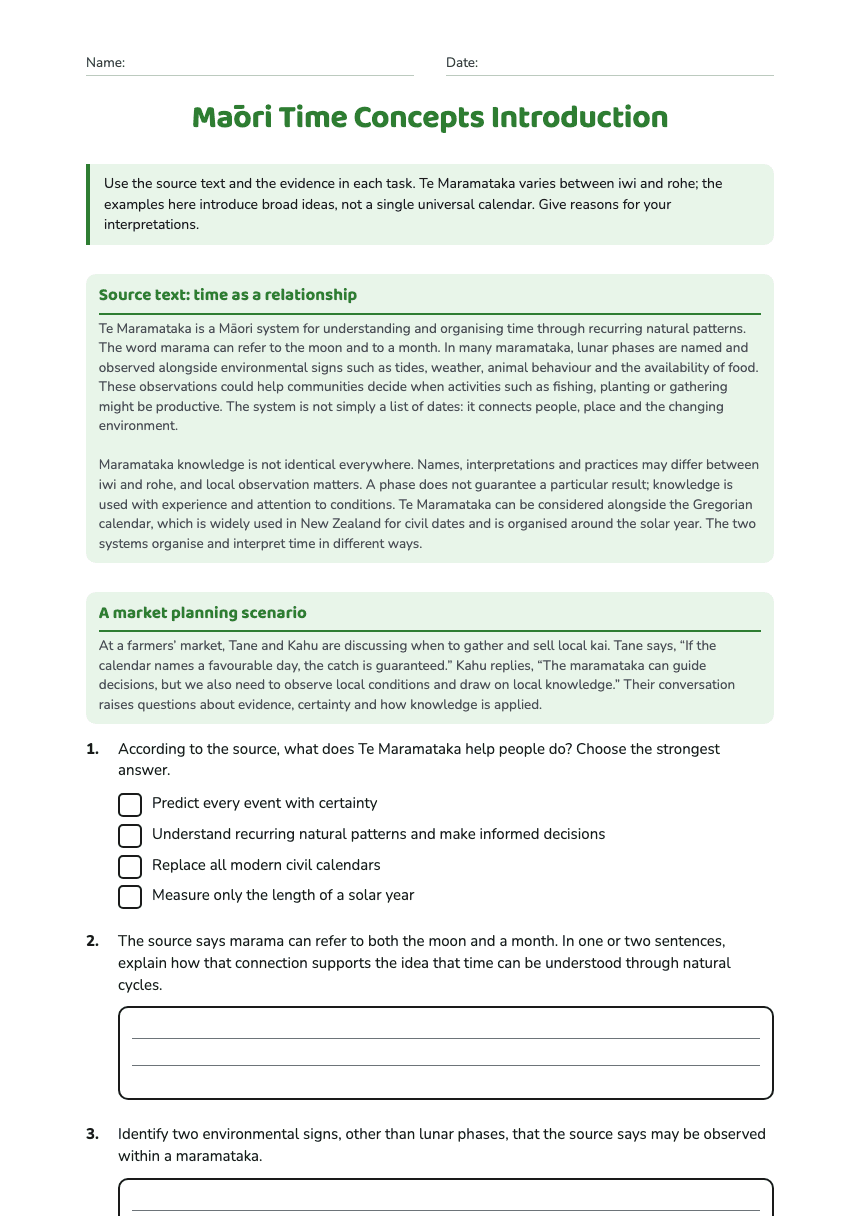
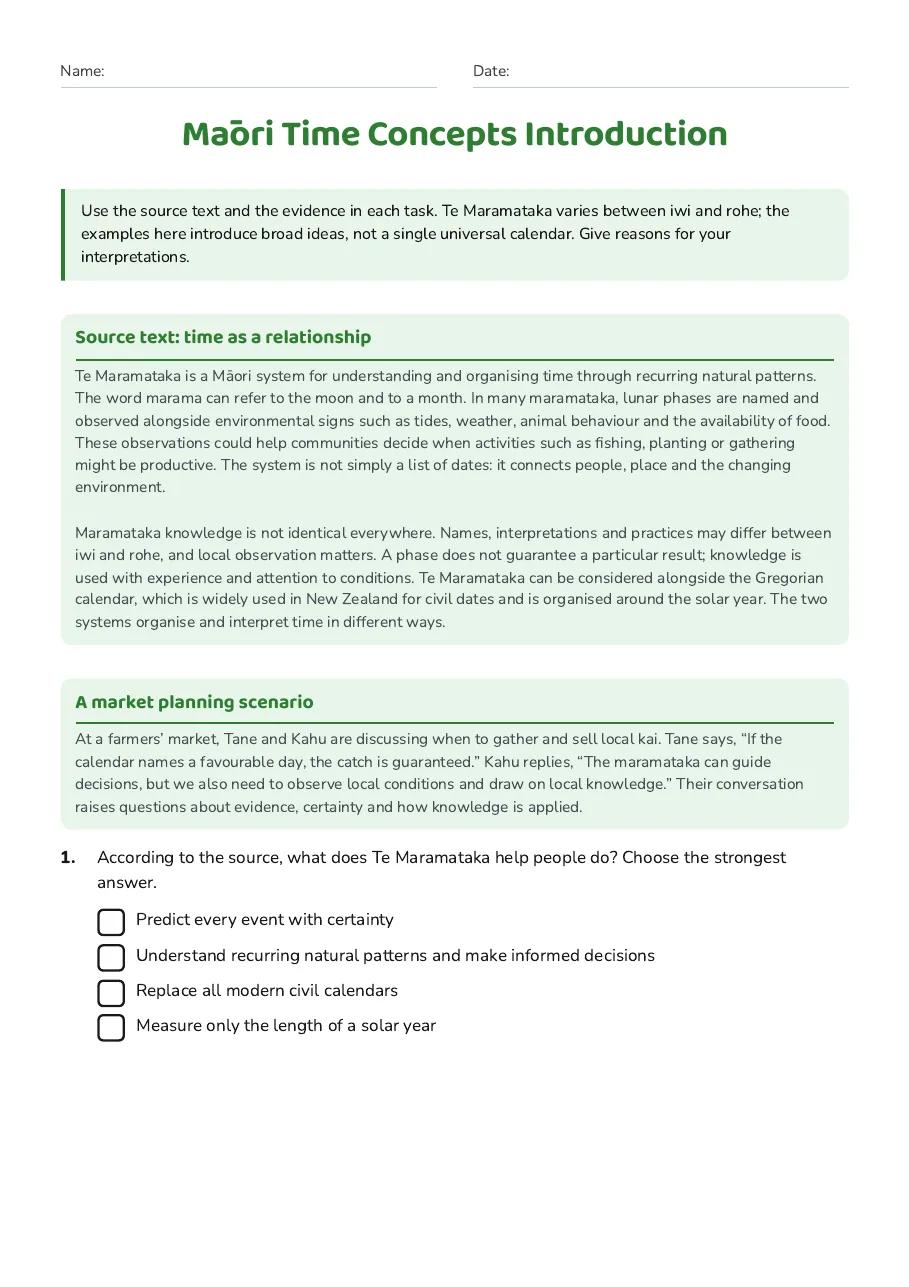
Source text: time as a relationship
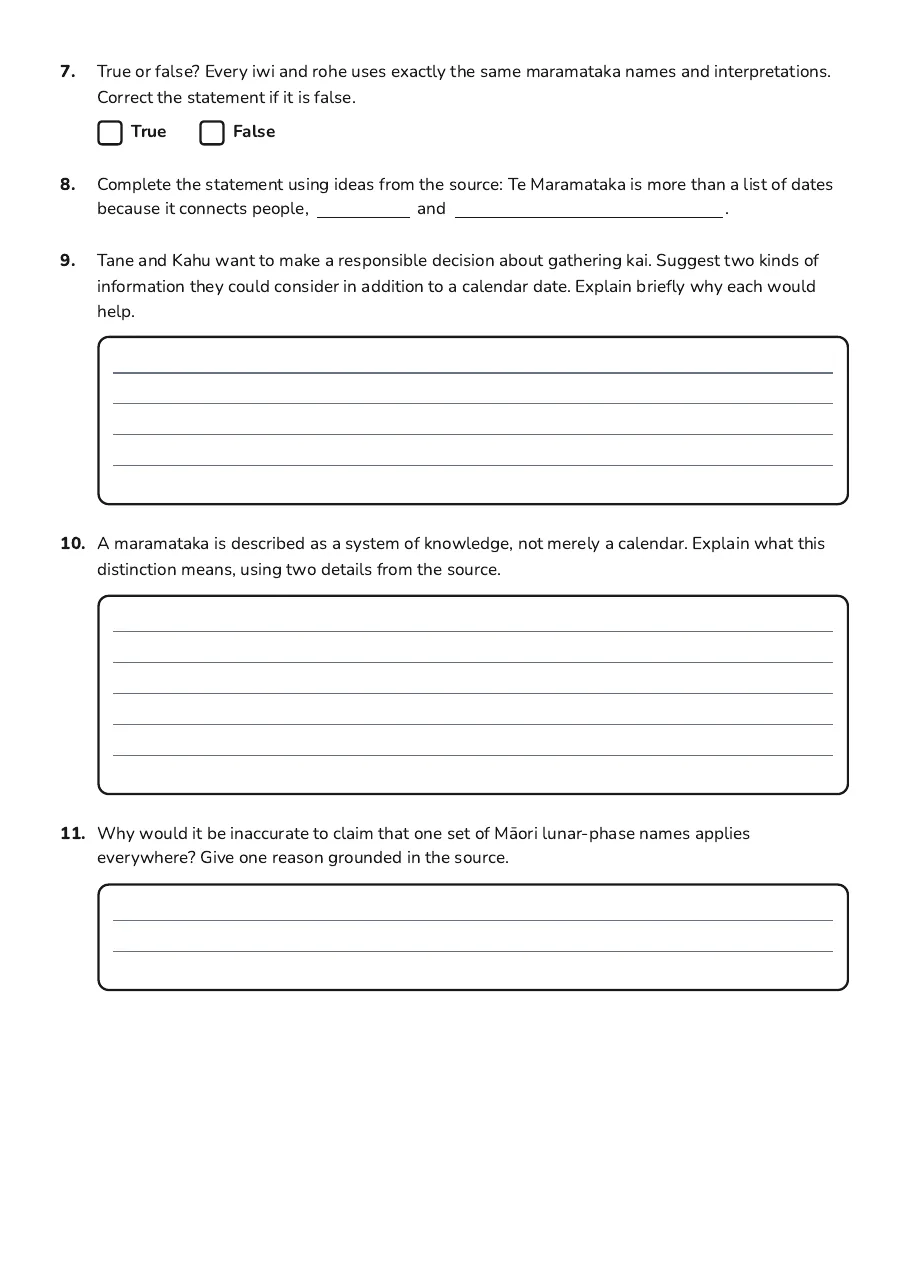
Te Maramataka is a Māori system for understanding and organising time through recurring natural patterns. The word marama can refer to the moon and to a month. In many maramataka, lunar phases are named and observed alongside environmental signs such as tides, weather, animal behaviour and the availability of food. These observations could help communities decide when activities such as fishing, planting or gathering might be productive. The system is not simply a list of dates: it connects people, place and the changing environment. Maramataka knowledge is not identical everywhere. Names, interpretations and practices may differ between iwi and rohe, and local observation matters. A phase does not guarantee a particular result; knowledge is used with experience and attention to conditions. Te Maramataka can be considered alongside the Gregorian calendar, which is widely used in New Zealand for civil dates and is organised around the solar year. The two systems organise and interpret time in different ways.
A market planning scenario
At a farmers’ market, Tane and Kahu are discussing when to gather and sell local kai. Tane says, “If the calendar names a favourable day, the catch is guaranteed.” Kahu replies, “The maramataka can guide decisions, but we also need to observe local conditions and draw on local knowledge.” Their conversation raises questions about evidence, certainty and how knowledge is applied.
- Predict every event with certainty
- Understand recurring natural patterns and make informed decisions
- Replace all modern civil calendars
- Measure only the length of a solar year
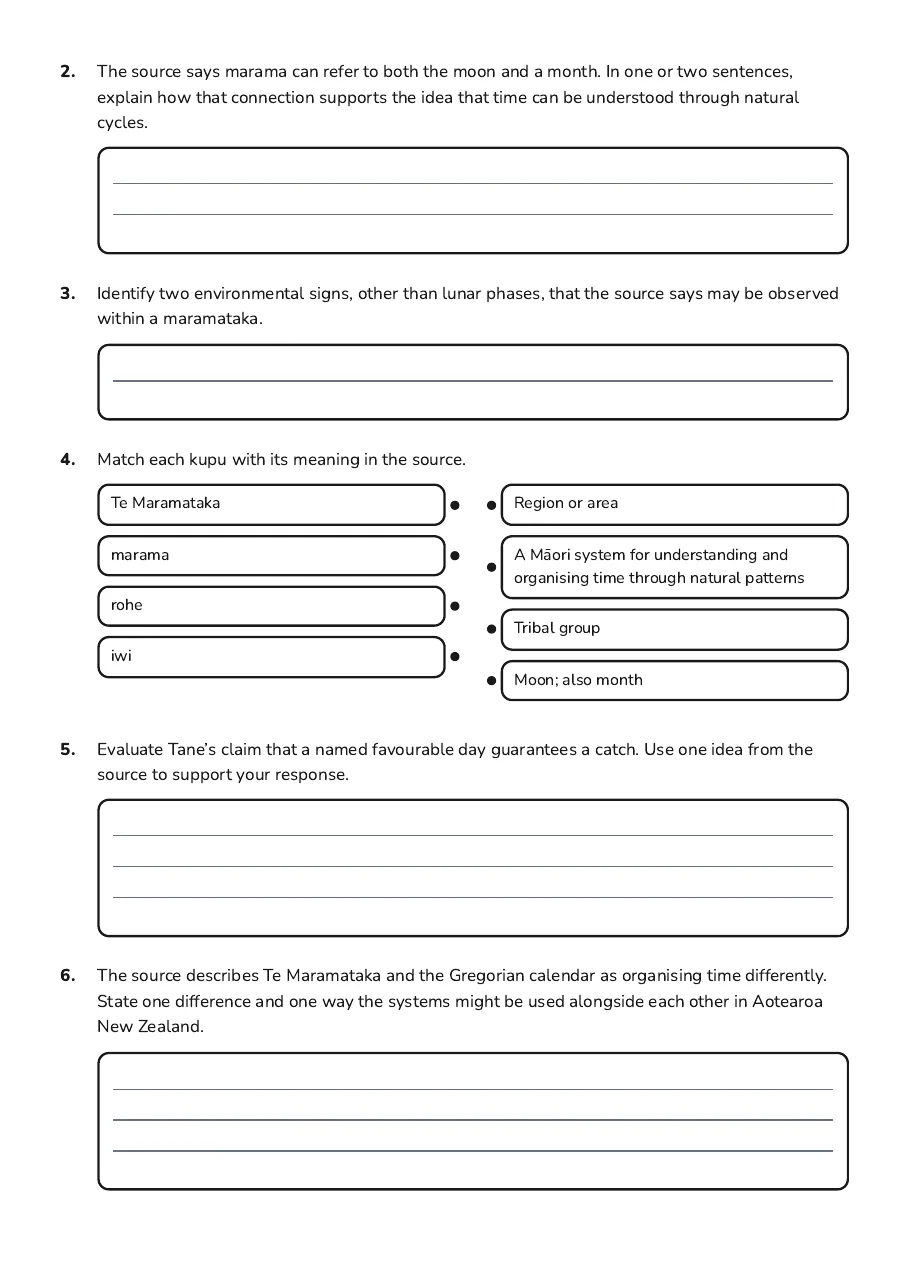
- Te Maramataka
- marama
- rohe
- iwi
- Region or area
- A Māori system for understanding and organising time through natural patterns
- Tribal group
- Moon; also month
4 printable pages
Page 1
Page 2
Page 3

Page 4
About This Worksheet
Free in Kuraplan
Sign up free, grab the PDF, and customize it for your class.
Print-Ready
Formatted for standard paper. Clean layout, easy to read.
AI-Generated
Created with Kuraplan's AI, designed for real classroom use.
For Teachers & Parents
Use in classrooms, for homework, tutoring, or homeschool.
Need a custom version of this worksheet?
Kuraplan's AI generates custom worksheets in seconds — differentiated for every learner, aligned to your curriculum.
Generate Custom Worksheets — FreeMore Te Reo Māori Worksheets
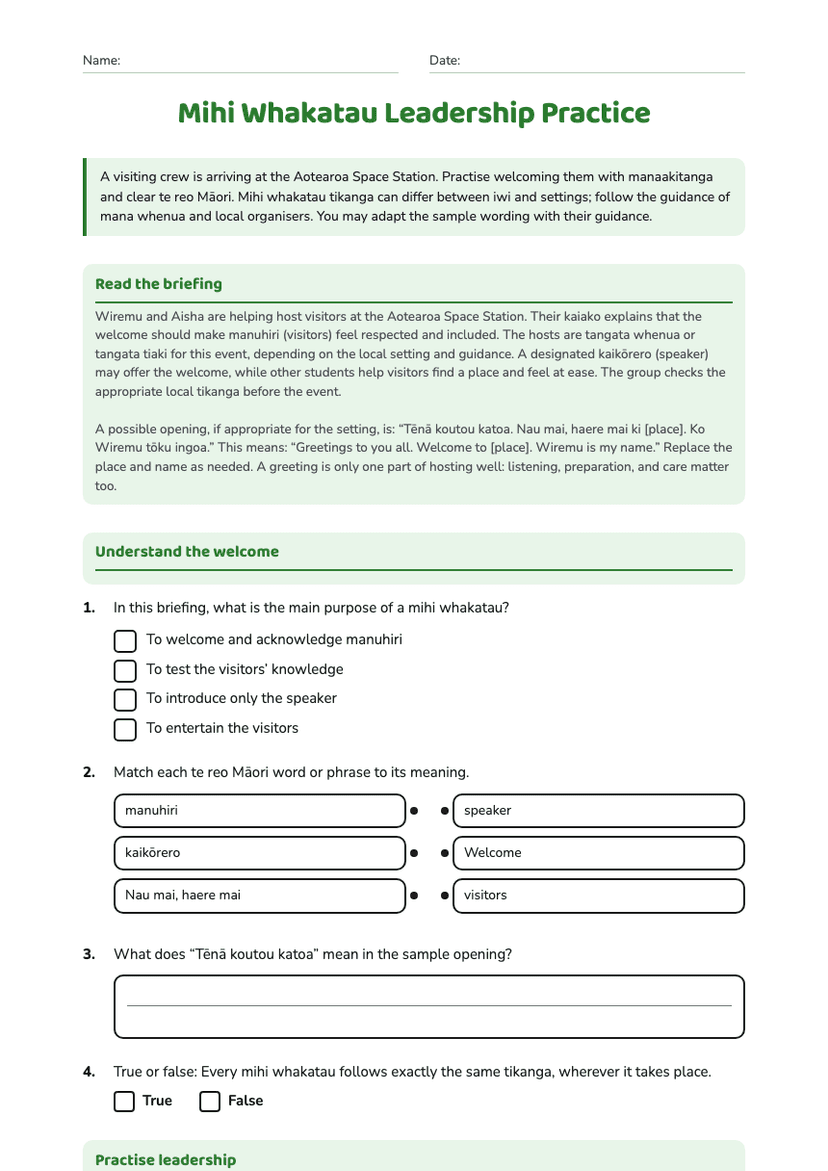
Mihi Whakatau Leadership Practice
Free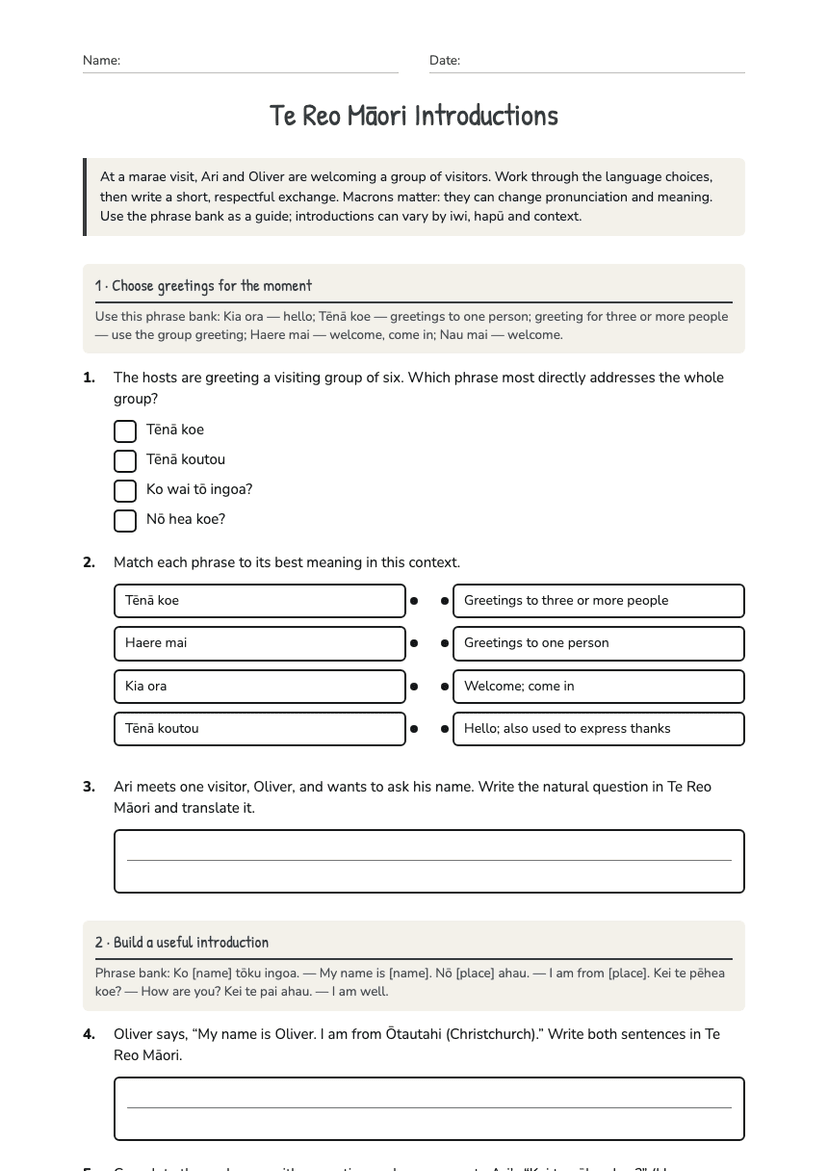
Te Reo Māori Introductions
Free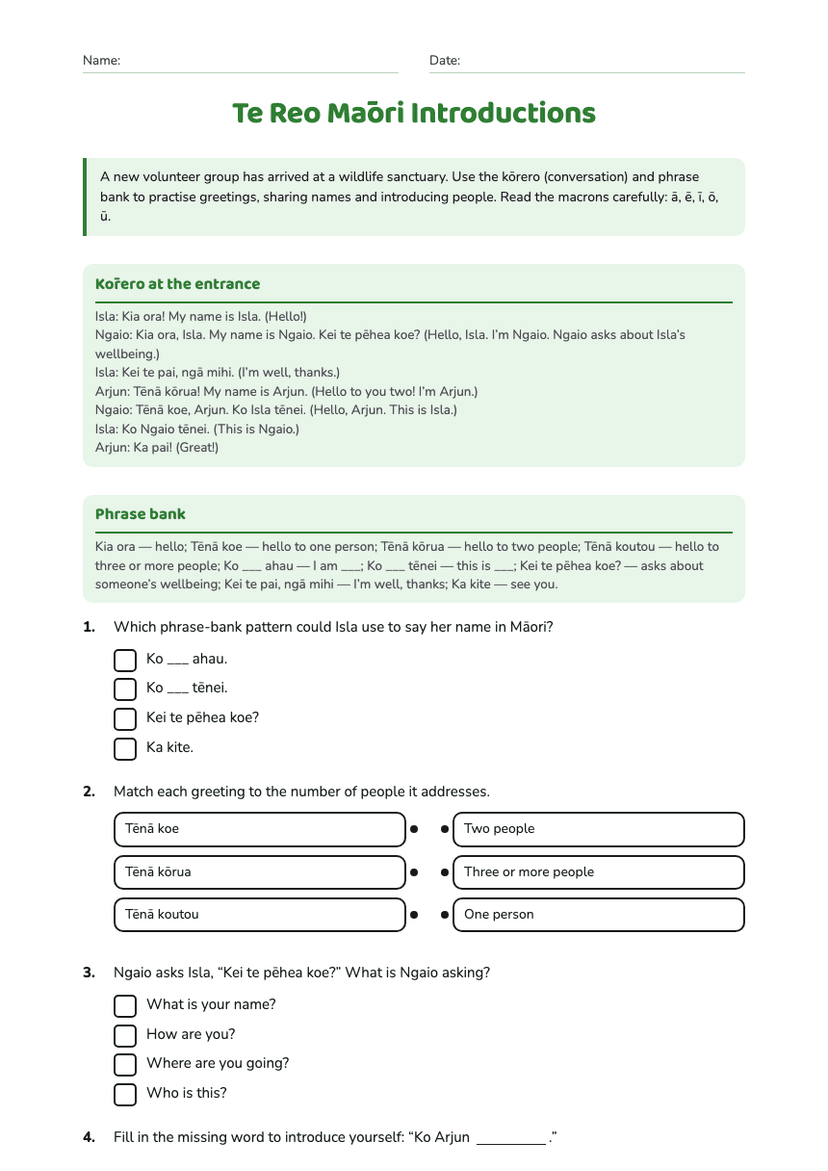
Te Reo Māori Introductions
Free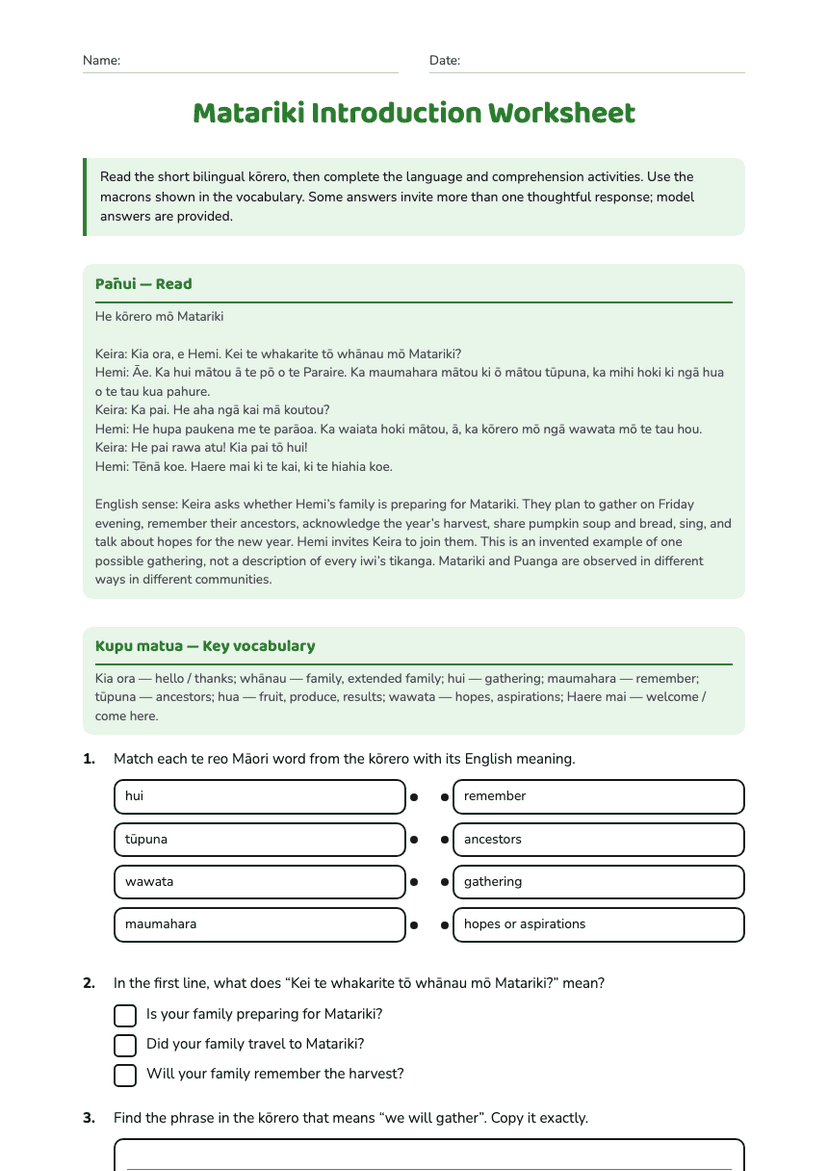
Matariki Introduction Worksheet
Free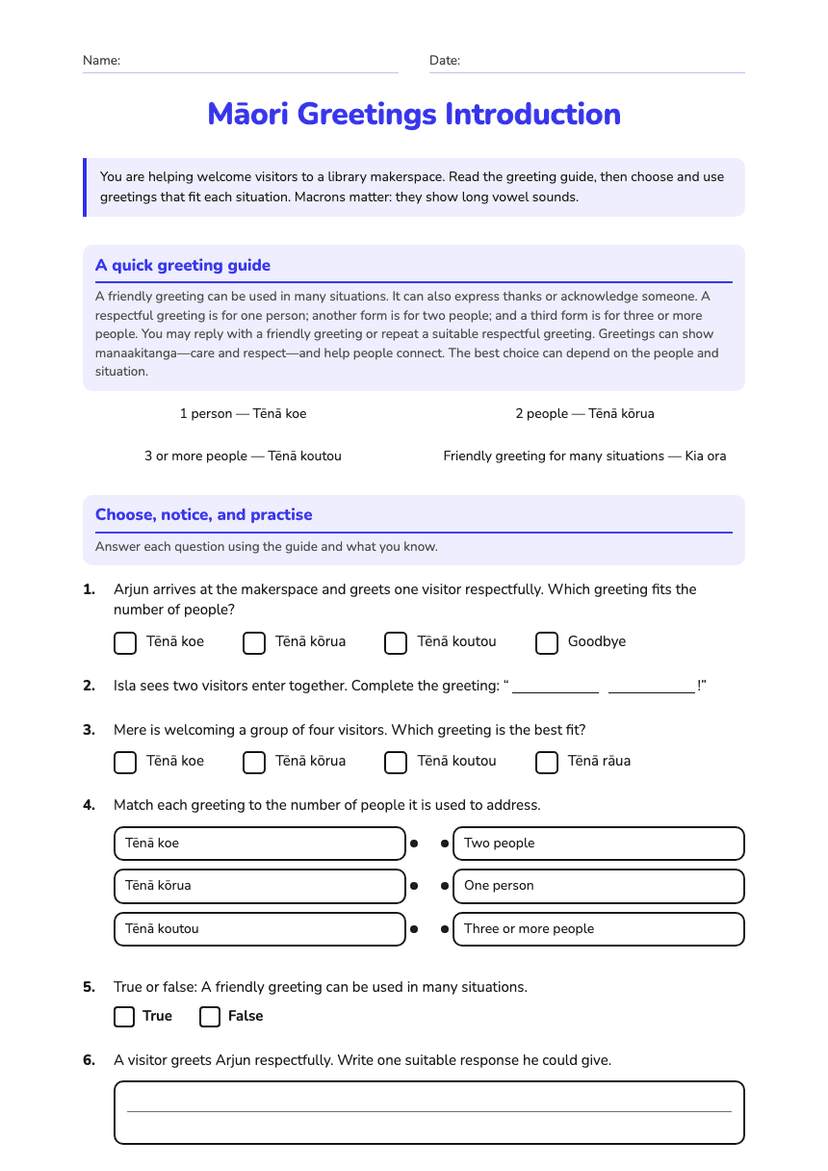
Māori Greetings Introduction
Free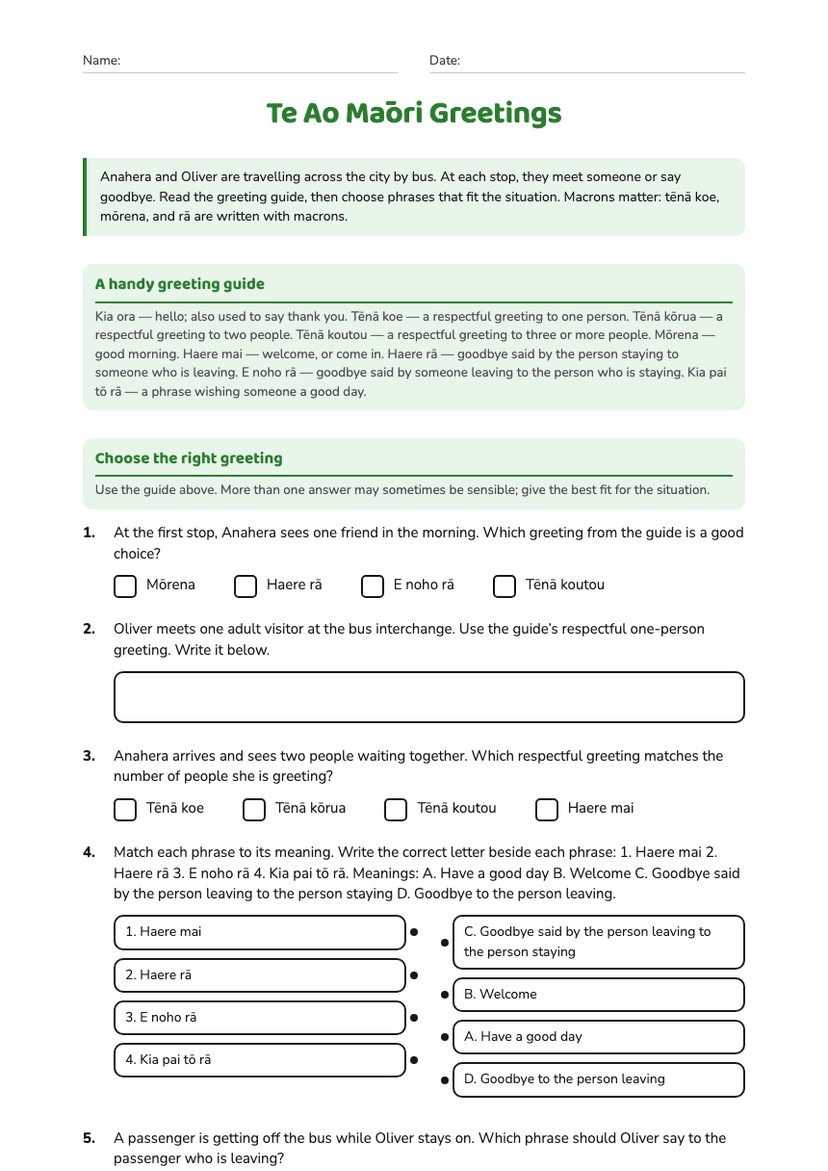
Te Ao Māori Greetings
Free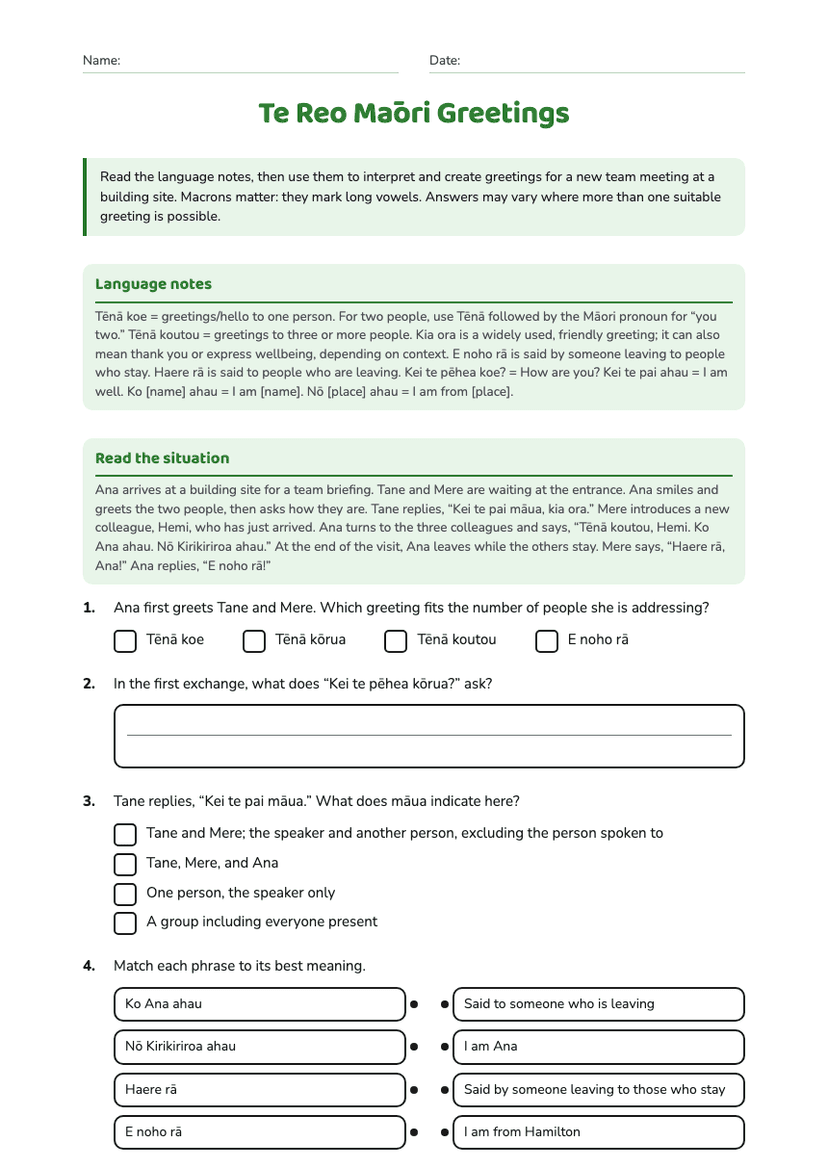
Te Reo Māori Greetings
Free