Nature Research Fact Sheet
A free english worksheet ready for your classroom. Open in Kuraplan to grab the print-ready PDF, customize it for your students, or generate a fresh version in seconds.
Nature Research Fact Sheet
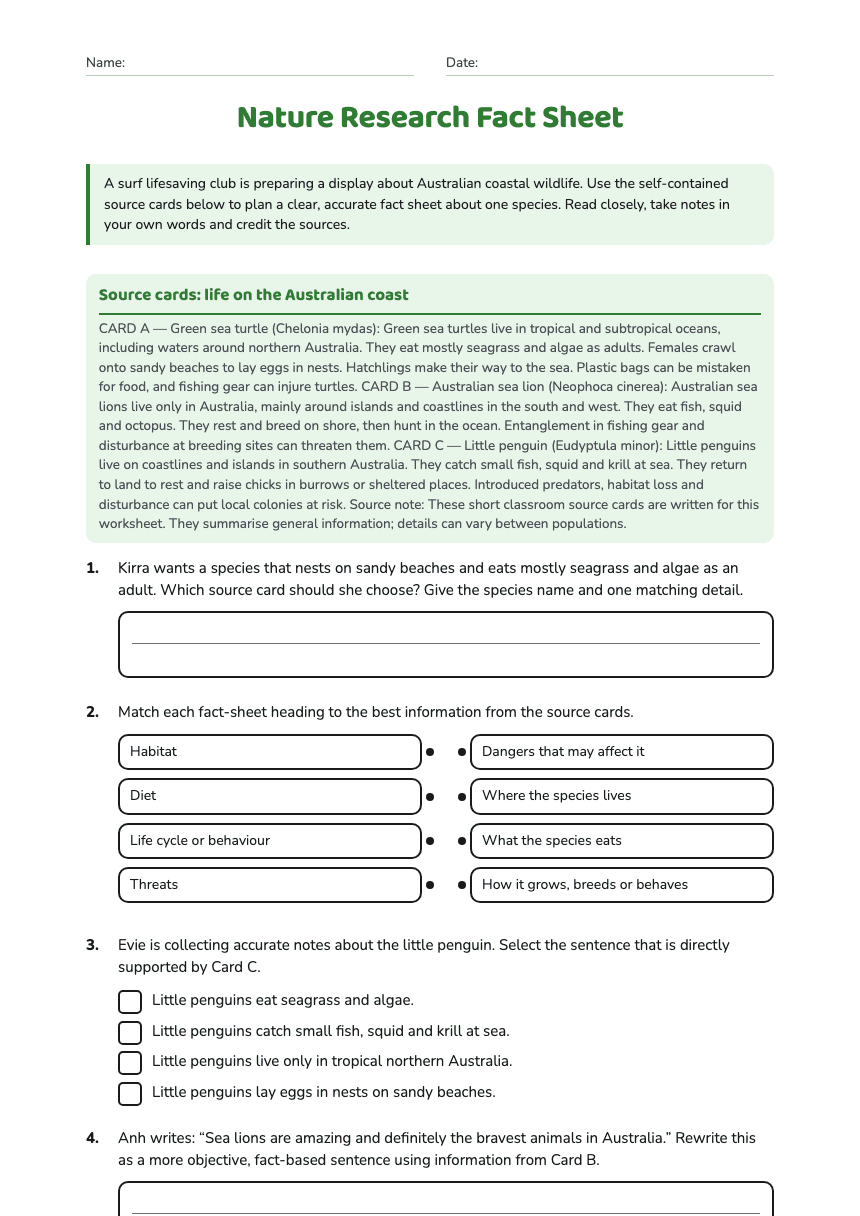
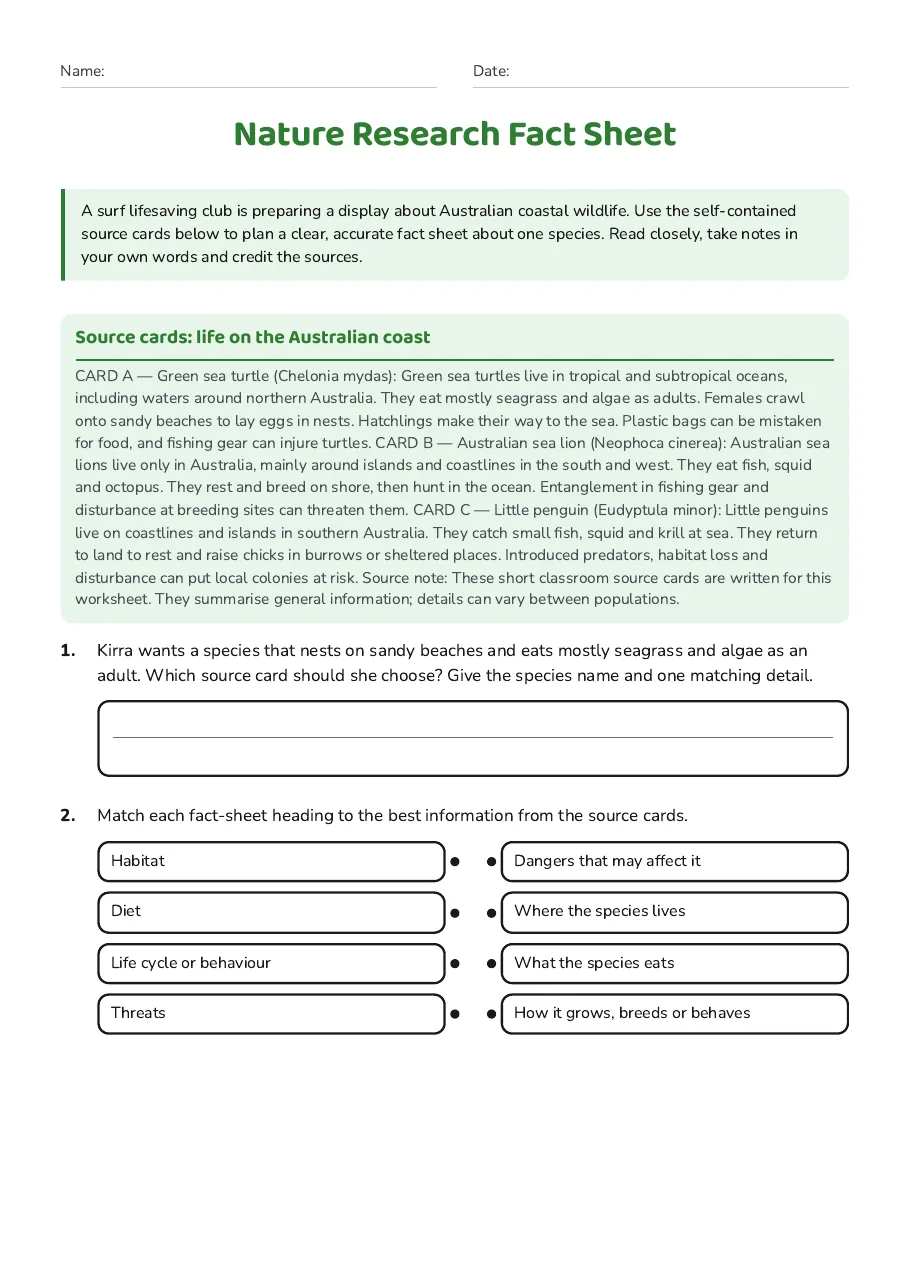
Source cards: life on the Australian coast
CARD A — Green sea turtle (Chelonia mydas): Green sea turtles live in tropical and subtropical oceans, including waters around northern Australia. They eat mostly seagrass and algae as adults. Females crawl onto sandy beaches to lay eggs in nests. Hatchlings make their way to the sea. Plastic bags can be mistaken for food, and fishing gear can injure turtles. CARD B — Australian sea lion (Neophoca cinerea): Australian sea lions live only in Australia, mainly around islands and coastlines in the south and west. They eat fish, squid and octopus. They rest and breed on shore, then hunt in the ocean. Entanglement in fishing gear and disturbance at breeding sites can threaten them. CARD C — Little penguin (Eudyptula minor): Little penguins live on coastlines and islands in southern Australia. They catch small fish, squid and krill at sea. They return to land to rest and raise chicks in burrows or sheltered places. Introduced predators, habitat loss and disturbance can put local colonies at risk. Source note: These short classroom source cards are written for this worksheet. They summarise general information; details can vary between populations.
- Habitat
- Diet
- Life cycle or behaviour
- Threats
- Dangers that may affect it
- Where the species lives
- What the species eats
- How it grows, breeds or behaves
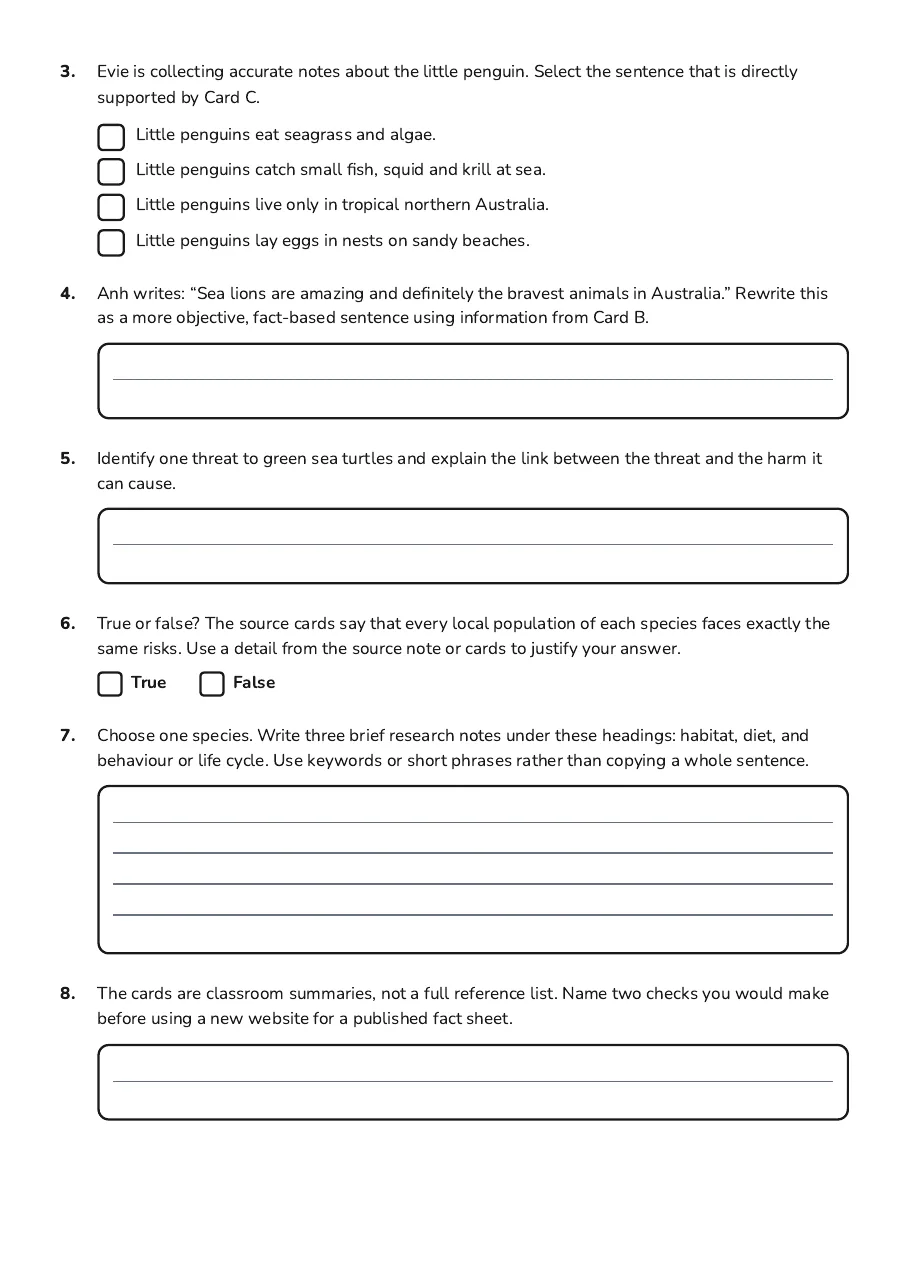
- Little penguins eat seagrass and algae.
- Little penguins catch small fish, squid and krill at sea.
- Little penguins live only in tropical northern Australia.
- Little penguins lay eggs in nests on sandy beaches.
3 printable pages
Page 1
Page 2
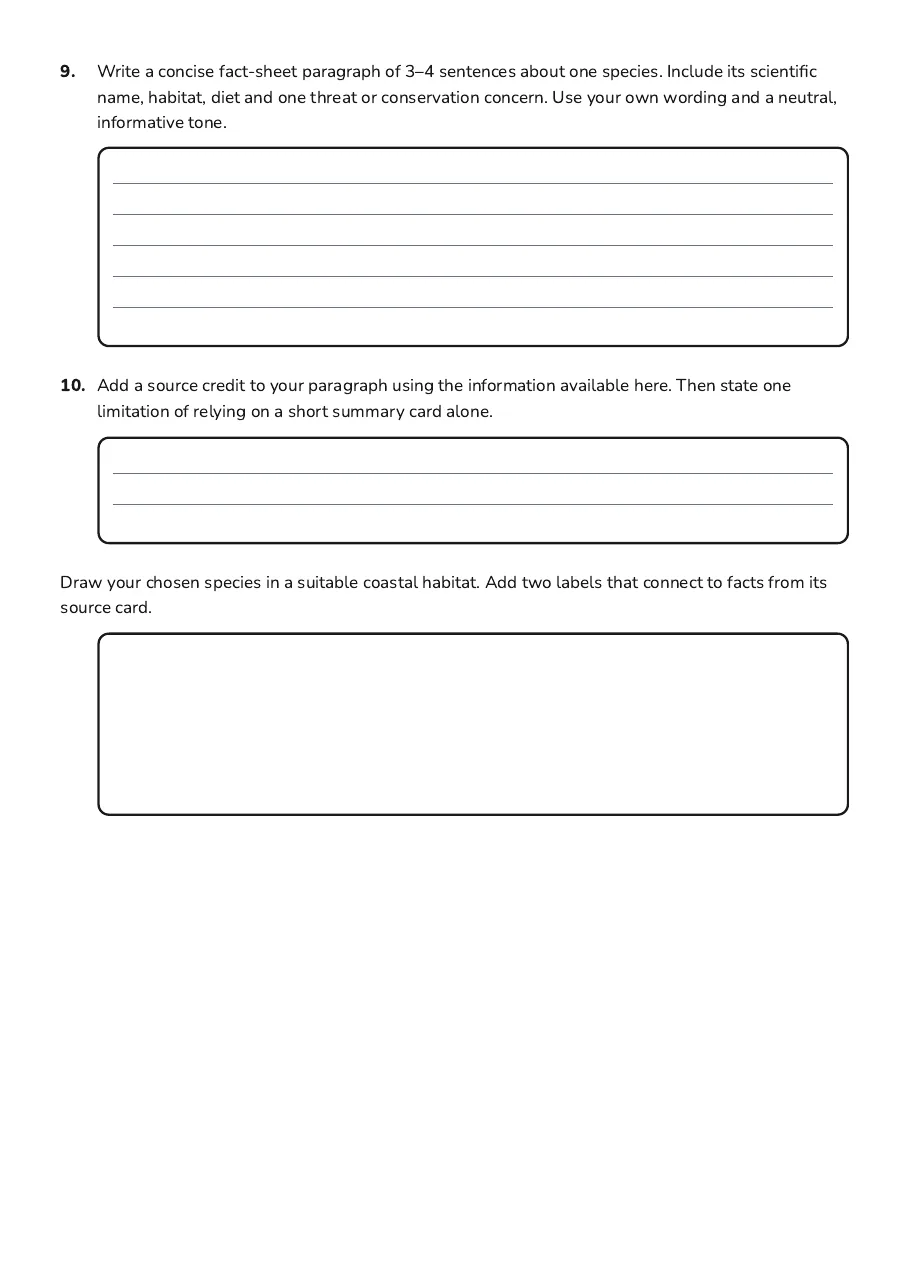
Page 3
About This Worksheet
Free in Kuraplan
Sign up free, grab the PDF, and customize it for your class.
Print-Ready
Formatted for standard paper. Clean layout, easy to read.
AI-Generated
Created with Kuraplan's AI, designed for real classroom use.
For Teachers & Parents
Use in classrooms, for homework, tutoring, or homeschool.
Need a custom version of this worksheet?
Kuraplan's AI generates custom worksheets in seconds — differentiated for every learner, aligned to your curriculum.
Generate Custom Worksheets — FreeMore English Worksheets
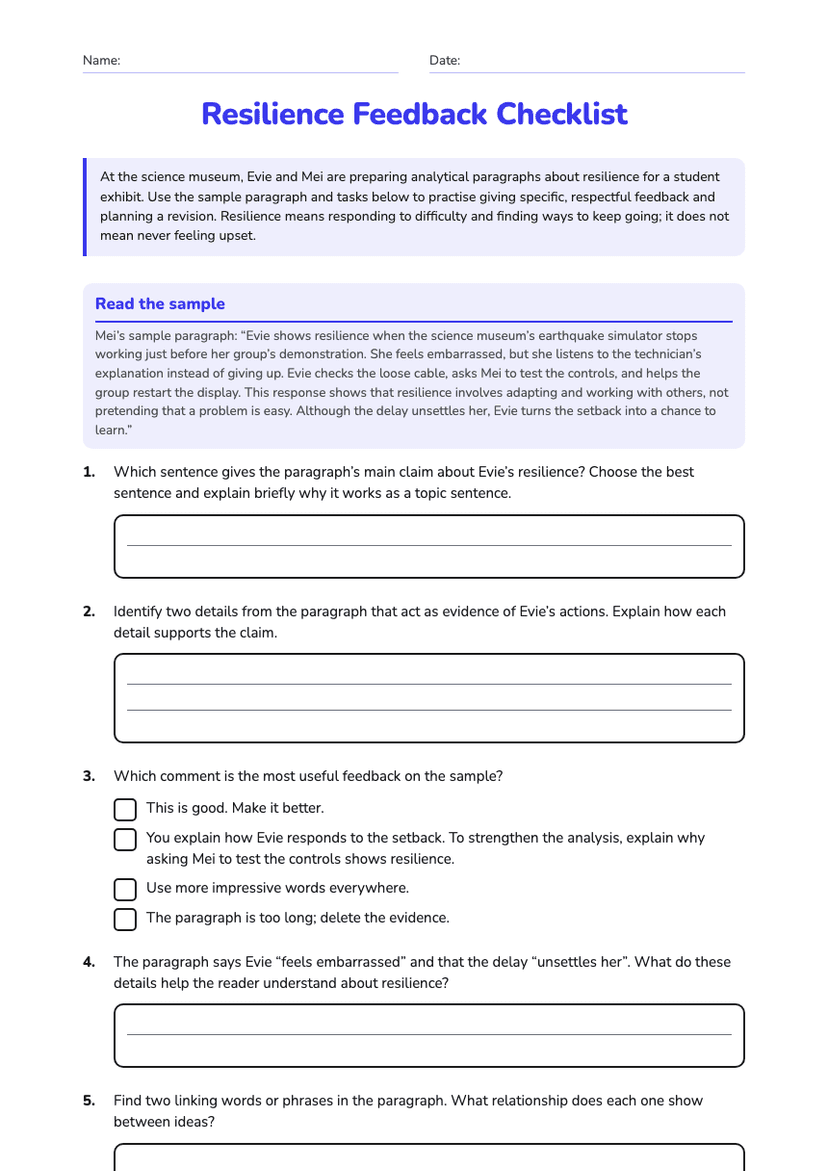
Resilience Feedback Checklist
Free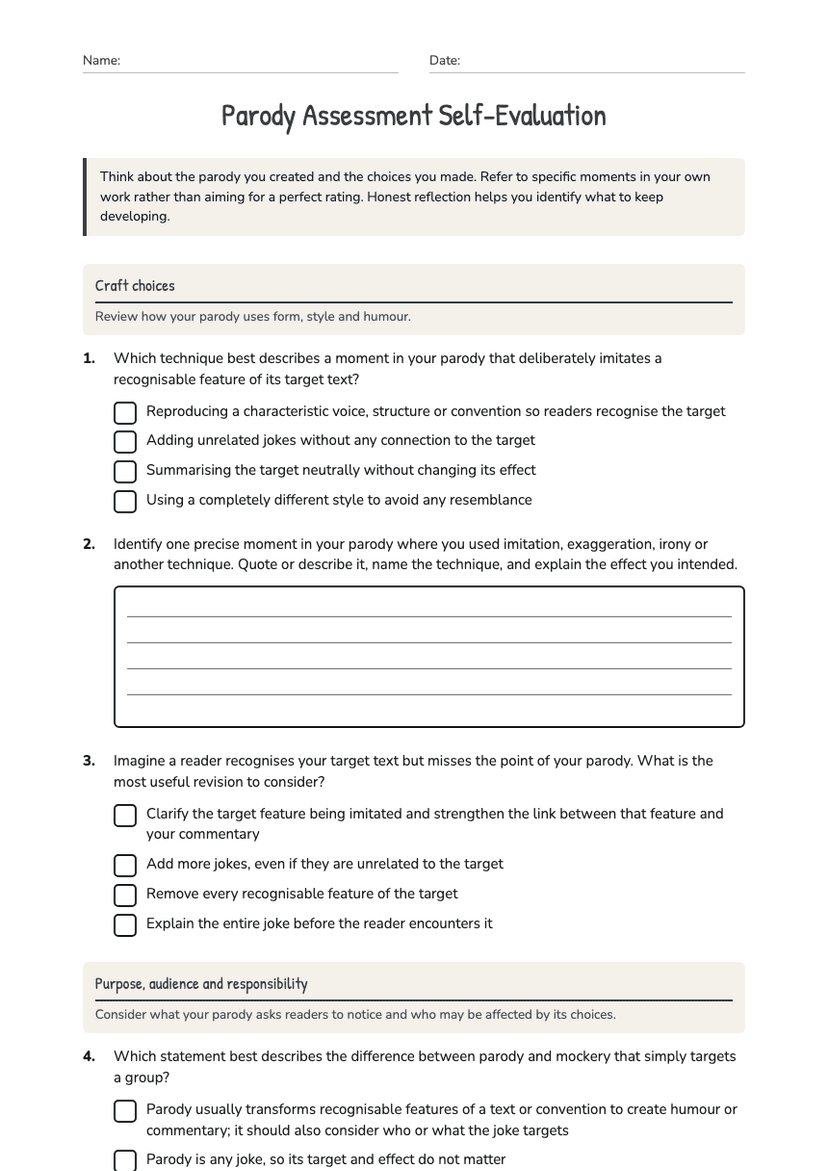
Parody Assessment Self-Evaluation
Free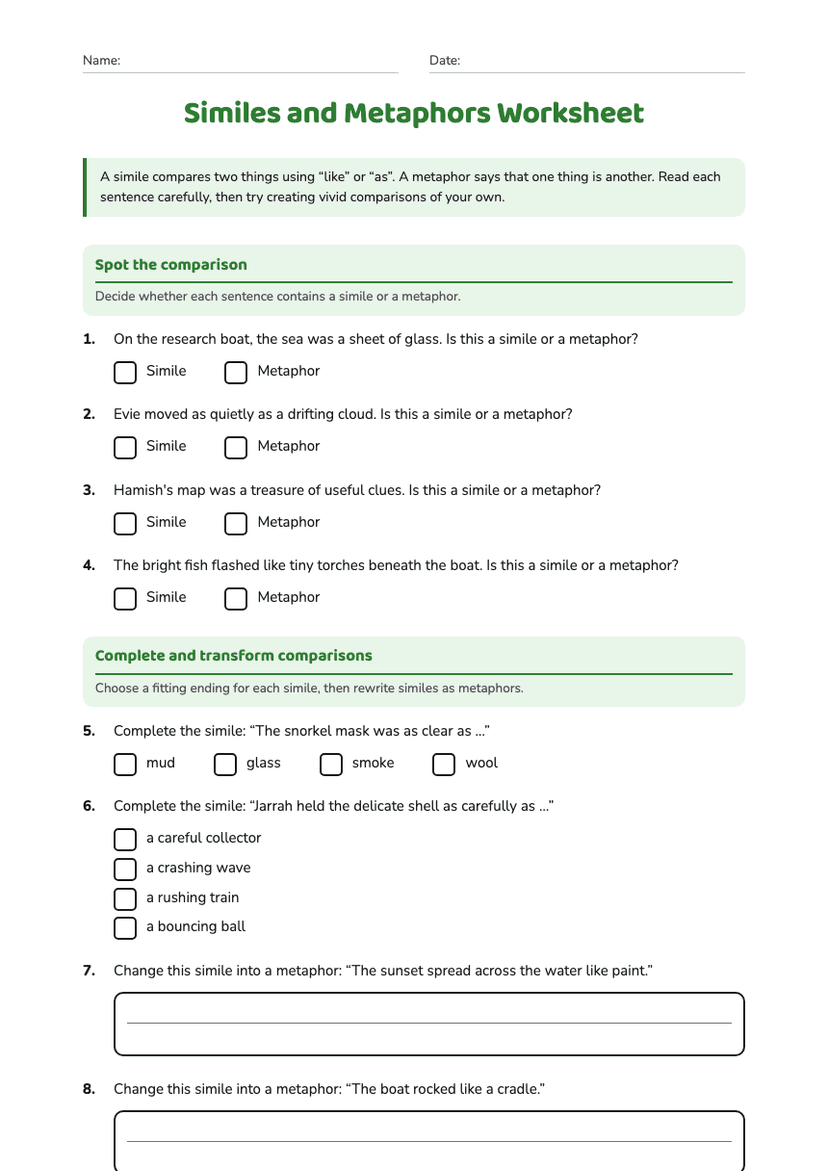
Similes and Metaphors Worksheet
Free
Zeelie's Fire Diary
Free
Persuasive Introduction Writing
Free
Titans Film Analysis Essay
Free
Persuasive Writing Editing Checklist
Free