New Zealand Birds Writing
A free english worksheet ready for your classroom. Open in Kuraplan to grab the print-ready PDF, customize it for your students, or generate a fresh version in seconds.

New Zealand Birds Writing
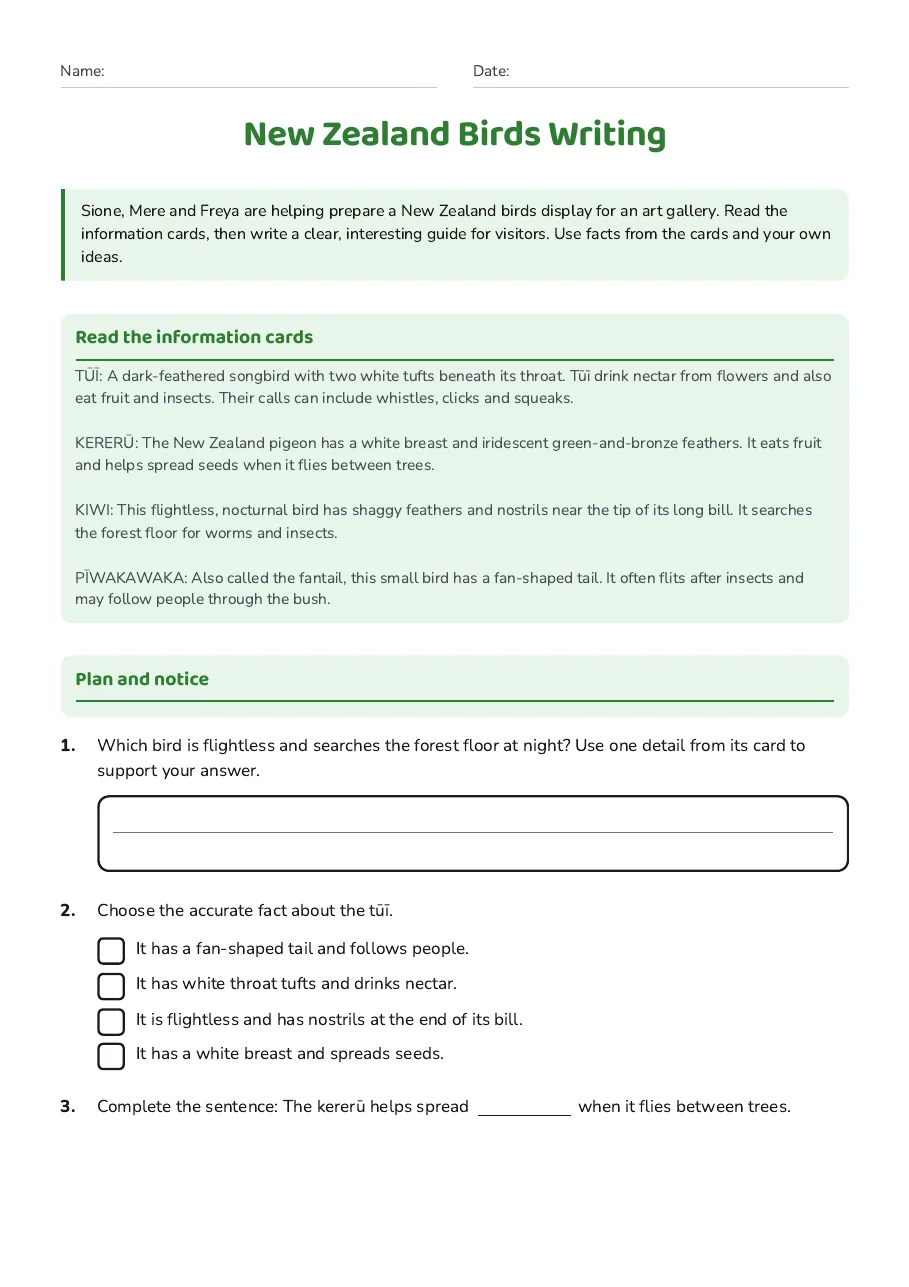
Read the information cards
TŪĪ: A dark-feathered songbird with two white tufts beneath its throat. Tūī drink nectar from flowers and also eat fruit and insects. Their calls can include whistles, clicks and squeaks. KERERŪ: The New Zealand pigeon has a white breast and iridescent green-and-bronze feathers. It eats fruit and helps spread seeds when it flies between trees. KIWI: This flightless, nocturnal bird has shaggy feathers and nostrils near the tip of its long bill. It searches the forest floor for worms and insects. PĪWAKAWAKA: Also called the fantail, this small bird has a fan-shaped tail. It often flits after insects and may follow people through the bush.
Plan and notice
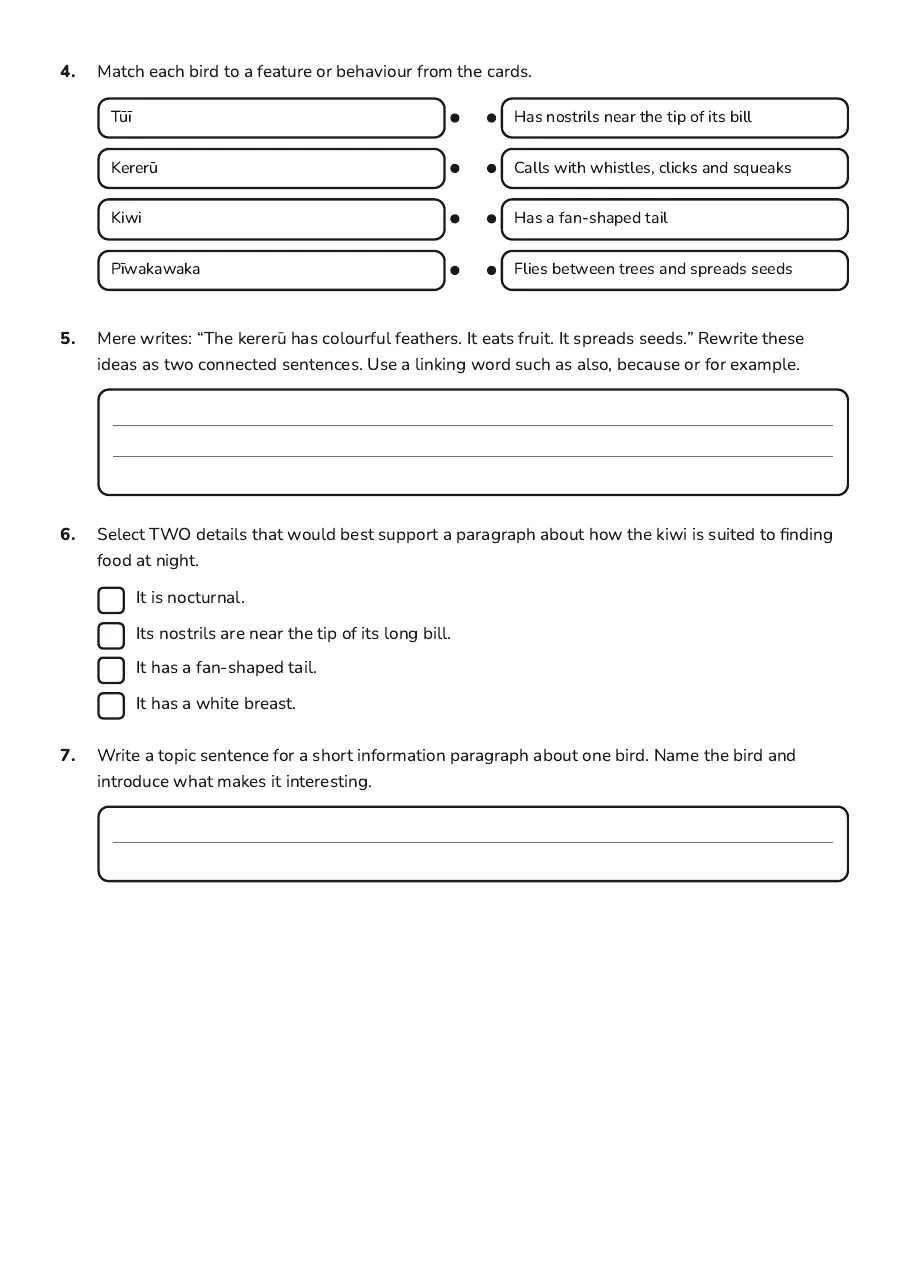
- It has a fan-shaped tail and follows people.
- It has white throat tufts and drinks nectar.
- It is flightless and has nostrils at the end of its bill.
- It has a white breast and spreads seeds.
- Tūī
- Kererū
- Kiwi
- Pīwakawaka
- Has nostrils near the tip of its bill
- Calls with whistles, clicks and squeaks
- Has a fan-shaped tail
- Flies between trees and spreads seeds
- It is nocturnal.
- Its nostrils are near the tip of its long bill.
- It has a fan-shaped tail.
- It has a white breast.
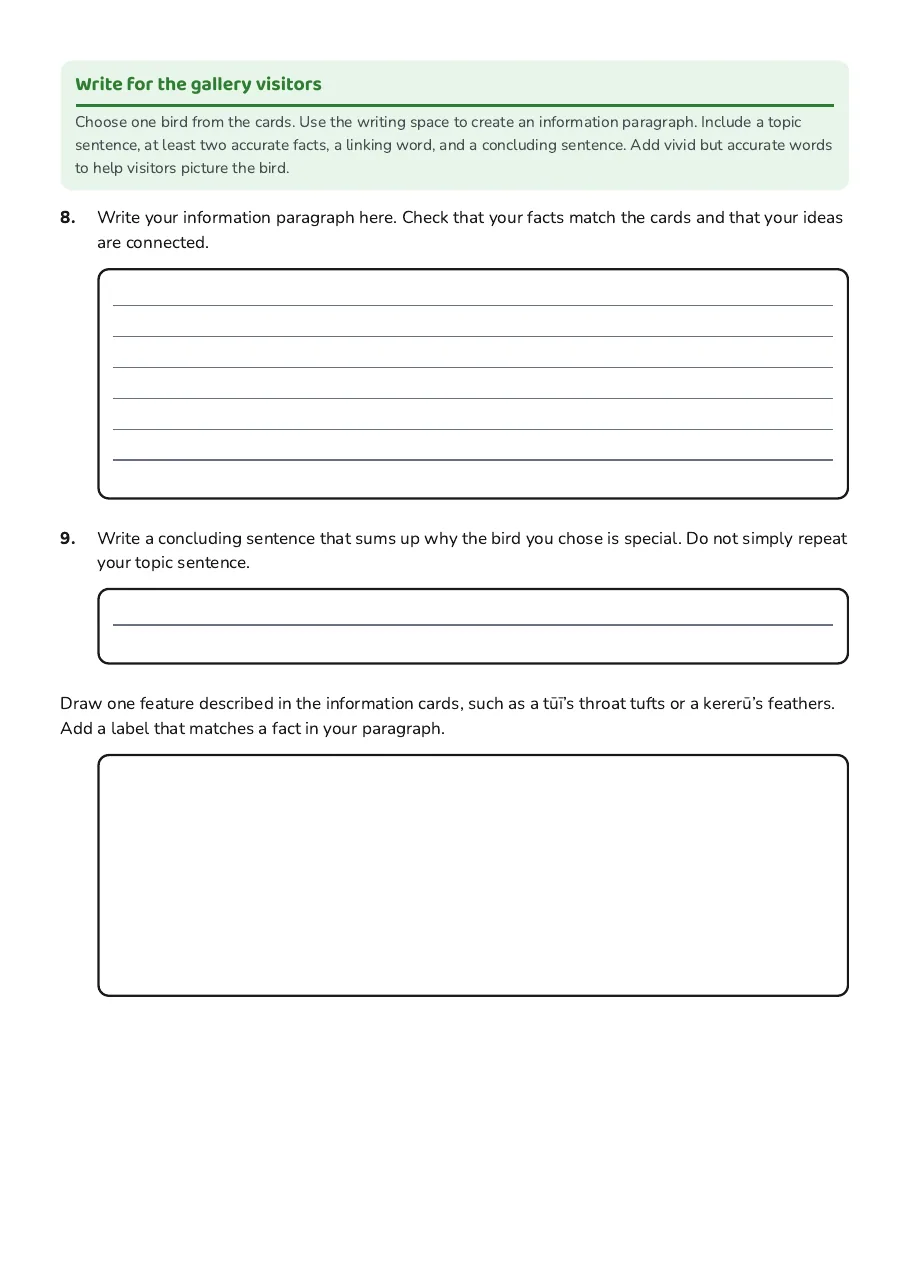
Write for the gallery visitors
Choose one bird from the cards. Use the writing space to create an information paragraph. Include a topic sentence, at least two accurate facts, a linking word, and a concluding sentence. Add vivid but accurate words to help visitors picture the bird.
3 printable pages
Page 1
Page 2
Page 3
About This Worksheet
Free in Kuraplan
Sign up free, grab the PDF, and customize it for your class.
Print-Ready
Formatted for standard paper. Clean layout, easy to read.
AI-Generated
Created with Kuraplan's AI, designed for real classroom use.
For Teachers & Parents
Use in classrooms, for homework, tutoring, or homeschool.
Need a custom version of this worksheet?
Kuraplan's AI generates custom worksheets in seconds — differentiated for every learner, aligned to your curriculum.
Generate Custom Worksheets — FreeMore English Worksheets
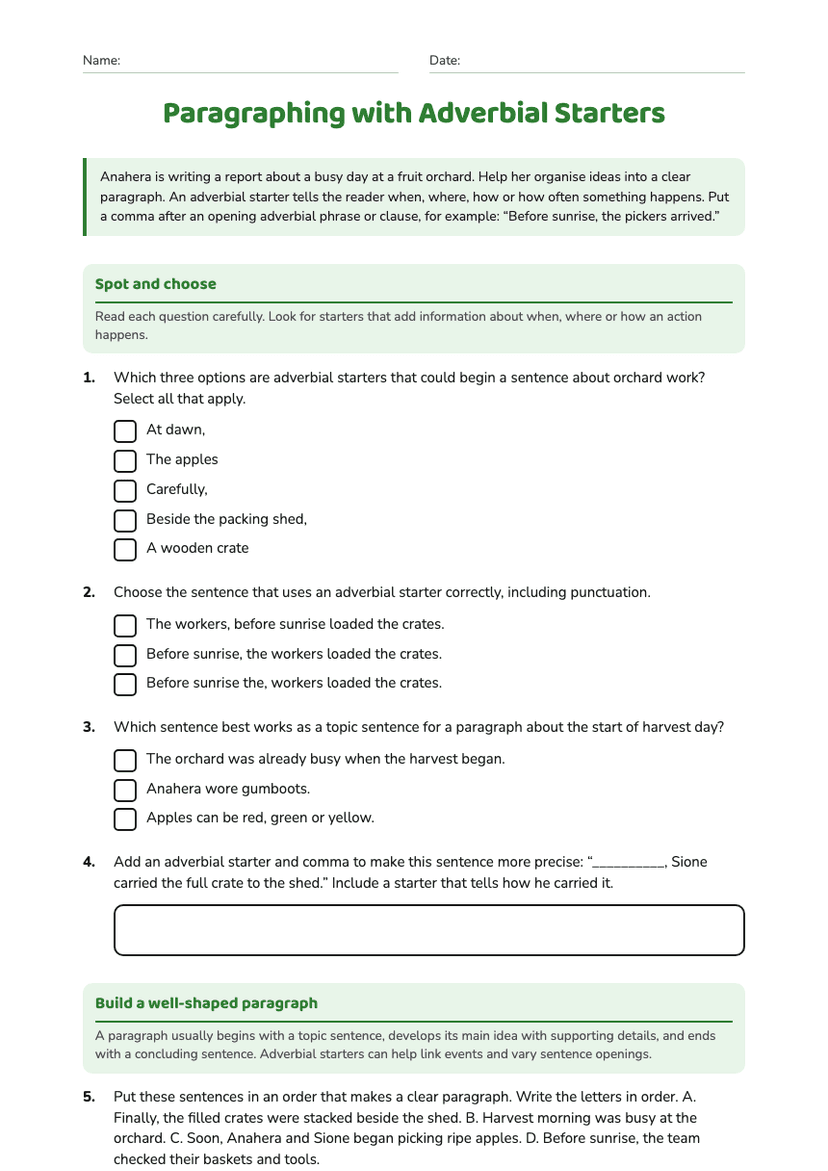
Paragraphing with Adverbial Starters
Free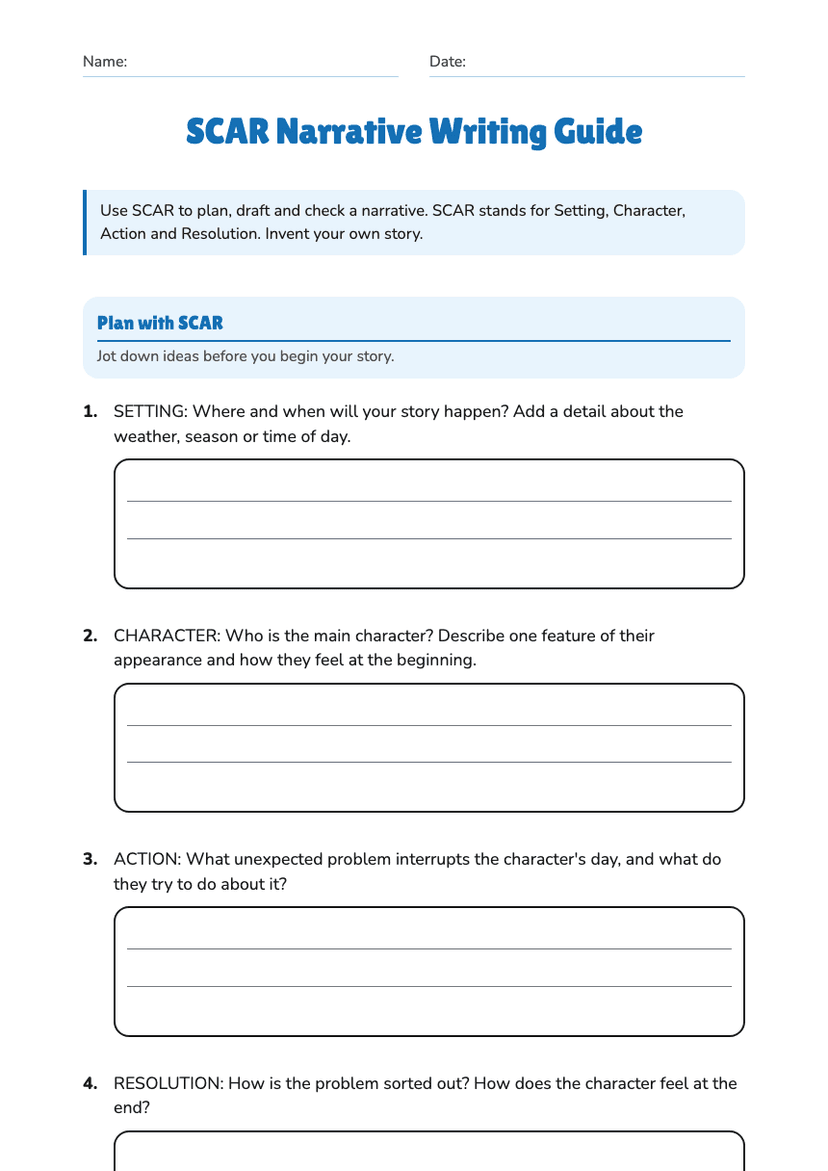
SCAR Narrative Writing Guide
Free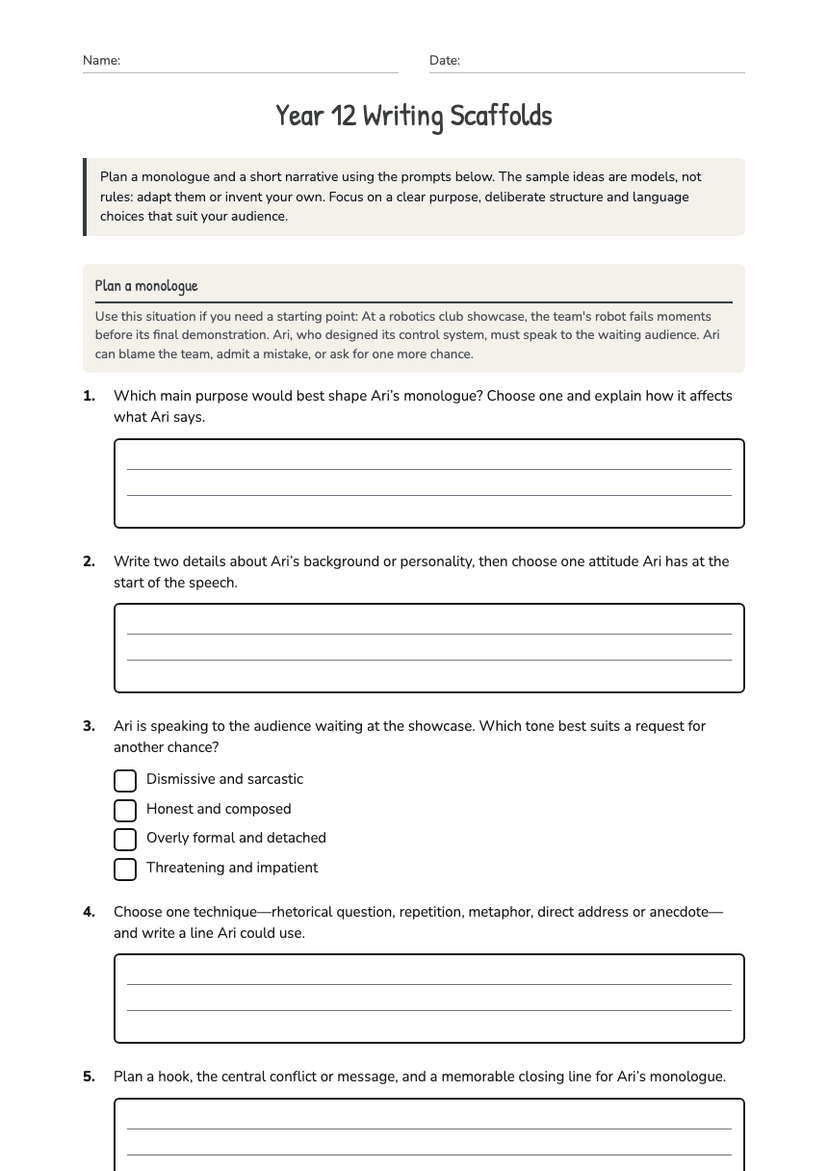
Year 12 Writing Scaffolds
Free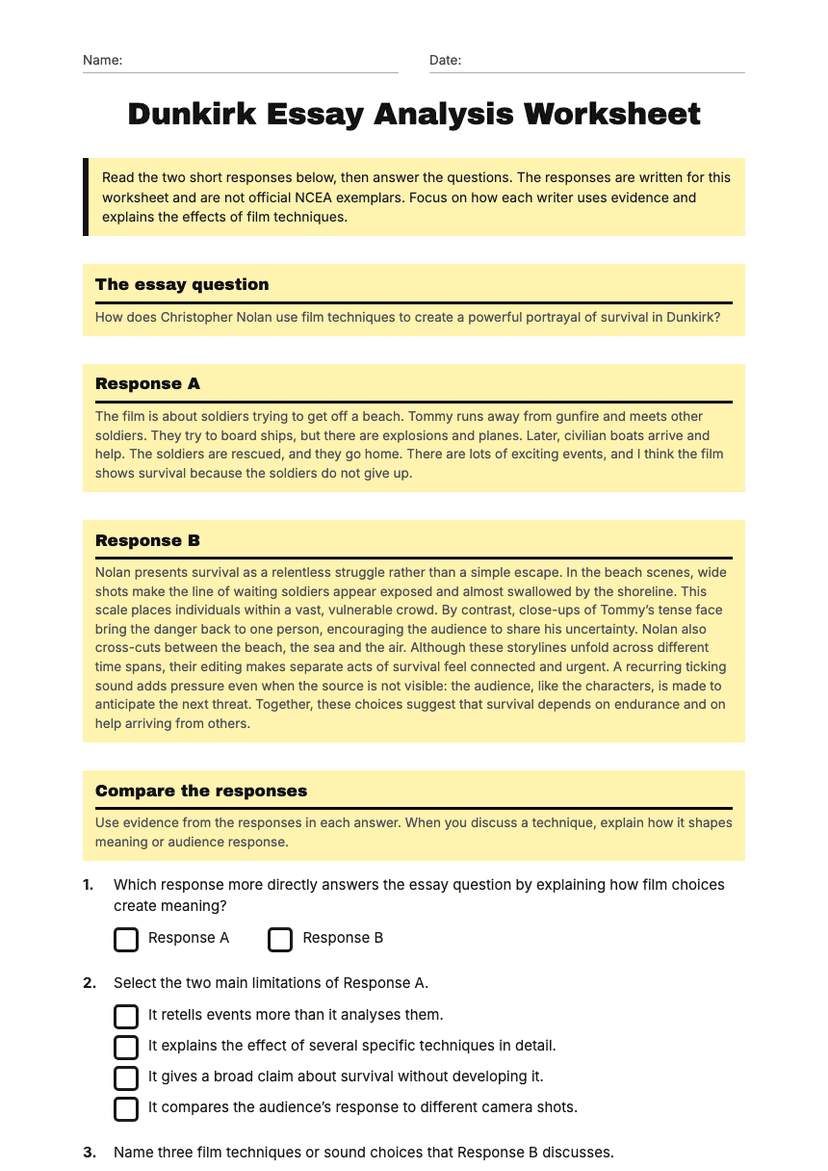
Dunkirk Essay Analysis Worksheet
Free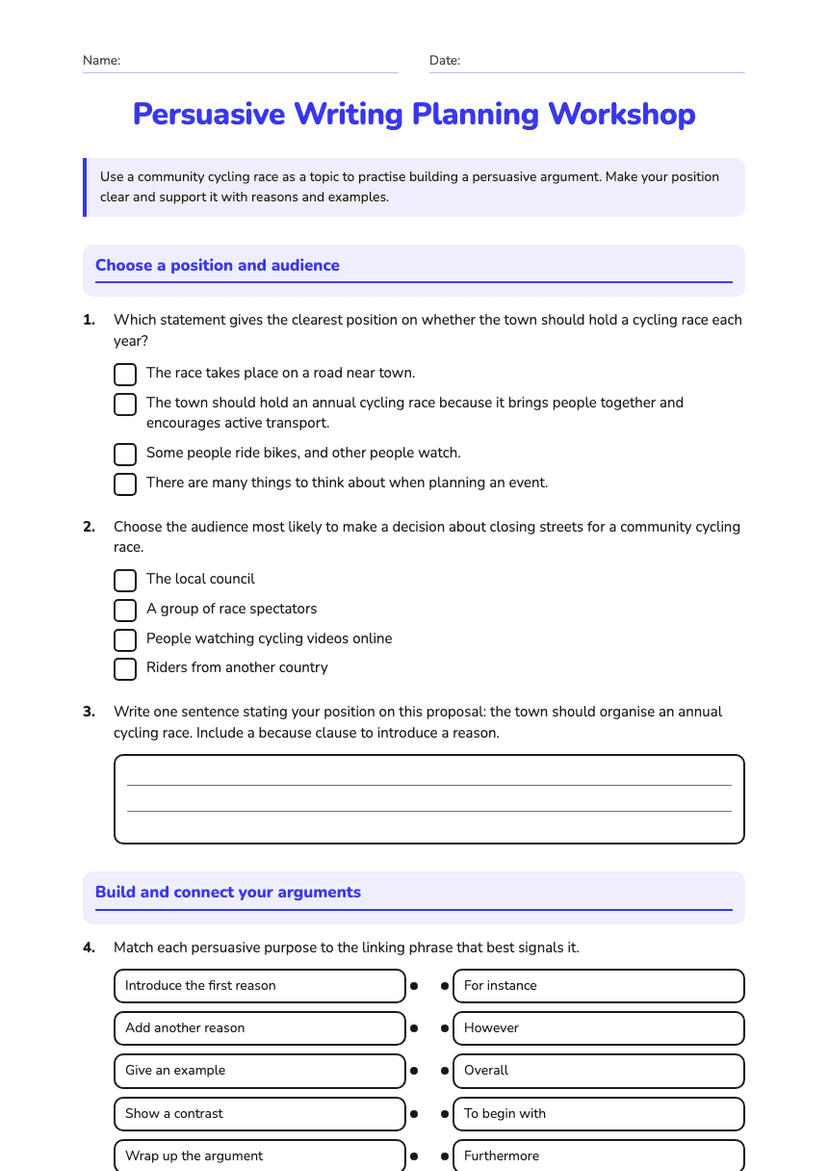
Persuasive Writing Planning Workshop
Free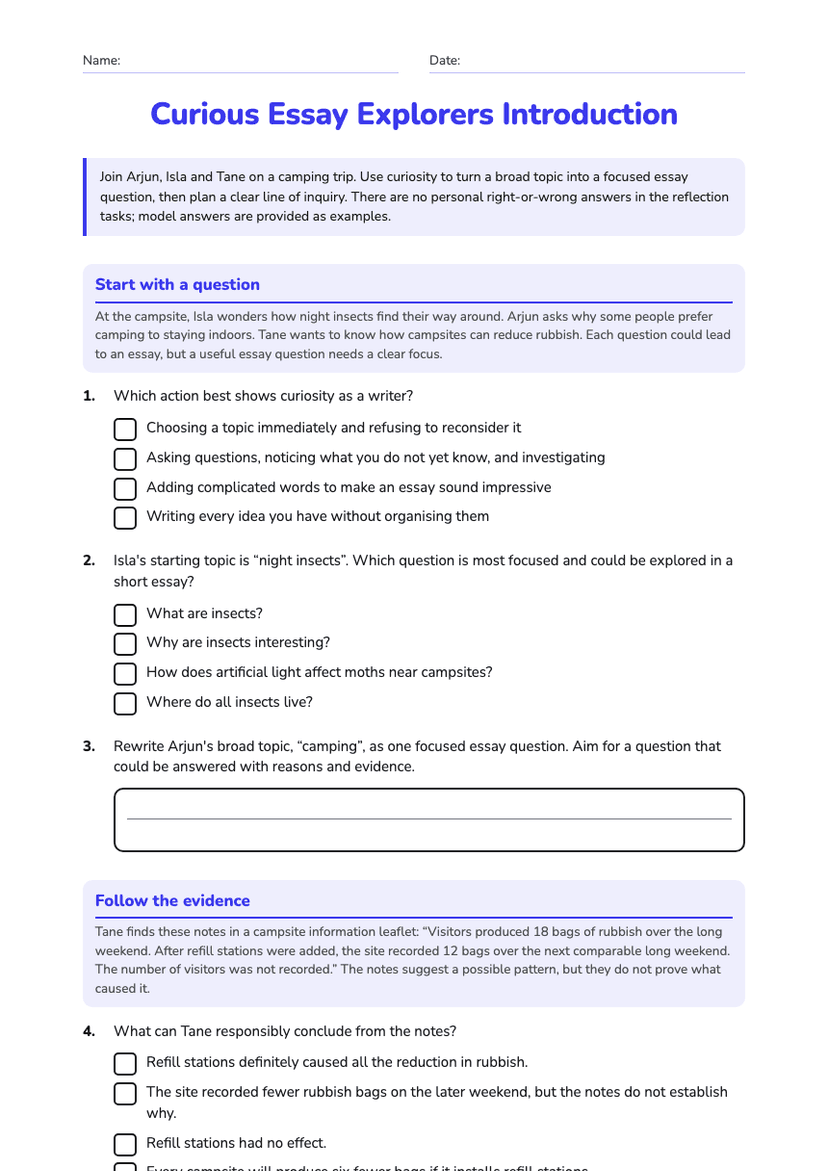
Curious Essay Explorers Introduction
Free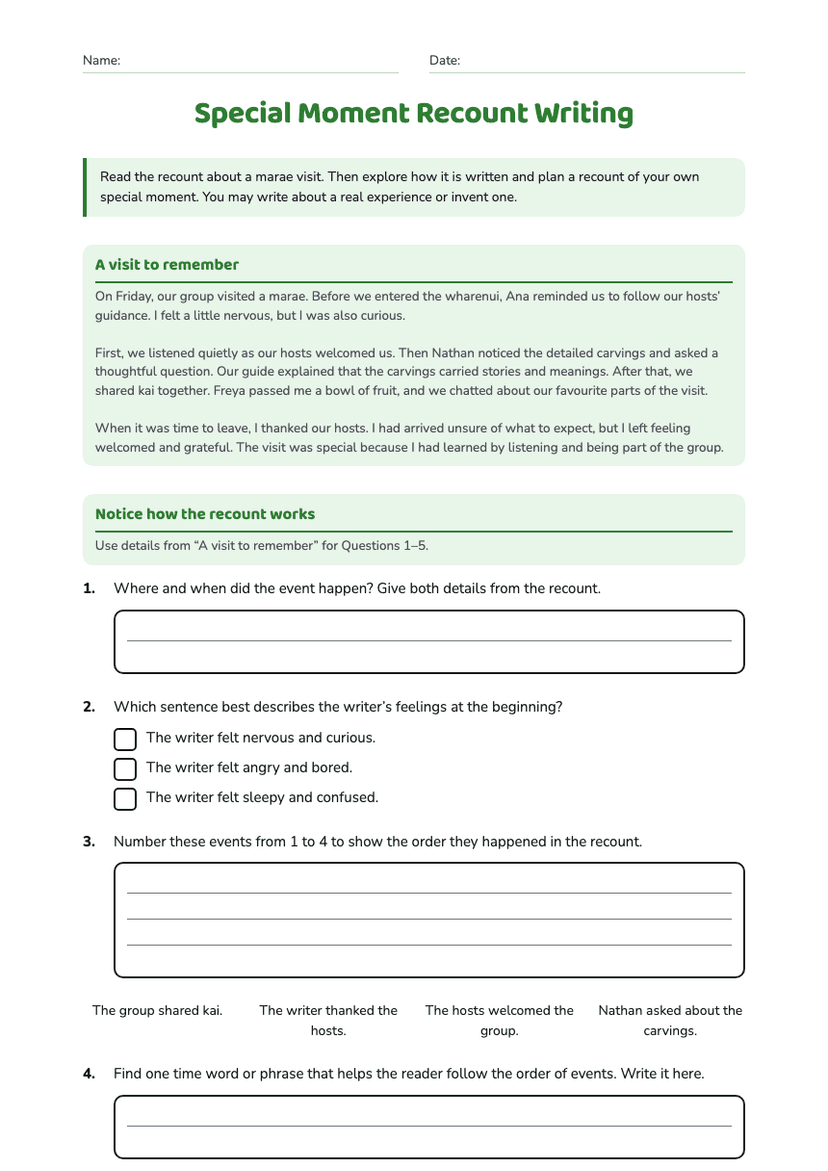
Special Moment Recount Writing
Free