NZ Ecosystems Climate Impact
A free science worksheet ready for your classroom. Open in Kuraplan to grab the print-ready PDF, customize it for your students, or generate a fresh version in seconds.
NZ Ecosystems Climate Impact
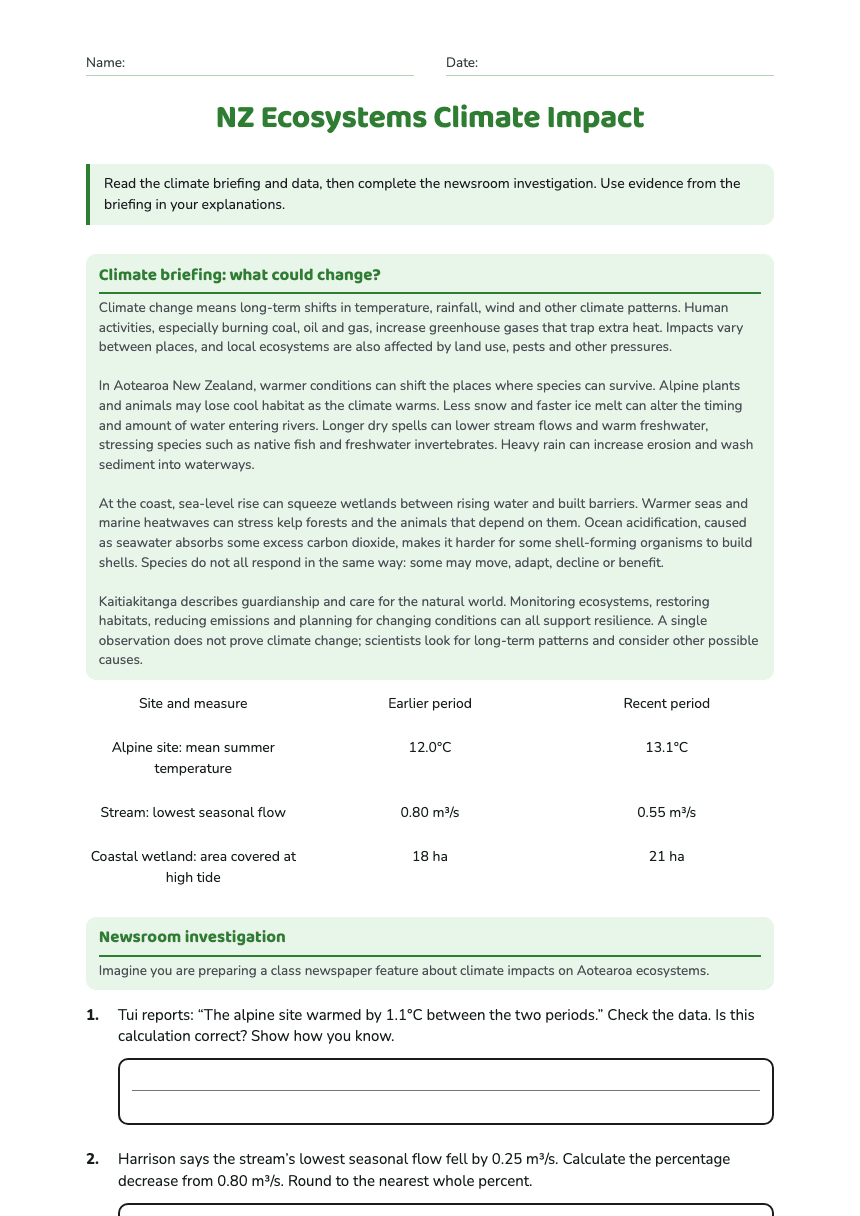
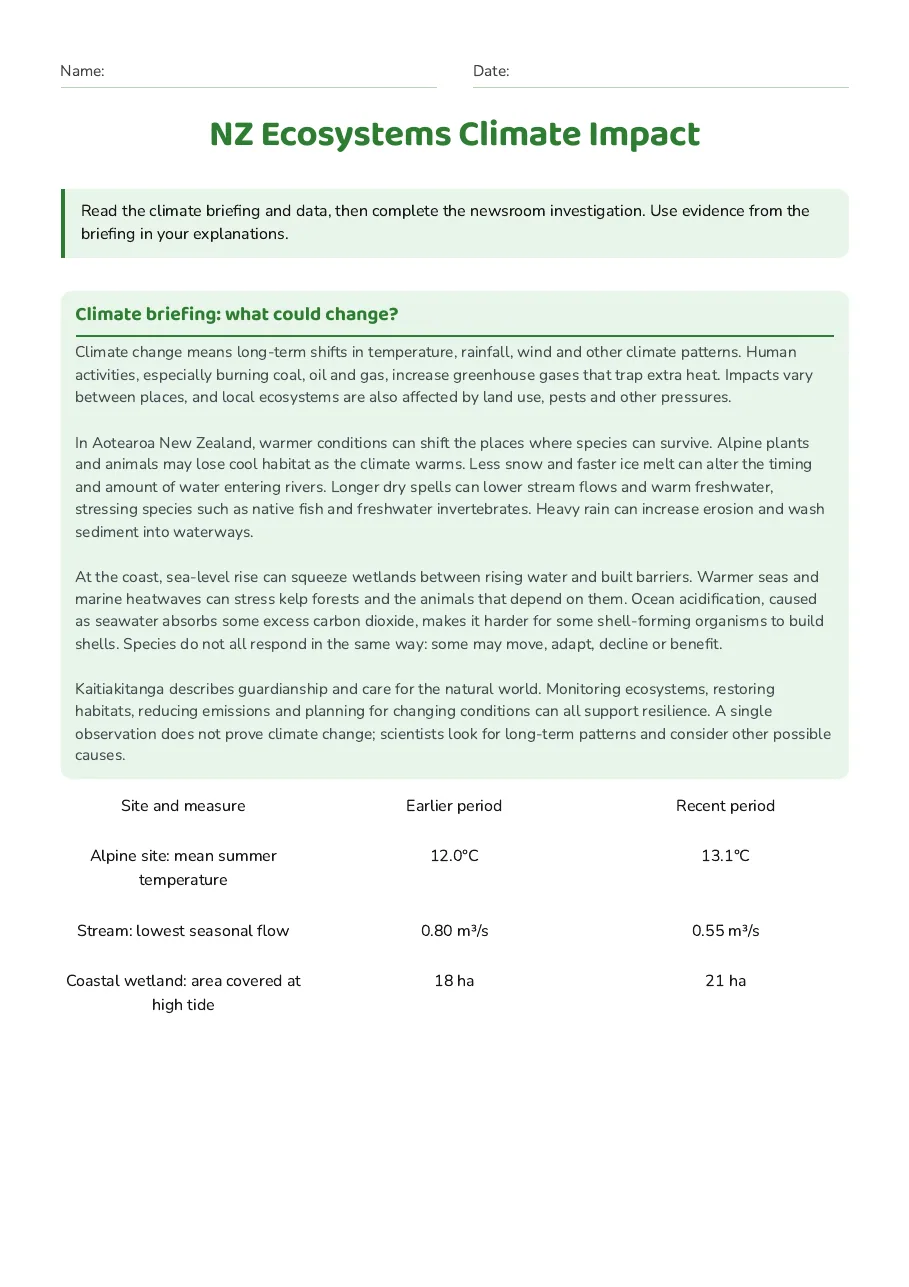
Climate briefing: what could change?
Climate change means long-term shifts in temperature, rainfall, wind and other climate patterns. Human activities, especially burning coal, oil and gas, increase greenhouse gases that trap extra heat. Impacts vary between places, and local ecosystems are also affected by land use, pests and other pressures. In Aotearoa New Zealand, warmer conditions can shift the places where species can survive. Alpine plants and animals may lose cool habitat as the climate warms. Less snow and faster ice melt can alter the timing and amount of water entering rivers. Longer dry spells can lower stream flows and warm freshwater, stressing species such as native fish and freshwater invertebrates. Heavy rain can increase erosion and wash sediment into waterways. At the coast, sea-level rise can squeeze wetlands between rising water and built barriers. Warmer seas and marine heatwaves can stress kelp forests and the animals that depend on them. Ocean acidification, caused as seawater absorbs some excess carbon dioxide, makes it harder for some shell-forming organisms to build shells. Species do not all respond in the same way: some may move, adapt, decline or benefit. Kaitiakitanga describes guardianship and care for the natural world. Monitoring ecosystems, restoring habitats, reducing emissions and planning for changing conditions can all support resilience. A single observation does not prove climate change; scientists look for long-term patterns and consider other possible causes.
Site and measure
Earlier period
Recent period
Alpine site: mean summer temperature
12.0°C
13.1°C
Stream: lowest seasonal flow
0.80 m³/s
0.55 m³/s
Coastal wetland: area covered at high tide
18 ha
21 ha
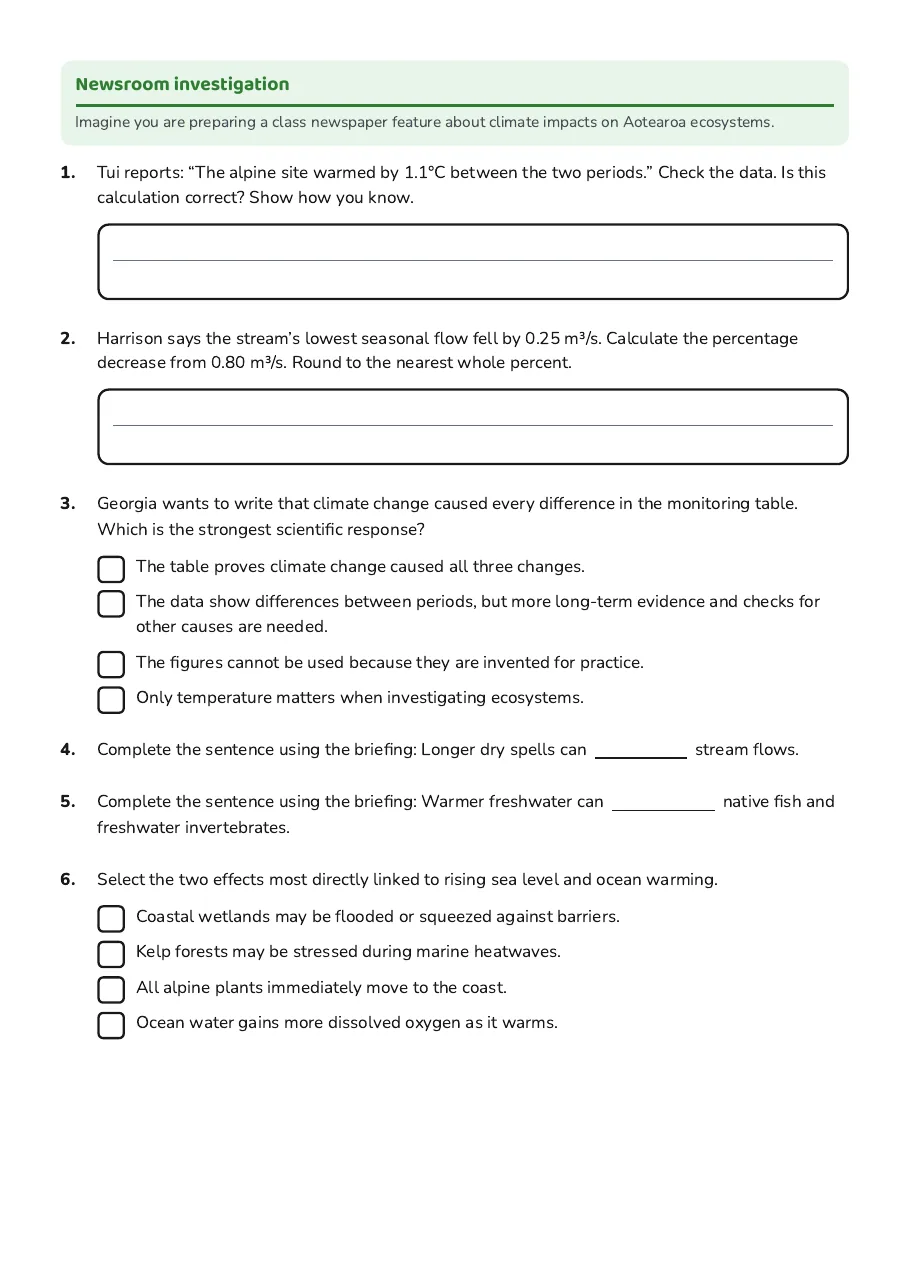
Newsroom investigation
Imagine you are preparing a class newspaper feature about climate impacts on Aotearoa ecosystems.
- The table proves climate change caused all three changes.
- The data show differences between periods, but more long-term evidence and checks for other causes are needed.
- The figures cannot be used because they are invented for practice.
- Only temperature matters when investigating ecosystems.
- Coastal wetlands may be flooded or squeezed against barriers.
- Kelp forests may be stressed during marine heatwaves.
- All alpine plants immediately move to the coast.
- Ocean water gains more dissolved oxygen as it warms.
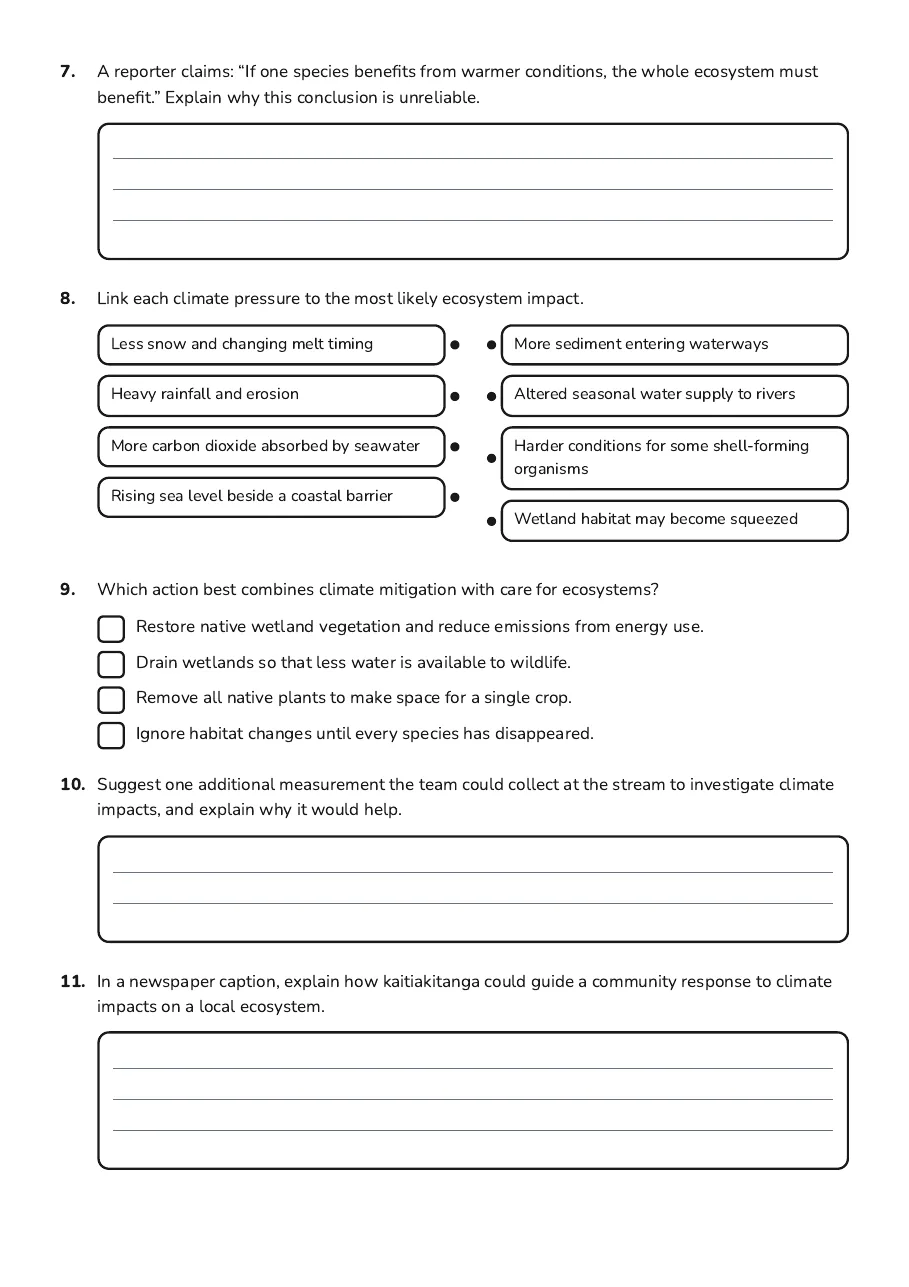
- Less snow and changing melt timing
- Heavy rainfall and erosion
- More carbon dioxide absorbed by seawater
- Rising sea level beside a coastal barrier
- More sediment entering waterways
- Altered seasonal water supply to rivers
- Harder conditions for some shell-forming organisms
- Wetland habitat may become squeezed
- Restore native wetland vegetation and reduce emissions from energy use.
- Drain wetlands so that less water is available to wildlife.
- Remove all native plants to make space for a single crop.
- Ignore habitat changes until every species has disappeared.
3 printable pages
Page 1
Page 2
Page 3
About This Worksheet
Free in Kuraplan
Sign up free, grab the PDF, and customize it for your class.
Print-Ready
Formatted for standard paper. Clean layout, easy to read.
AI-Generated
Created with Kuraplan's AI, designed for real classroom use.
For Teachers & Parents
Use in classrooms, for homework, tutoring, or homeschool.
Need a custom version of this worksheet?
Kuraplan's AI generates custom worksheets in seconds — differentiated for every learner, aligned to your curriculum.
Generate Custom Worksheets — FreeMore Science Worksheets
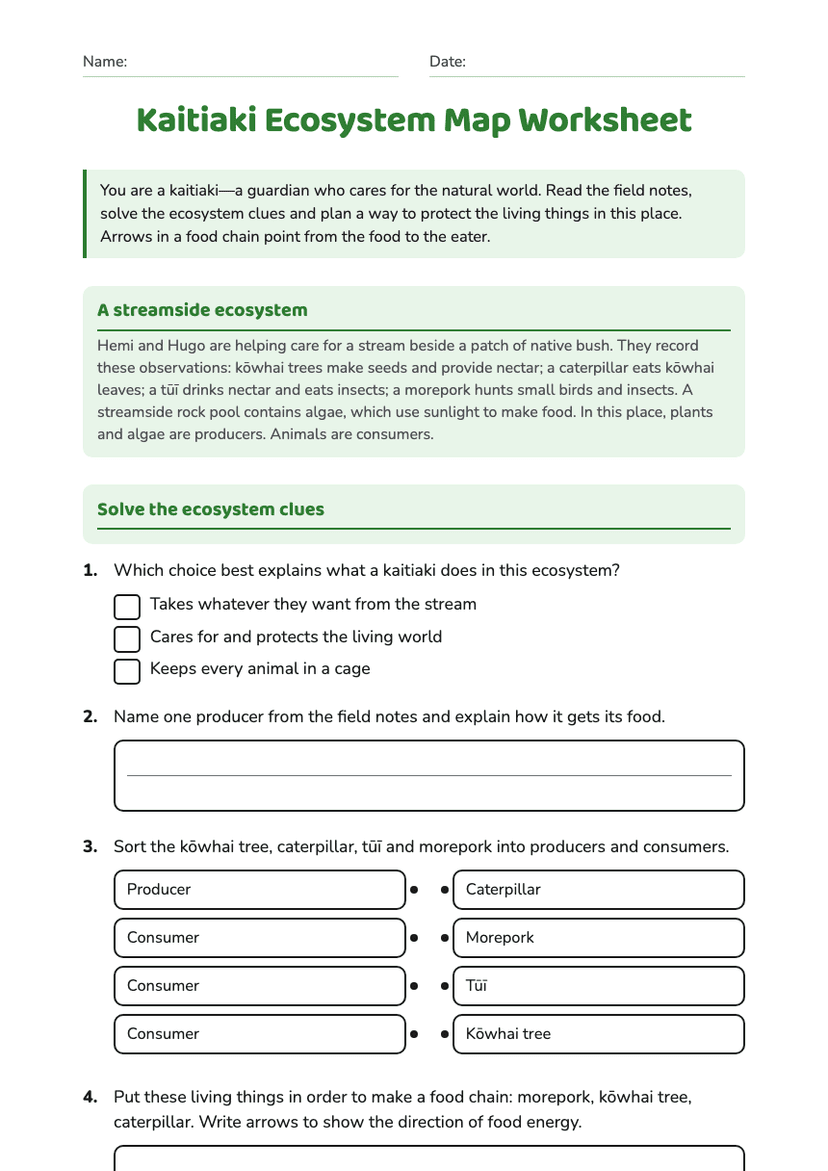
Kaitiaki Ecosystem Map Worksheet
Free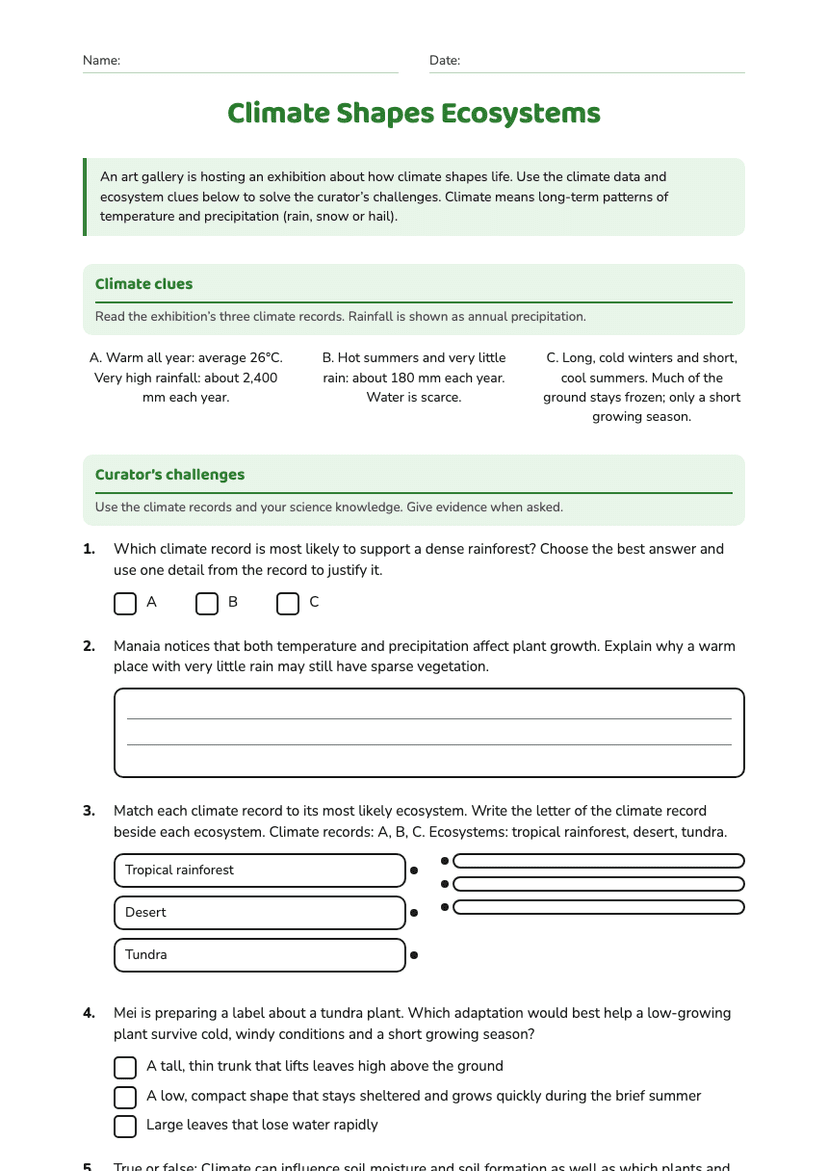
Climate Shapes Ecosystems
Free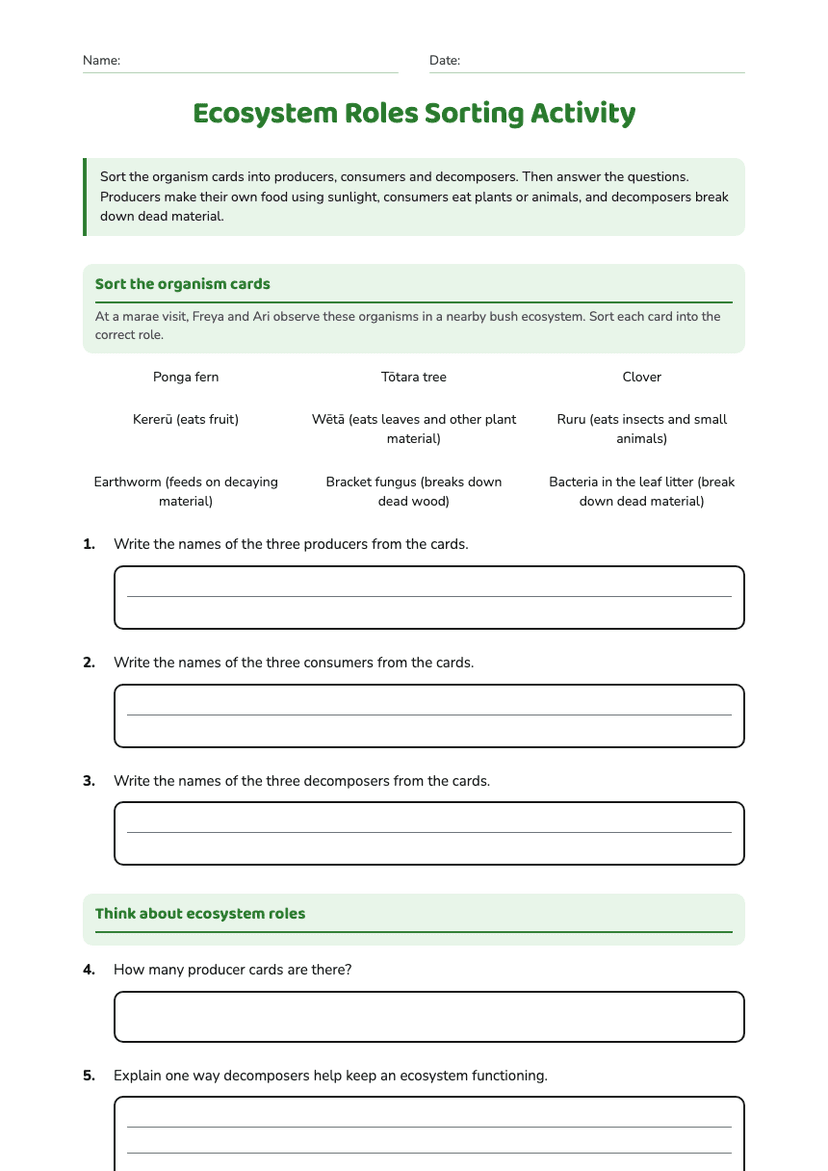
Ecosystem Roles Sorting Activity
Free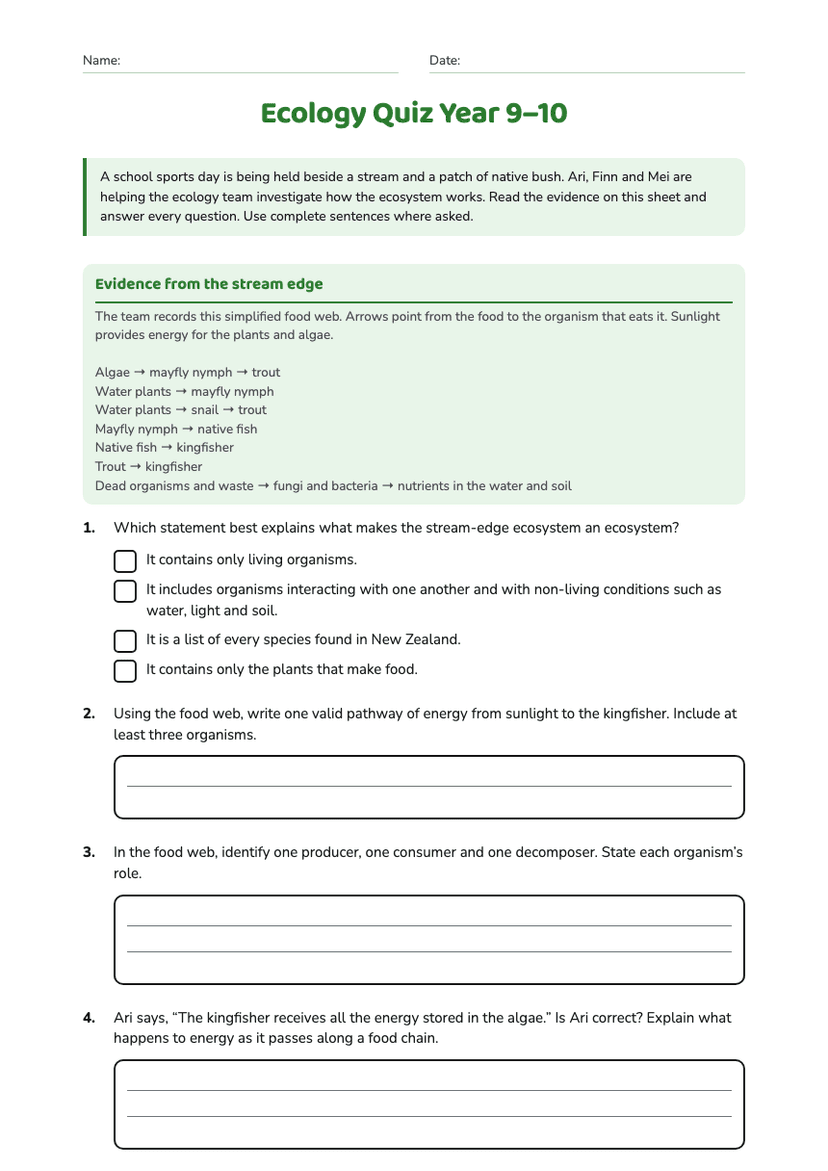
Ecology Quiz Year 9–10
Free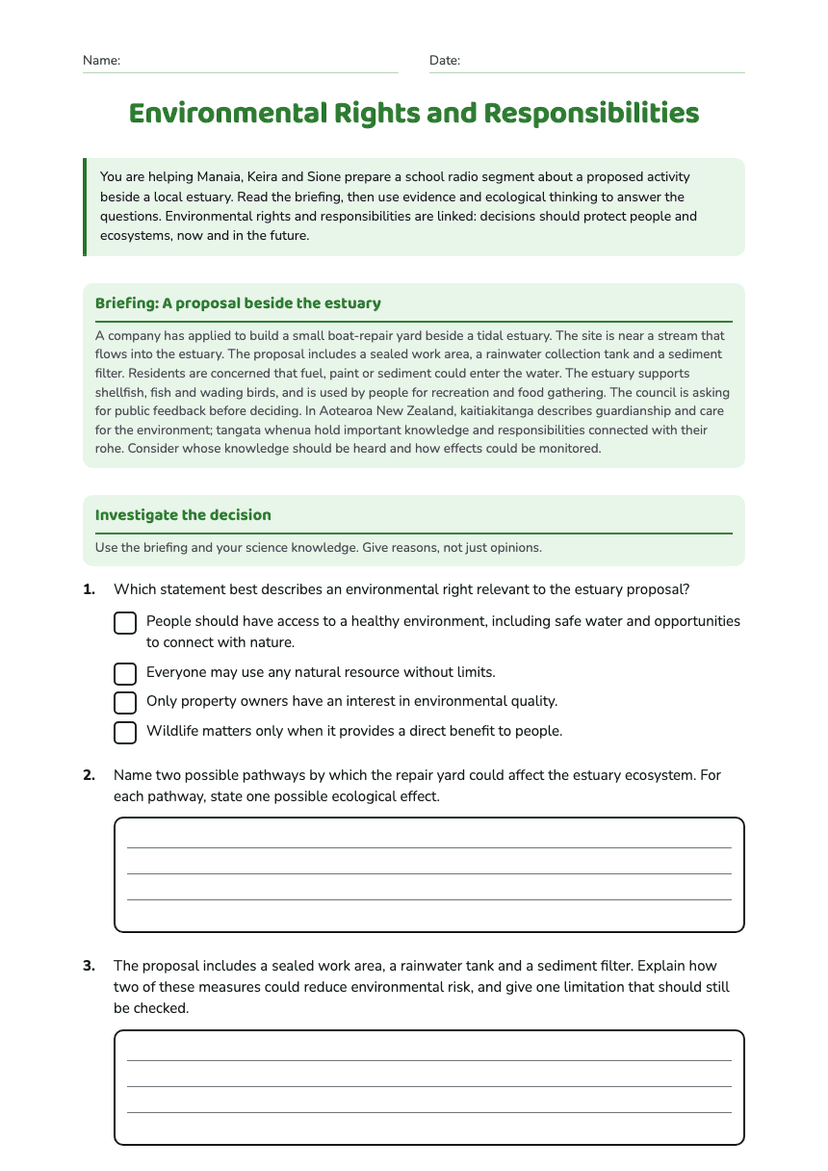
Environmental Rights and Responsibilities
Free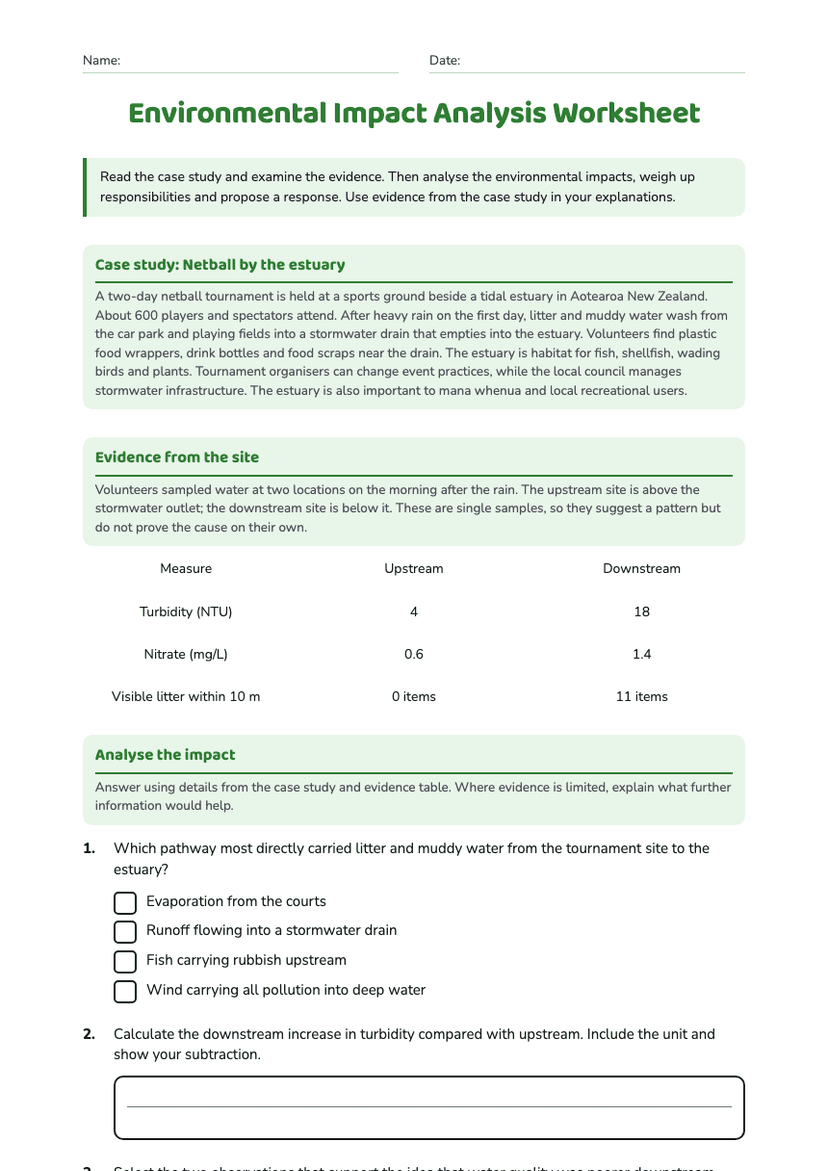
Environmental Impact Analysis Worksheet
Free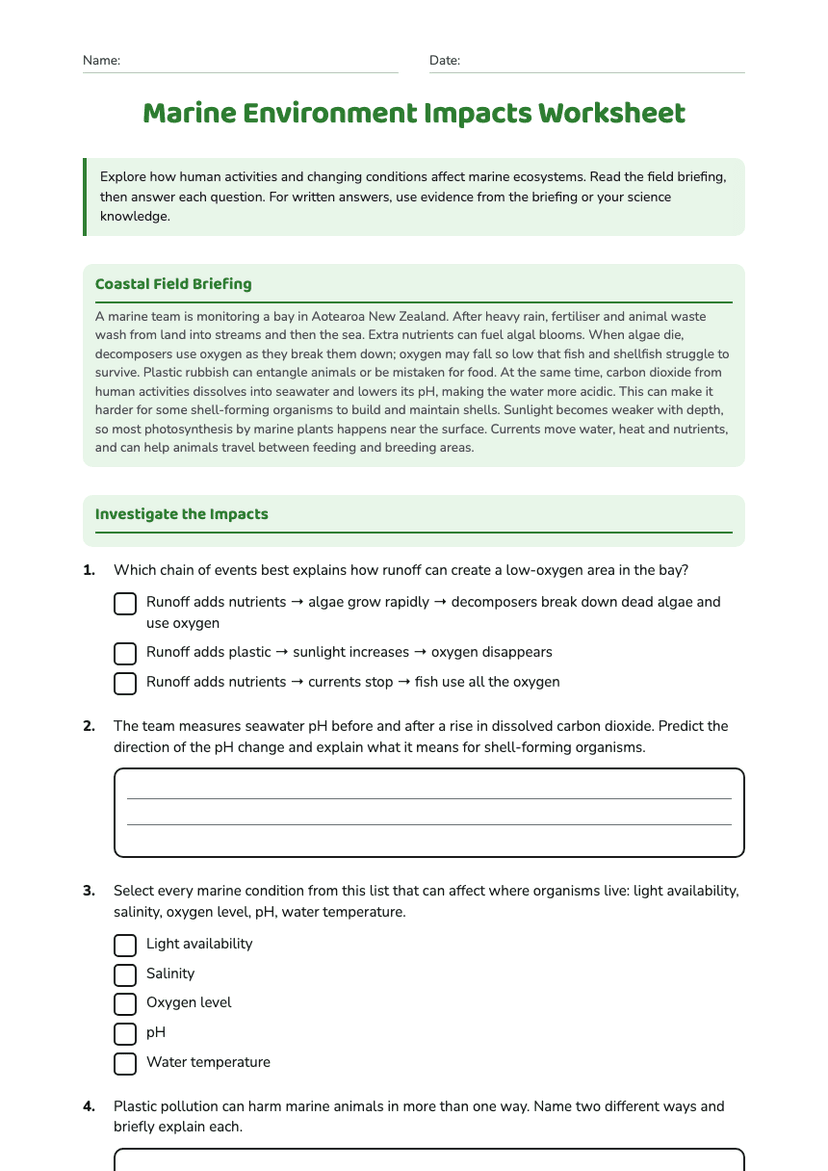
Marine Environment Impacts Worksheet
Free