NZ Ecosystems Climate Impact
A free science worksheet ready for your classroom. Open in Kuraplan to grab the print-ready PDF, customize it for your students, or generate a fresh version in seconds.
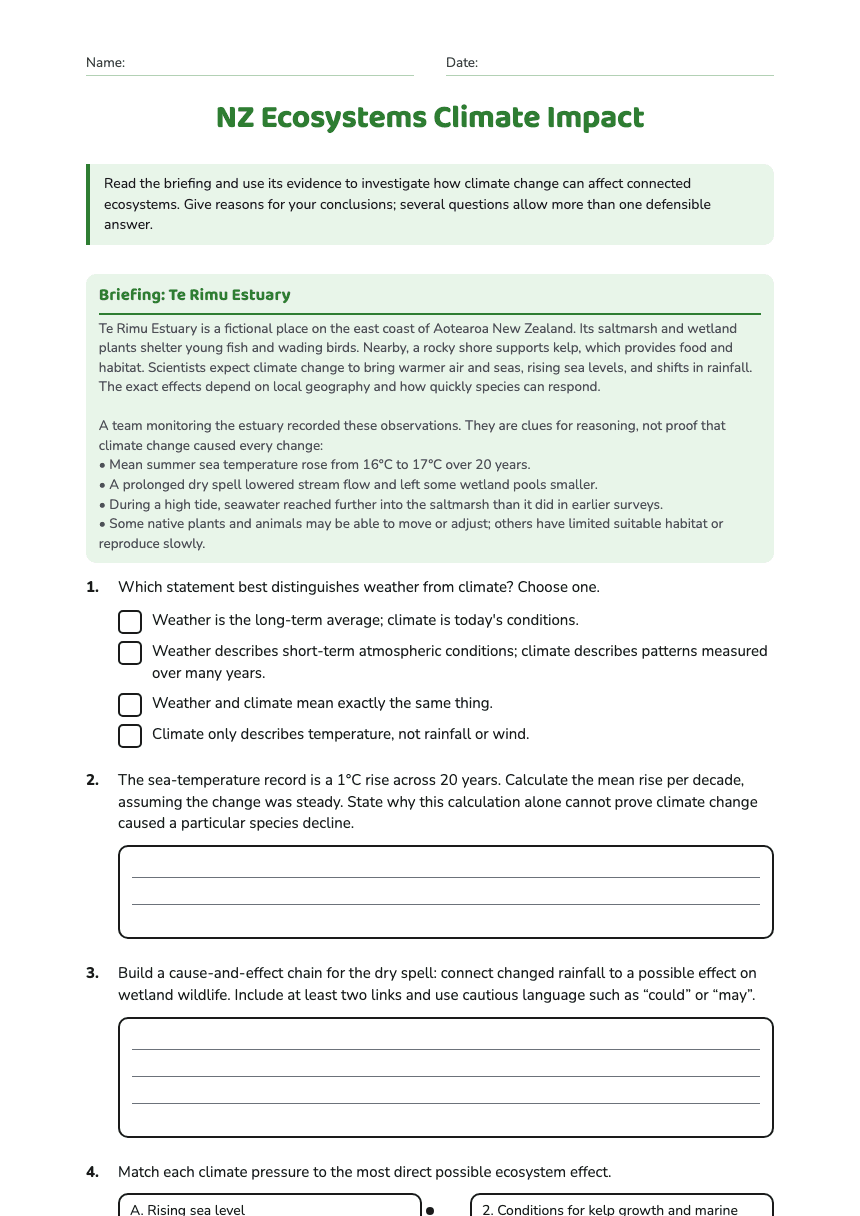
NZ Ecosystems Climate Impact
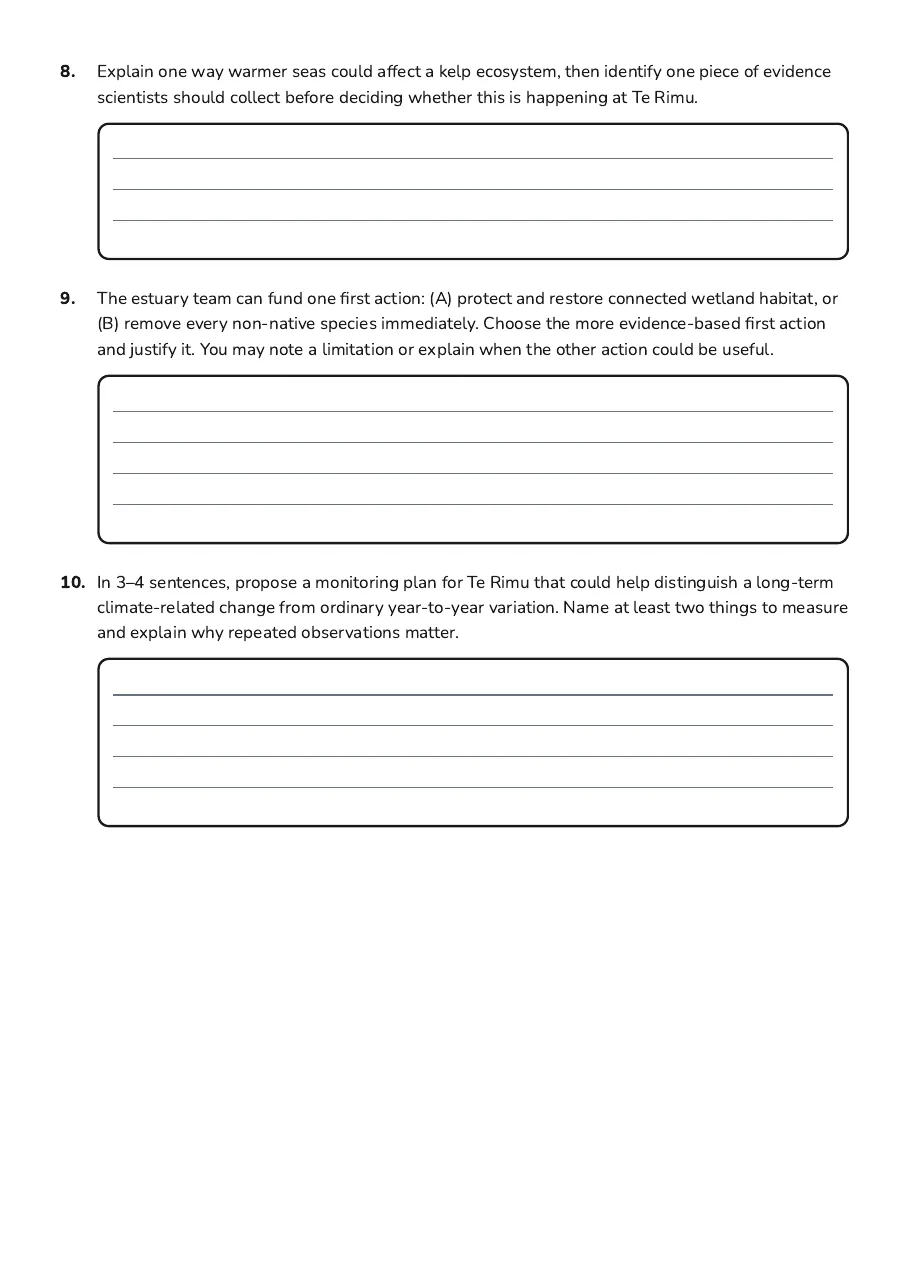
Briefing: Te Rimu Estuary
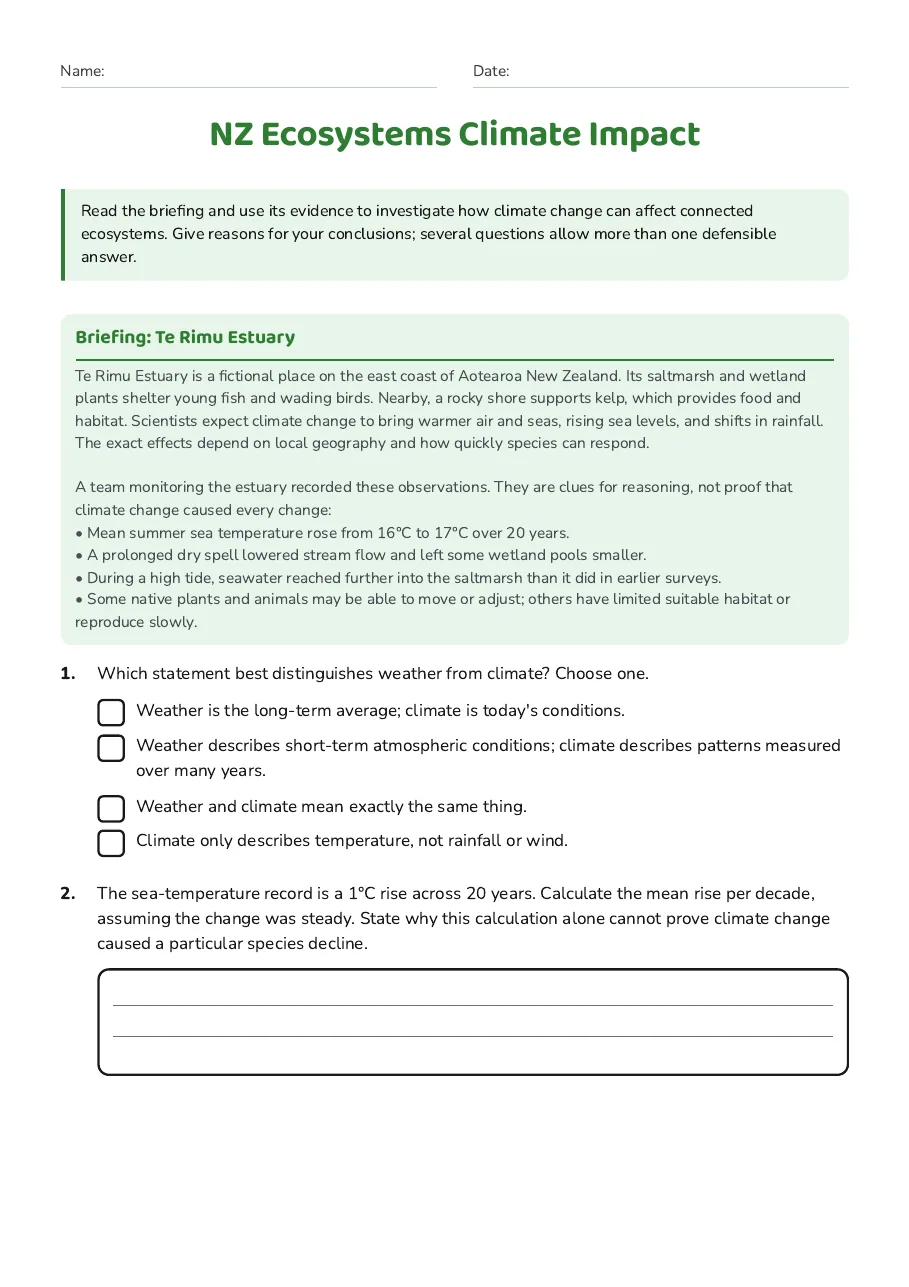
Te Rimu Estuary is a fictional place on the east coast of Aotearoa New Zealand. Its saltmarsh and wetland plants shelter young fish and wading birds. Nearby, a rocky shore supports kelp, which provides food and habitat. Scientists expect climate change to bring warmer air and seas, rising sea levels, and shifts in rainfall. The exact effects depend on local geography and how quickly species can respond. A team monitoring the estuary recorded these observations. They are clues for reasoning, not proof that climate change caused every change: • Mean summer sea temperature rose from 16°C to 17°C over 20 years. • A prolonged dry spell lowered stream flow and left some wetland pools smaller. • During a high tide, seawater reached further into the saltmarsh than it did in earlier surveys. • Some native plants and animals may be able to move or adjust; others have limited suitable habitat or reproduce slowly.
- Weather is the long-term average; climate is today's conditions.
- Weather describes short-term atmospheric conditions; climate describes patterns measured over many years.
- Weather and climate mean exactly the same thing.
- Climate only describes temperature, not rainfall or wind.
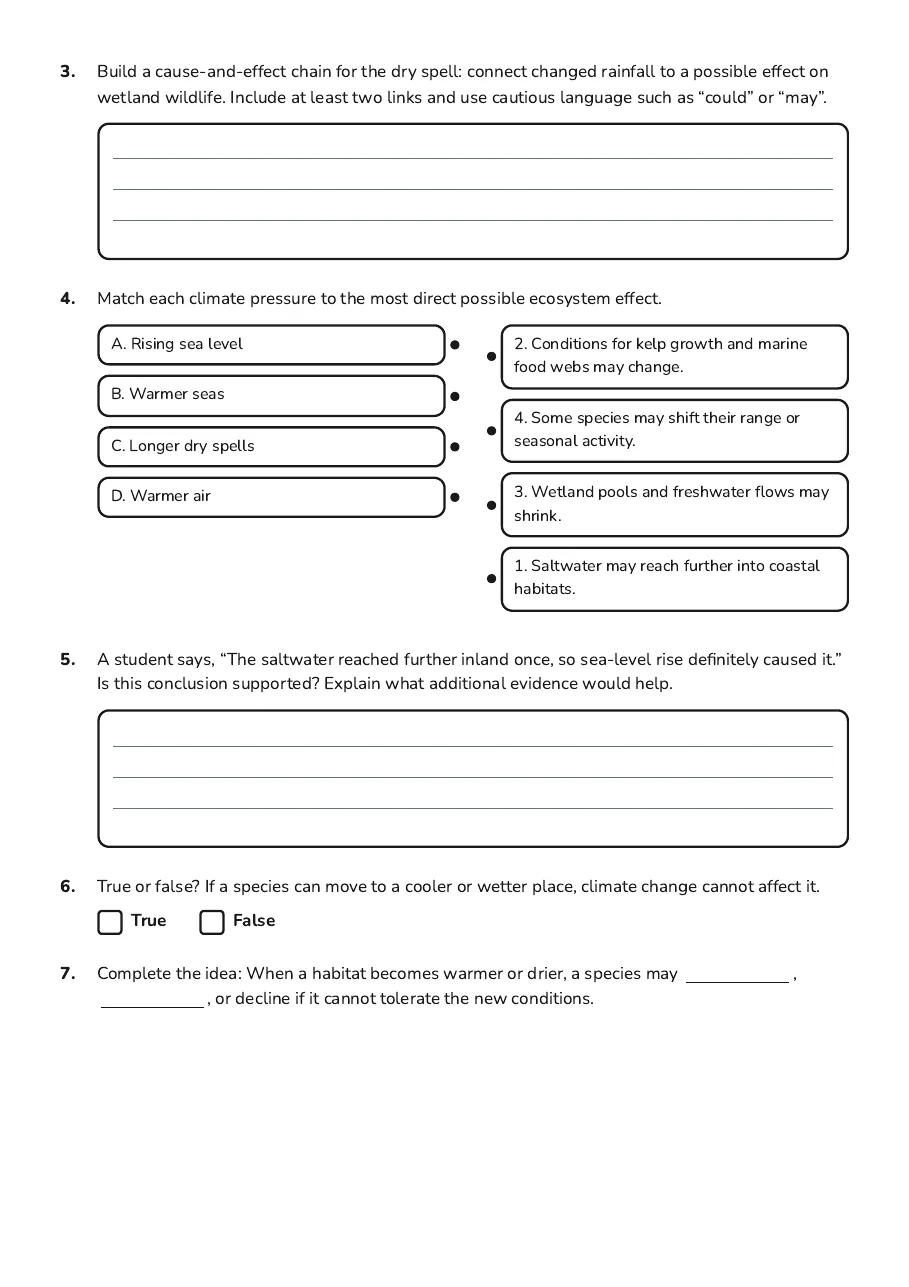
- A. Rising sea level
- B. Warmer seas
- C. Longer dry spells
- D. Warmer air
- 2. Conditions for kelp growth and marine food webs may change.
- 4. Some species may shift their range or seasonal activity.
- 3. Wetland pools and freshwater flows may shrink.
- 1. Saltwater may reach further into coastal habitats.
3 printable pages
Page 1
Page 2
Page 3
About This Worksheet
Free in Kuraplan
Sign up free, grab the PDF, and customize it for your class.
Print-Ready
Formatted for standard paper. Clean layout, easy to read.
AI-Generated
Created with Kuraplan's AI, designed for real classroom use.
For Teachers & Parents
Use in classrooms, for homework, tutoring, or homeschool.
Need a custom version of this worksheet?
Kuraplan's AI generates custom worksheets in seconds — differentiated for every learner, aligned to your curriculum.
Generate Custom Worksheets — FreeMore Science Worksheets
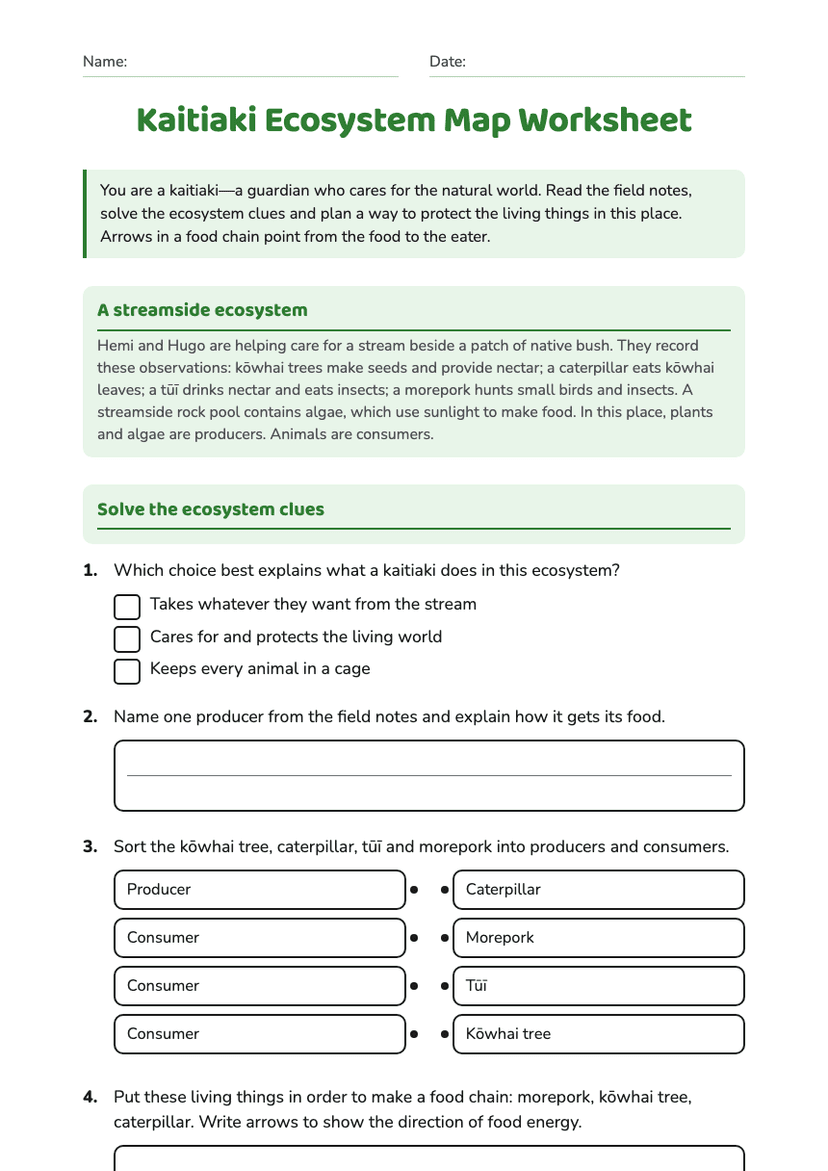
Kaitiaki Ecosystem Map Worksheet
Free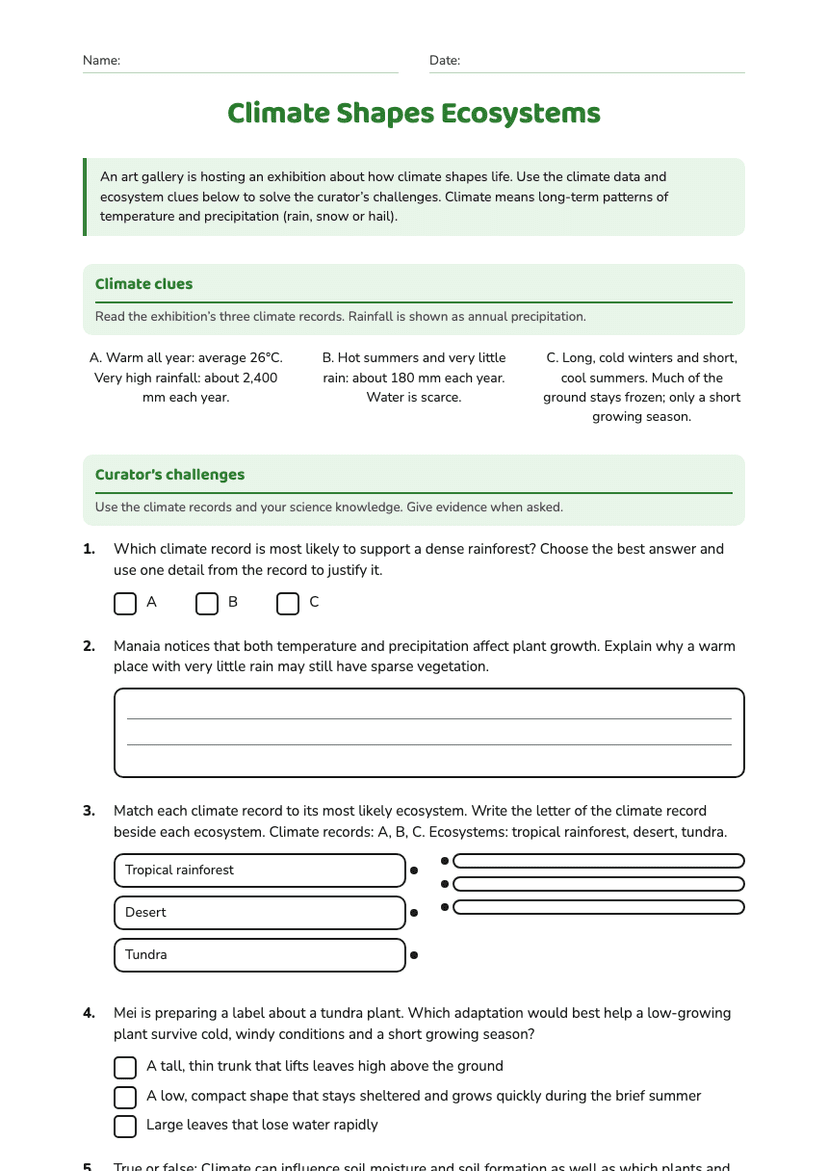
Climate Shapes Ecosystems
Free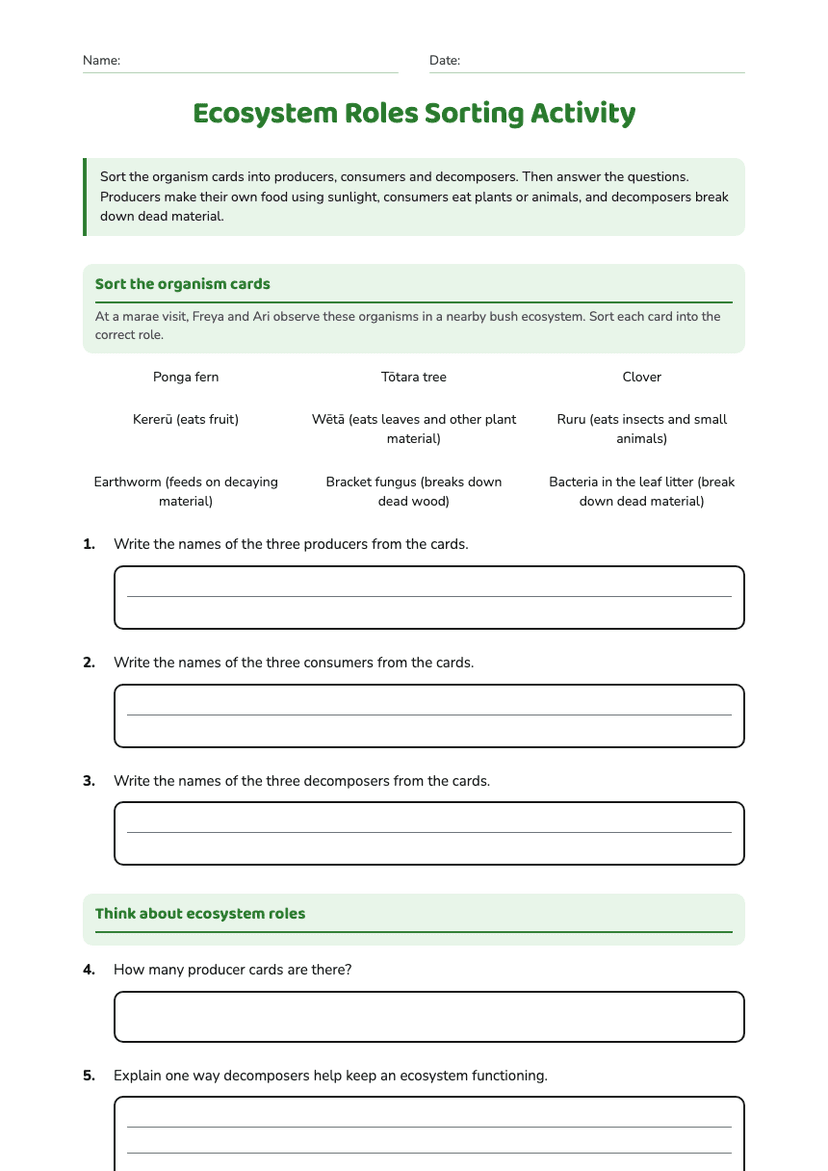
Ecosystem Roles Sorting Activity
Free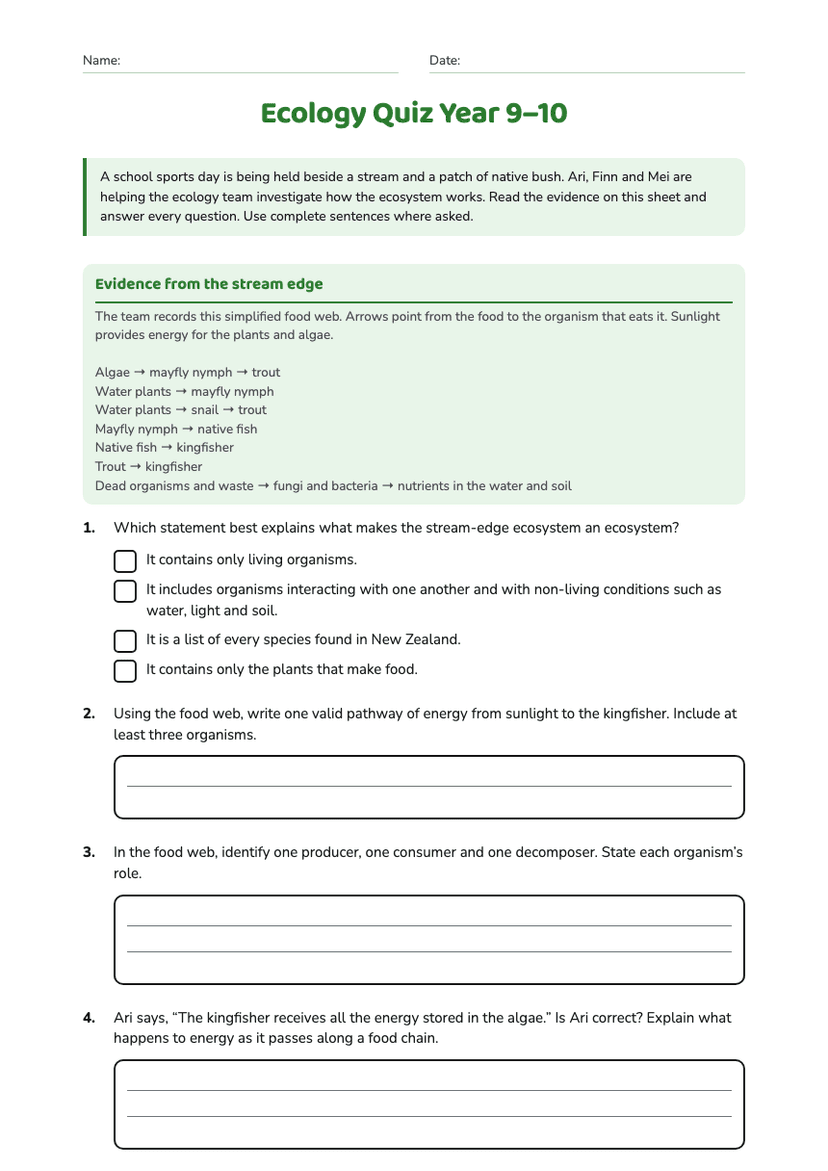
Ecology Quiz Year 9–10
Free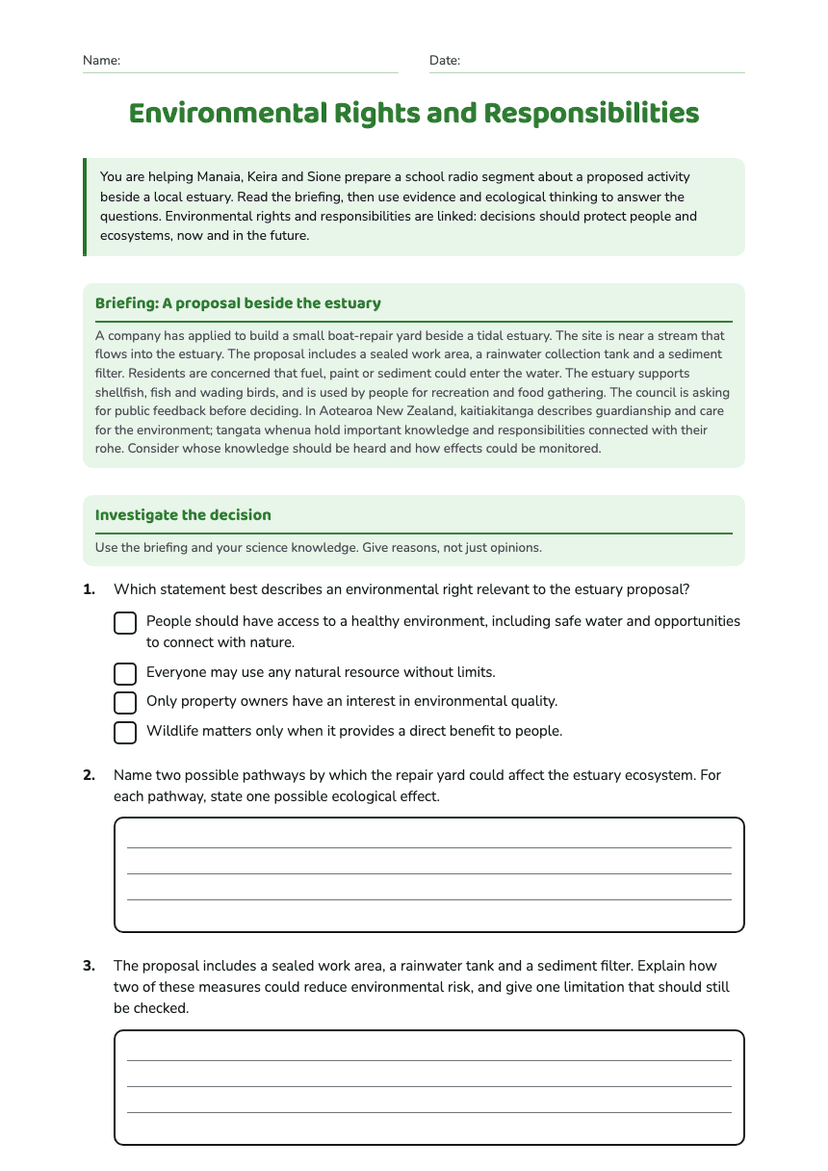
Environmental Rights and Responsibilities
Free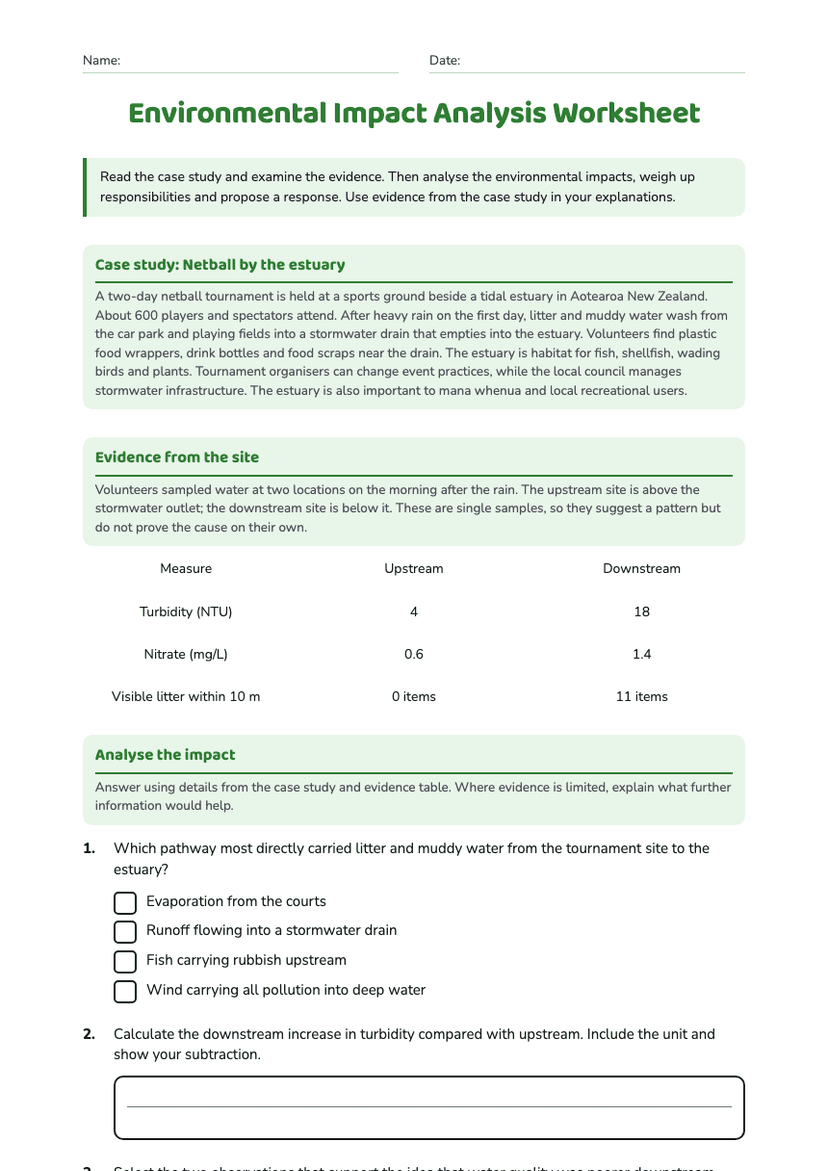
Environmental Impact Analysis Worksheet
Free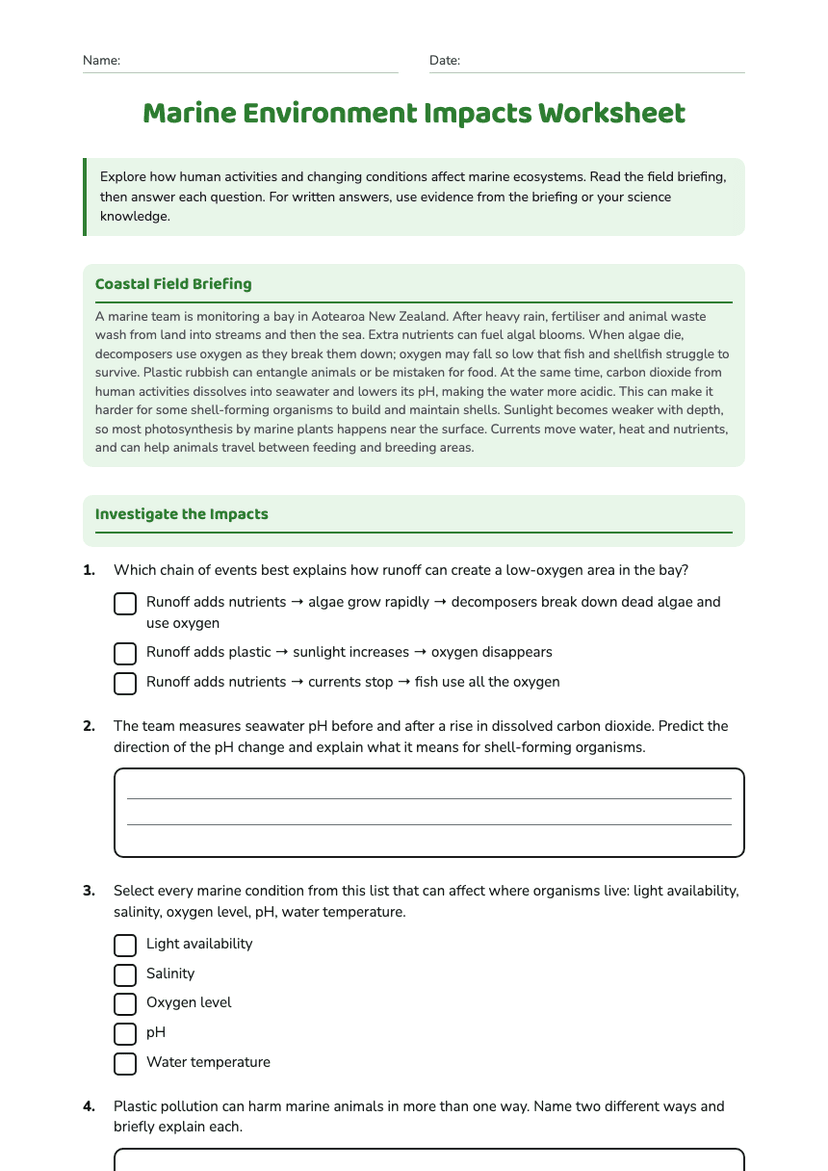
Marine Environment Impacts Worksheet
Free