Onion and Cheek Cells
A free science worksheet ready for your classroom. Open in Kuraplan to grab the print-ready PDF, customize it for your students, or generate a fresh version in seconds.
Onion and Cheek Cells
Field notes
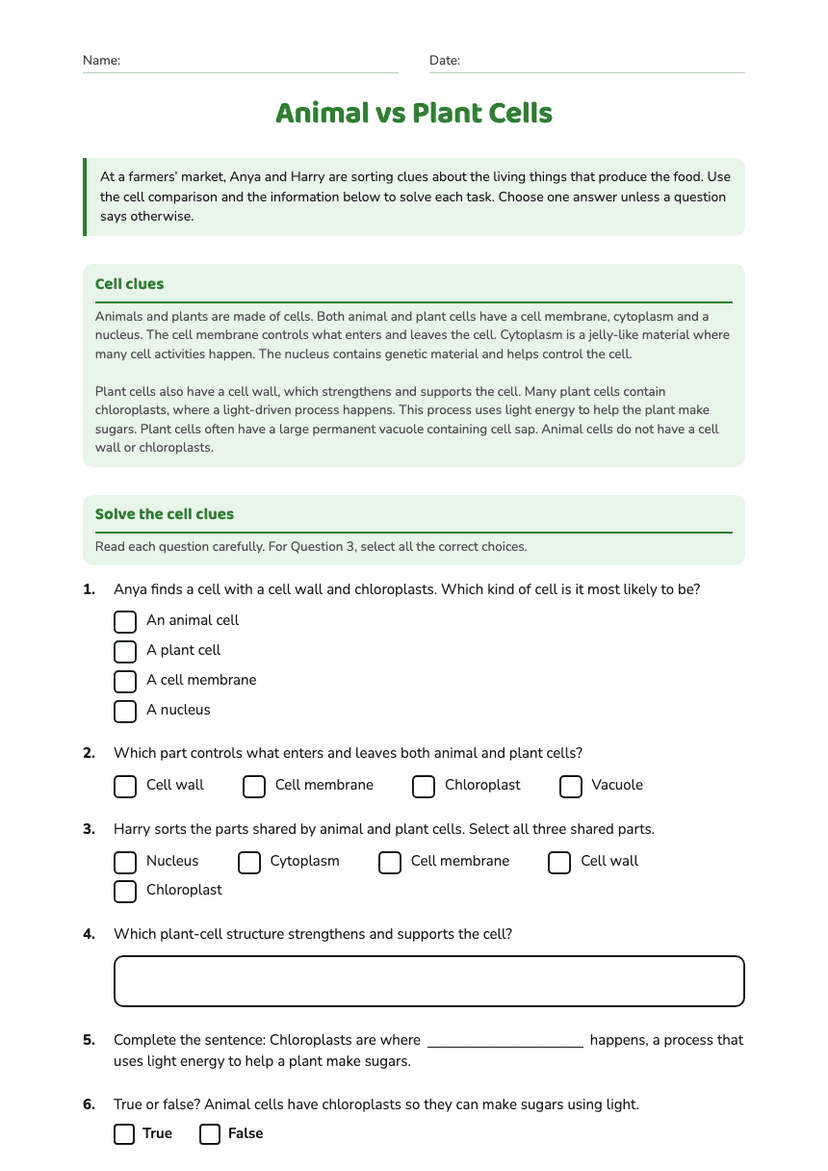
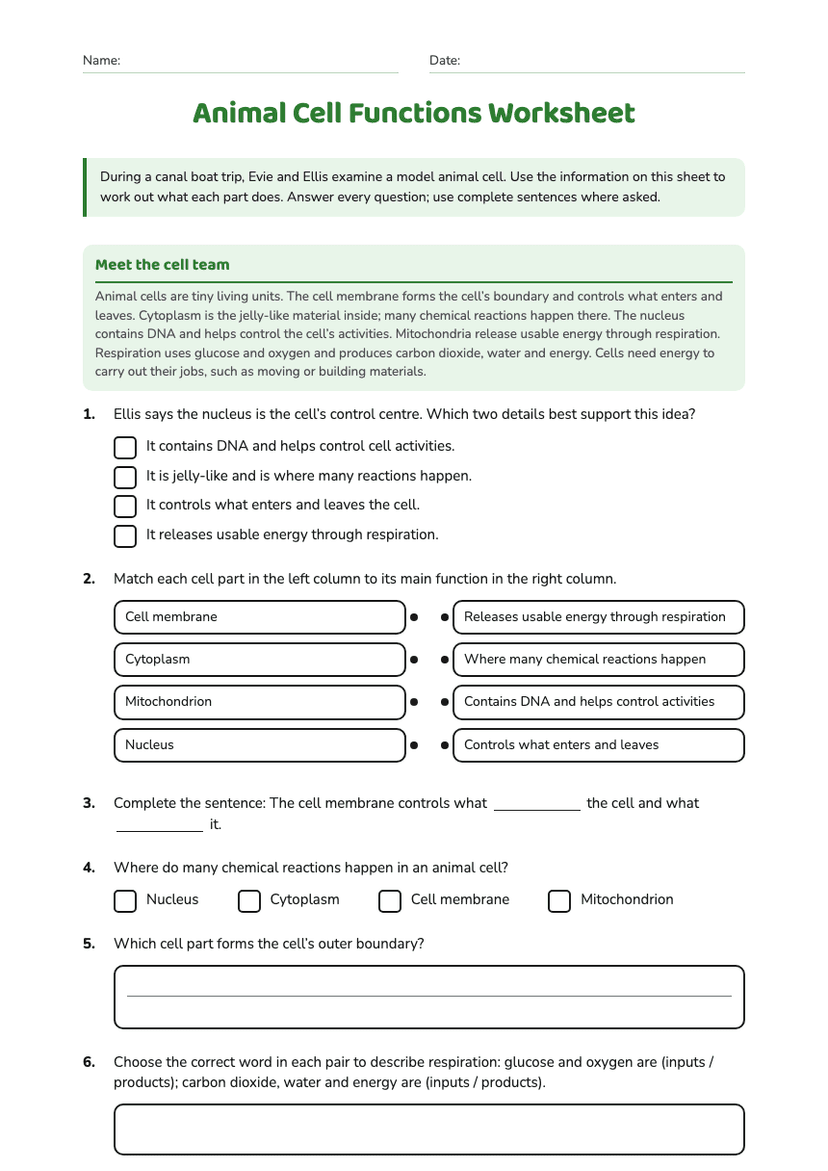
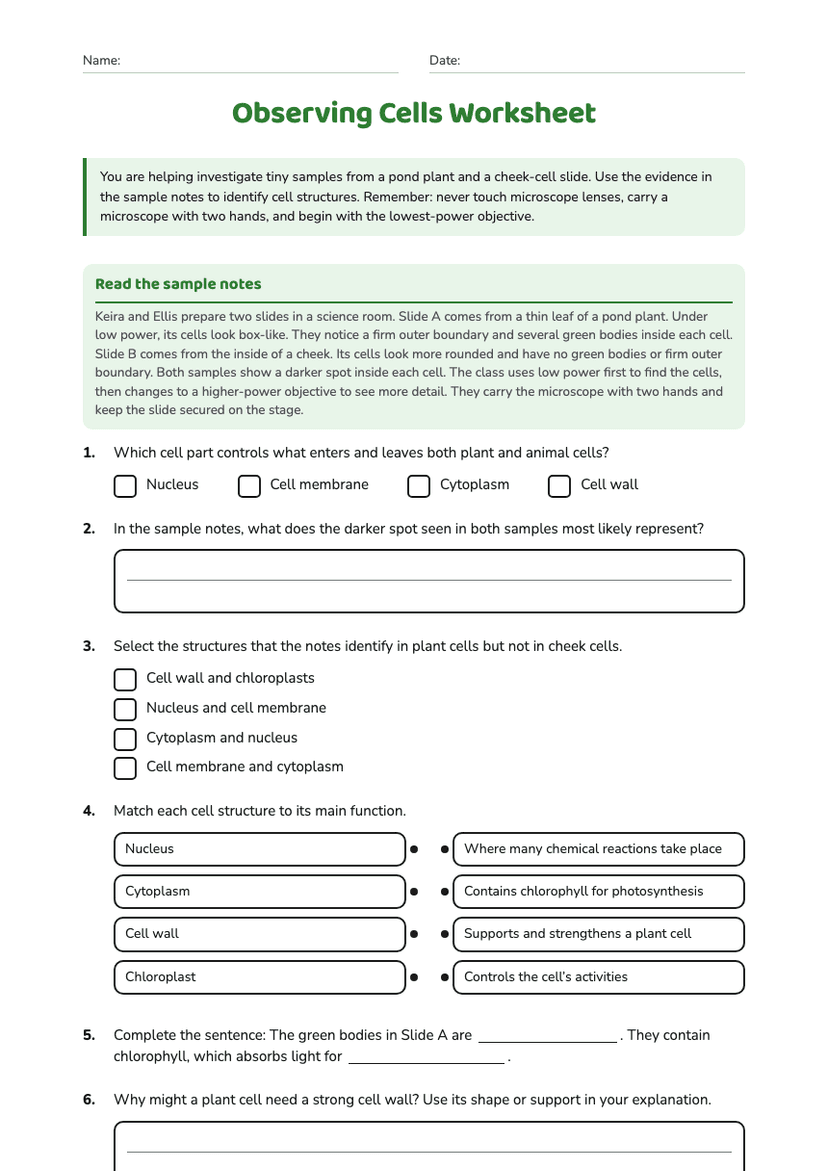
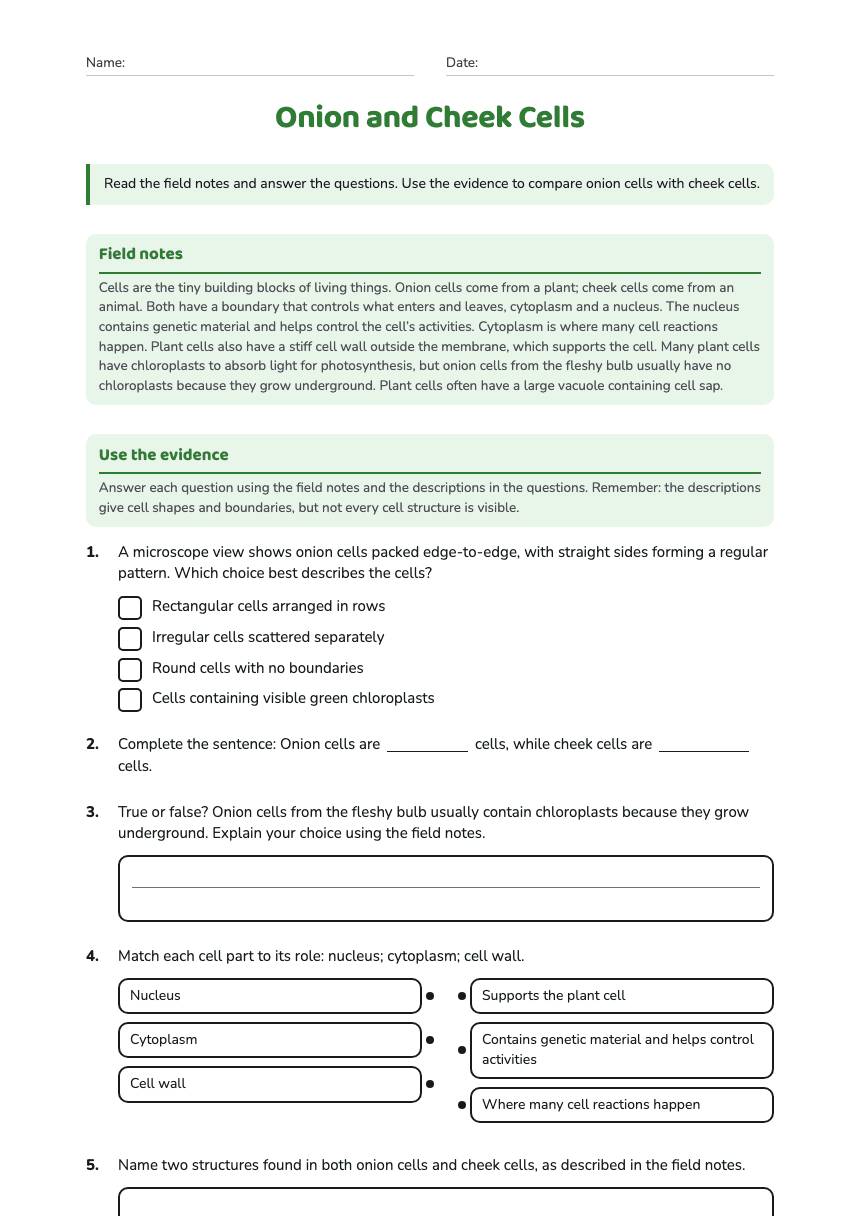
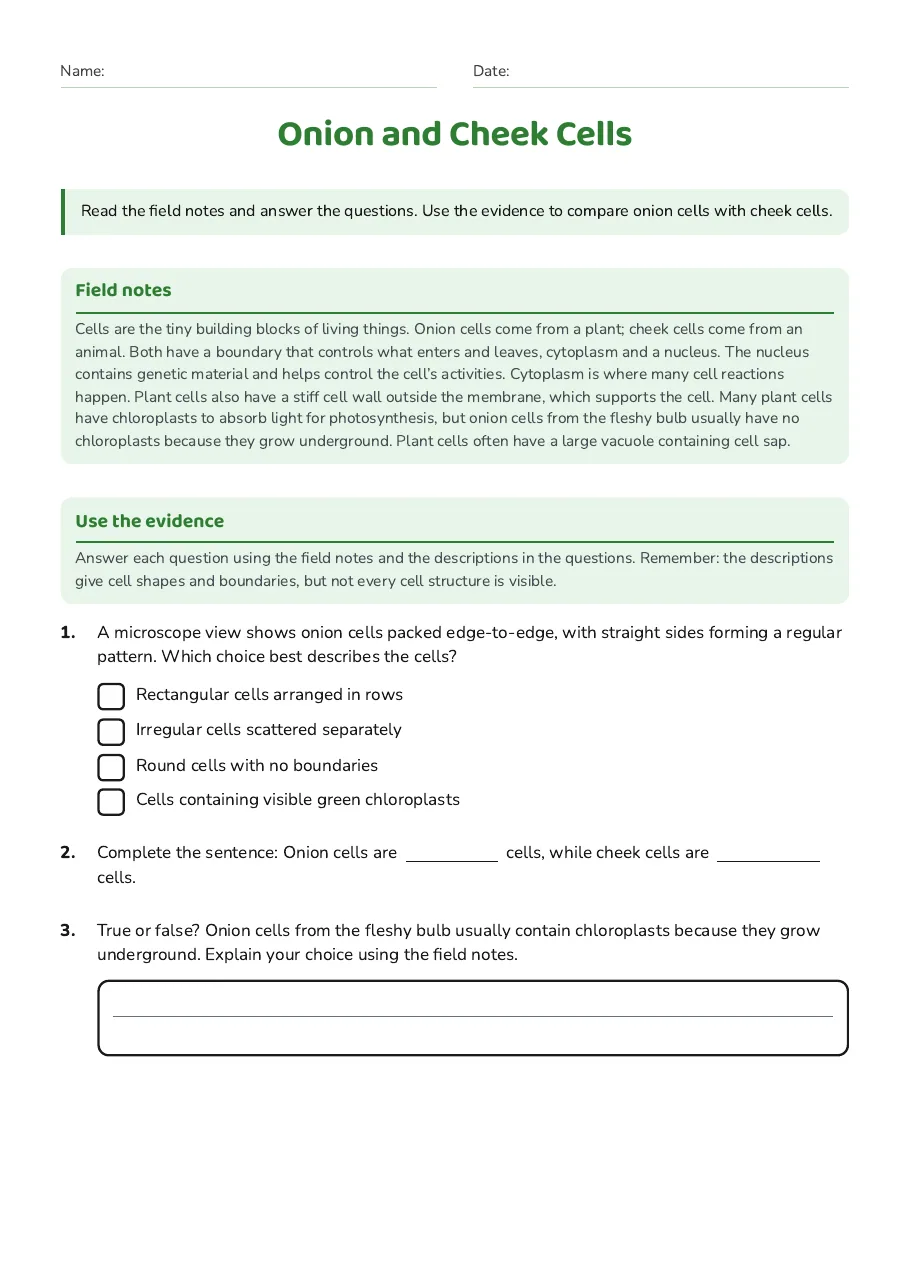
Cells are the tiny building blocks of living things. Onion cells come from a plant; cheek cells come from an animal. Both have a boundary that controls what enters and leaves, cytoplasm and a nucleus. The nucleus contains genetic material and helps control the cell’s activities. Cytoplasm is where many cell reactions happen. Plant cells also have a stiff cell wall outside the membrane, which supports the cell. Many plant cells have chloroplasts to absorb light for photosynthesis, but onion cells from the fleshy bulb usually have no chloroplasts because they grow underground. Plant cells often have a large vacuole containing cell sap.
Use the evidence
Answer each question using the field notes and the descriptions in the questions. Remember: the descriptions give cell shapes and boundaries, but not every cell structure is visible.
- Rectangular cells arranged in rows
- Irregular cells scattered separately
- Round cells with no boundaries
- Cells containing visible green chloroplasts
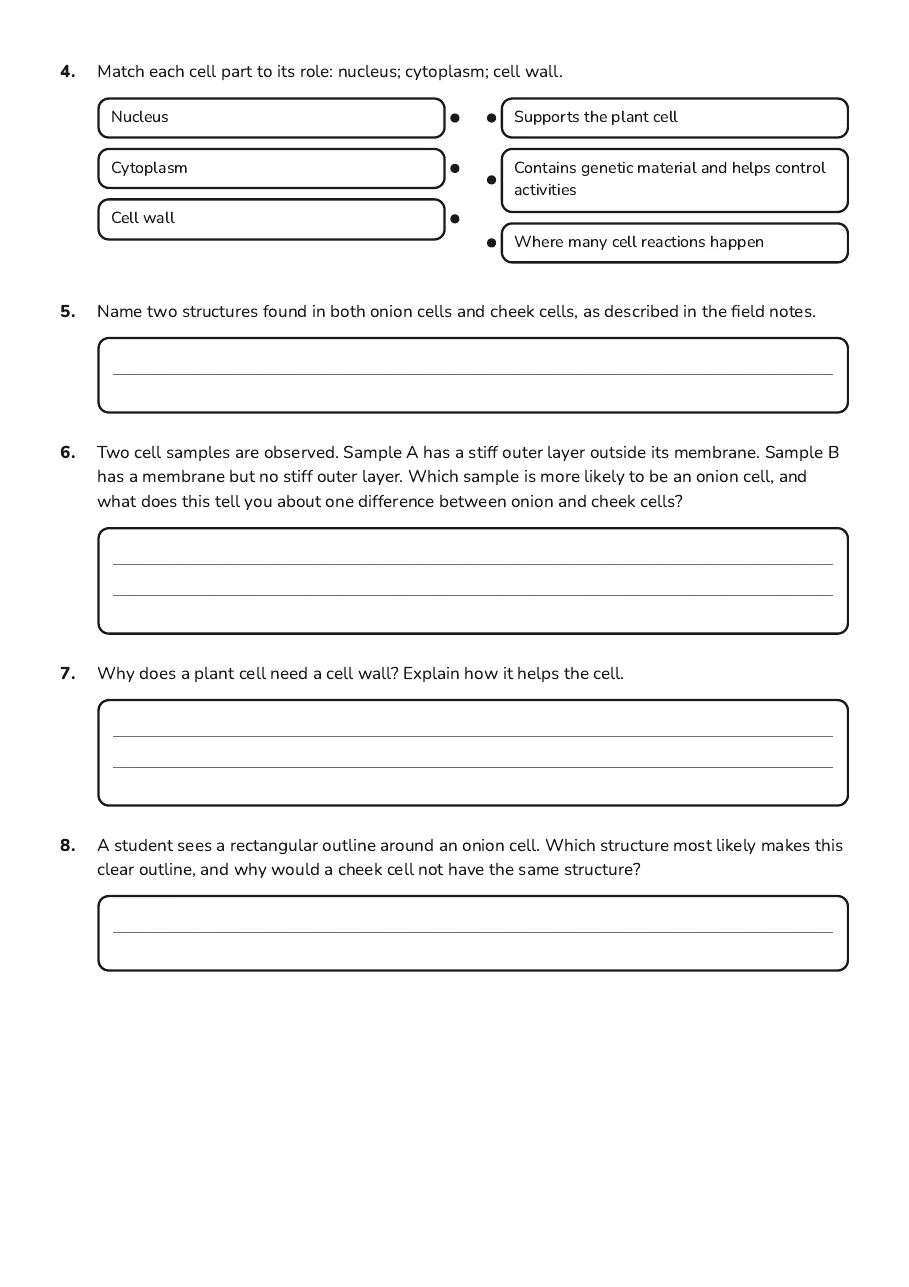
- Nucleus
- Cytoplasm
- Cell wall
- Supports the plant cell
- Contains genetic material and helps control activities
- Where many cell reactions happen
3 printable pages
Page 1
Page 2

Page 3
About This Worksheet
Free in Kuraplan
Sign up free, grab the PDF, and customize it for your class.
Print-Ready
Formatted for standard paper. Clean layout, easy to read.
AI-Generated
Created with Kuraplan's AI, designed for real classroom use.
For Teachers & Parents
Use in classrooms, for homework, tutoring, or homeschool.
Need a custom version of this worksheet?
Kuraplan's AI generates custom worksheets in seconds — differentiated for every learner, aligned to your curriculum.
Generate Custom Worksheets — Free