Personal Perspective Reflective Writing
A free english worksheet ready for your classroom. Open in Kuraplan to grab the print-ready PDF, customize it for your students, or generate a fresh version in seconds.
Personal Perspective Reflective Writing
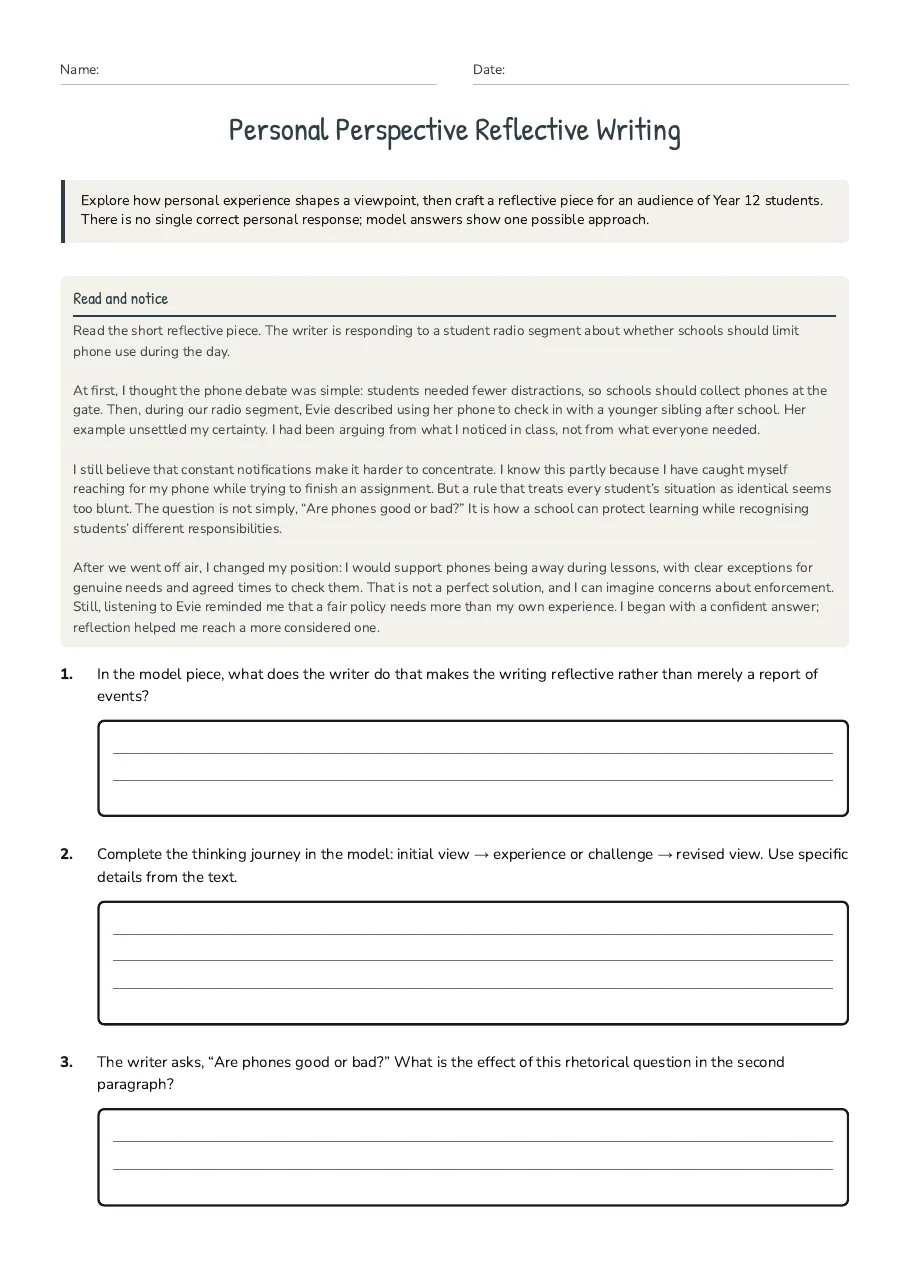
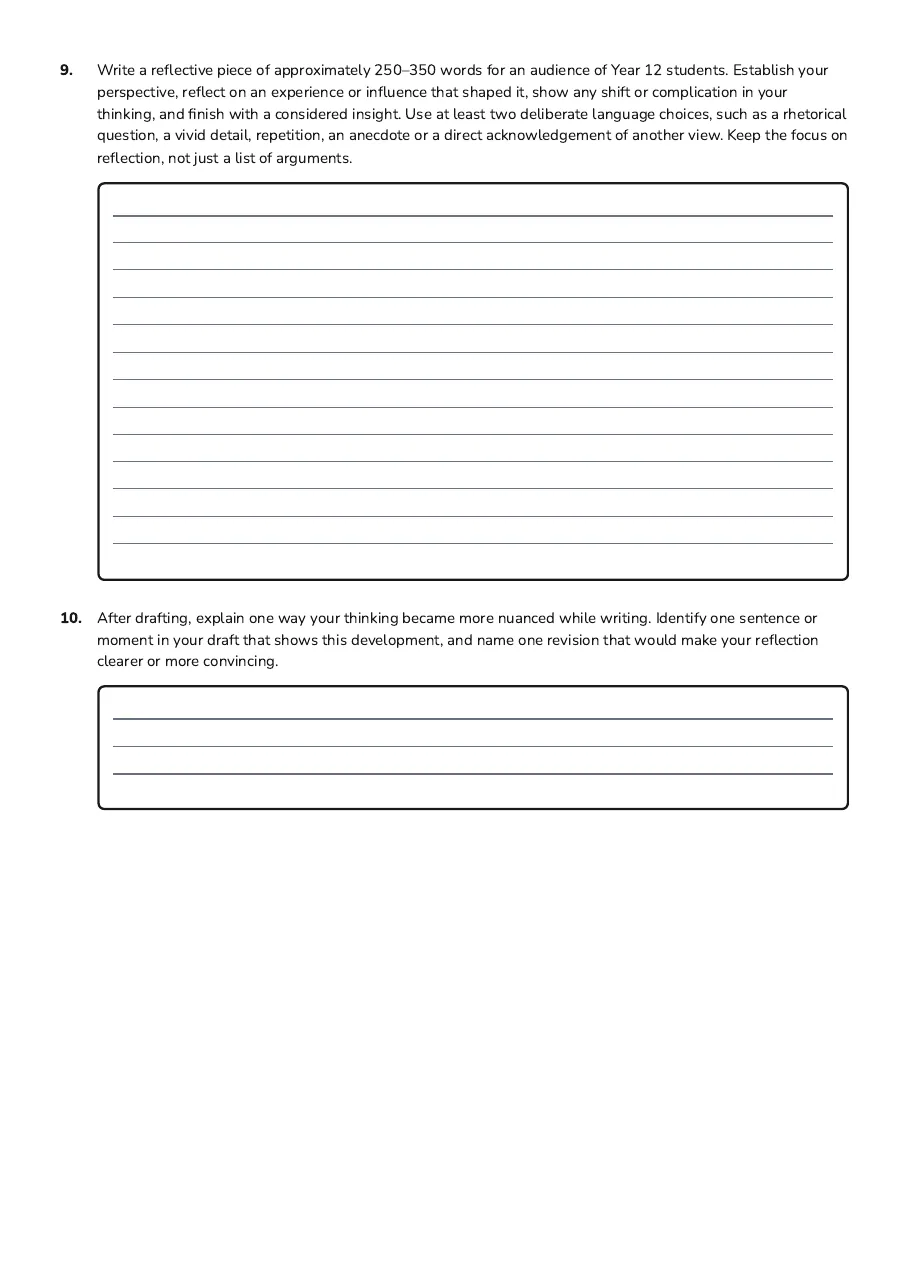
Read and notice
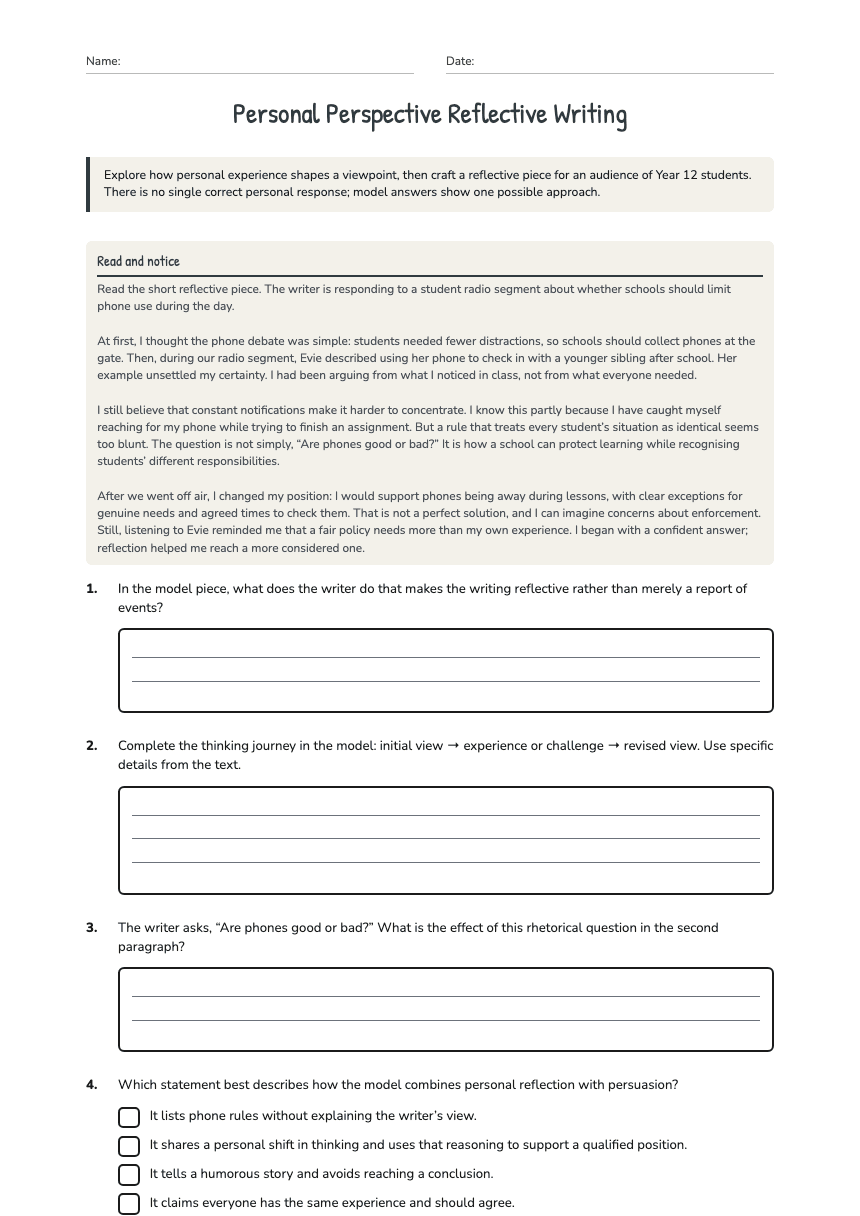
Read the short reflective piece. The writer is responding to a student radio segment about whether schools should limit phone use during the day. At first, I thought the phone debate was simple: students needed fewer distractions, so schools should collect phones at the gate. Then, during our radio segment, Evie described using her phone to check in with a younger sibling after school. Her example unsettled my certainty. I had been arguing from what I noticed in class, not from what everyone needed. I still believe that constant notifications make it harder to concentrate. I know this partly because I have caught myself reaching for my phone while trying to finish an assignment. But a rule that treats every student’s situation as identical seems too blunt. The question is not simply, “Are phones good or bad?” It is how a school can protect learning while recognising students’ different responsibilities. After we went off air, I changed my position: I would support phones being away during lessons, with clear exceptions for genuine needs and agreed times to check them. That is not a perfect solution, and I can imagine concerns about enforcement. Still, listening to Evie reminded me that a fair policy needs more than my own experience. I began with a confident answer; reflection helped me reach a more considered one.
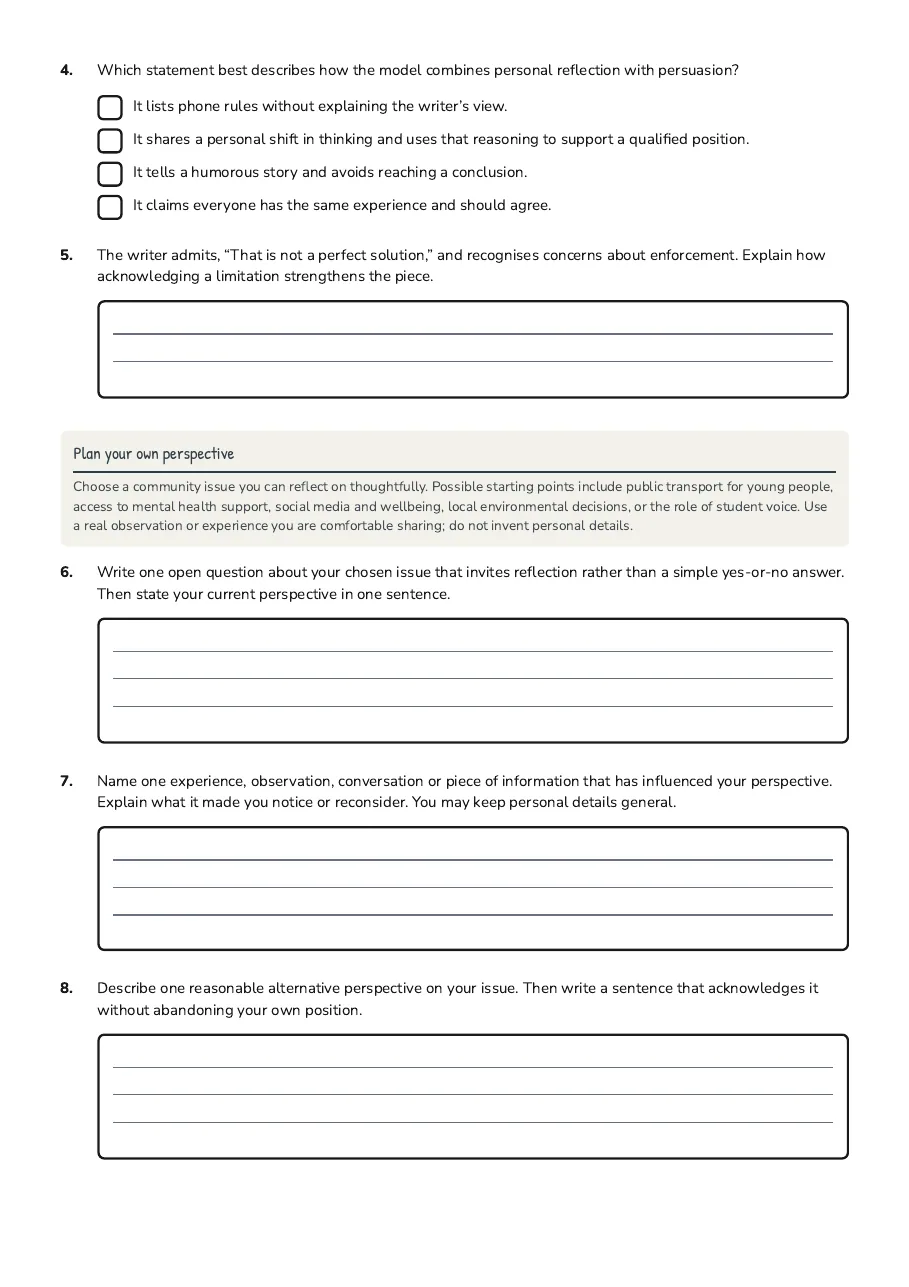
- It lists phone rules without explaining the writer’s view.
- It shares a personal shift in thinking and uses that reasoning to support a qualified position.
- It tells a humorous story and avoids reaching a conclusion.
- It claims everyone has the same experience and should agree.
Plan your own perspective
Choose a community issue you can reflect on thoughtfully. Possible starting points include public transport for young people, access to mental health support, social media and wellbeing, local environmental decisions, or the role of student voice. Use a real observation or experience you are comfortable sharing; do not invent personal details.
3 printable pages
Page 1
Page 2
Page 3
About This Worksheet
Free in Kuraplan
Sign up free, grab the PDF, and customize it for your class.
Print-Ready
Formatted for standard paper. Clean layout, easy to read.
AI-Generated
Created with Kuraplan's AI, designed for real classroom use.
For Teachers & Parents
Use in classrooms, for homework, tutoring, or homeschool.
Need a custom version of this worksheet?
Kuraplan's AI generates custom worksheets in seconds — differentiated for every learner, aligned to your curriculum.
Generate Custom Worksheets — FreeMore English Worksheets
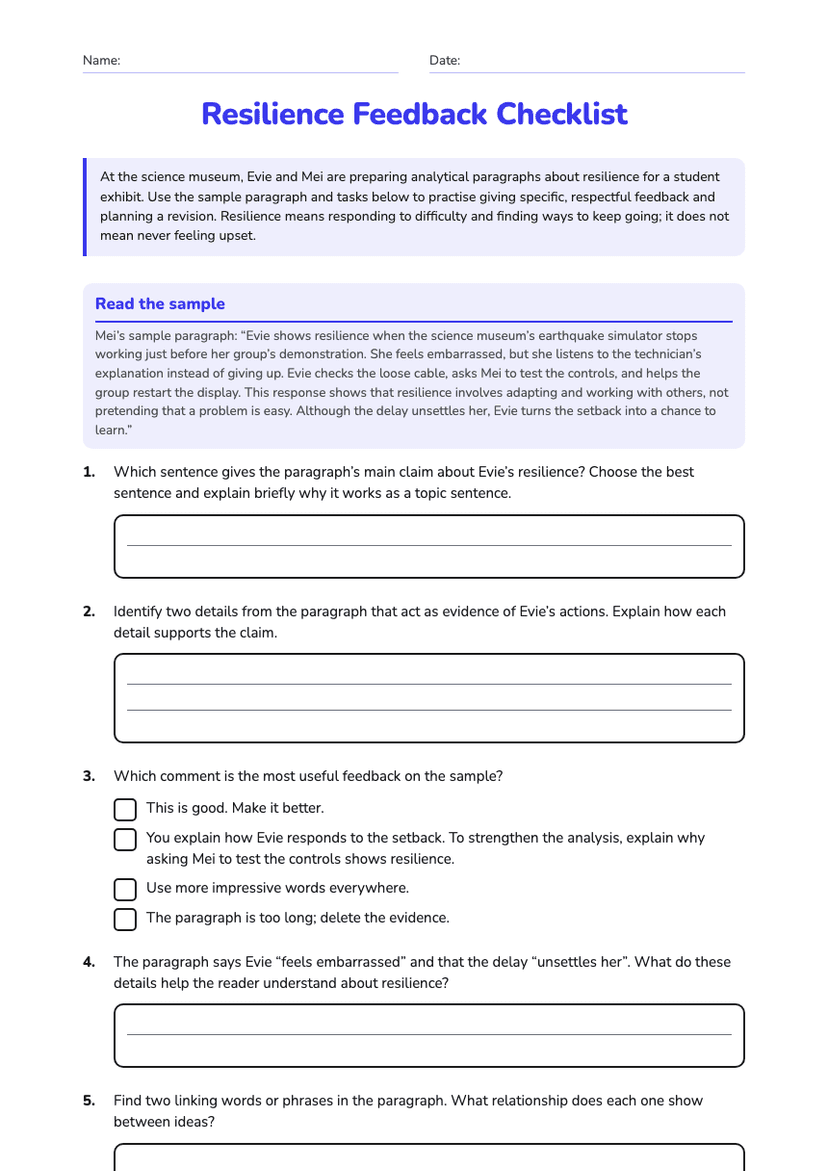
Resilience Feedback Checklist
Free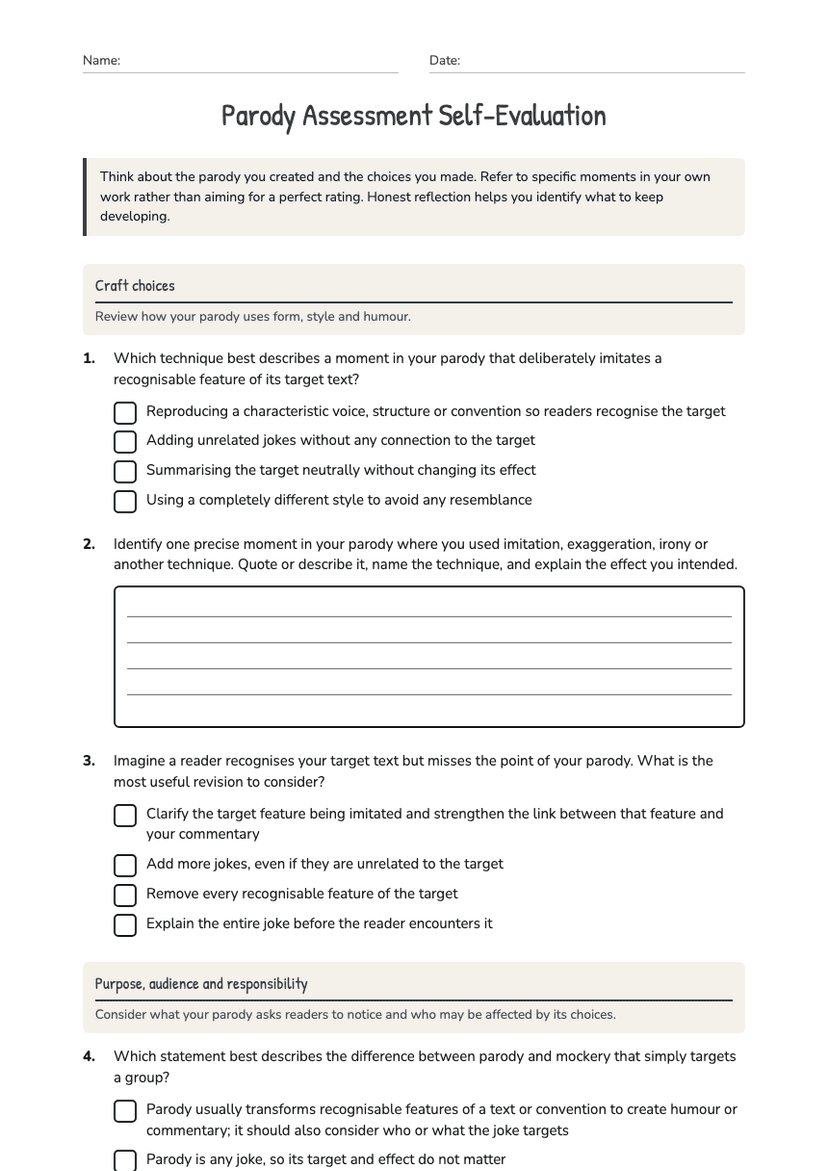
Parody Assessment Self-Evaluation
Free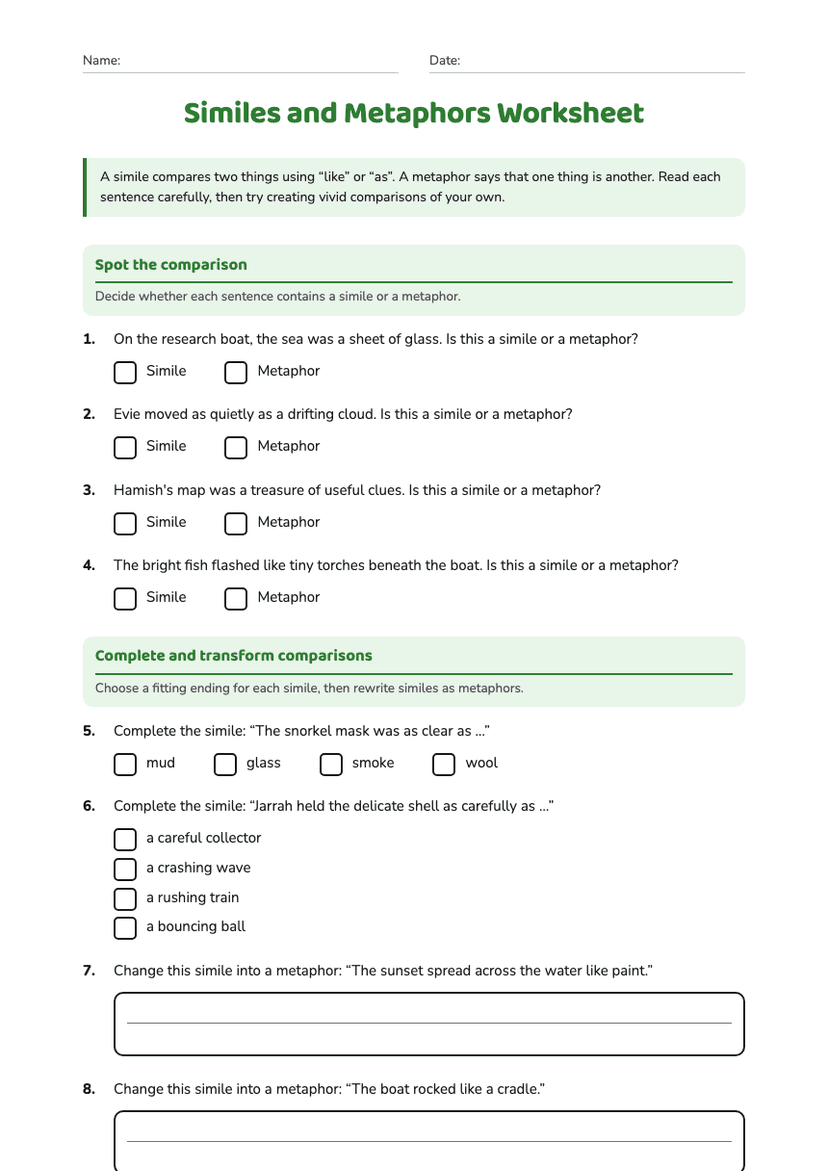
Similes and Metaphors Worksheet
Free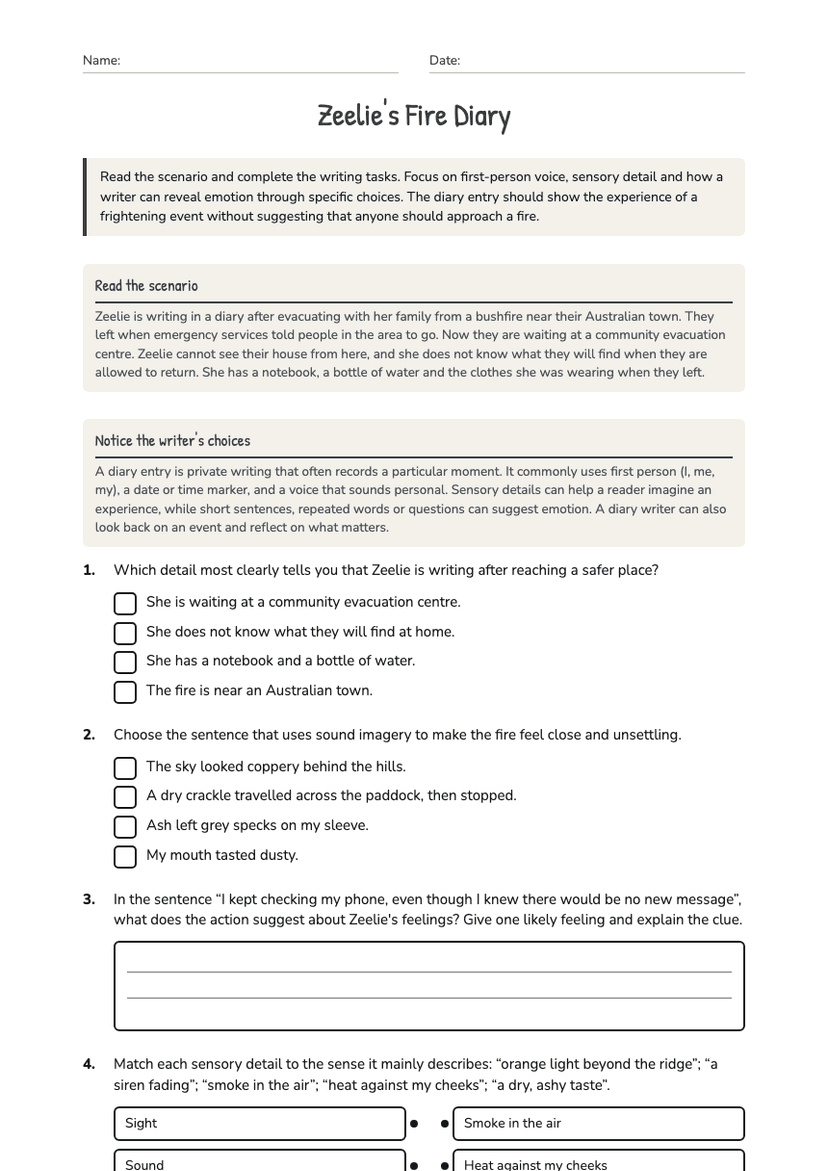
Zeelie's Fire Diary
Free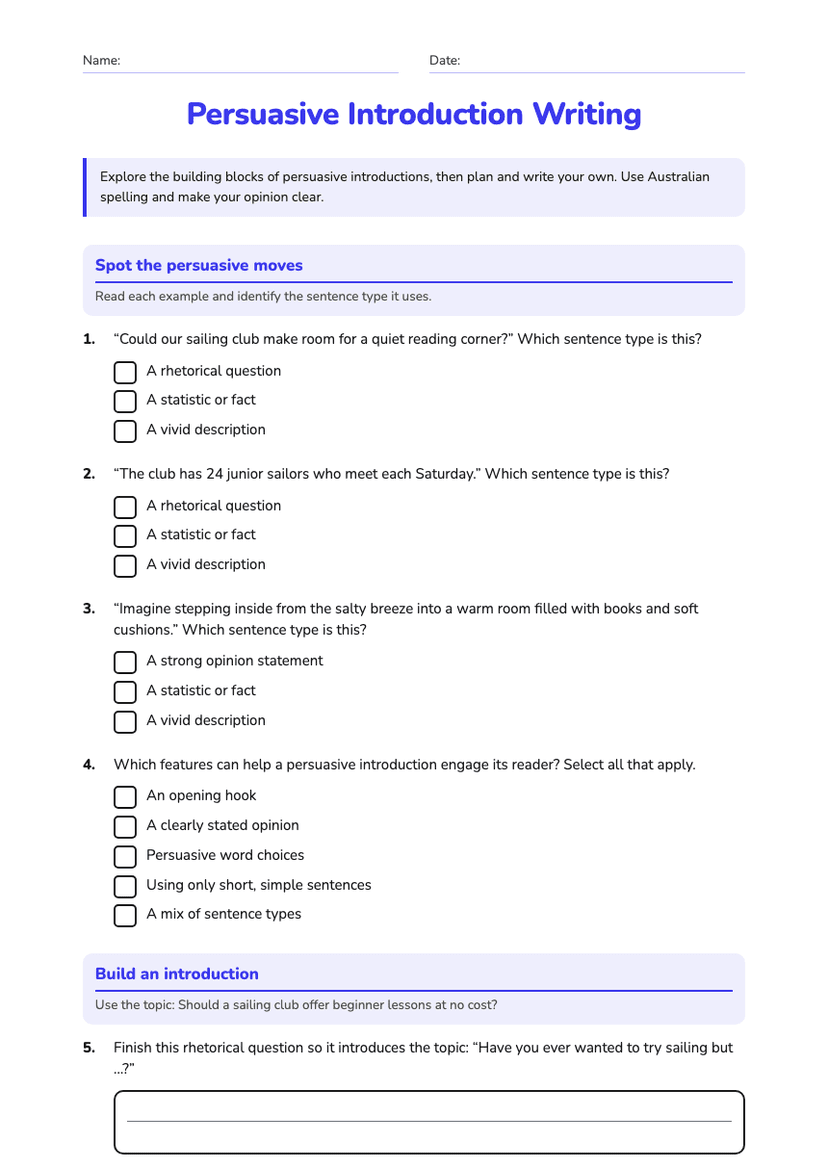
Persuasive Introduction Writing
Free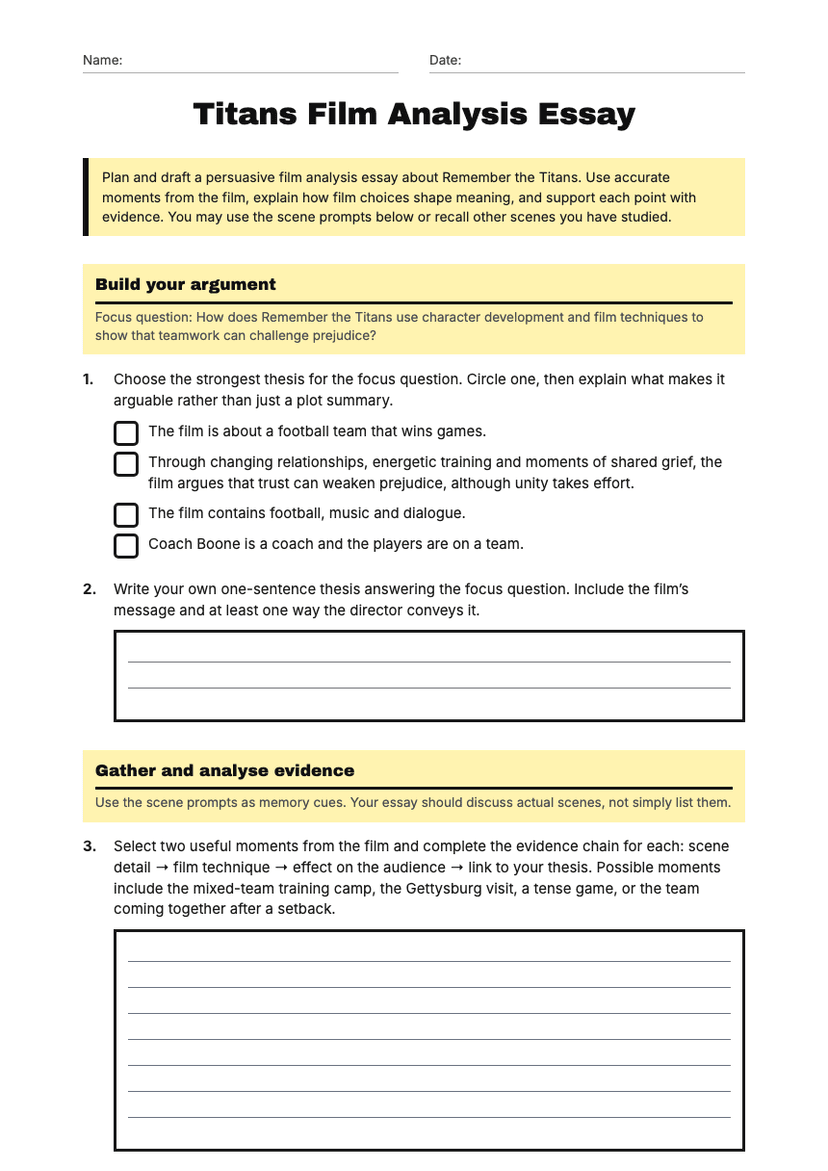
Titans Film Analysis Essay
Free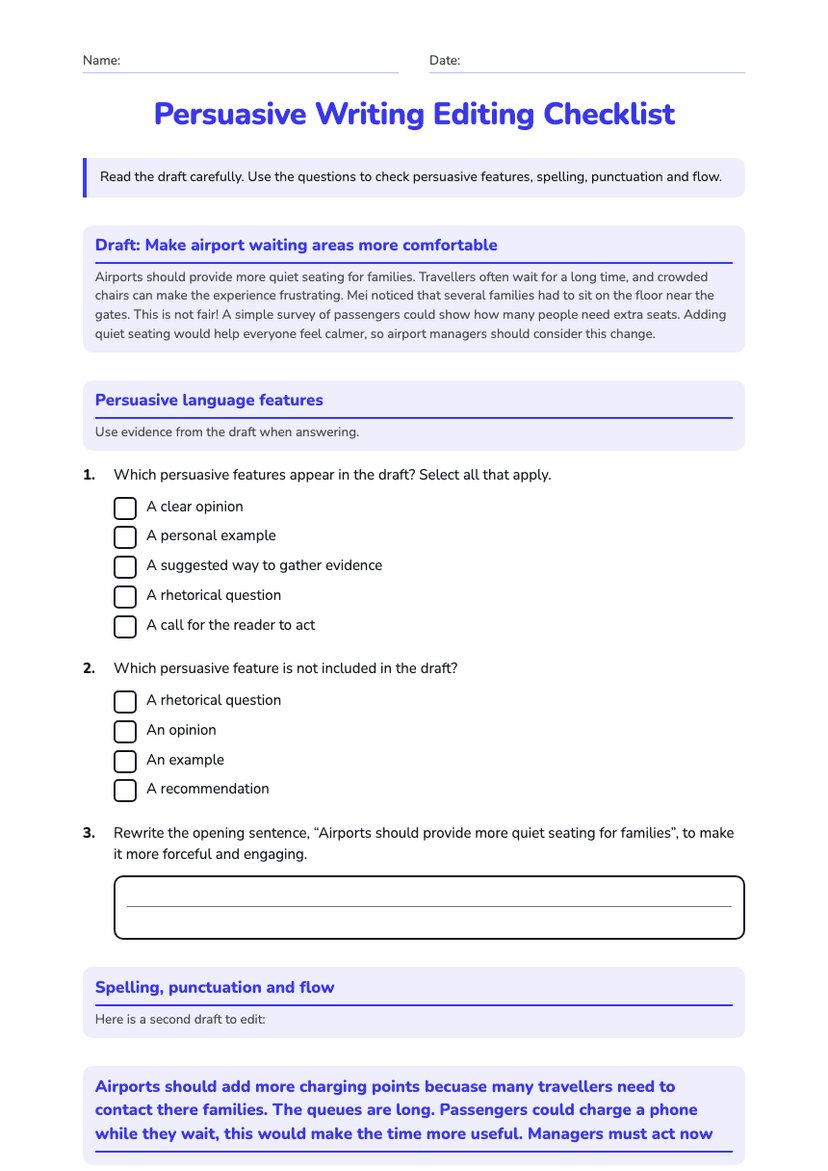
Persuasive Writing Editing Checklist
Free