Physical Theatre Introduction
A free drama worksheet ready for your classroom. Open in Kuraplan to grab the print-ready PDF, customize it for your students, or generate a fresh version in seconds.
Physical Theatre Introduction
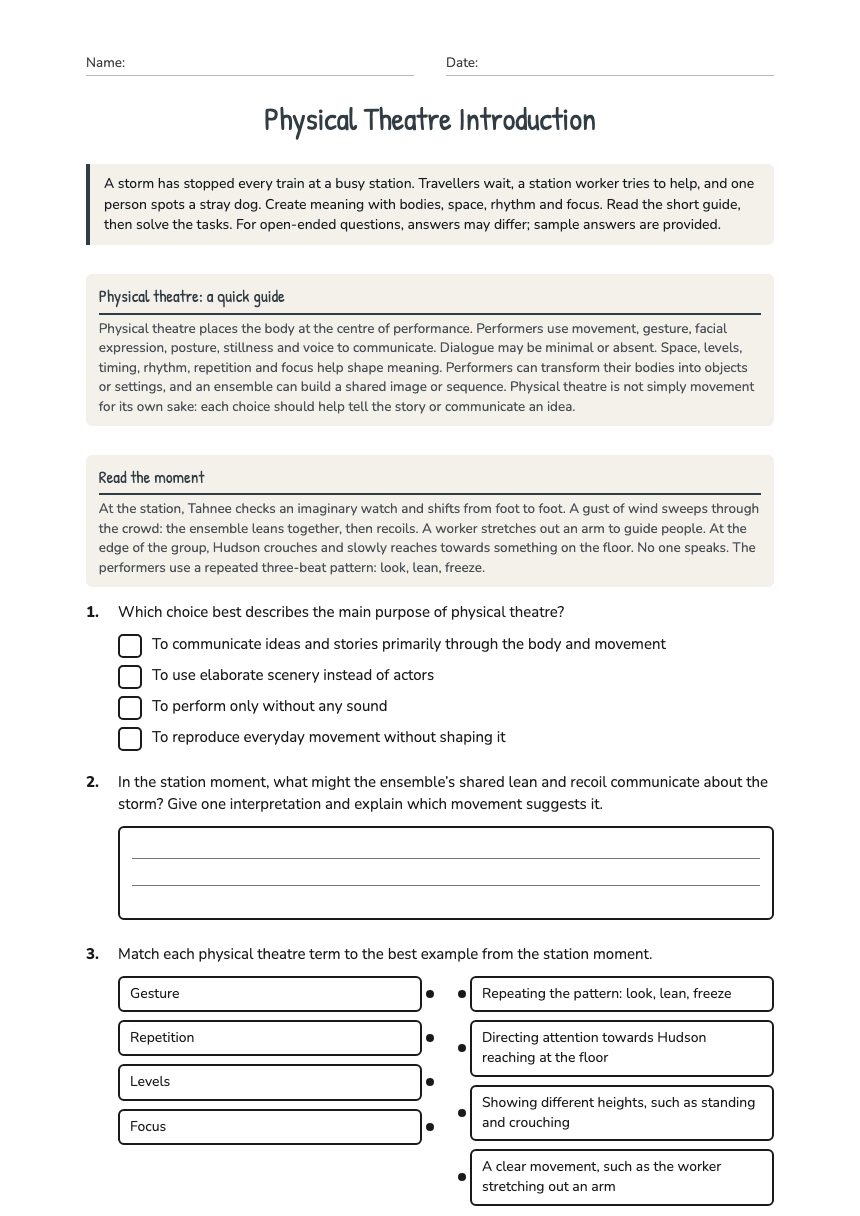
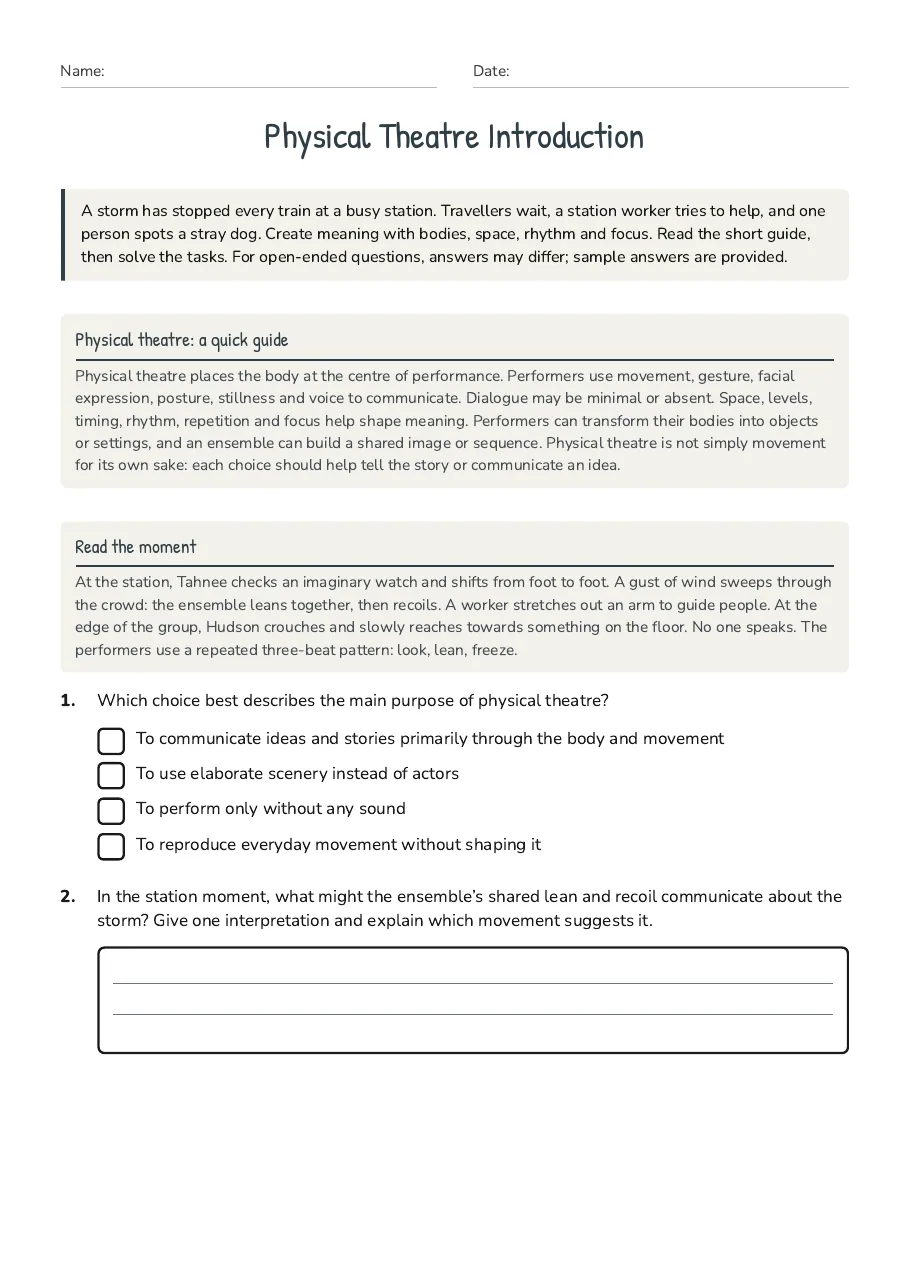
Physical theatre: a quick guide
Physical theatre places the body at the centre of performance. Performers use movement, gesture, facial expression, posture, stillness and voice to communicate. Dialogue may be minimal or absent. Space, levels, timing, rhythm, repetition and focus help shape meaning. Performers can transform their bodies into objects or settings, and an ensemble can build a shared image or sequence. Physical theatre is not simply movement for its own sake: each choice should help tell the story or communicate an idea.
Read the moment
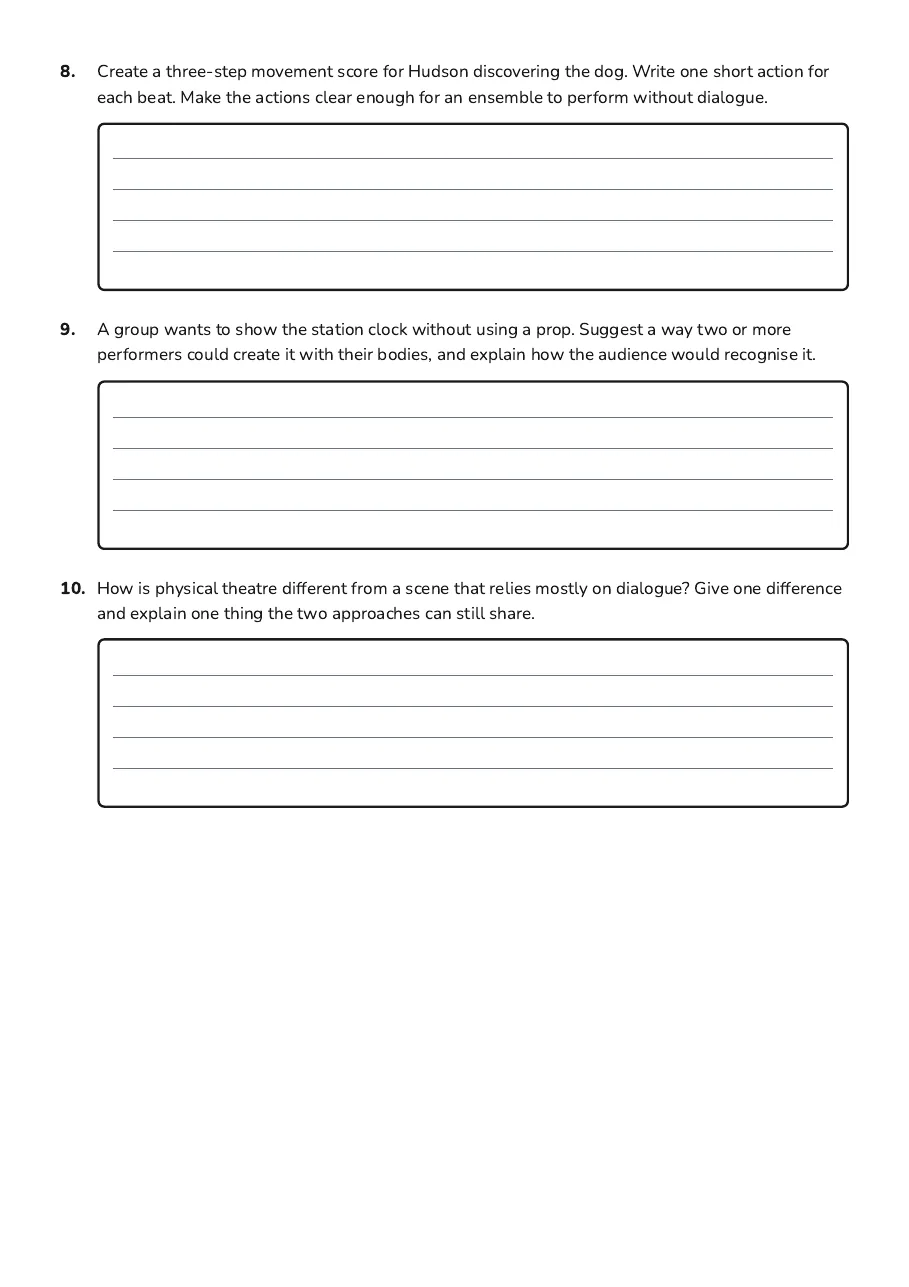
At the station, Tahnee checks an imaginary watch and shifts from foot to foot. A gust of wind sweeps through the crowd: the ensemble leans together, then recoils. A worker stretches out an arm to guide people. At the edge of the group, Hudson crouches and slowly reaches towards something on the floor. No one speaks. The performers use a repeated three-beat pattern: look, lean, freeze.
- To communicate ideas and stories primarily through the body and movement
- To use elaborate scenery instead of actors
- To perform only without any sound
- To reproduce everyday movement without shaping it
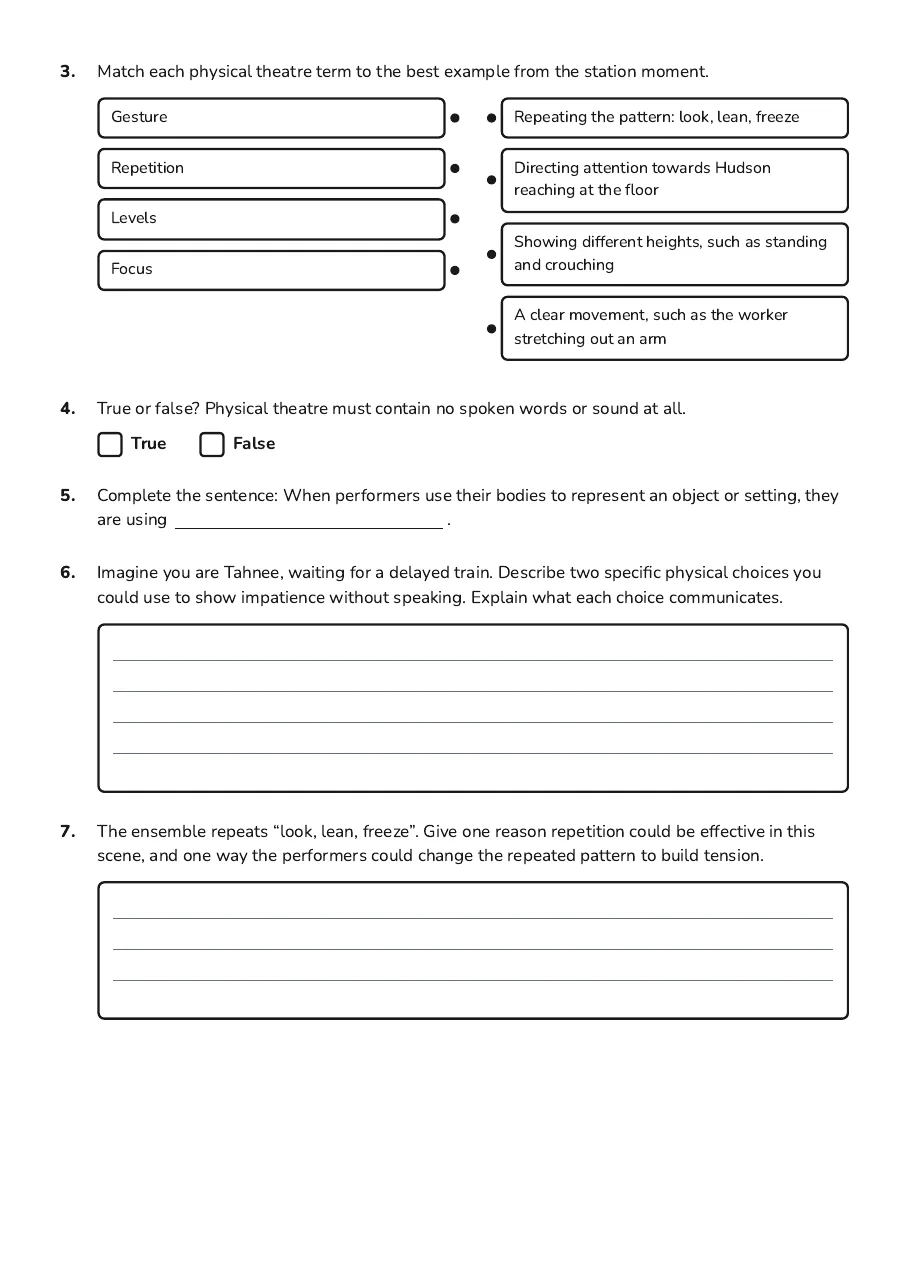
- Gesture
- Repetition
- Levels
- Focus
- Repeating the pattern: look, lean, freeze
- Directing attention towards Hudson reaching at the floor
- Showing different heights, such as standing and crouching
- A clear movement, such as the worker stretching out an arm
3 printable pages
Page 1
Page 2
Page 3
About This Worksheet
Free in Kuraplan
Sign up free, grab the PDF, and customize it for your class.
Print-Ready
Formatted for standard paper. Clean layout, easy to read.
AI-Generated
Created with Kuraplan's AI, designed for real classroom use.
For Teachers & Parents
Use in classrooms, for homework, tutoring, or homeschool.
Need a custom version of this worksheet?
Kuraplan's AI generates custom worksheets in seconds — differentiated for every learner, aligned to your curriculum.
Generate Custom Worksheets — FreeMore Drama Worksheets
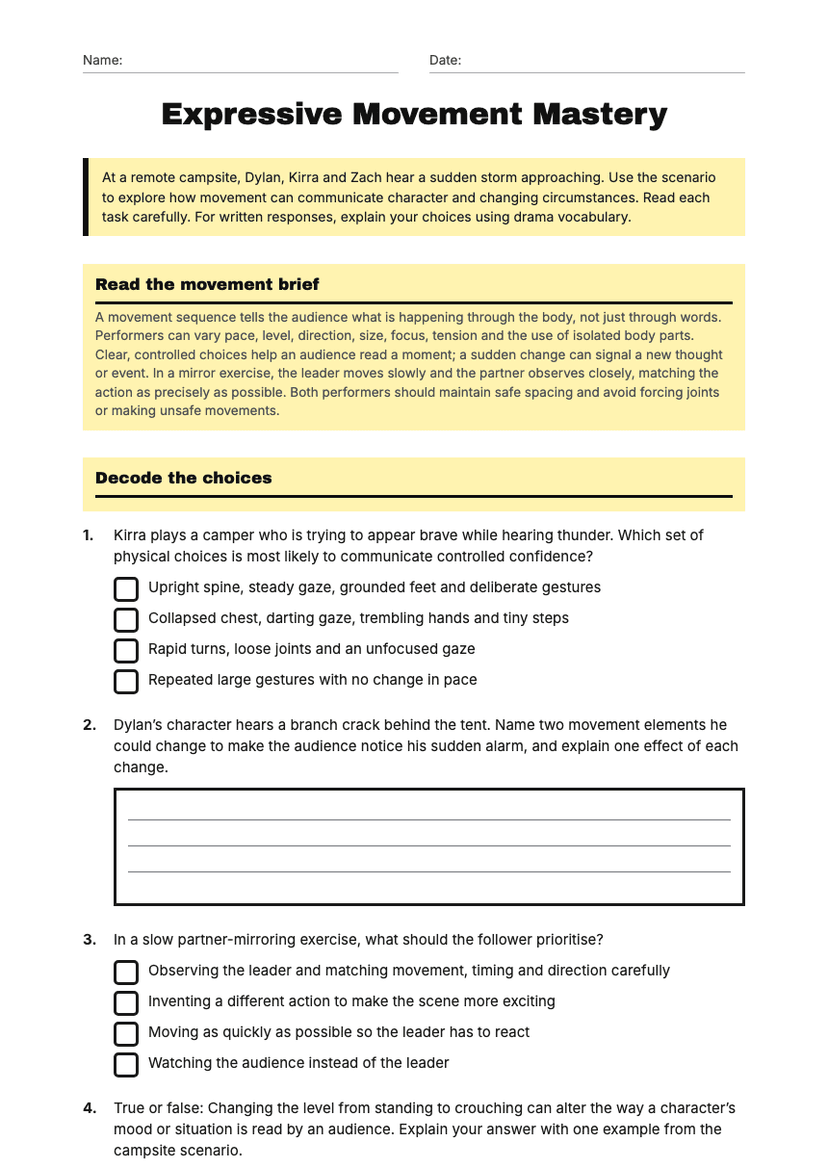
Expressive Movement Mastery
Free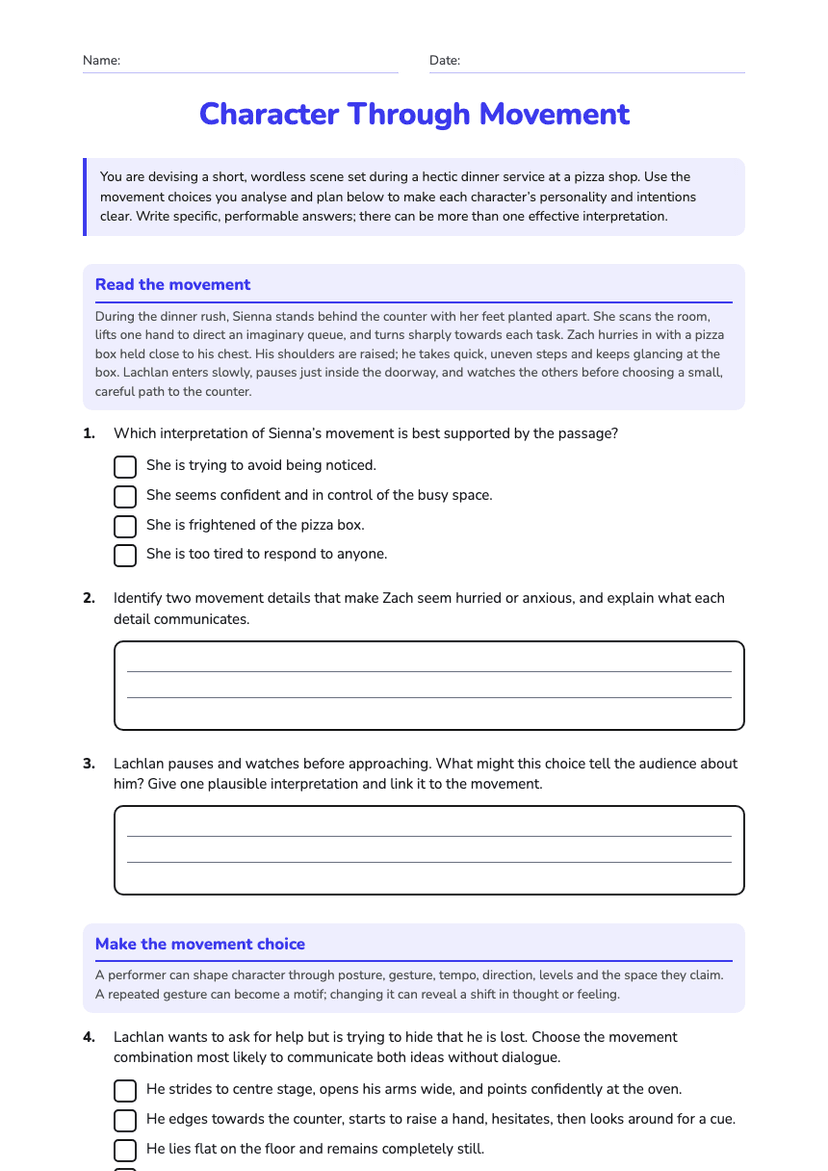
Character Through Movement
Free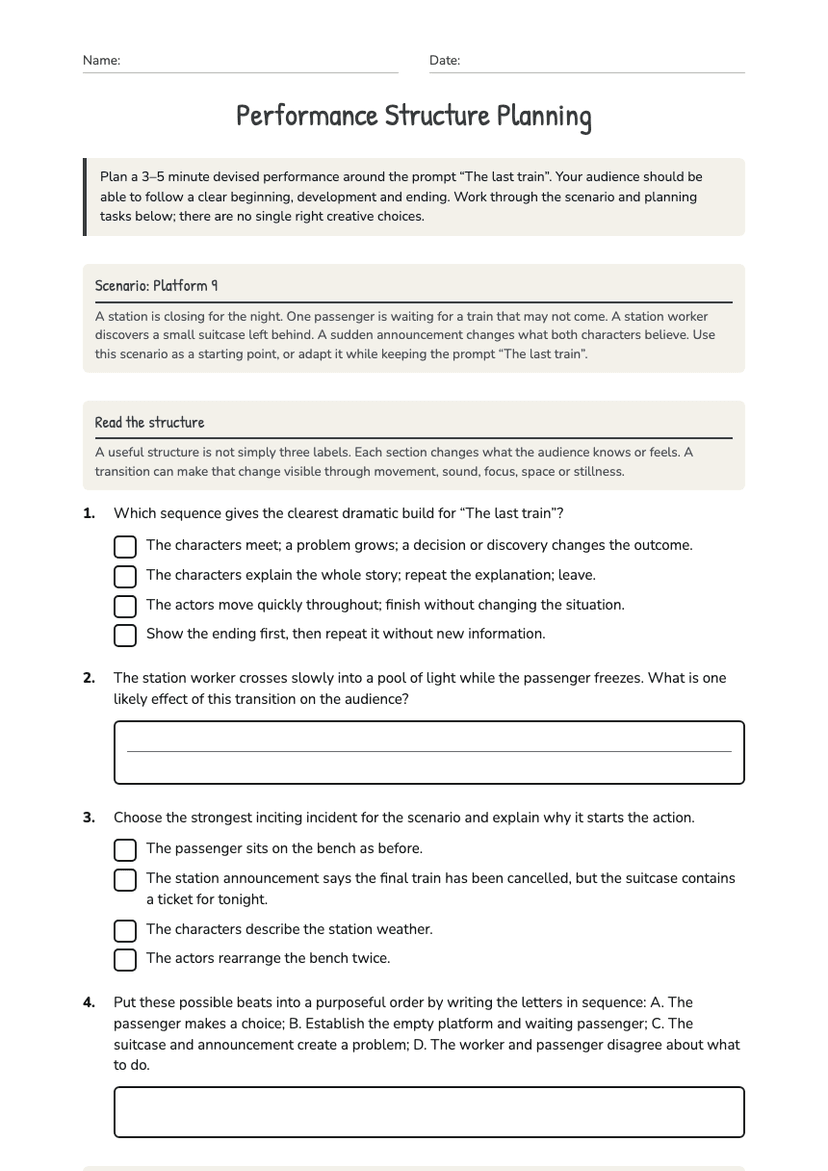
Performance Structure Planning
Free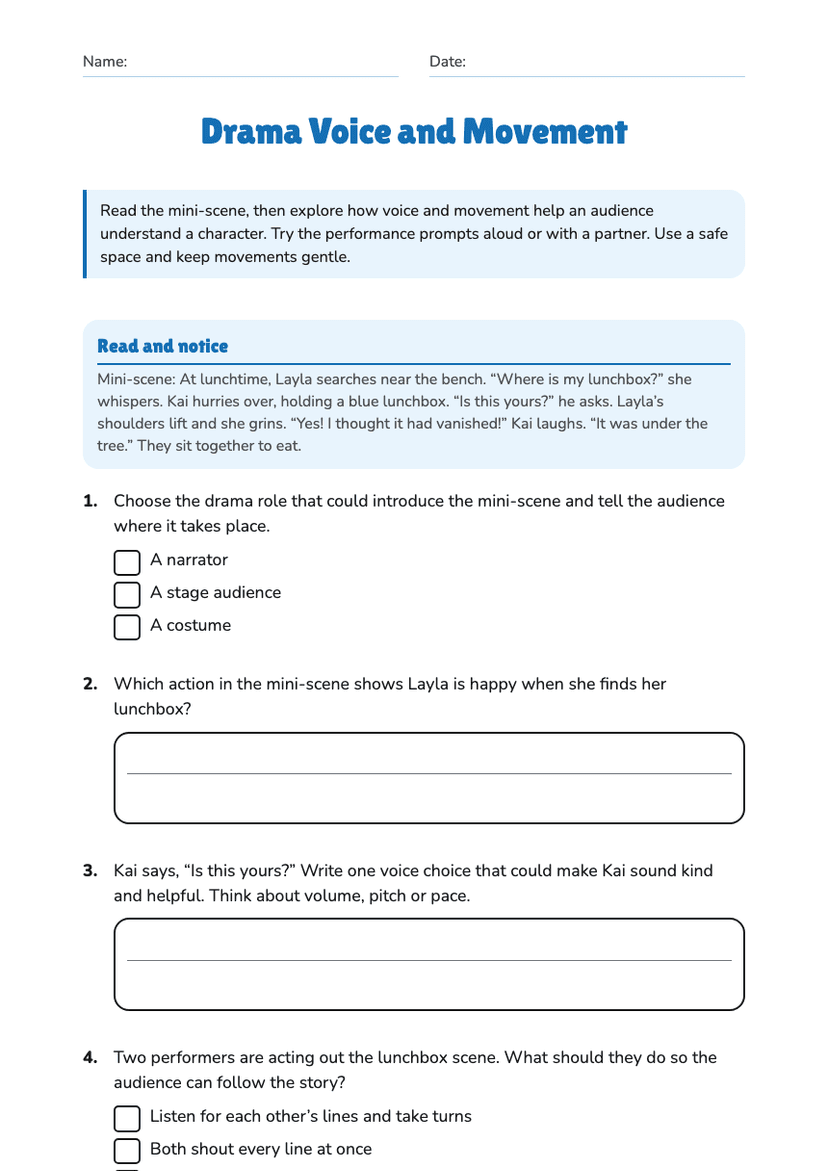
Drama Voice and Movement
Free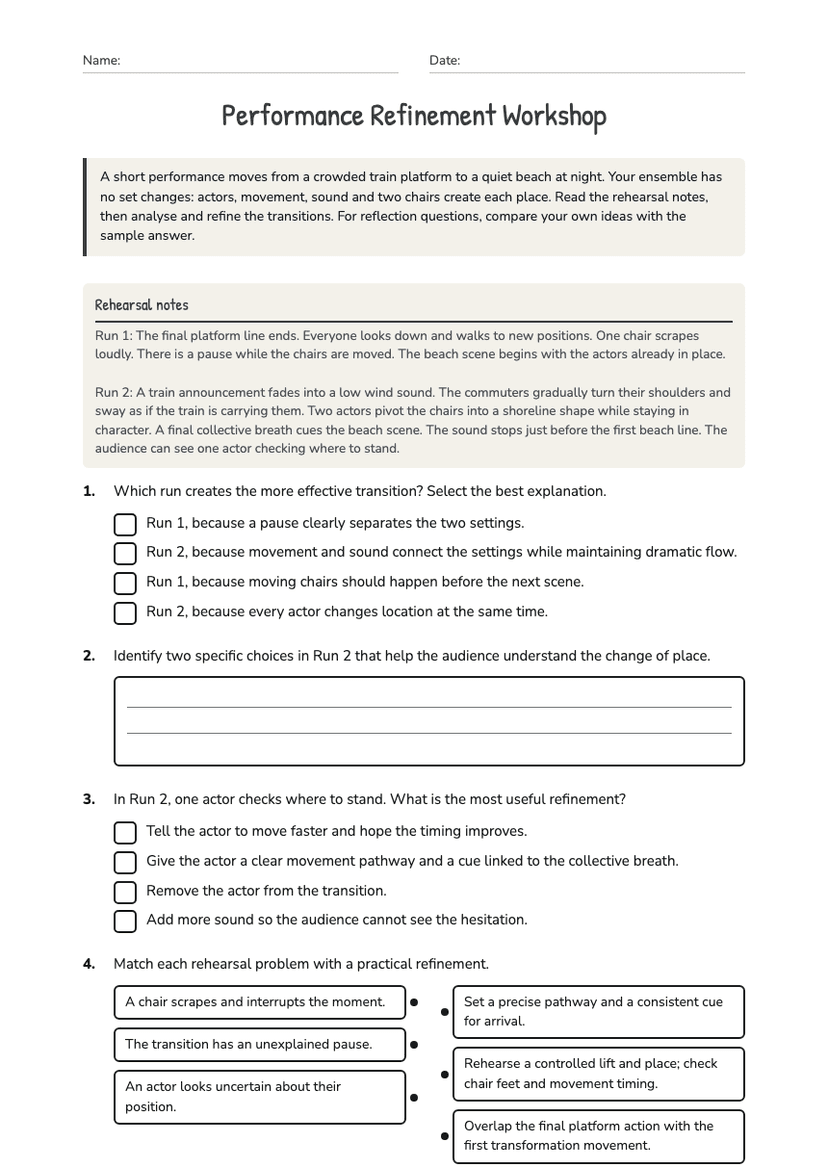
Performance Refinement Workshop
Free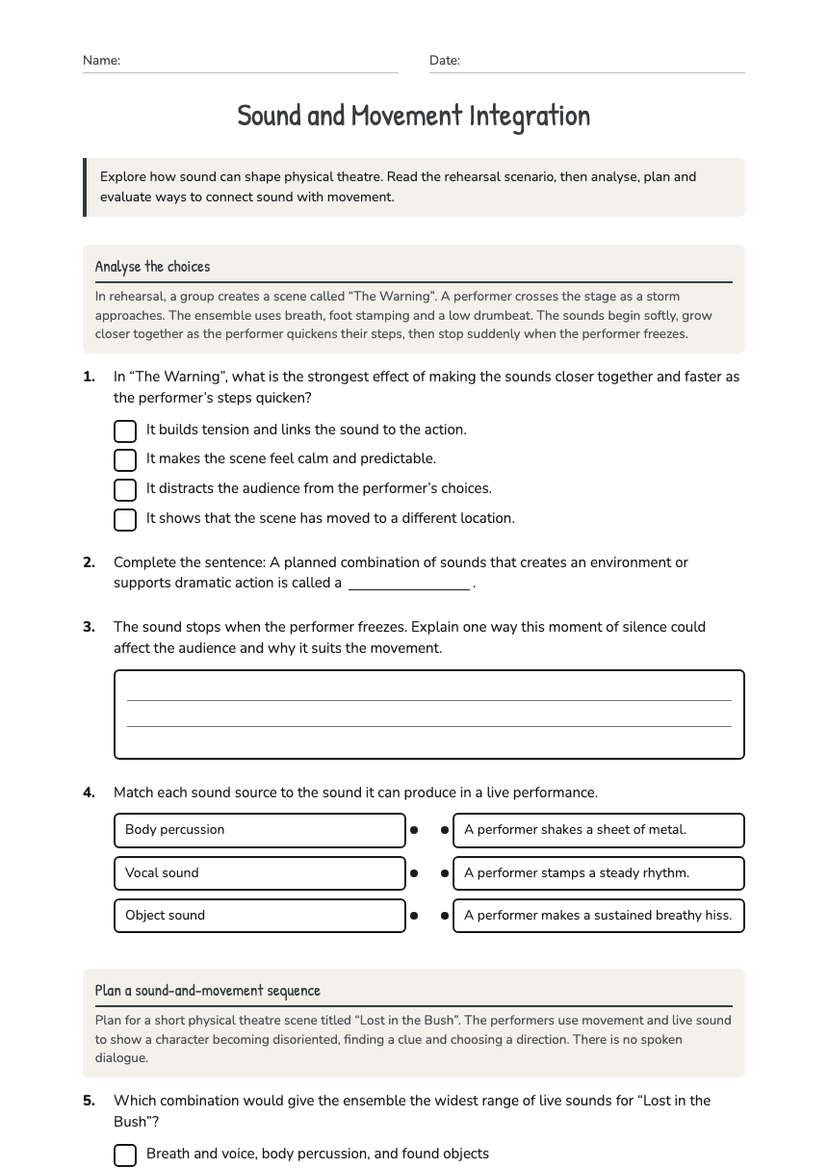
Sound and Movement Integration
Free
Drama Space and Levels
Free