PEFreePrintable
Skipping Skills and Progressions
A free pe worksheet ready for your classroom. Open in Kuraplan to grab the print-ready PDF, customize it for your students, or generate a fresh version in seconds.
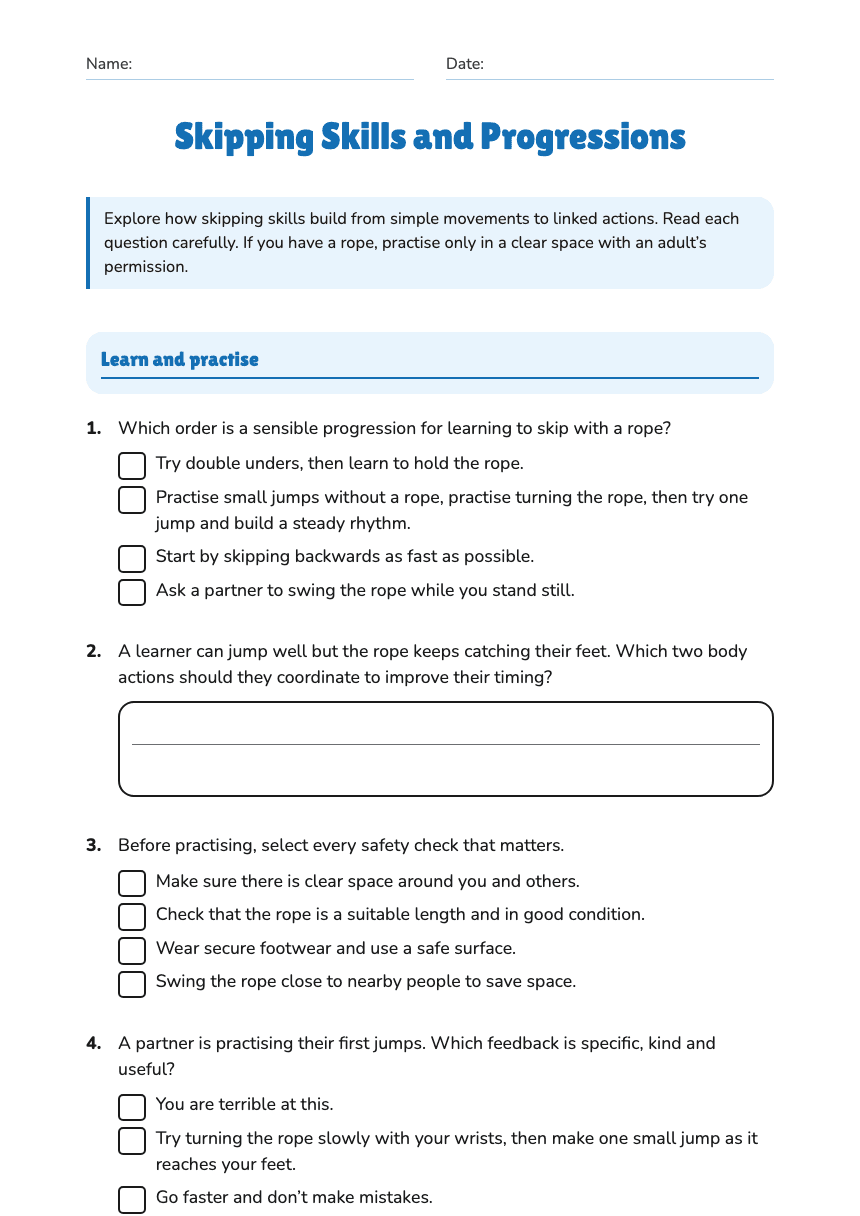
Name:Date:
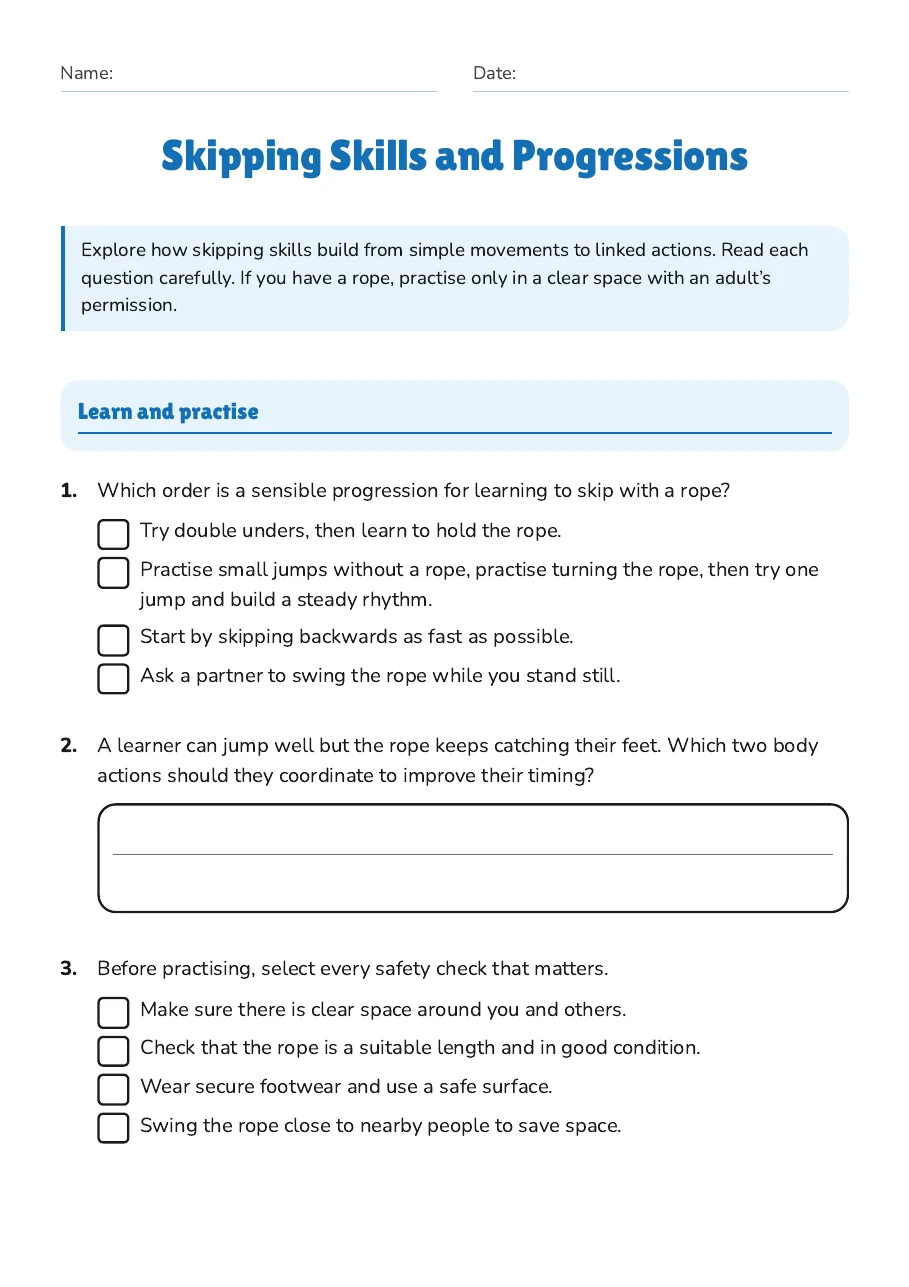
Skipping Skills and Progressions
Explore how skipping skills build from simple movements to linked actions. Read each question carefully. If you have a rope, practise only in a clear space with an adult’s permission.
Learn and practise
1.Which order is a sensible progression for learning to skip with a rope?
- Try double unders, then learn to hold the rope.
- Practise small jumps without a rope, practise turning the rope, then try one jump and build a steady rhythm.
- Start by skipping backwards as fast as possible.
- Ask a partner to swing the rope while you stand still.
2.A learner can jump well but the rope keeps catching their feet. Which two body actions should they coordinate to improve their timing?
3.Before practising, select every safety check that matters.
- Make sure there is clear space around you and others.
- Check that the rope is a suitable length and in good condition.
- Wear secure footwear and use a safe surface.
- Swing the rope close to nearby people to save space.
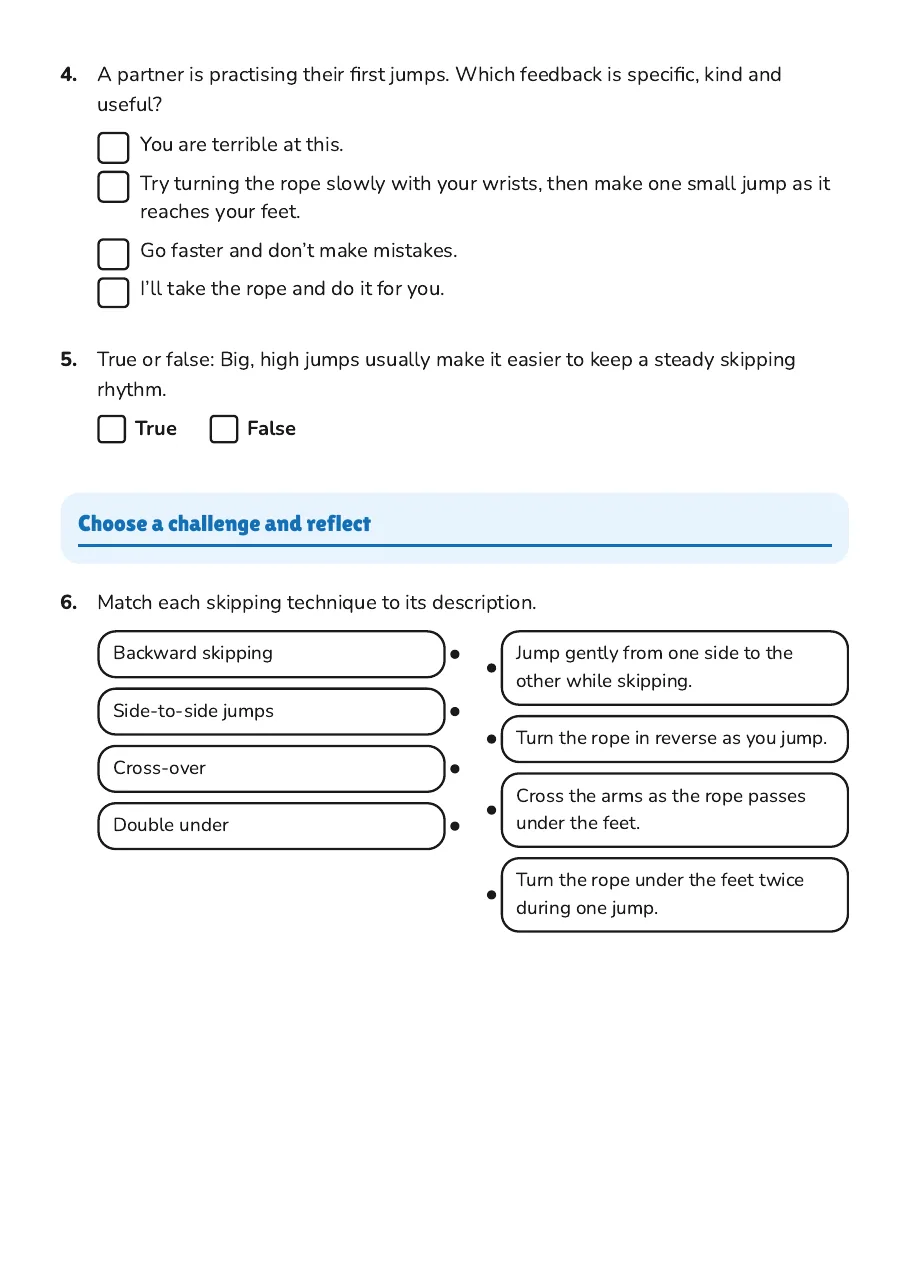
4.A partner is practising their first jumps. Which feedback is specific, kind and useful?
- You are terrible at this.
- Try turning the rope slowly with your wrists, then make one small jump as it reaches your feet.
- Go faster and don’t make mistakes.
- I’ll take the rope and do it for you.
5.True or false: Big, high jumps usually make it easier to keep a steady skipping rhythm.
TrueFalse
Choose a challenge and reflect
6.Match each skipping technique to its description.
- Backward skipping
- Side-to-side jumps
- Cross-over
- Double under
- Jump gently from one side to the other while skipping.
- Turn the rope in reverse as you jump.
- Cross the arms as the rope passes under the feet.
- Turn the rope under the feet twice during one jump.
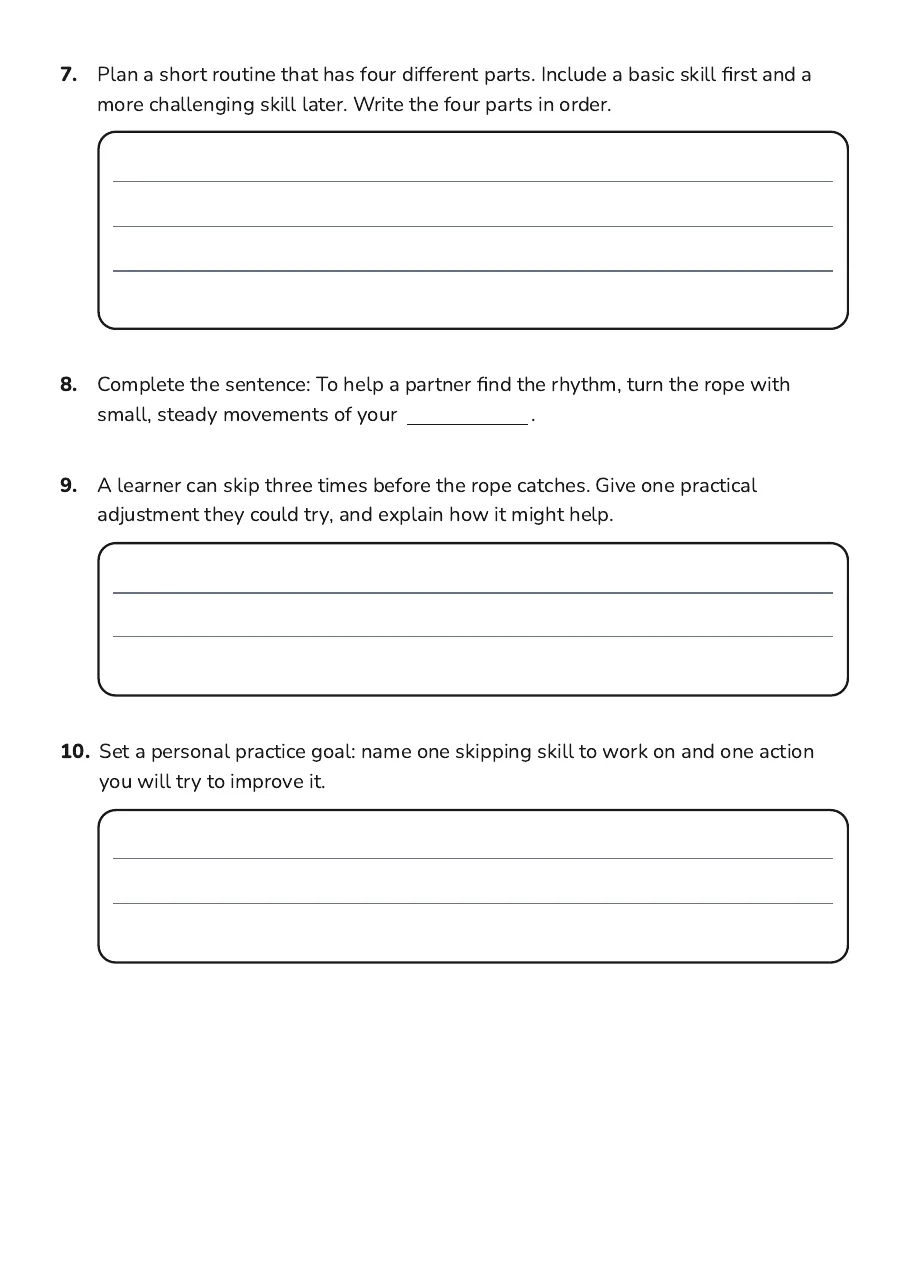
7.Plan a short routine that has four different parts. Include a basic skill first and a more challenging skill later. Write the four parts in order.
8.Complete the sentence: To help a partner find the rhythm, turn the rope with small, steady movements of your .
9.A learner can skip three times before the rope catches. Give one practical adjustment they could try, and explain how it might help.
10.Set a personal practice goal: name one skipping skill to work on and one action you will try to improve it.
3 printable pages
Page 1
Page 2
Page 3
About This Worksheet
Free in Kuraplan
Sign up free, grab the PDF, and customize it for your class.
Print-Ready
Formatted for standard paper. Clean layout, easy to read.
AI-Generated
Created with Kuraplan's AI, designed for real classroom use.
For Teachers & Parents
Use in classrooms, for homework, tutoring, or homeschool.
Need a custom version of this worksheet?
Kuraplan's AI generates custom worksheets in seconds — differentiated for every learner, aligned to your curriculum.
Generate Custom Worksheets — Free No credit card Curriculum-aligned Under 60 seconds
More PE Worksheets
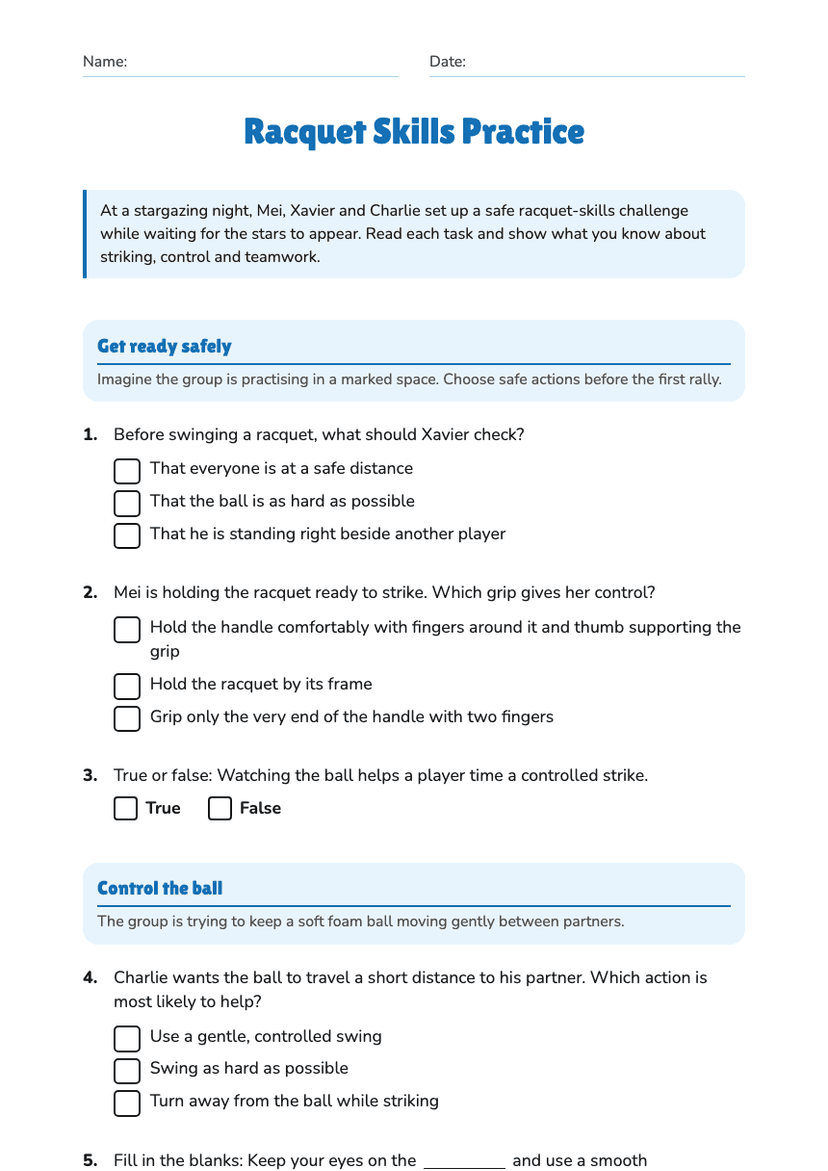
Year 3–4
Racquet Skills Practice
Free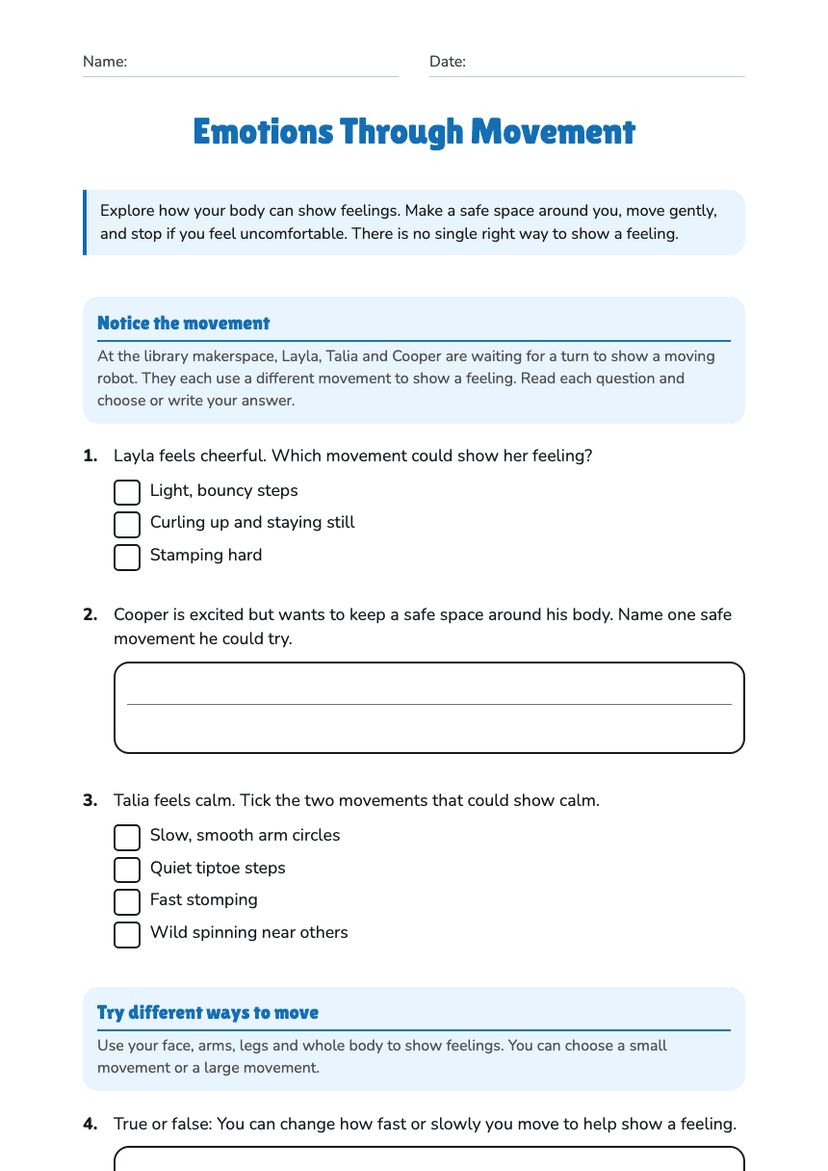
Year 1
Emotions Through Movement
Free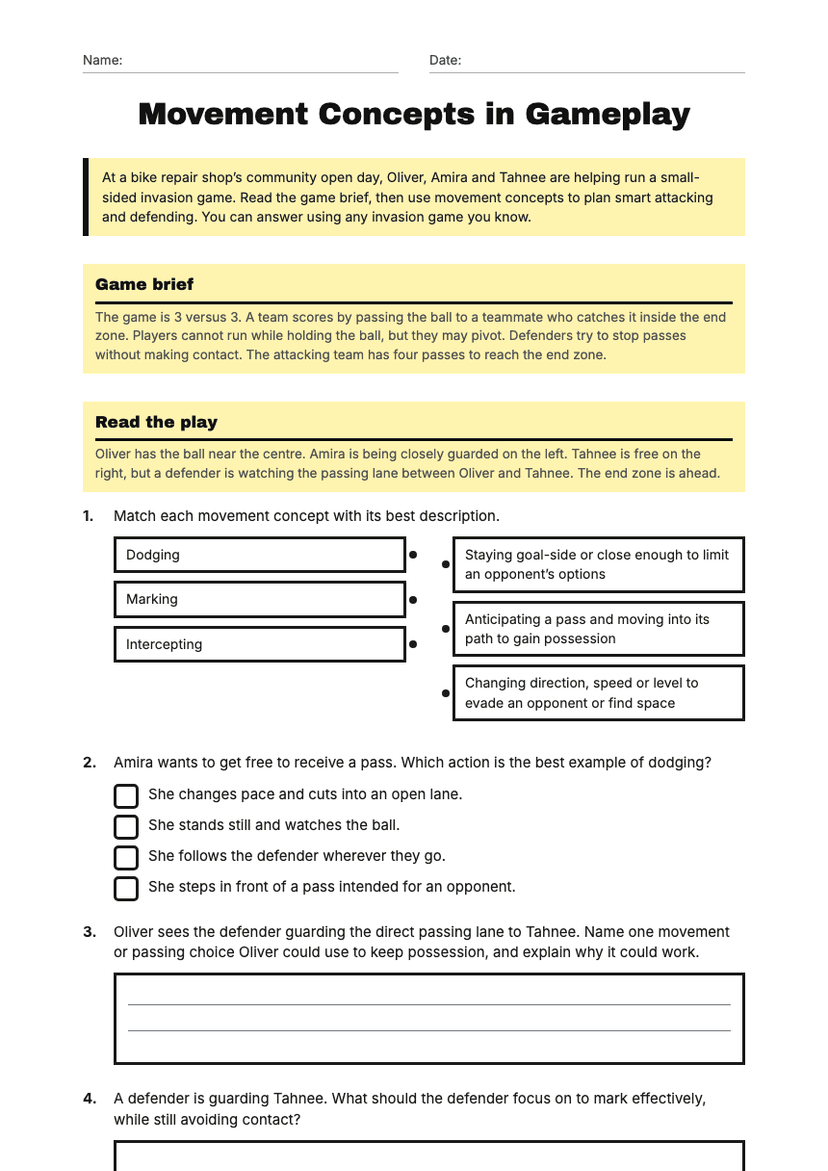
Year 8
Movement Concepts in Gameplay
Free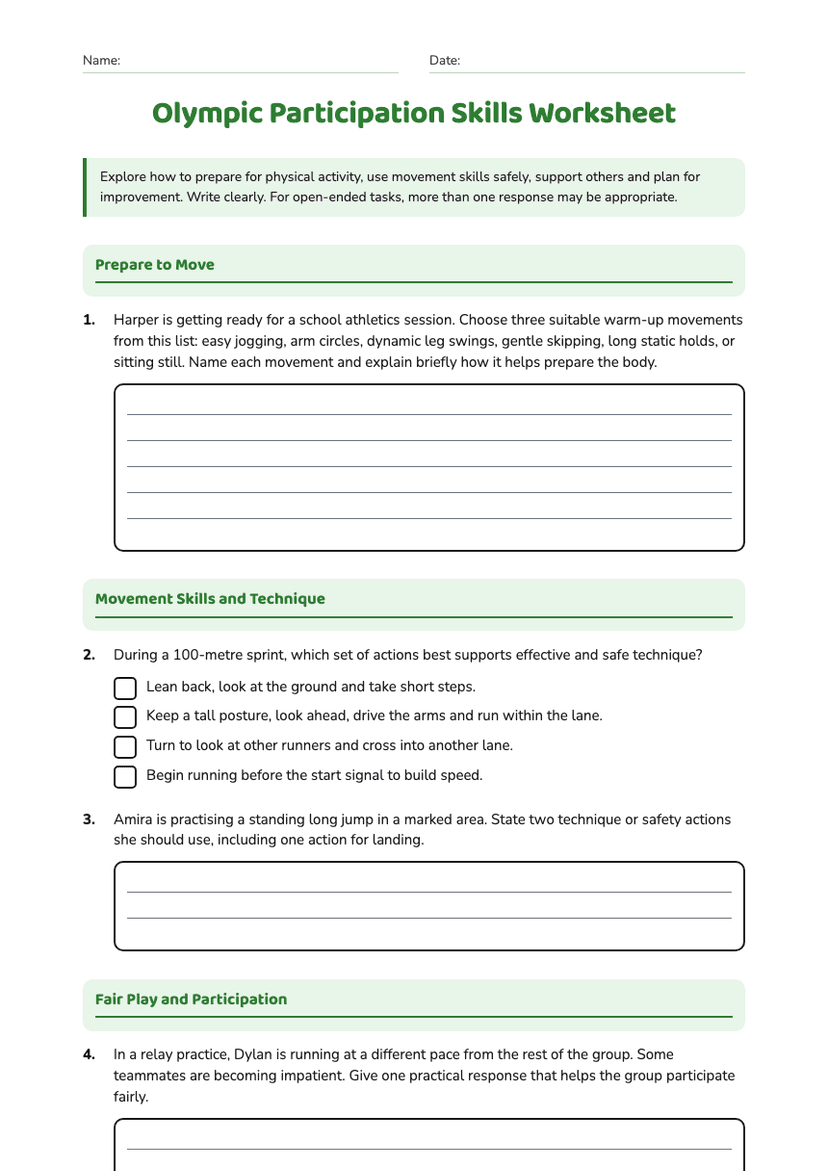
Year 7
Olympic Participation Skills Worksheet
Free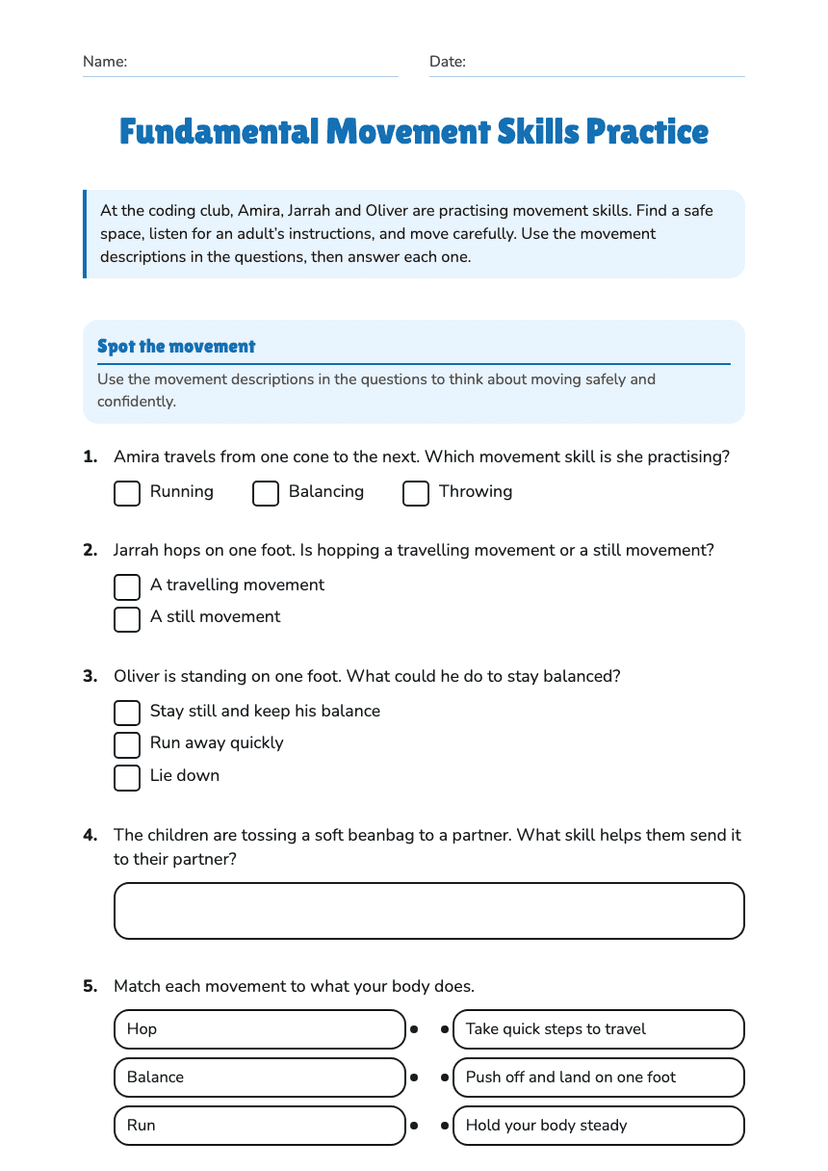
Prep
Fundamental Movement Skills Practice
Free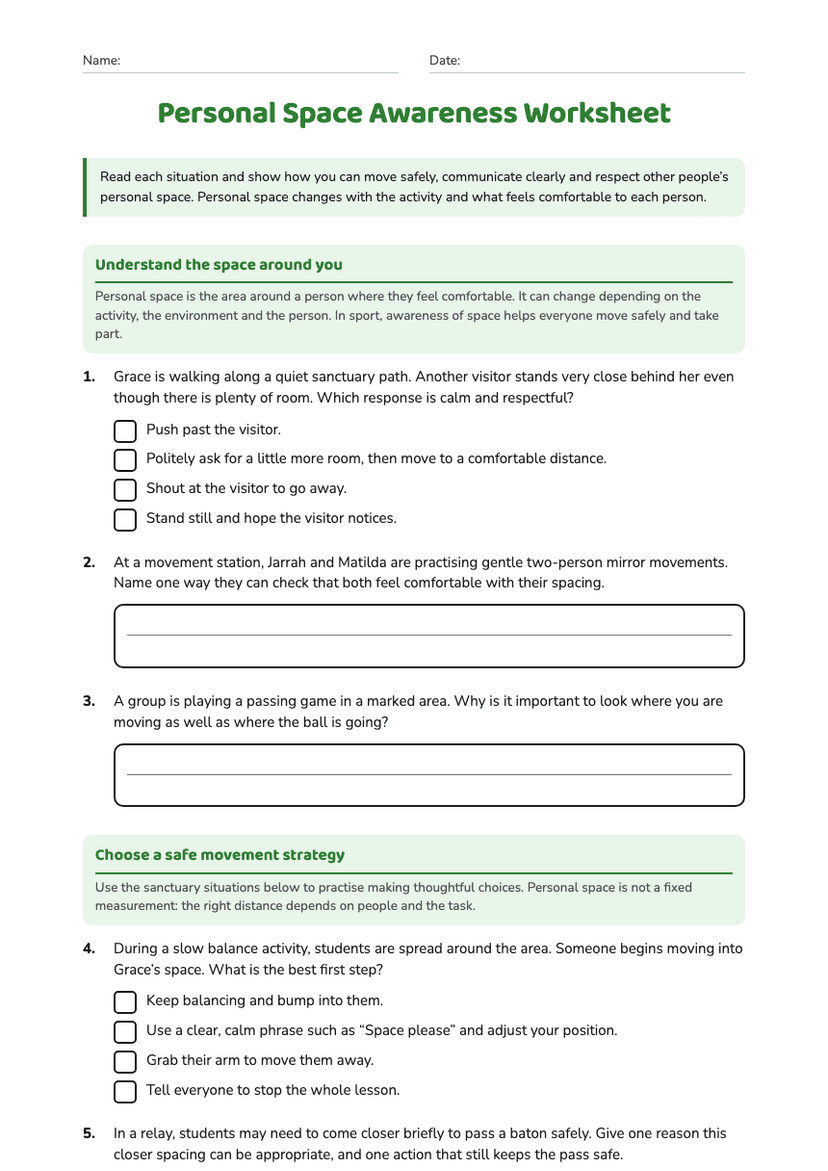
Year 6
Personal Space Awareness Worksheet
Free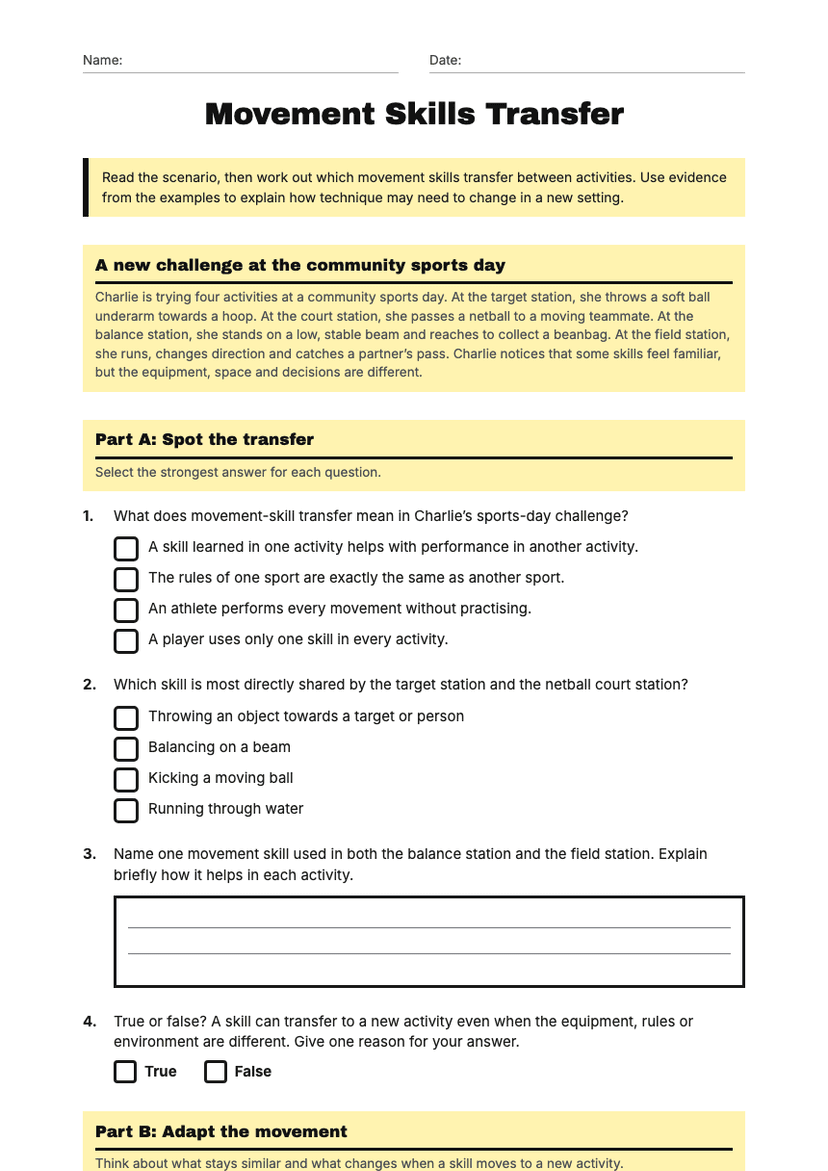
Year 9
Movement Skills Transfer
Free
Year 2