Space Exploration Connections
A free science worksheet ready for your classroom. Open in Kuraplan to grab the print-ready PDF, customize it for your students, or generate a fresh version in seconds.
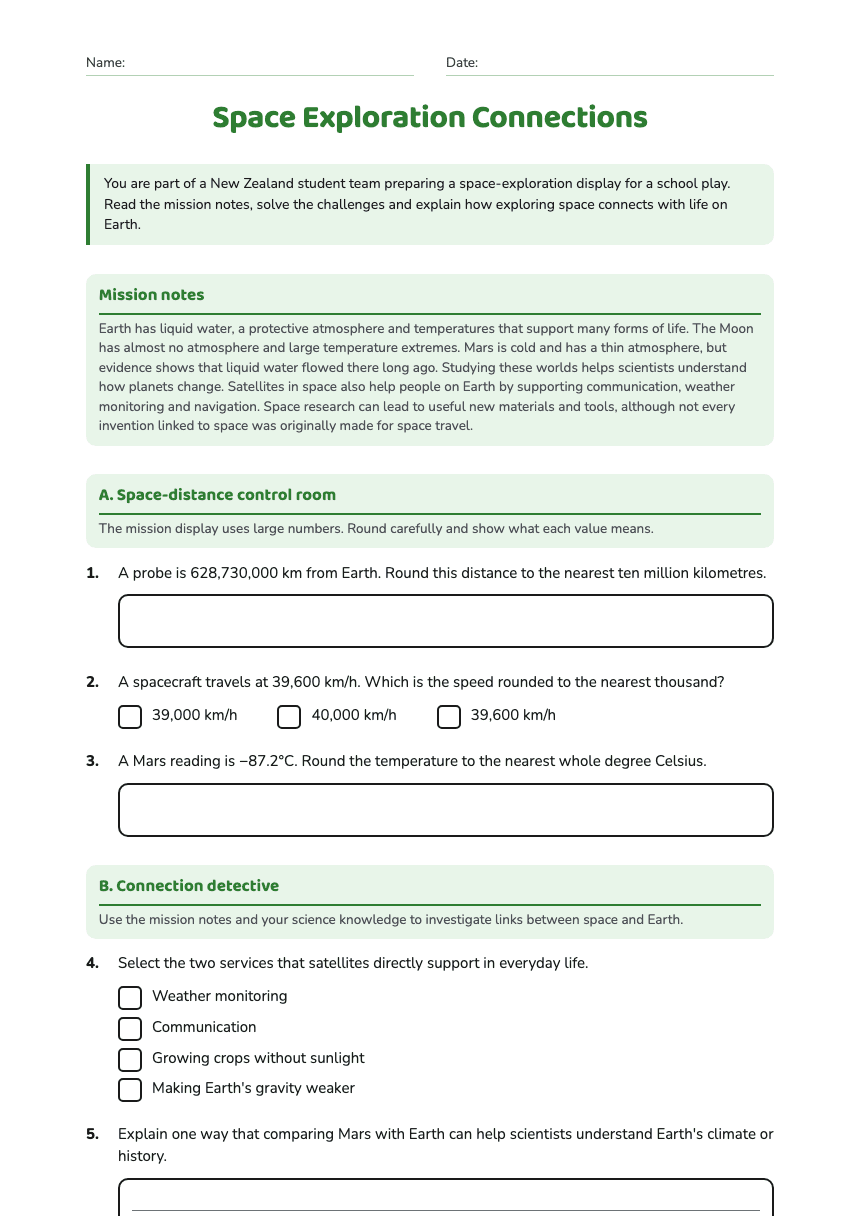
Space Exploration Connections
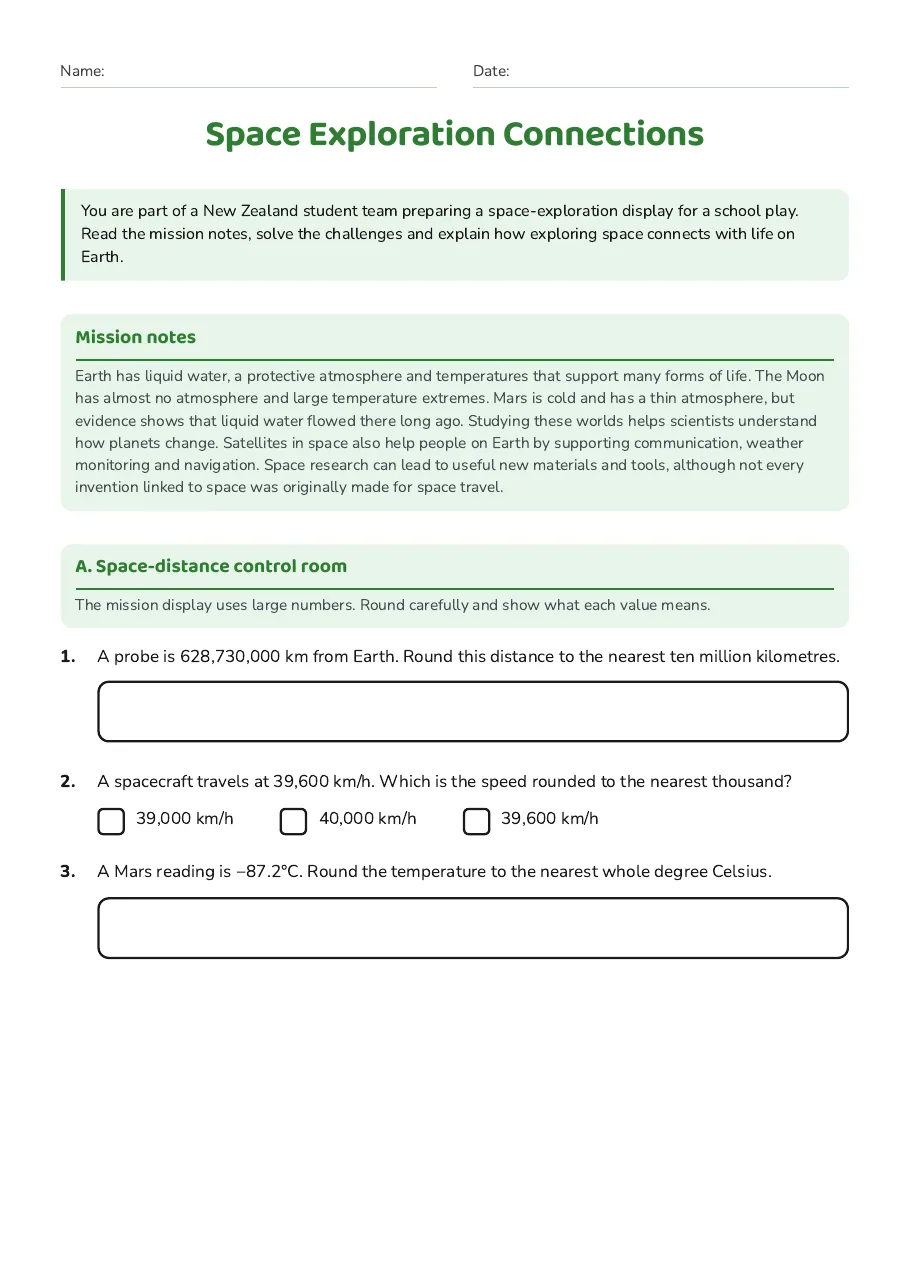
Mission notes
Earth has liquid water, a protective atmosphere and temperatures that support many forms of life. The Moon has almost no atmosphere and large temperature extremes. Mars is cold and has a thin atmosphere, but evidence shows that liquid water flowed there long ago. Studying these worlds helps scientists understand how planets change. Satellites in space also help people on Earth by supporting communication, weather monitoring and navigation. Space research can lead to useful new materials and tools, although not every invention linked to space was originally made for space travel.
A. Space-distance control room
The mission display uses large numbers. Round carefully and show what each value means.
- 39,000 km/h
- 40,000 km/h
- 39,600 km/h
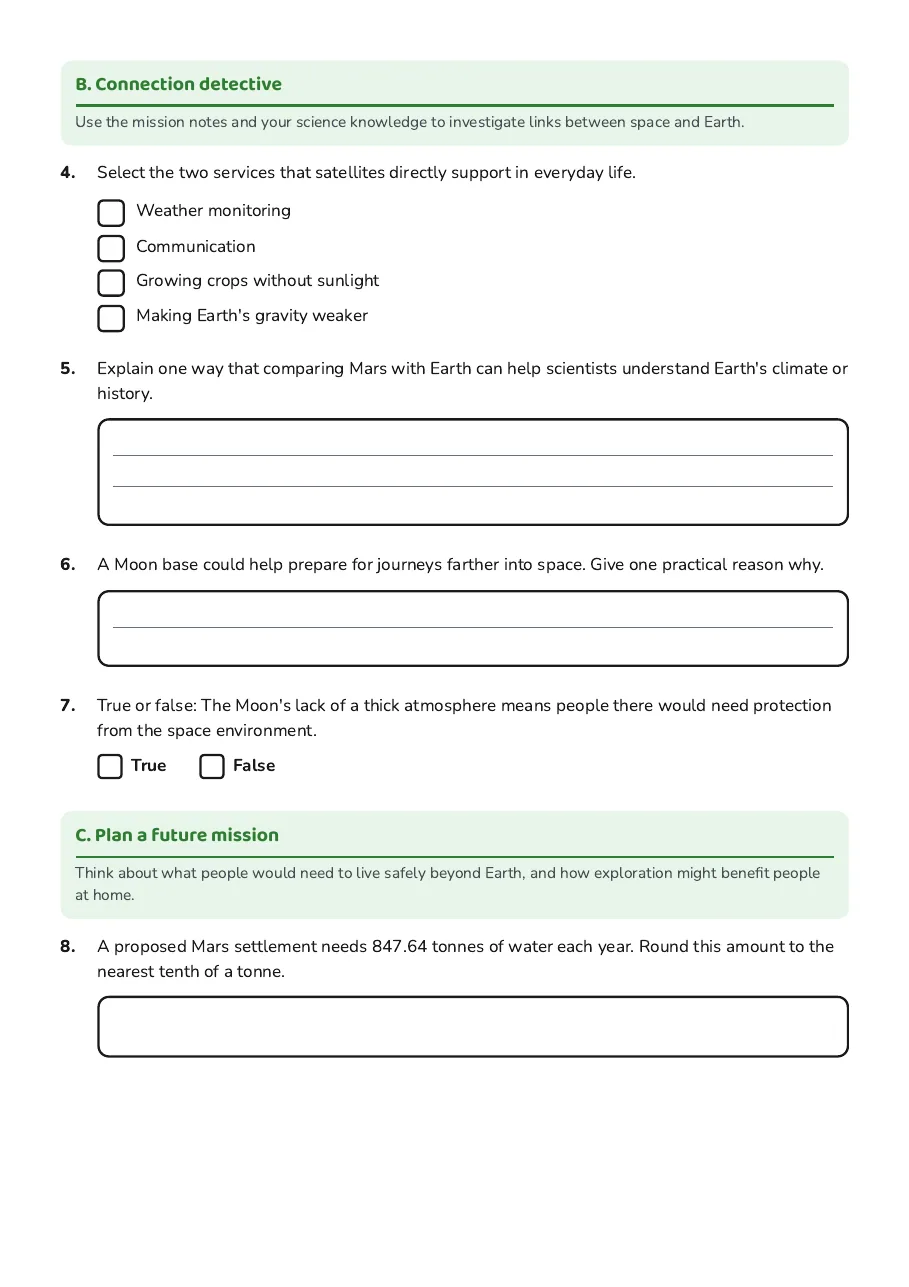
B. Connection detective
Use the mission notes and your science knowledge to investigate links between space and Earth.
- Weather monitoring
- Communication
- Growing crops without sunlight
- Making Earth's gravity weaker
C. Plan a future mission
Think about what people would need to live safely beyond Earth, and how exploration might benefit people at home.
3 printable pages
Page 1
Page 2
Page 3
About This Worksheet
Free in Kuraplan
Sign up free, grab the PDF, and customize it for your class.
Print-Ready
Formatted for standard paper. Clean layout, easy to read.
AI-Generated
Created with Kuraplan's AI, designed for real classroom use.
For Teachers & Parents
Use in classrooms, for homework, tutoring, or homeschool.
Need a custom version of this worksheet?
Kuraplan's AI generates custom worksheets in seconds — differentiated for every learner, aligned to your curriculum.
Generate Custom Worksheets — Free