Sugar's Cultural Significance
A free social sciences worksheet ready for your classroom. Open in Kuraplan to grab the print-ready PDF, customize it for your students, or generate a fresh version in seconds.
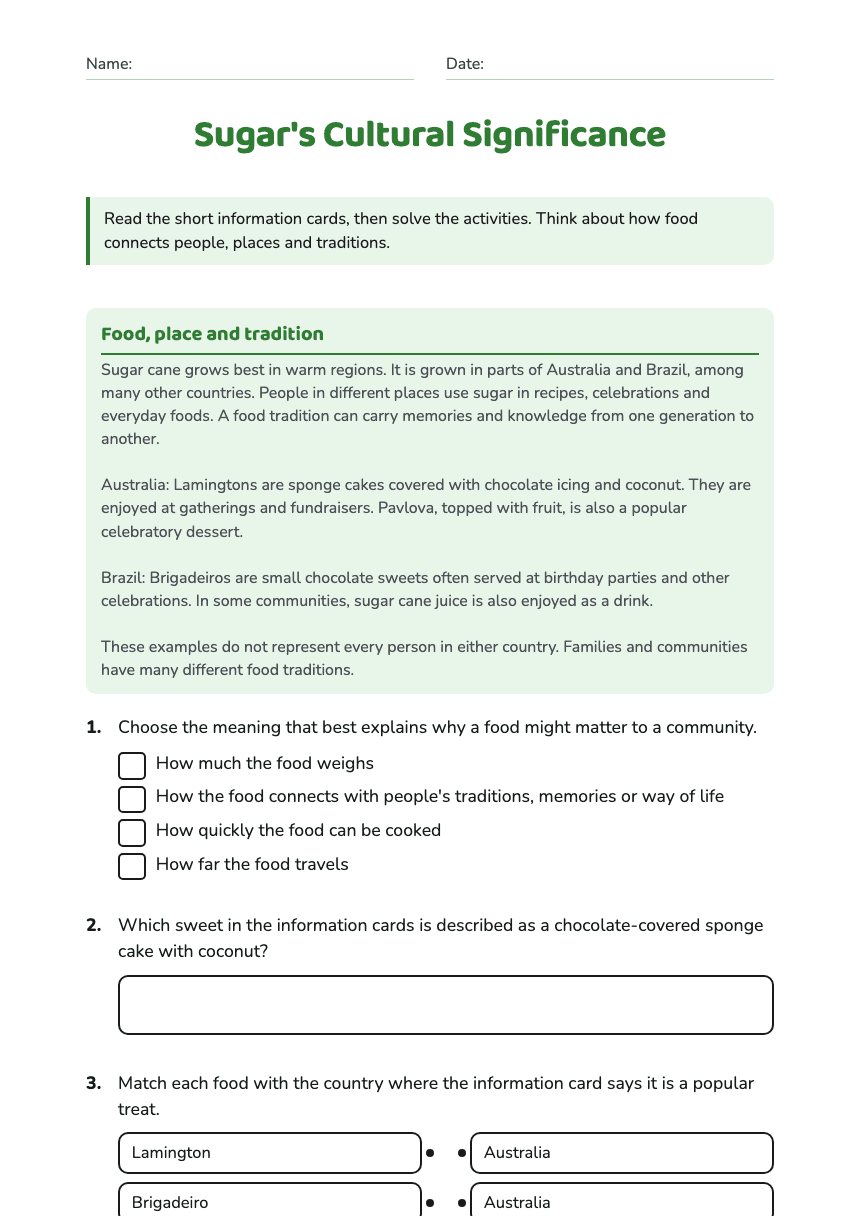
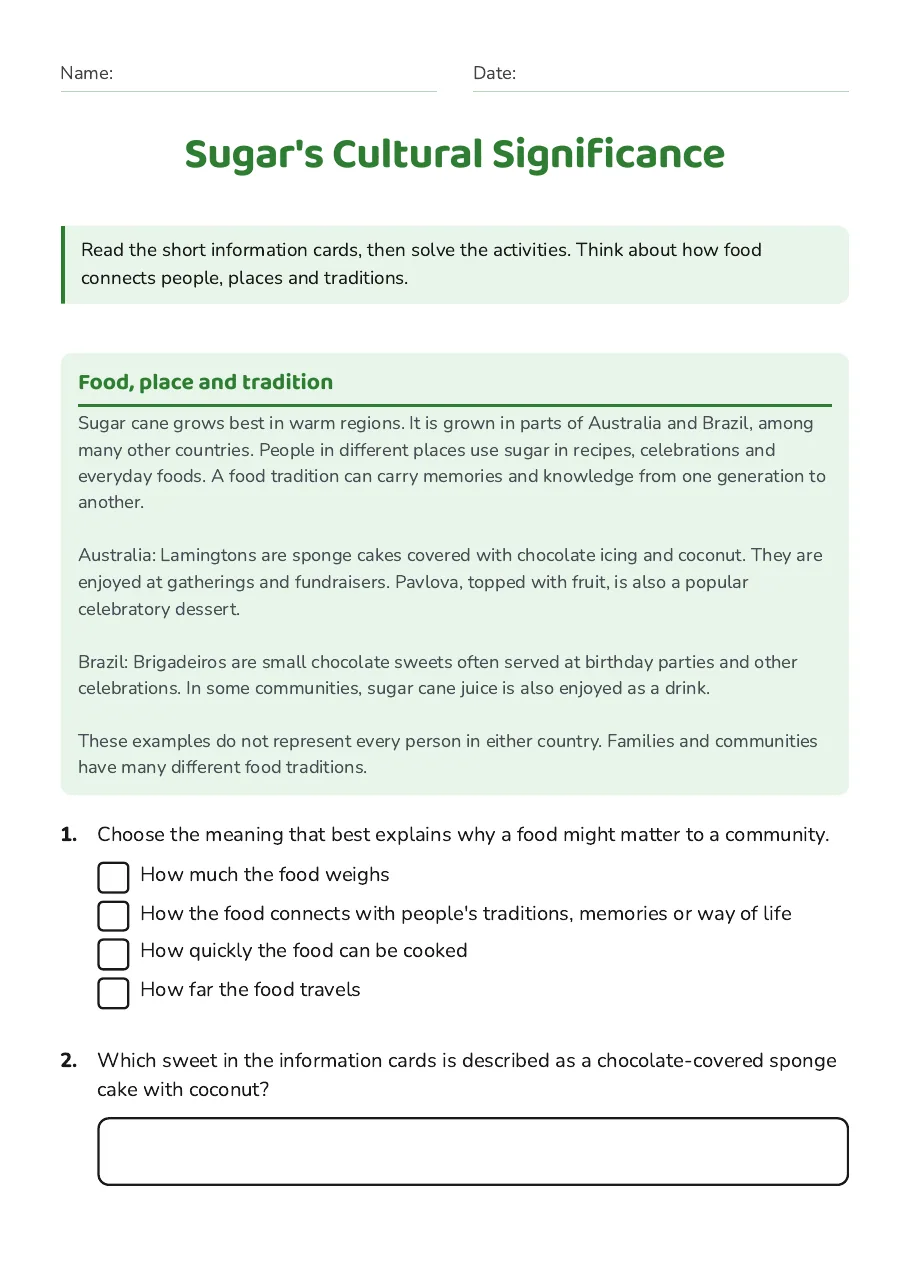
Sugar's Cultural Significance
Food, place and tradition
Sugar cane grows best in warm regions. It is grown in parts of Australia and Brazil, among many other countries. People in different places use sugar in recipes, celebrations and everyday foods. A food tradition can carry memories and knowledge from one generation to another. Australia: Lamingtons are sponge cakes covered with chocolate icing and coconut. They are enjoyed at gatherings and fundraisers. Pavlova, topped with fruit, is also a popular celebratory dessert. Brazil: Brigadeiros are small chocolate sweets often served at birthday parties and other celebrations. In some communities, sugar cane juice is also enjoyed as a drink. These examples do not represent every person in either country. Families and communities have many different food traditions.
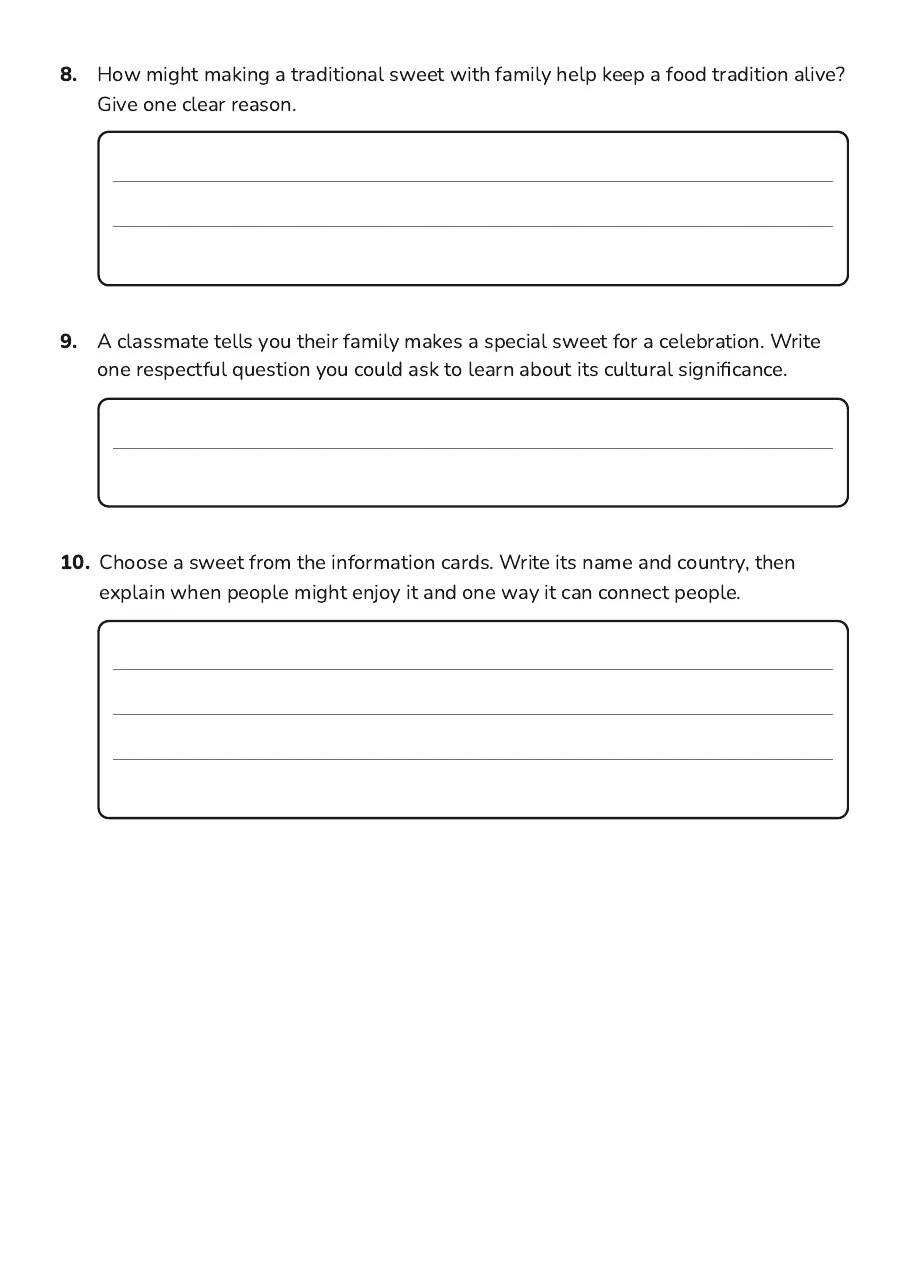
- How much the food weighs
- How the food connects with people's traditions, memories or way of life
- How quickly the food can be cooked
- How far the food travels
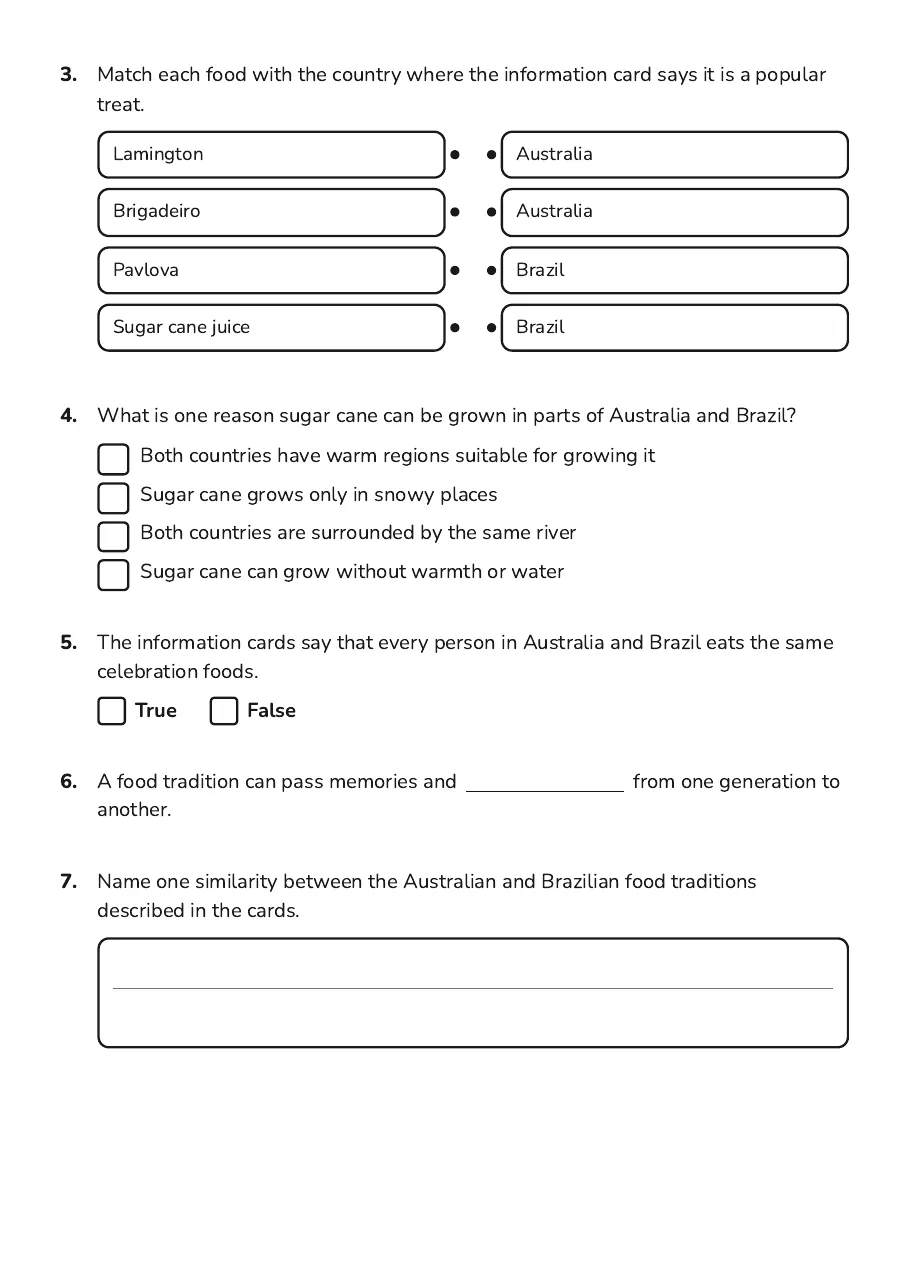
- Lamington
- Brigadeiro
- Pavlova
- Sugar cane juice
- Australia
- Australia
- Brazil
- Brazil
- Both countries have warm regions suitable for growing it
- Sugar cane grows only in snowy places
- Both countries are surrounded by the same river
- Sugar cane can grow without warmth or water
3 printable pages
Page 1
Page 2
Page 3
About This Worksheet
Free in Kuraplan
Sign up free, grab the PDF, and customize it for your class.
Print-Ready
Formatted for standard paper. Clean layout, easy to read.
AI-Generated
Created with Kuraplan's AI, designed for real classroom use.
For Teachers & Parents
Use in classrooms, for homework, tutoring, or homeschool.
Need a custom version of this worksheet?
Kuraplan's AI generates custom worksheets in seconds — differentiated for every learner, aligned to your curriculum.
Generate Custom Worksheets — FreeMore Social Sciences Worksheets
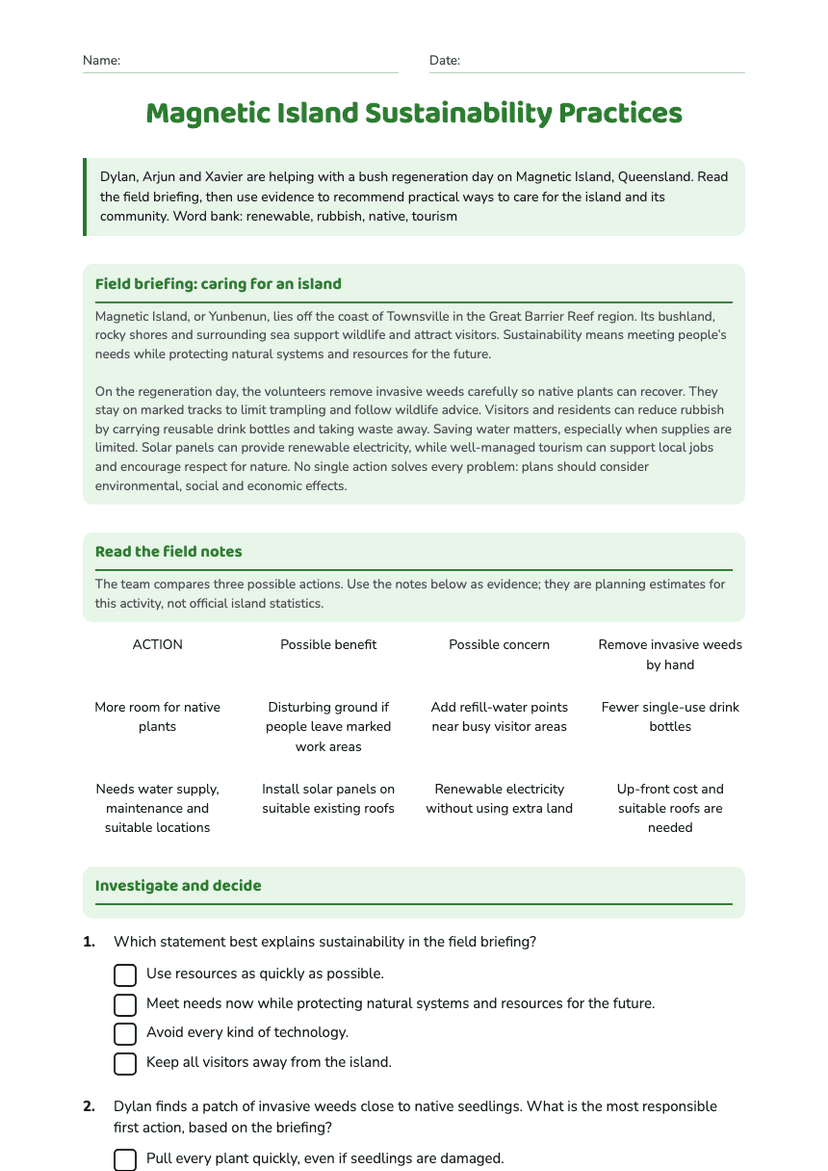
Magnetic Island Sustainability Practices
Free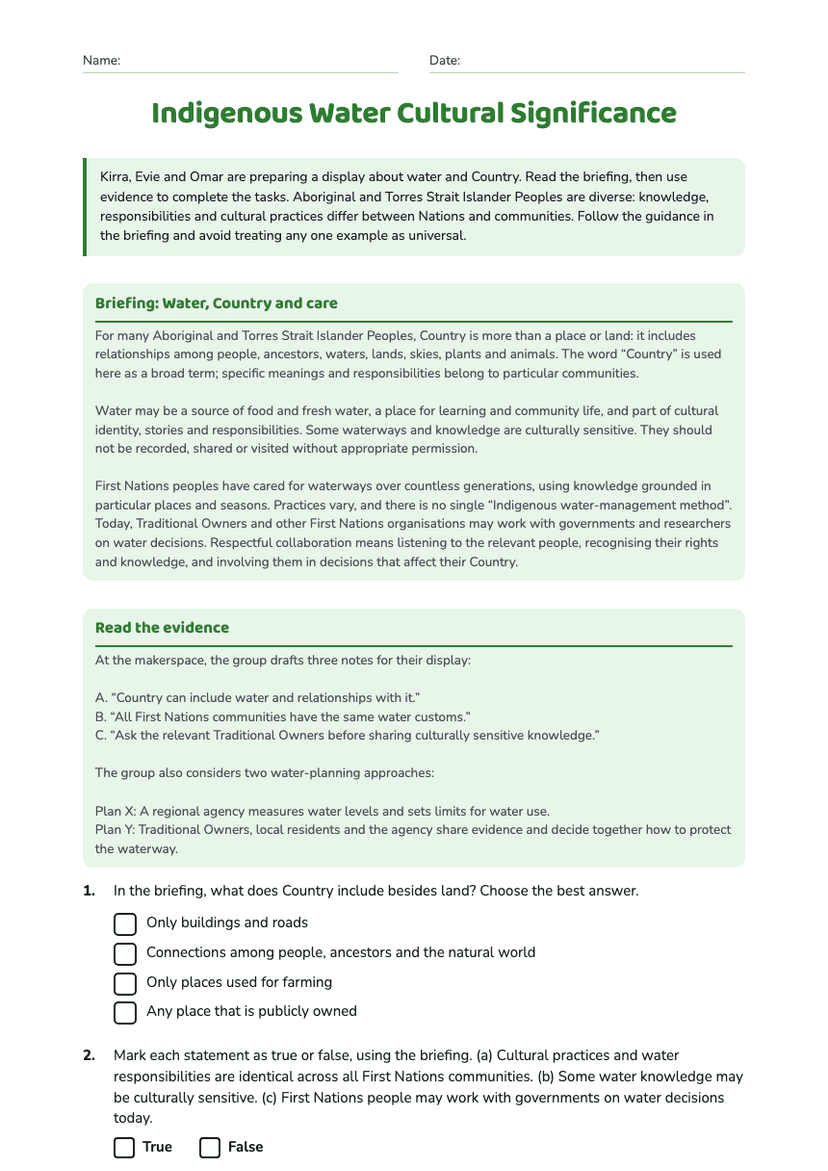
Indigenous Water Cultural Significance
Free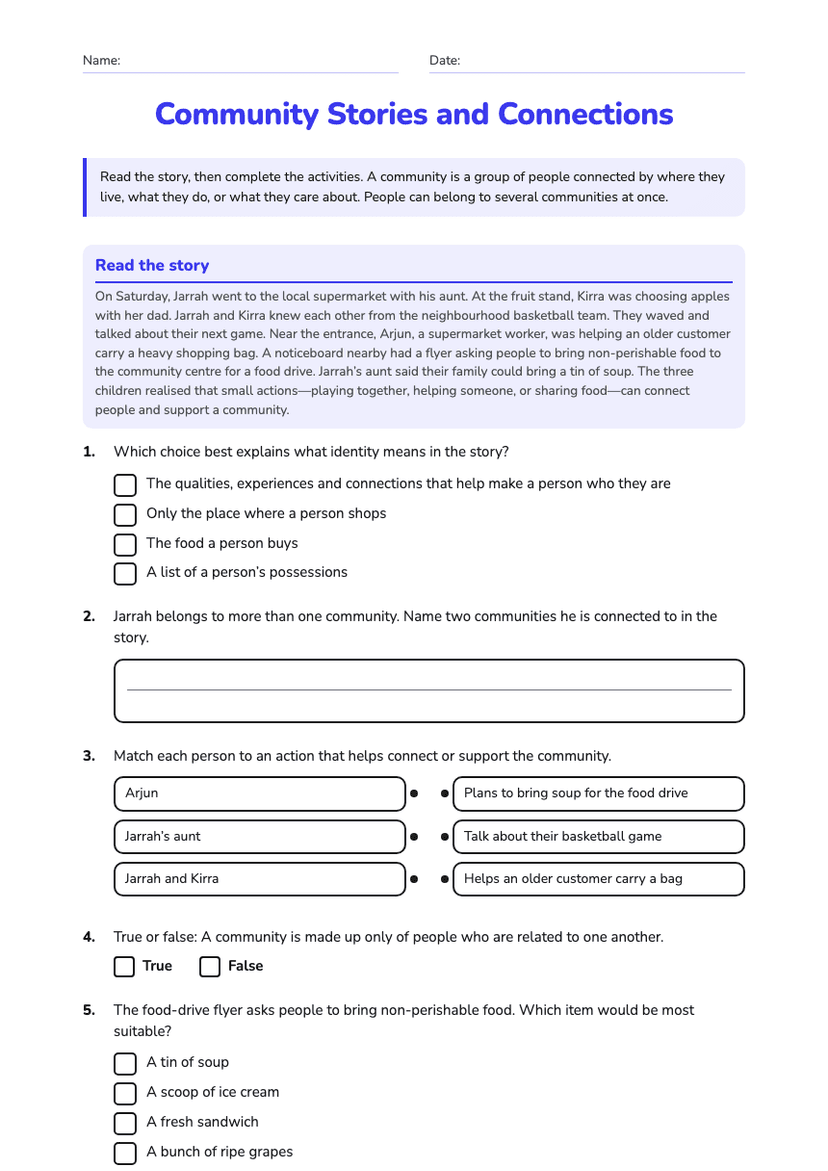
Community Stories and Connections
Free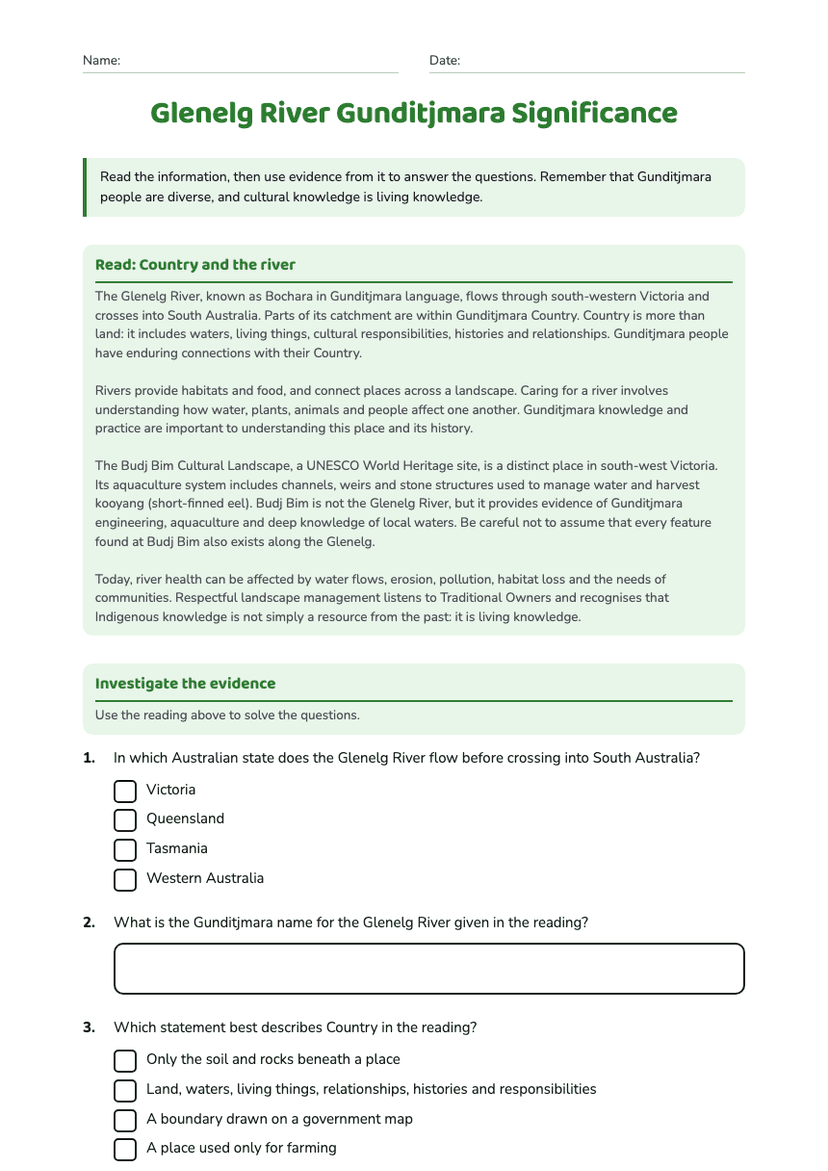
Glenelg River Gunditjmara Significance
Free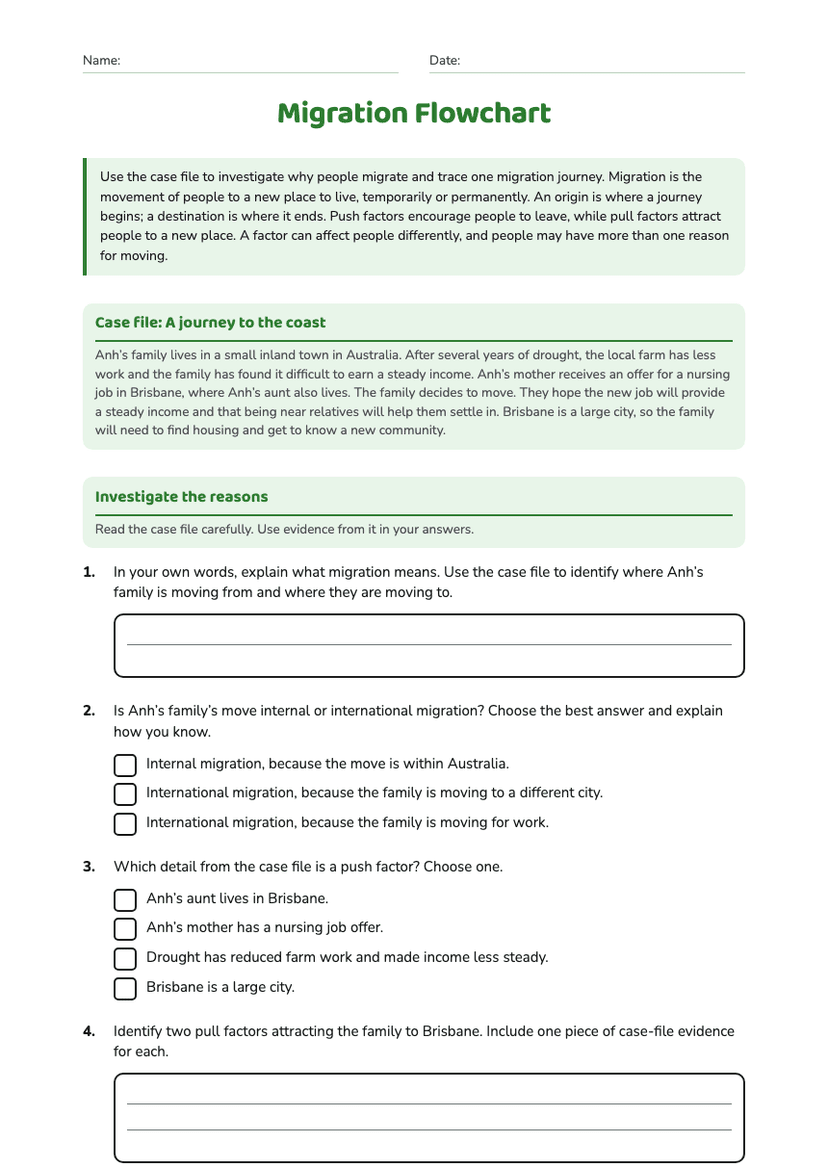
Migration Flowchart
Free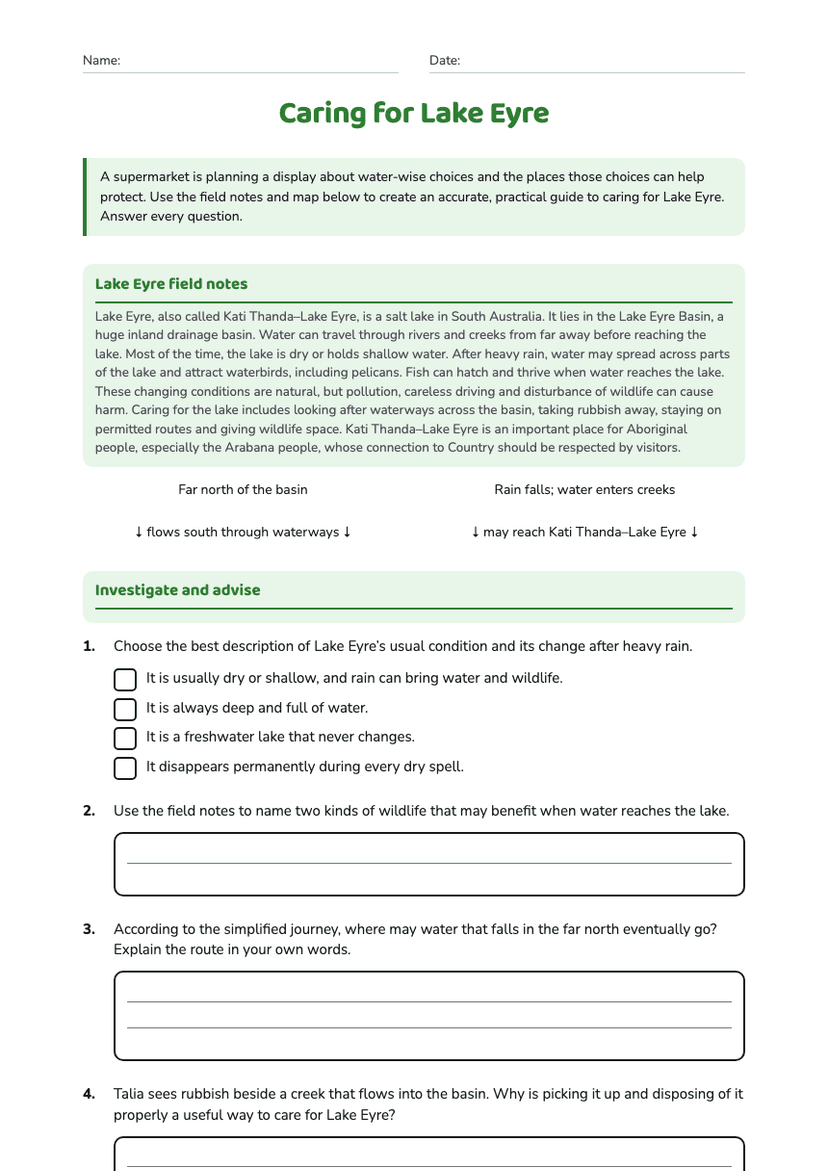
Caring for Lake Eyre
Free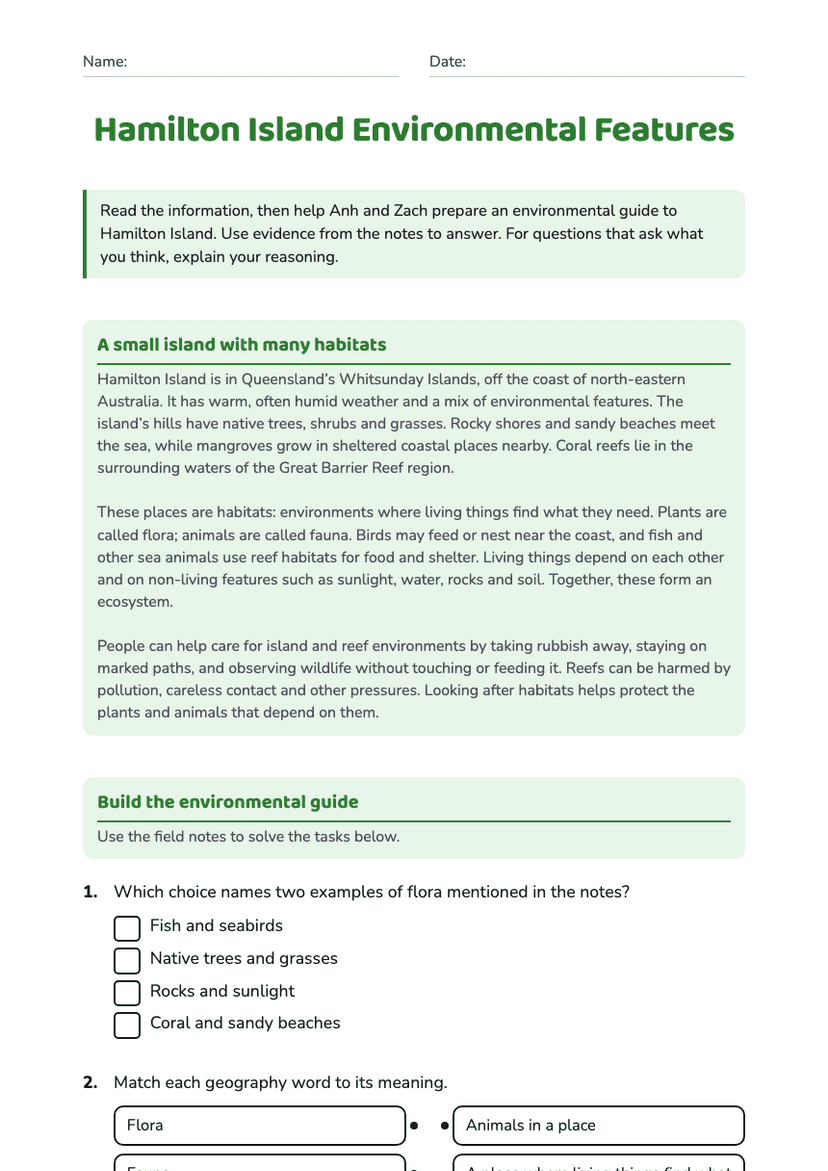
Hamilton Island Environmental Features
Free