ScienceFreePrintable

Sydney Zoo Discovery Booklet

A free science worksheet ready for your classroom. Open in Kuraplan to grab the print-ready PDF, customize it for your students, or generate a fresh version in seconds.

Sydney Zoo Discovery Booklet worksheet preview
Name:Date:

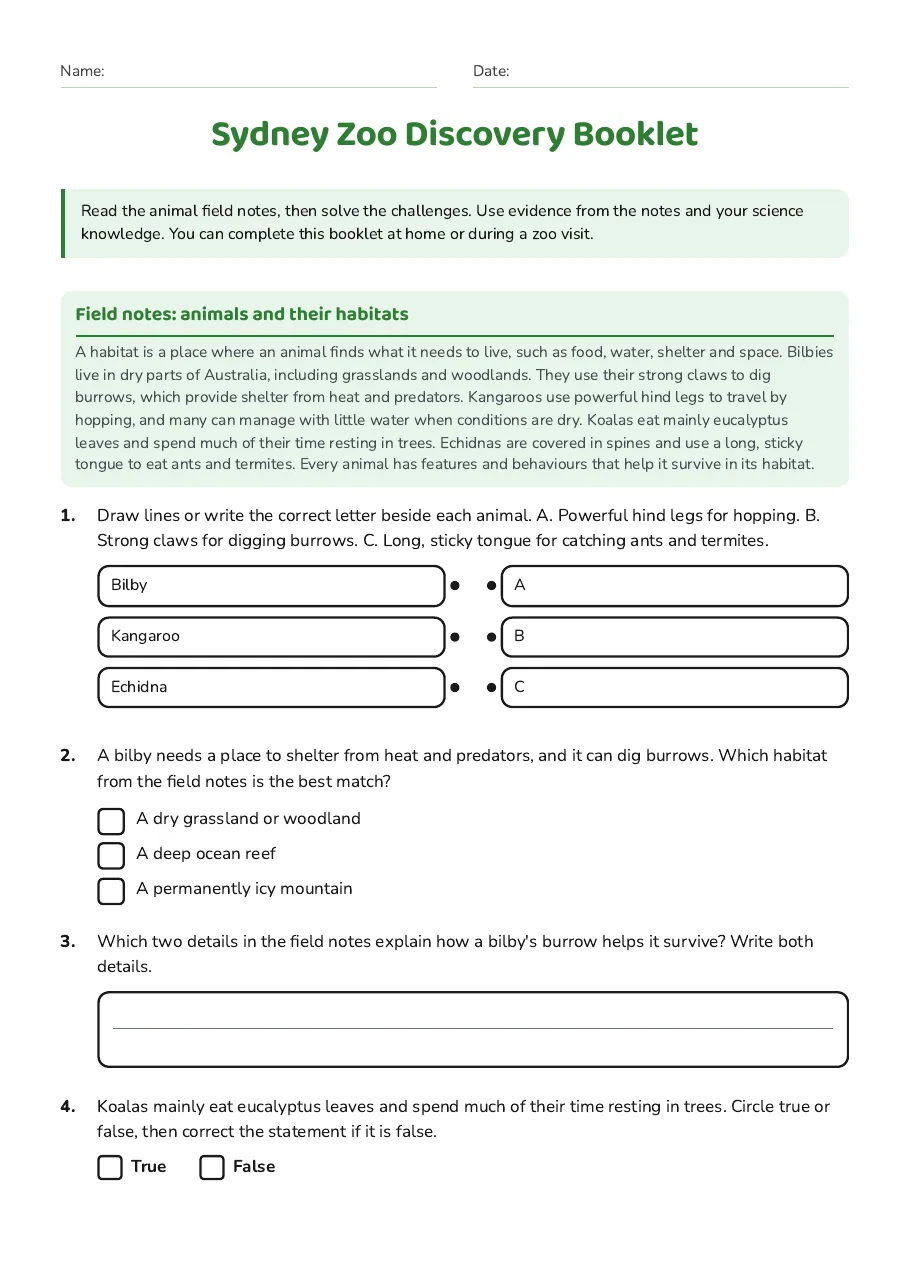
Sydney Zoo Discovery Booklet

Read the animal field notes, then solve the challenges. Use evidence from the notes and your science knowledge. You can complete this booklet at home or during a zoo visit.

Field notes: animals and their habitats

A habitat is a place where an animal finds what it needs to live, such as food, water, shelter and space. Bilbies live in dry parts of Australia, including grasslands and woodlands. They use their strong claws to dig burrows, which provide shelter from heat and predators. Kangaroos use powerful hind legs to travel by hopping, and many can manage with little water when conditions are dry. Koalas eat mainly eucalyptus leaves and spend much of their time resting in trees. Echidnas are covered in spines and use a long, sticky tongue to eat ants and termites. Every animal has features and behaviours that help it survive in its habitat.

1.Draw lines or write the correct letter beside each animal. A. Powerful hind legs for hopping. B. Strong claws for digging burrows. C. Long, sticky tongue for catching ants and termites.
  • Bilby
  • Kangaroo
  • Echidna
  • A
  • B
  • C
2.A bilby needs a place to shelter from heat and predators, and it can dig burrows. Which habitat from the field notes is the best match?
  • A dry grassland or woodland
  • A deep ocean reef
  • A permanently icy mountain
3.Which two details in the field notes explain how a bilby's burrow helps it survive? Write both details.
4.Koalas mainly eat eucalyptus leaves and spend much of their time resting in trees. Circle true or false, then correct the statement if it is false.
TrueFalse

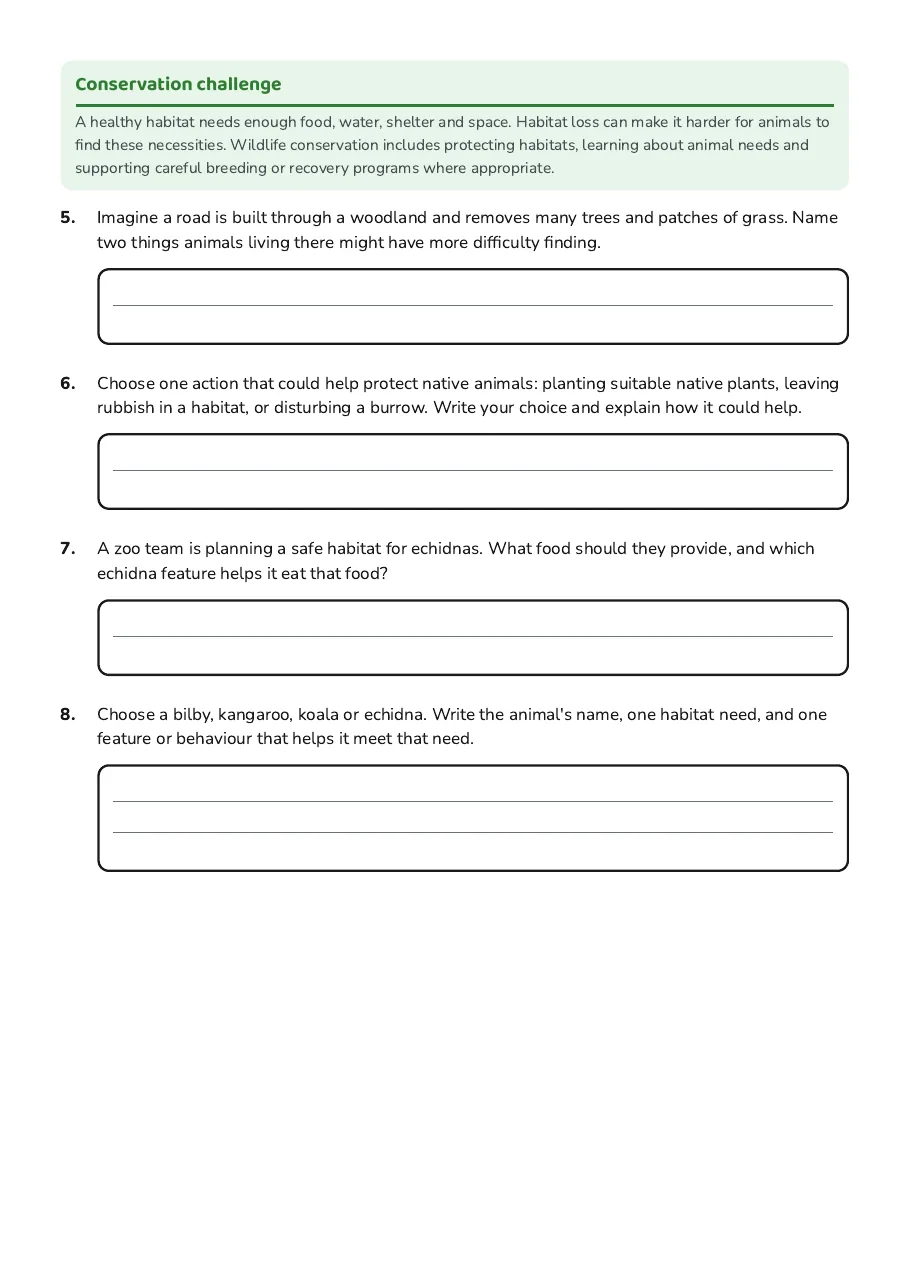
Conservation challenge

A healthy habitat needs enough food, water, shelter and space. Habitat loss can make it harder for animals to find these necessities. Wildlife conservation includes protecting habitats, learning about animal needs and supporting careful breeding or recovery programs where appropriate.

5.Imagine a road is built through a woodland and removes many trees and patches of grass. Name two things animals living there might have more difficulty finding.
6.Choose one action that could help protect native animals: planting suitable native plants, leaving rubbish in a habitat, or disturbing a burrow. Write your choice and explain how it could help.
7.A zoo team is planning a safe habitat for echidnas. What food should they provide, and which echidna feature helps it eat that food?
8.Choose a bilby, kangaroo, koala or echidna. Write the animal's name, one habitat need, and one feature or behaviour that helps it meet that need.
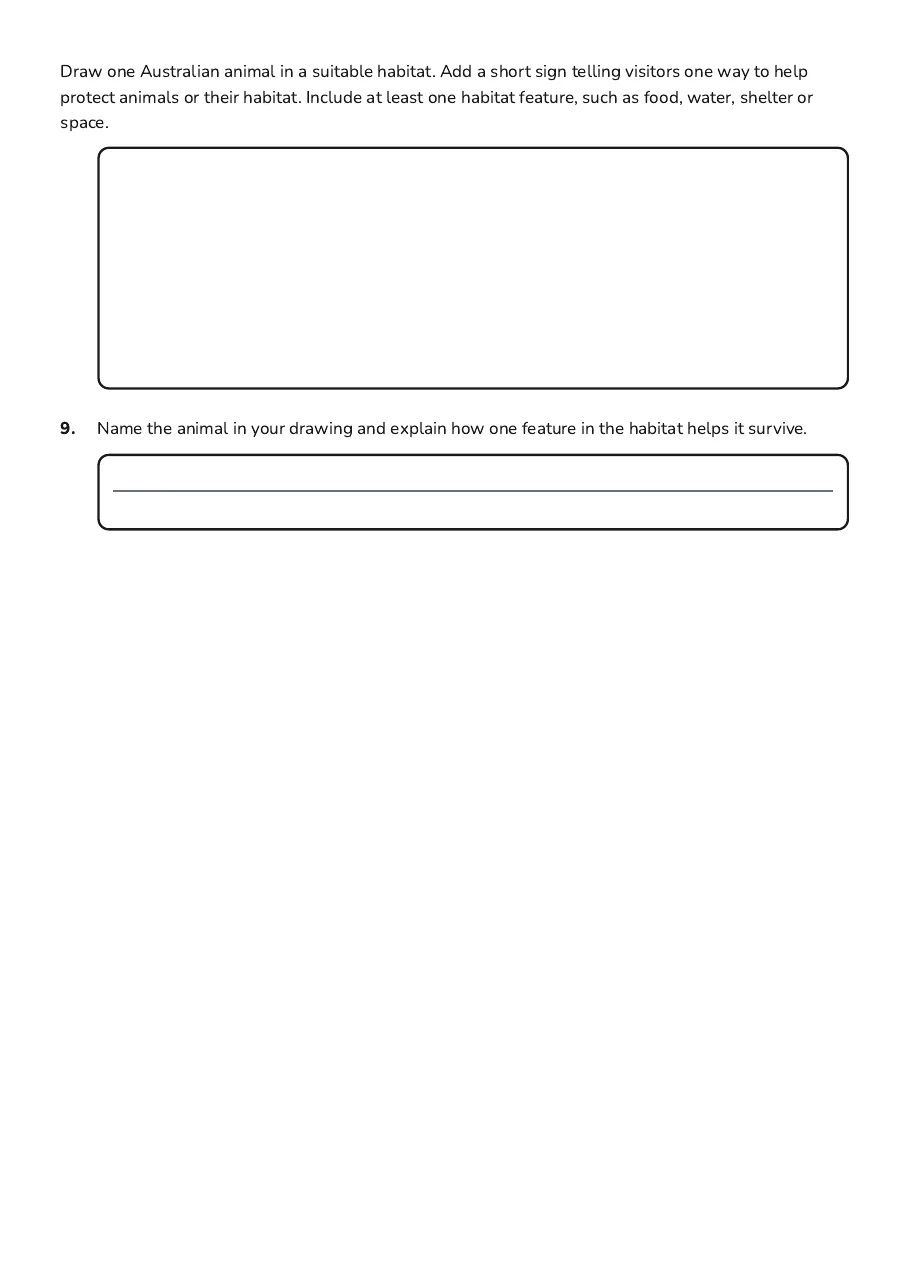
Draw one Australian animal in a suitable habitat. Add a short sign telling visitors one way to help protect animals or their habitat. Include at least one habitat feature, such as food, water, shelter or space.
9.Name the animal in your drawing and explain how one feature in the habitat helps it survive.

3 printable pages

  • Sydney Zoo Discovery Booklet, page 1 of 3: Field notes: animals and their habitats

    Page 1

  • Sydney Zoo Discovery Booklet, page 2 of 3: Conservation challenge

    Page 2

  • Sydney Zoo Discovery Booklet, page 3 of 3: Draw one Australian animal in a suitable habitat. Add a short sign telling visitors one…

    Page 3

About This Worksheet

Free in Kuraplan

Sign up free, grab the PDF, and customize it for your class.

Print-Ready

Formatted for standard paper. Clean layout, easy to read.

AI-Generated

Created with Kuraplan's AI, designed for real classroom use.

For Teachers & Parents

Use in classrooms, for homework, tutoring, or homeschool.

Need a custom version of this worksheet?

Kuraplan's AI generates custom worksheets in seconds — differentiated for every learner, aligned to your curriculum.

Generate Custom Worksheets — Free
No credit card Curriculum-aligned Under 60 seconds