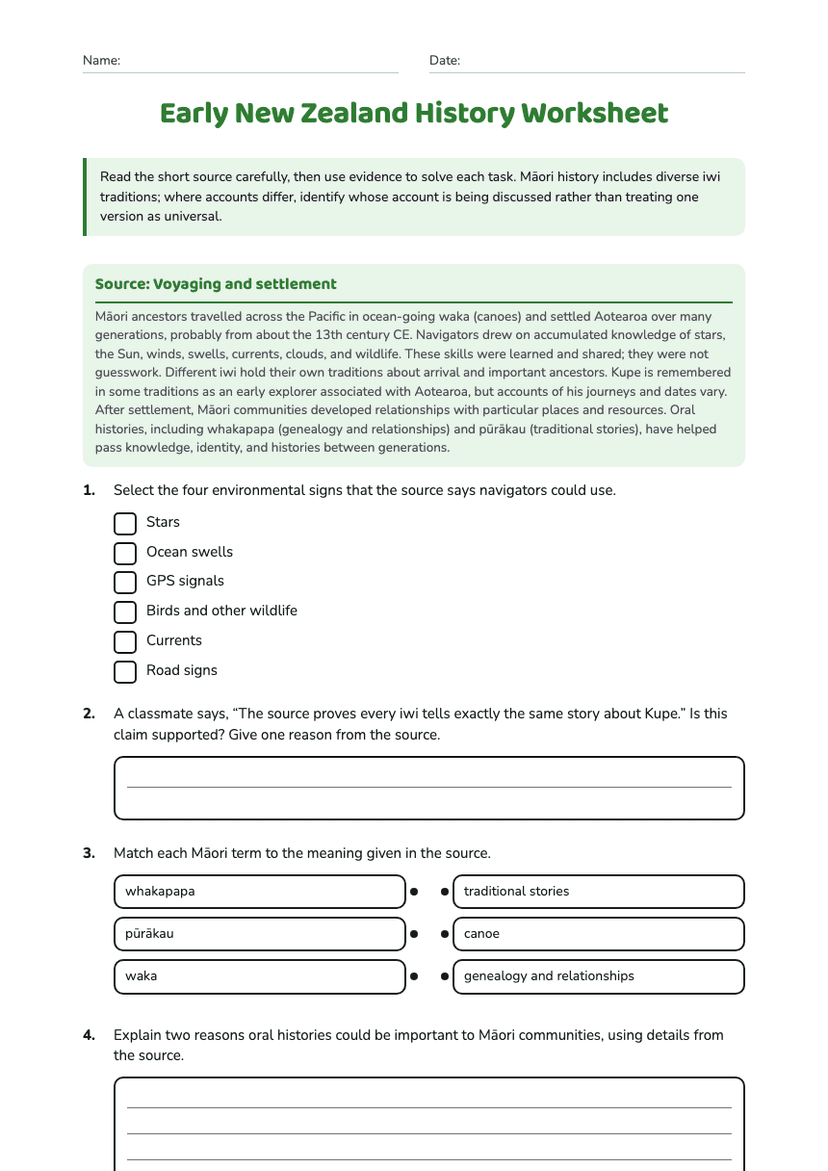
Te Tiriti Historical Background
A free social sciences worksheet ready for your classroom. Open in Kuraplan to grab the print-ready PDF, customize it for your students, or generate a fresh version in seconds.

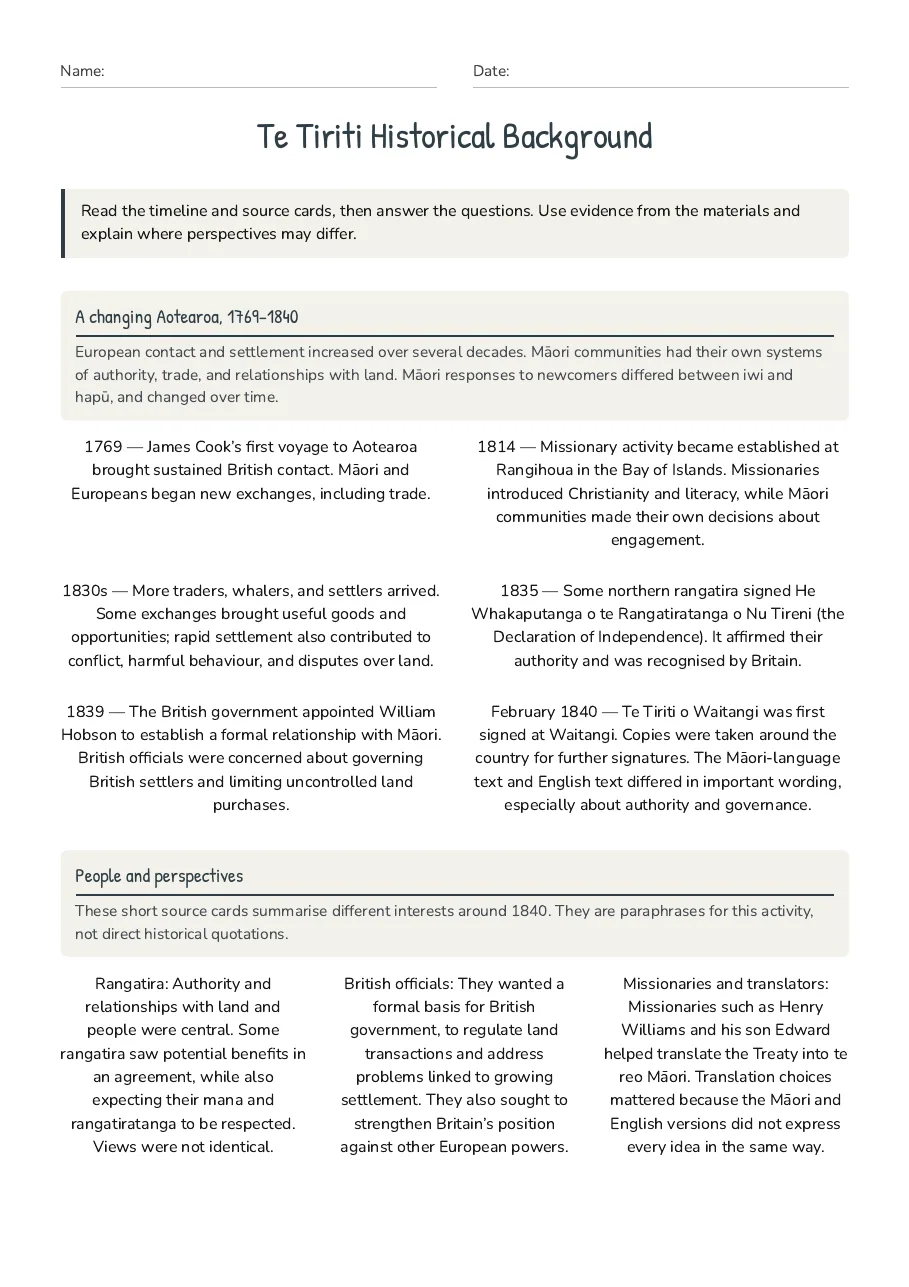
Te Tiriti Historical Background
A changing Aotearoa, 1769–1840
European contact and settlement increased over several decades. Māori communities had their own systems of authority, trade, and relationships with land. Māori responses to newcomers differed between iwi and hapū, and changed over time.
1769 — James Cook’s first voyage to Aotearoa brought sustained British contact. Māori and Europeans began new exchanges, including trade.
1814 — Missionary activity became established at Rangihoua in the Bay of Islands. Missionaries introduced Christianity and literacy, while Māori communities made their own decisions about engagement.
1830s — More traders, whalers, and settlers arrived. Some exchanges brought useful goods and opportunities; rapid settlement also contributed to conflict, harmful behaviour, and disputes over land.
1835 — Some northern rangatira signed He Whakaputanga o te Rangatiratanga o Nu Tireni (the Declaration of Independence). It affirmed their authority and was recognised by Britain.
1839 — The British government appointed William Hobson to establish a formal relationship with Māori. British officials were concerned about governing British settlers and limiting uncontrolled land purchases.
February 1840 — Te Tiriti o Waitangi was first signed at Waitangi. Copies were taken around the country for further signatures. The Māori-language text and English text differed in important wording, especially about authority and governance.
People and perspectives
These short source cards summarise different interests around 1840. They are paraphrases for this activity, not direct historical quotations.
Rangatira: Authority and relationships with land and people were central. Some rangatira saw potential benefits in an agreement, while also expecting their mana and rangatiratanga to be respected. Views were not identical.
British officials: They wanted a formal basis for British government, to regulate land transactions and address problems linked to growing settlement. They also sought to strengthen Britain’s position against other European powers.
Missionaries and translators: Missionaries such as Henry Williams and his son Edward helped translate the Treaty into te reo Māori. Translation choices mattered because the Māori and English versions did not express every idea in the same way.
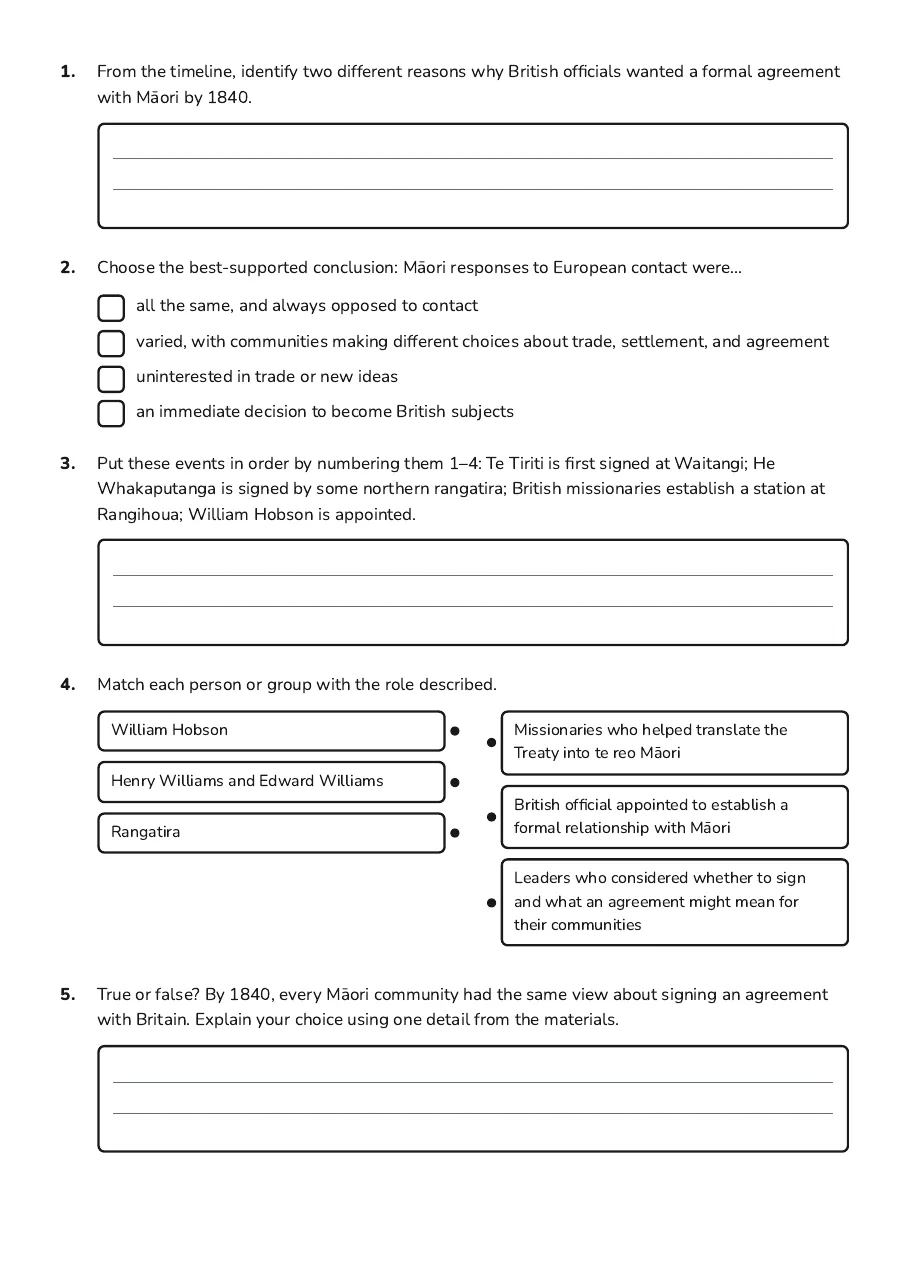
- all the same, and always opposed to contact
- varied, with communities making different choices about trade, settlement, and agreement
- uninterested in trade or new ideas
- an immediate decision to become British subjects
- William Hobson
- Henry Williams and Edward Williams
- Rangatira
- Missionaries who helped translate the Treaty into te reo Māori
- British official appointed to establish a formal relationship with Māori
- Leaders who considered whether to sign and what an agreement might mean for their communities
3 printable pages
Page 1
Page 2
Page 3
About This Worksheet
Free in Kuraplan
Sign up free, grab the PDF, and customize it for your class.
Print-Ready
Formatted for standard paper. Clean layout, easy to read.
AI-Generated
Created with Kuraplan's AI, designed for real classroom use.
For Teachers & Parents
Use in classrooms, for homework, tutoring, or homeschool.
Need a custom version of this worksheet?
Kuraplan's AI generates custom worksheets in seconds — differentiated for every learner, aligned to your curriculum.
Generate Custom Worksheets — FreeMore Social Sciences Worksheets
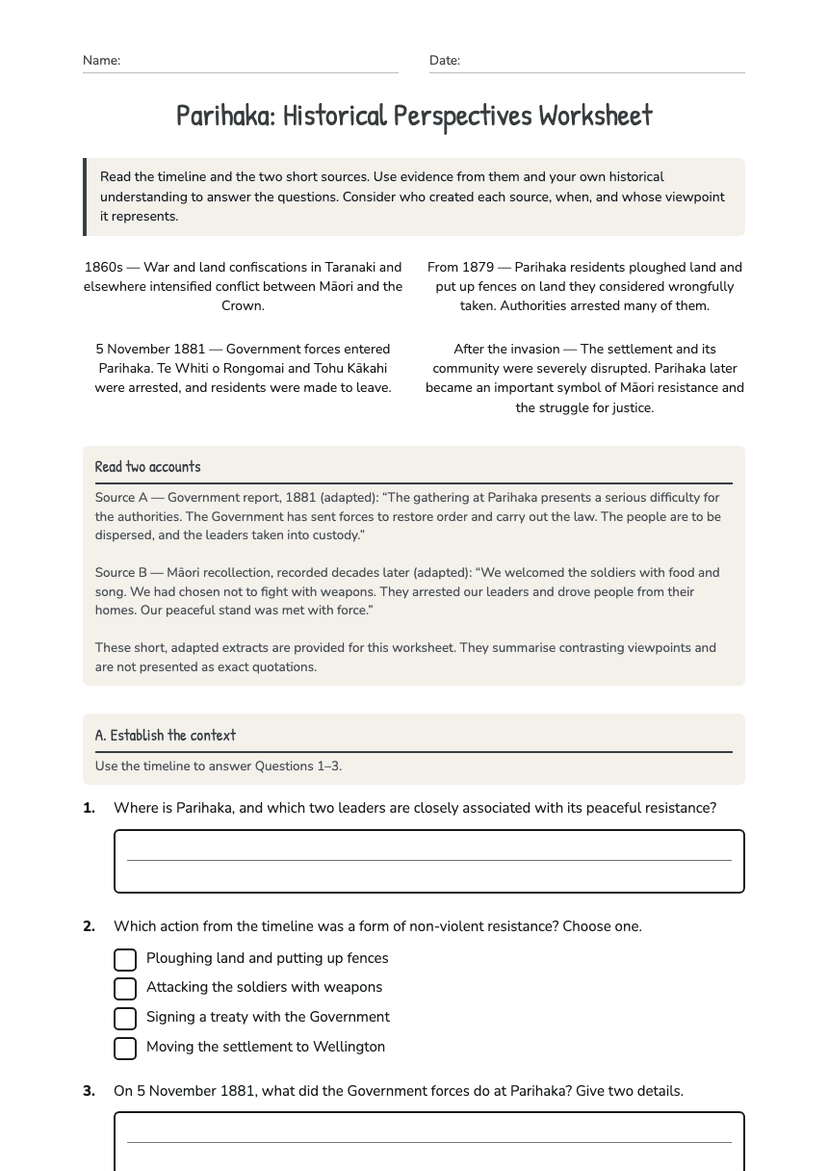
Parihaka: Historical Perspectives Worksheet
Free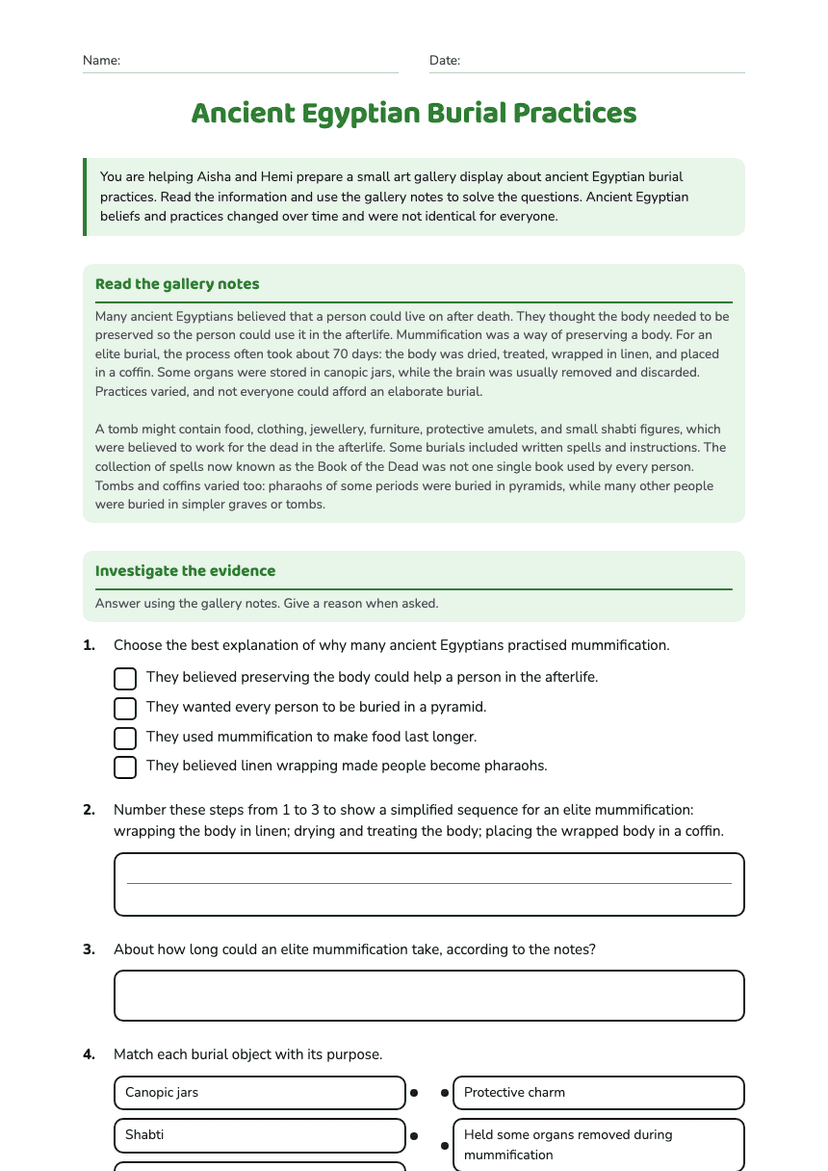
Ancient Egyptian Burial Practices
Free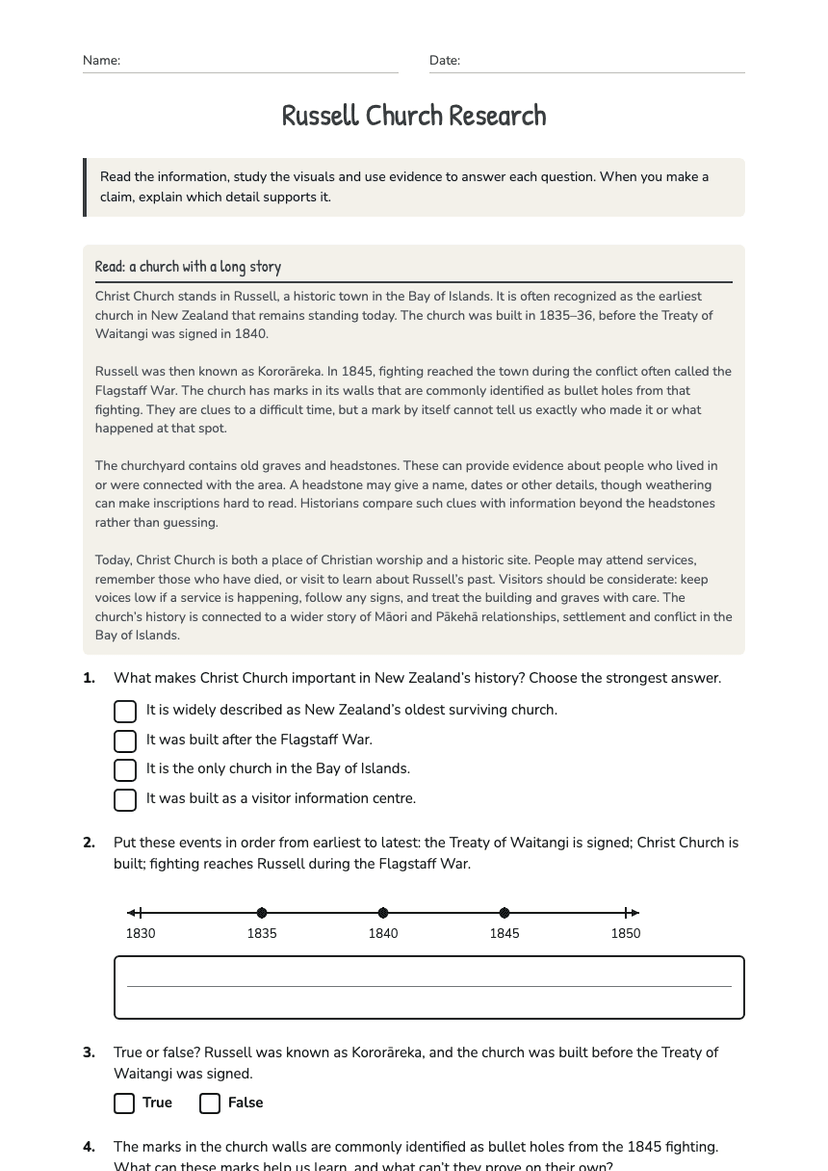
Russell Church Research
Free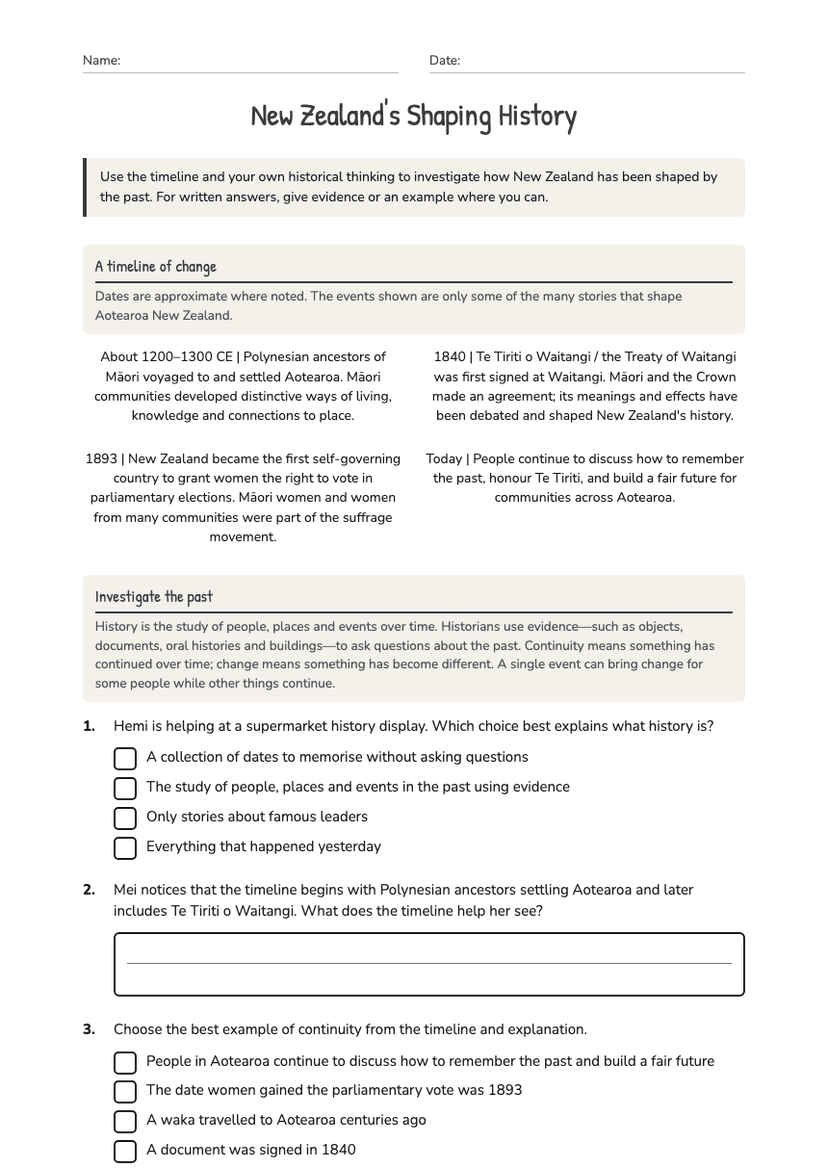
New Zealand's Shaping History
Free
Te Aute Historical Insights
Free
World War II: Causes
Free
Traditional and Modern Voyaging
Free