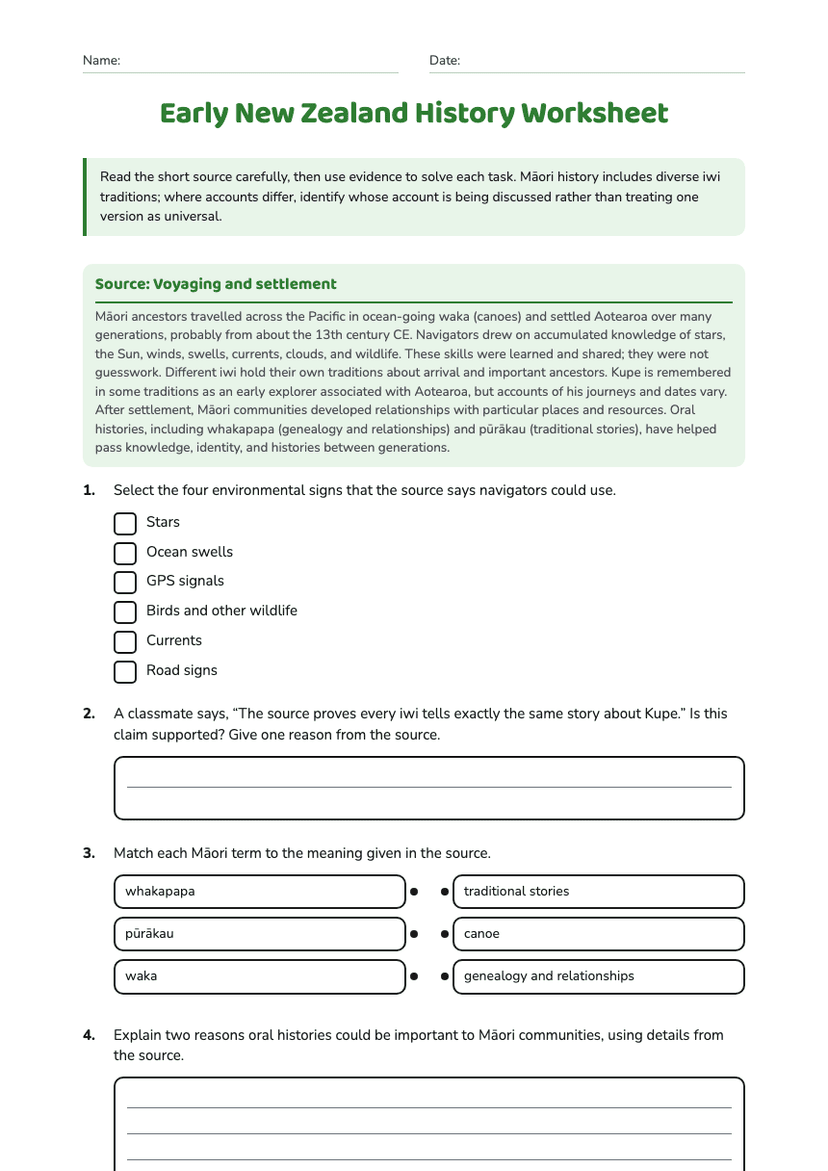
Understanding Historical Perspectives
A free social sciences worksheet ready for your classroom. Open in Kuraplan to grab the print-ready PDF, customize it for your students, or generate a fresh version in seconds.
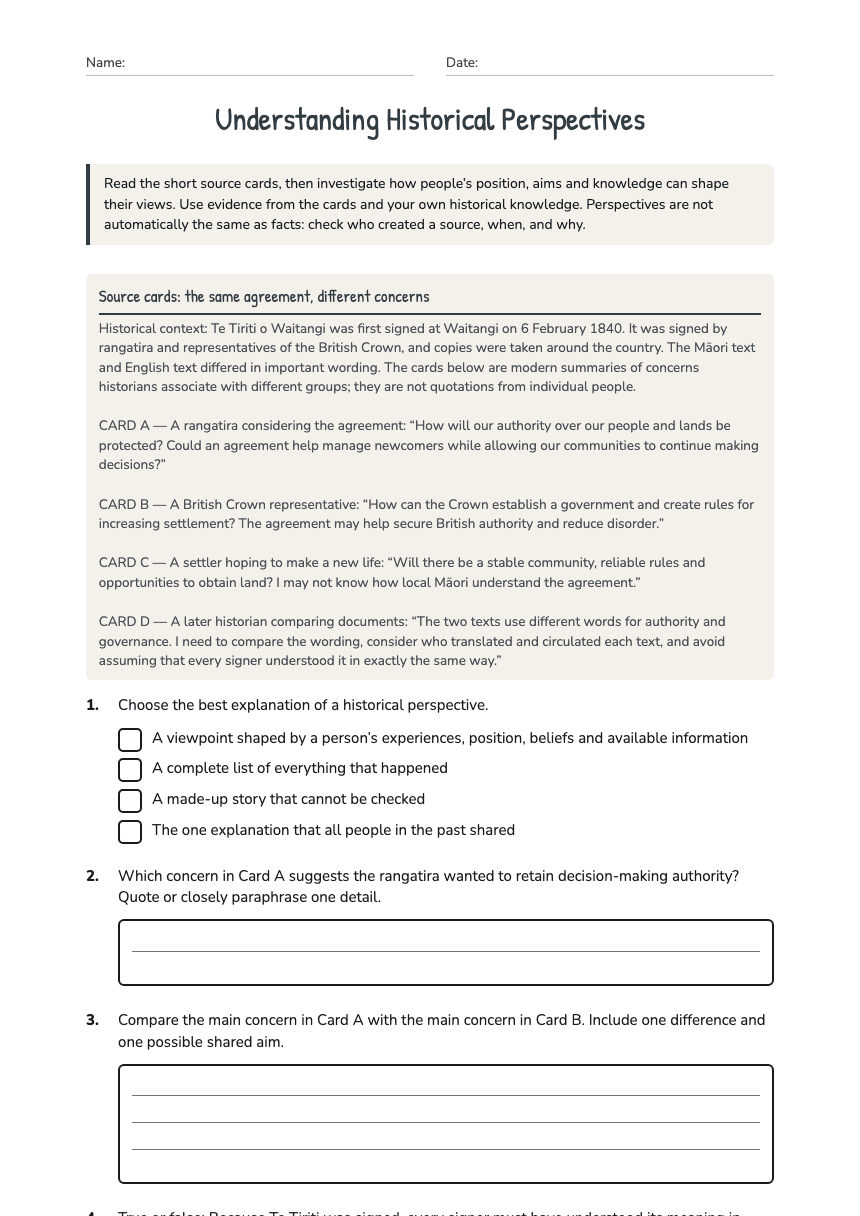
Understanding Historical Perspectives
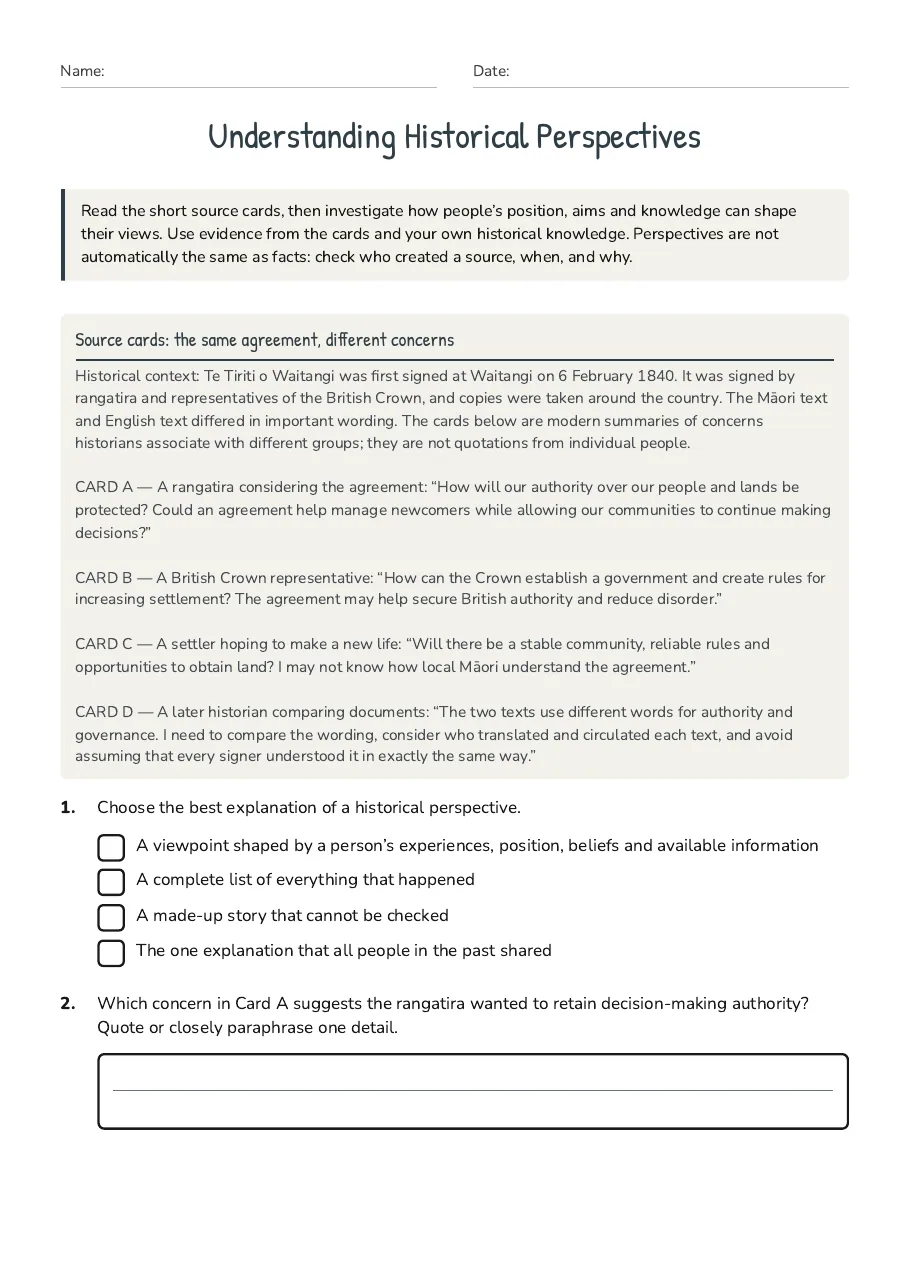
Source cards: the same agreement, different concerns
Historical context: Te Tiriti o Waitangi was first signed at Waitangi on 6 February 1840. It was signed by rangatira and representatives of the British Crown, and copies were taken around the country. The Māori text and English text differed in important wording. The cards below are modern summaries of concerns historians associate with different groups; they are not quotations from individual people. CARD A — A rangatira considering the agreement: “How will our authority over our people and lands be protected? Could an agreement help manage newcomers while allowing our communities to continue making decisions?” CARD B — A British Crown representative: “How can the Crown establish a government and create rules for increasing settlement? The agreement may help secure British authority and reduce disorder.” CARD C — A settler hoping to make a new life: “Will there be a stable community, reliable rules and opportunities to obtain land? I may not know how local Māori understand the agreement.” CARD D — A later historian comparing documents: “The two texts use different words for authority and governance. I need to compare the wording, consider who translated and circulated each text, and avoid assuming that every signer understood it in exactly the same way.”
- A viewpoint shaped by a person’s experiences, position, beliefs and available information
- A complete list of everything that happened
- A made-up story that cannot be checked
- The one explanation that all people in the past shared
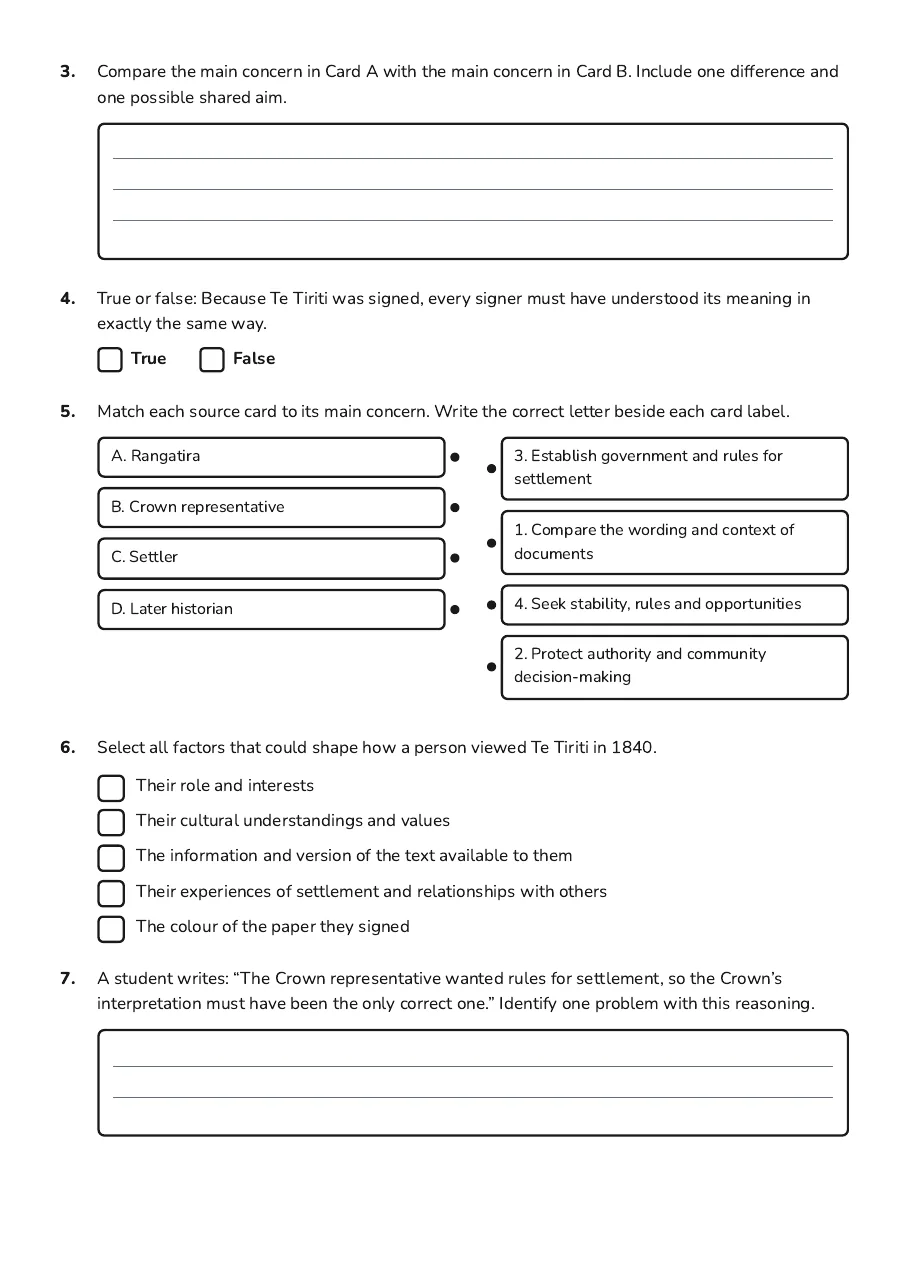
- A. Rangatira
- B. Crown representative
- C. Settler
- D. Later historian
- 3. Establish government and rules for settlement
- 1. Compare the wording and context of documents
- 4. Seek stability, rules and opportunities
- 2. Protect authority and community decision-making
- Their role and interests
- Their cultural understandings and values
- The information and version of the text available to them
- Their experiences of settlement and relationships with others
- The colour of the paper they signed
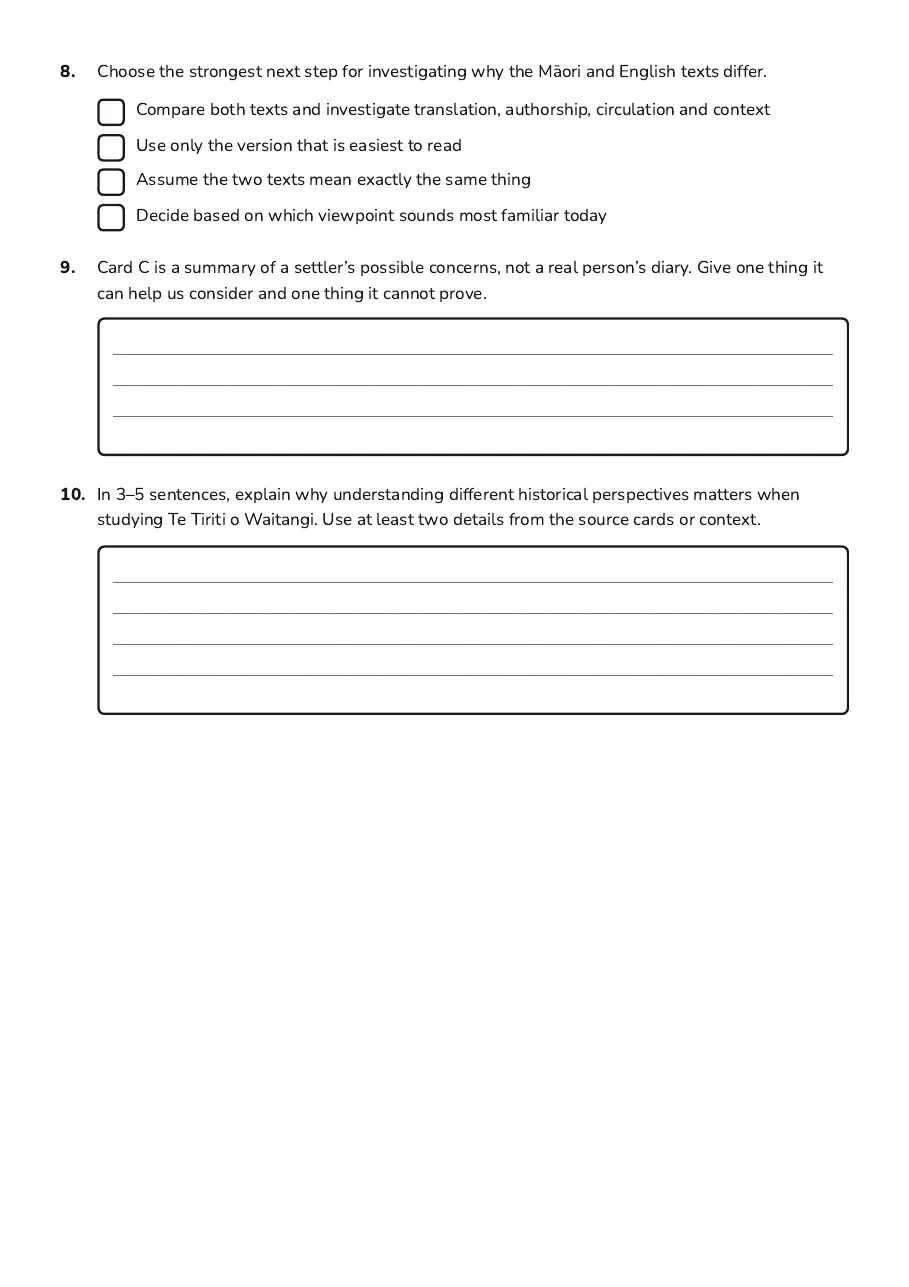
- Compare both texts and investigate translation, authorship, circulation and context
- Use only the version that is easiest to read
- Assume the two texts mean exactly the same thing
- Decide based on which viewpoint sounds most familiar today
3 printable pages
Page 1
Page 2
Page 3
About This Worksheet
Free in Kuraplan
Sign up free, grab the PDF, and customize it for your class.
Print-Ready
Formatted for standard paper. Clean layout, easy to read.
AI-Generated
Created with Kuraplan's AI, designed for real classroom use.
For Teachers & Parents
Use in classrooms, for homework, tutoring, or homeschool.
Need a custom version of this worksheet?
Kuraplan's AI generates custom worksheets in seconds — differentiated for every learner, aligned to your curriculum.
Generate Custom Worksheets — FreeMore Social Sciences Worksheets
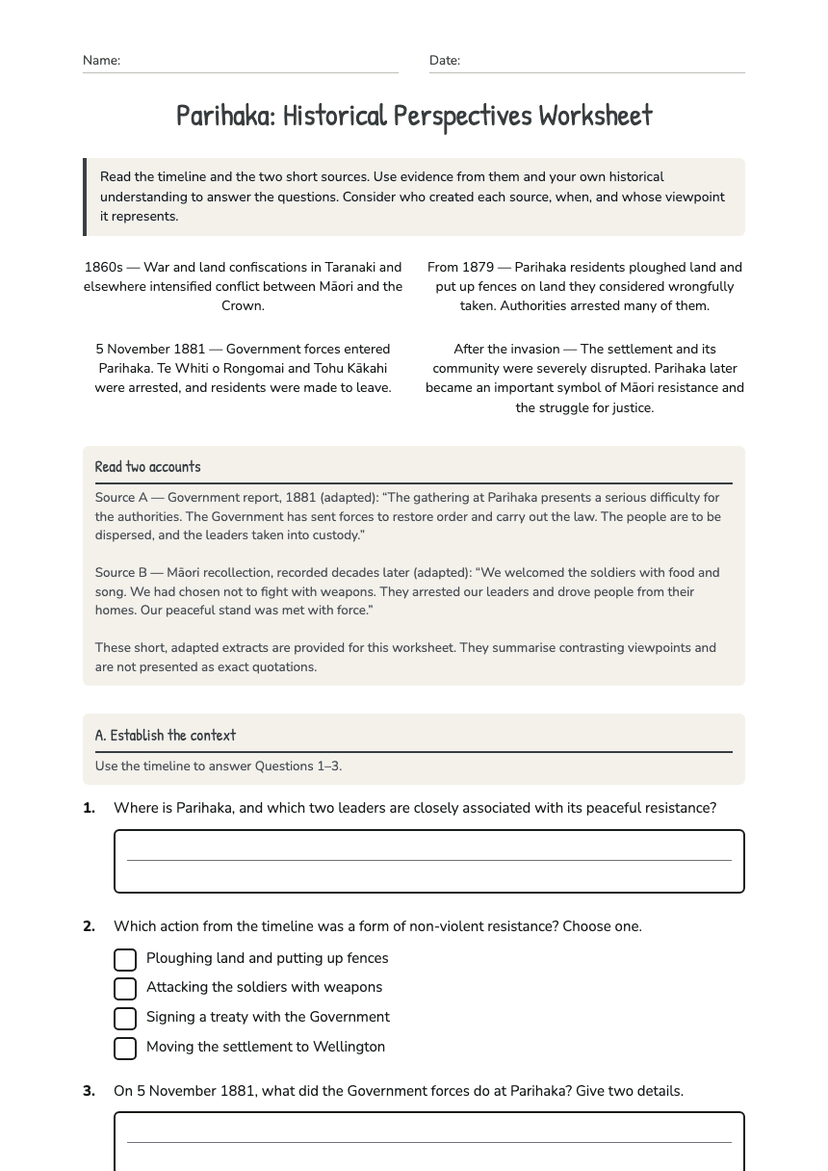
Parihaka: Historical Perspectives Worksheet
Free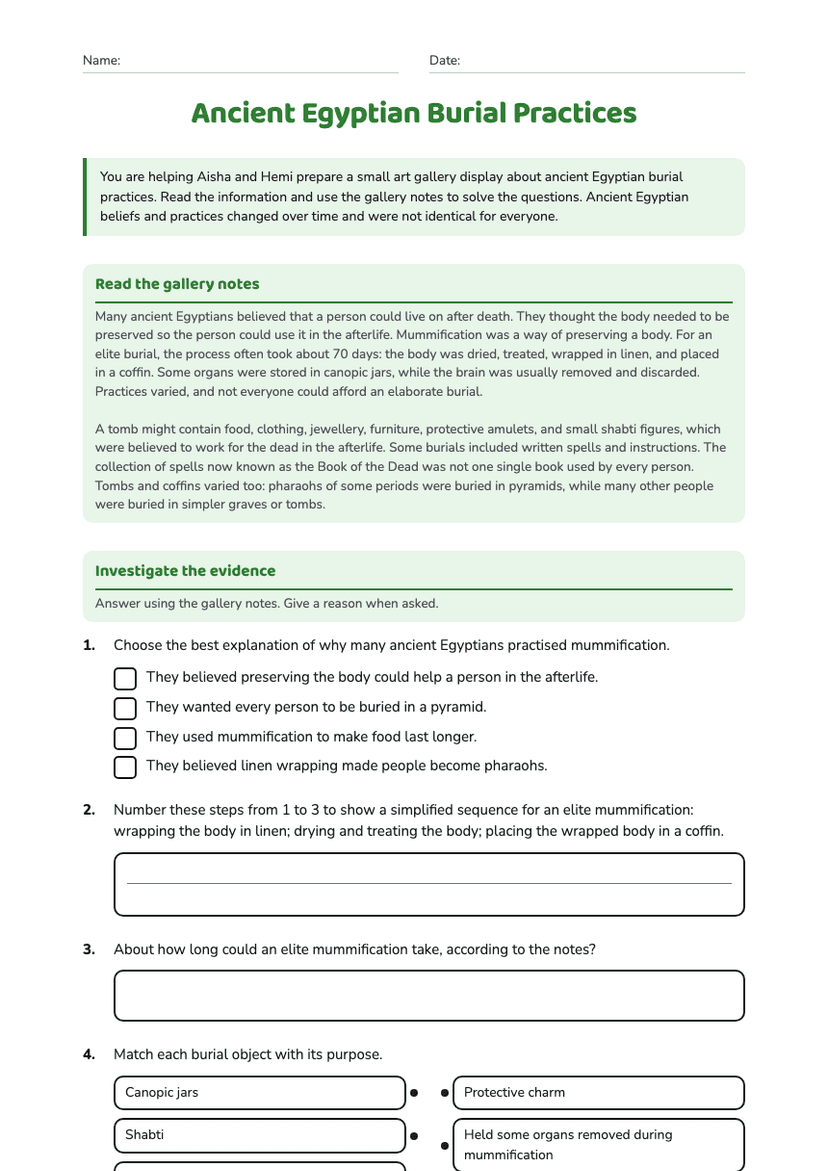
Ancient Egyptian Burial Practices
Free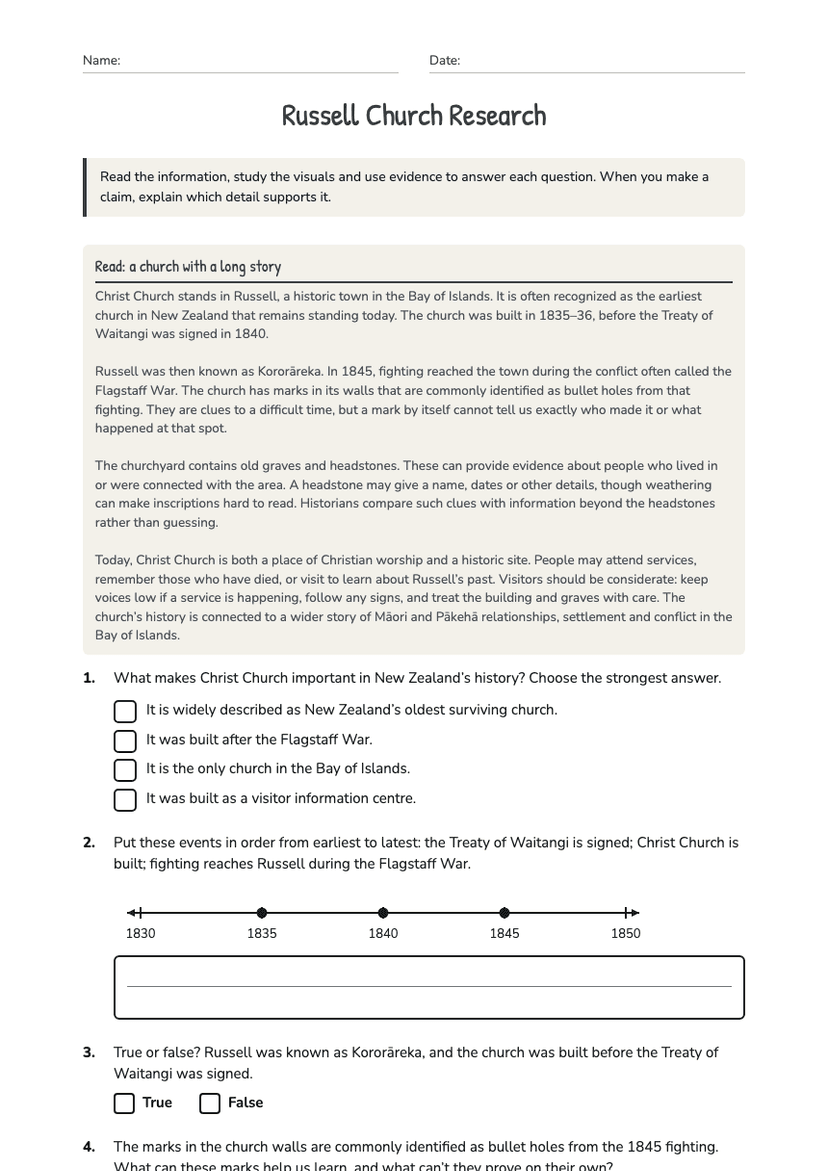
Russell Church Research
Free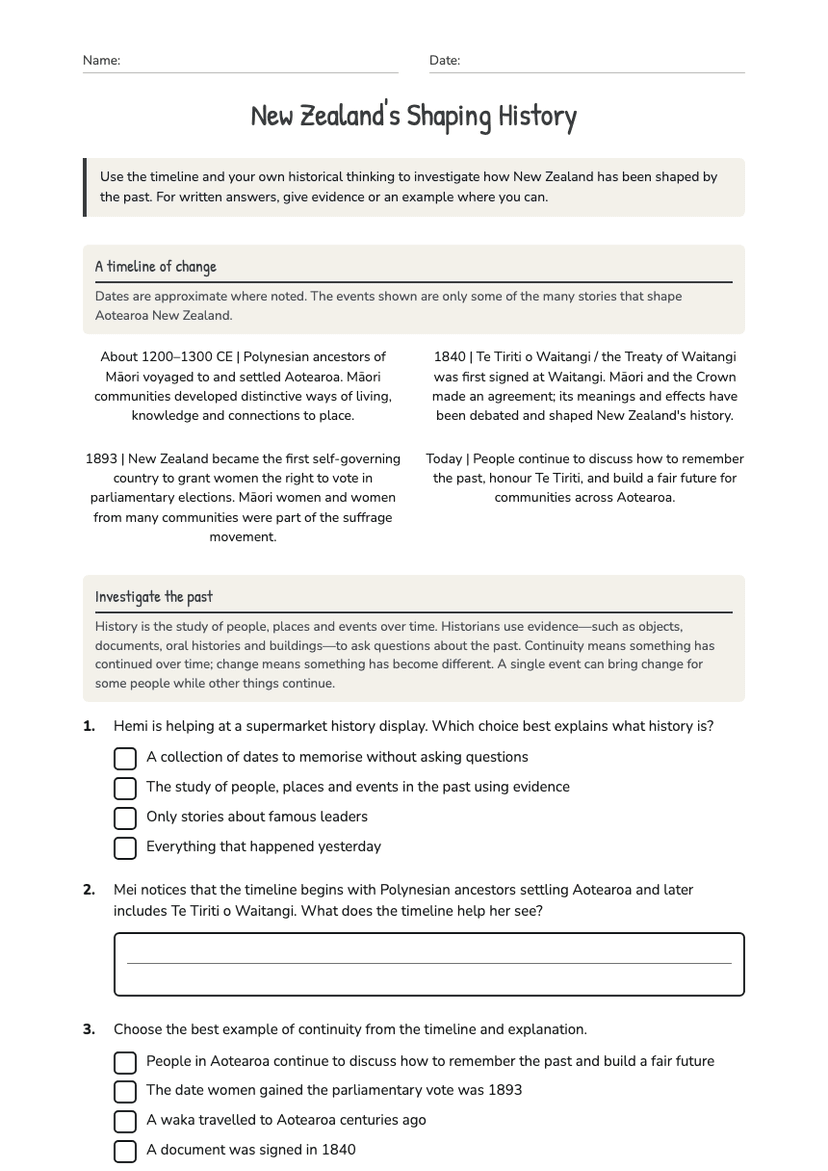
New Zealand's Shaping History
Free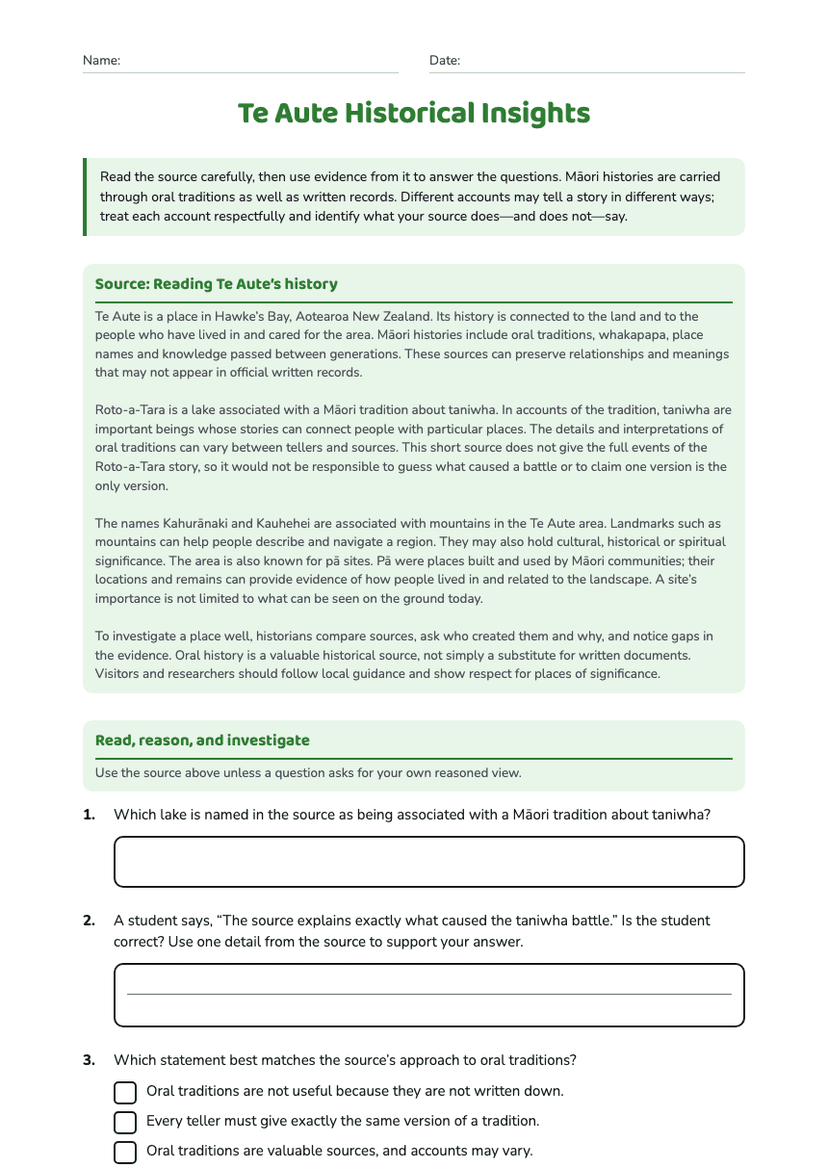
Te Aute Historical Insights
Free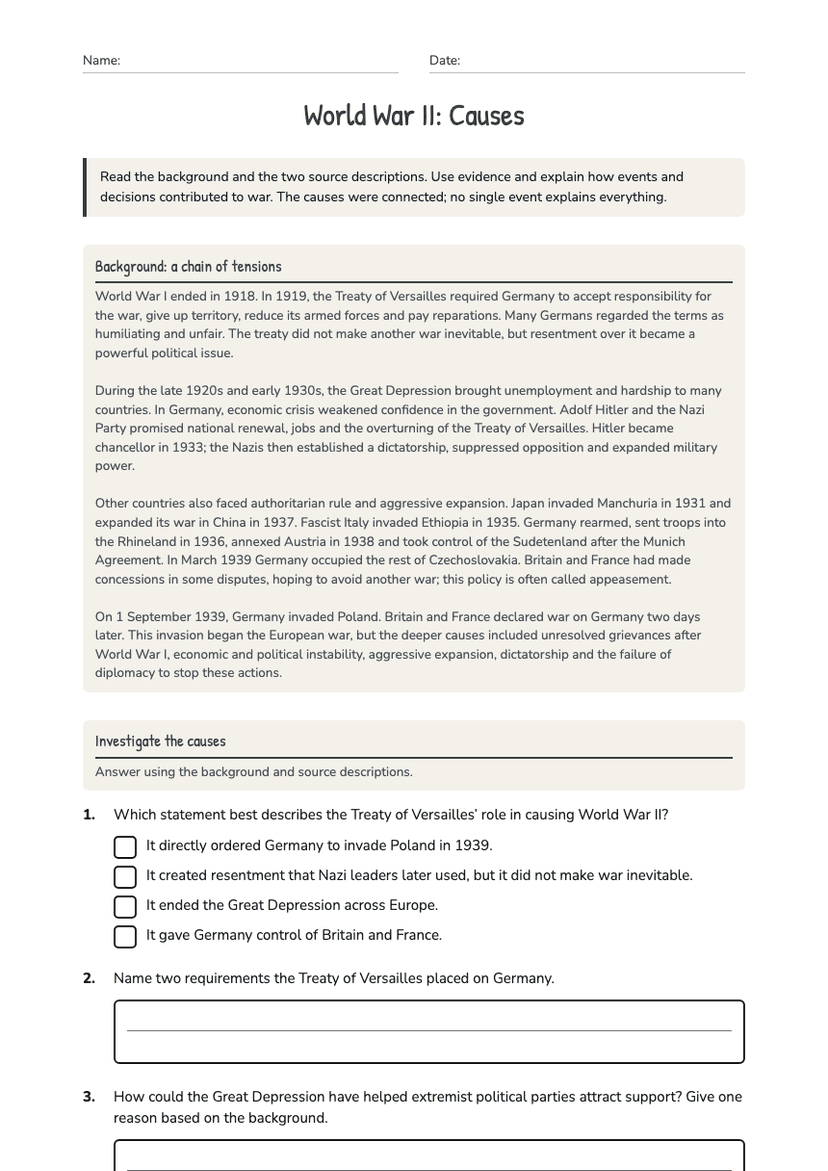
World War II: Causes
Free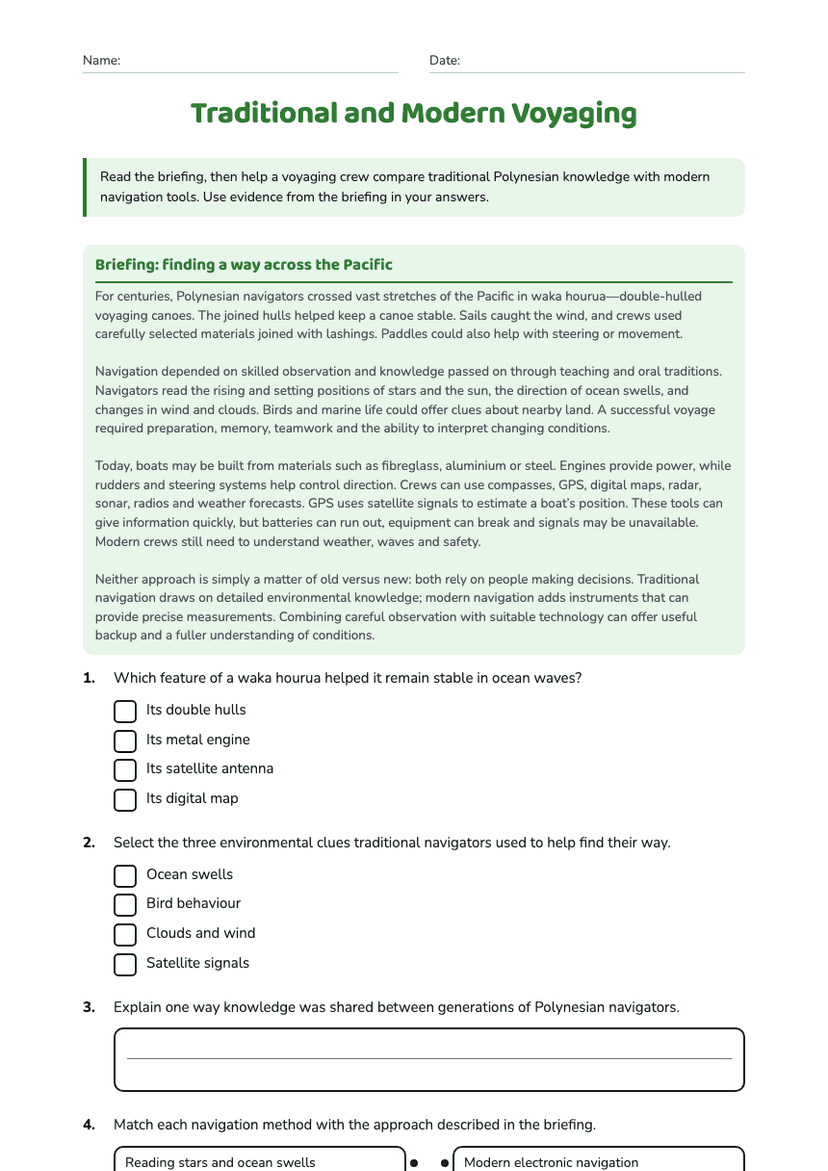
Traditional and Modern Voyaging
Free