Using Historical Evidence
A free social sciences worksheet ready for your classroom. Open in Kuraplan to grab the print-ready PDF, customize it for your students, or generate a fresh version in seconds.
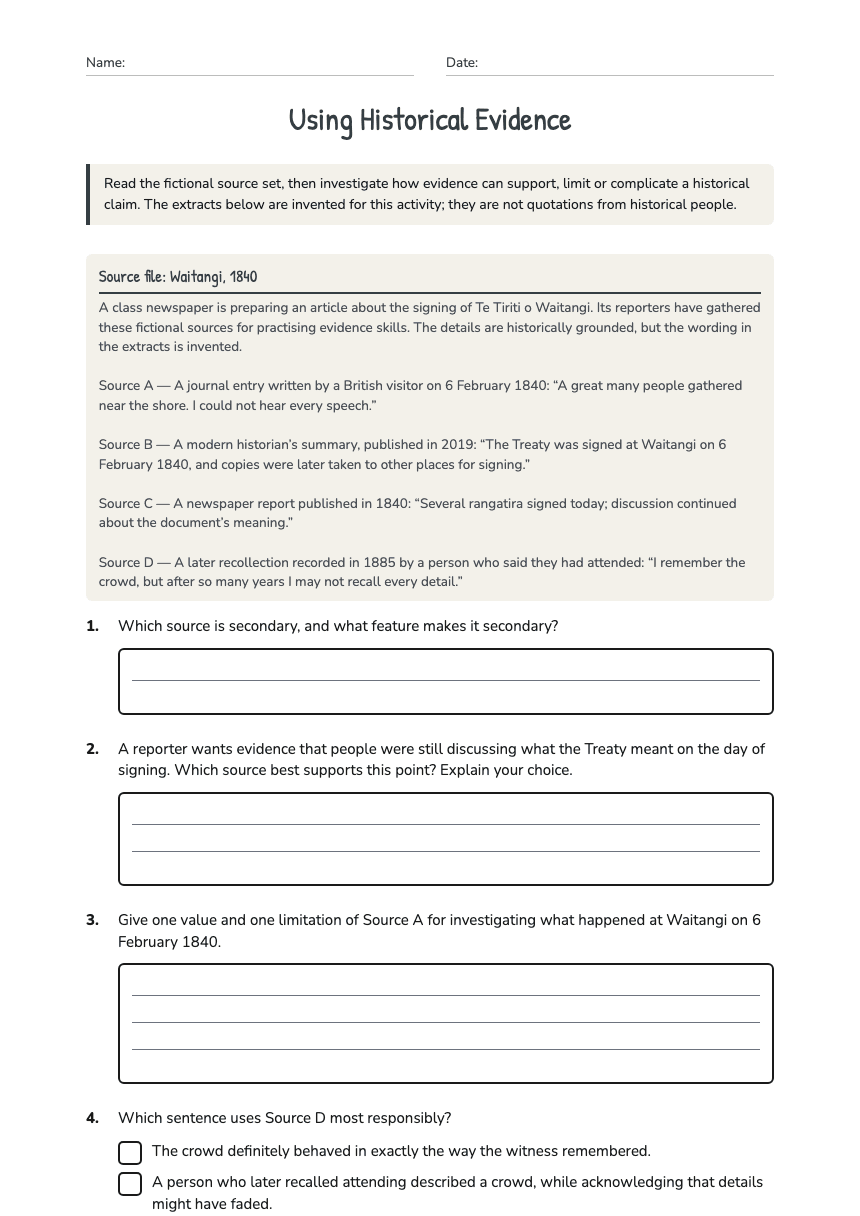
Using Historical Evidence
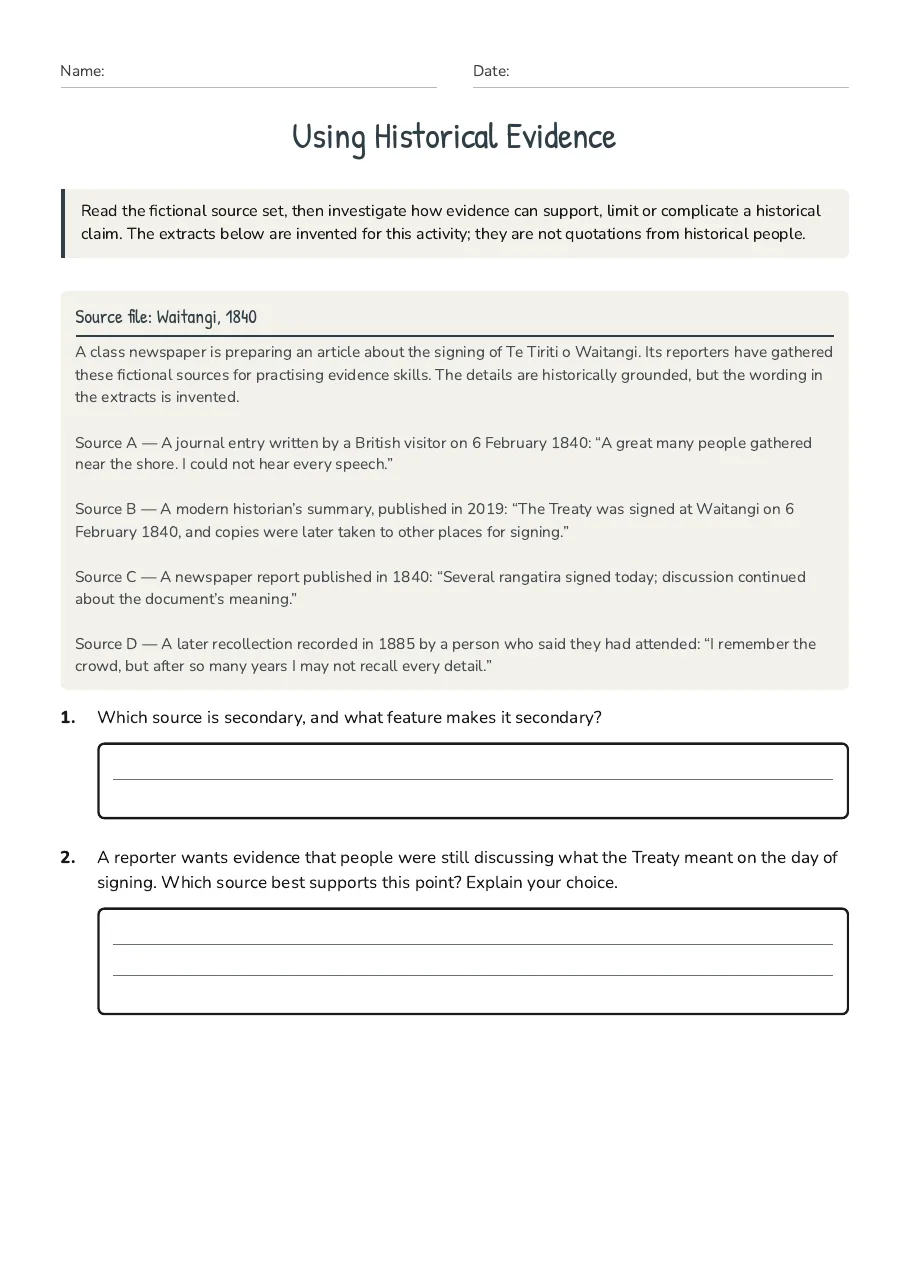
Source file: Waitangi, 1840
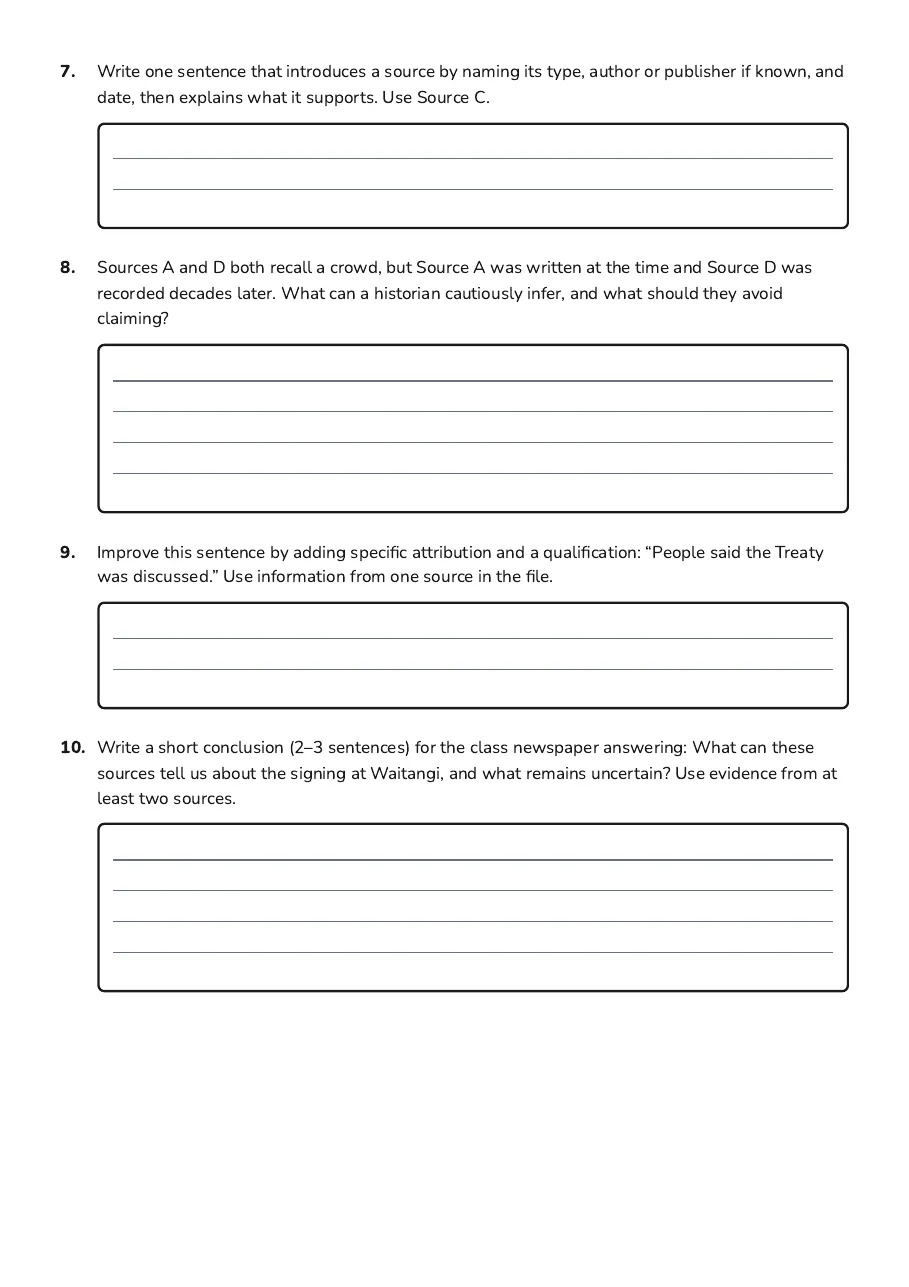
A class newspaper is preparing an article about the signing of Te Tiriti o Waitangi. Its reporters have gathered these fictional sources for practising evidence skills. The details are historically grounded, but the wording in the extracts is invented. Source A — A journal entry written by a British visitor on 6 February 1840: “A great many people gathered near the shore. I could not hear every speech.” Source B — A modern historian’s summary, published in 2019: “The Treaty was signed at Waitangi on 6 February 1840, and copies were later taken to other places for signing.” Source C — A newspaper report published in 1840: “Several rangatira signed today; discussion continued about the document’s meaning.” Source D — A later recollection recorded in 1885 by a person who said they had attended: “I remember the crowd, but after so many years I may not recall every detail.”
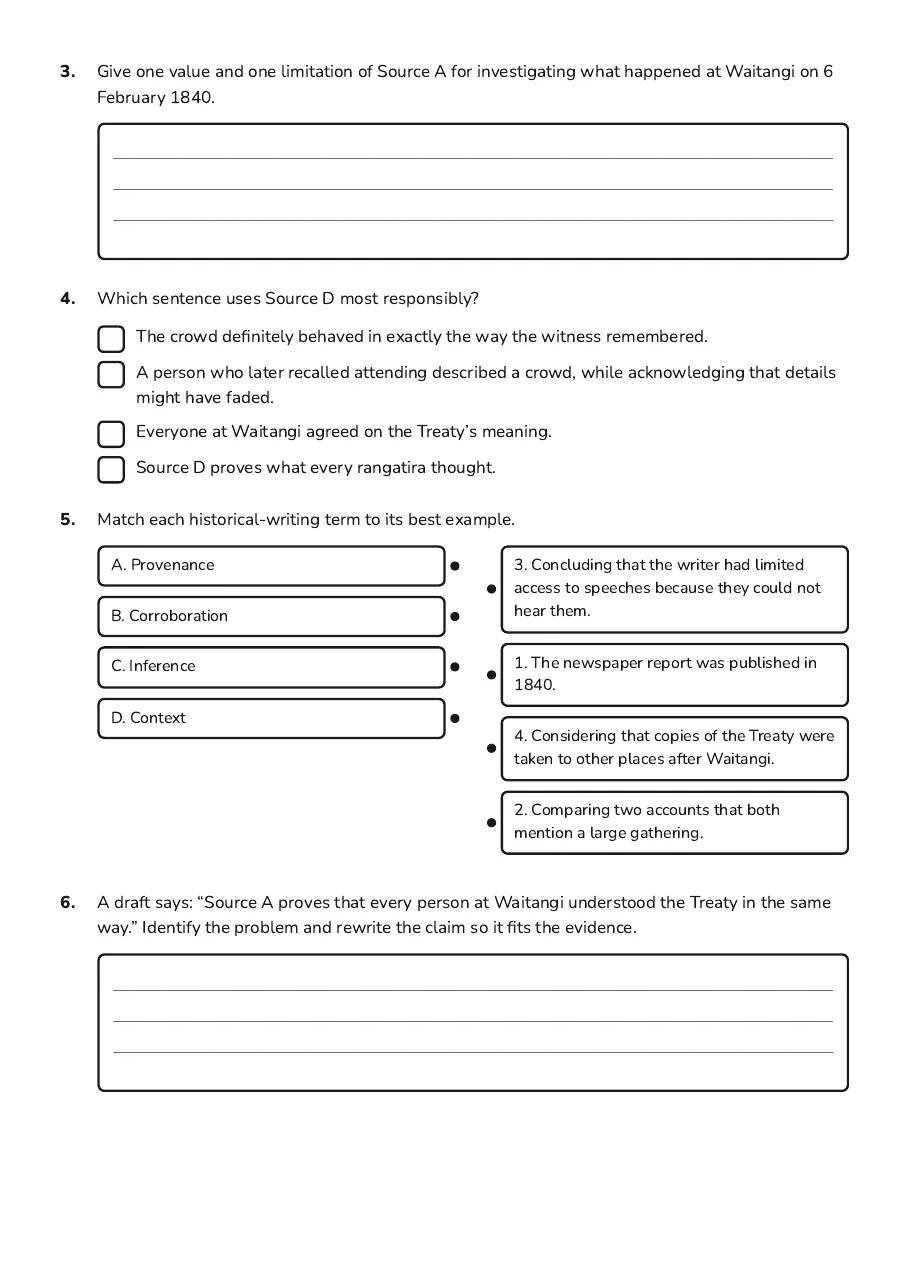
- The crowd definitely behaved in exactly the way the witness remembered.
- A person who later recalled attending described a crowd, while acknowledging that details might have faded.
- Everyone at Waitangi agreed on the Treaty’s meaning.
- Source D proves what every rangatira thought.
- A. Provenance
- B. Corroboration
- C. Inference
- D. Context
- 3. Concluding that the writer had limited access to speeches because they could not hear them.
- 1. The newspaper report was published in 1840.
- 4. Considering that copies of the Treaty were taken to other places after Waitangi.
- 2. Comparing two accounts that both mention a large gathering.
3 printable pages
Page 1
Page 2
Page 3
About This Worksheet
Free in Kuraplan
Sign up free, grab the PDF, and customize it for your class.
Print-Ready
Formatted for standard paper. Clean layout, easy to read.
AI-Generated
Created with Kuraplan's AI, designed for real classroom use.
For Teachers & Parents
Use in classrooms, for homework, tutoring, or homeschool.
Need a custom version of this worksheet?
Kuraplan's AI generates custom worksheets in seconds — differentiated for every learner, aligned to your curriculum.
Generate Custom Worksheets — FreeMore Social Sciences Worksheets
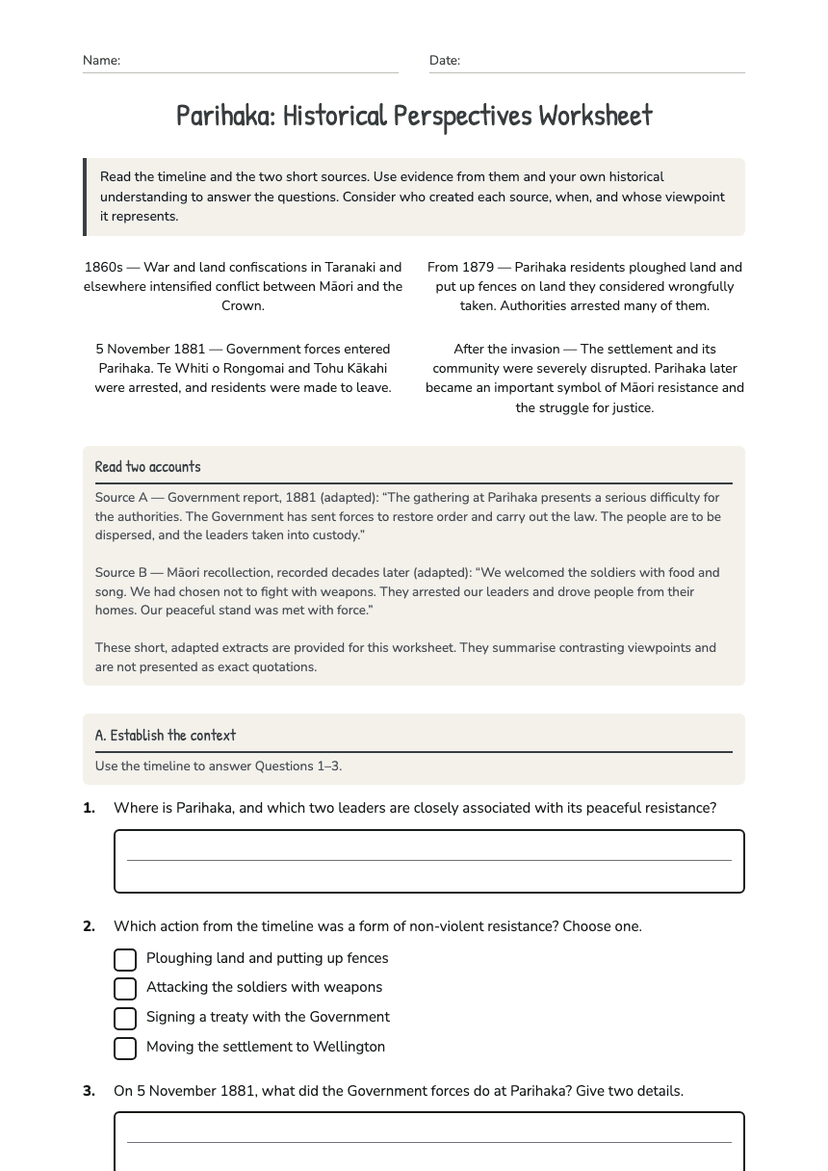
Parihaka: Historical Perspectives Worksheet
Free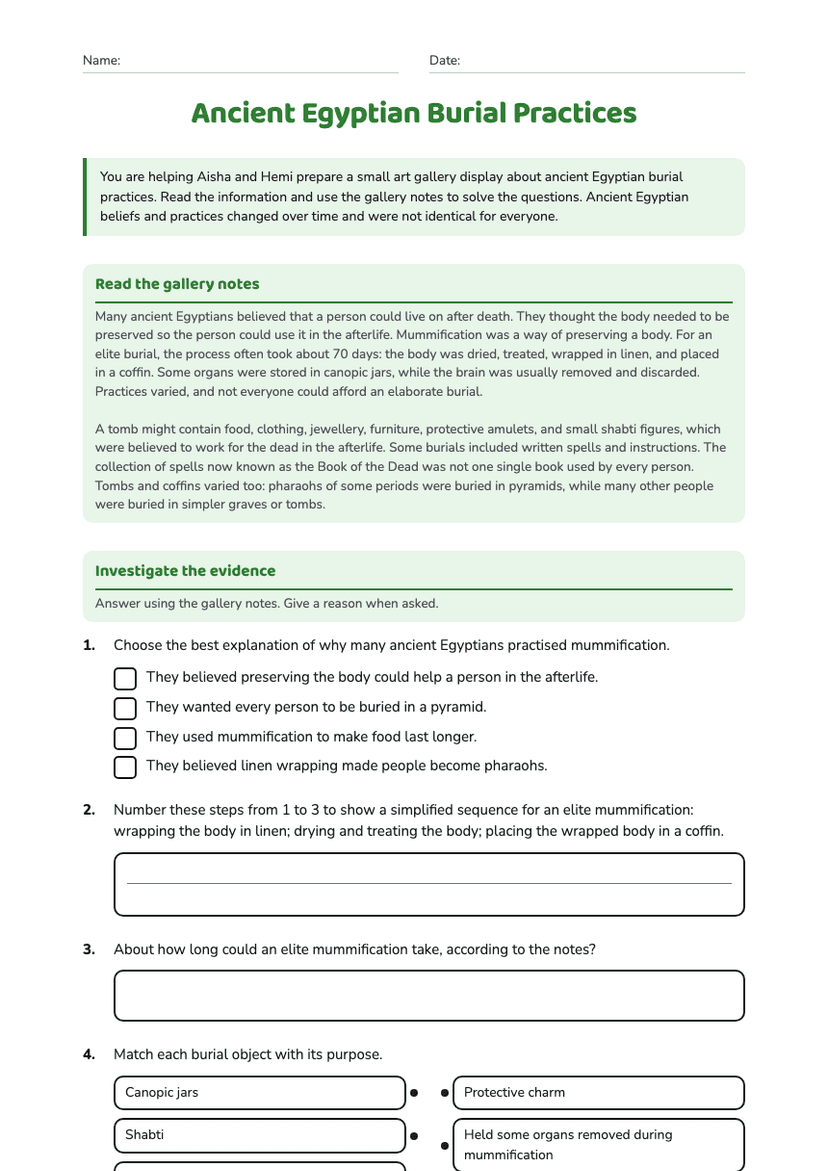
Ancient Egyptian Burial Practices
Free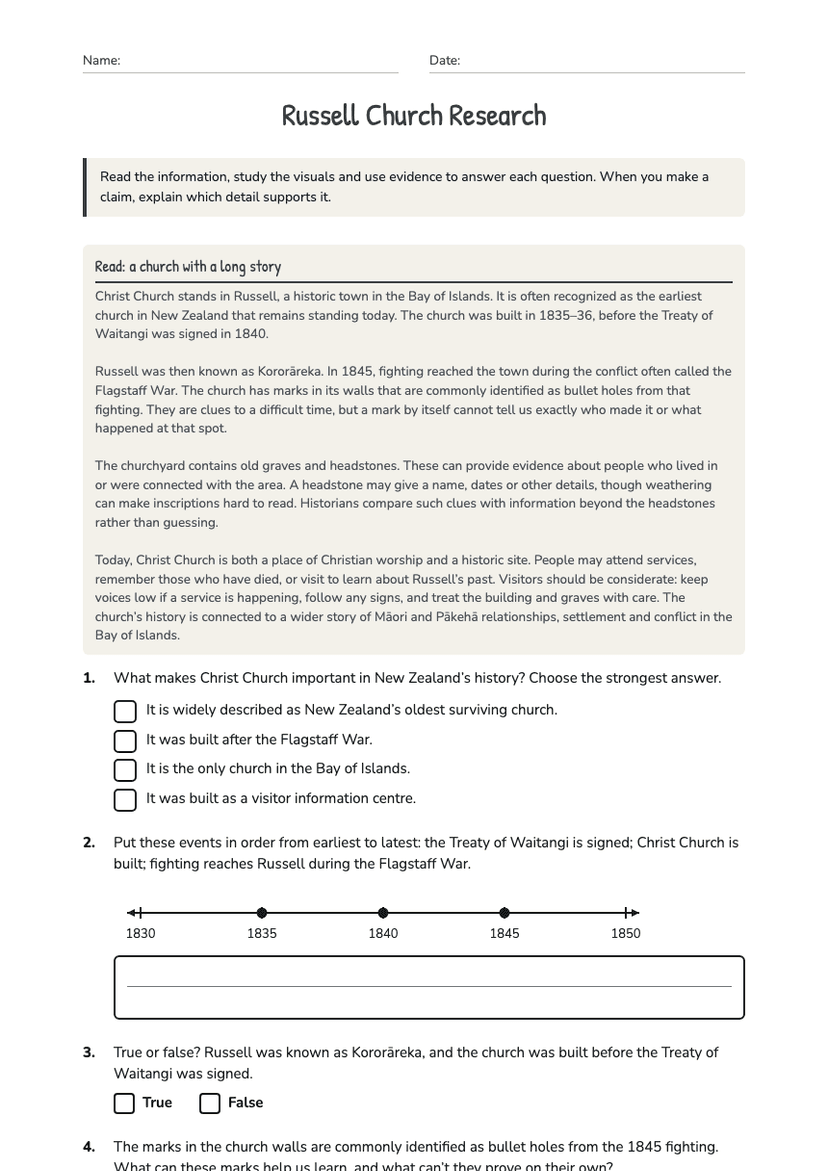
Russell Church Research
Free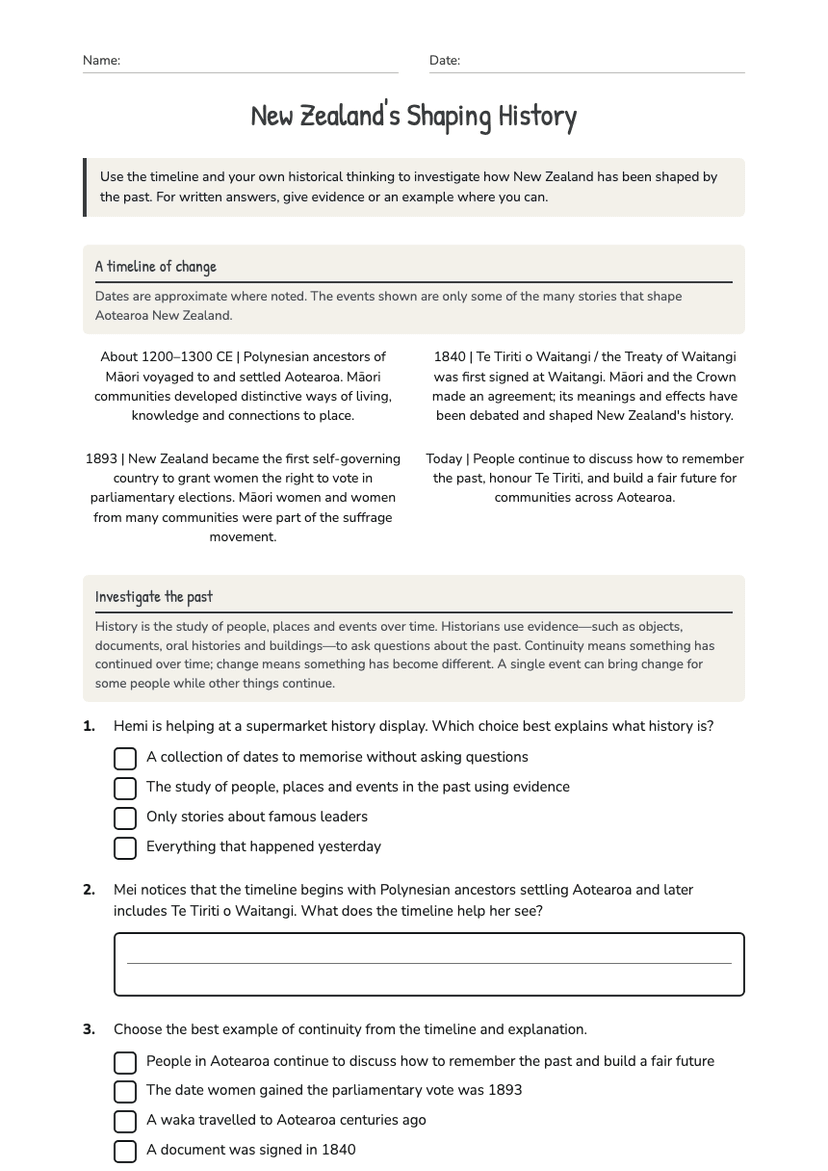
New Zealand's Shaping History
Free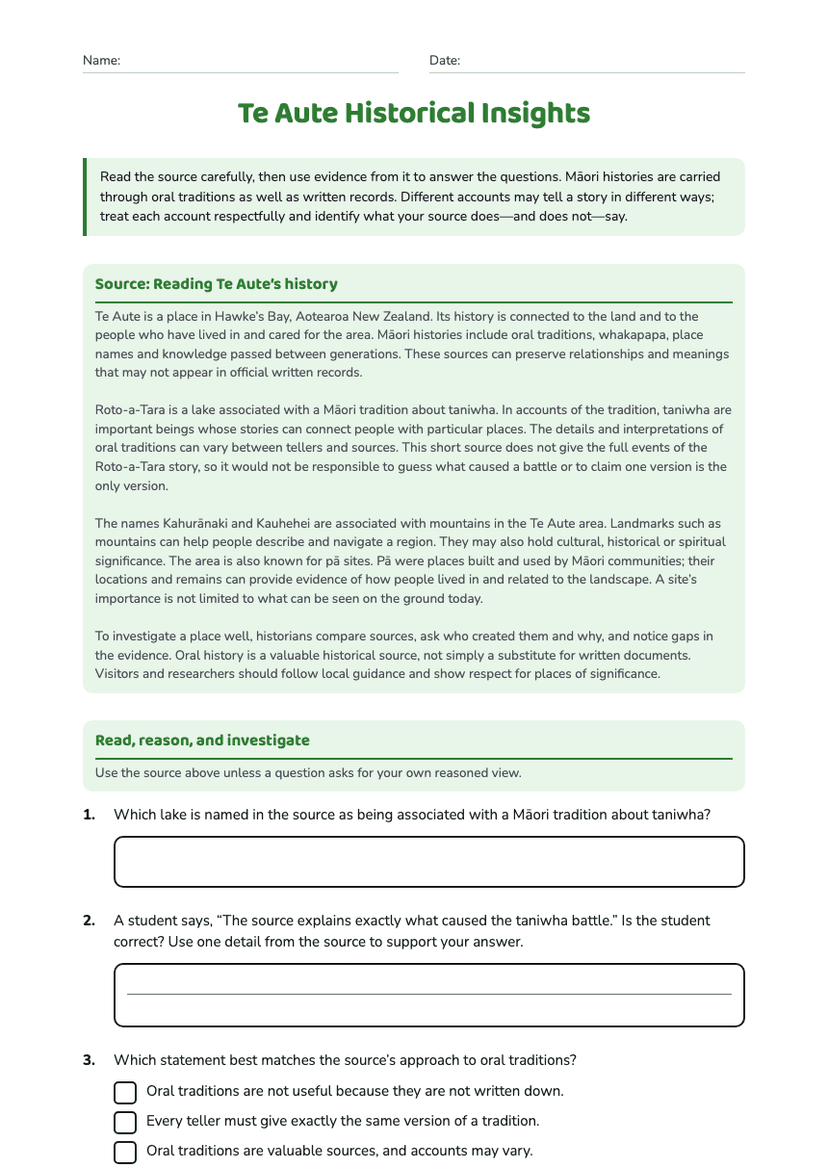
Te Aute Historical Insights
Free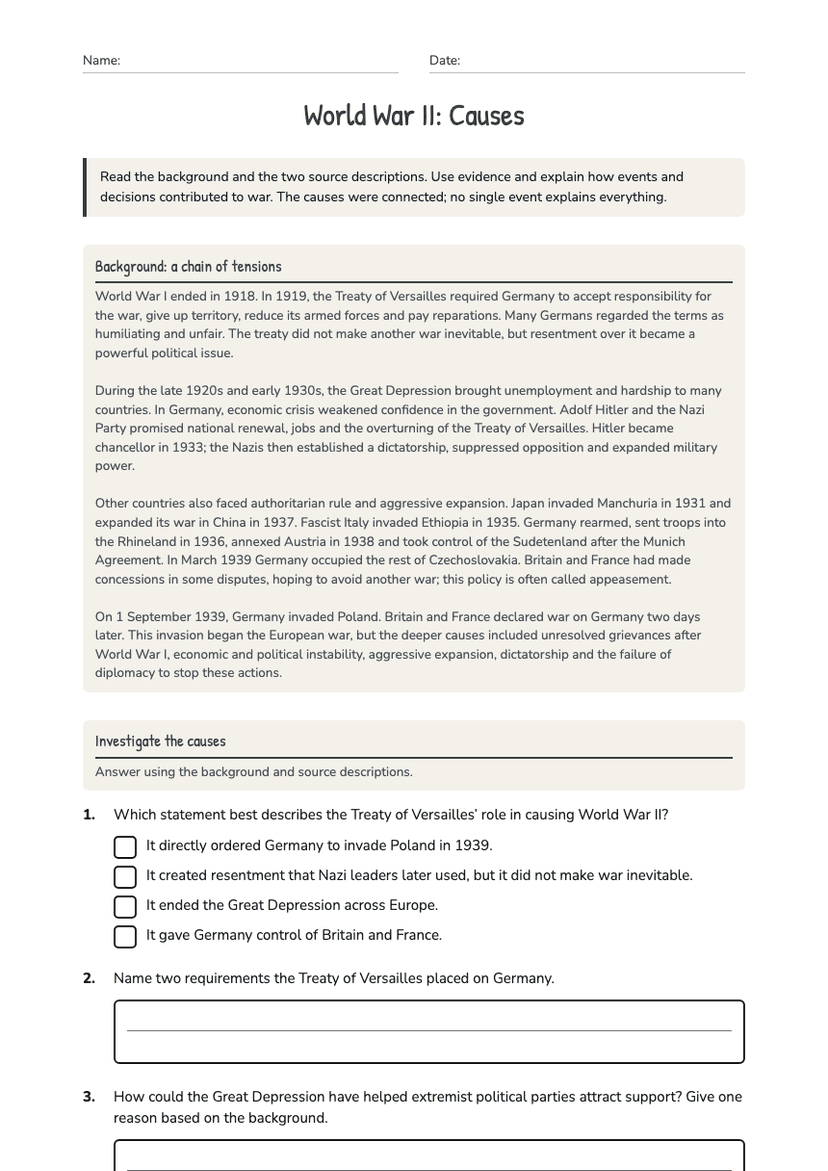
World War II: Causes
Free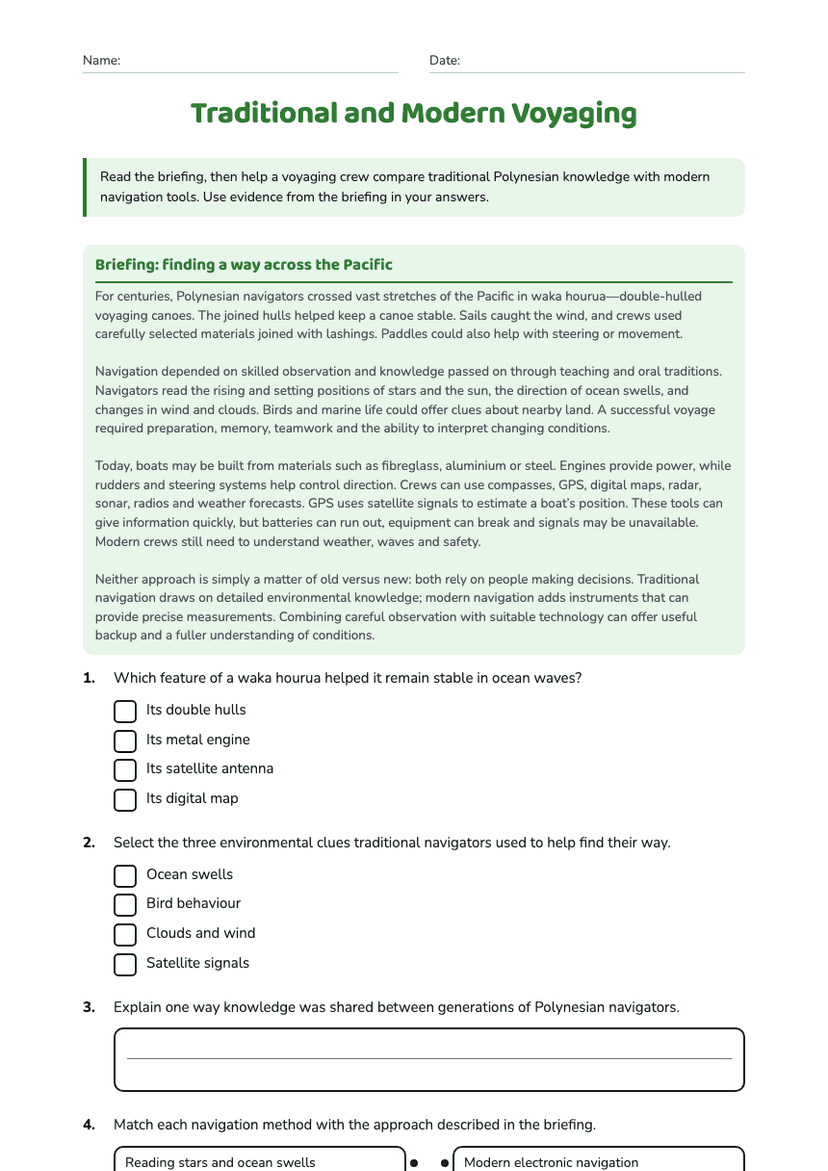
Traditional and Modern Voyaging
Free