PEFreePrintable
Volleyball Balance Basics Worksheet
A free pe worksheet ready for your classroom. Open in Kuraplan to grab the print-ready PDF, customize it for your students, or generate a fresh version in seconds.
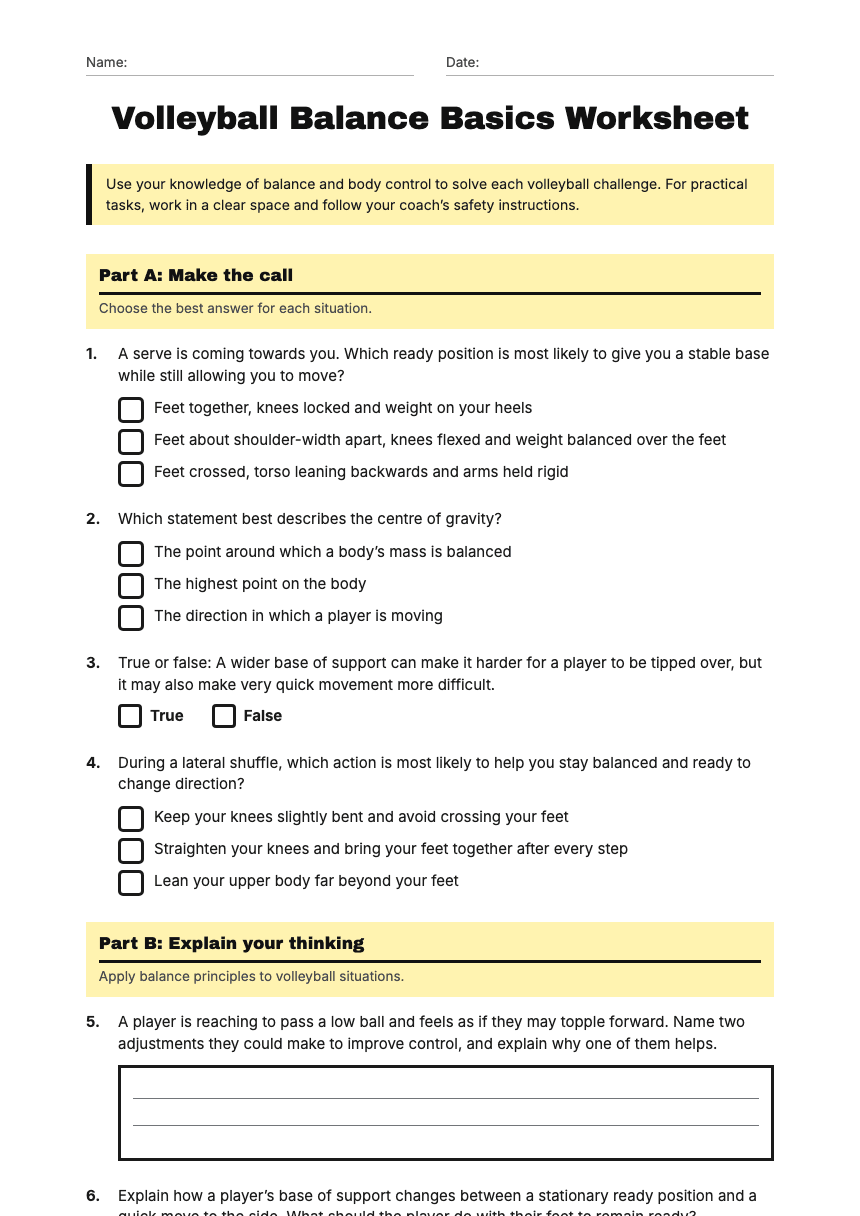
Name:Date:
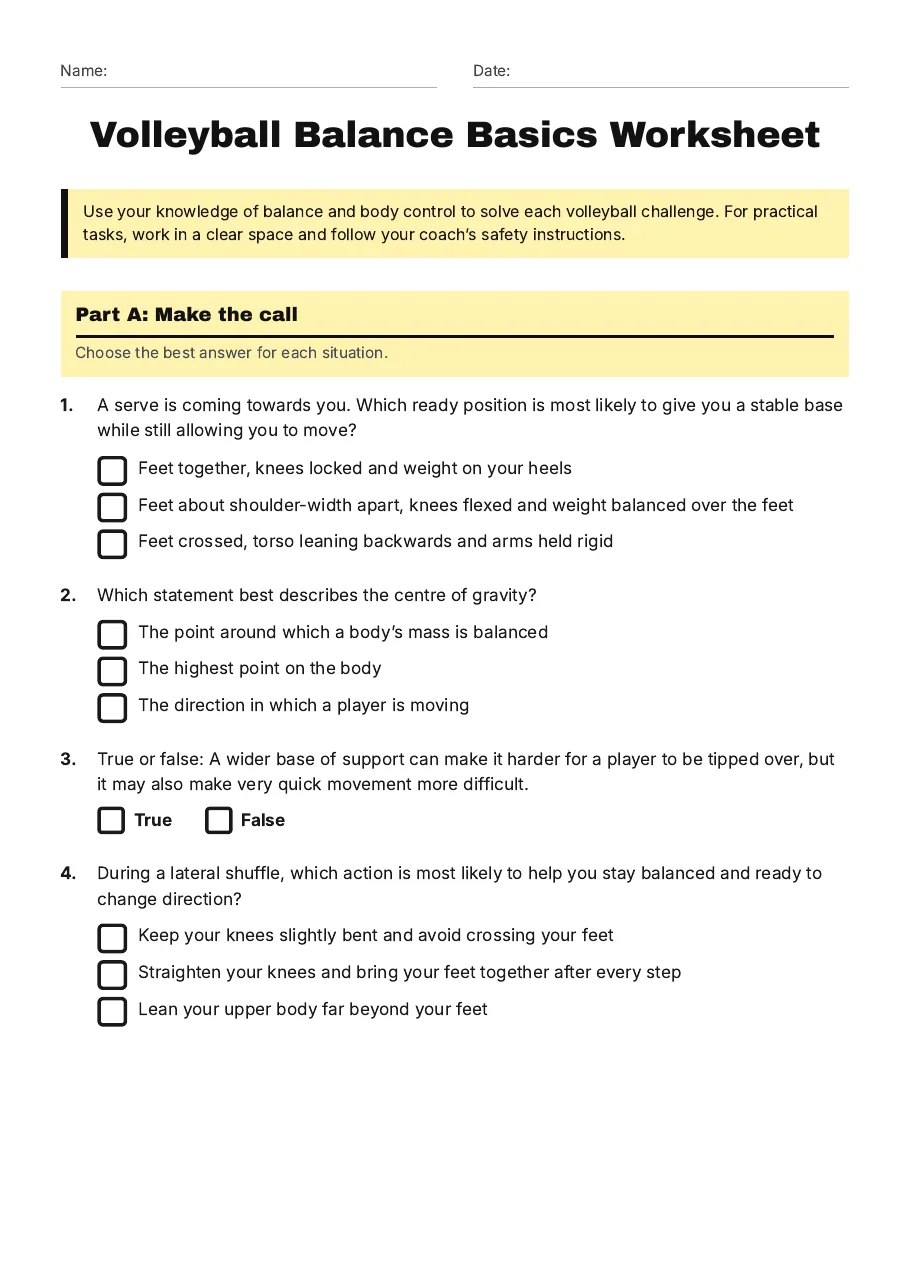
Volleyball Balance Basics Worksheet
Use your knowledge of balance and body control to solve each volleyball challenge. For practical tasks, work in a clear space and follow your coach’s safety instructions.
Part A: Make the call
Choose the best answer for each situation.
1.A serve is coming towards you. Which ready position is most likely to give you a stable base while still allowing you to move?
- Feet together, knees locked and weight on your heels
- Feet about shoulder-width apart, knees flexed and weight balanced over the feet
- Feet crossed, torso leaning backwards and arms held rigid
2.Which statement best describes the centre of gravity?
- The point around which a body’s mass is balanced
- The highest point on the body
- The direction in which a player is moving
3.True or false: A wider base of support can make it harder for a player to be tipped over, but it may also make very quick movement more difficult.
TrueFalse
4.During a lateral shuffle, which action is most likely to help you stay balanced and ready to change direction?
- Keep your knees slightly bent and avoid crossing your feet
- Straighten your knees and bring your feet together after every step
- Lean your upper body far beyond your feet
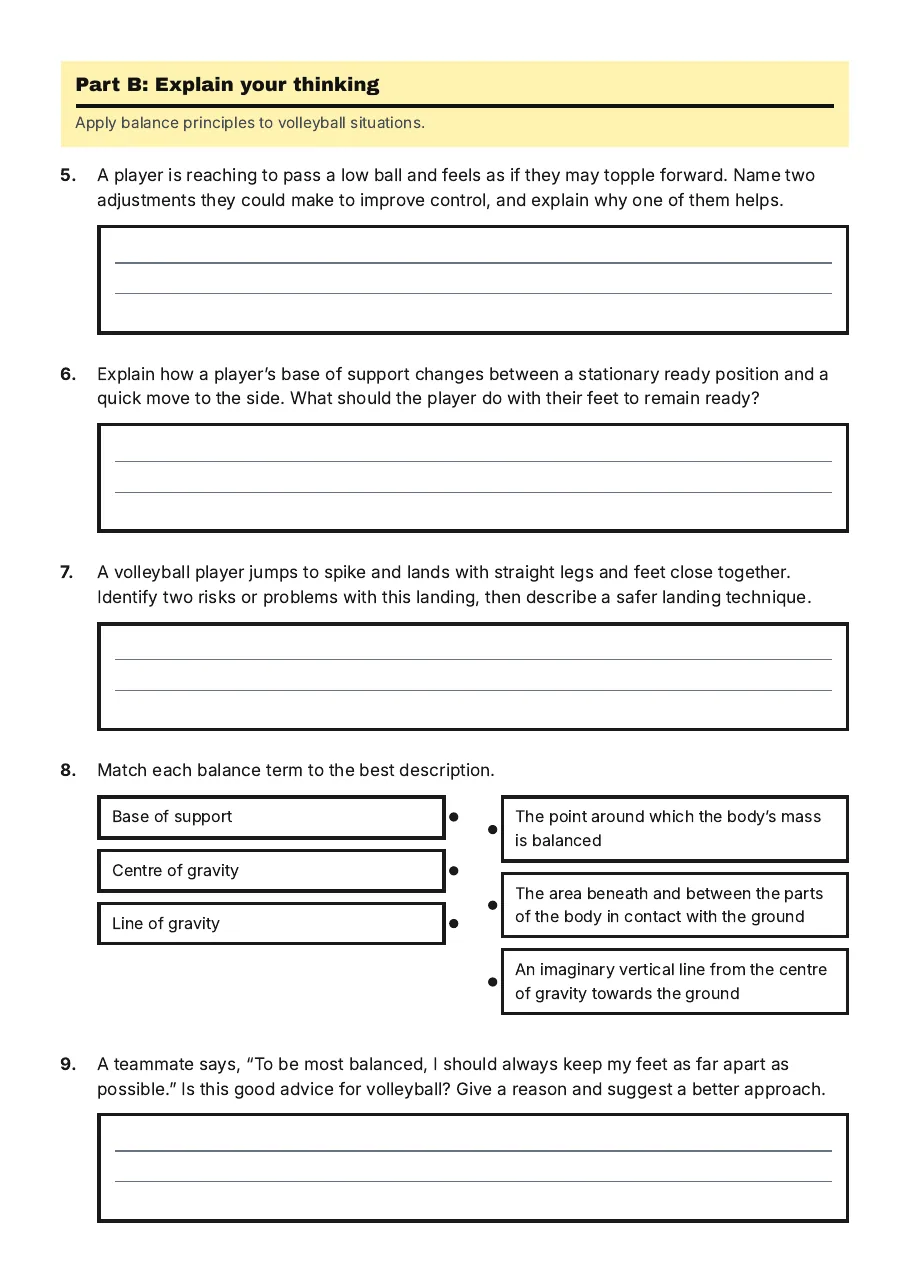
Part B: Explain your thinking
Apply balance principles to volleyball situations.
5.A player is reaching to pass a low ball and feels as if they may topple forward. Name two adjustments they could make to improve control, and explain why one of them helps.
6.Explain how a player’s base of support changes between a stationary ready position and a quick move to the side. What should the player do with their feet to remain ready?
7.A volleyball player jumps to spike and lands with straight legs and feet close together. Identify two risks or problems with this landing, then describe a safer landing technique.
8.Match each balance term to the best description.
- Base of support
- Centre of gravity
- Line of gravity
- The point around which the body’s mass is balanced
- The area beneath and between the parts of the body in contact with the ground
- An imaginary vertical line from the centre of gravity towards the ground
9.A teammate says, “To be most balanced, I should always keep my feet as far apart as possible.” Is this good advice for volleyball? Give a reason and suggest a better approach.
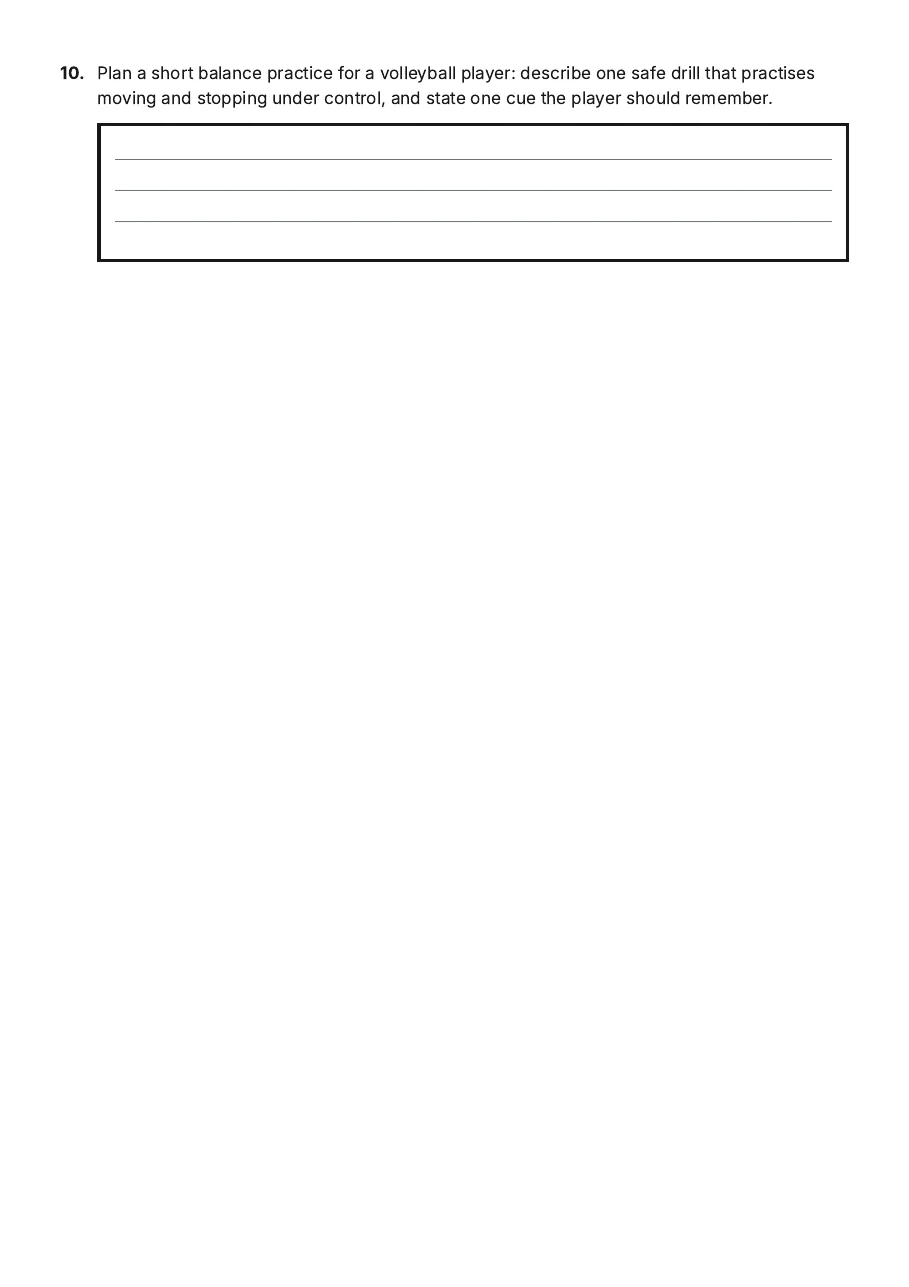
10.Plan a short balance practice for a volleyball player: describe one safe drill that practises moving and stopping under control, and state one cue the player should remember.
3 printable pages
Page 1
Page 2
Page 3
About This Worksheet
Free in Kuraplan
Sign up free, grab the PDF, and customize it for your class.
Print-Ready
Formatted for standard paper. Clean layout, easy to read.
AI-Generated
Created with Kuraplan's AI, designed for real classroom use.
For Teachers & Parents
Use in classrooms, for homework, tutoring, or homeschool.
Need a custom version of this worksheet?
Kuraplan's AI generates custom worksheets in seconds — differentiated for every learner, aligned to your curriculum.
Generate Custom Worksheets — Free No credit card Curriculum-aligned Under 60 seconds
More PE Worksheets
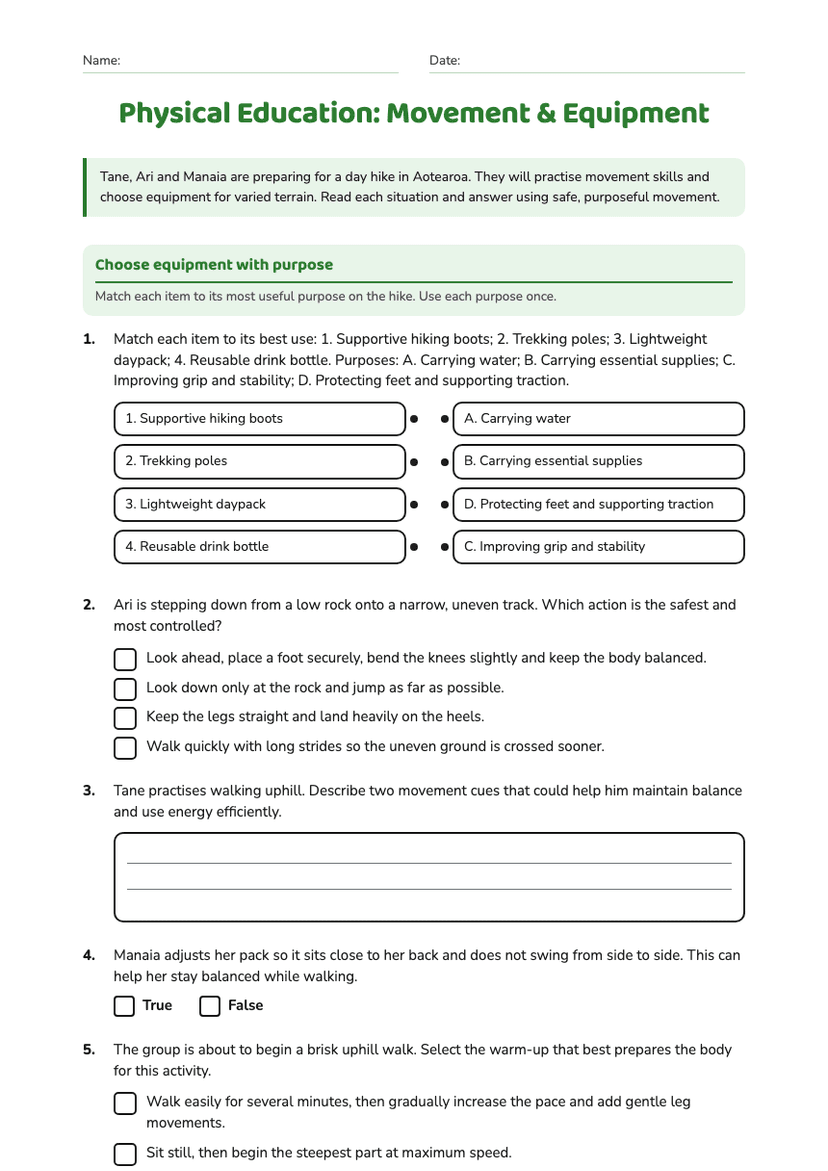
Year 10
Physical Education: Movement & Equipment
Free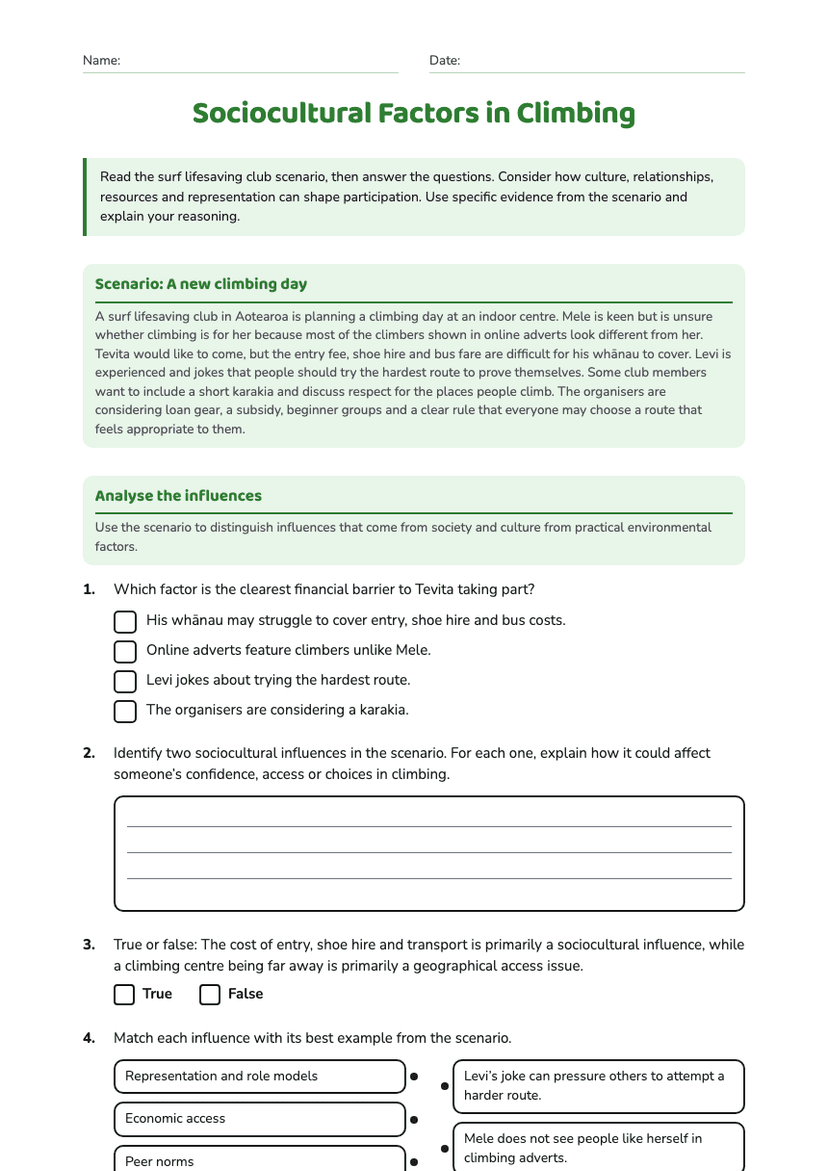
Year 11
Sociocultural Factors in Climbing
Free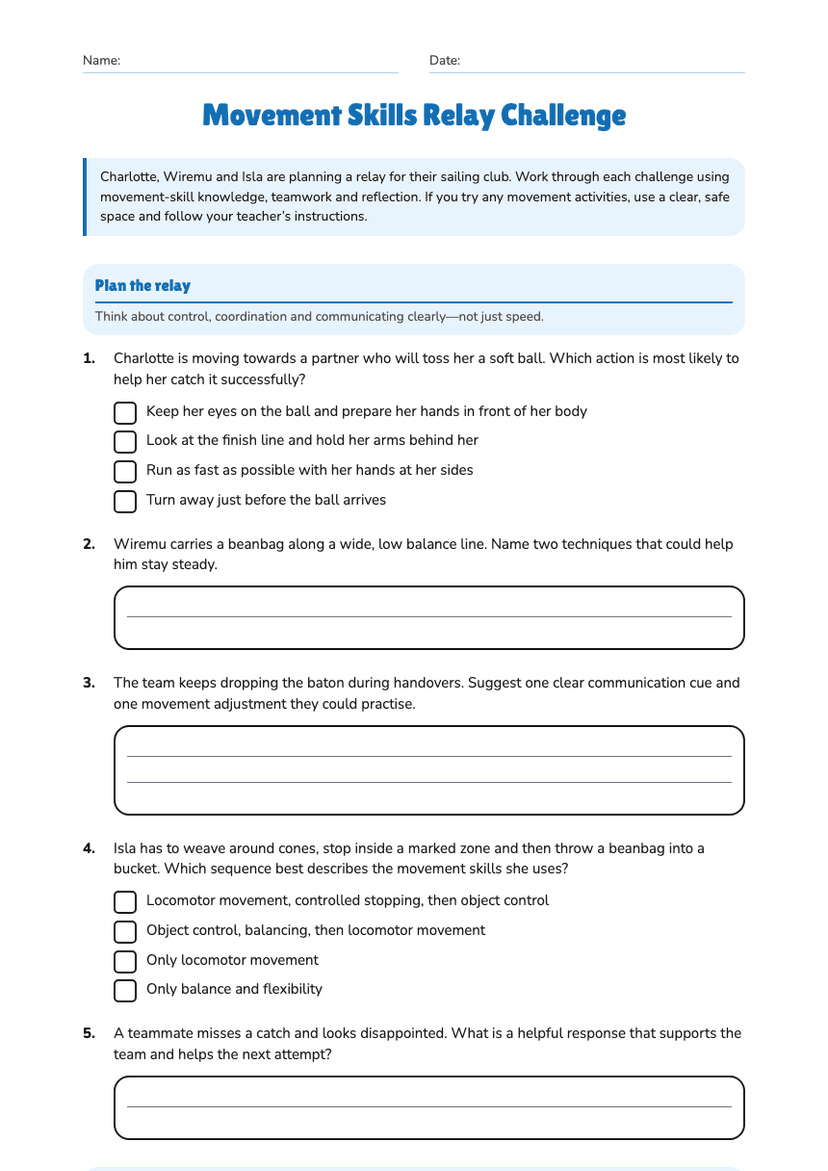
Year 5–8
Movement Skills Relay Challenge
Free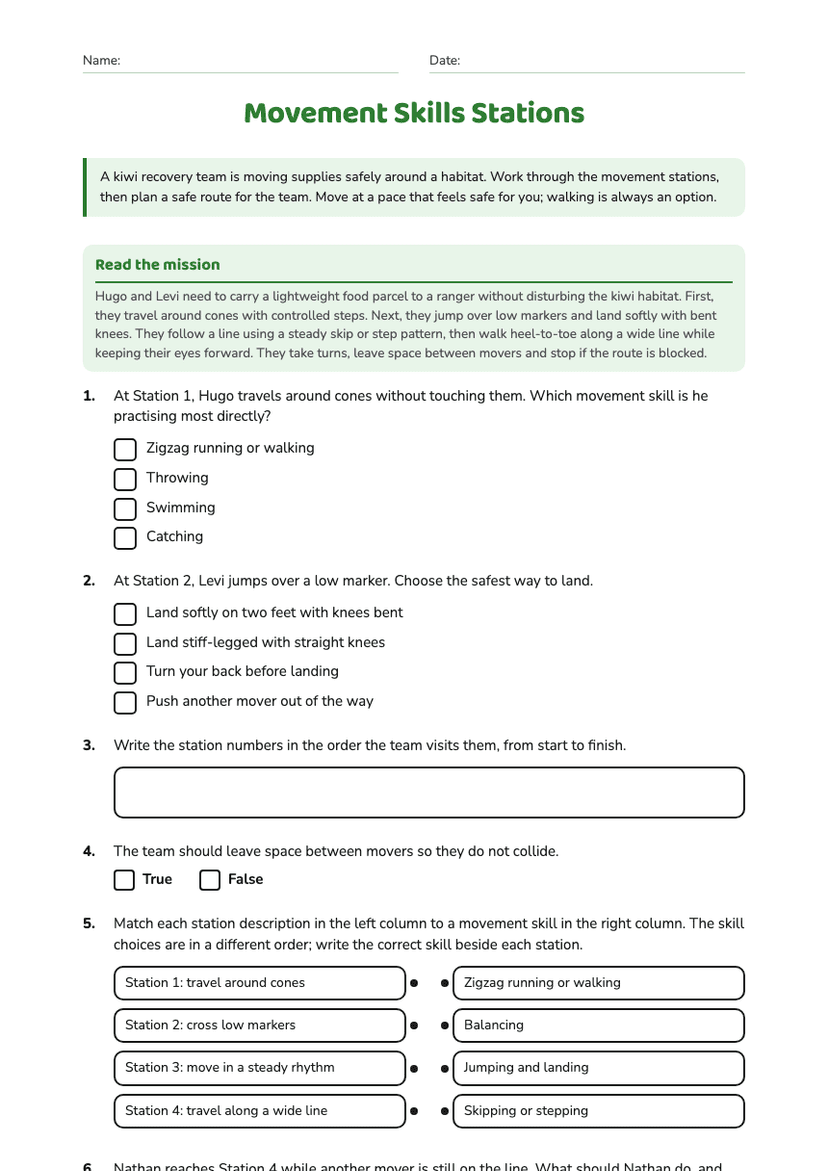
Movement Skills Stations
Free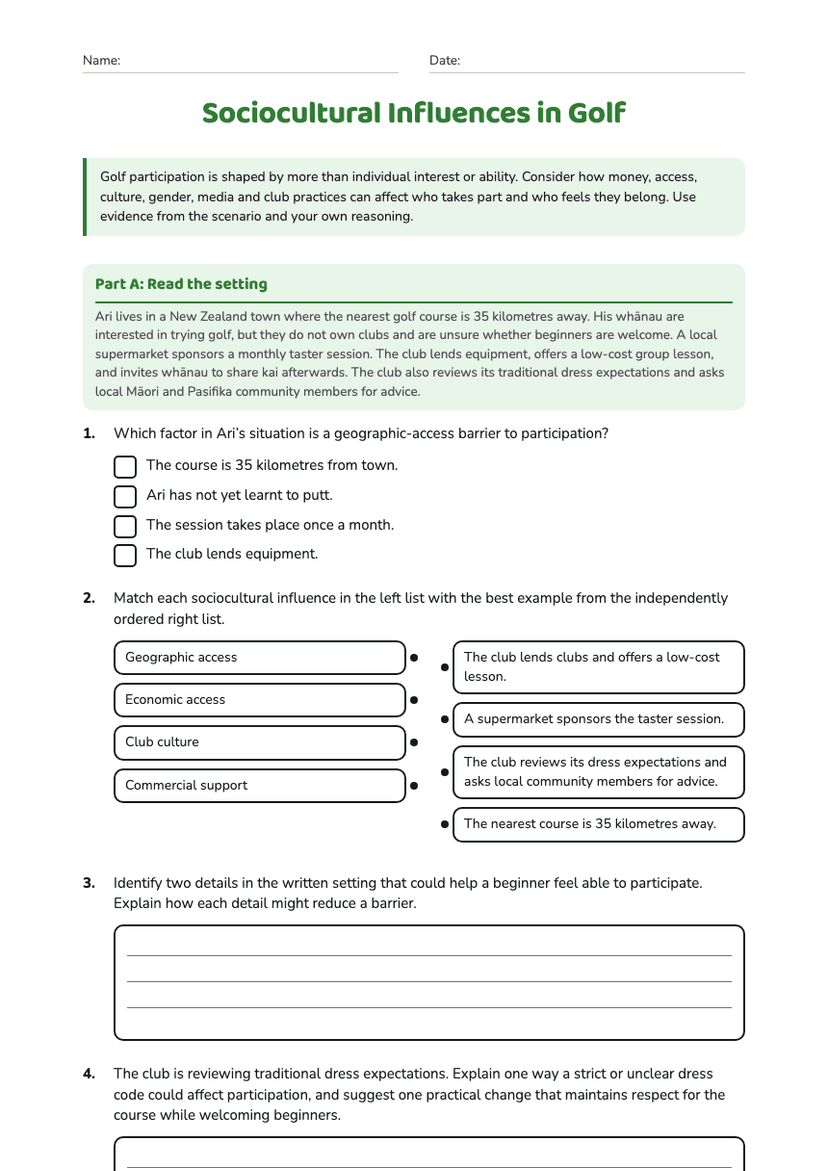
Year 11
Sociocultural Influences in Golf
Free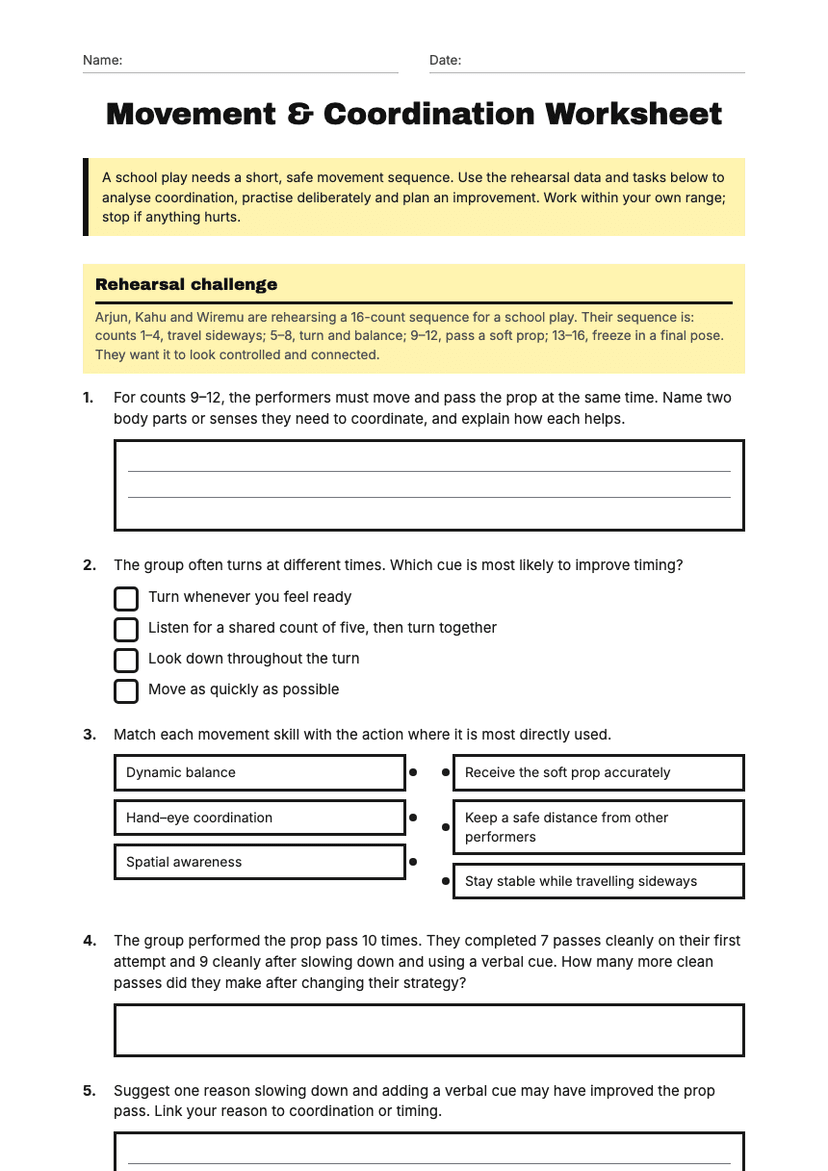
Year 11
Movement & Coordination Worksheet
Free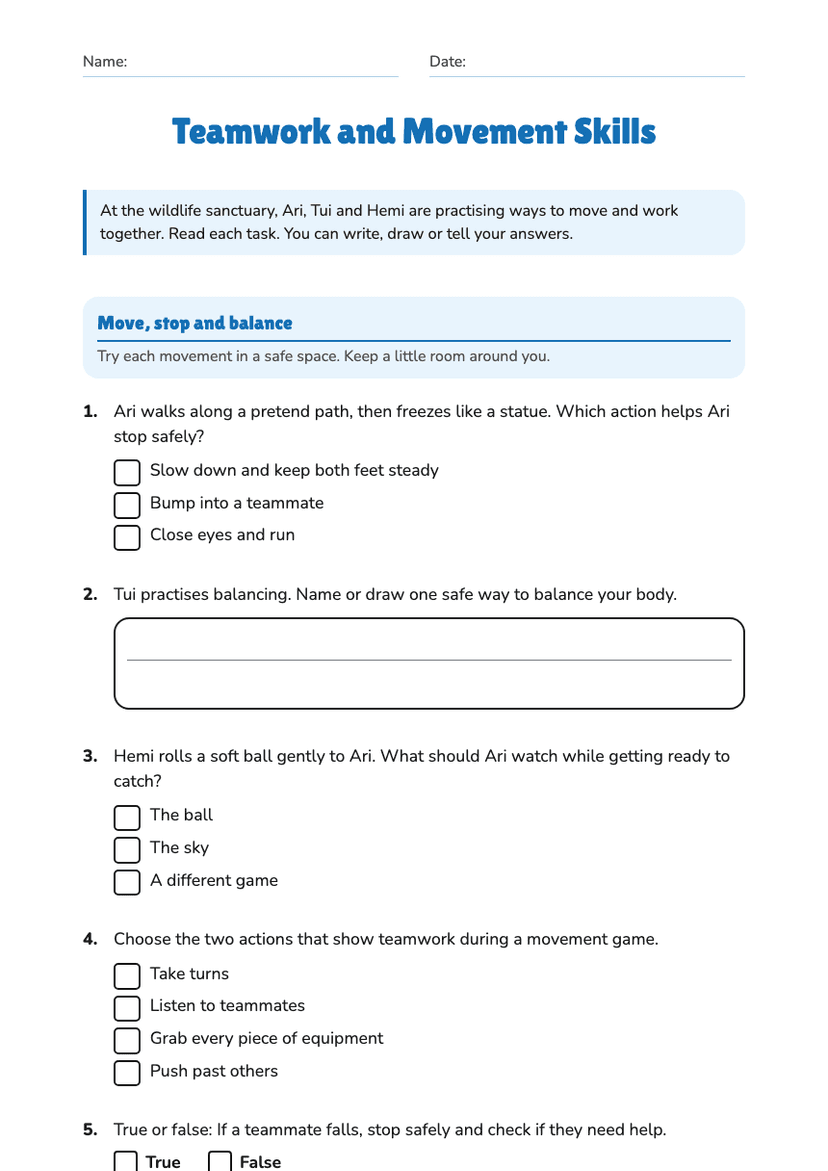
Year 0–1
Teamwork and Movement Skills
Free
Year 9