Water Properties Investigation
A free science worksheet ready for your classroom. Open in Kuraplan to grab the print-ready PDF, customize it for your students, or generate a fresh version in seconds.
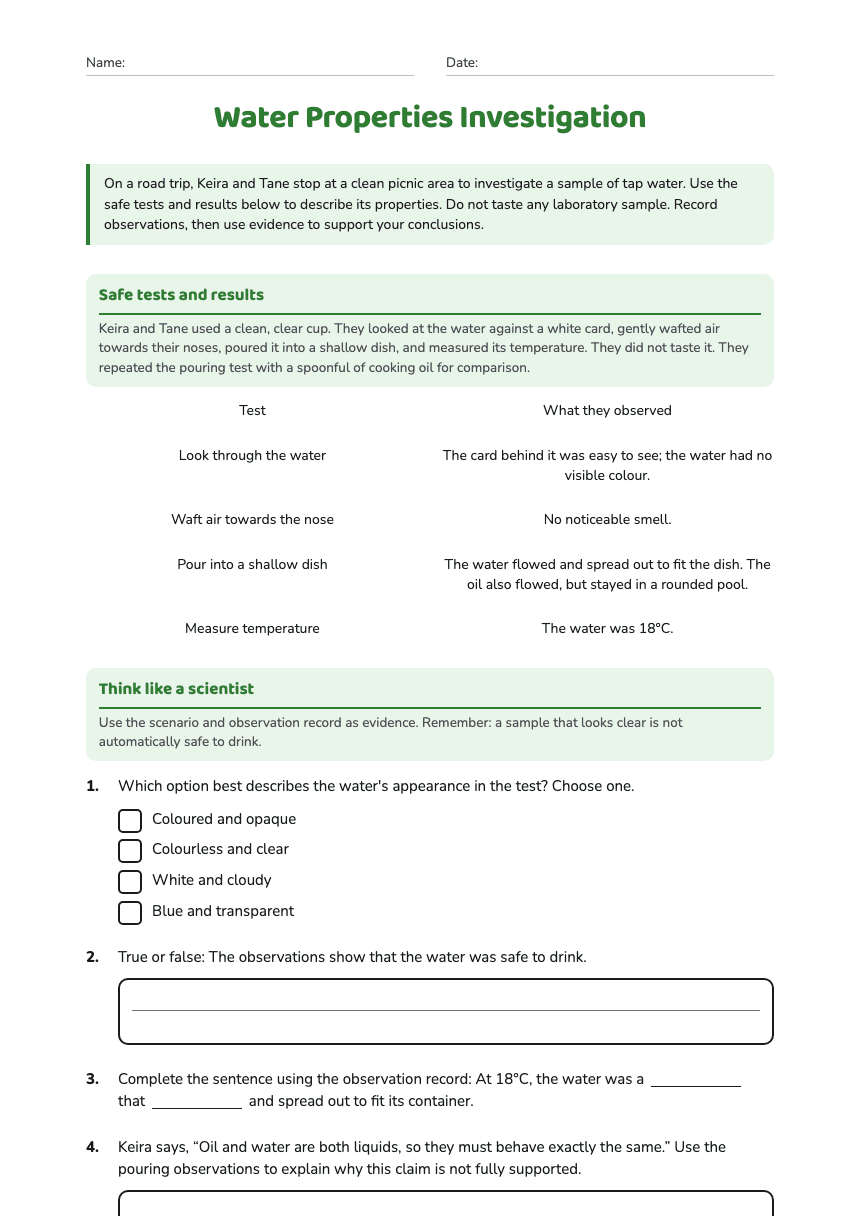
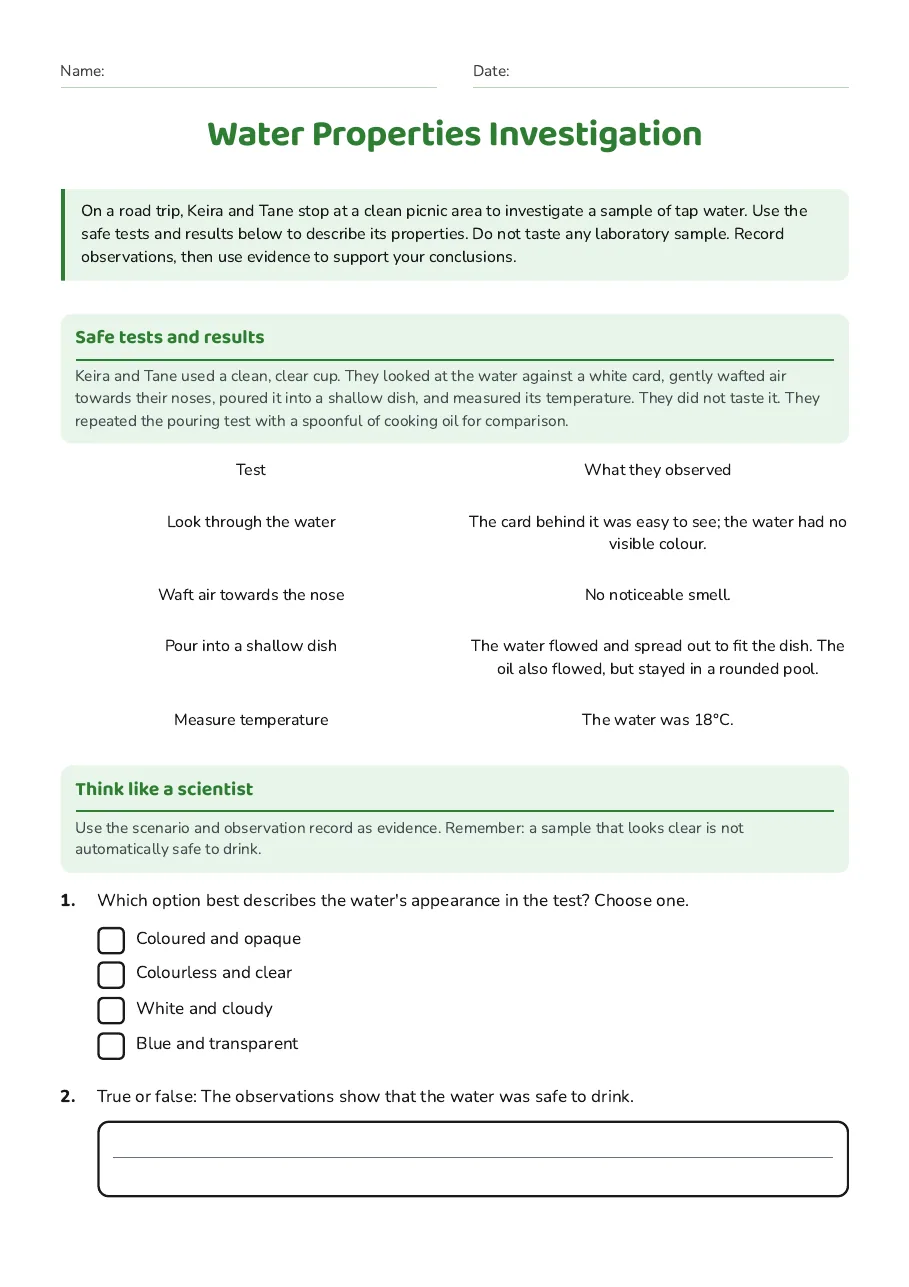
Water Properties Investigation
Safe tests and results
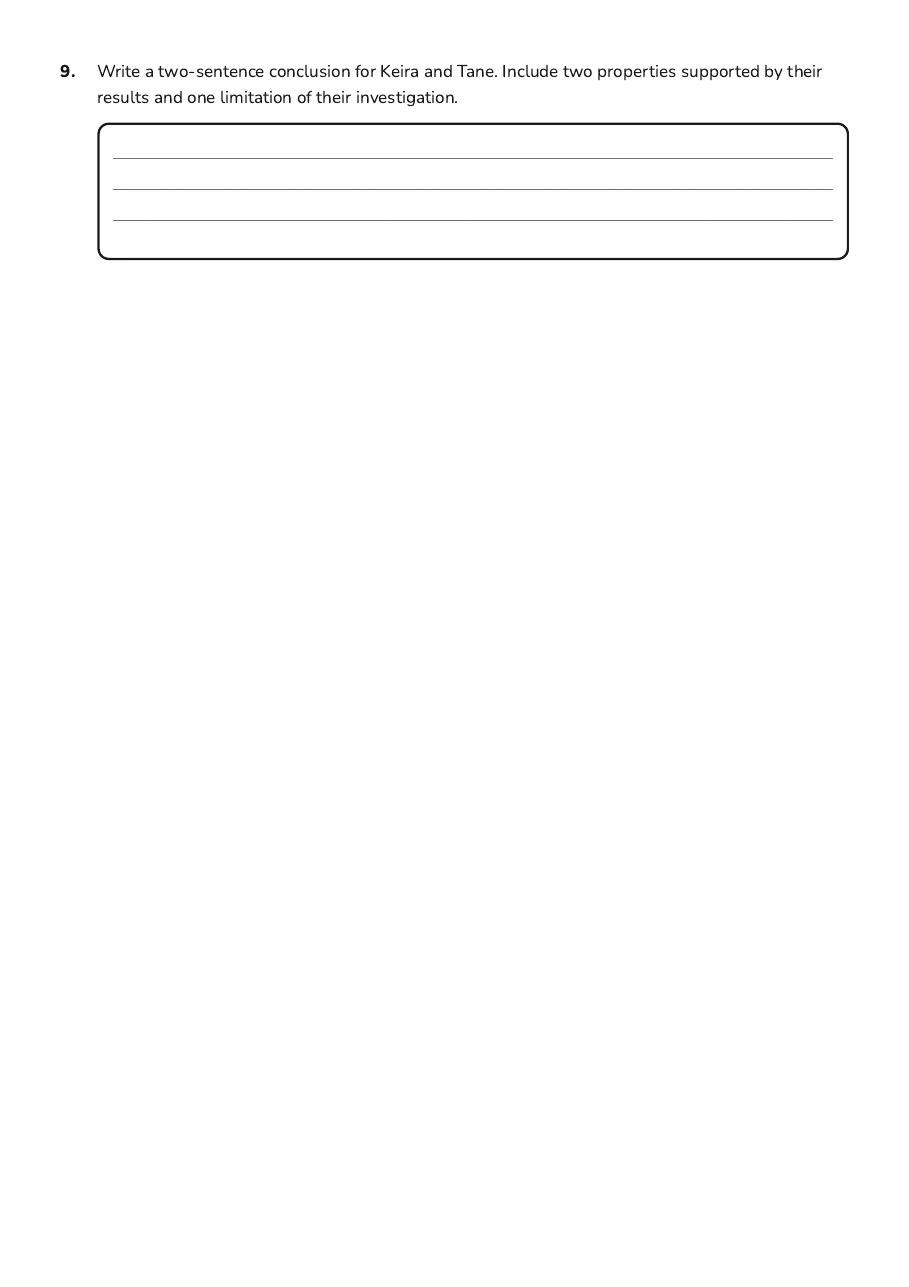
Keira and Tane used a clean, clear cup. They looked at the water against a white card, gently wafted air towards their noses, poured it into a shallow dish, and measured its temperature. They did not taste it. They repeated the pouring test with a spoonful of cooking oil for comparison.
Test
What they observed
Look through the water
The card behind it was easy to see; the water had no visible colour.
Waft air towards the nose
No noticeable smell.
Pour into a shallow dish
The water flowed and spread out to fit the dish. The oil also flowed, but stayed in a rounded pool.
Measure temperature
The water was 18°C.
Think like a scientist
Use the scenario and observation record as evidence. Remember: a sample that looks clear is not automatically safe to drink.
- Coloured and opaque
- Colourless and clear
- White and cloudy
- Blue and transparent
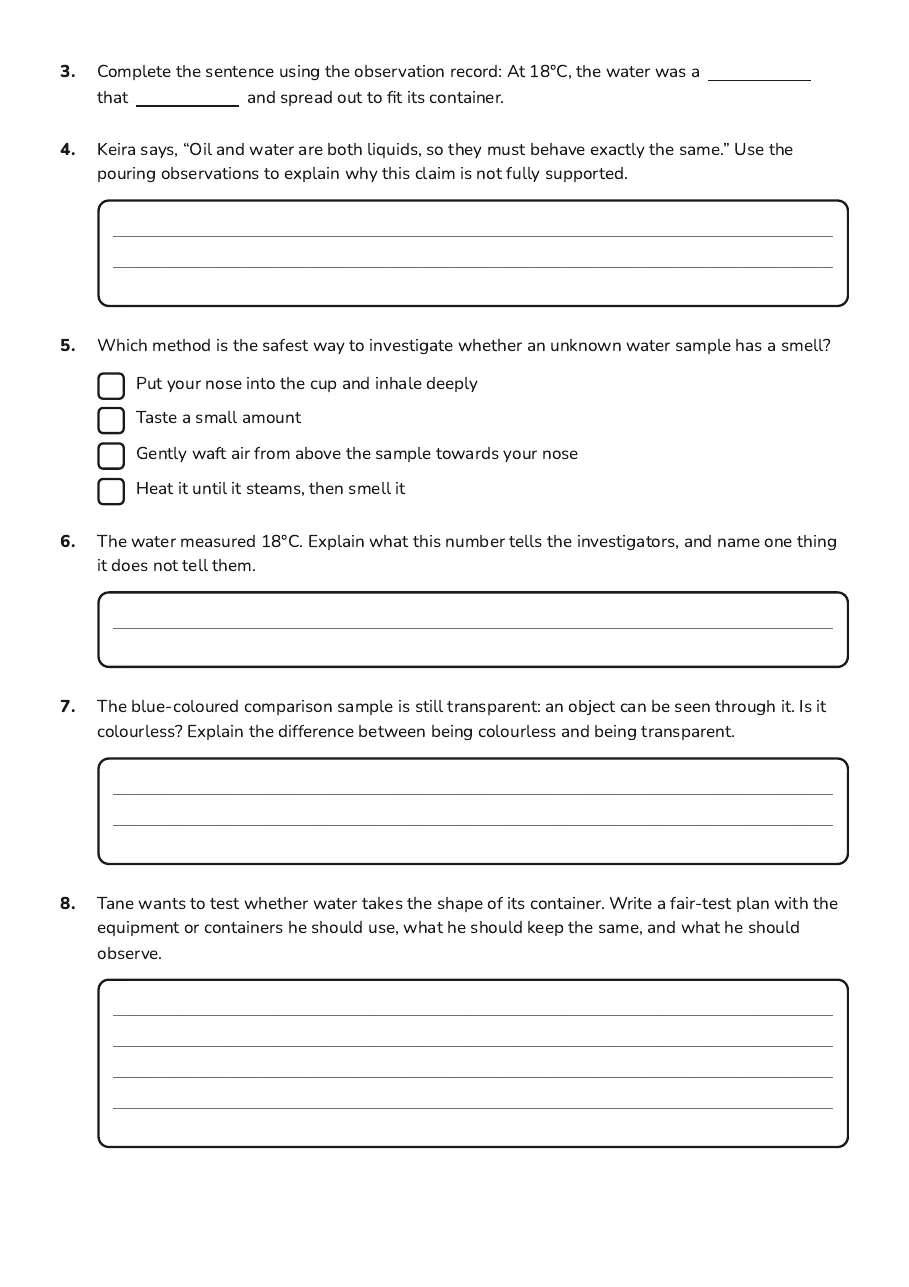
- Put your nose into the cup and inhale deeply
- Taste a small amount
- Gently waft air from above the sample towards your nose
- Heat it until it steams, then smell it
3 printable pages
Page 1
Page 2
Page 3
About This Worksheet
Free in Kuraplan
Sign up free, grab the PDF, and customize it for your class.
Print-Ready
Formatted for standard paper. Clean layout, easy to read.
AI-Generated
Created with Kuraplan's AI, designed for real classroom use.
For Teachers & Parents
Use in classrooms, for homework, tutoring, or homeschool.
Need a custom version of this worksheet?
Kuraplan's AI generates custom worksheets in seconds — differentiated for every learner, aligned to your curriculum.
Generate Custom Worksheets — FreeMore Science Worksheets
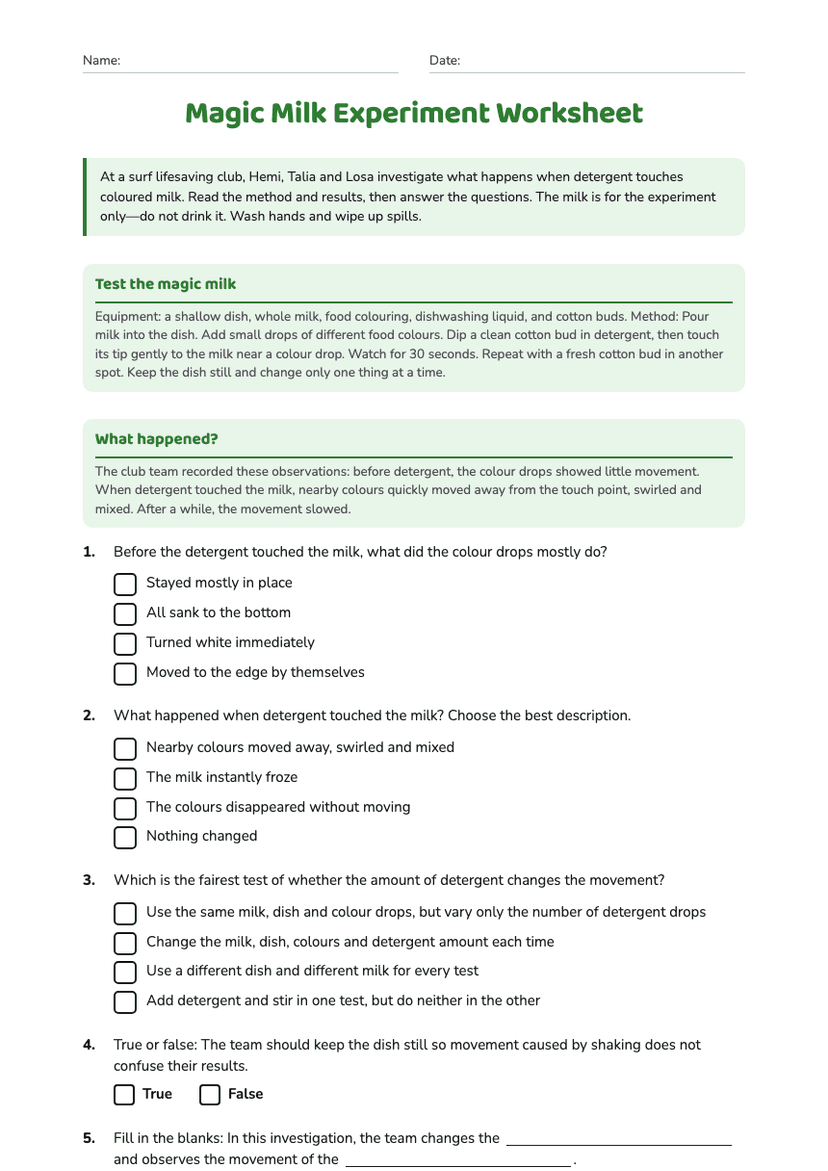
Magic Milk Experiment Worksheet
Free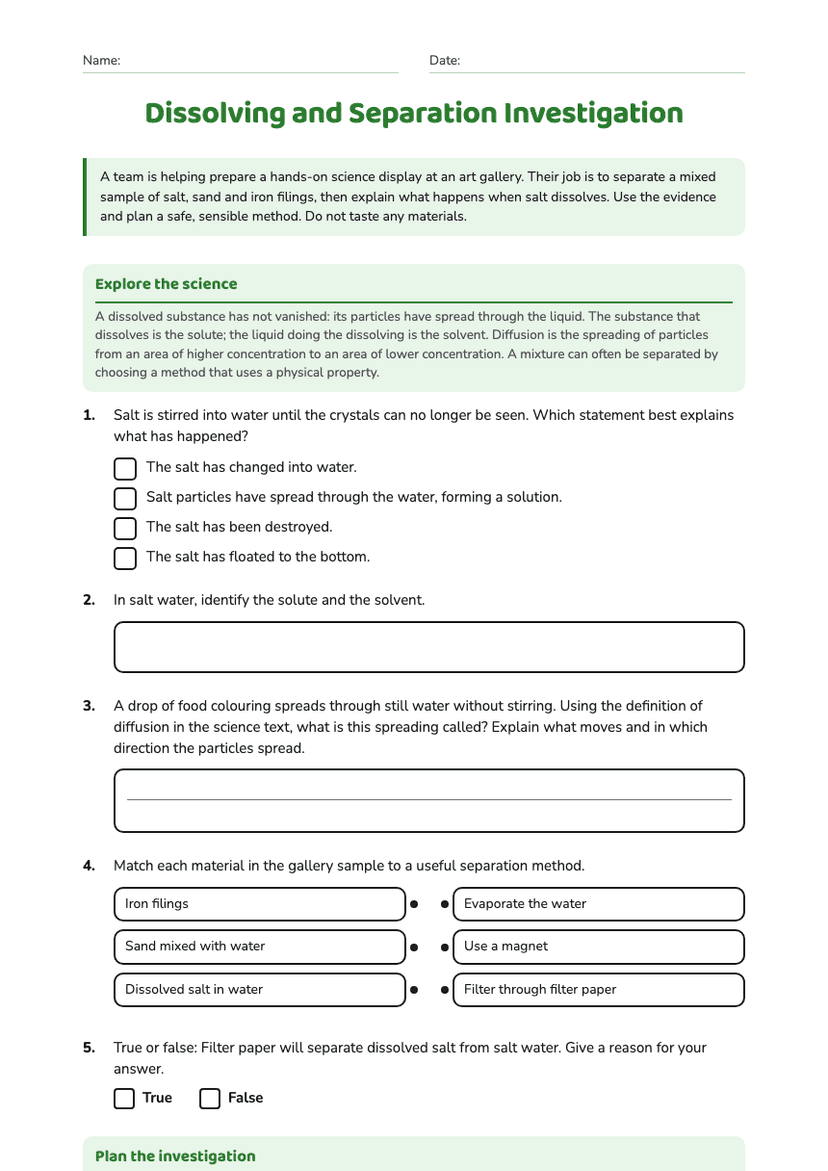
Dissolving and Separation Investigation
Free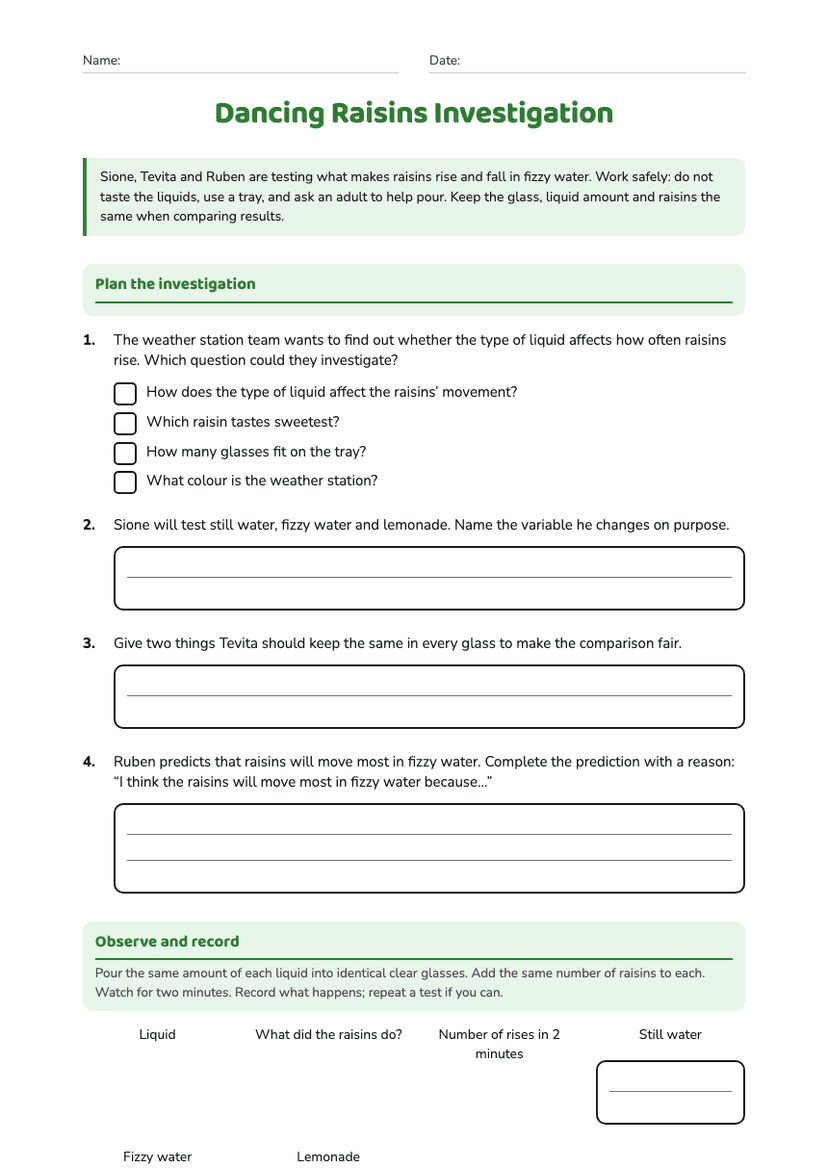
Dancing Raisins Investigation
Free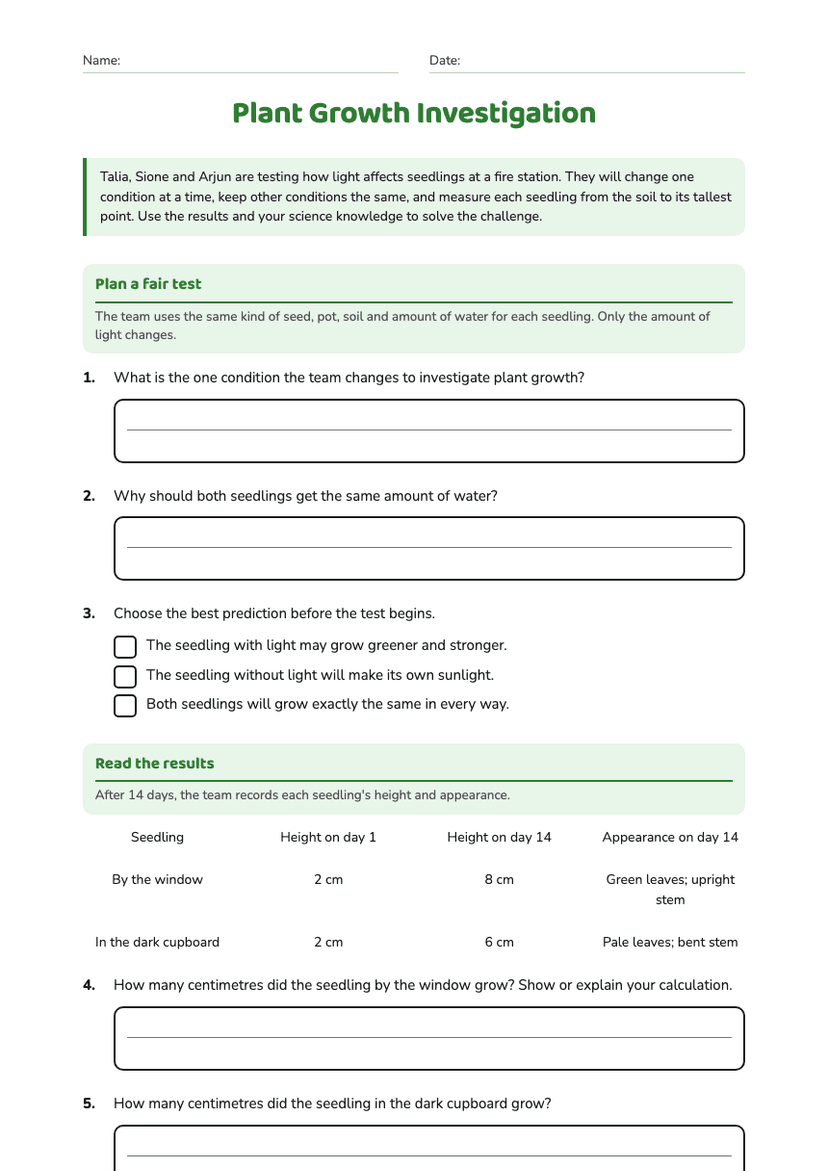
Plant Growth Investigation
Free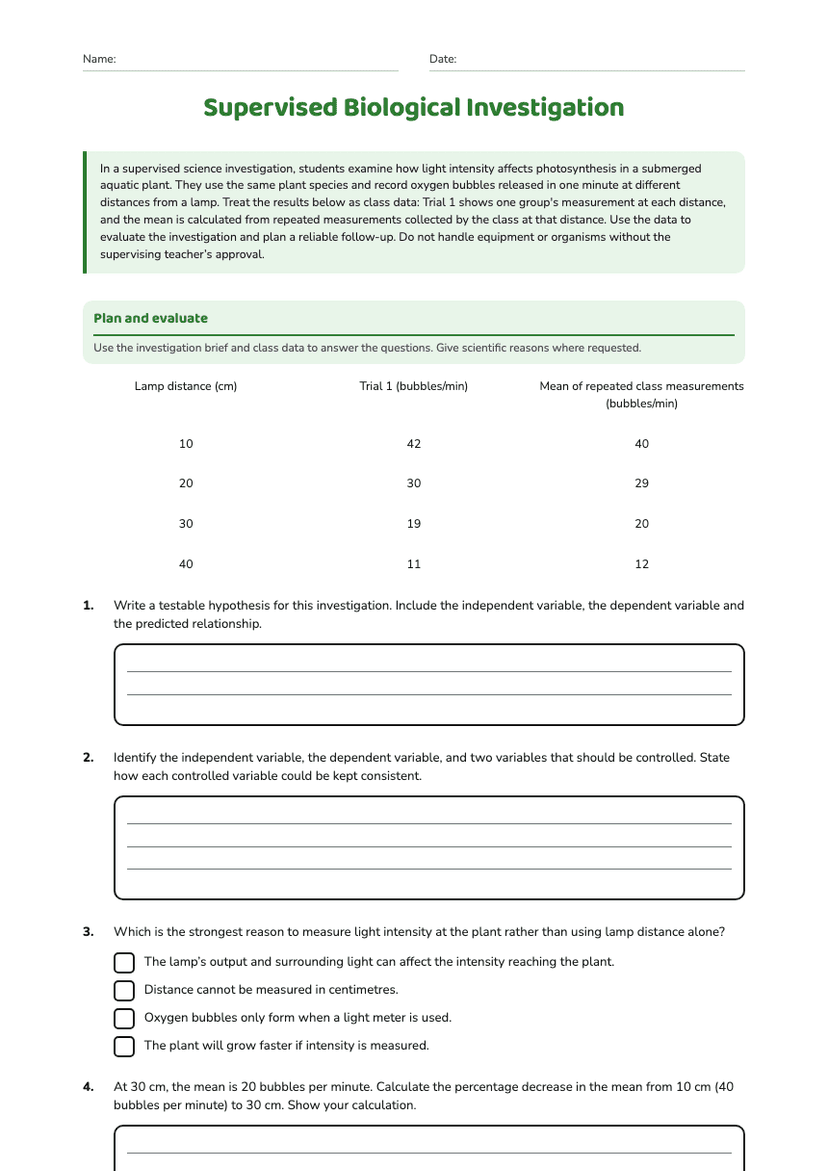
Supervised Biological Investigation
Free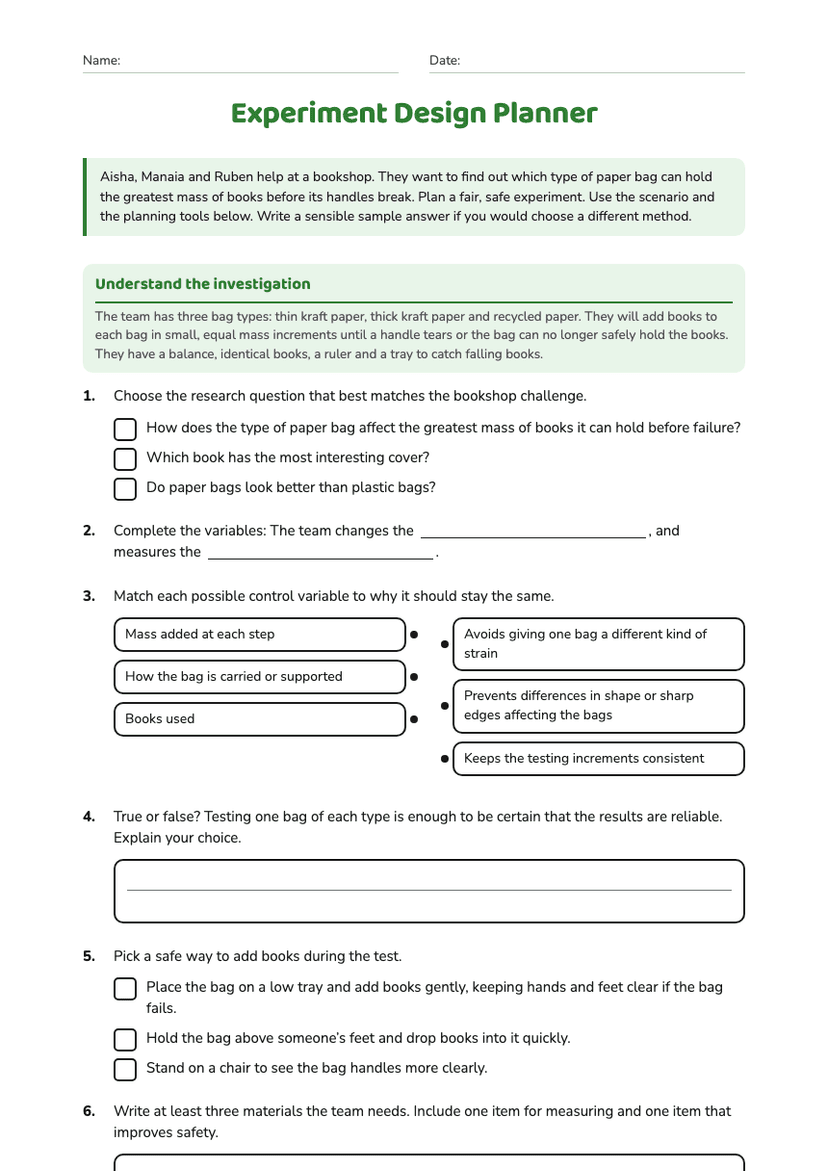
Experiment Design Planner
Free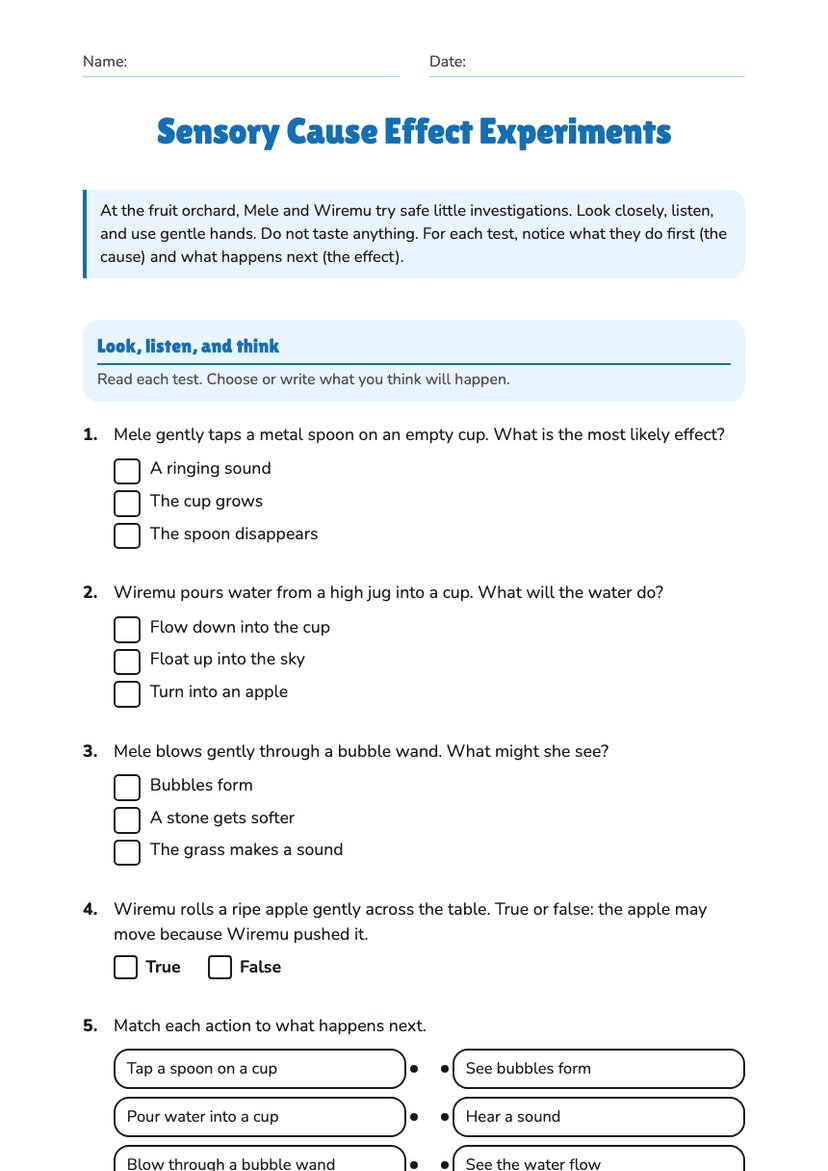
Sensory Cause Effect Experiments
Free