ScienceFreePrintable

Chemical Changes Investigation

A free science worksheet ready for your classroom. Open in Kuraplan to grab the print-ready PDF, customize it for your students, or generate a fresh version in seconds.

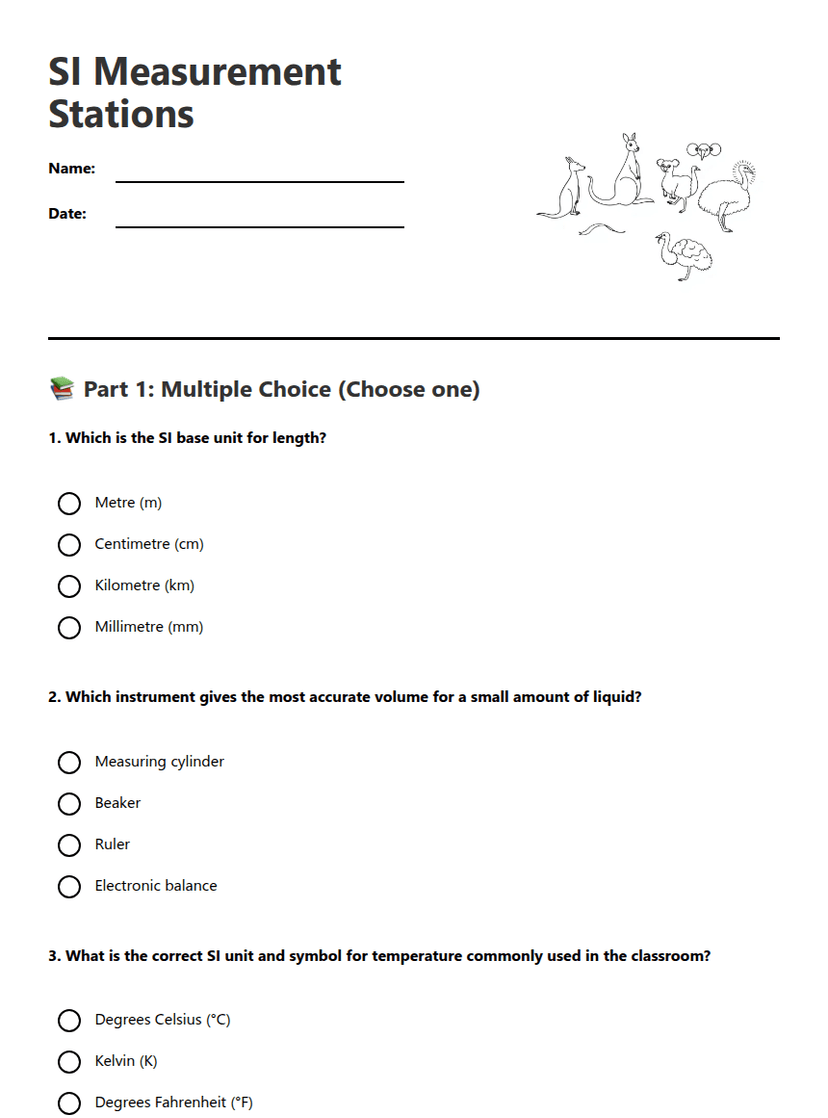
Chemical Changes Investigation worksheet preview
Chemical Changes Investigation

Chemical Changes Investigation

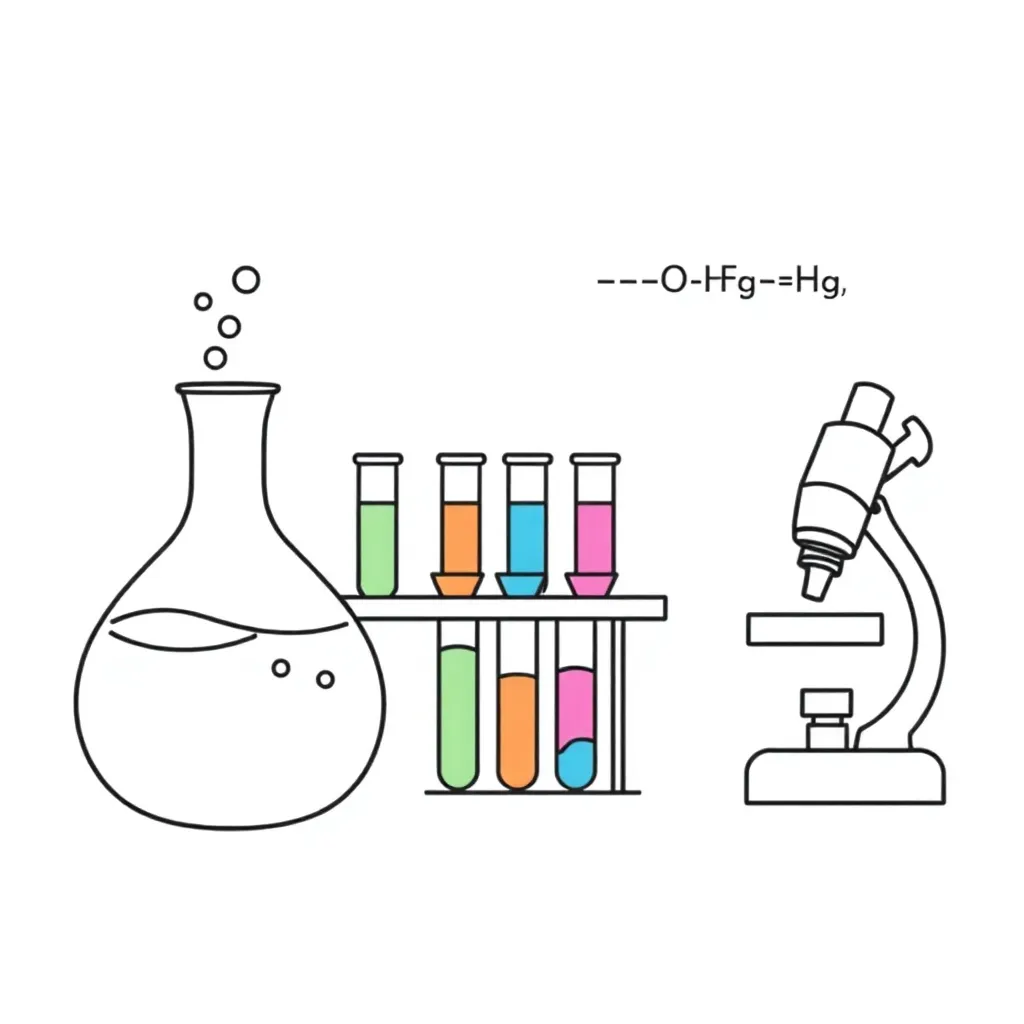
Chemical reaction illustration

🔬 Part 1: Understanding Matter

1. Circle the correct definition of an atom:

The smallest particle of an element that retains its properties

A mixture of different substances

A large molecule made of many atoms

A type of chemical reaction

2. Match each term with its correct definition:
1. Element
2. Compound
3. Mixture
A. Two or more substances physically combined
B. Pure substance made of one type of atom
C. Two or more elements chemically bonded
3. Draw a diagram showing the particle arrangement in a solid, liquid, and gas:

⚗️ Part 2: Physical vs Chemical Changes

4. Tick all the examples that show a physical change:

Ice melting into water

Burning wood to make ash

Dissolving sugar in water

Rusting of iron

Cutting paper into pieces

Cooking an egg

5. Fill in the blanks about signs of chemical change:

When a chemical reaction occurs, we might observe several signs including the production of ________, a change in ________, the formation of a ________, or the release or absorption of ________.

6. Explain the difference between a physical change and a chemical change:

🧪 Part 3: Vinegar and Baking Soda Investigation

7. Before conducting the experiment, predict what you think will happen when vinegar is mixed with baking soda:
8. During the experiment, record your observations in the table below:
9. Circle the evidence that shows this is a chemical change:

Gas bubbles are produced

The mixture becomes warmer

A fizzing sound is heard

All of the above

10. Draw what you observed during the reaction, showing the particles before and after:

🎯 Part 4: Applying Your Knowledge

11. For each scenario below, write whether it is a physical (P) or chemical (C) change:

a) Water boiling to form steam ____

b) Milk turning sour ____

c) Dissolving salt in water ____

d) Burning petrol in a car engine ____

e) Freezing orange juice ____

f) Digesting food in your stomach ____

12. Explain why the particle model is useful for understanding chemical reactions:
13. Design your own simple experiment to demonstrate a chemical change. Describe what materials you would use and what you would expect to observe:

🏠 Part 5: Extension Activity

14. Homework Challenge: Create a comic strip showing particles during a chemical change. Plan your comic strip below by describing what will happen in each panel:

Panel 1: ________________________________

Panel 2: ________________________________

Panel 3: ________________________________

Panel 4: ________________________________

15. Reflection: What was the most interesting thing you learned about chemical changes today?

About This Worksheet

Free in Kuraplan

Sign up free, grab the PDF, and customize it for your class.

Print-Ready

Formatted for standard paper. Clean layout, easy to read.

AI-Generated

Created with Kuraplan's AI, designed for real classroom use.

For Teachers & Parents

Use in classrooms, for homework, tutoring, or homeschool.

Need a custom version of this worksheet?

Kuraplan's AI generates custom worksheets in seconds — differentiated for every learner, aligned to your curriculum.

Generate Custom Worksheets — Free
No credit card Curriculum-aligned Under 60 seconds