Contraception Facts and Myths
A free health worksheet ready for your classroom. Open in Kuraplan to grab the print-ready PDF, customize it for your students, or generate a fresh version in seconds.
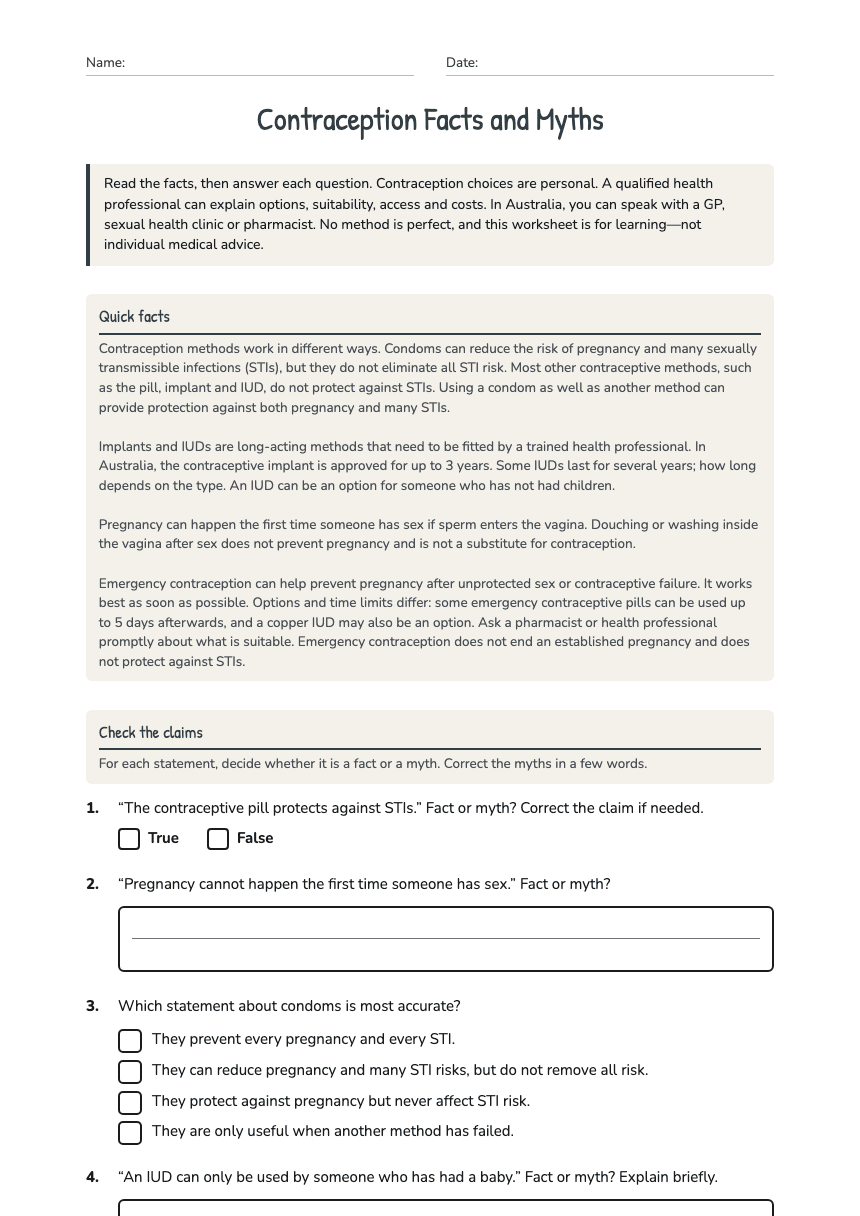
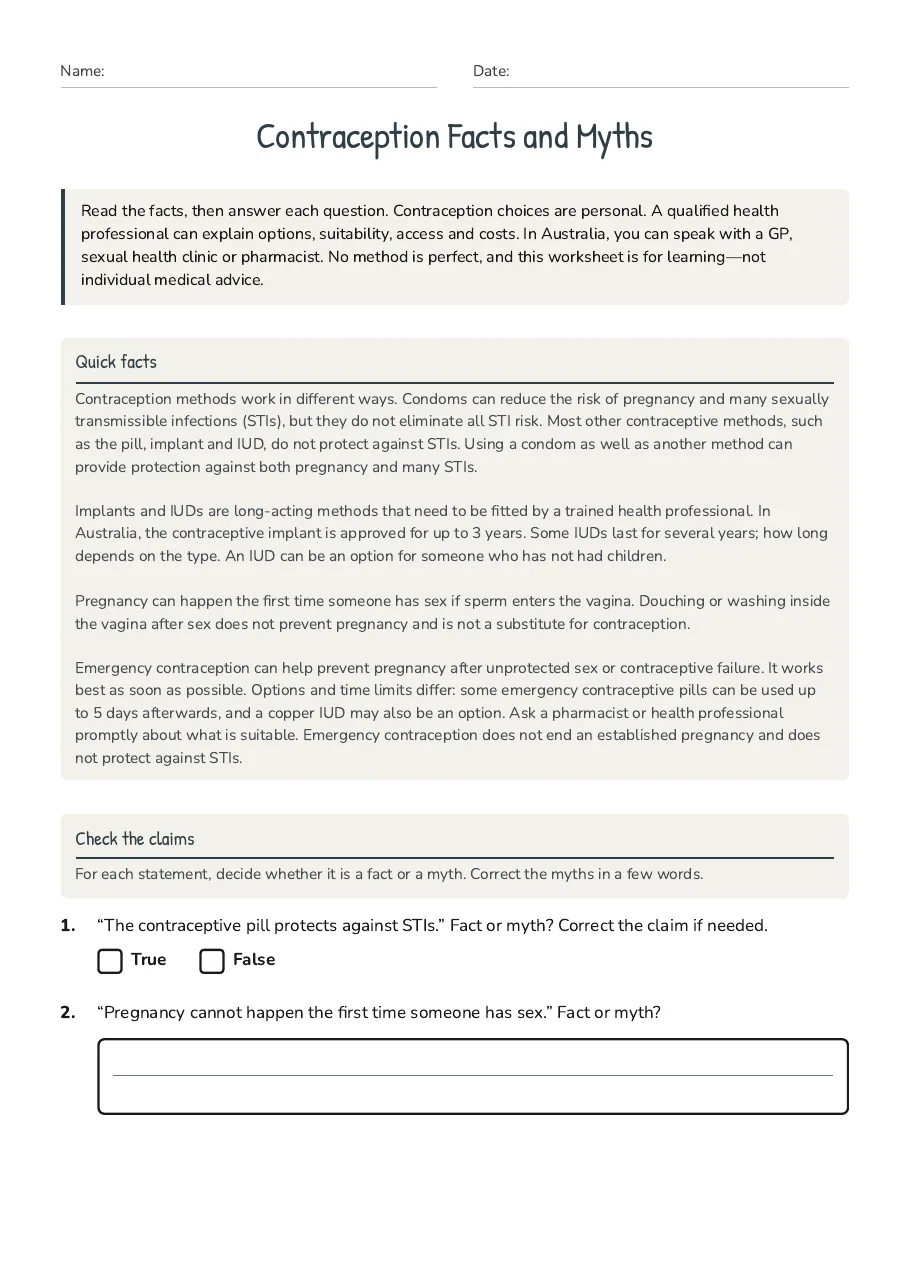
Contraception Facts and Myths
Quick facts
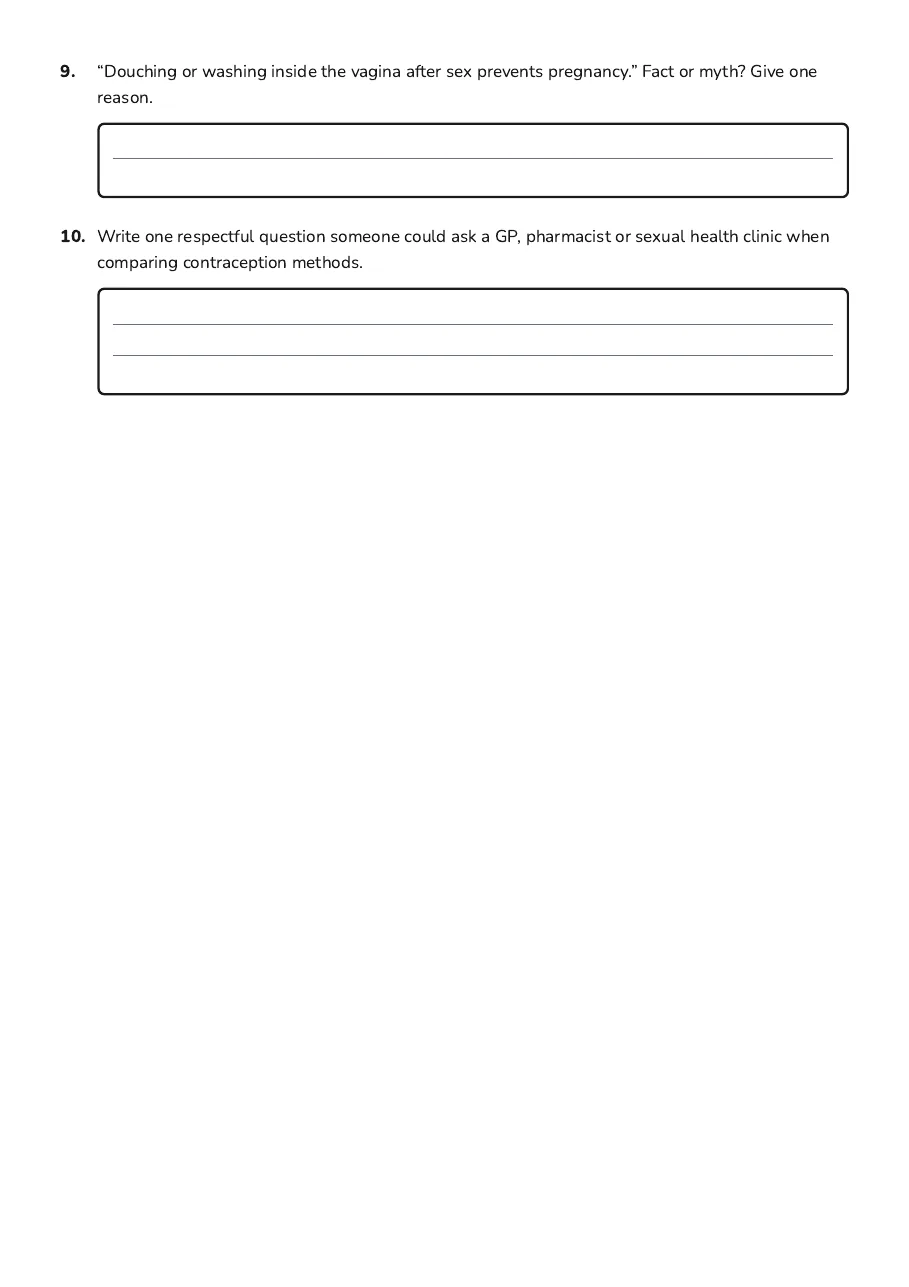
Contraception methods work in different ways. Condoms can reduce the risk of pregnancy and many sexually transmissible infections (STIs), but they do not eliminate all STI risk. Most other contraceptive methods, such as the pill, implant and IUD, do not protect against STIs. Using a condom as well as another method can provide protection against both pregnancy and many STIs. Implants and IUDs are long-acting methods that need to be fitted by a trained health professional. In Australia, the contraceptive implant is approved for up to 3 years. Some IUDs last for several years; how long depends on the type. An IUD can be an option for someone who has not had children. Pregnancy can happen the first time someone has sex if sperm enters the vagina. Douching or washing inside the vagina after sex does not prevent pregnancy and is not a substitute for contraception. Emergency contraception can help prevent pregnancy after unprotected sex or contraceptive failure. It works best as soon as possible. Options and time limits differ: some emergency contraceptive pills can be used up to 5 days afterwards, and a copper IUD may also be an option. Ask a pharmacist or health professional promptly about what is suitable. Emergency contraception does not end an established pregnancy and does not protect against STIs.
Check the claims
For each statement, decide whether it is a fact or a myth. Correct the myths in a few words.
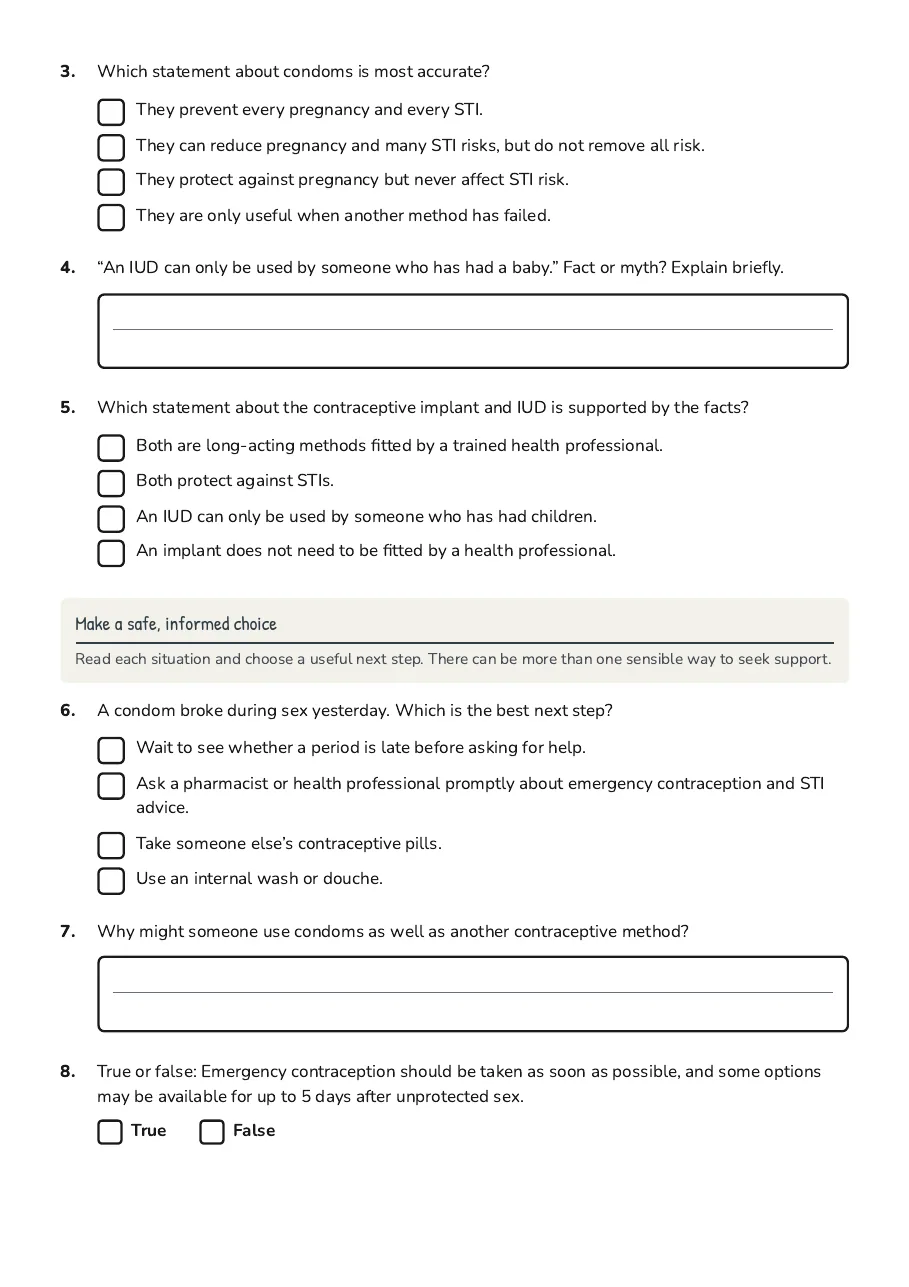
- They prevent every pregnancy and every STI.
- They can reduce pregnancy and many STI risks, but do not remove all risk.
- They protect against pregnancy but never affect STI risk.
- They are only useful when another method has failed.
- Both are long-acting methods fitted by a trained health professional.
- Both protect against STIs.
- An IUD can only be used by someone who has had children.
- An implant does not need to be fitted by a health professional.
Make a safe, informed choice
Read each situation and choose a useful next step. There can be more than one sensible way to seek support.
- Wait to see whether a period is late before asking for help.
- Ask a pharmacist or health professional promptly about emergency contraception and STI advice.
- Take someone else’s contraceptive pills.
- Use an internal wash or douche.
3 printable pages
Page 1
Page 2
Page 3
About This Worksheet
Free in Kuraplan
Sign up free, grab the PDF, and customize it for your class.
Print-Ready
Formatted for standard paper. Clean layout, easy to read.
AI-Generated
Created with Kuraplan's AI, designed for real classroom use.
For Teachers & Parents
Use in classrooms, for homework, tutoring, or homeschool.
Need a custom version of this worksheet?
Kuraplan's AI generates custom worksheets in seconds — differentiated for every learner, aligned to your curriculum.
Generate Custom Worksheets — FreeMore Health Worksheets
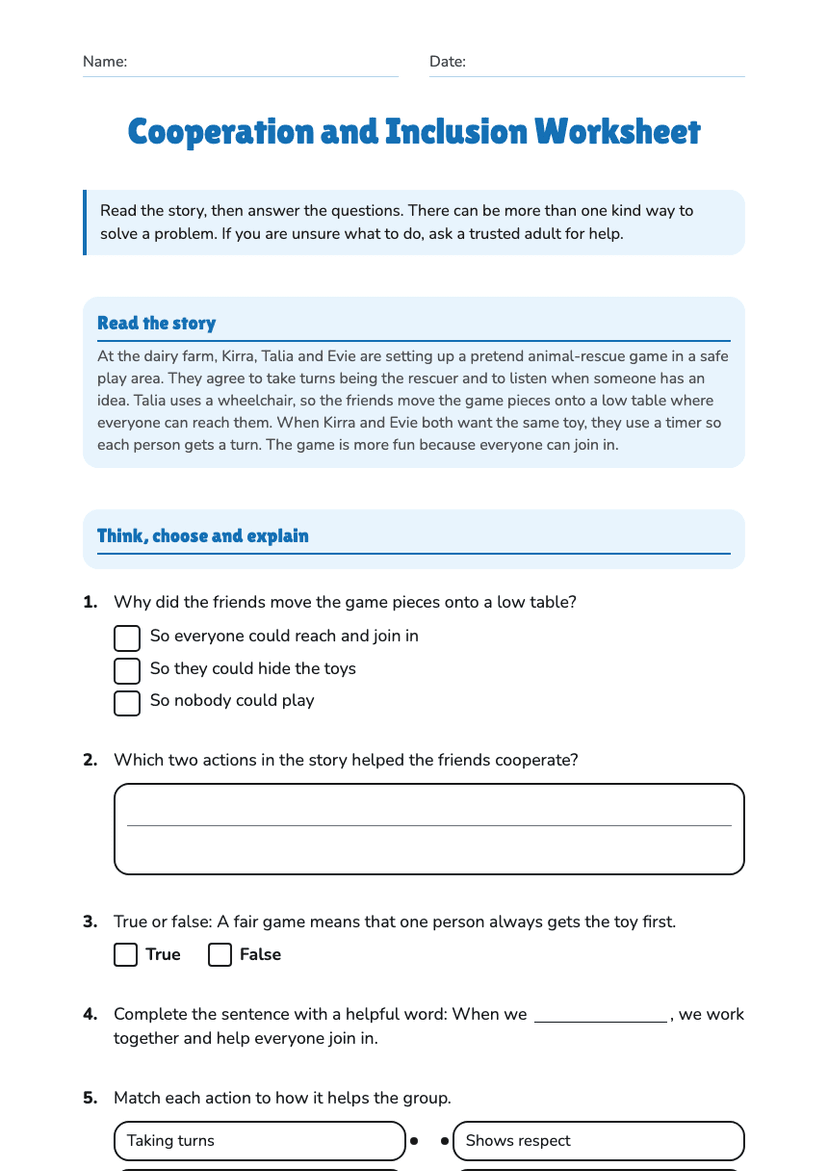
Cooperation and Inclusion Worksheet
Free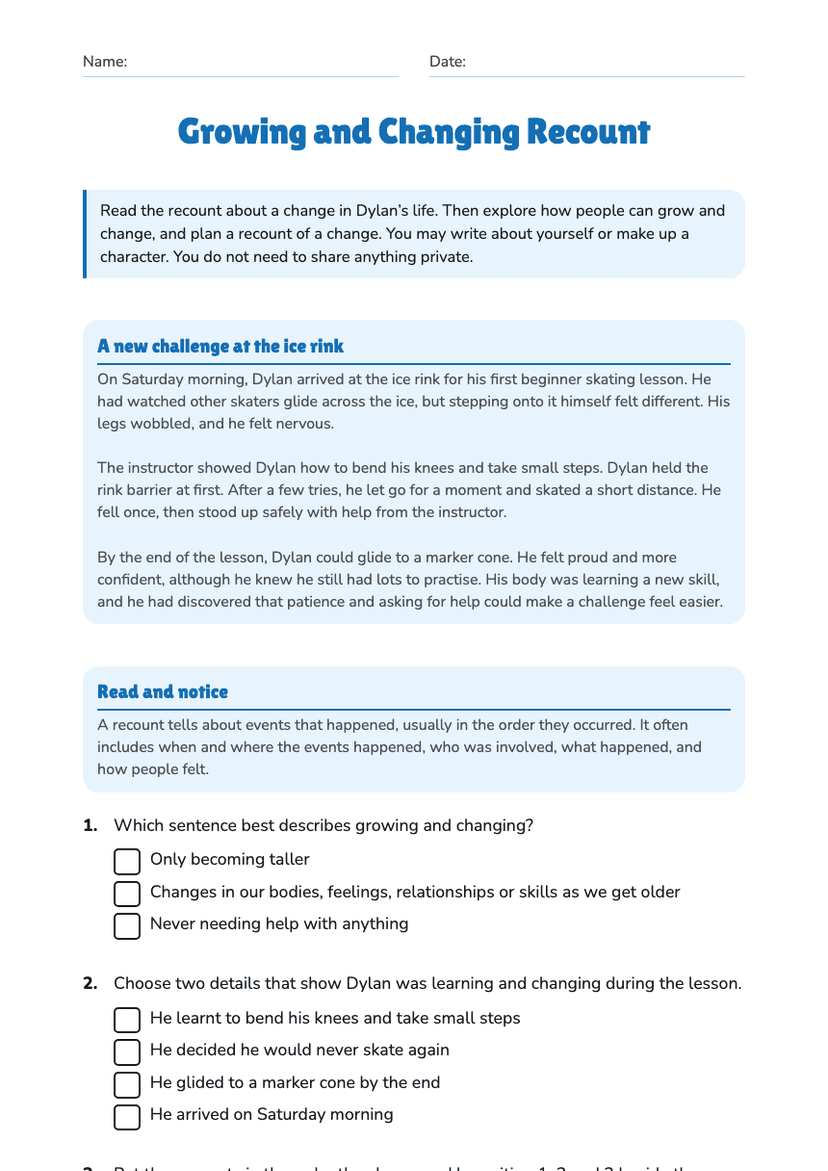
Growing and Changing Recount
Free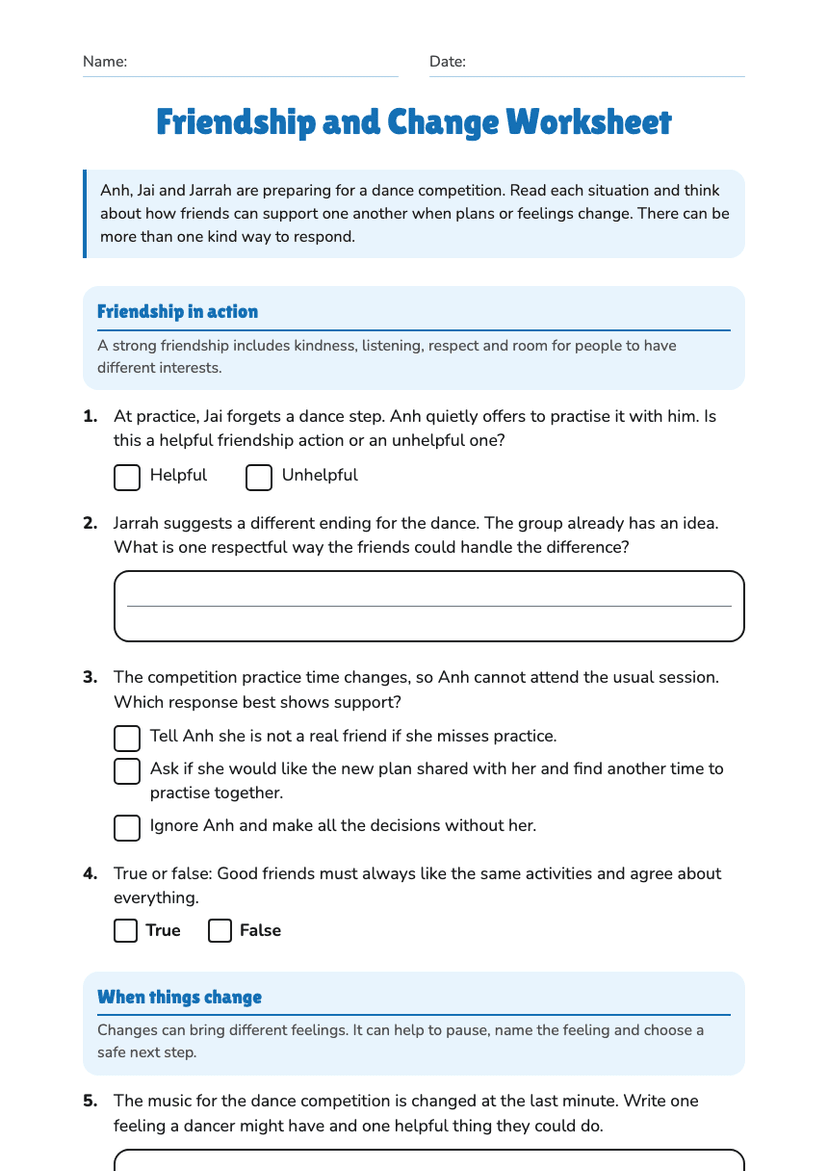
Friendship and Change Worksheet
Free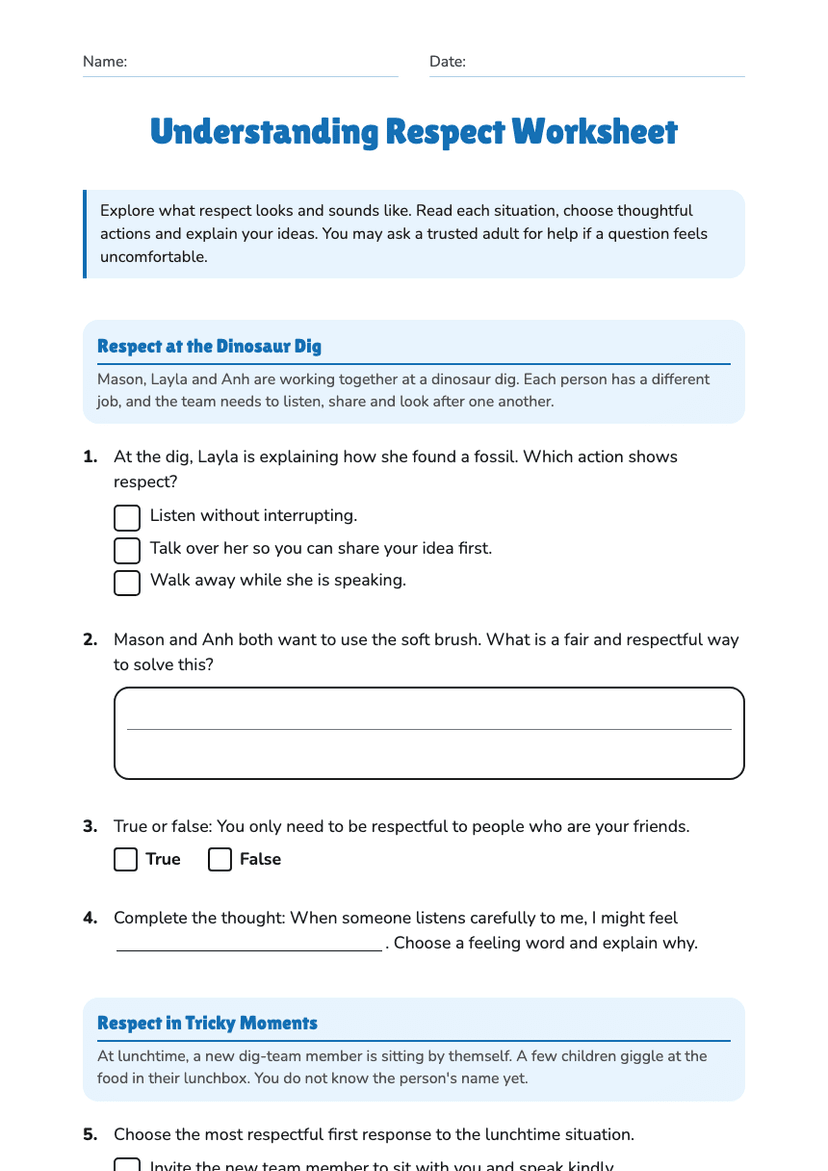
Understanding Respect Worksheet
Free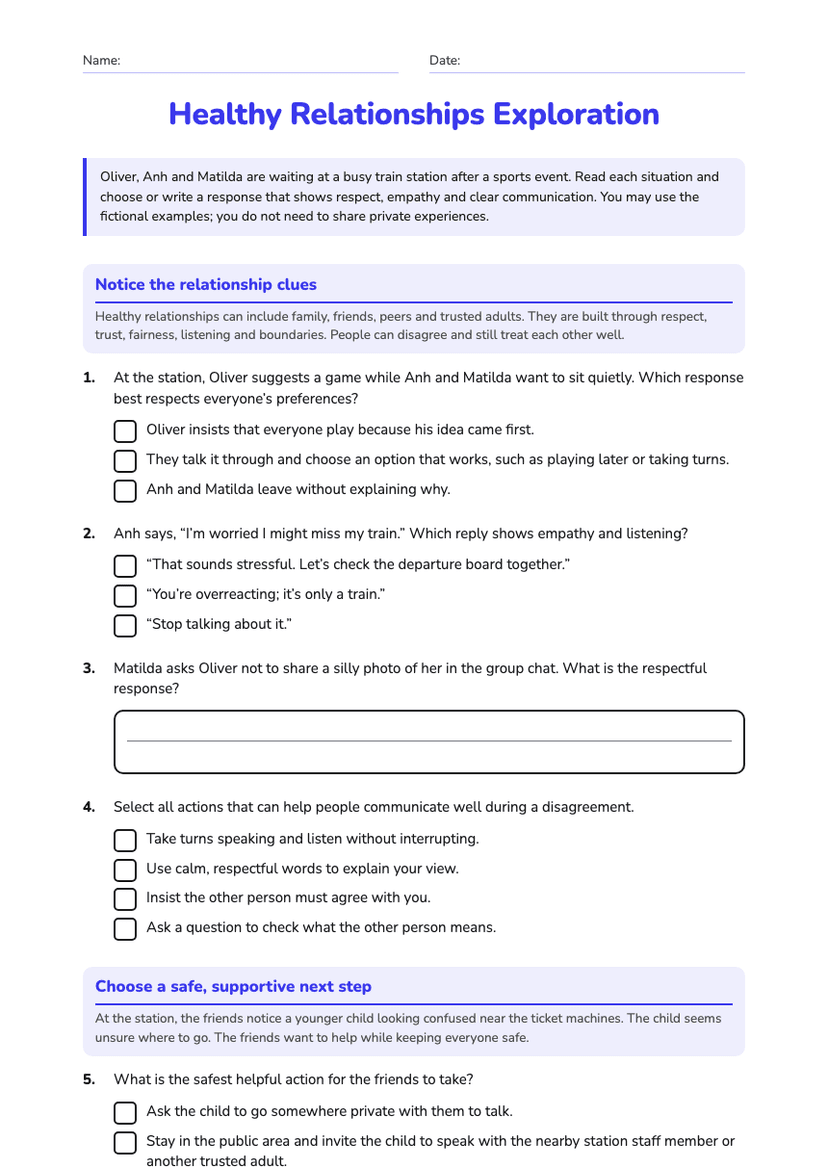
Healthy Relationships Exploration
Free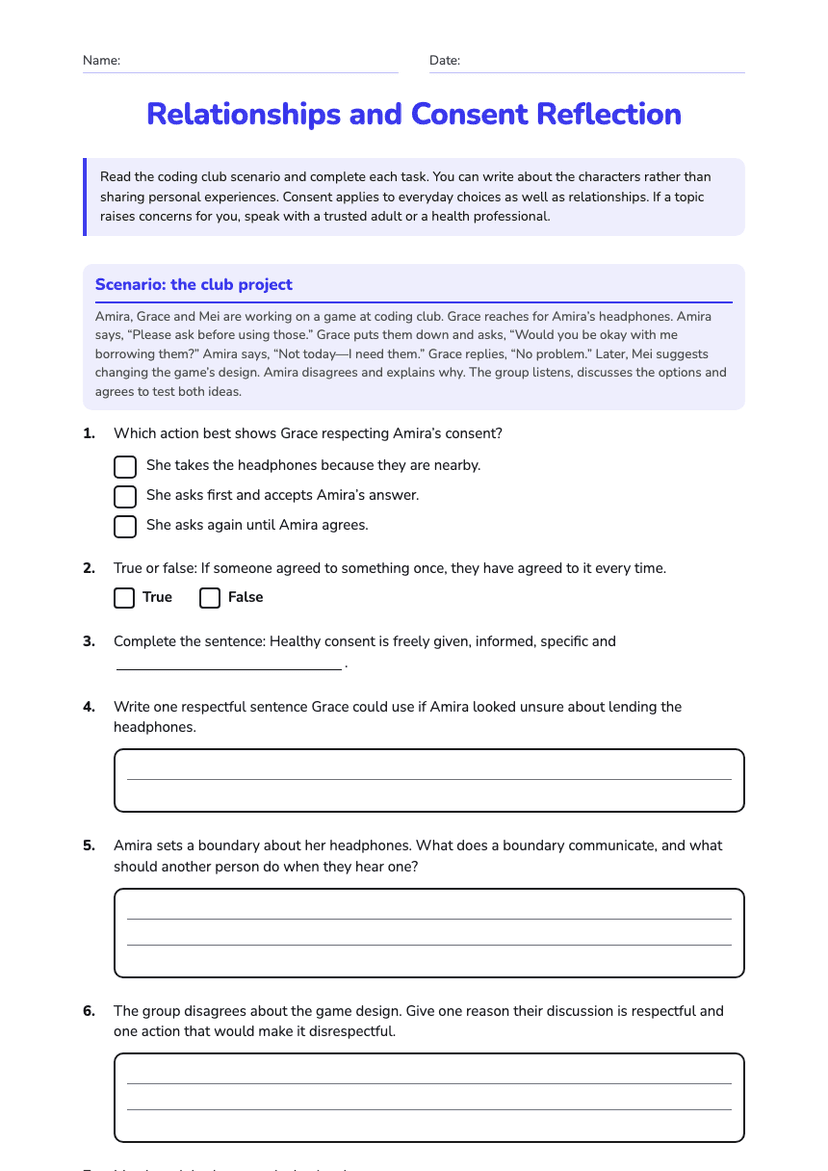
Relationships and Consent Reflection
Free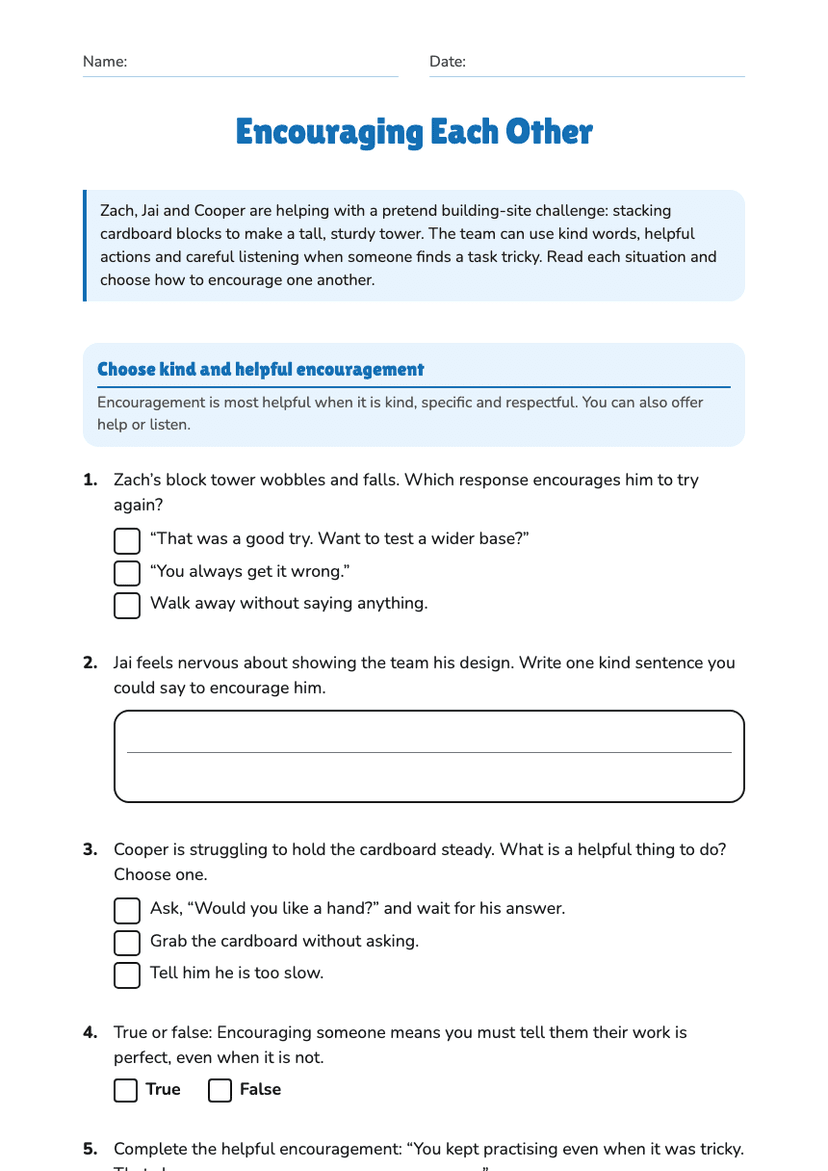
Encouraging Each Other
Free