Electron Valency and Ion Formation
A free science worksheet ready for your classroom. Open in Kuraplan to grab the print-ready PDF, customize it for your students, or generate a fresh version in seconds.
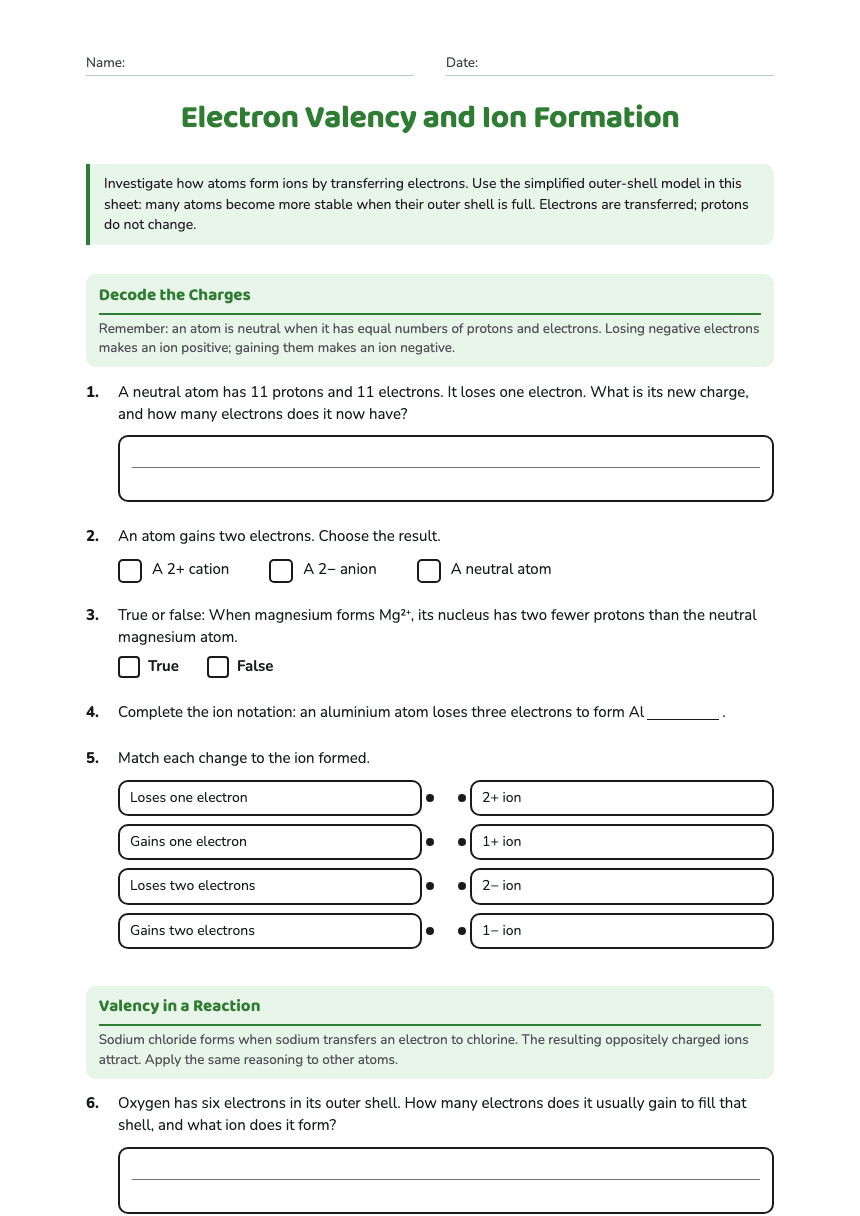
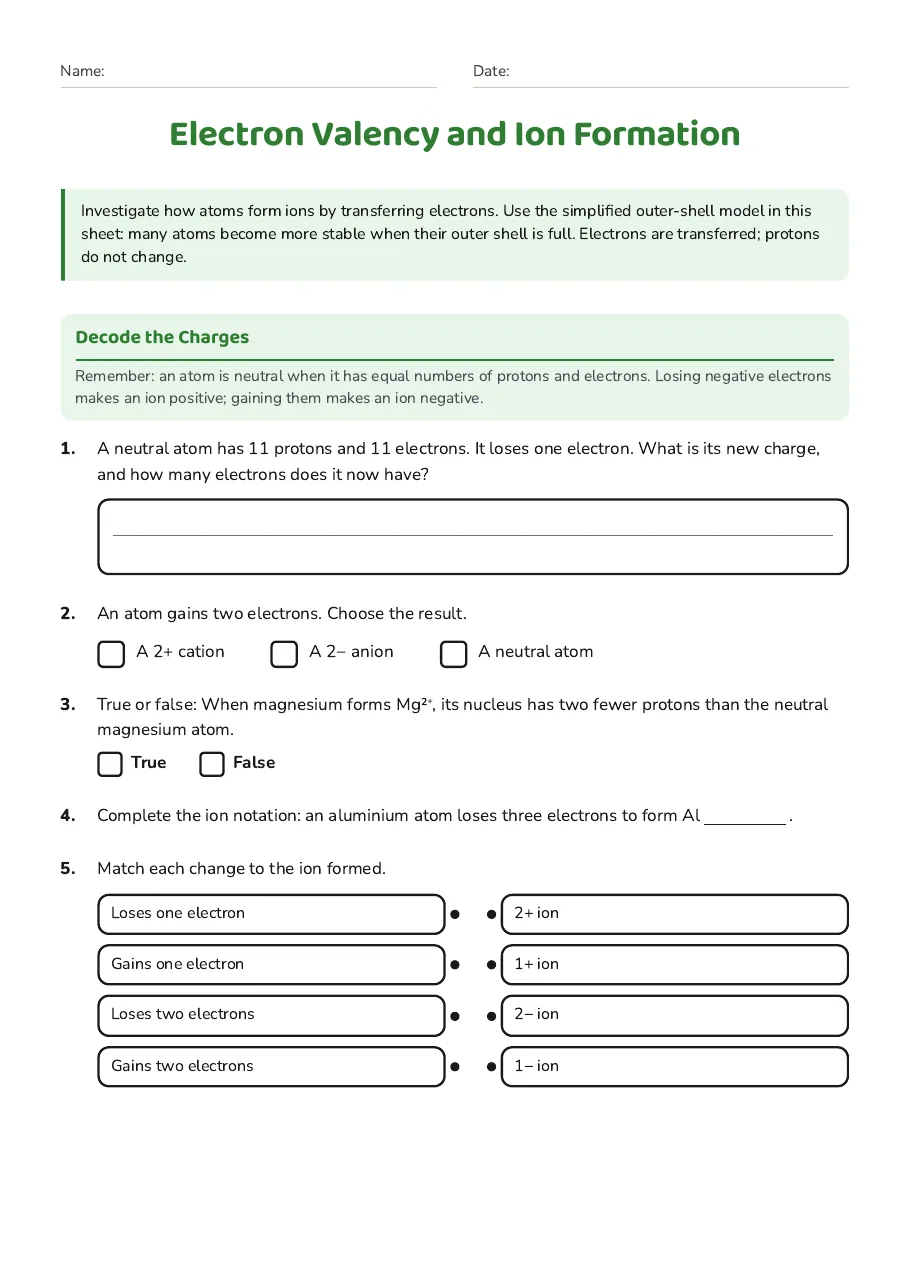
Electron Valency and Ion Formation
Decode the Charges
Remember: an atom is neutral when it has equal numbers of protons and electrons. Losing negative electrons makes an ion positive; gaining them makes an ion negative.
- A 2+ cation
- A 2− anion
- A neutral atom
- Loses one electron
- Gains one electron
- Loses two electrons
- Gains two electrons
- 2+ ion
- 1+ ion
- 2− ion
- 1− ion
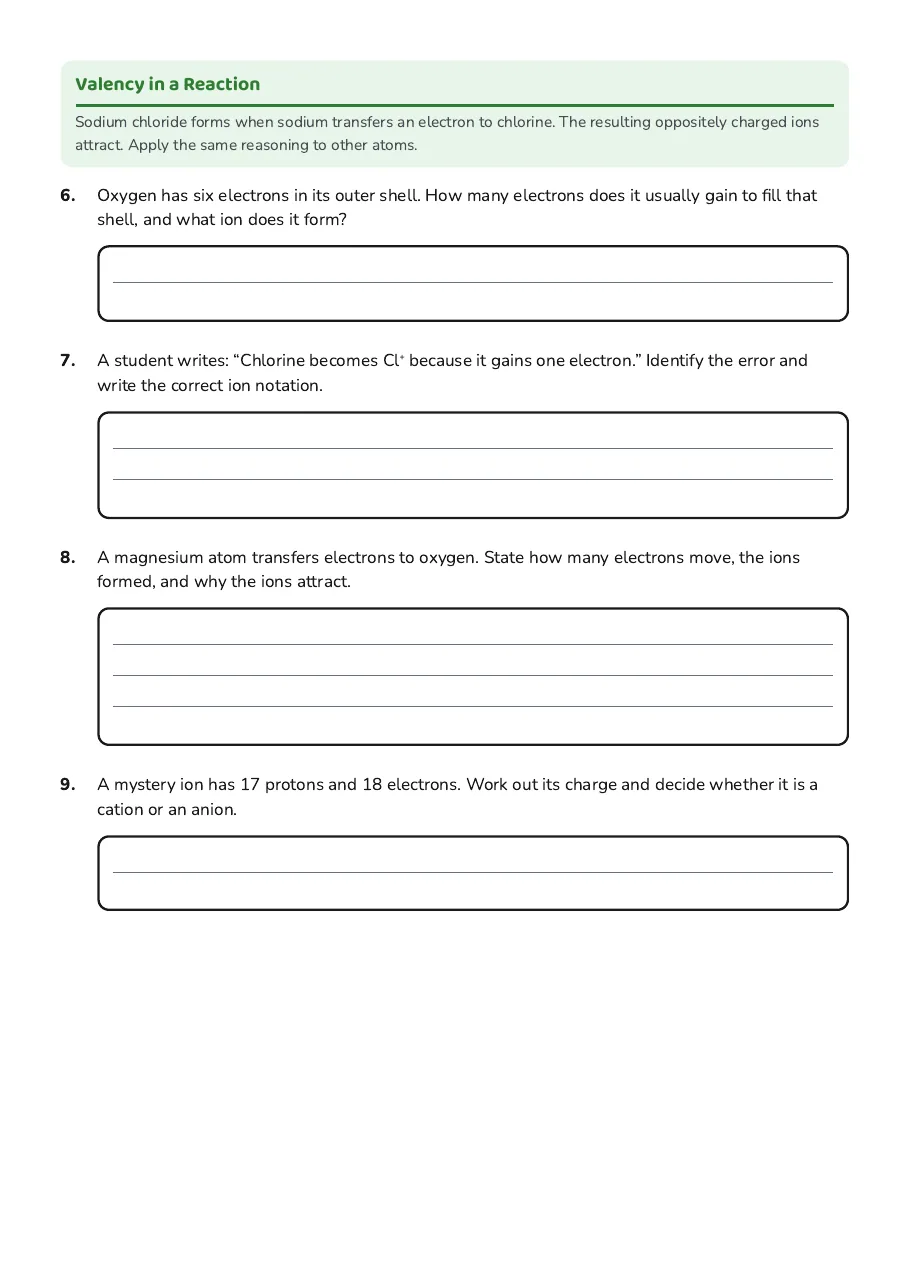
Valency in a Reaction
Sodium chloride forms when sodium transfers an electron to chlorine. The resulting oppositely charged ions attract. Apply the same reasoning to other atoms.
2 printable pages
Page 1
Page 2
About This Worksheet
Free in Kuraplan
Sign up free, grab the PDF, and customize it for your class.
Print-Ready
Formatted for standard paper. Clean layout, easy to read.
AI-Generated
Created with Kuraplan's AI, designed for real classroom use.
For Teachers & Parents
Use in classrooms, for homework, tutoring, or homeschool.
Need a custom version of this worksheet?
Kuraplan's AI generates custom worksheets in seconds — differentiated for every learner, aligned to your curriculum.
Generate Custom Worksheets — FreeMore Science Worksheets
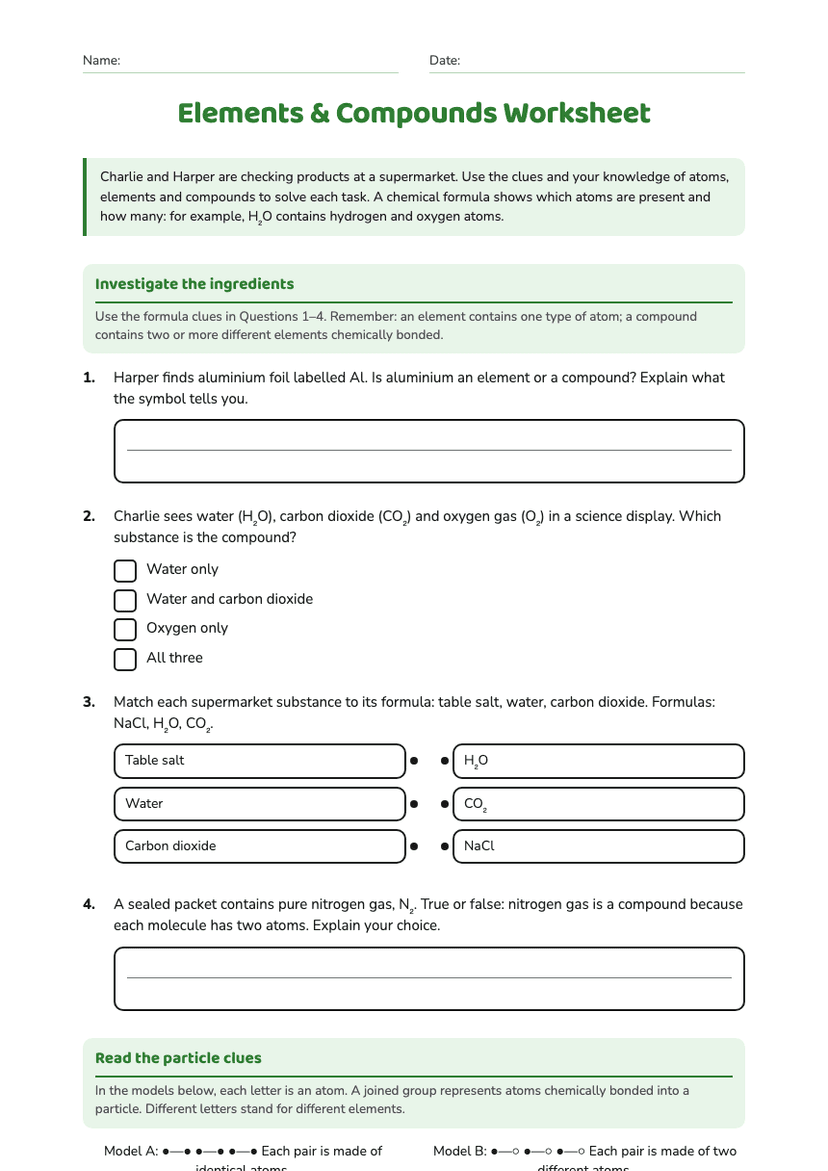
Elements & Compounds Worksheet
Free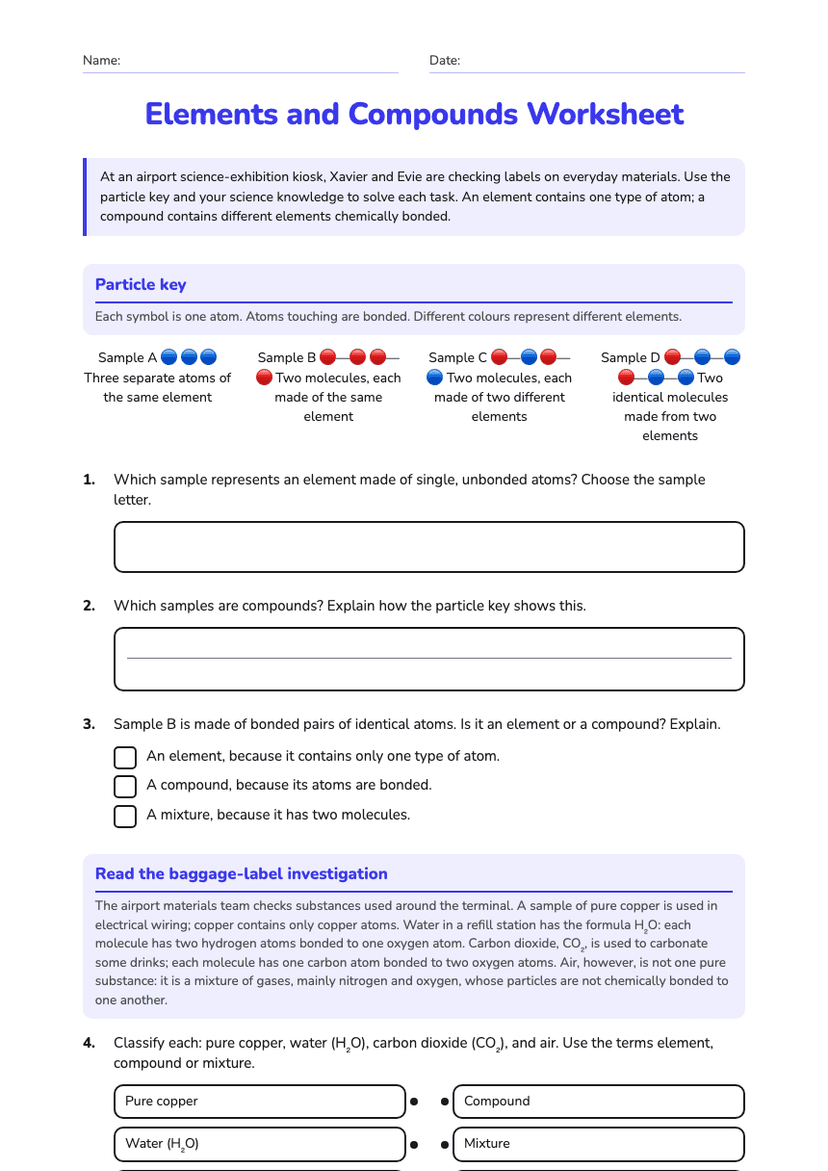
Elements and Compounds Worksheet
Free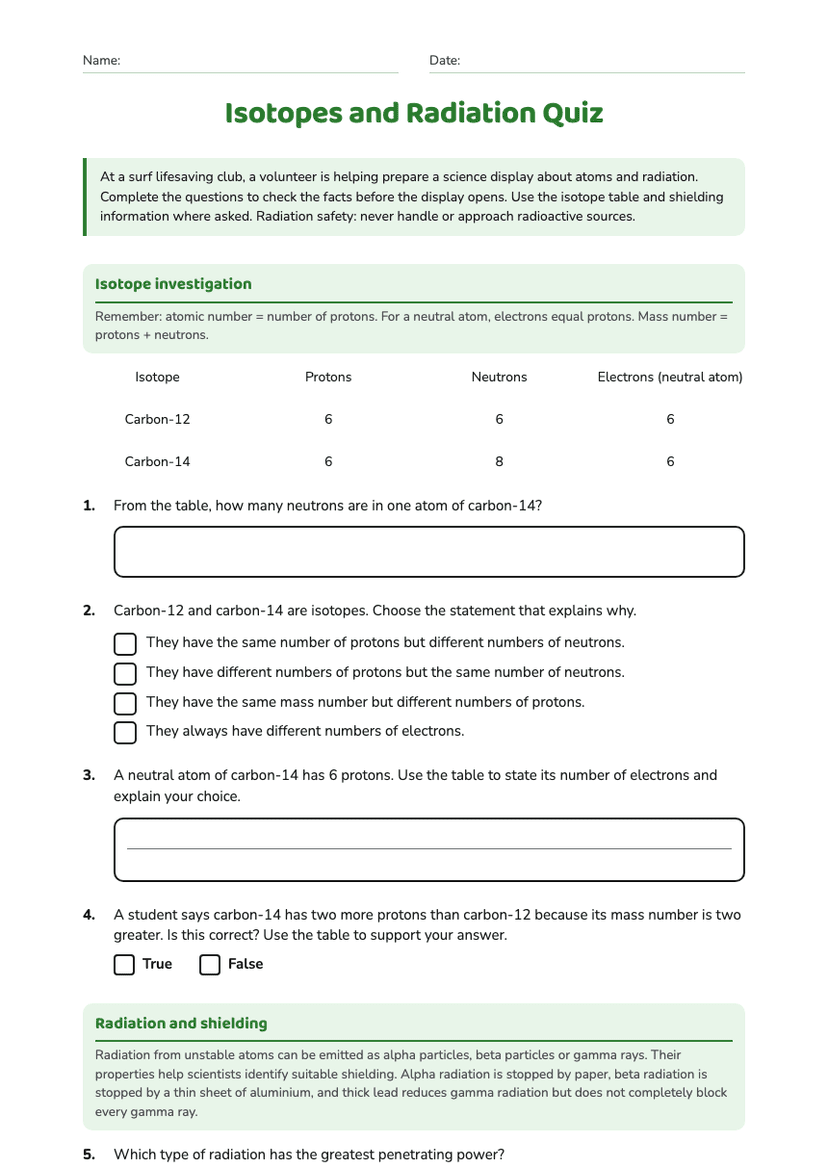
Isotopes and Radiation Quiz
Free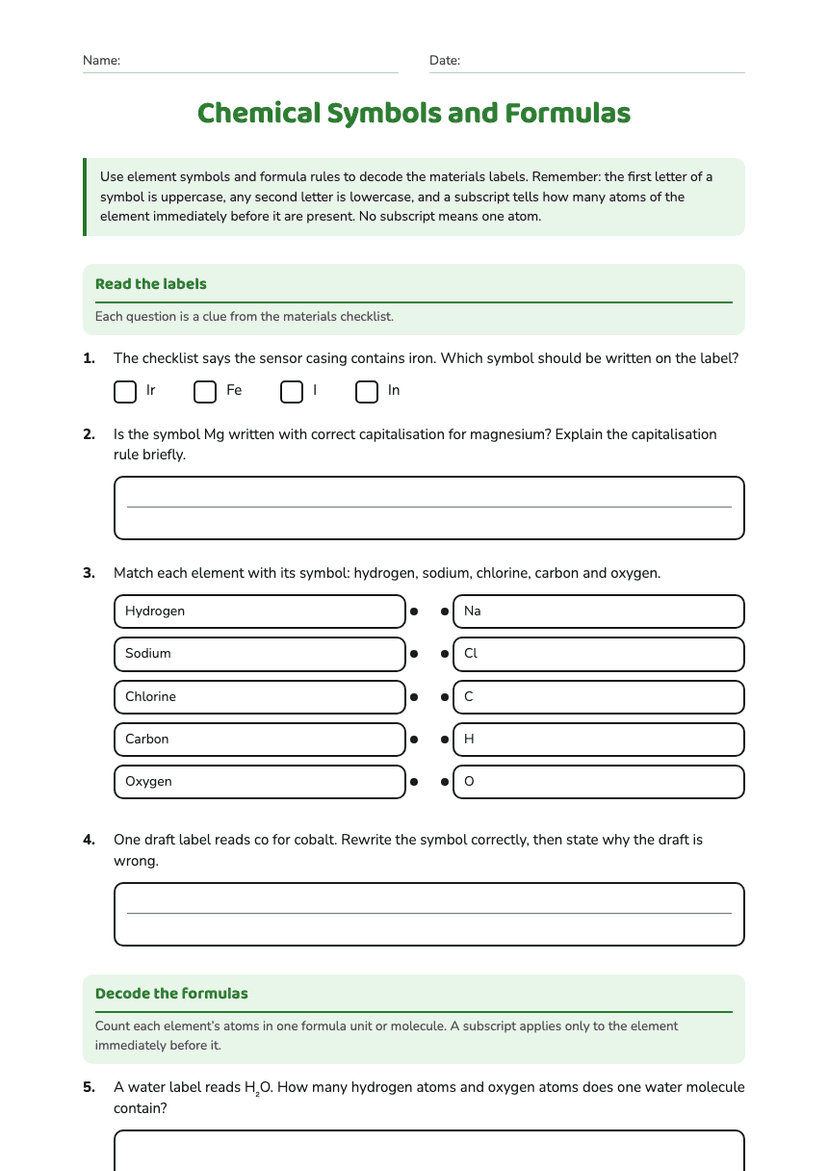
Chemical Symbols and Formulas
Free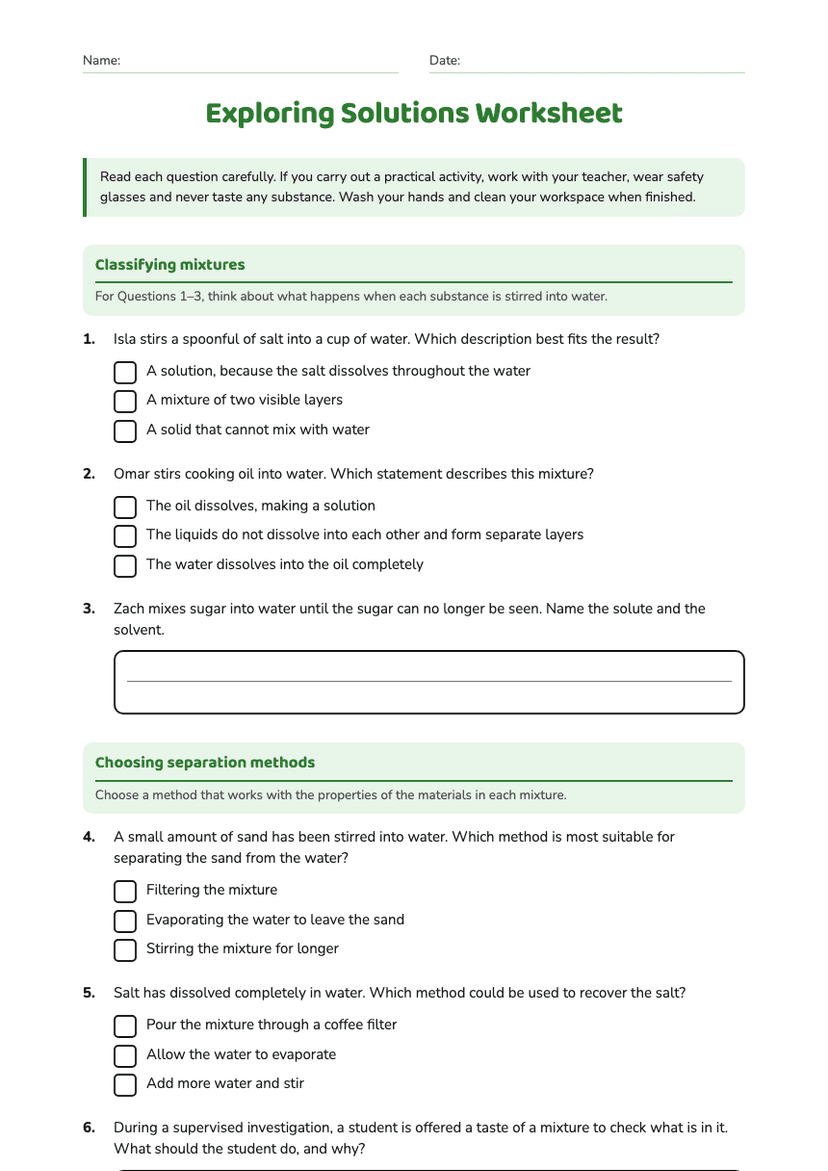
Exploring Solutions Worksheet
Free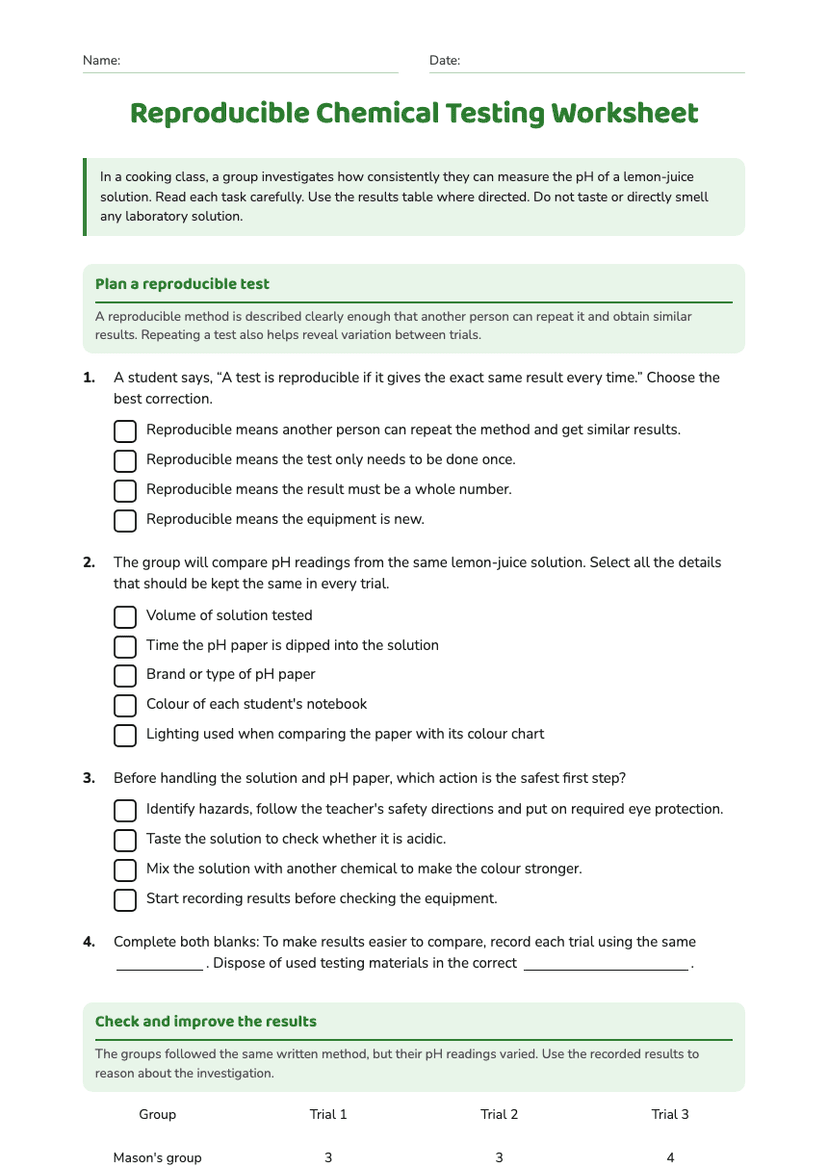
Reproducible Chemical Testing Worksheet
Free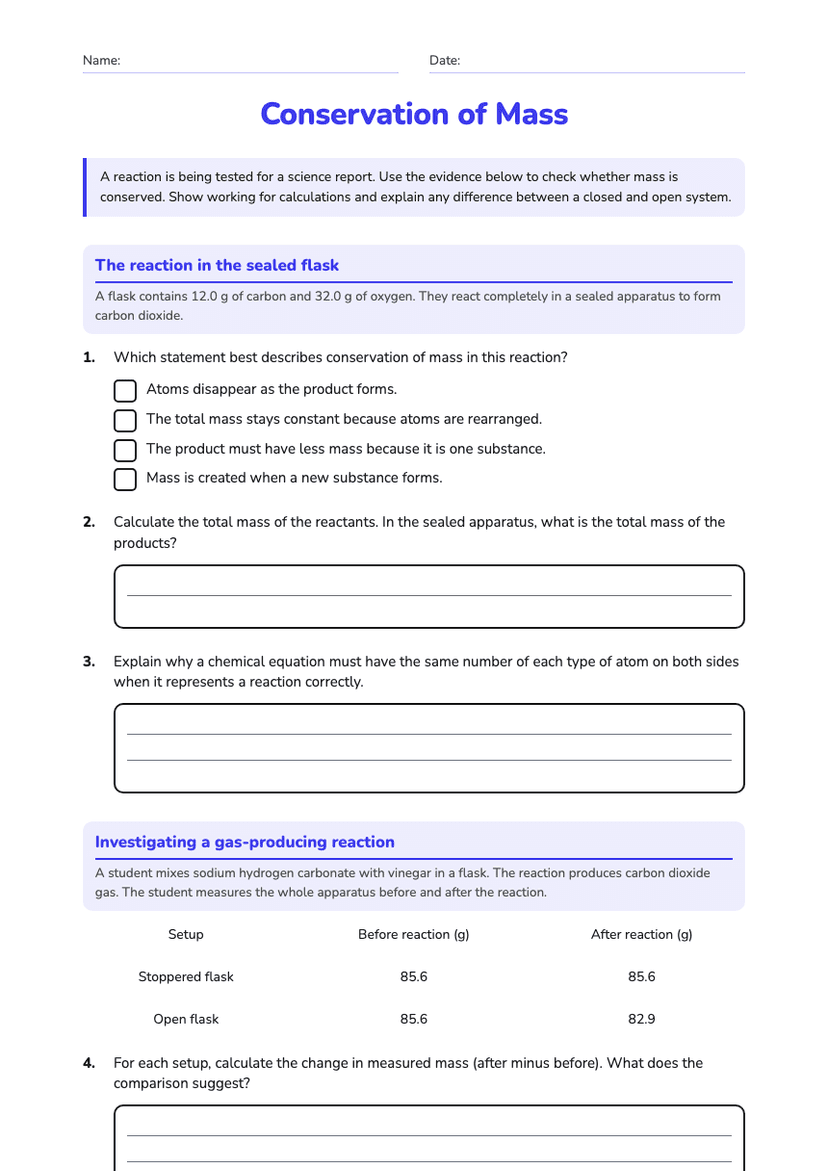
Conservation of Mass
Free