Exploring World Music
A free music worksheet ready for your classroom. Open in Kuraplan to grab the print-ready PDF, customize it for your students, or generate a fresh version in seconds.
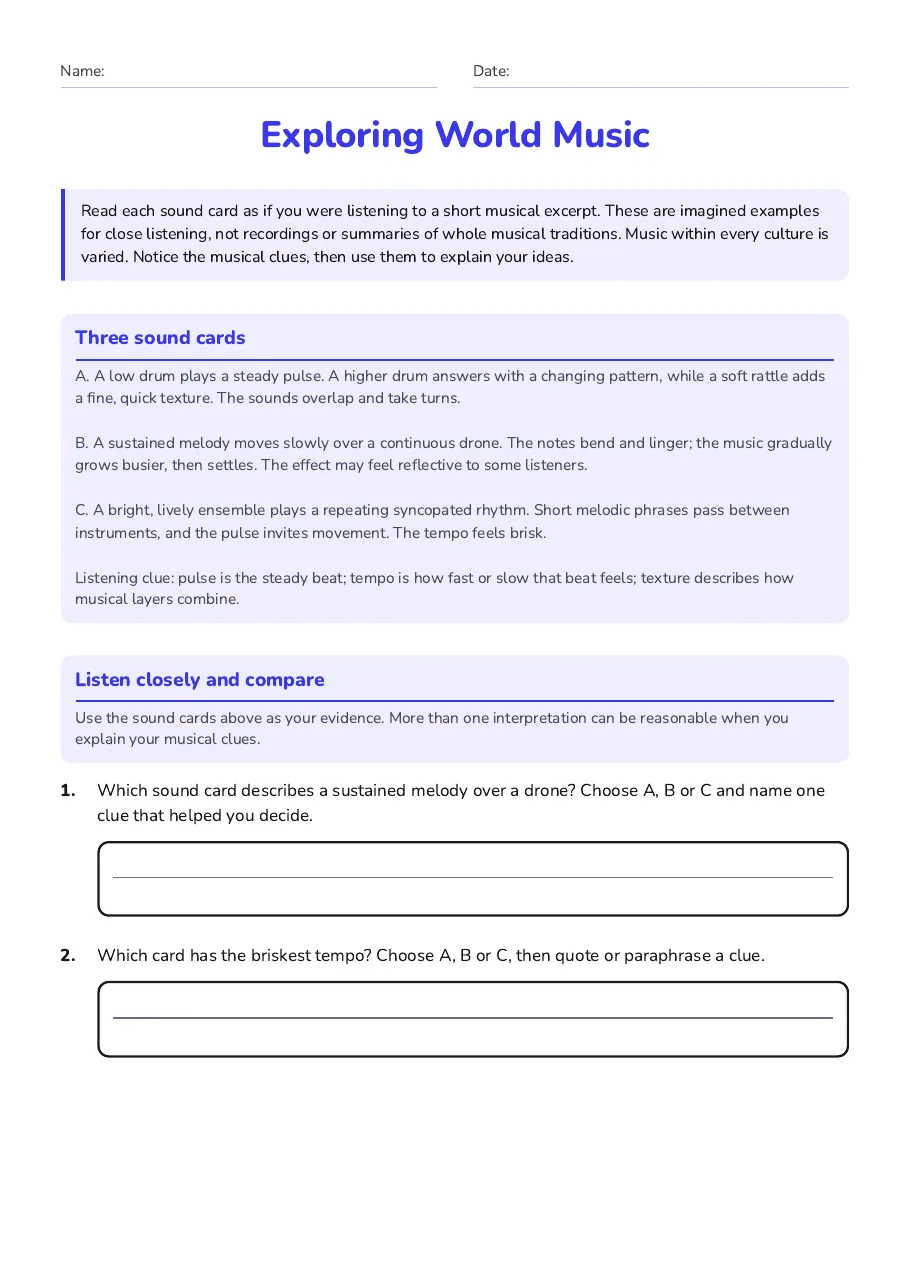
Exploring World Music
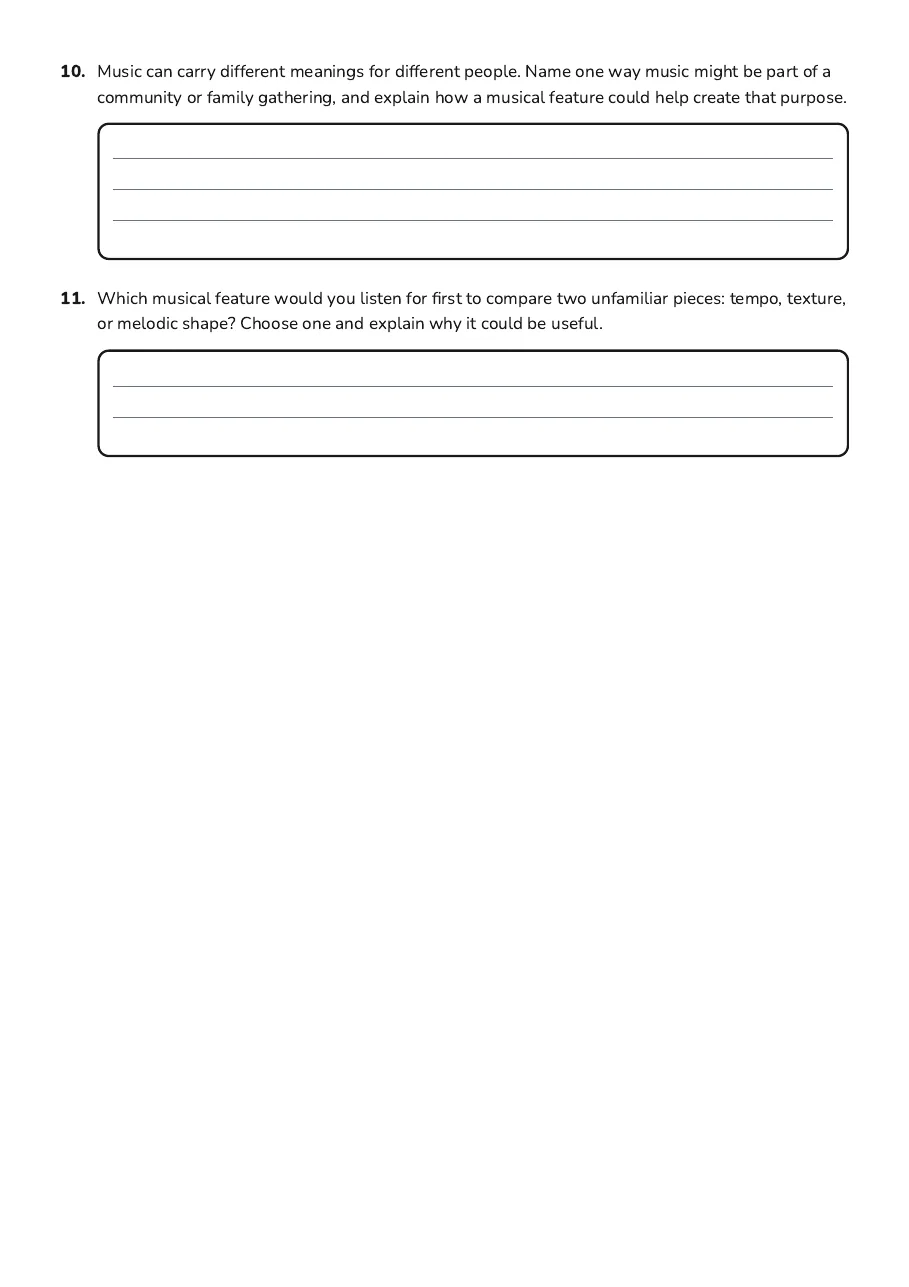
Three sound cards
A. A low drum plays a steady pulse. A higher drum answers with a changing pattern, while a soft rattle adds a fine, quick texture. The sounds overlap and take turns. B. A sustained melody moves slowly over a continuous drone. The notes bend and linger; the music gradually grows busier, then settles. The effect may feel reflective to some listeners. C. A bright, lively ensemble plays a repeating syncopated rhythm. Short melodic phrases pass between instruments, and the pulse invites movement. The tempo feels brisk. Listening clue: pulse is the steady beat; tempo is how fast or slow that beat feels; texture describes how musical layers combine.
Listen closely and compare
Use the sound cards above as your evidence. More than one interpretation can be reasonable when you explain your musical clues.
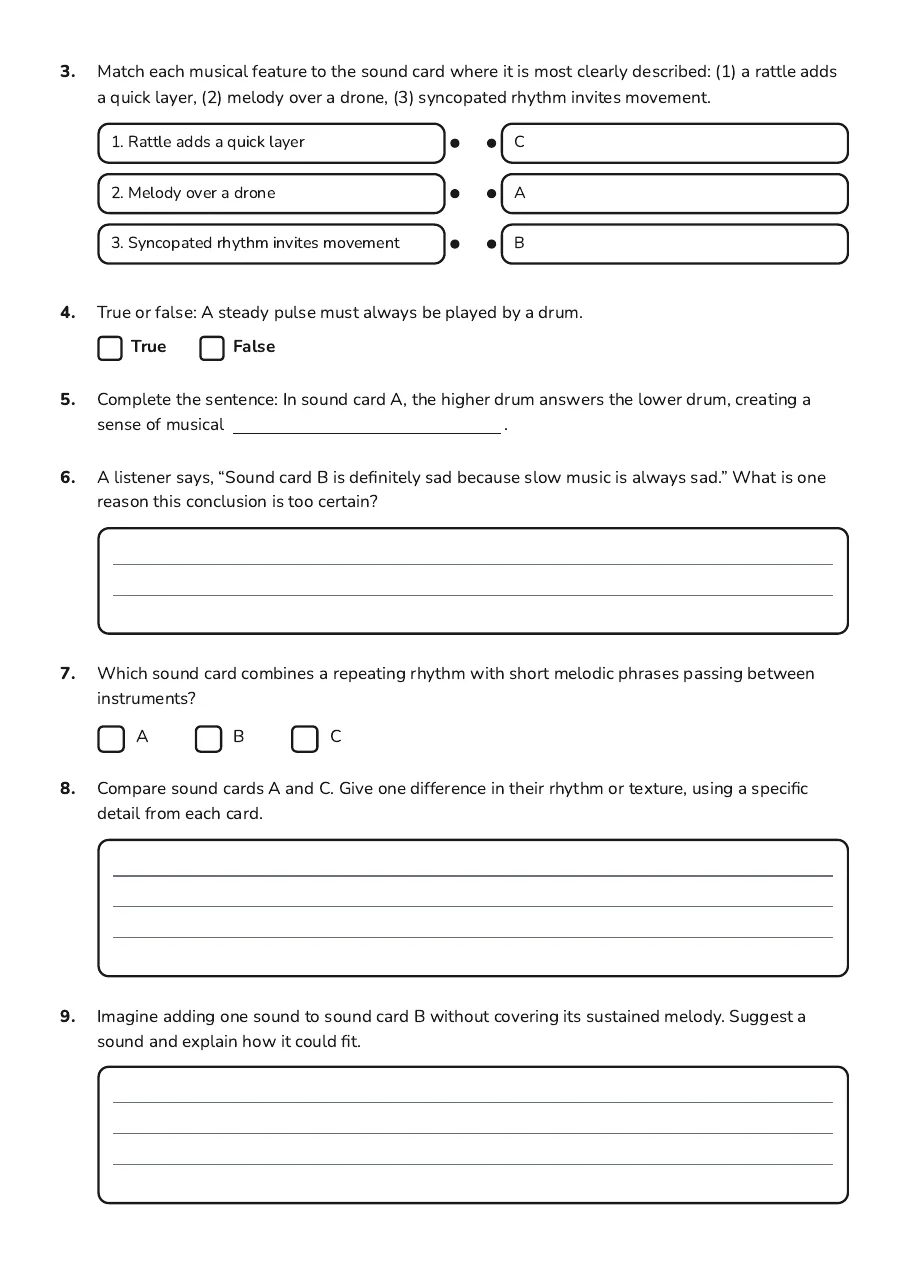
- 1. Rattle adds a quick layer
- 2. Melody over a drone
- 3. Syncopated rhythm invites movement
- C
- A
- B
- A
- B
- C
3 printable pages
Page 1
Page 2
Page 3
About This Worksheet
Free in Kuraplan
Sign up free, grab the PDF, and customize it for your class.
Print-Ready
Formatted for standard paper. Clean layout, easy to read.
AI-Generated
Created with Kuraplan's AI, designed for real classroom use.
For Teachers & Parents
Use in classrooms, for homework, tutoring, or homeschool.
Need a custom version of this worksheet?
Kuraplan's AI generates custom worksheets in seconds — differentiated for every learner, aligned to your curriculum.
Generate Custom Worksheets — FreeMore Music Worksheets
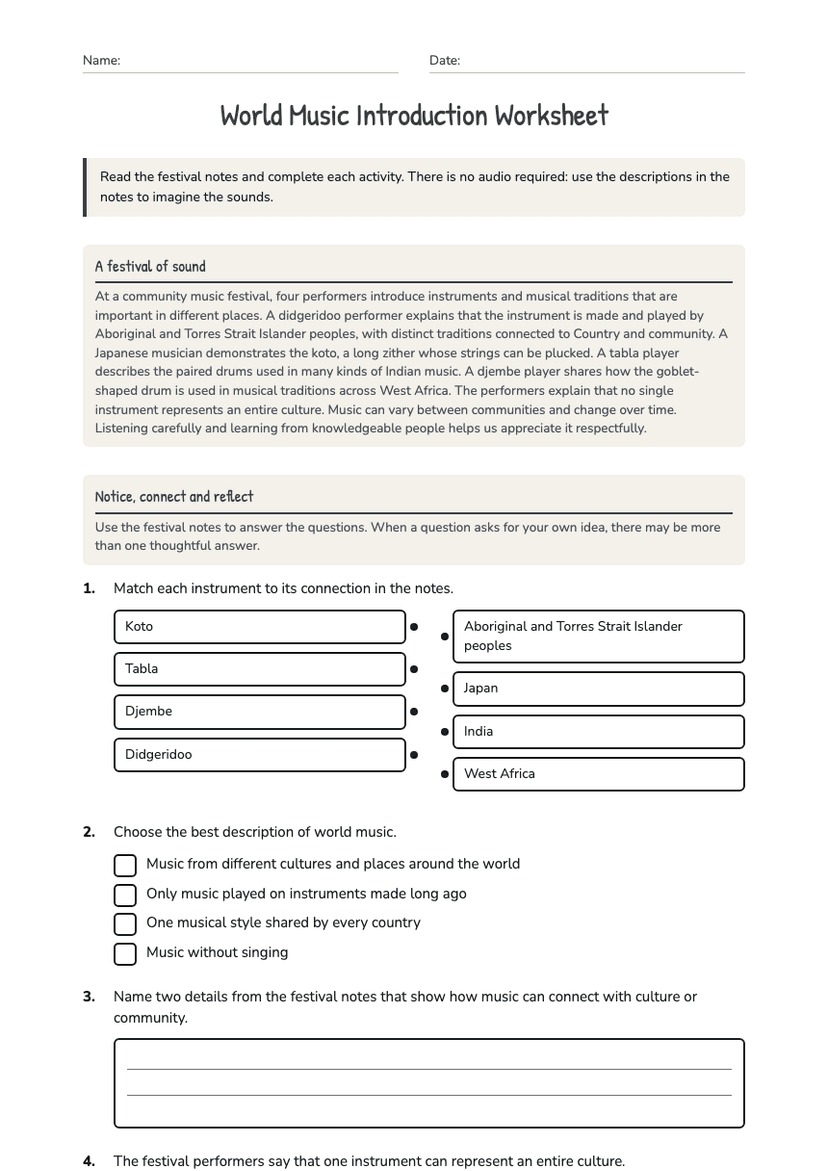
World Music Introduction Worksheet
Free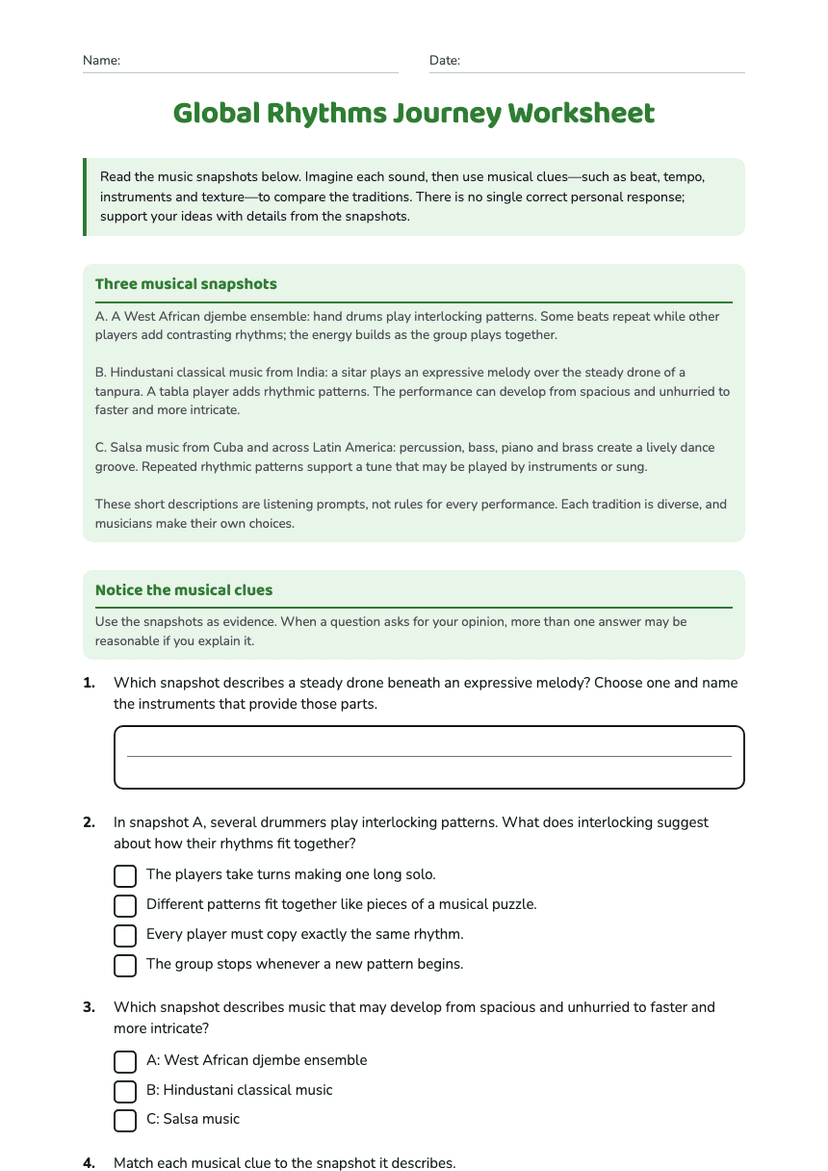
Global Rhythms Journey Worksheet
Free
First Nations Music Stories
Free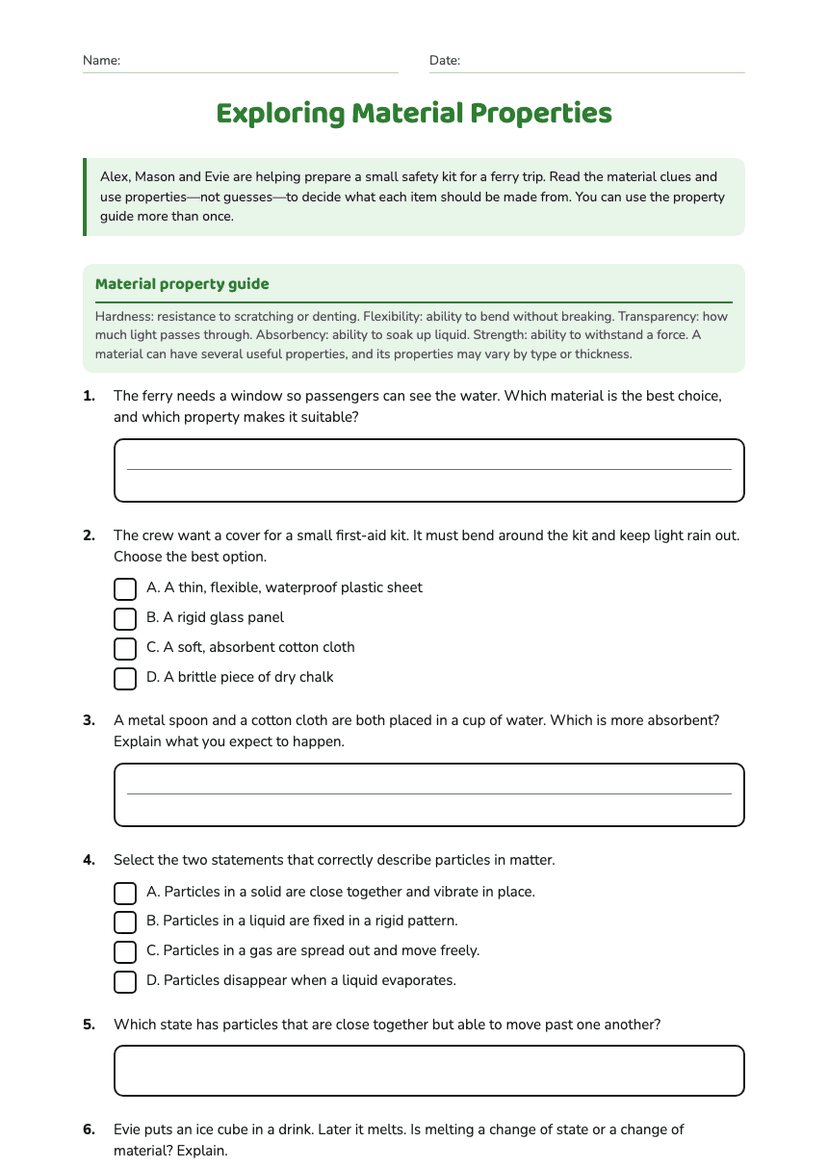
Exploring Material Properties
Free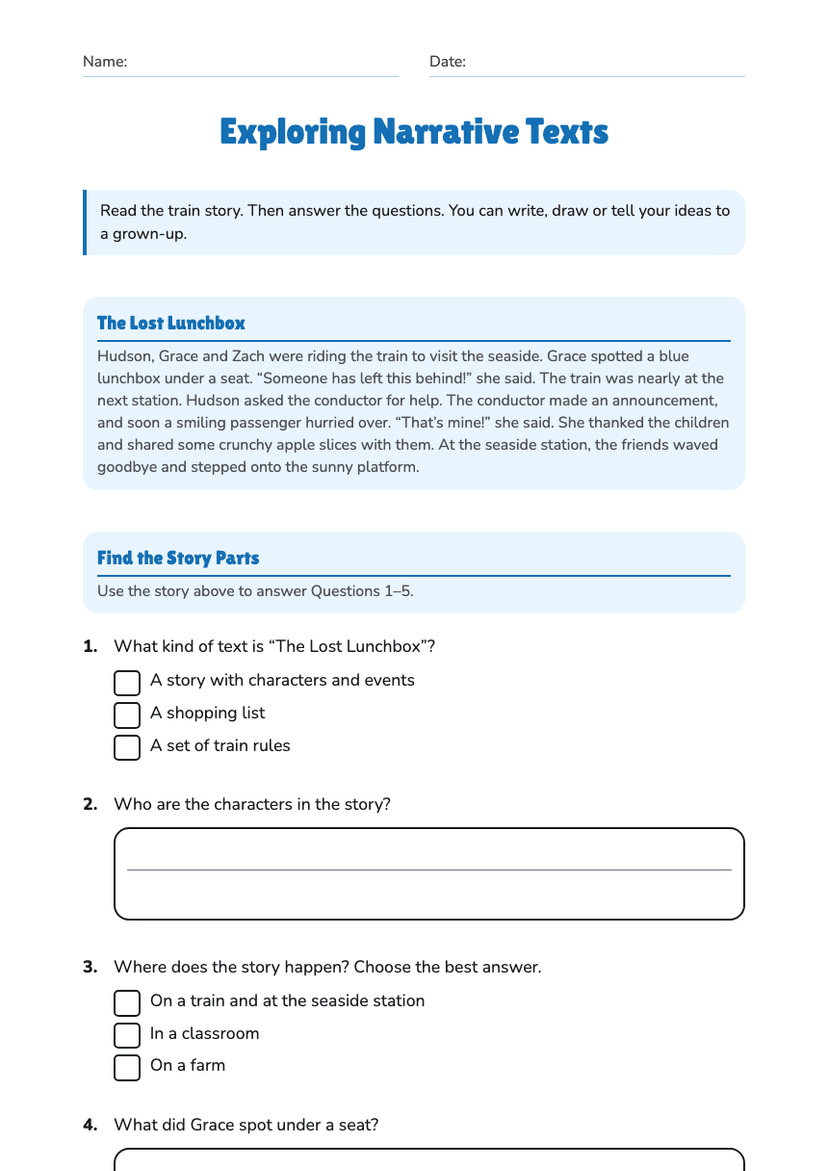
Exploring Narrative Texts
Free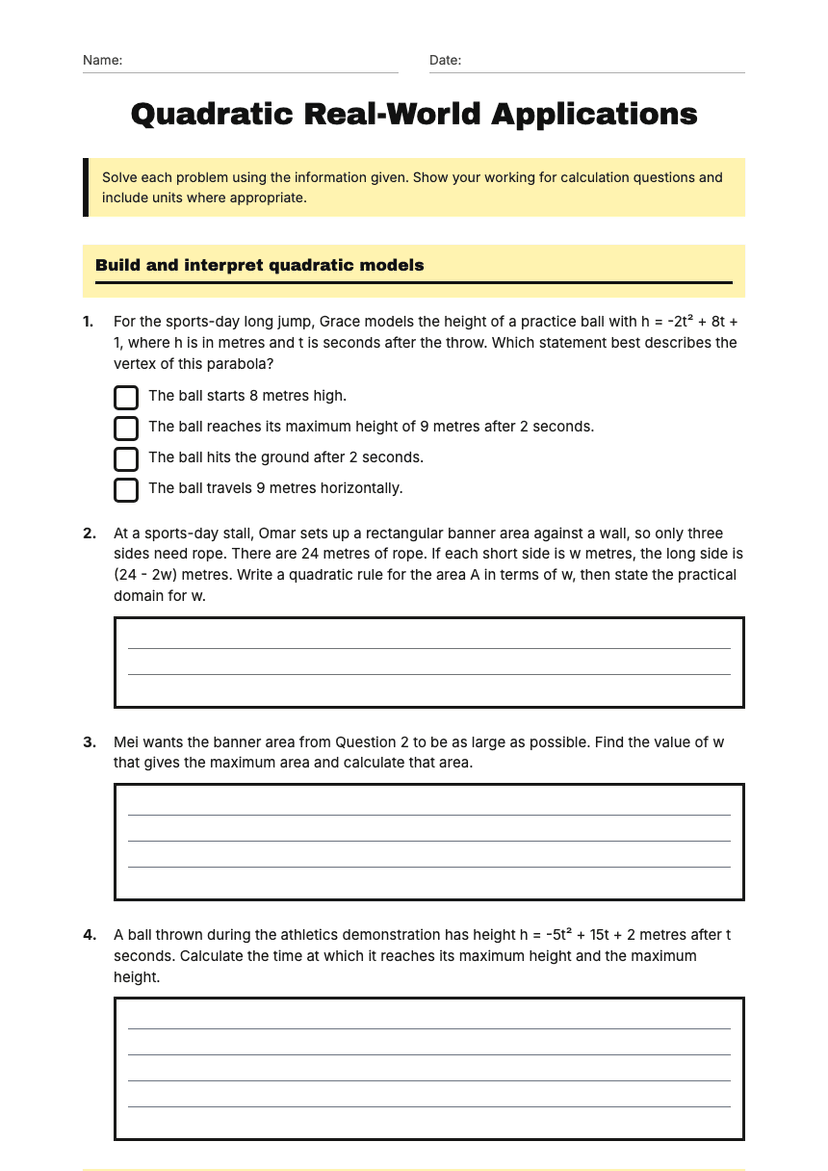
Quadratic Real-World Applications
Free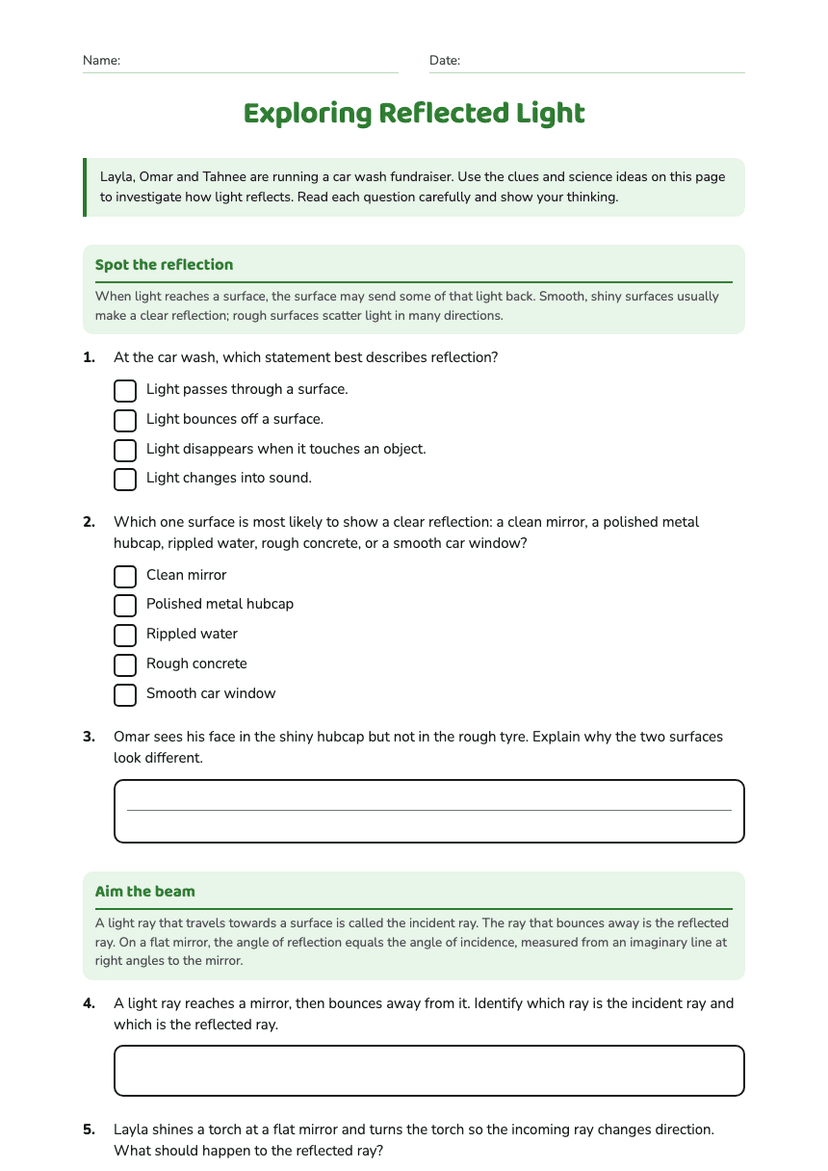
Exploring Reflected Light
Free