How Things Work
A free science worksheet ready for your classroom. Open in Kuraplan to grab the print-ready PDF, customize it for your students, or generate a fresh version in seconds.
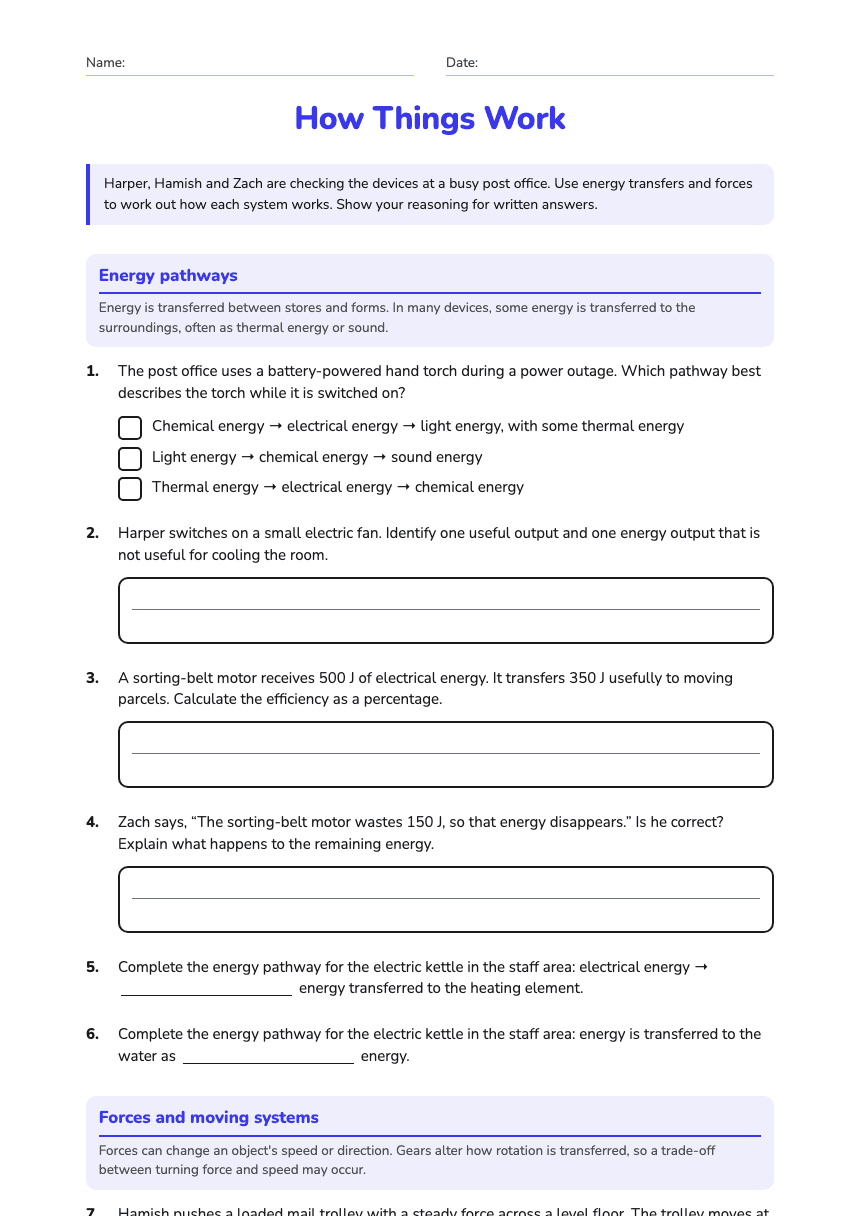
How Things Work
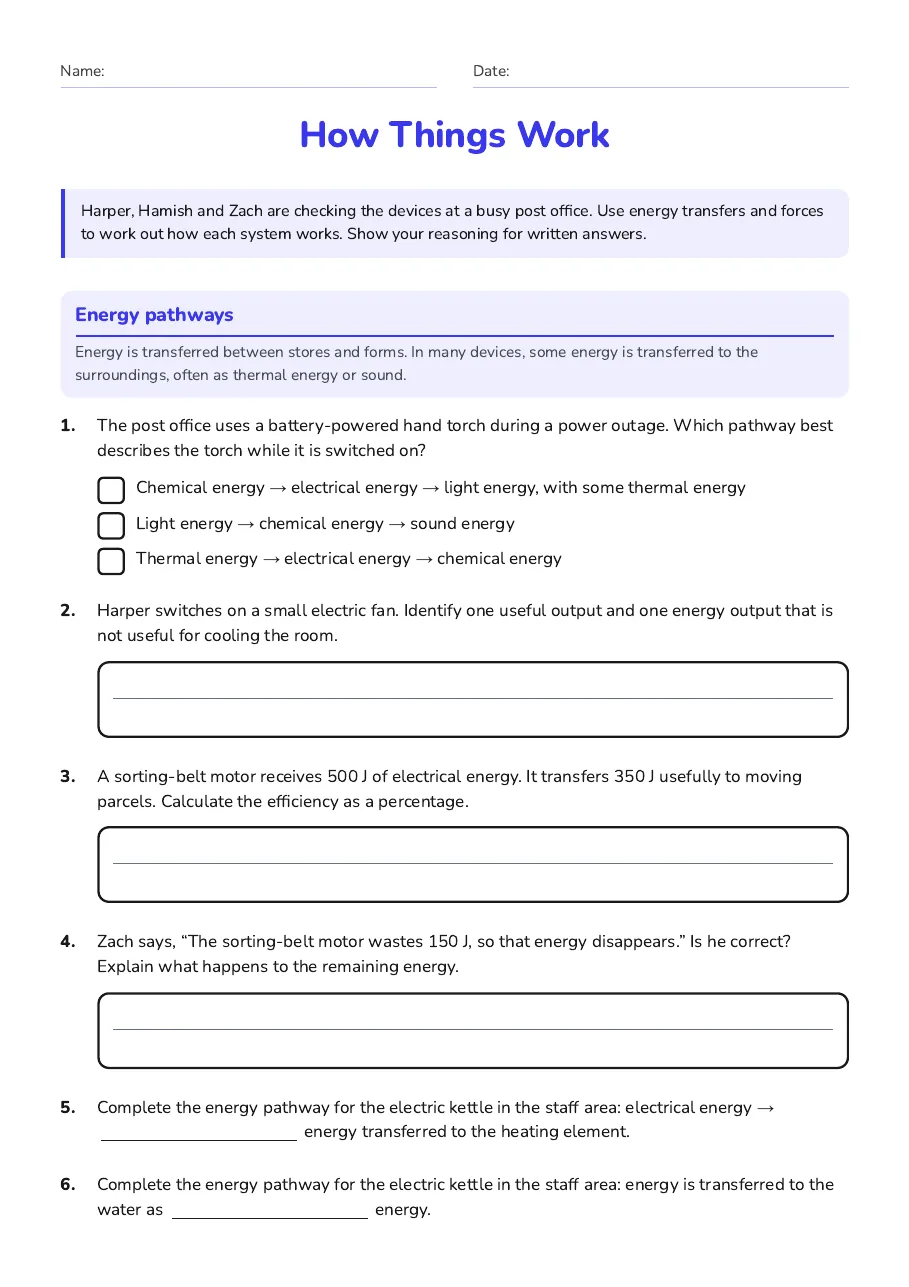
Energy pathways
Energy is transferred between stores and forms. In many devices, some energy is transferred to the surroundings, often as thermal energy or sound.
- Chemical energy → electrical energy → light energy, with some thermal energy
- Light energy → chemical energy → sound energy
- Thermal energy → electrical energy → chemical energy
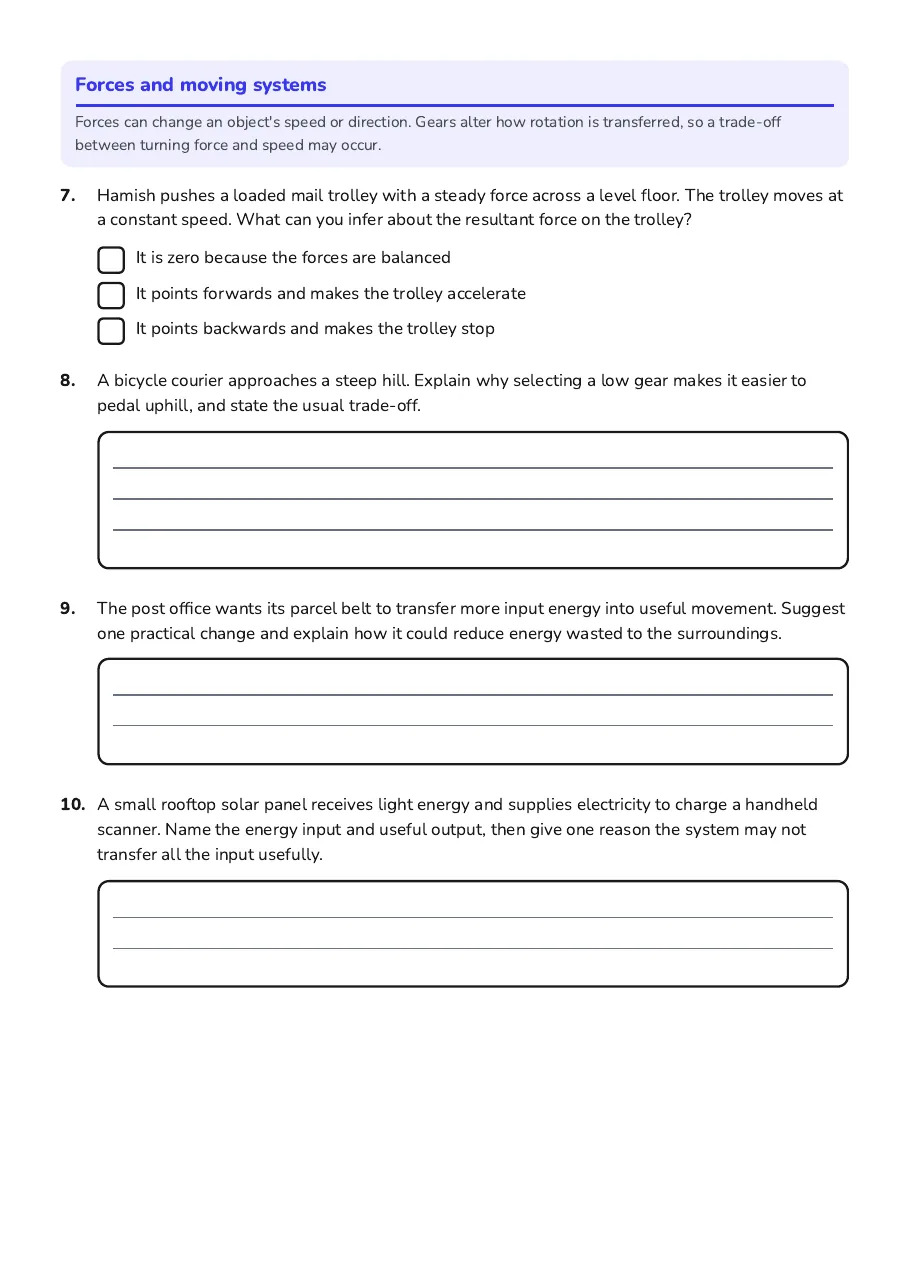
Forces and moving systems
Forces can change an object's speed or direction. Gears alter how rotation is transferred, so a trade-off between turning force and speed may occur.
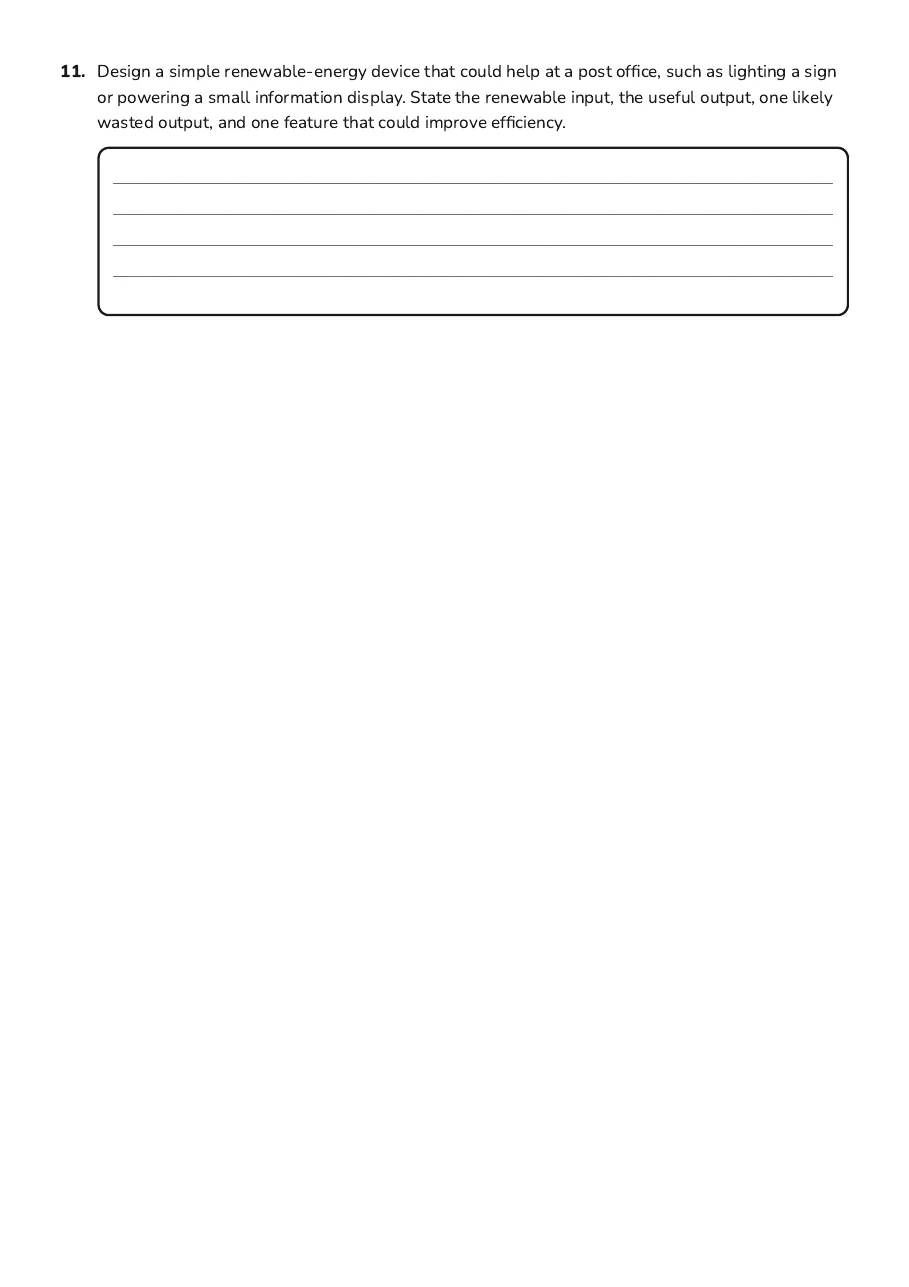
- It is zero because the forces are balanced
- It points forwards and makes the trolley accelerate
- It points backwards and makes the trolley stop
3 printable pages
Page 1
Page 2
Page 3
About This Worksheet
Free in Kuraplan
Sign up free, grab the PDF, and customize it for your class.
Print-Ready
Formatted for standard paper. Clean layout, easy to read.
AI-Generated
Created with Kuraplan's AI, designed for real classroom use.
For Teachers & Parents
Use in classrooms, for homework, tutoring, or homeschool.
Need a custom version of this worksheet?
Kuraplan's AI generates custom worksheets in seconds — differentiated for every learner, aligned to your curriculum.
Generate Custom Worksheets — FreeMore Science Worksheets
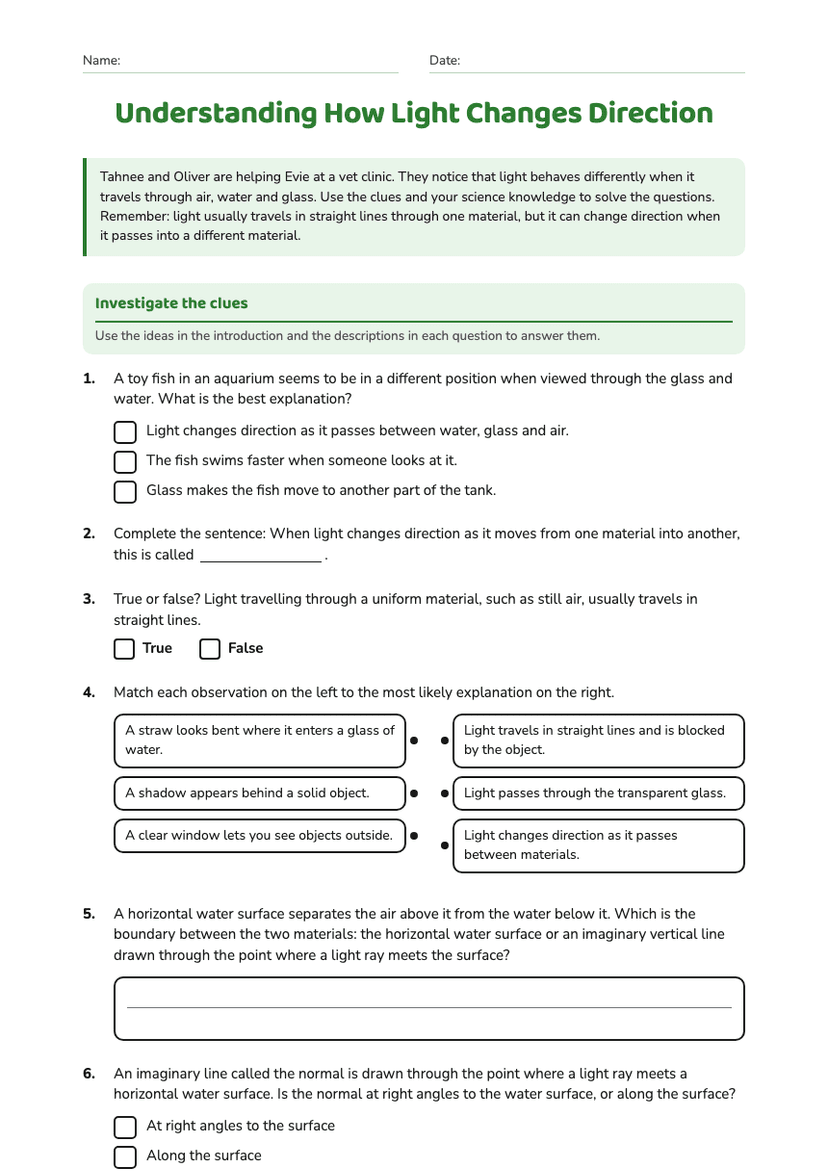
Understanding How Light Changes Direction
Free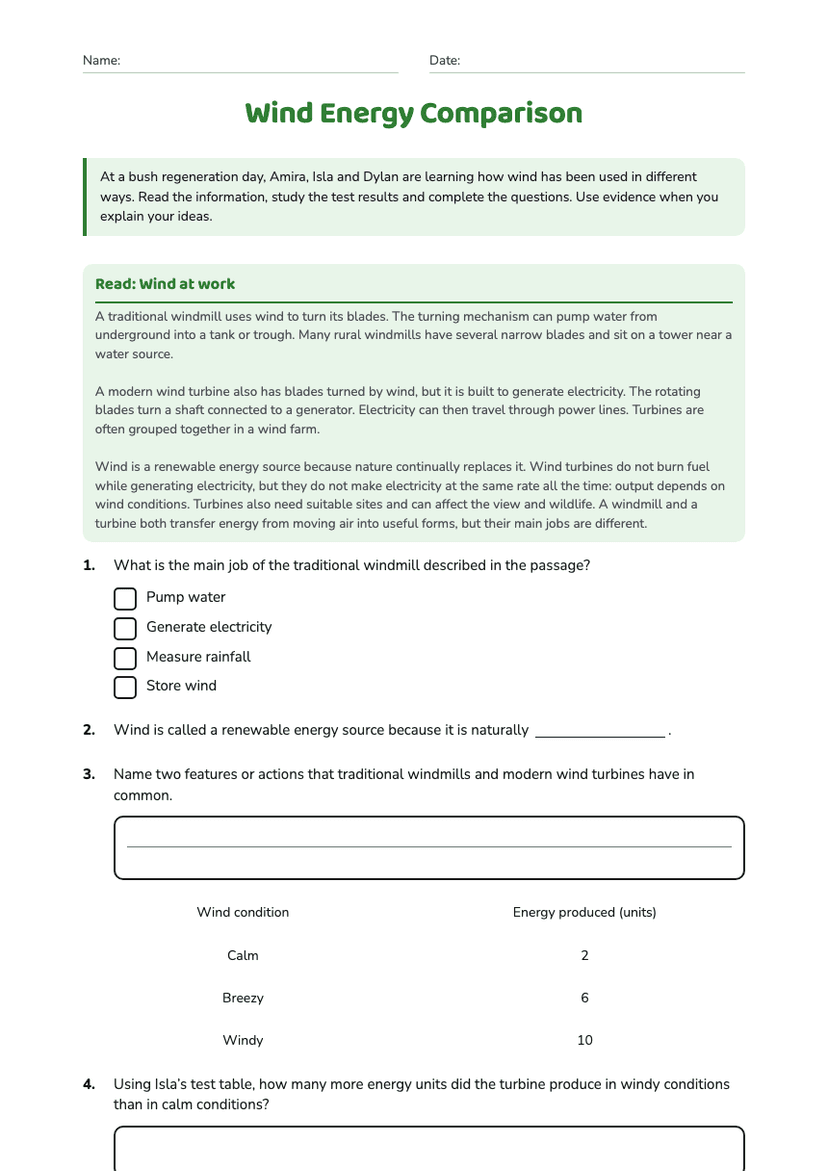
Wind Energy Comparison
Free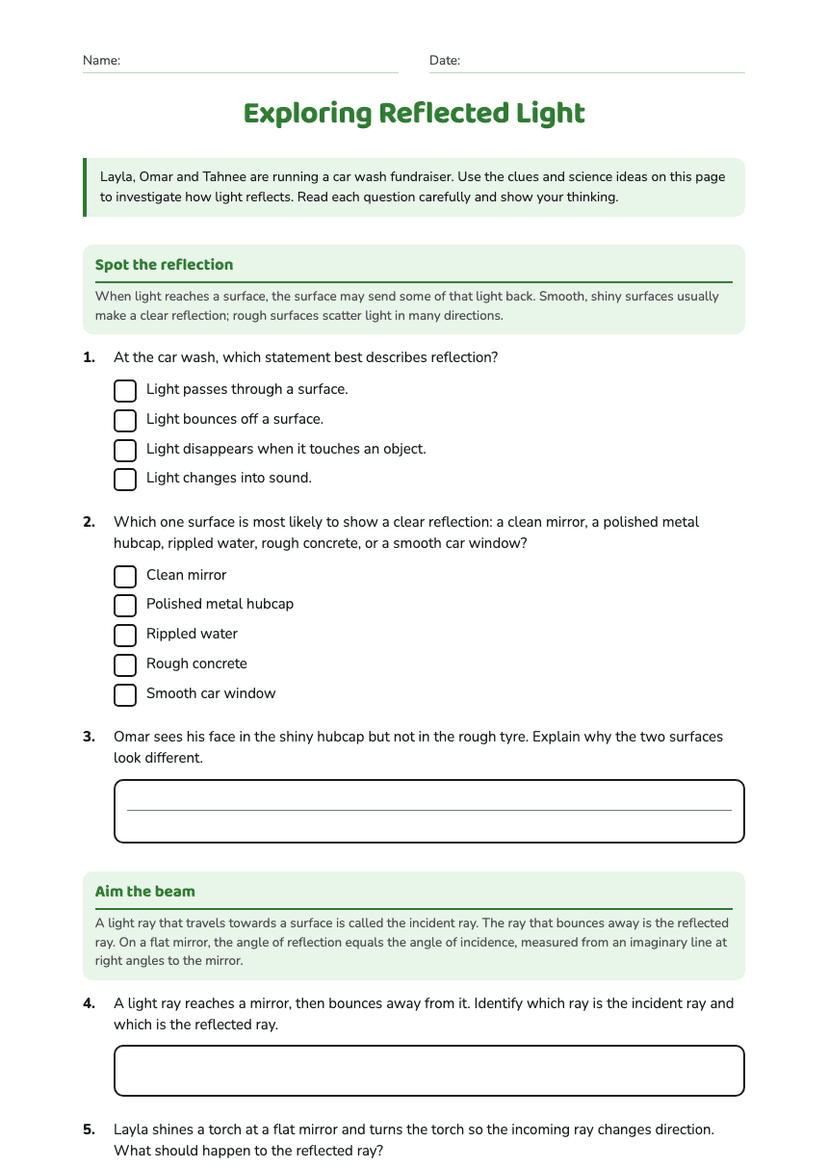
Exploring Reflected Light
Free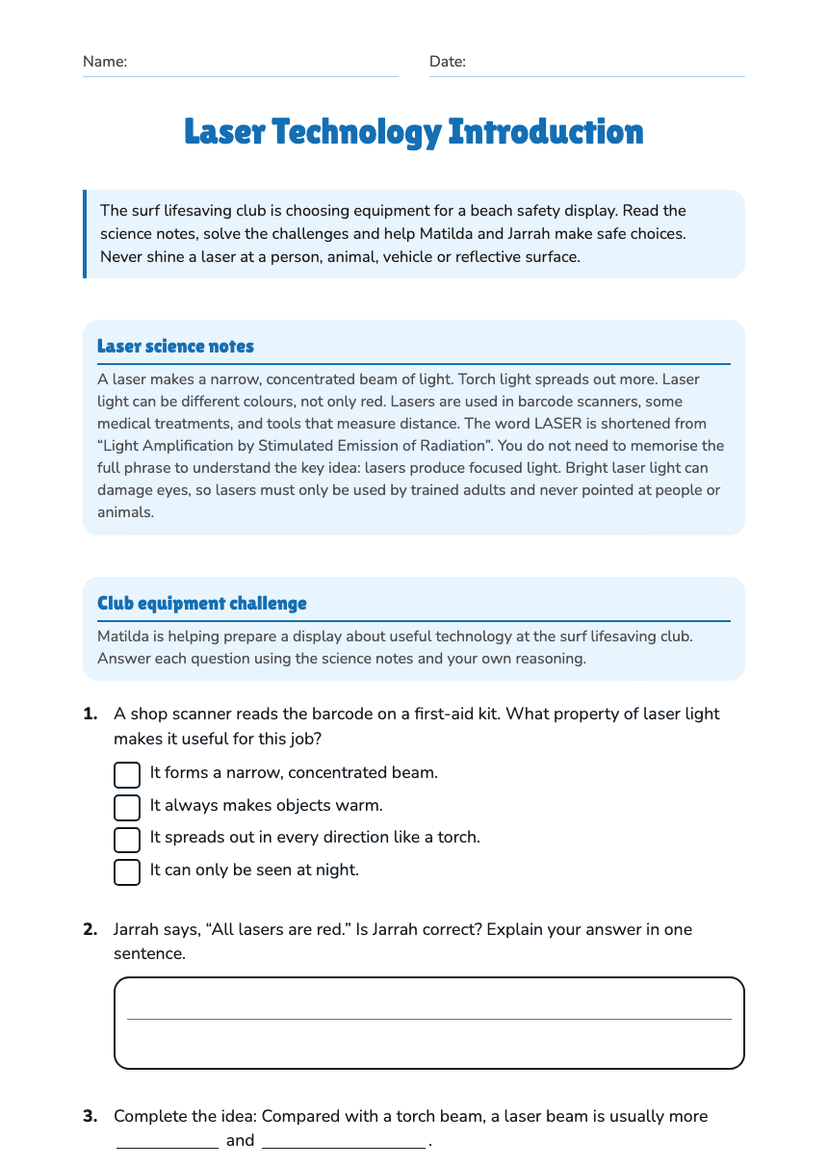
Laser Technology Introduction
Free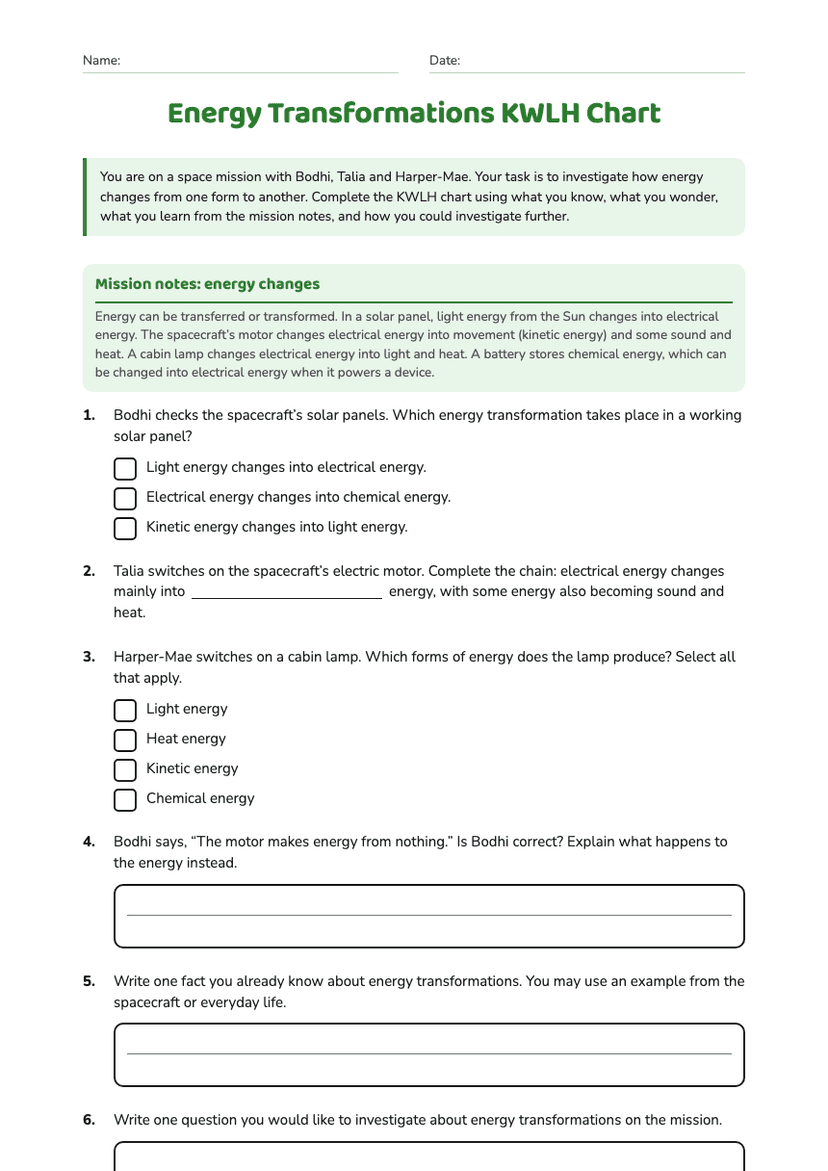
Energy Transformations KWLH Chart
Free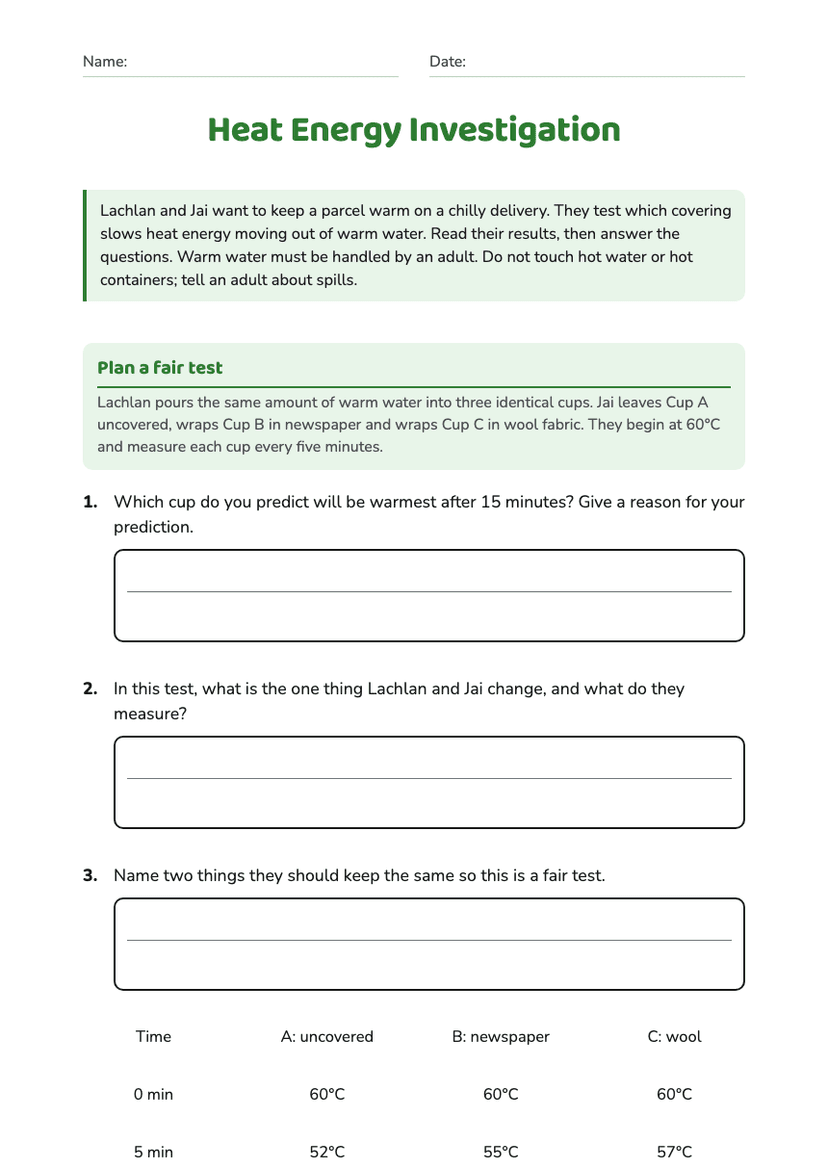
Heat Energy Investigation
Free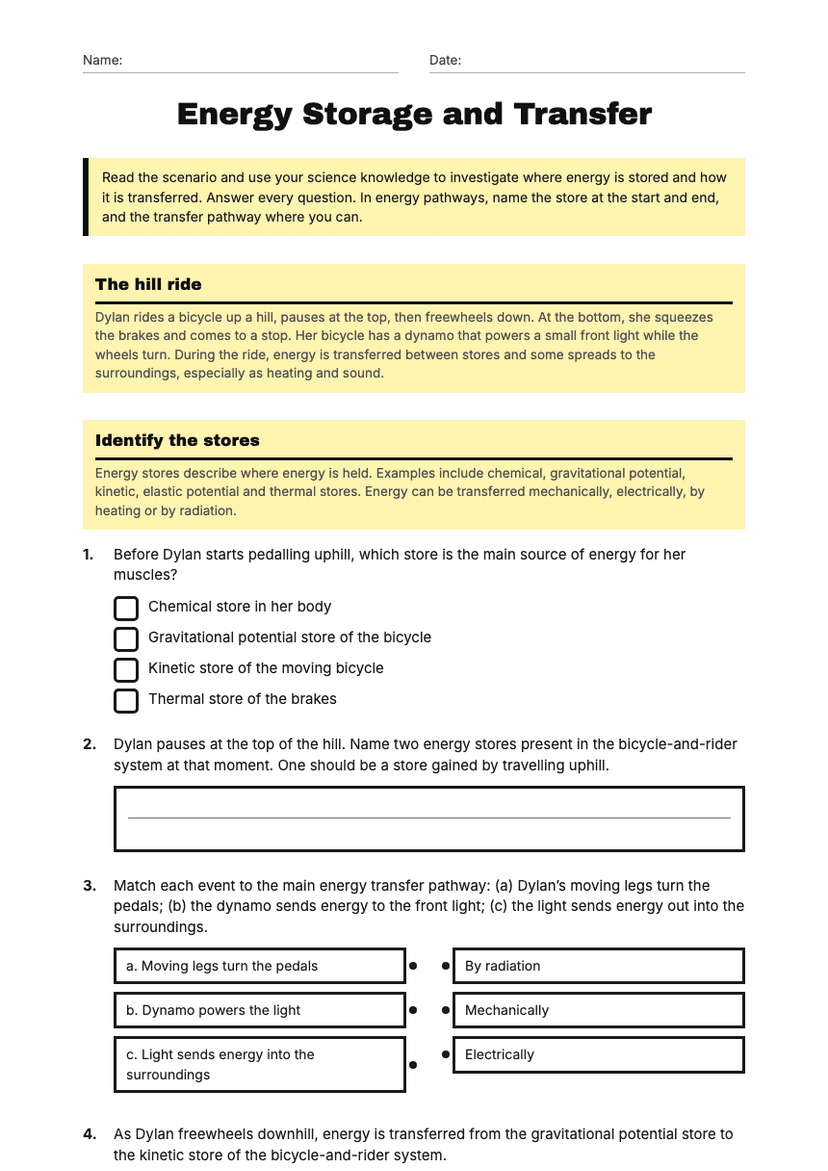
Energy Storage and Transfer
Free