ScienceFreePrintable
Lab Safety Essentials
A free science worksheet ready for your classroom. Open in Kuraplan to grab the print-ready PDF, customize it for your students, or generate a fresh version in seconds.
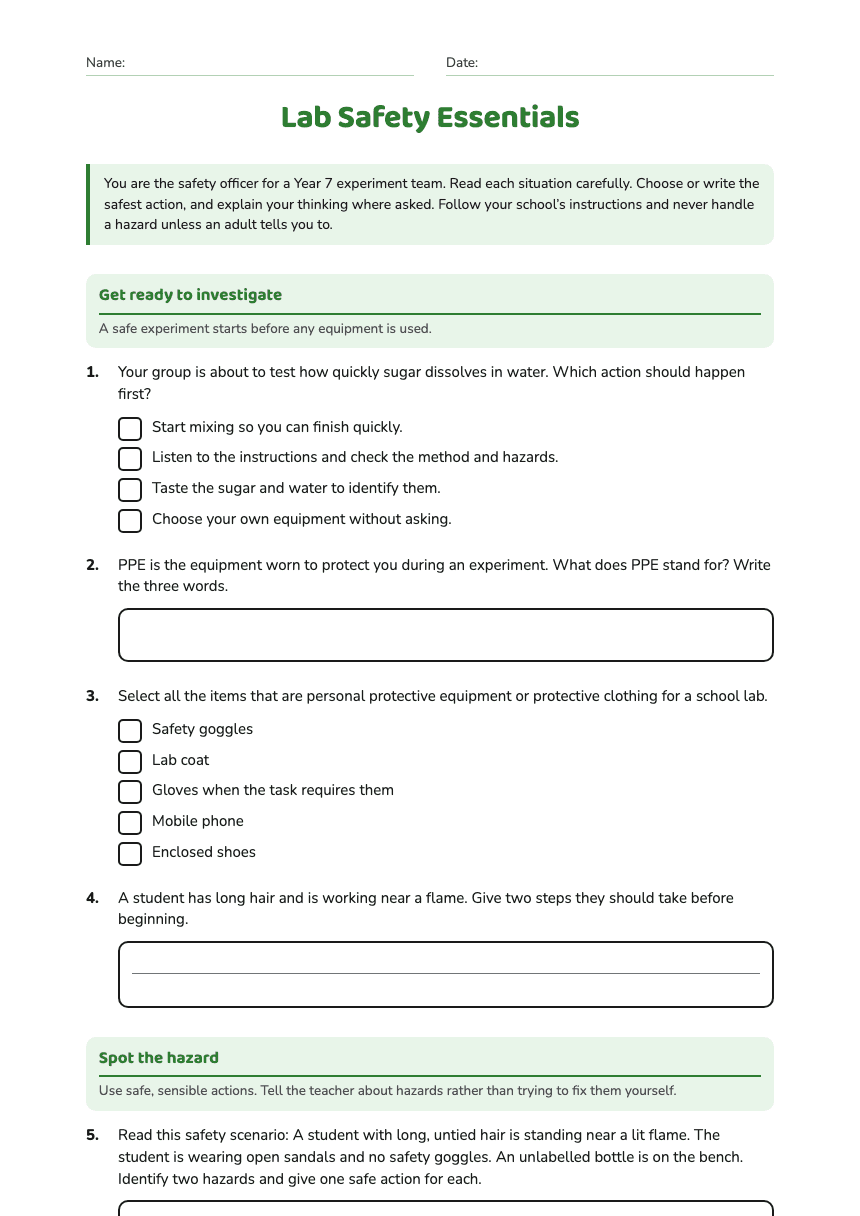
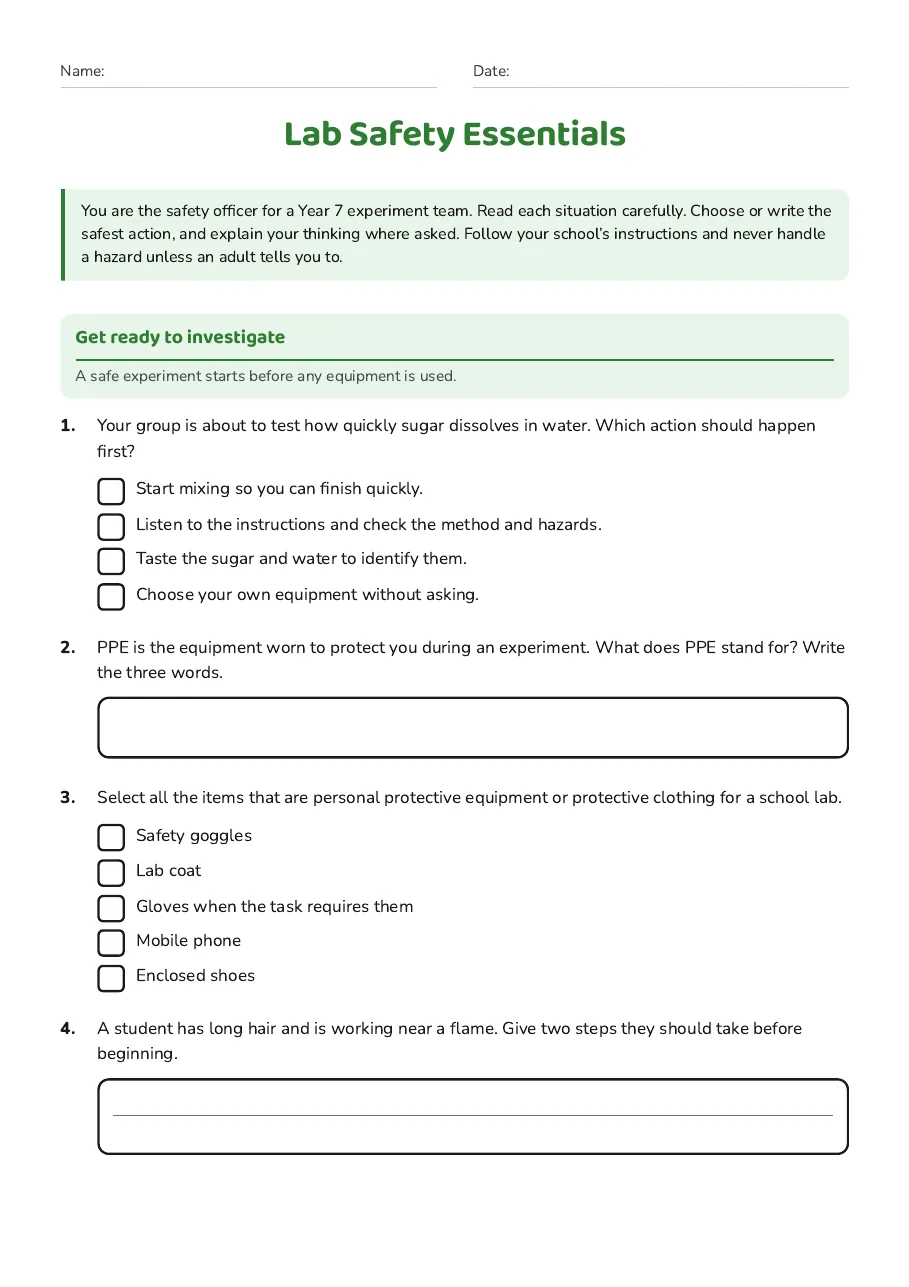
Name:Date:
Lab Safety Essentials
You are the safety officer for a Year 7 experiment team. Read each situation carefully. Choose or write the safest action, and explain your thinking where asked. Follow your school’s instructions and never handle a hazard unless an adult tells you to.
Get ready to investigate
A safe experiment starts before any equipment is used.
1.Your group is about to test how quickly sugar dissolves in water. Which action should happen first?
- Start mixing so you can finish quickly.
- Listen to the instructions and check the method and hazards.
- Taste the sugar and water to identify them.
- Choose your own equipment without asking.
2.PPE is the equipment worn to protect you during an experiment. What does PPE stand for? Write the three words.
3.Select all the items that are personal protective equipment or protective clothing for a school lab.
- Safety goggles
- Lab coat
- Gloves when the task requires them
- Mobile phone
- Enclosed shoes
4.A student has long hair and is working near a flame. Give two steps they should take before beginning.
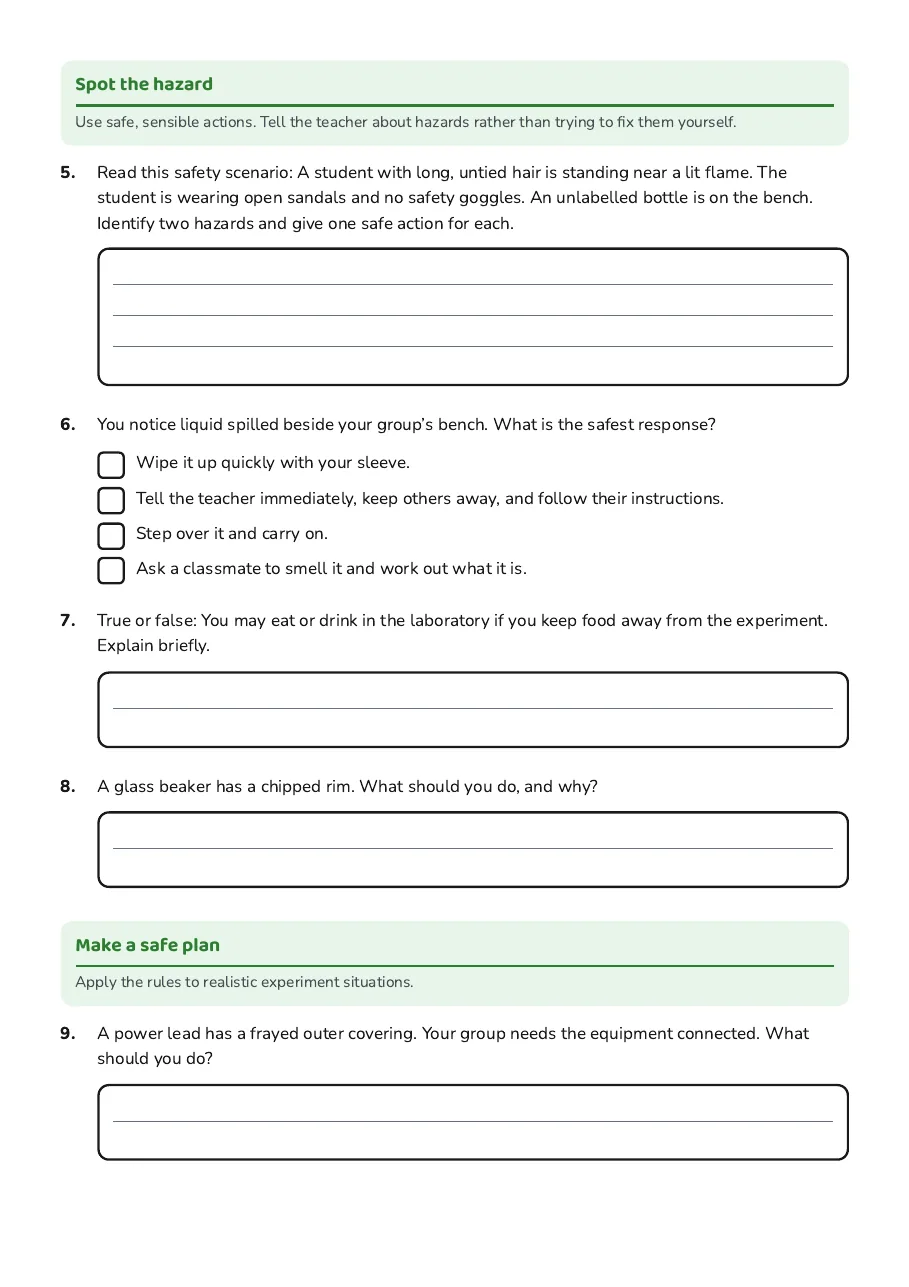
Spot the hazard
Use safe, sensible actions. Tell the teacher about hazards rather than trying to fix them yourself.
5.Read this safety scenario: A student with long, untied hair is standing near a lit flame. The student is wearing open sandals and no safety goggles. An unlabelled bottle is on the bench. Identify two hazards and give one safe action for each.
6.You notice liquid spilled beside your group’s bench. What is the safest response?
- Wipe it up quickly with your sleeve.
- Tell the teacher immediately, keep others away, and follow their instructions.
- Step over it and carry on.
- Ask a classmate to smell it and work out what it is.
7.True or false: You may eat or drink in the laboratory if you keep food away from the experiment. Explain briefly.
8.A glass beaker has a chipped rim. What should you do, and why?
Make a safe plan
Apply the rules to realistic experiment situations.
9.A power lead has a frayed outer covering. Your group needs the equipment connected. What should you do?
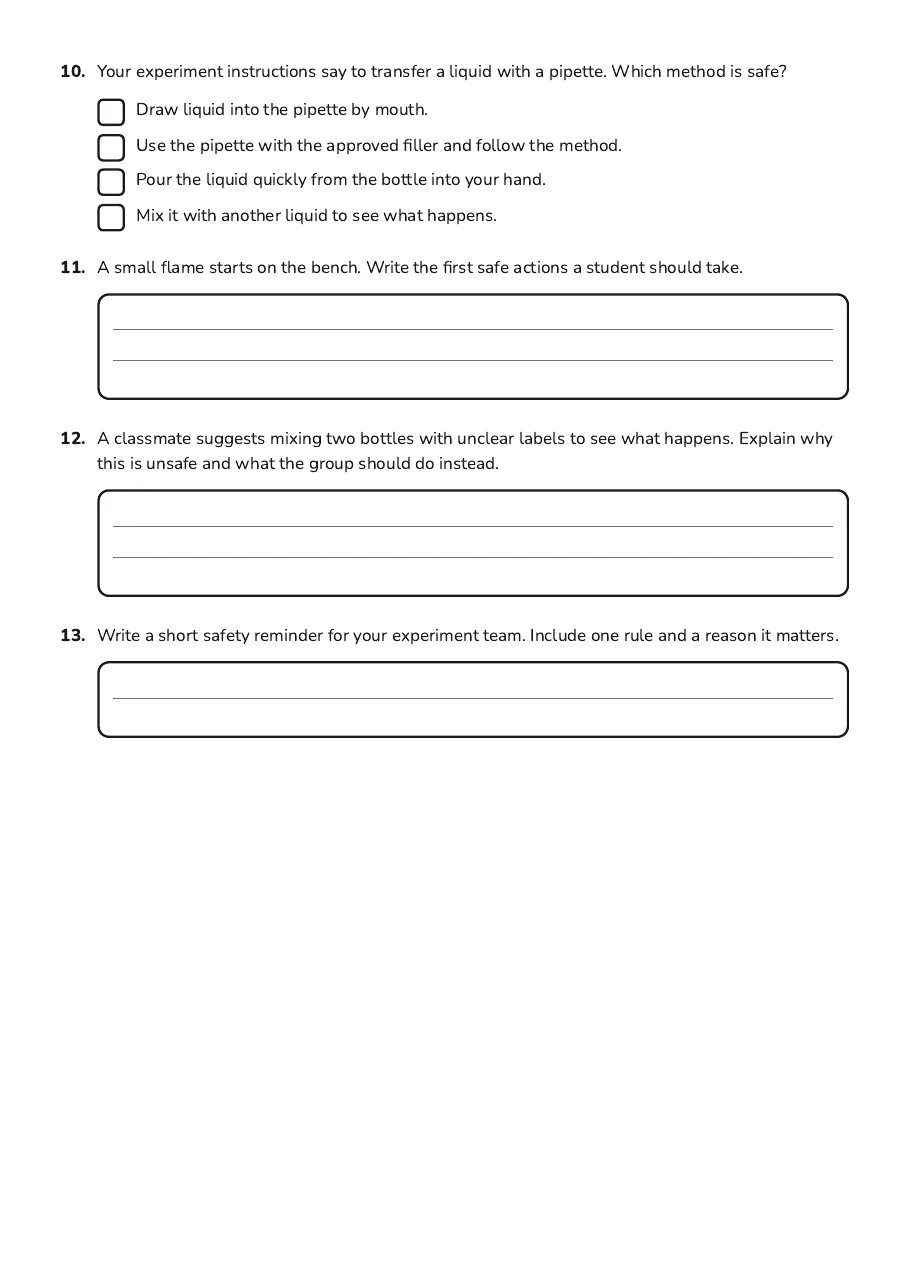
10.Your experiment instructions say to transfer a liquid with a pipette. Which method is safe?
- Draw liquid into the pipette by mouth.
- Use the pipette with the approved filler and follow the method.
- Pour the liquid quickly from the bottle into your hand.
- Mix it with another liquid to see what happens.
11.A small flame starts on the bench. Write the first safe actions a student should take.
12.A classmate suggests mixing two bottles with unclear labels to see what happens. Explain why this is unsafe and what the group should do instead.
13.Write a short safety reminder for your experiment team. Include one rule and a reason it matters.
3 printable pages
Page 1
Page 2
Page 3
About This Worksheet
Free in Kuraplan
Sign up free, grab the PDF, and customize it for your class.
Print-Ready
Formatted for standard paper. Clean layout, easy to read.
AI-Generated
Created with Kuraplan's AI, designed for real classroom use.
For Teachers & Parents
Use in classrooms, for homework, tutoring, or homeschool.
Need a custom version of this worksheet?
Kuraplan's AI generates custom worksheets in seconds — differentiated for every learner, aligned to your curriculum.
Generate Custom Worksheets — Free No credit card Curriculum-aligned Under 60 seconds
More Science Worksheets
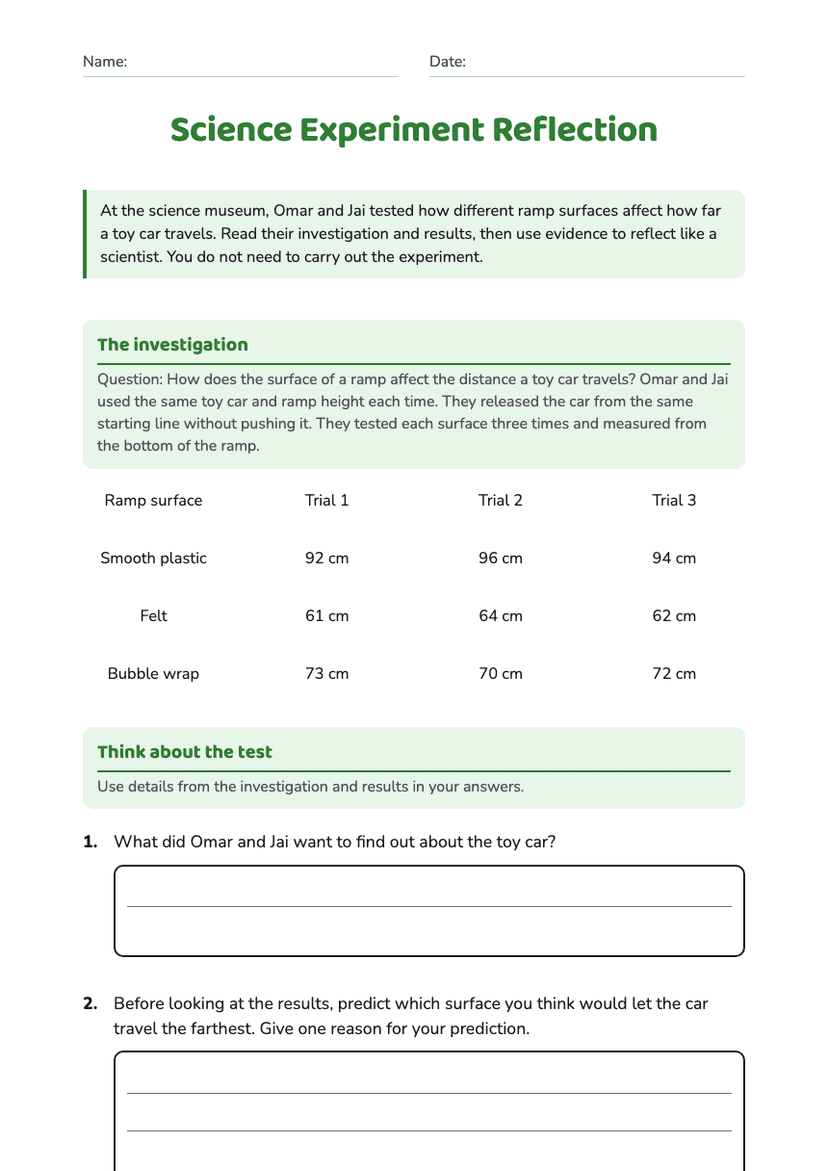
Year 4
Science Experiment Reflection
Free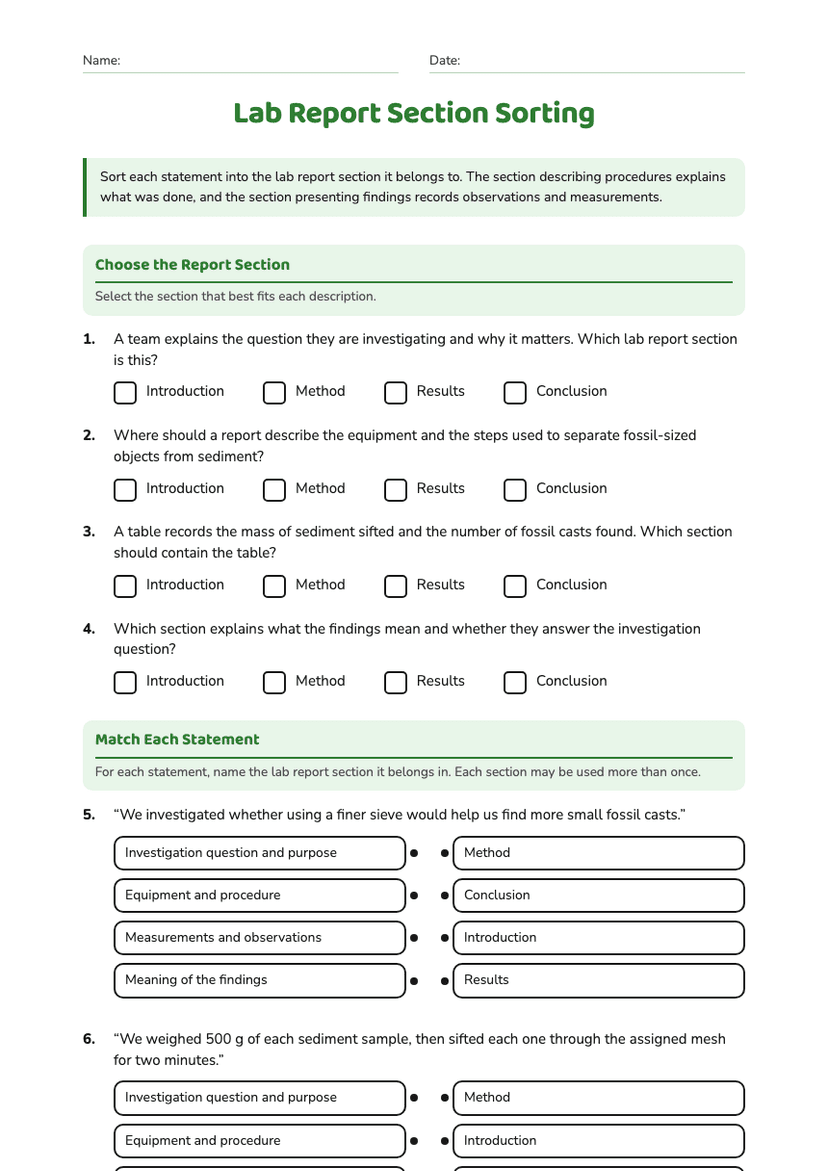
Year 8
Lab Report Section Sorting
Free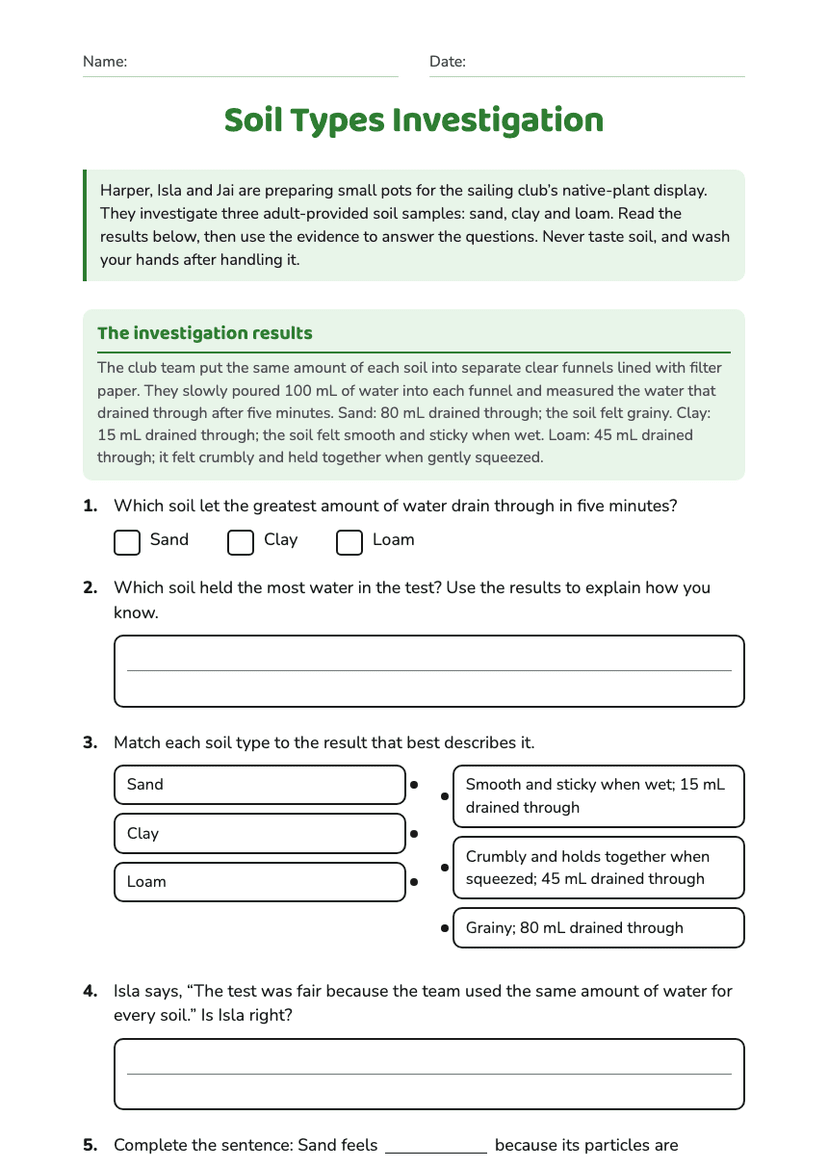
Year 3–4
Soil Types Investigation
Free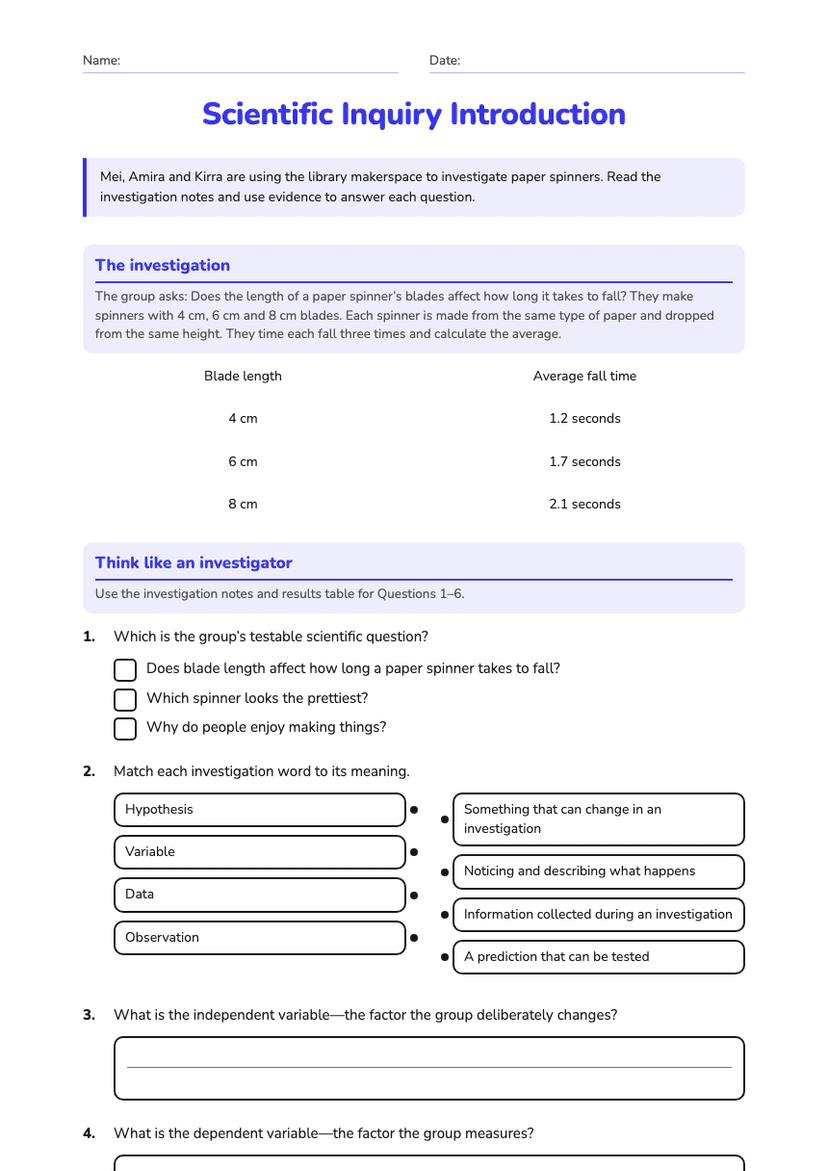
Year 4–6
Scientific Inquiry Introduction
Free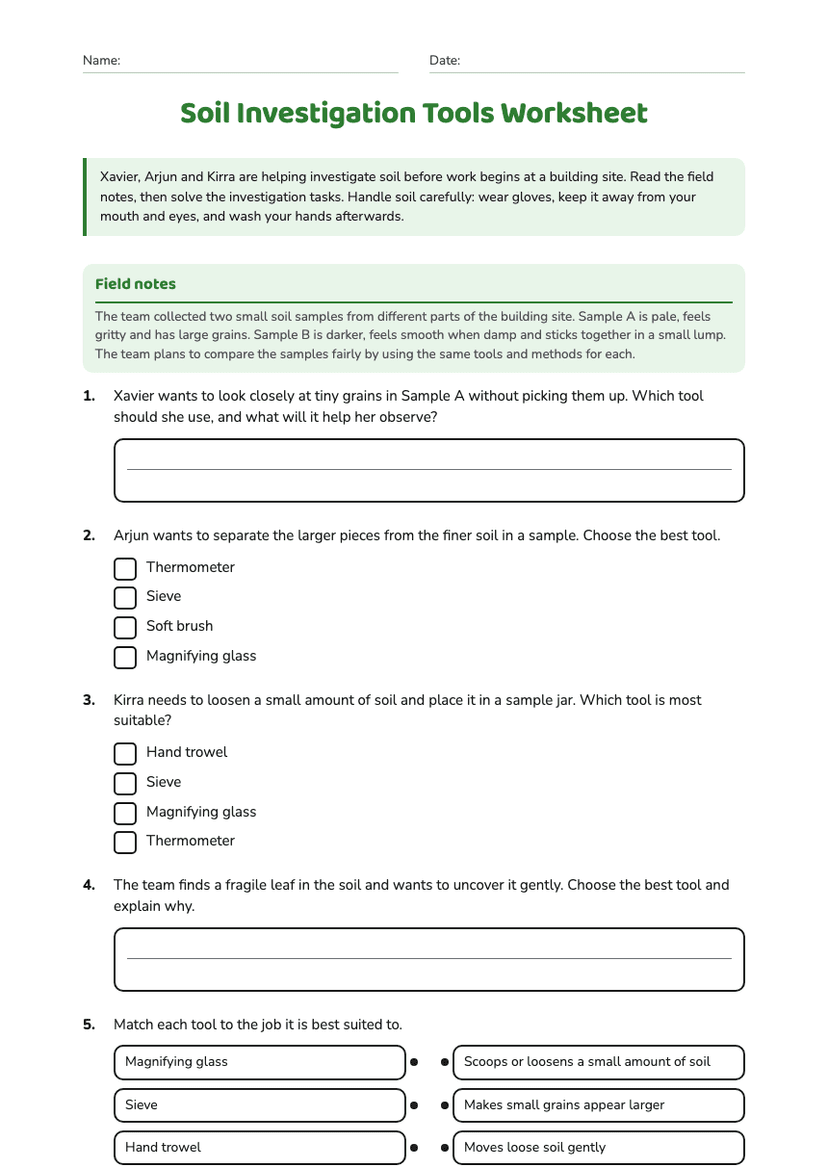
Year 4
Soil Investigation Tools Worksheet
Free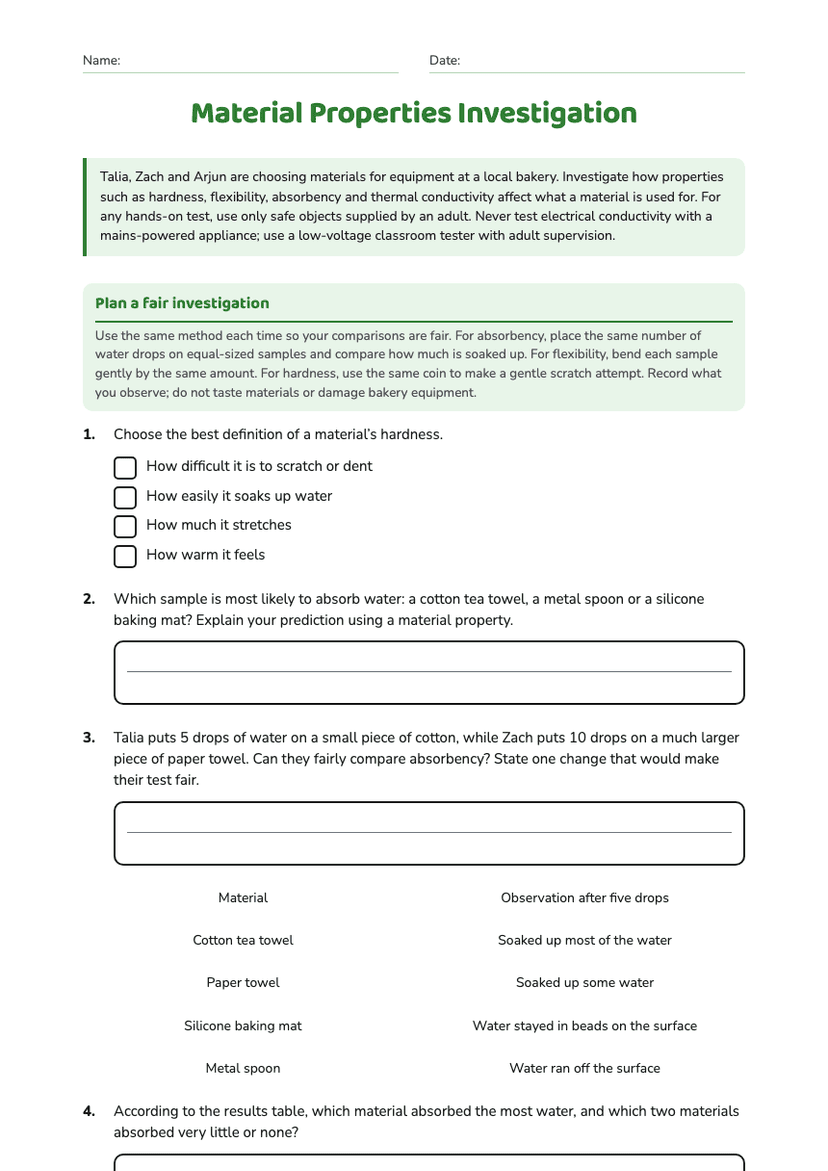
Year 6
Material Properties Investigation
Free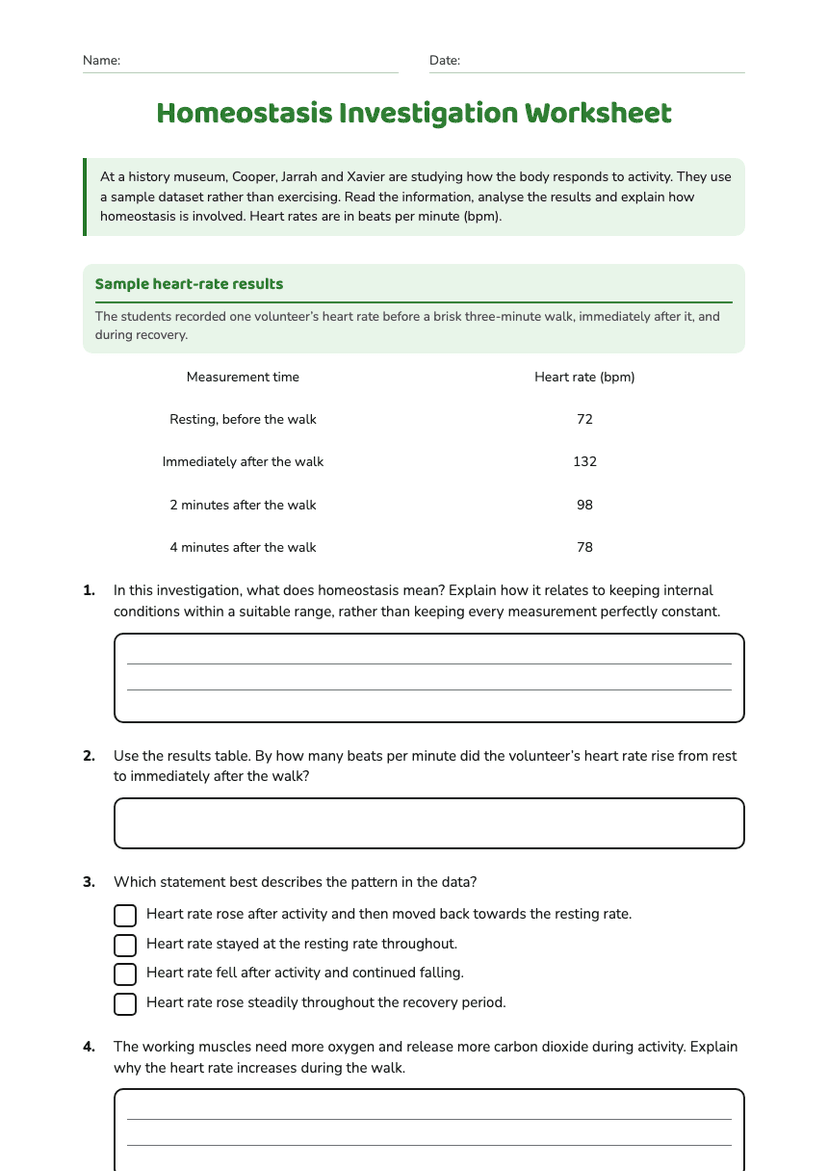
Year 9
Homeostasis Investigation Worksheet
Free
Year 5