Local Ecosystem Components
A free science worksheet ready for your classroom. Open in Kuraplan to grab the print-ready PDF, customize it for your students, or generate a fresh version in seconds.
Local Ecosystem Components
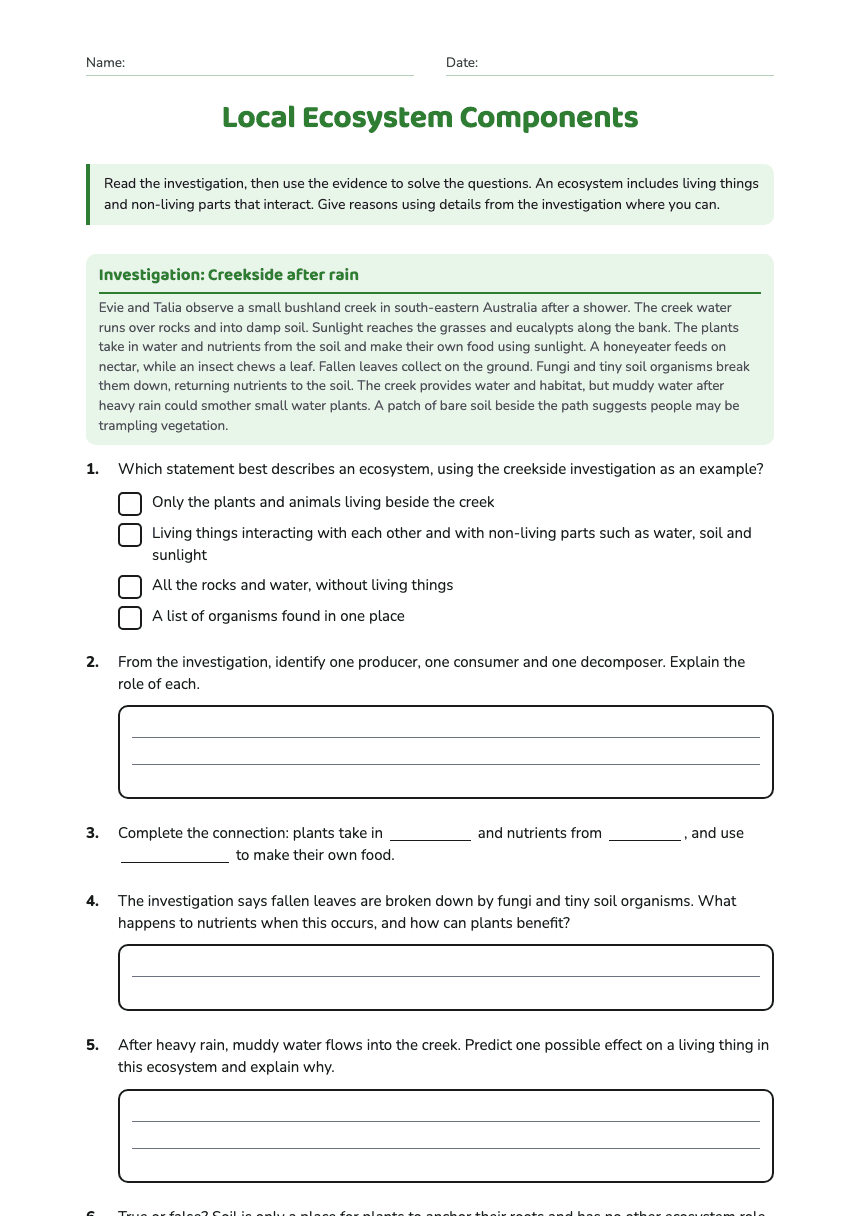
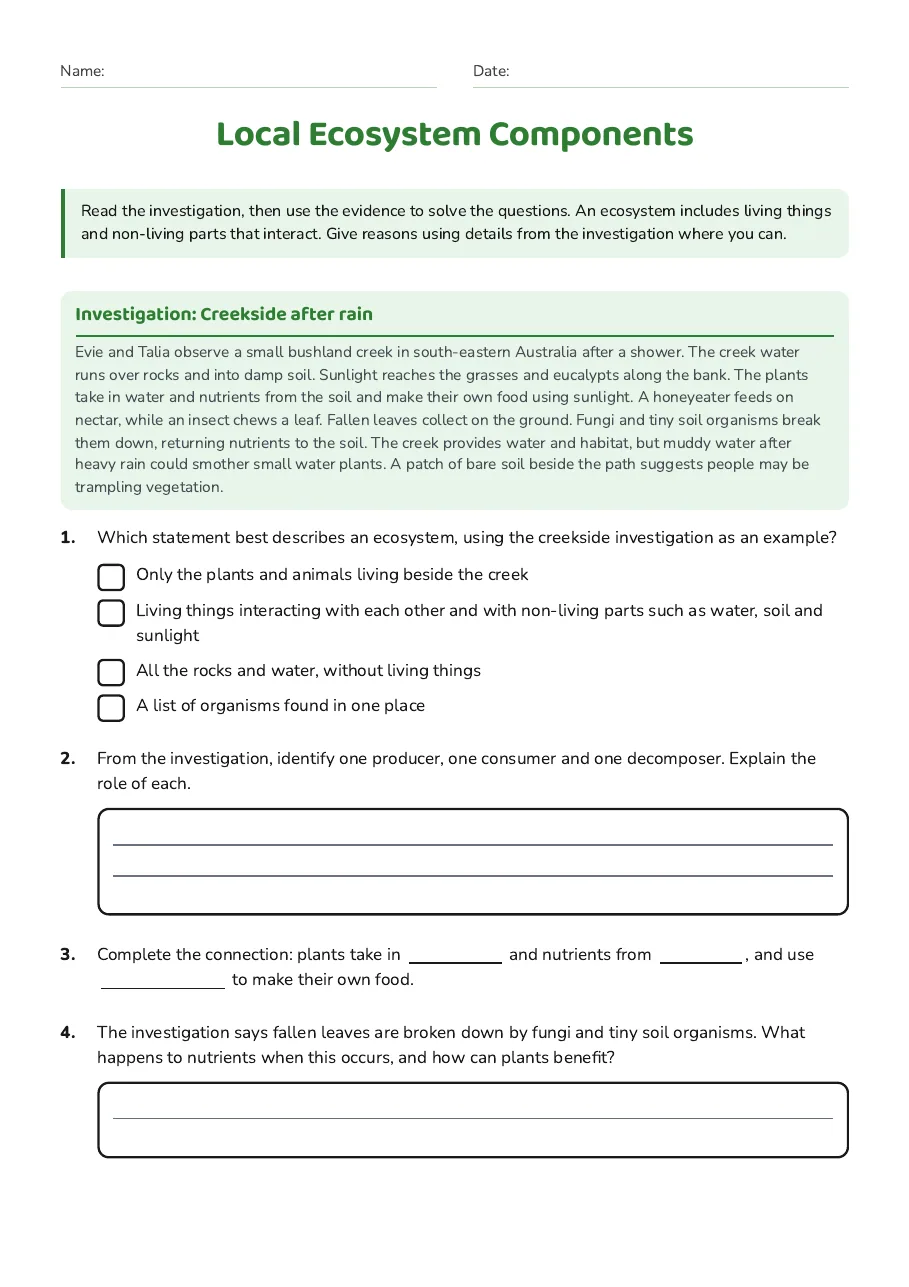
Investigation: Creekside after rain
Evie and Talia observe a small bushland creek in south-eastern Australia after a shower. The creek water runs over rocks and into damp soil. Sunlight reaches the grasses and eucalypts along the bank. The plants take in water and nutrients from the soil and make their own food using sunlight. A honeyeater feeds on nectar, while an insect chews a leaf. Fallen leaves collect on the ground. Fungi and tiny soil organisms break them down, returning nutrients to the soil. The creek provides water and habitat, but muddy water after heavy rain could smother small water plants. A patch of bare soil beside the path suggests people may be trampling vegetation.
- Only the plants and animals living beside the creek
- Living things interacting with each other and with non-living parts such as water, soil and sunlight
- All the rocks and water, without living things
- A list of organisms found in one place
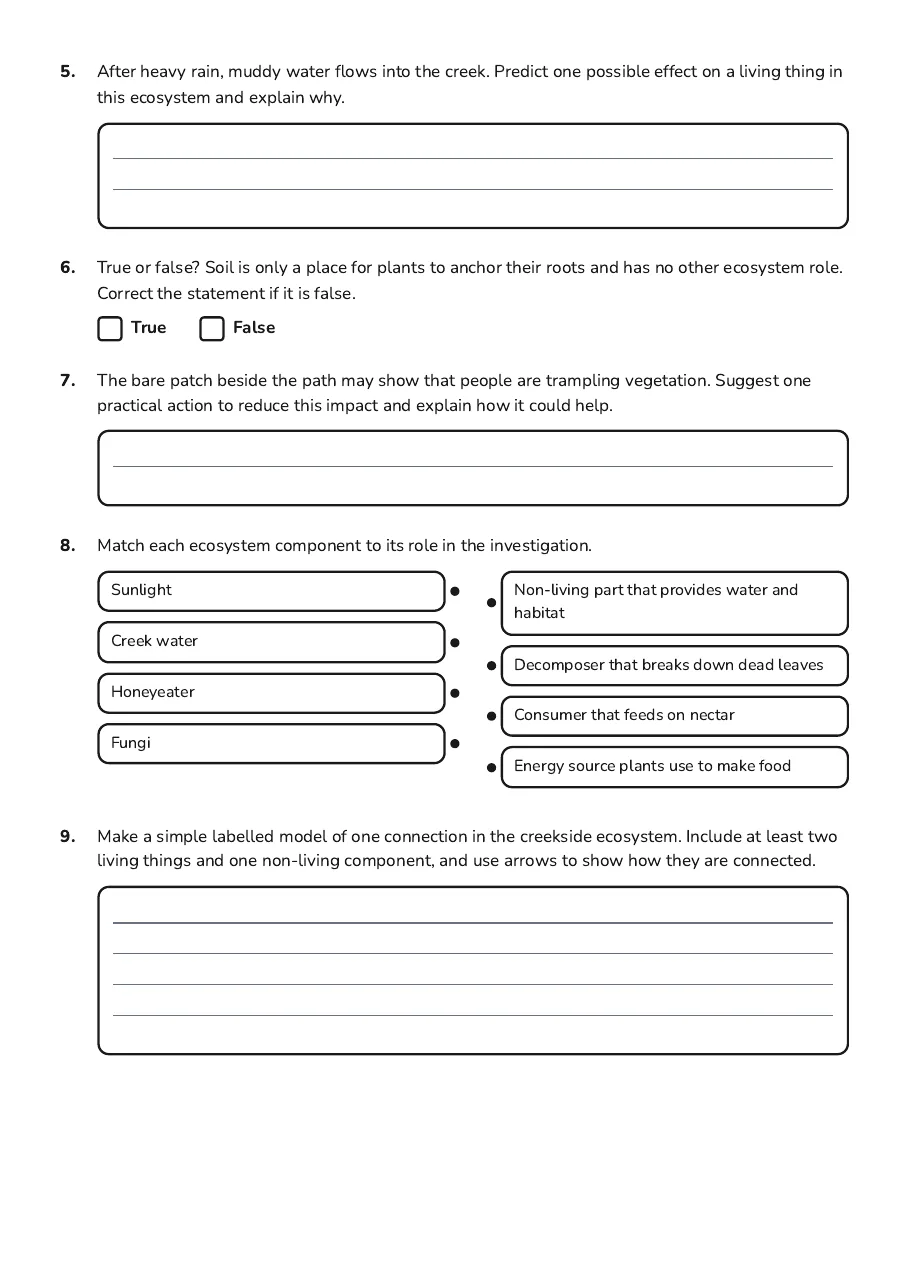
- Sunlight
- Creek water
- Honeyeater
- Fungi
- Non-living part that provides water and habitat
- Decomposer that breaks down dead leaves
- Consumer that feeds on nectar
- Energy source plants use to make food
3 printable pages
Page 1
Page 2

Page 3
About This Worksheet
Free in Kuraplan
Sign up free, grab the PDF, and customize it for your class.
Print-Ready
Formatted for standard paper. Clean layout, easy to read.
AI-Generated
Created with Kuraplan's AI, designed for real classroom use.
For Teachers & Parents
Use in classrooms, for homework, tutoring, or homeschool.
Need a custom version of this worksheet?
Kuraplan's AI generates custom worksheets in seconds — differentiated for every learner, aligned to your curriculum.
Generate Custom Worksheets — FreeMore Science Worksheets
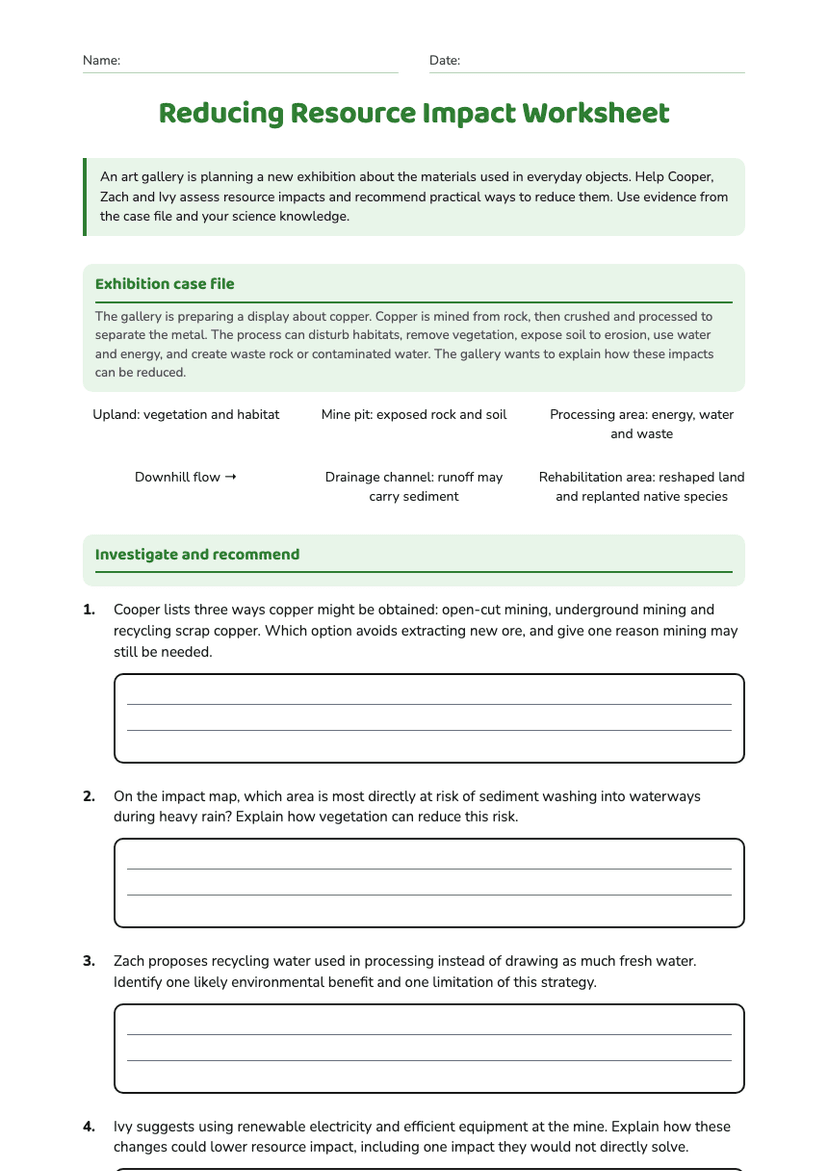
Reducing Resource Impact Worksheet
Free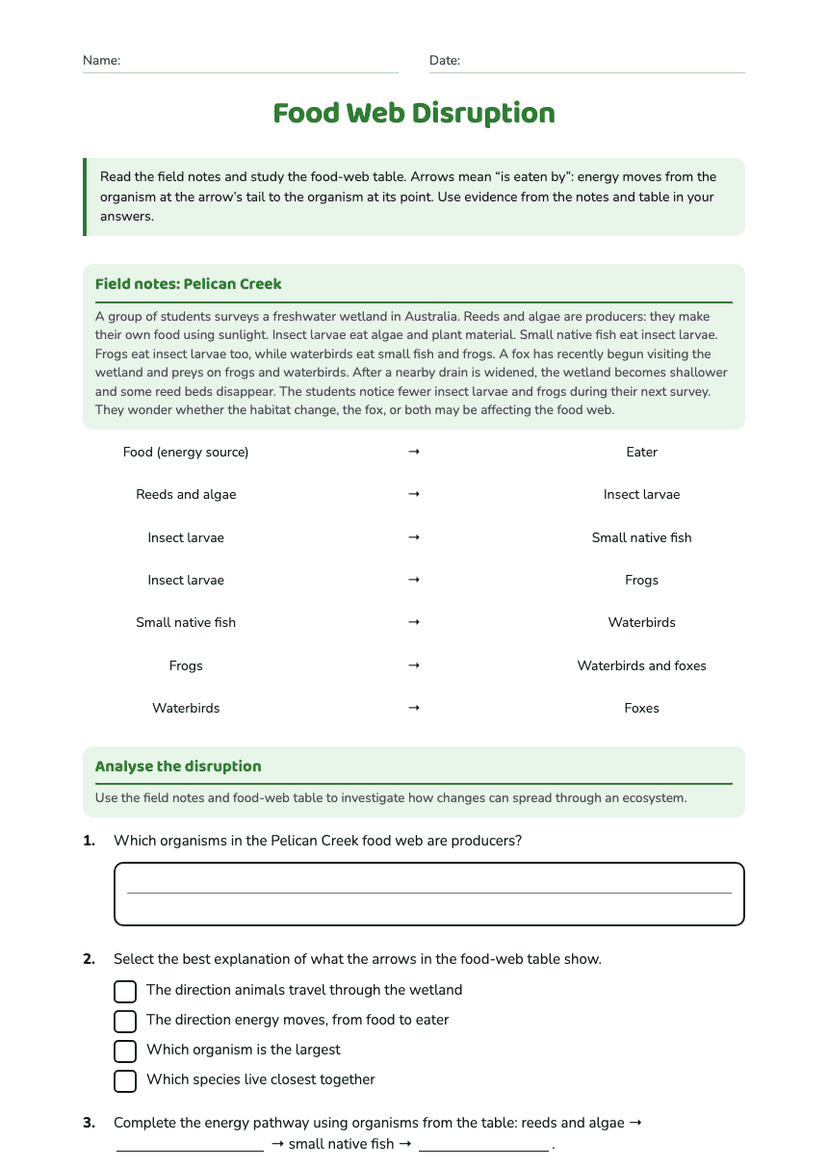
Food Web Disruption
Free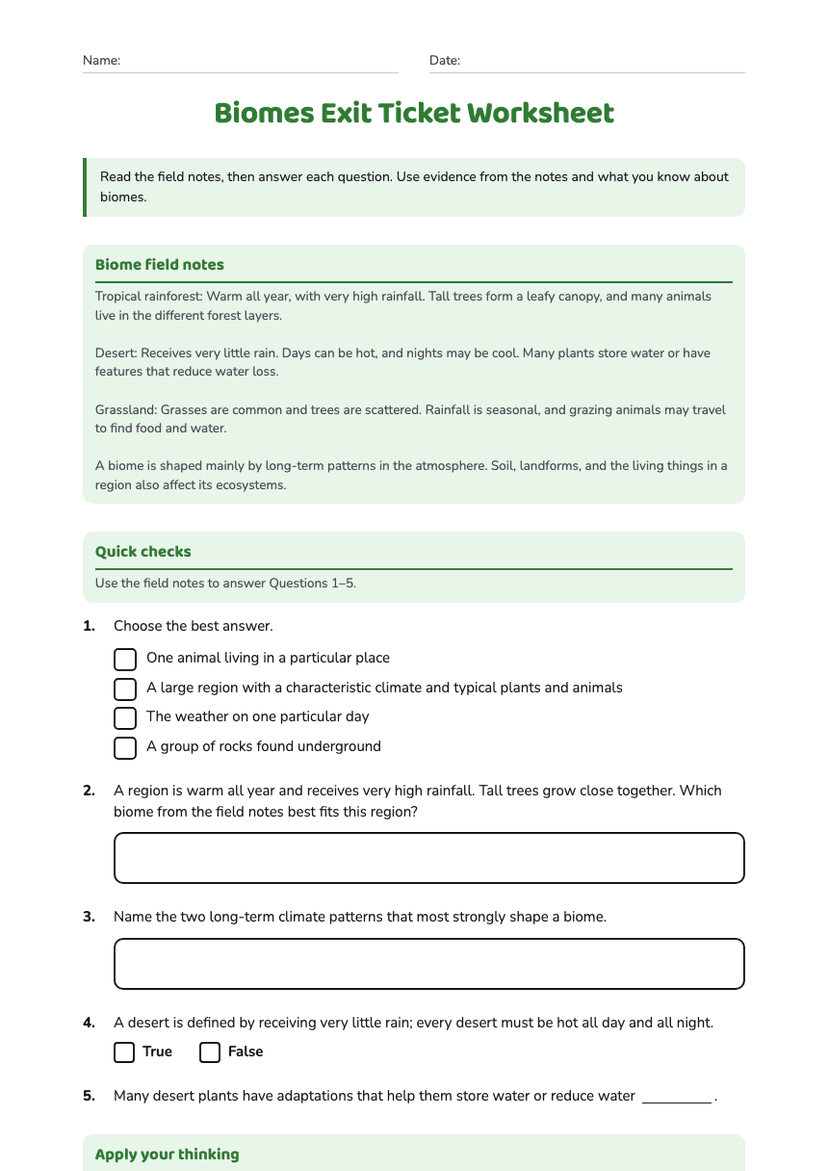
Biomes Exit Ticket Worksheet
Free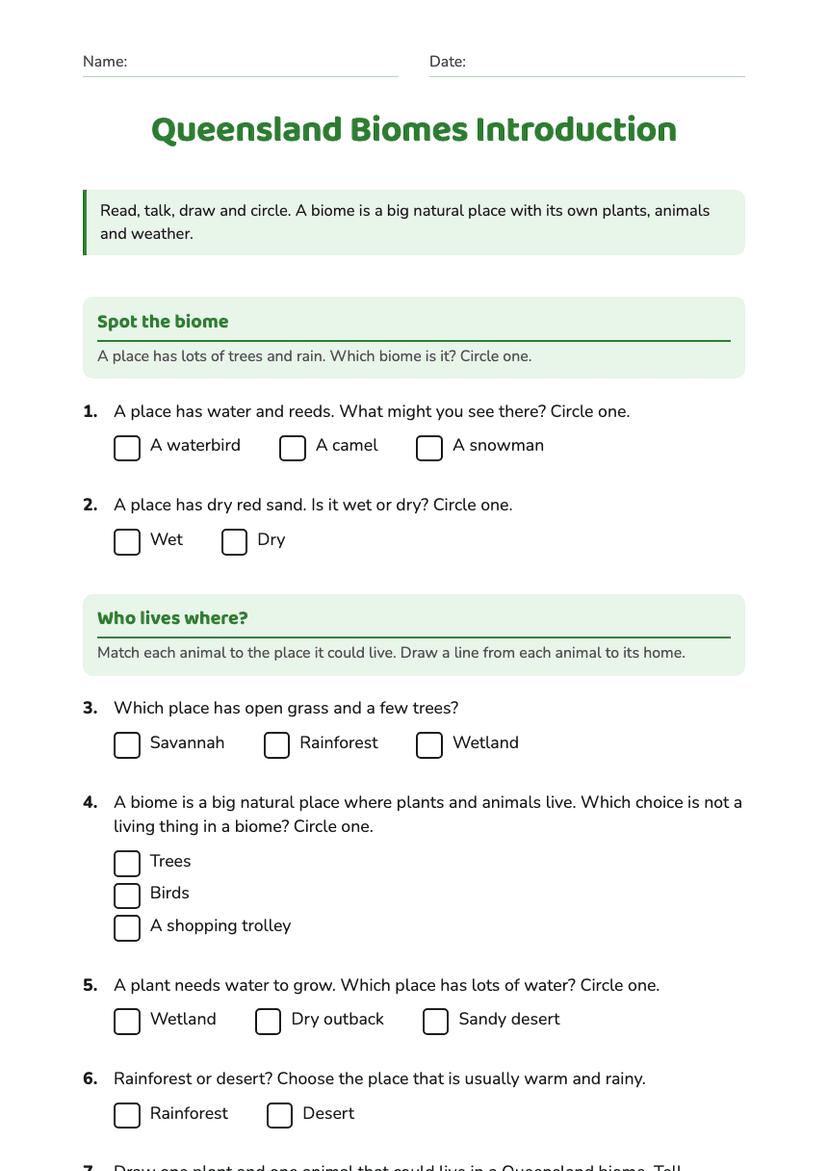
Queensland Biomes Introduction
Free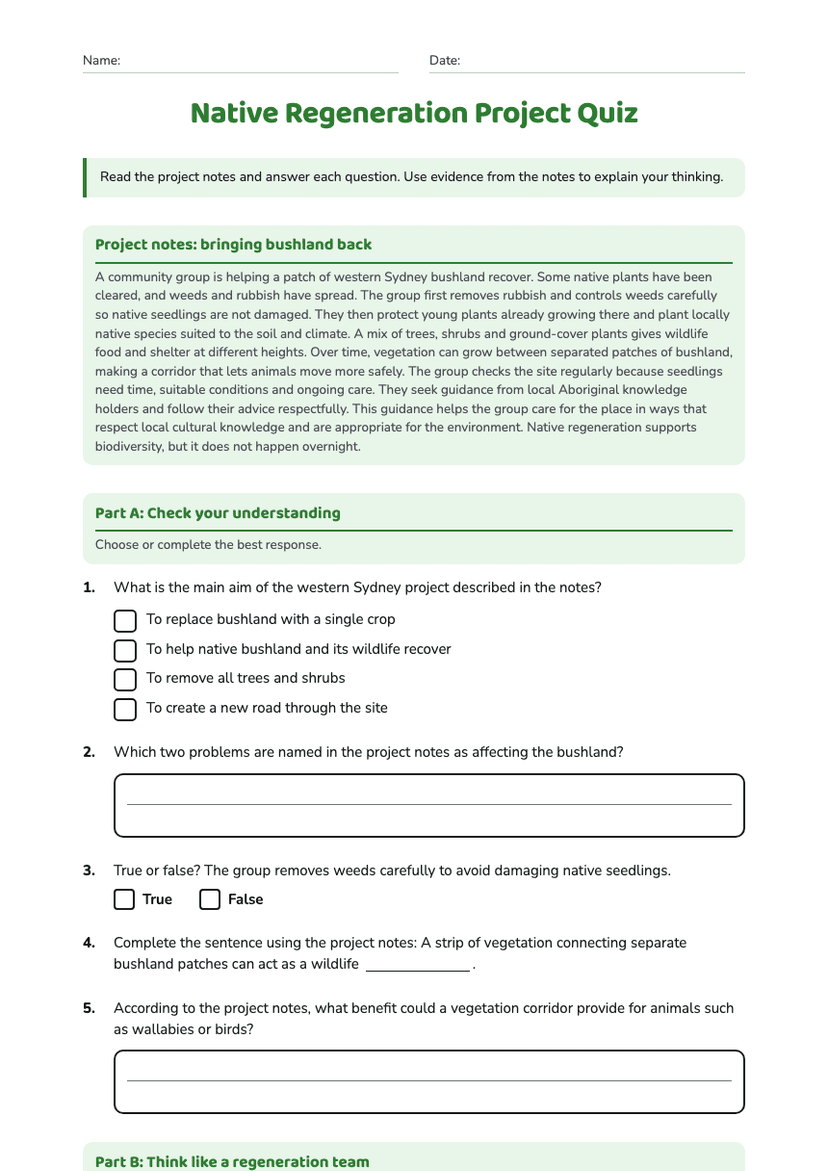
Native Regeneration Project Quiz
Free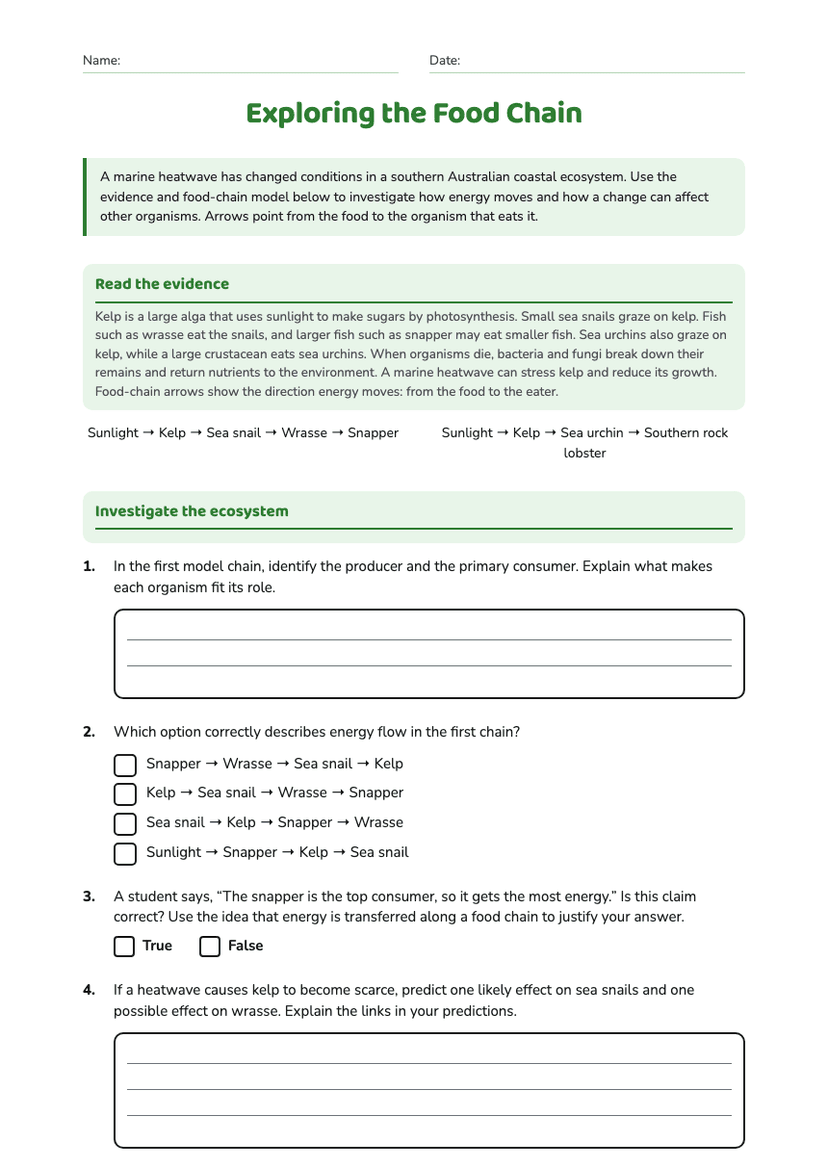
Exploring the Food Chain
Free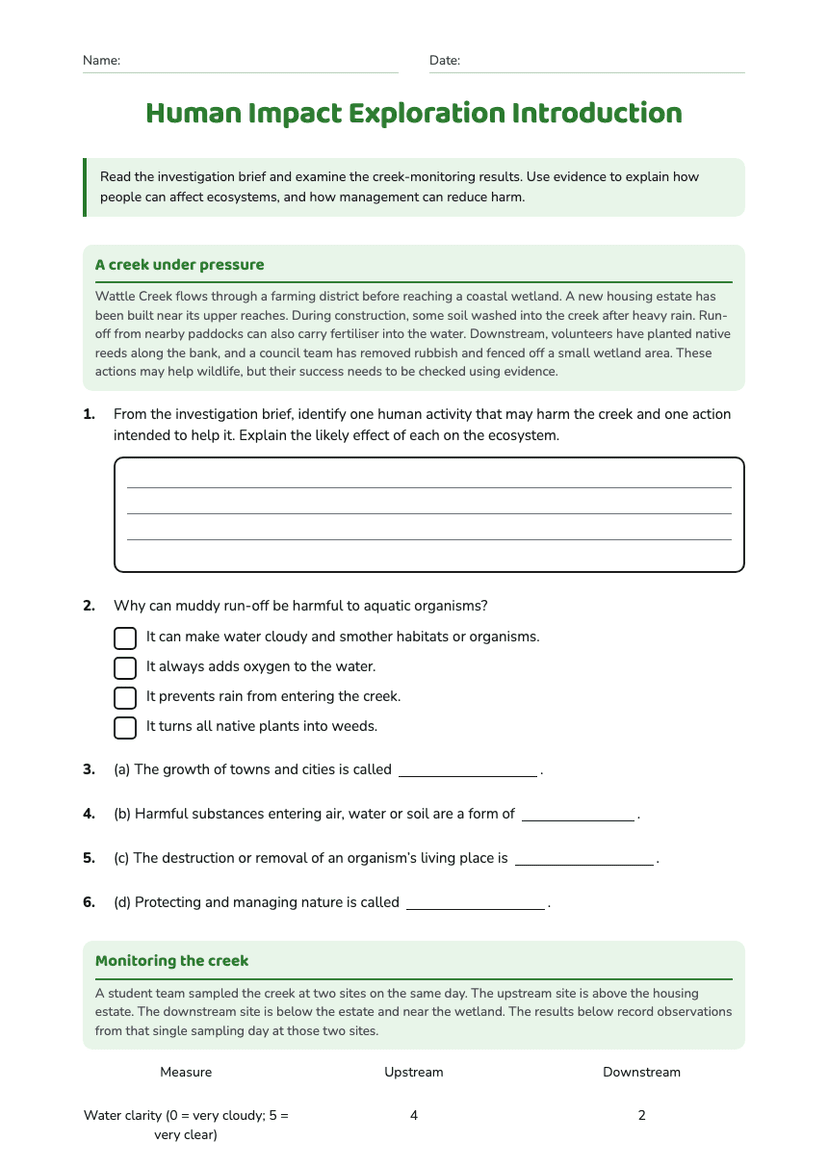
Human Impact Exploration Introduction
Free