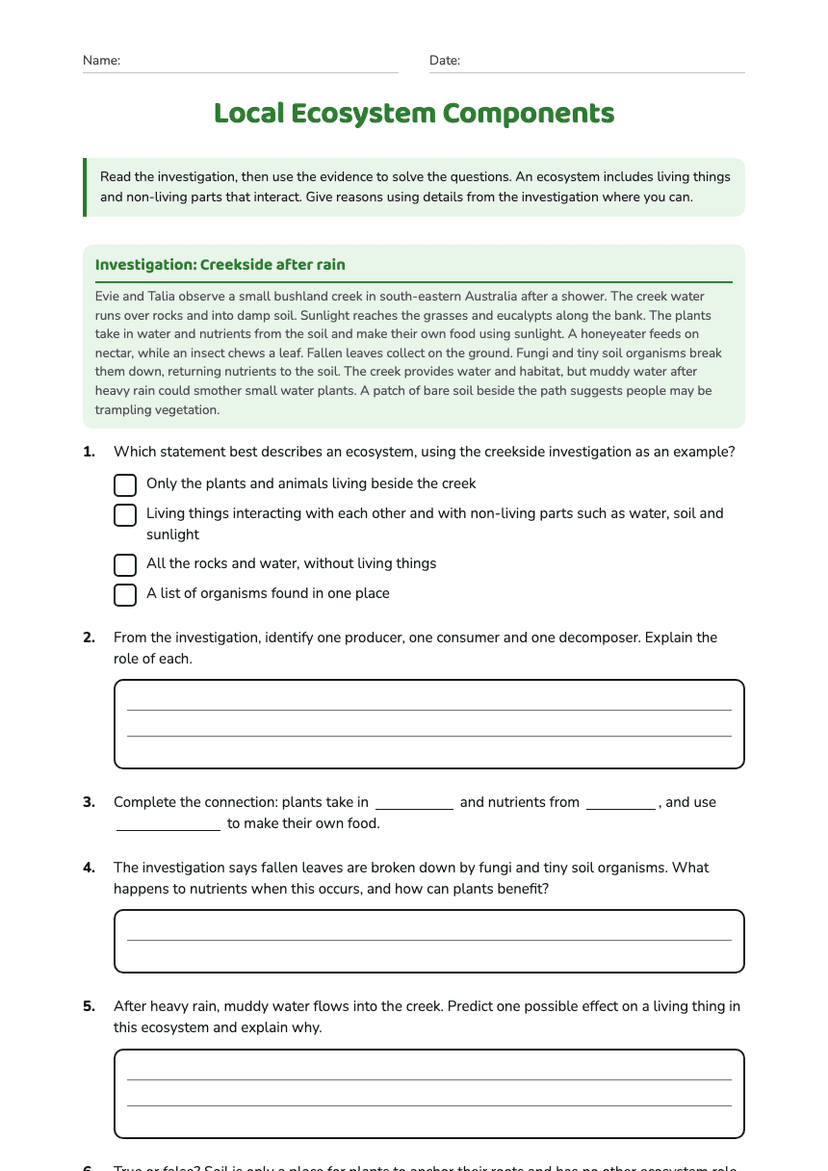
Food Web Disruption
A free science worksheet ready for your classroom. Open in Kuraplan to grab the print-ready PDF, customize it for your students, or generate a fresh version in seconds.
Food Web Disruption
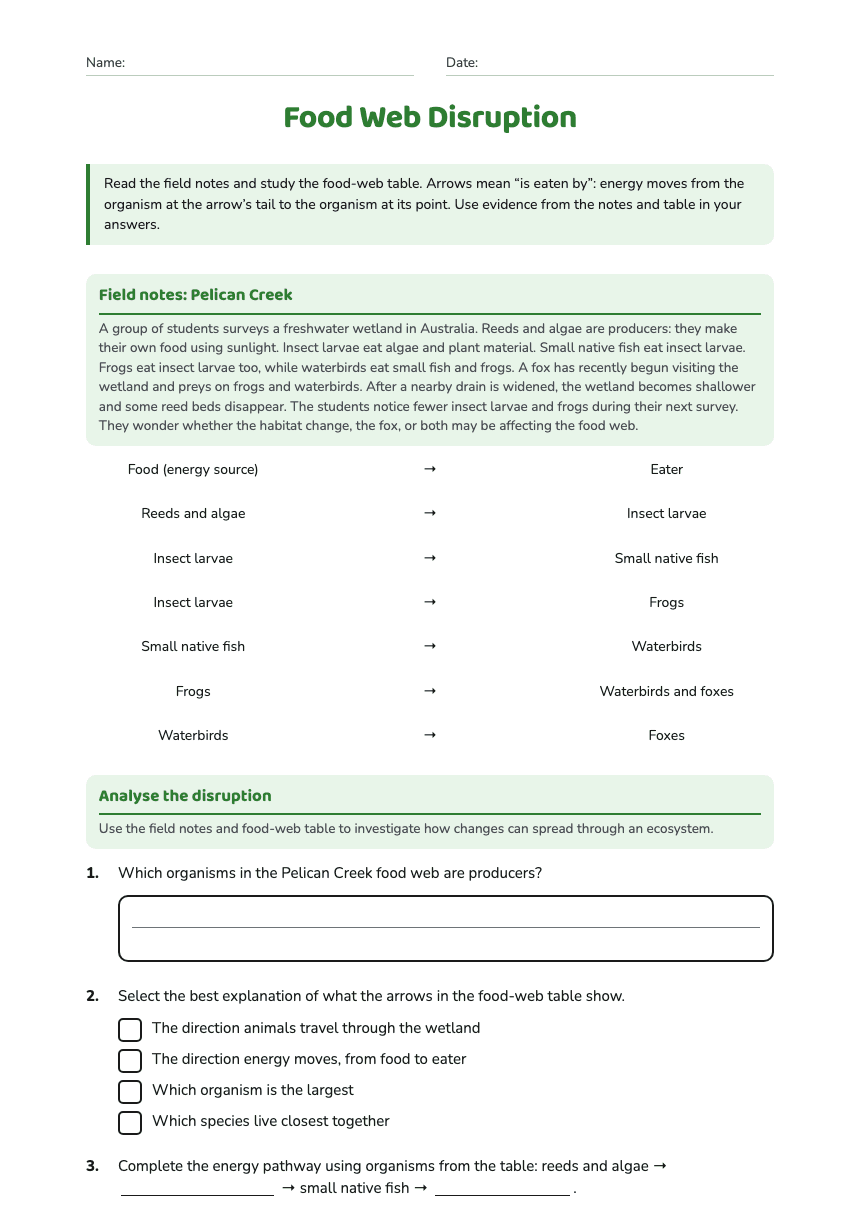
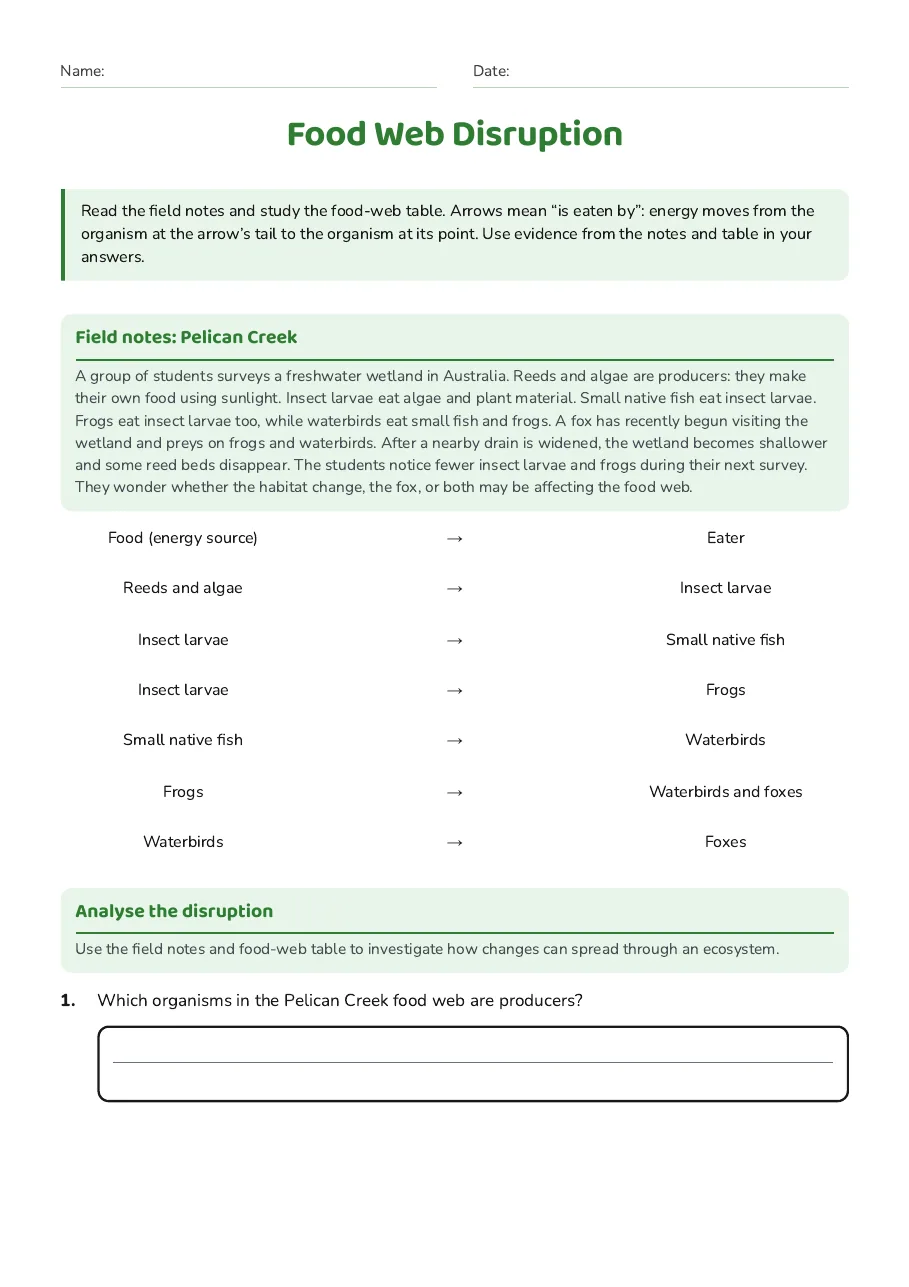
Field notes: Pelican Creek
A group of students surveys a freshwater wetland in Australia. Reeds and algae are producers: they make their own food using sunlight. Insect larvae eat algae and plant material. Small native fish eat insect larvae. Frogs eat insect larvae too, while waterbirds eat small fish and frogs. A fox has recently begun visiting the wetland and preys on frogs and waterbirds. After a nearby drain is widened, the wetland becomes shallower and some reed beds disappear. The students notice fewer insect larvae and frogs during their next survey. They wonder whether the habitat change, the fox, or both may be affecting the food web.
Food (energy source)
→
Eater
Reeds and algae
→
Insect larvae
Insect larvae
→
Small native fish
Insect larvae
→
Frogs
Small native fish
→
Waterbirds
Frogs
→
Waterbirds and foxes
Waterbirds
→
Foxes
Analyse the disruption
Use the field notes and food-web table to investigate how changes can spread through an ecosystem.
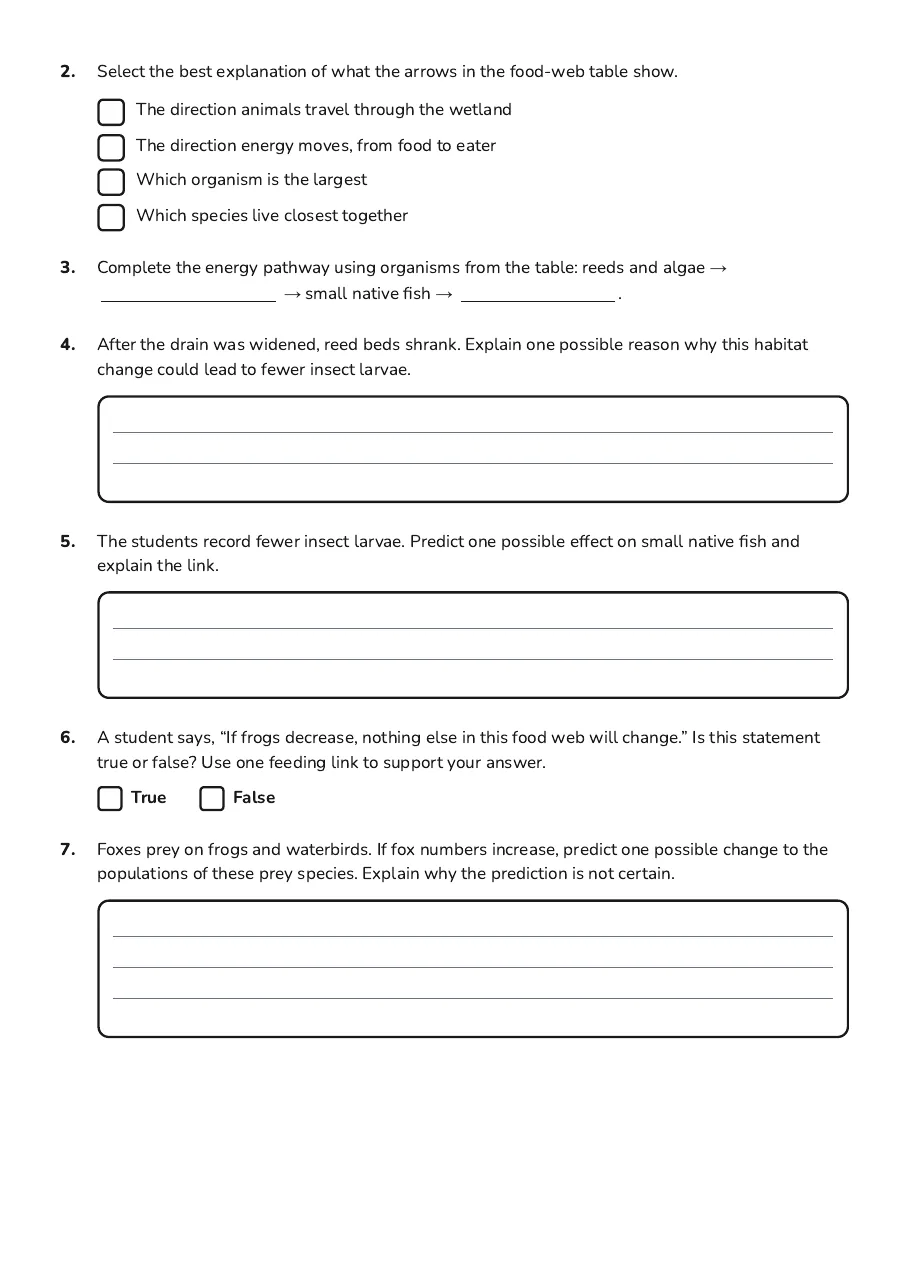
- The direction animals travel through the wetland
- The direction energy moves, from food to eater
- Which organism is the largest
- Which species live closest together
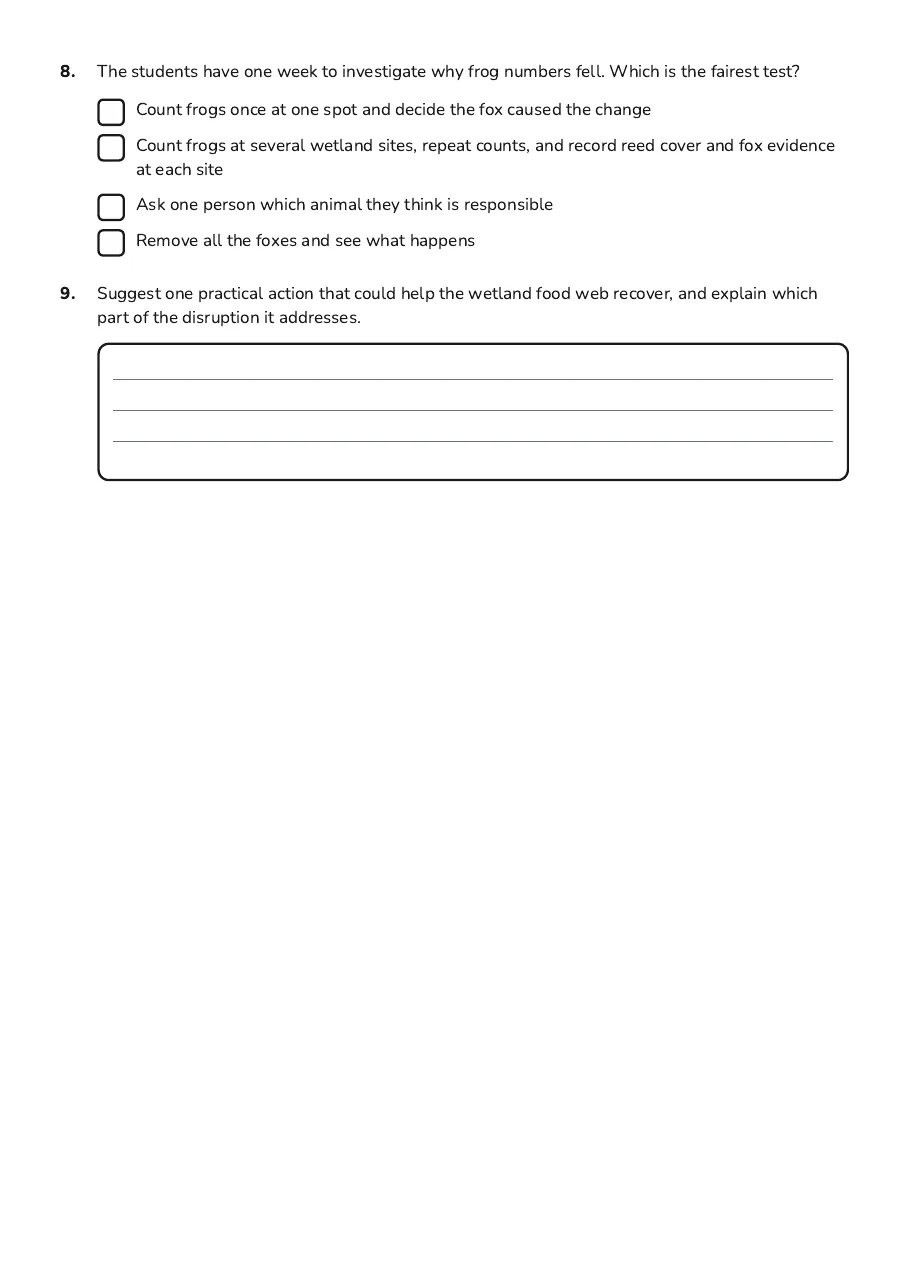
- Count frogs once at one spot and decide the fox caused the change
- Count frogs at several wetland sites, repeat counts, and record reed cover and fox evidence at each site
- Ask one person which animal they think is responsible
- Remove all the foxes and see what happens
3 printable pages
Page 1
Page 2
Page 3
About This Worksheet
Free in Kuraplan
Sign up free, grab the PDF, and customize it for your class.
Print-Ready
Formatted for standard paper. Clean layout, easy to read.
AI-Generated
Created with Kuraplan's AI, designed for real classroom use.
For Teachers & Parents
Use in classrooms, for homework, tutoring, or homeschool.
Need a custom version of this worksheet?
Kuraplan's AI generates custom worksheets in seconds — differentiated for every learner, aligned to your curriculum.
Generate Custom Worksheets — FreeMore Science Worksheets
Reducing Resource Impact Worksheet
Free
Biomes Exit Ticket Worksheet
Free
Queensland Biomes Introduction
Free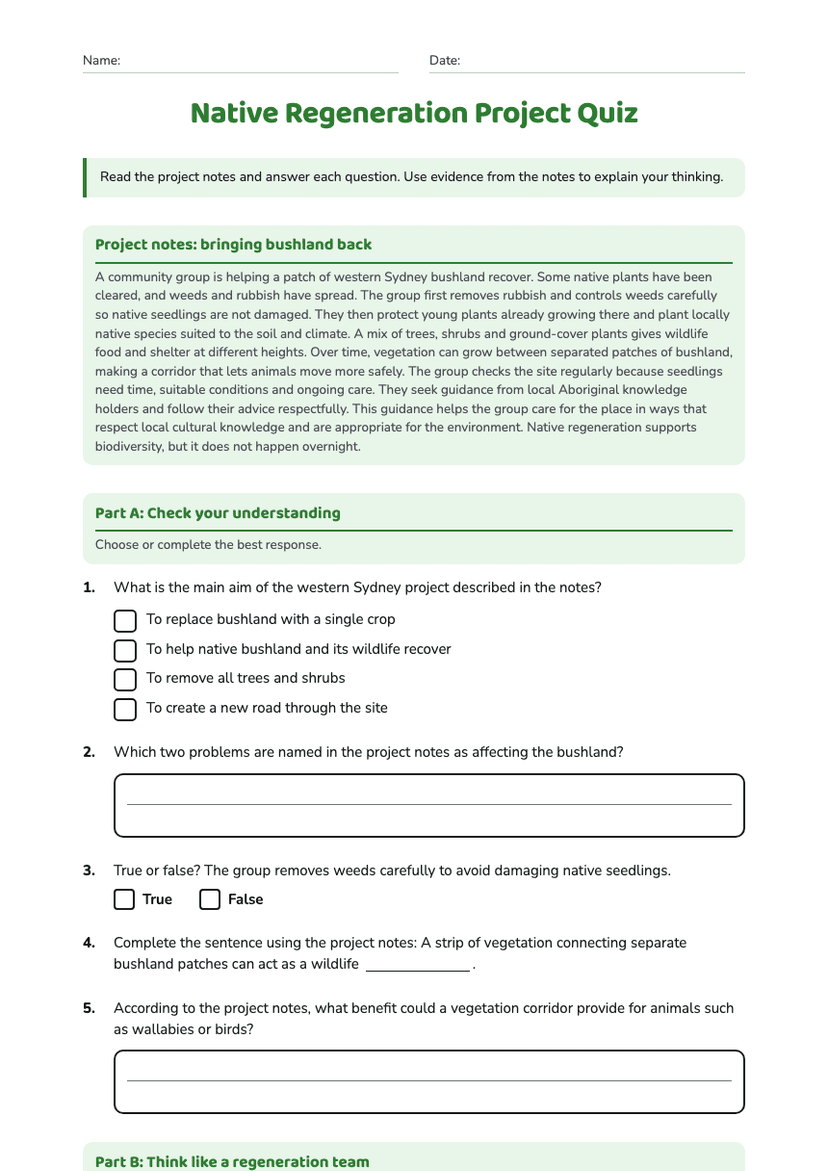
Native Regeneration Project Quiz
Free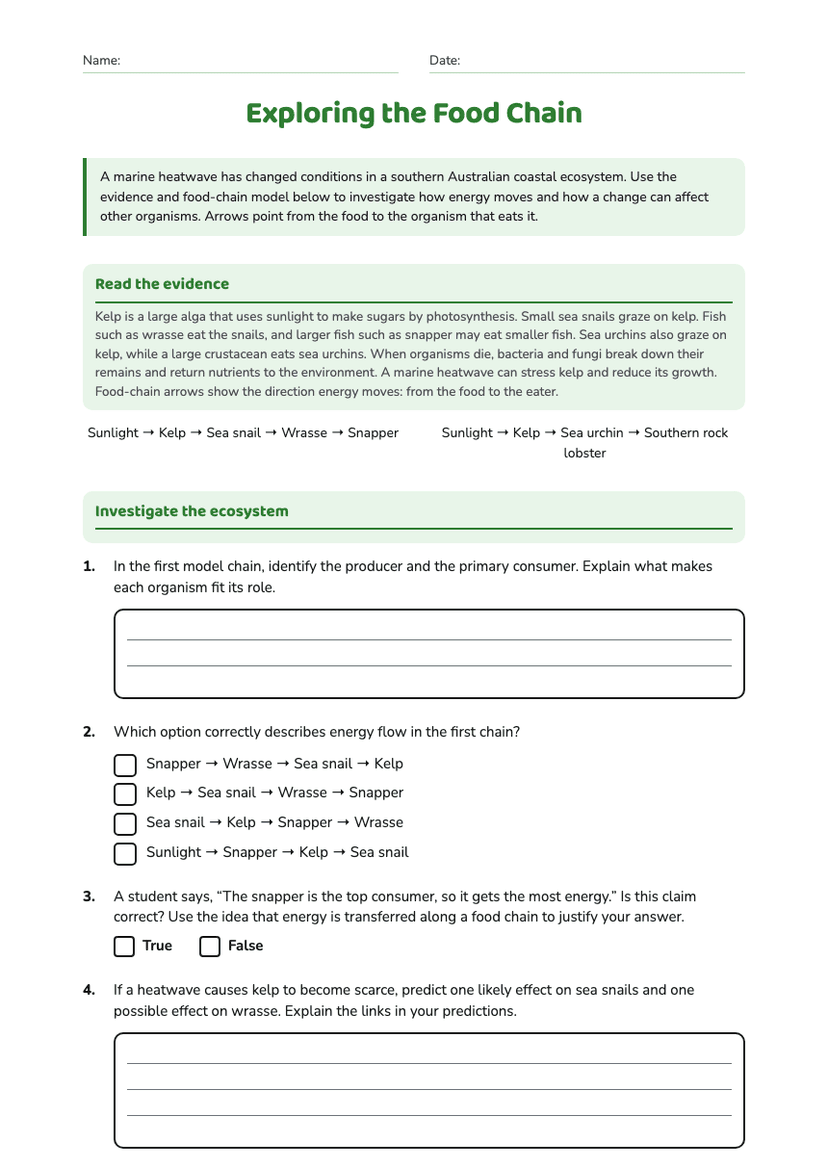
Exploring the Food Chain
Free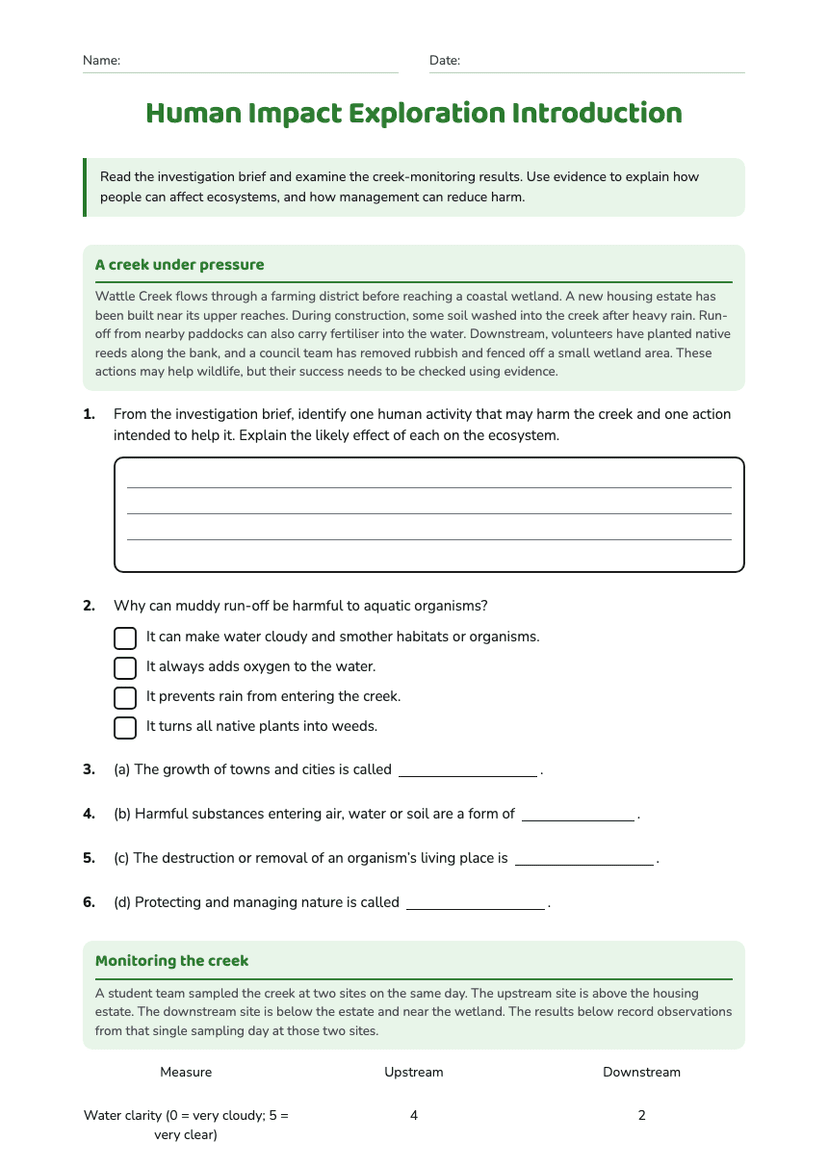
Human Impact Exploration Introduction
Free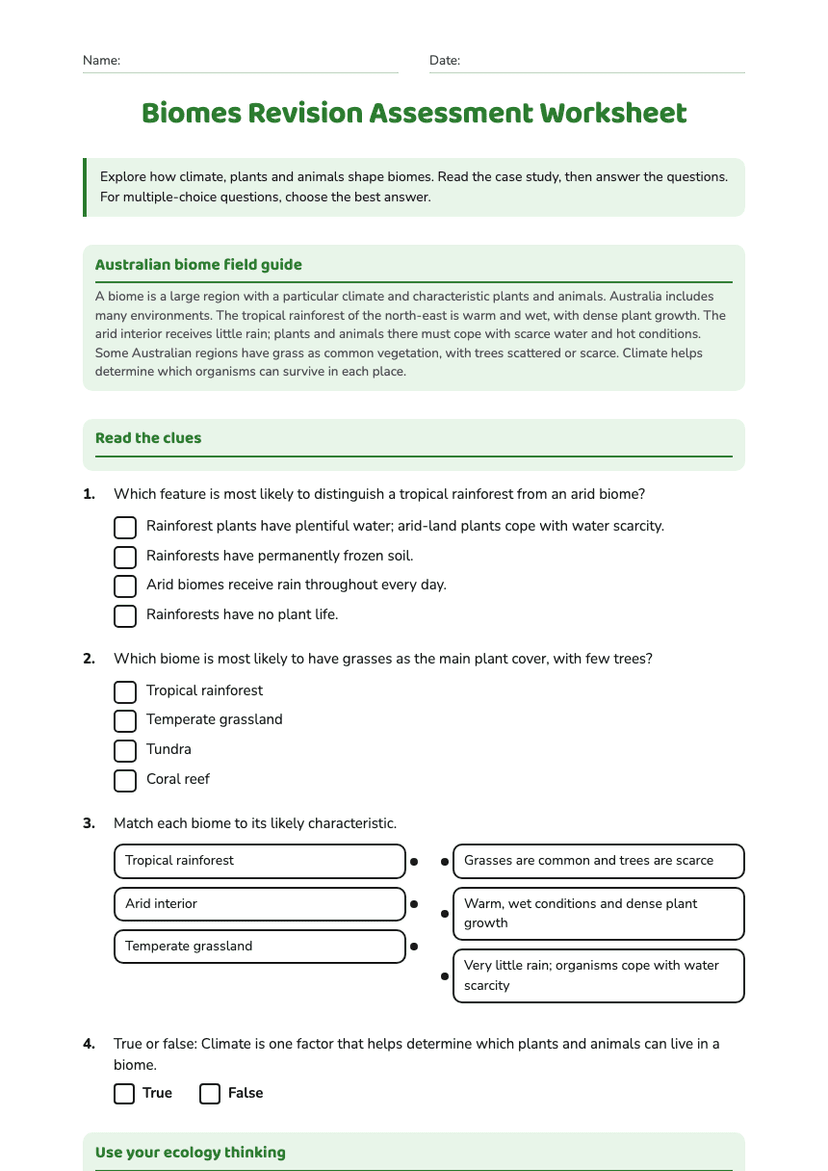
Biomes Revision Assessment Worksheet
Free