Native Regeneration Project Quiz
A free science worksheet ready for your classroom. Open in Kuraplan to grab the print-ready PDF, customize it for your students, or generate a fresh version in seconds.
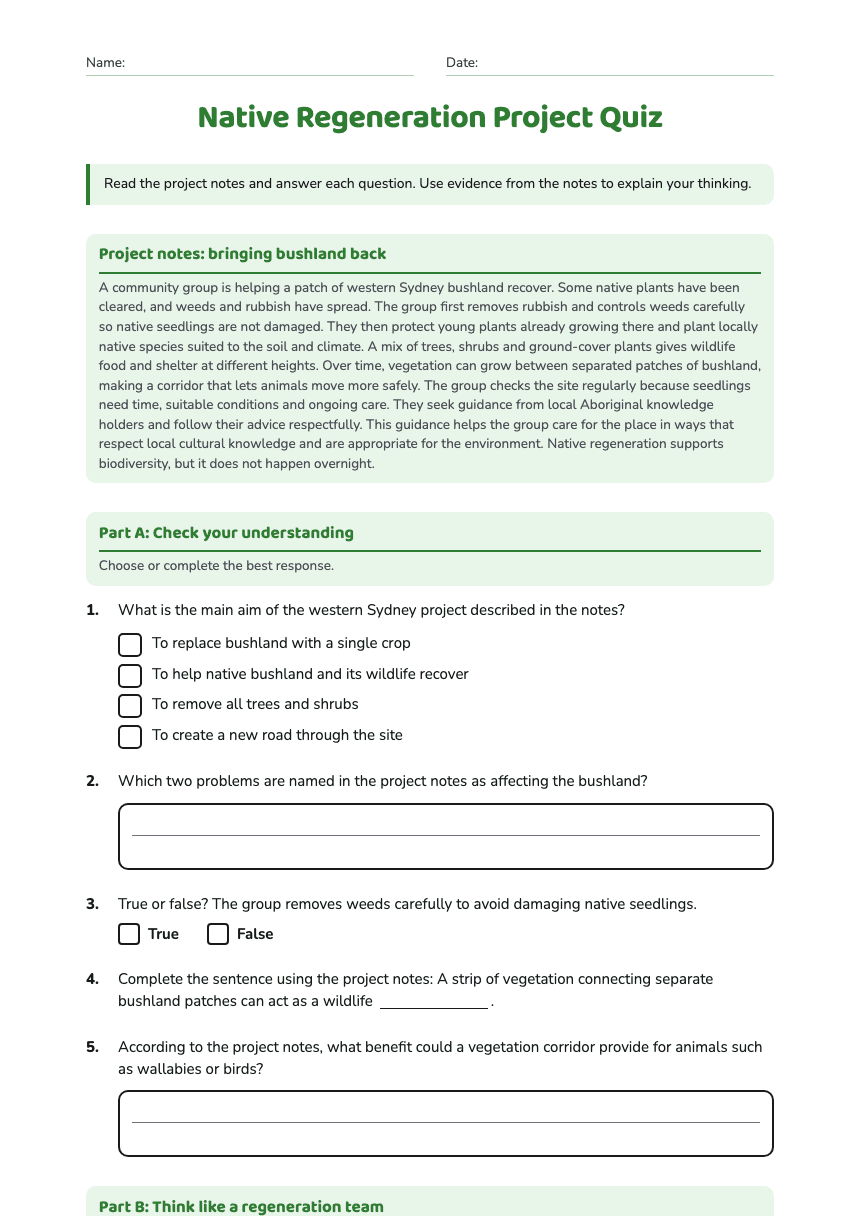
Native Regeneration Project Quiz
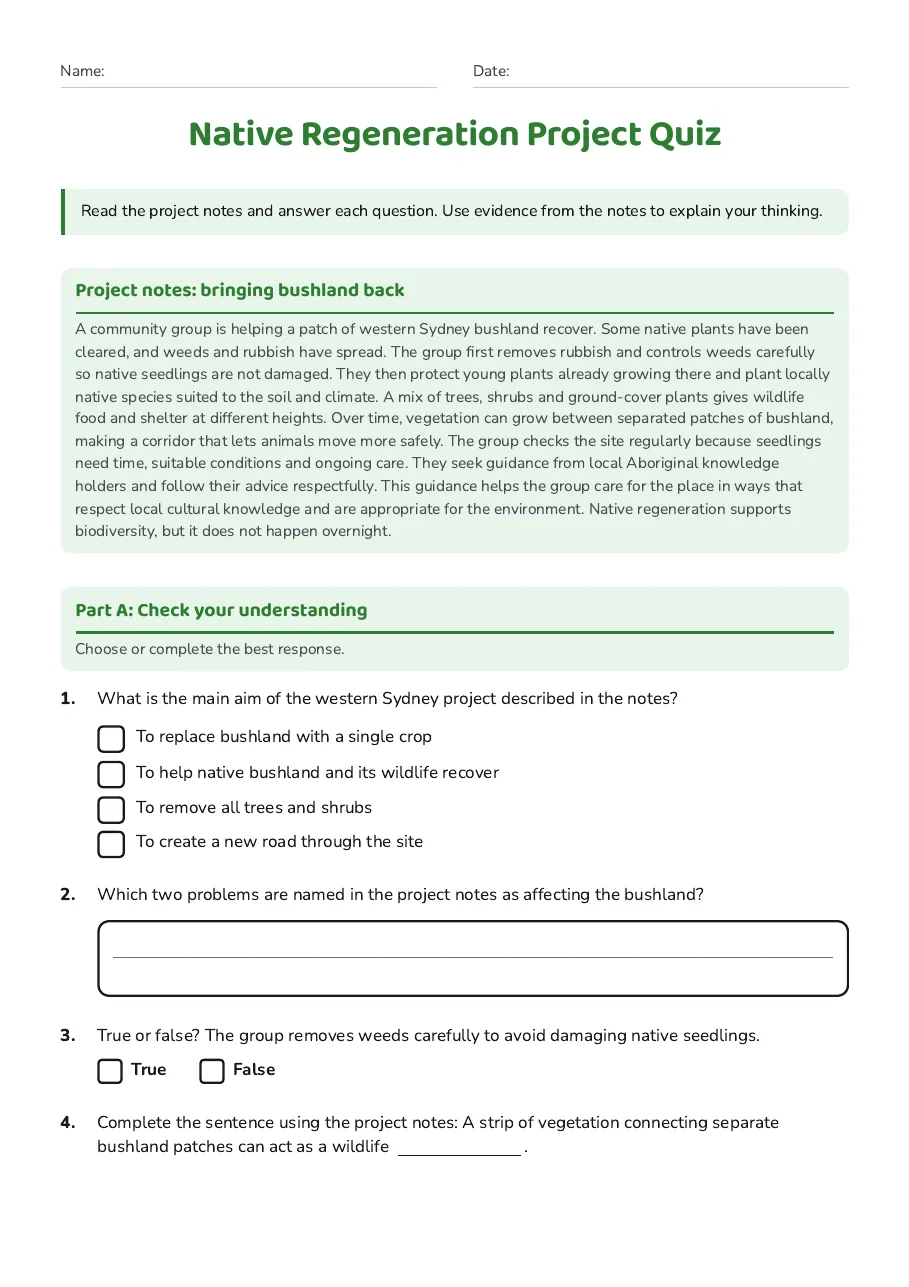
Project notes: bringing bushland back
A community group is helping a patch of western Sydney bushland recover. Some native plants have been cleared, and weeds and rubbish have spread. The group first removes rubbish and controls weeds carefully so native seedlings are not damaged. They then protect young plants already growing there and plant locally native species suited to the soil and climate. A mix of trees, shrubs and ground-cover plants gives wildlife food and shelter at different heights. Over time, vegetation can grow between separated patches of bushland, making a corridor that lets animals move more safely. The group checks the site regularly because seedlings need time, suitable conditions and ongoing care. They seek guidance from local Aboriginal knowledge holders and follow their advice respectfully. This guidance helps the group care for the place in ways that respect local cultural knowledge and are appropriate for the environment. Native regeneration supports biodiversity, but it does not happen overnight.
Part A: Check your understanding
Choose or complete the best response.
- To replace bushland with a single crop
- To help native bushland and its wildlife recover
- To remove all trees and shrubs
- To create a new road through the site
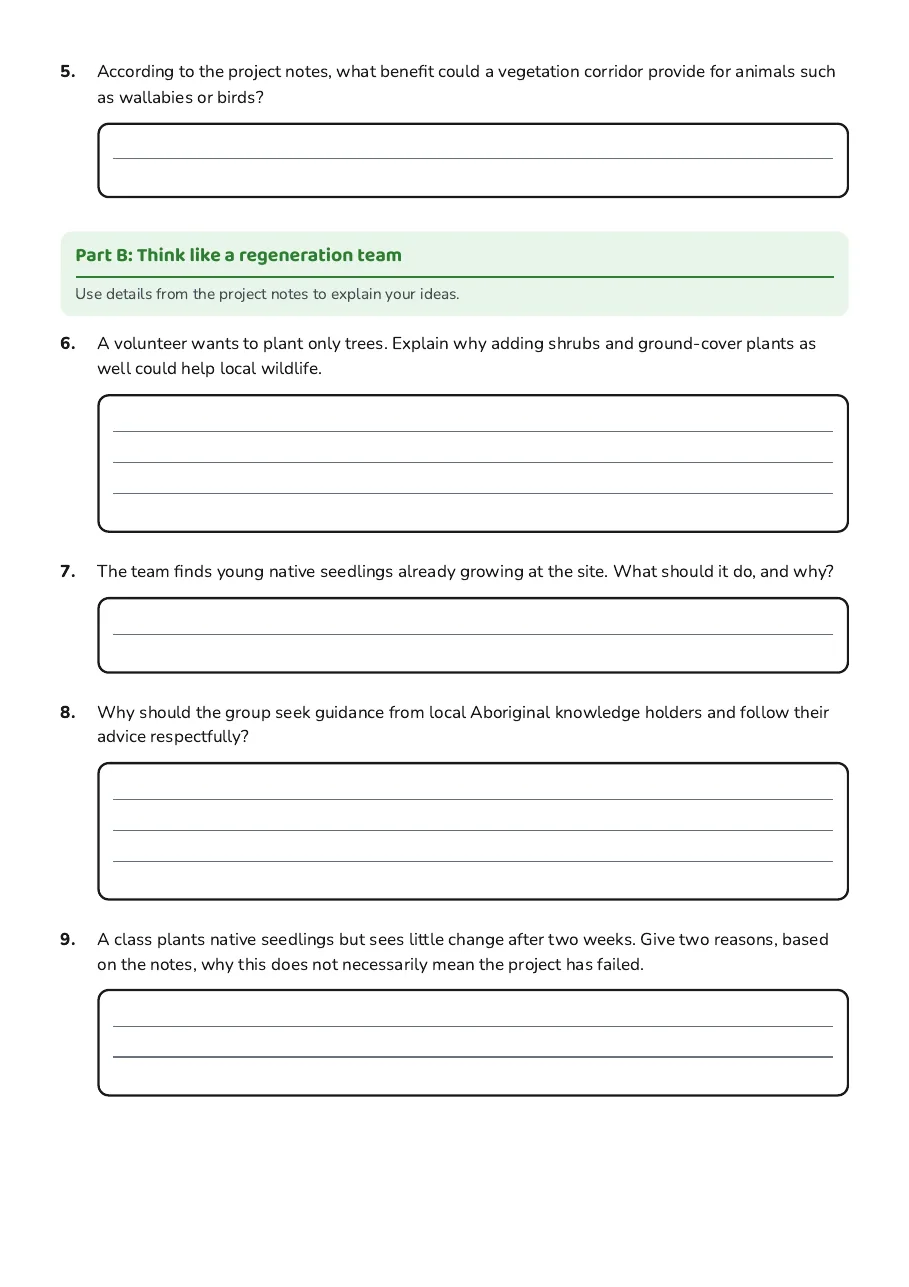
Part B: Think like a regeneration team
Use details from the project notes to explain your ideas.
3 printable pages
Page 1
Page 2
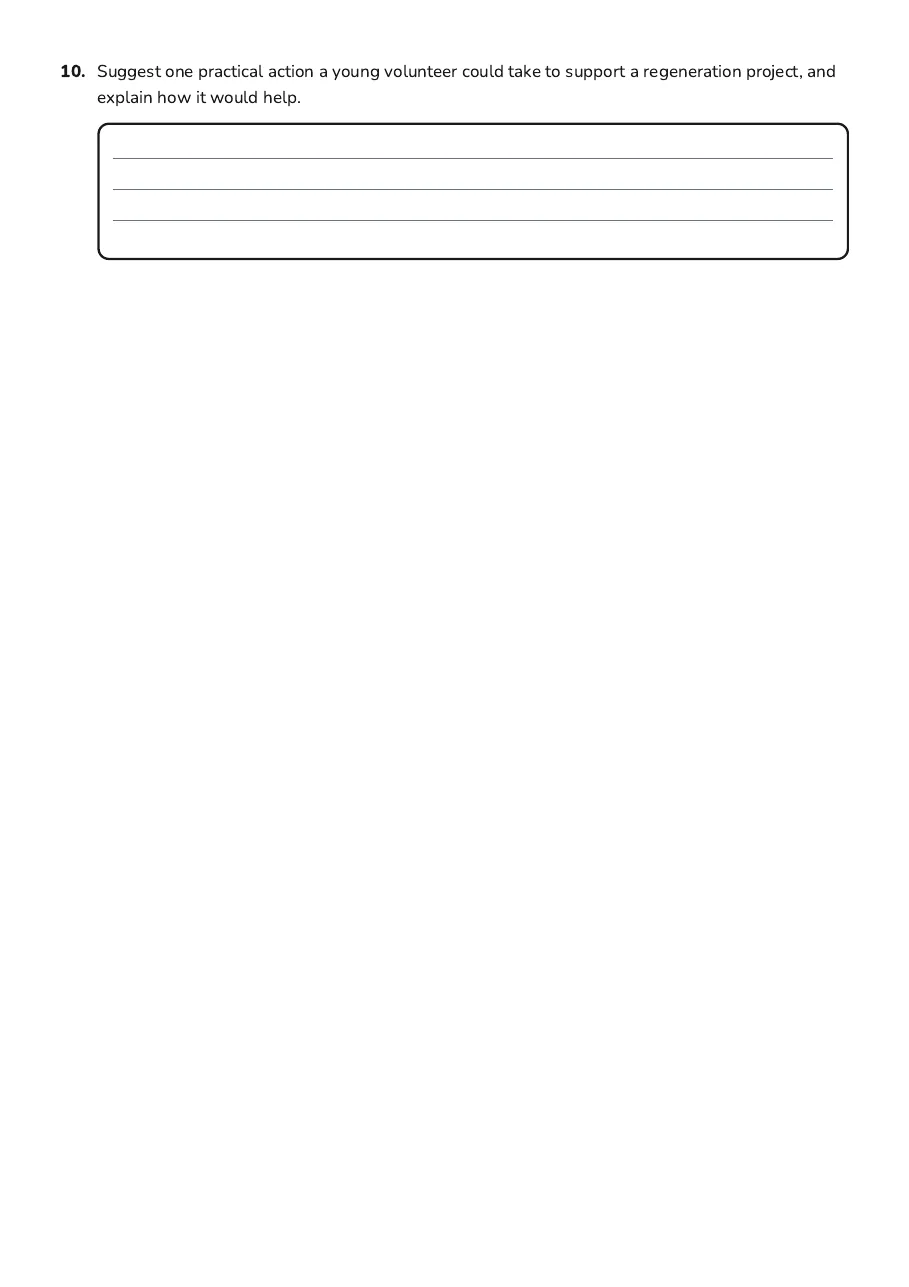
Page 3
About This Worksheet
Free in Kuraplan
Sign up free, grab the PDF, and customize it for your class.
Print-Ready
Formatted for standard paper. Clean layout, easy to read.
AI-Generated
Created with Kuraplan's AI, designed for real classroom use.
For Teachers & Parents
Use in classrooms, for homework, tutoring, or homeschool.
Need a custom version of this worksheet?
Kuraplan's AI generates custom worksheets in seconds — differentiated for every learner, aligned to your curriculum.
Generate Custom Worksheets — FreeMore Science Worksheets
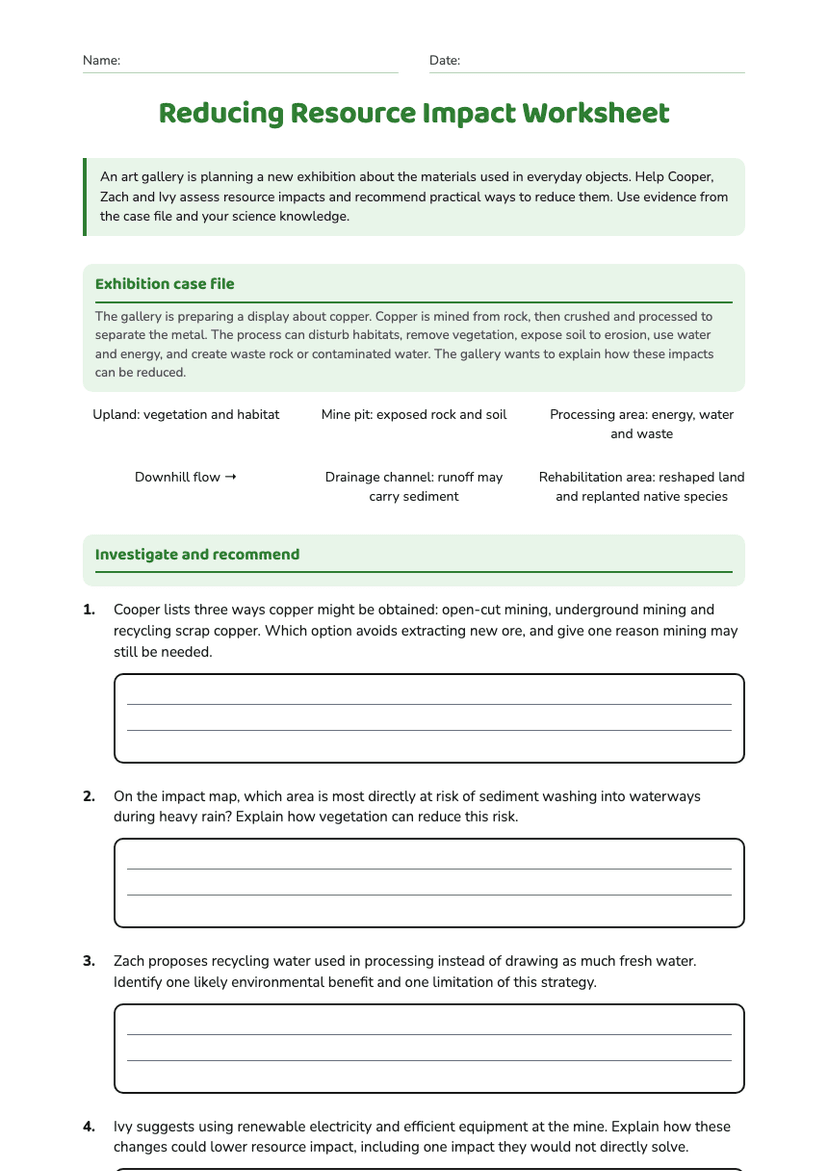
Reducing Resource Impact Worksheet
Free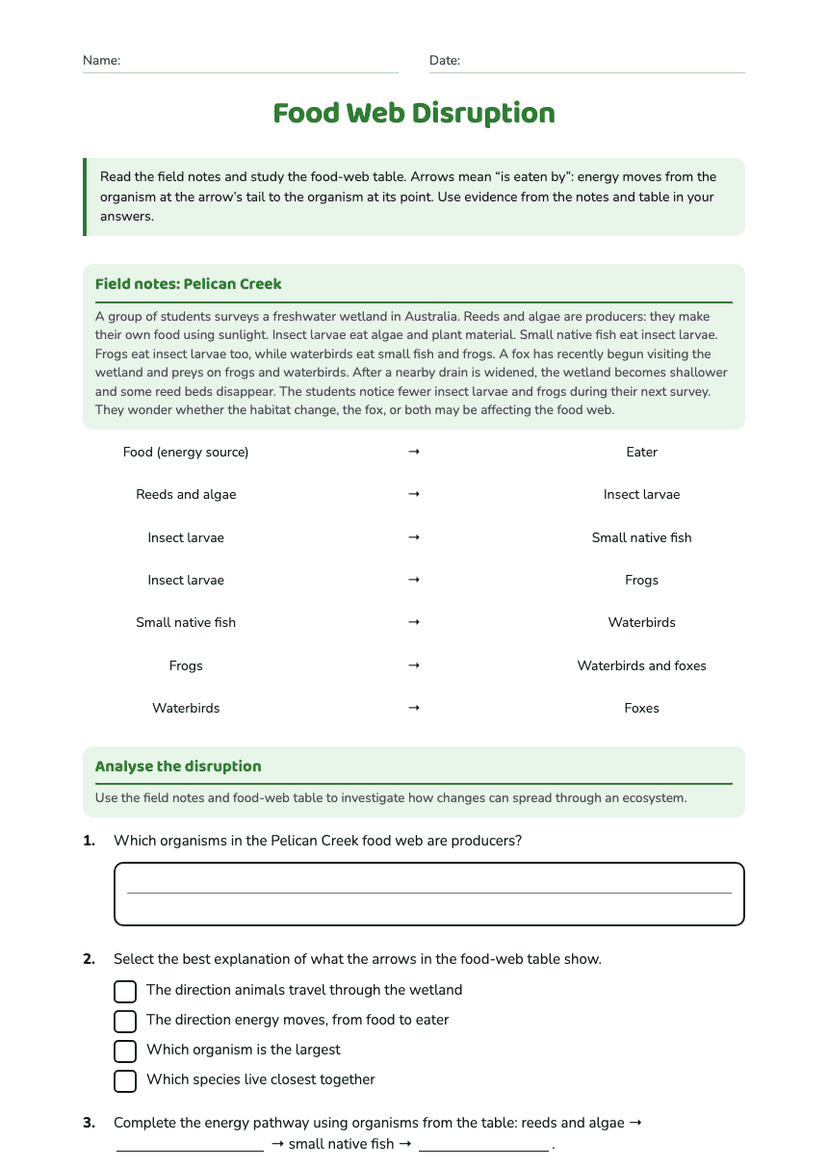
Food Web Disruption
Free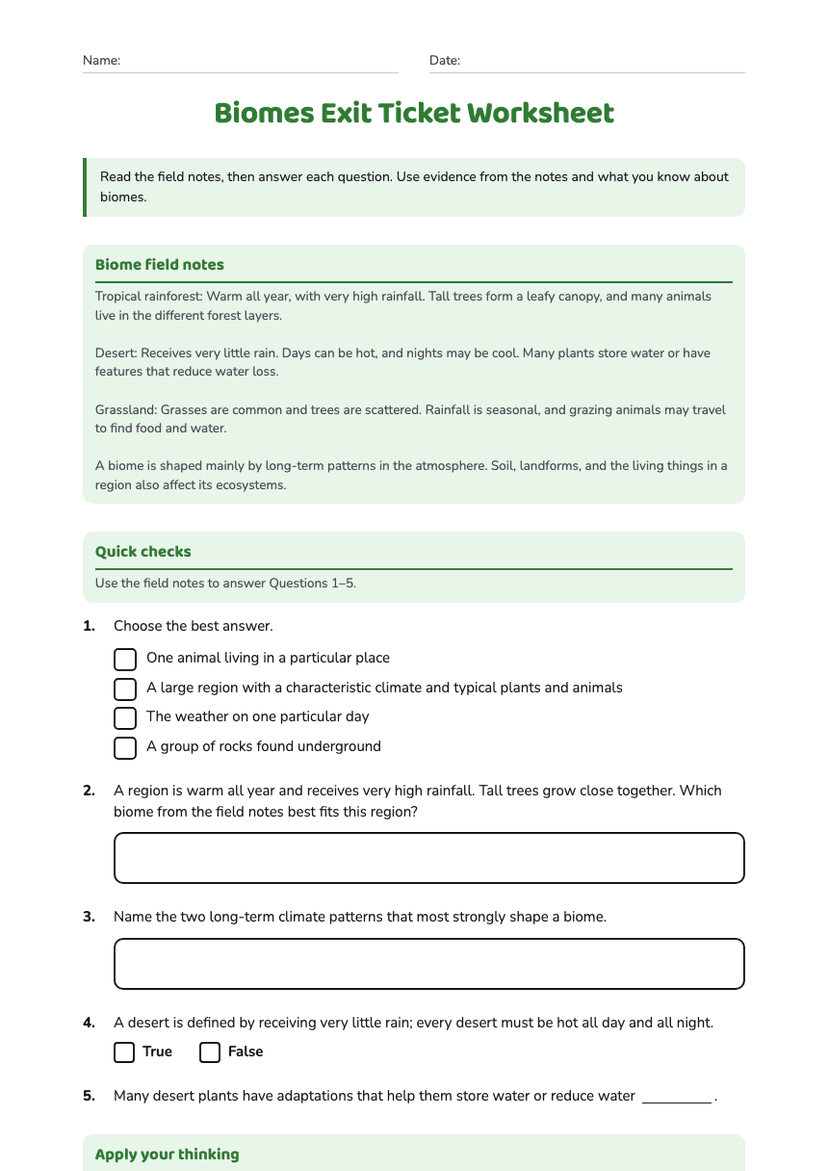
Biomes Exit Ticket Worksheet
Free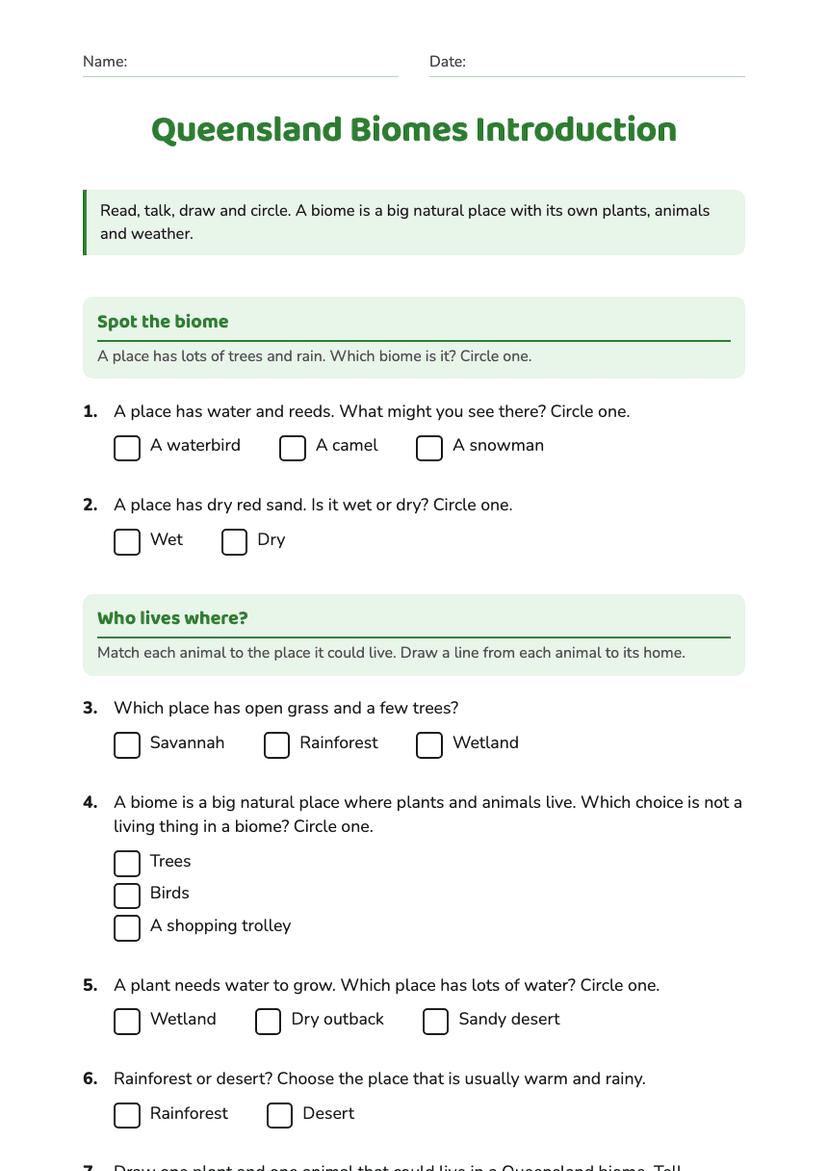
Queensland Biomes Introduction
Free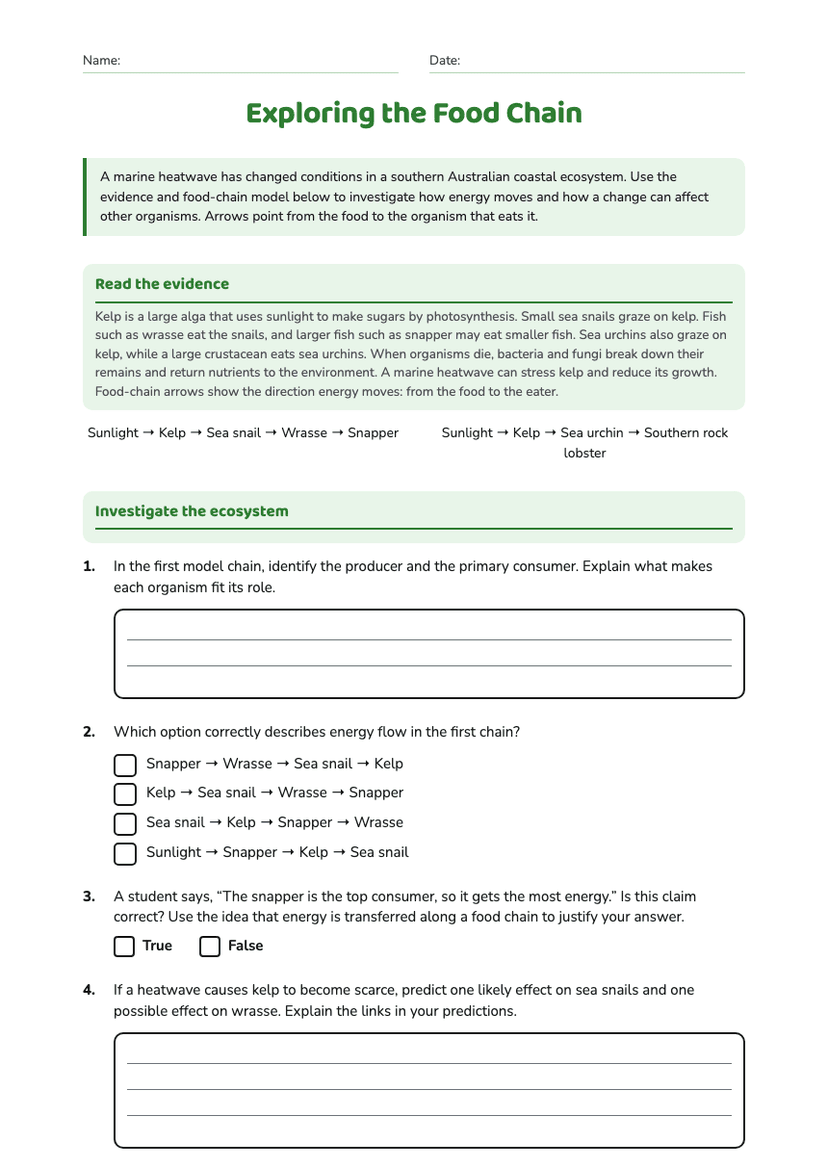
Exploring the Food Chain
Free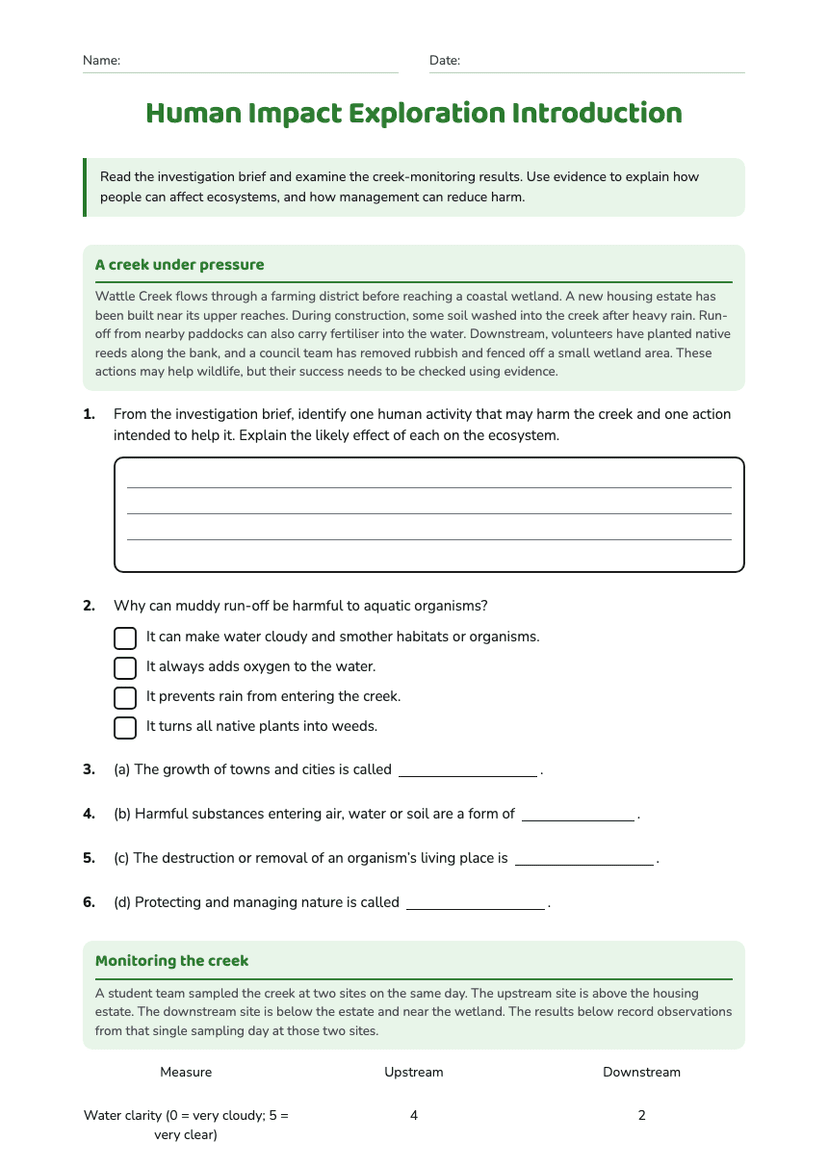
Human Impact Exploration Introduction
Free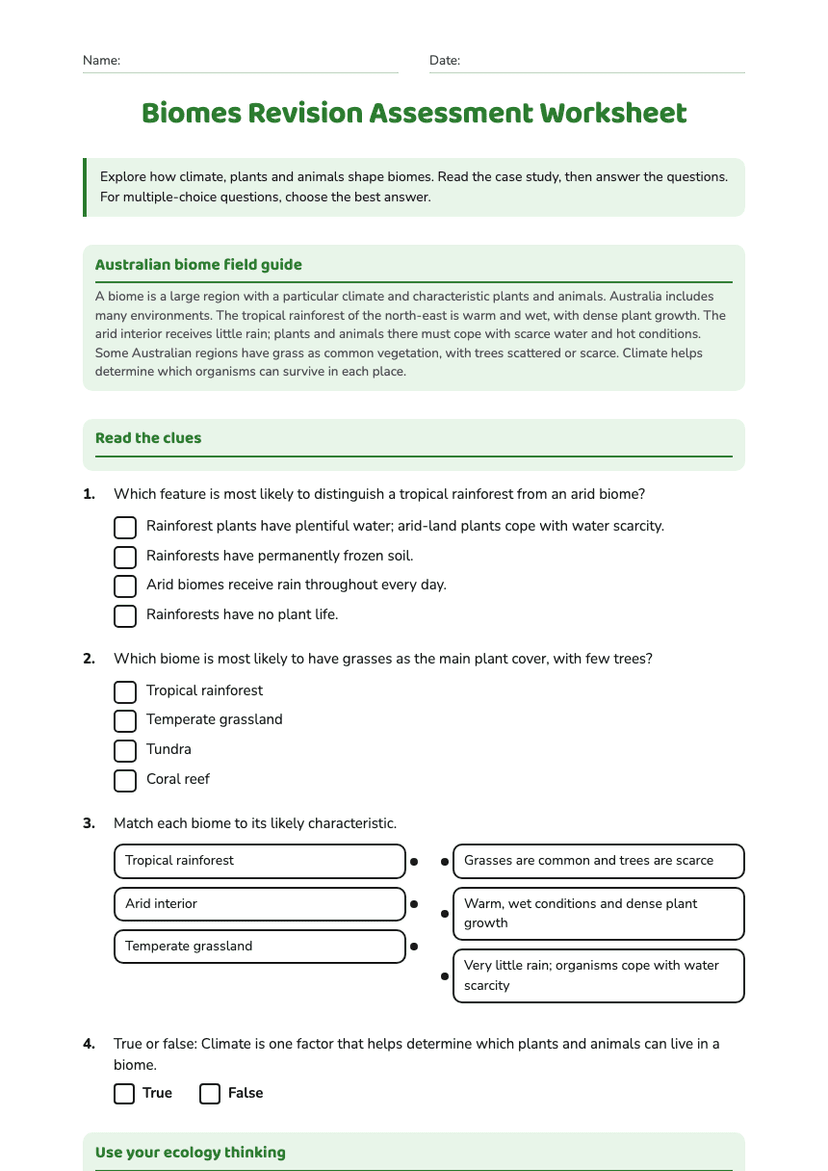
Biomes Revision Assessment Worksheet
Free