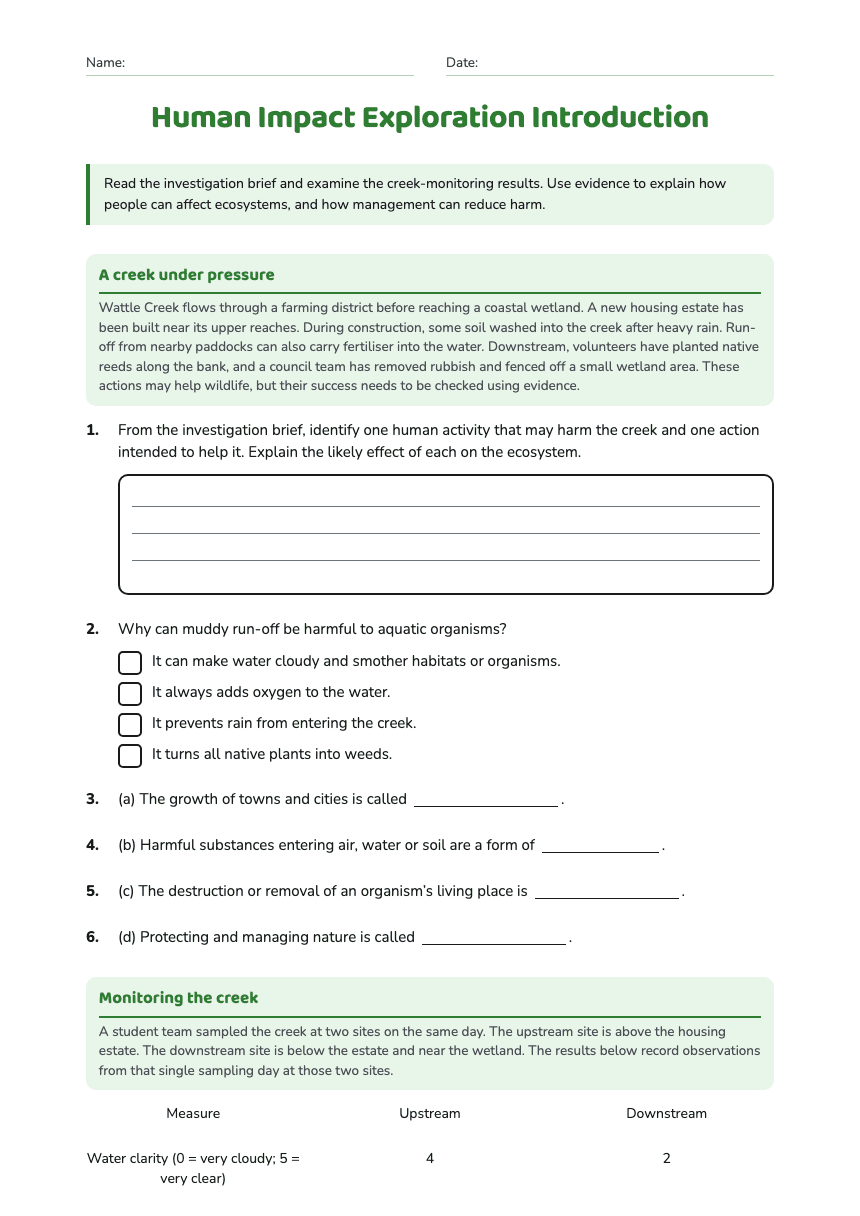
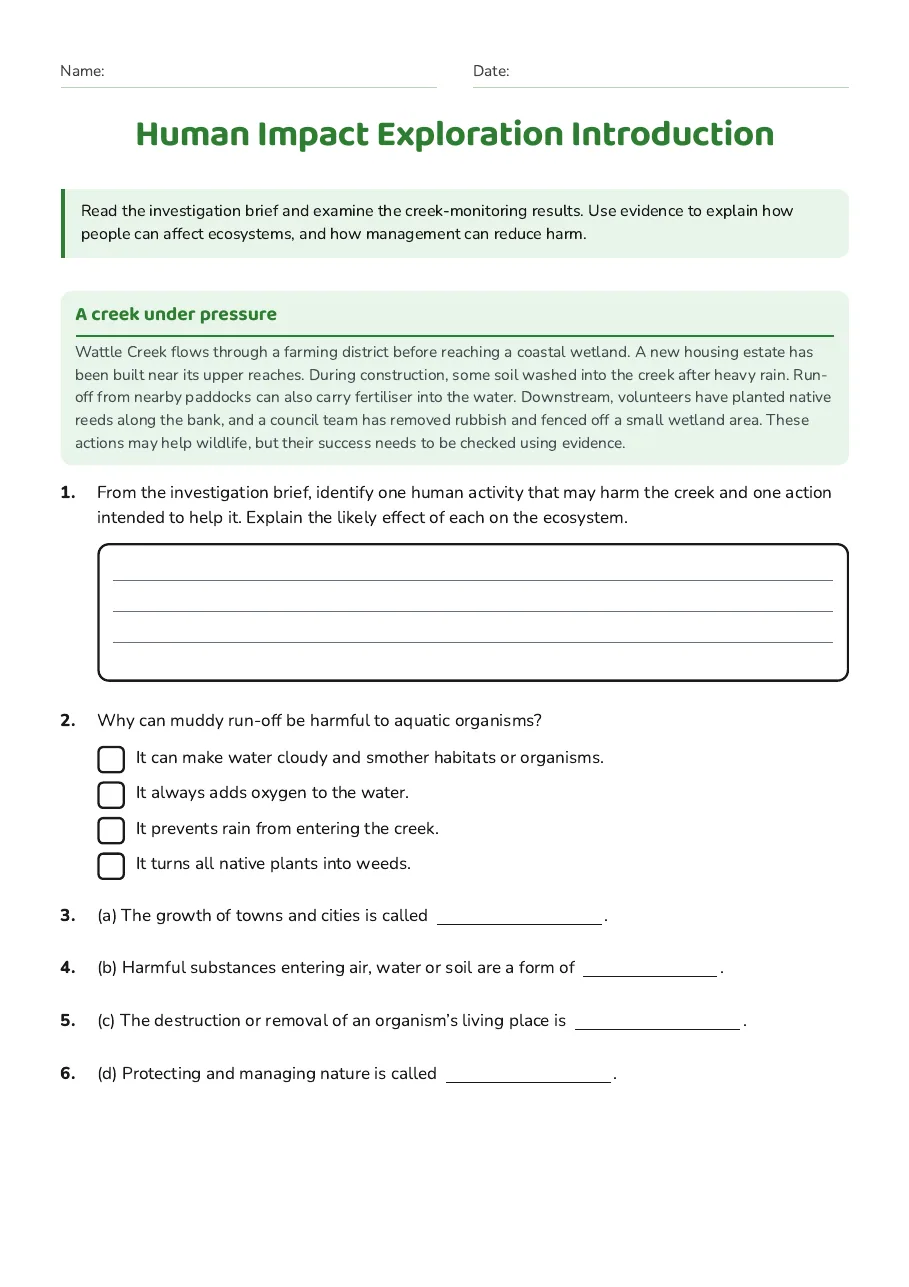
Human Impact Exploration Introduction
A free science worksheet ready for your classroom. Open in Kuraplan to grab the print-ready PDF, customize it for your students, or generate a fresh version in seconds.
Human Impact Exploration Introduction
A creek under pressure
Wattle Creek flows through a farming district before reaching a coastal wetland. A new housing estate has been built near its upper reaches. During construction, some soil washed into the creek after heavy rain. Run-off from nearby paddocks can also carry fertiliser into the water. Downstream, volunteers have planted native reeds along the bank, and a council team has removed rubbish and fenced off a small wetland area. These actions may help wildlife, but their success needs to be checked using evidence.
- It can make water cloudy and smother habitats or organisms.
- It always adds oxygen to the water.
- It prevents rain from entering the creek.
- It turns all native plants into weeds.
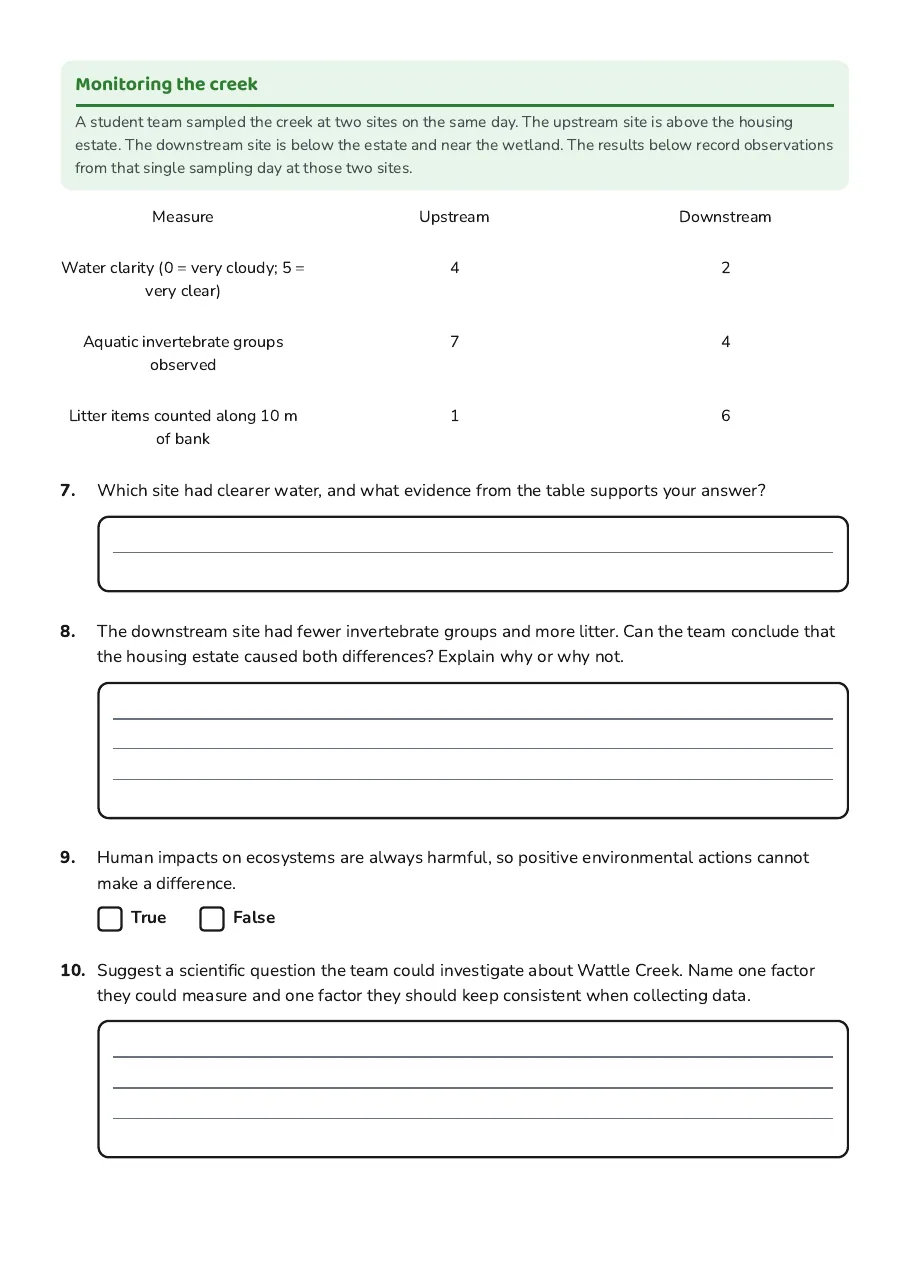
Monitoring the creek
A student team sampled the creek at two sites on the same day. The upstream site is above the housing estate. The downstream site is below the estate and near the wetland. The results below record observations from that single sampling day at those two sites.
Measure
Upstream
Downstream
Water clarity (0 = very cloudy; 5 = very clear)
4
2
Aquatic invertebrate groups observed
7
4
Litter items counted along 10 m of bank
1
6
3 printable pages
Page 1
Page 2
Page 3
About This Worksheet
Free in Kuraplan
Sign up free, grab the PDF, and customize it for your class.
Print-Ready
Formatted for standard paper. Clean layout, easy to read.
AI-Generated
Created with Kuraplan's AI, designed for real classroom use.
For Teachers & Parents
Use in classrooms, for homework, tutoring, or homeschool.
Need a custom version of this worksheet?
Kuraplan's AI generates custom worksheets in seconds — differentiated for every learner, aligned to your curriculum.
Generate Custom Worksheets — Free