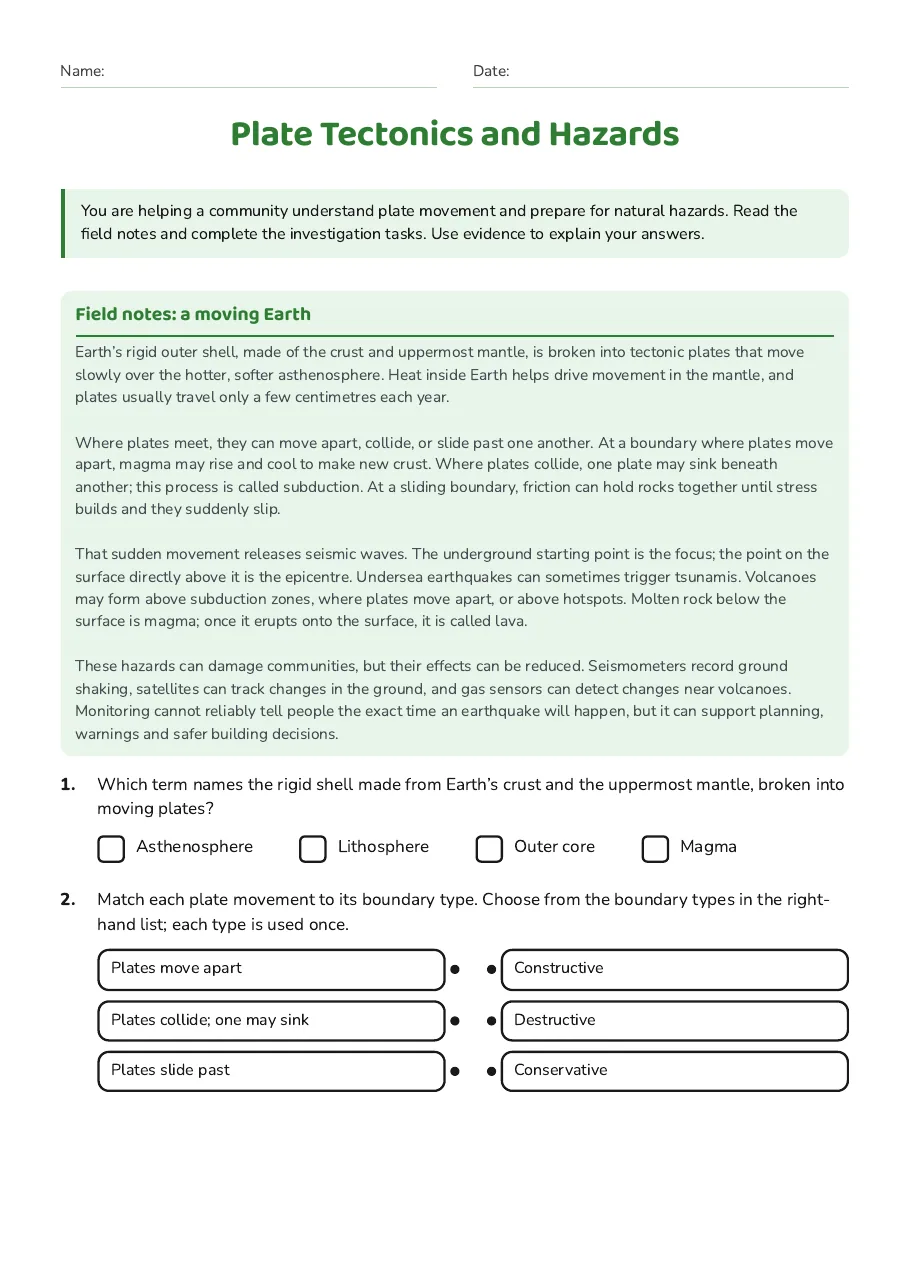
Plate Tectonics and Hazards
A free science worksheet ready for your classroom. Open in Kuraplan to grab the print-ready PDF, customize it for your students, or generate a fresh version in seconds.
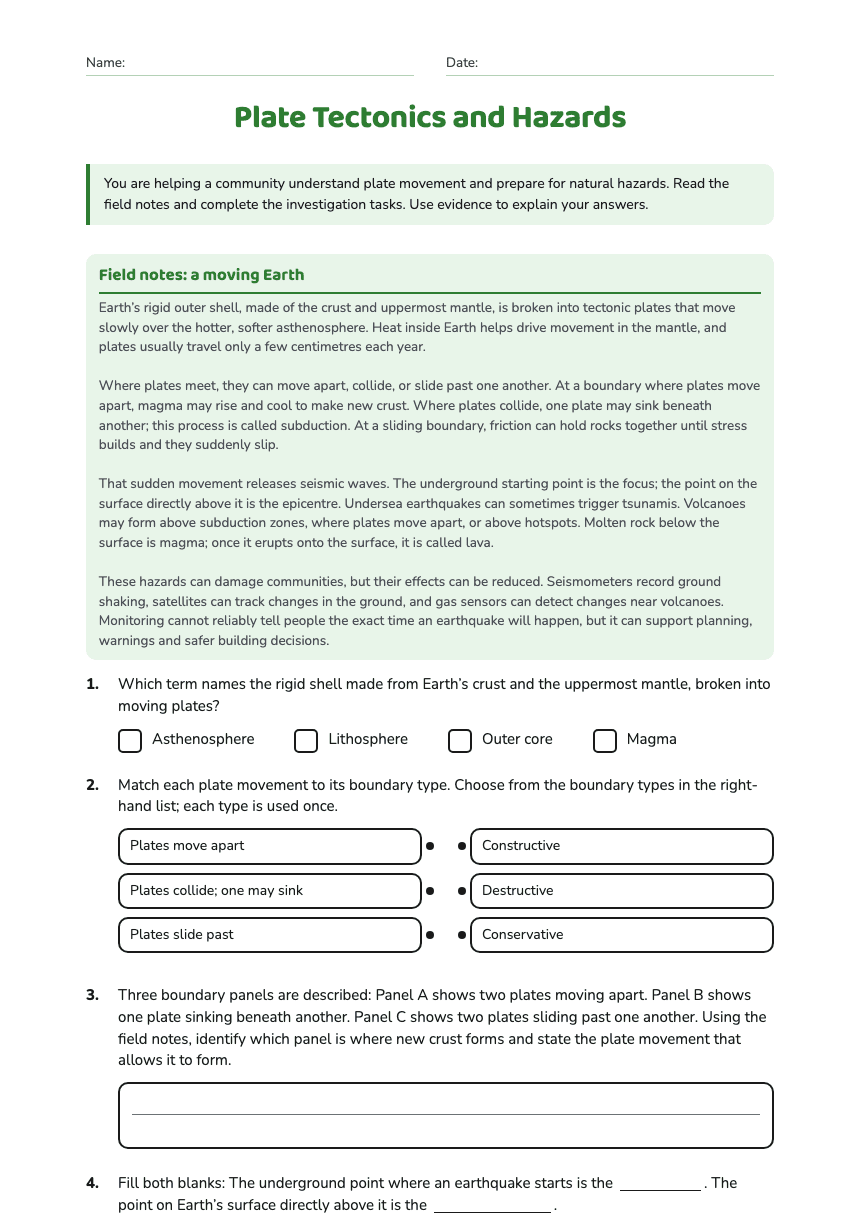
Plate Tectonics and Hazards
Field notes: a moving Earth
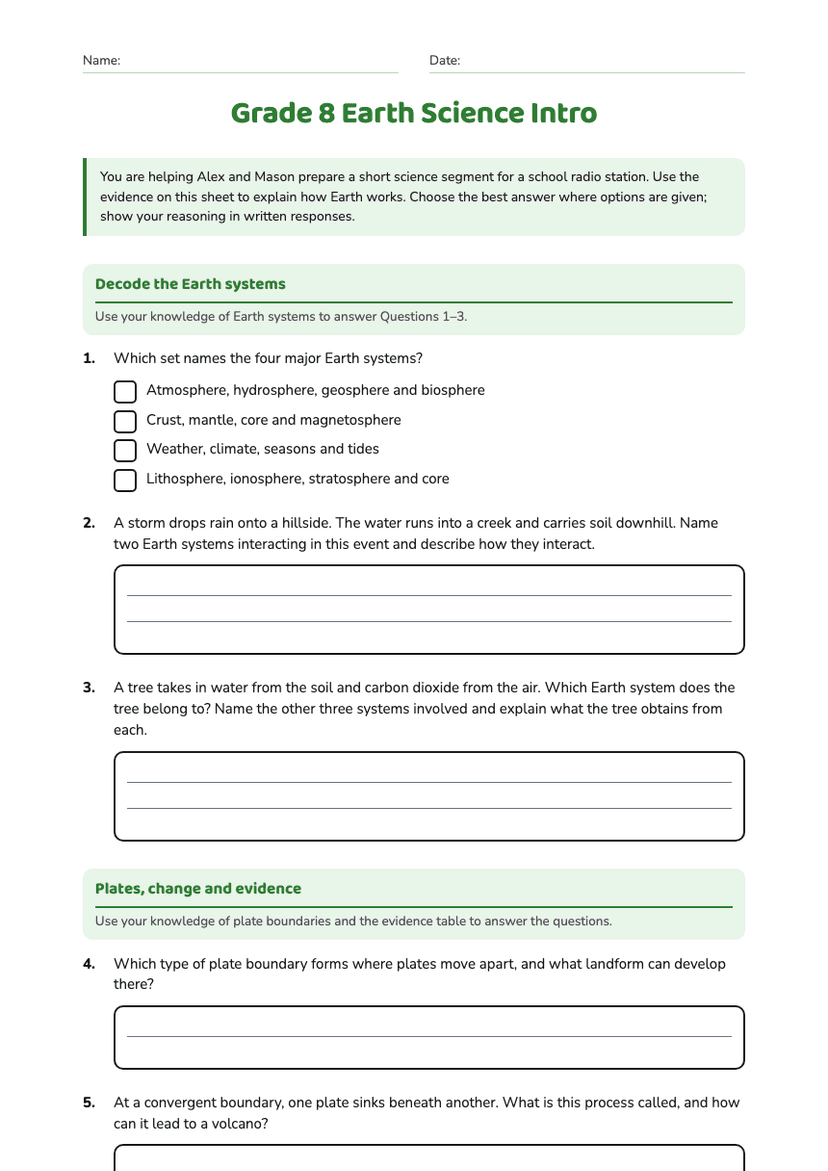
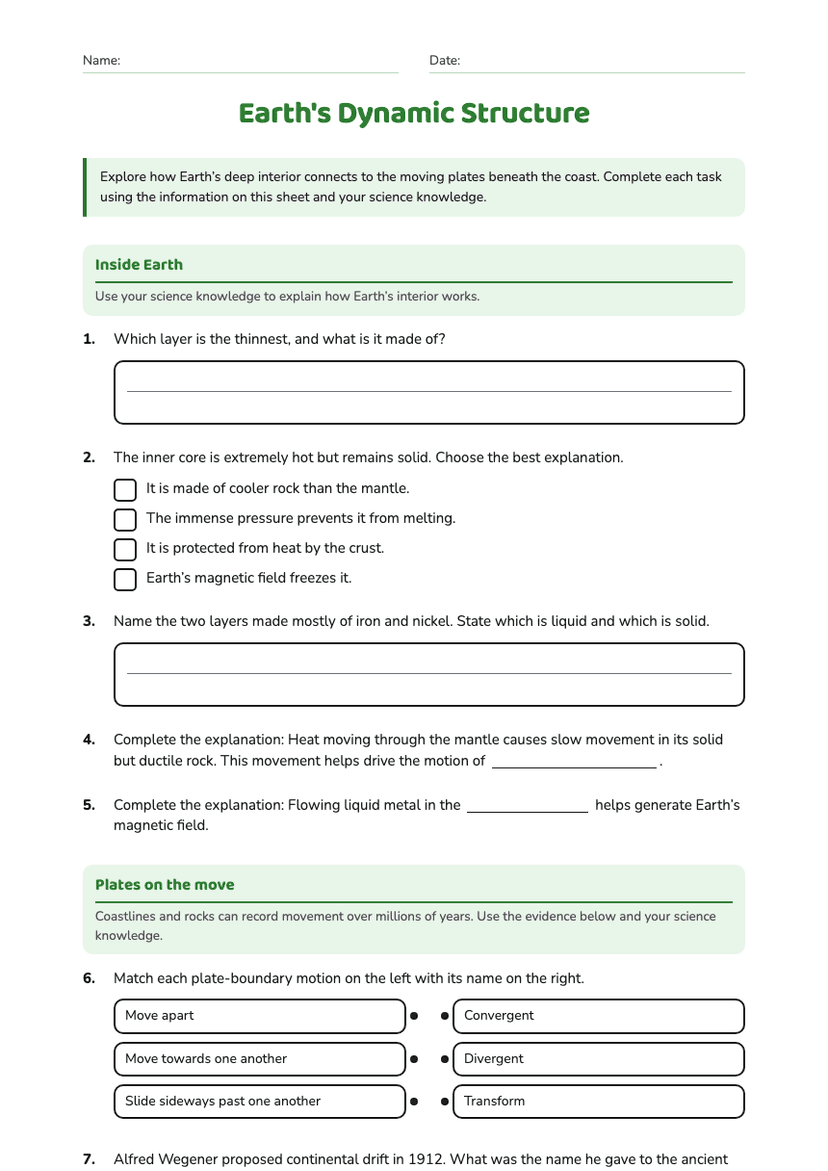
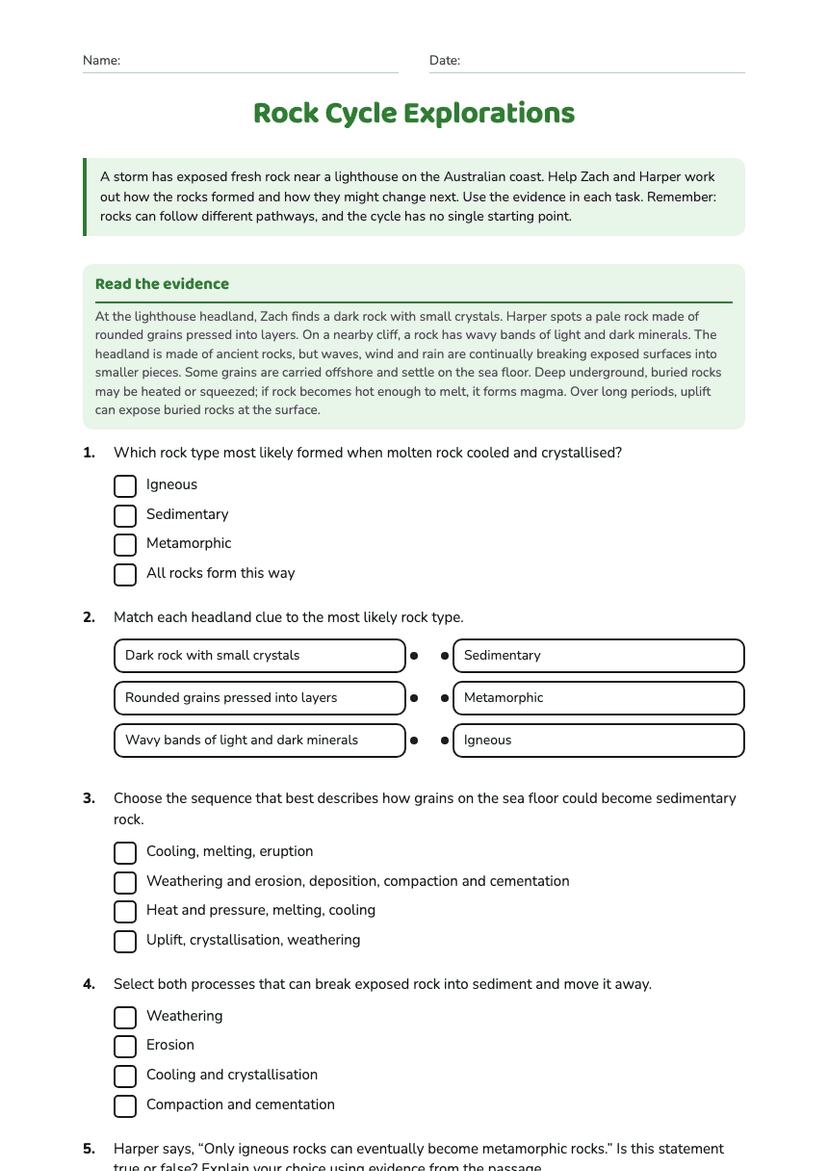
Earth’s rigid outer shell, made of the crust and uppermost mantle, is broken into tectonic plates that move slowly over the hotter, softer asthenosphere. Heat inside Earth helps drive movement in the mantle, and plates usually travel only a few centimetres each year. Where plates meet, they can move apart, collide, or slide past one another. At a boundary where plates move apart, magma may rise and cool to make new crust. Where plates collide, one plate may sink beneath another; this process is called subduction. At a sliding boundary, friction can hold rocks together until stress builds and they suddenly slip. That sudden movement releases seismic waves. The underground starting point is the focus; the point on the surface directly above it is the epicentre. Undersea earthquakes can sometimes trigger tsunamis. Volcanoes may form above subduction zones, where plates move apart, or above hotspots. Molten rock below the surface is magma; once it erupts onto the surface, it is called lava. These hazards can damage communities, but their effects can be reduced. Seismometers record ground shaking, satellites can track changes in the ground, and gas sensors can detect changes near volcanoes. Monitoring cannot reliably tell people the exact time an earthquake will happen, but it can support planning, warnings and safer building decisions.
- Asthenosphere
- Lithosphere
- Outer core
- Magma
- Plates move apart
- Plates collide; one may sink
- Plates slide past
- Constructive
- Destructive
- Conservative
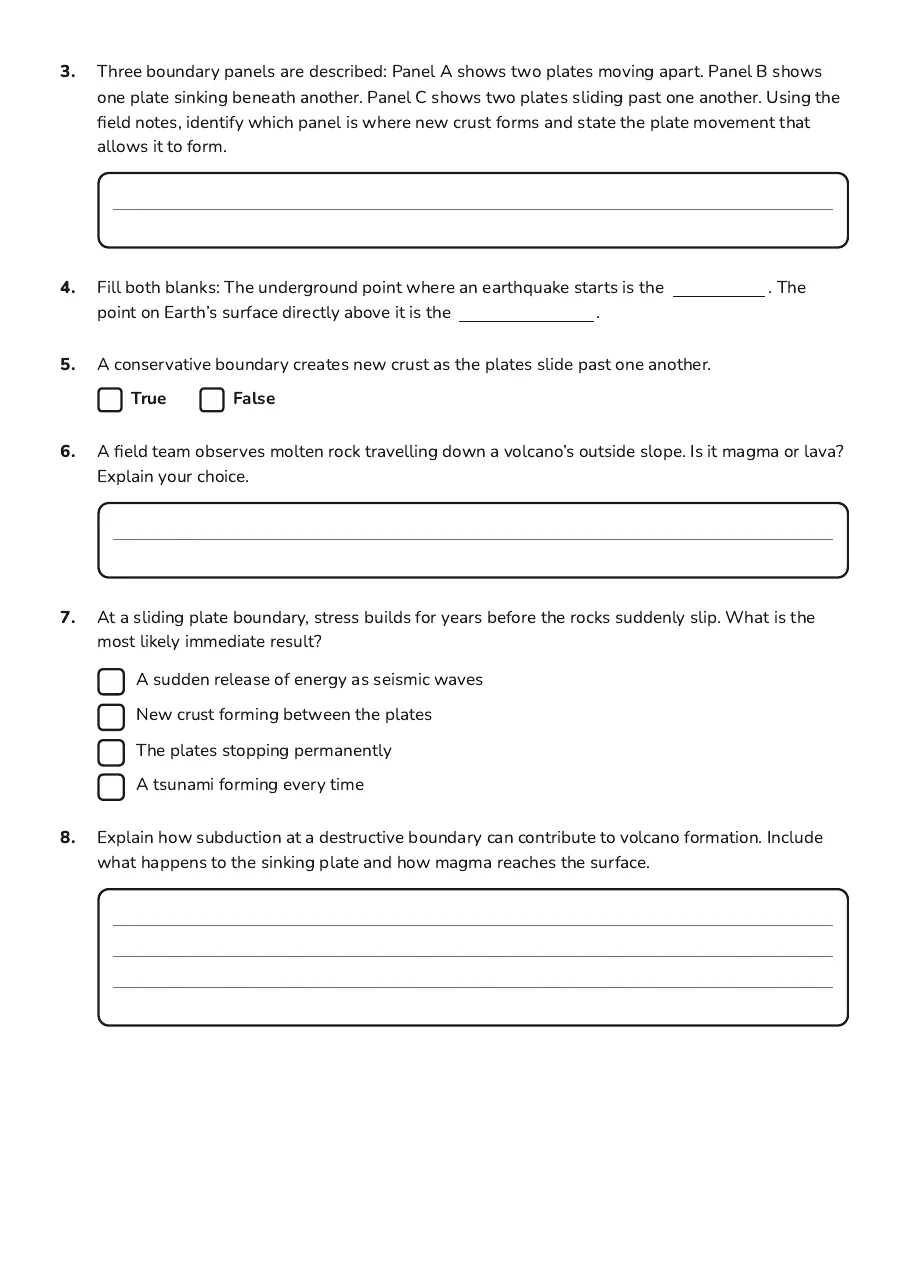
- A sudden release of energy as seismic waves
- New crust forming between the plates
- The plates stopping permanently
- A tsunami forming every time
3 printable pages
Page 1
Page 2
Page 3
About This Worksheet
Free in Kuraplan
Sign up free, grab the PDF, and customize it for your class.
Print-Ready
Formatted for standard paper. Clean layout, easy to read.
AI-Generated
Created with Kuraplan's AI, designed for real classroom use.
For Teachers & Parents
Use in classrooms, for homework, tutoring, or homeschool.
Need a custom version of this worksheet?
Kuraplan's AI generates custom worksheets in seconds — differentiated for every learner, aligned to your curriculum.
Generate Custom Worksheets — Free