Exploring Ecosystems Worksheet
A free science worksheet ready for your classroom. Open in Kuraplan to grab the print-ready PDF, customize it for your students, or generate a fresh version in seconds.
Exploring Ecosystems Worksheet
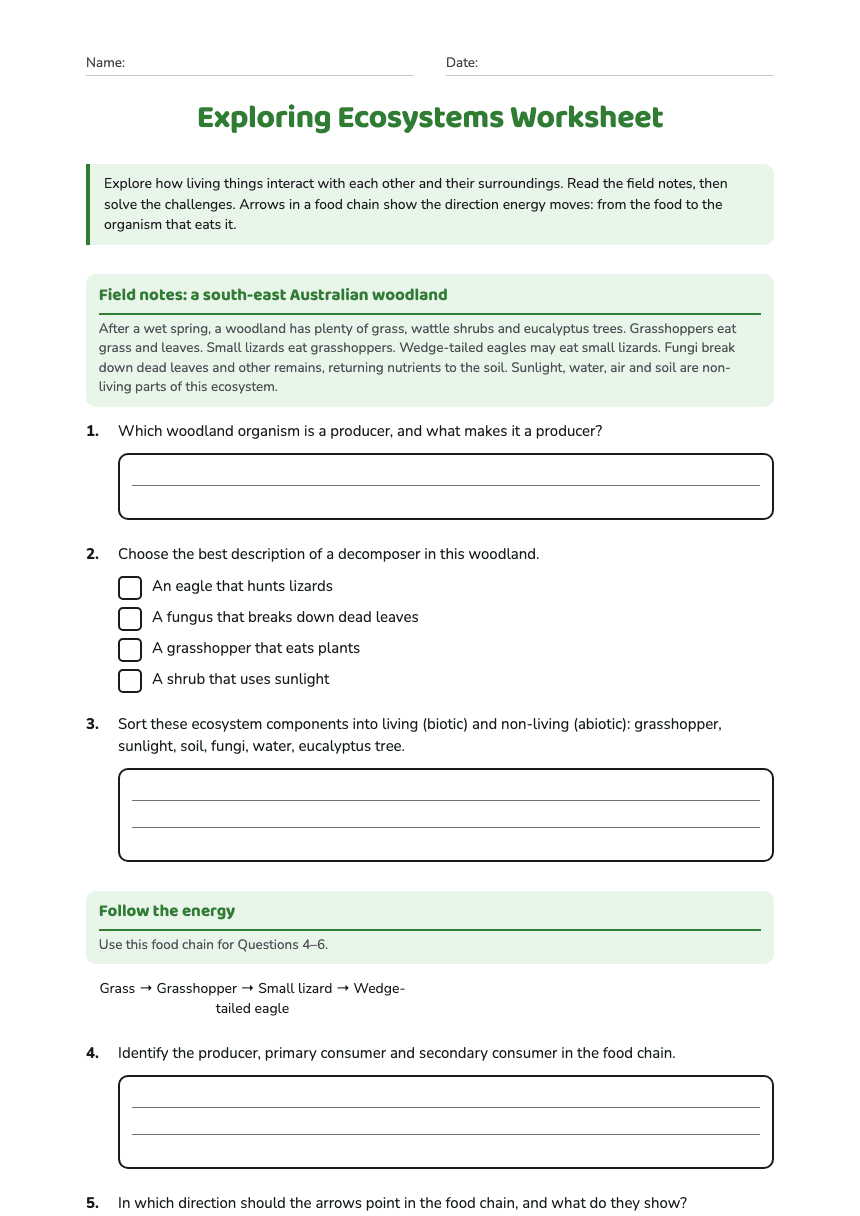
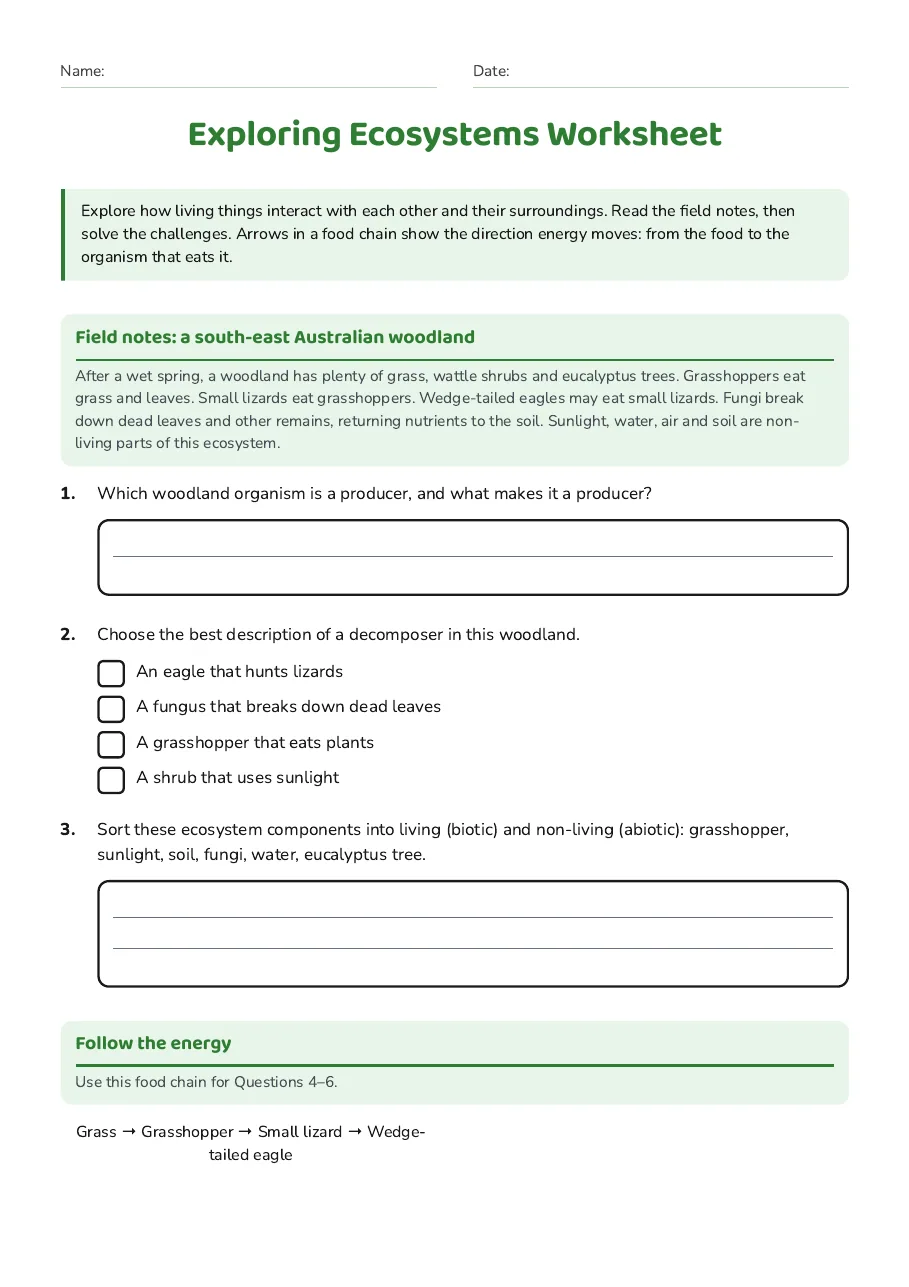
Field notes: a south-east Australian woodland
After a wet spring, a woodland has plenty of grass, wattle shrubs and eucalyptus trees. Grasshoppers eat grass and leaves. Small lizards eat grasshoppers. Wedge-tailed eagles may eat small lizards. Fungi break down dead leaves and other remains, returning nutrients to the soil. Sunlight, water, air and soil are non-living parts of this ecosystem.
- An eagle that hunts lizards
- A fungus that breaks down dead leaves
- A grasshopper that eats plants
- A shrub that uses sunlight
Follow the energy
Use this food chain for Questions 4–6.
Grass → Grasshopper → Small lizard → Wedge-tailed eagle
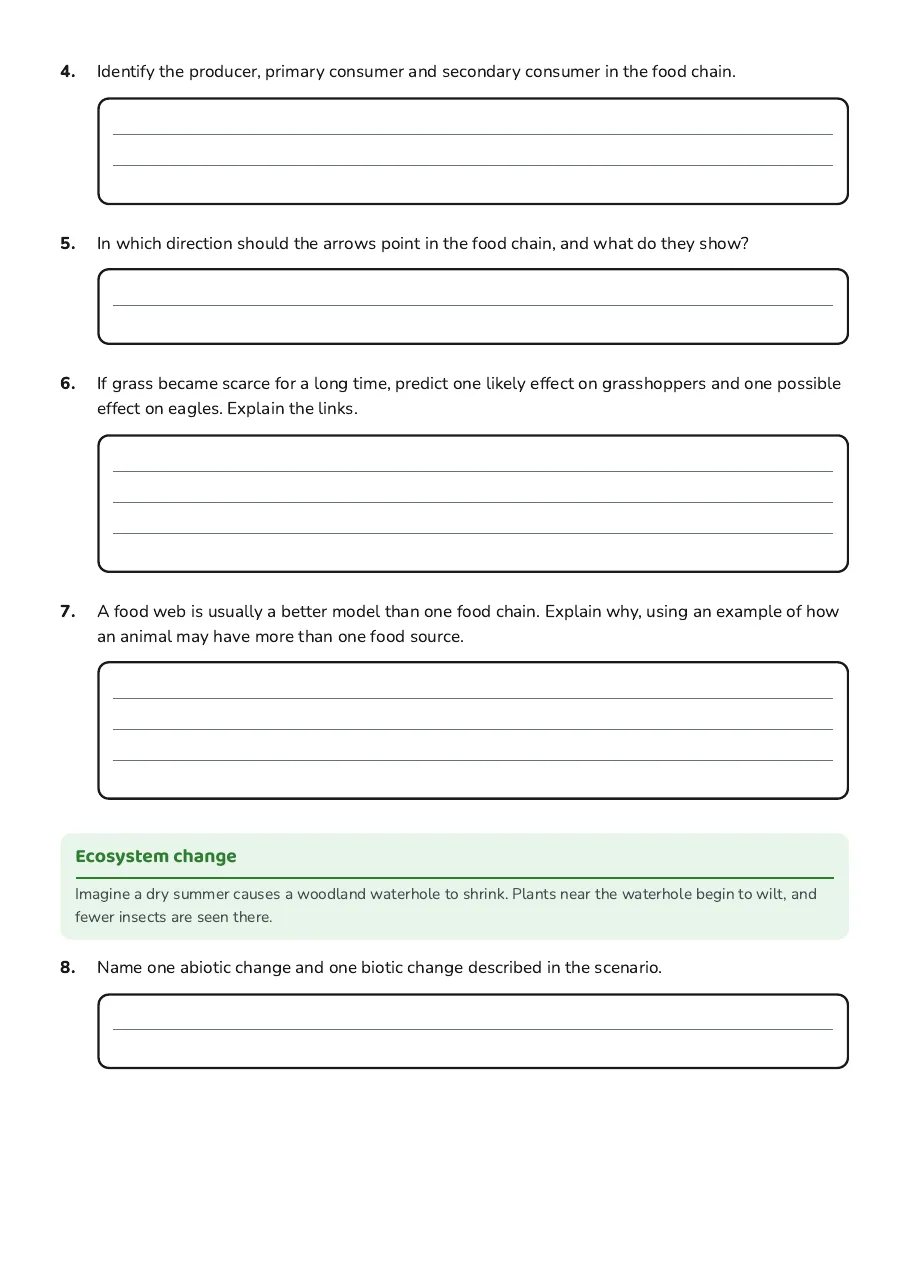
Ecosystem change
Imagine a dry summer causes a woodland waterhole to shrink. Plants near the waterhole begin to wilt, and fewer insects are seen there.
3 printable pages
Page 1
Page 2

Page 3
About This Worksheet
Free in Kuraplan
Sign up free, grab the PDF, and customize it for your class.
Print-Ready
Formatted for standard paper. Clean layout, easy to read.
AI-Generated
Created with Kuraplan's AI, designed for real classroom use.
For Teachers & Parents
Use in classrooms, for homework, tutoring, or homeschool.
Need a custom version of this worksheet?
Kuraplan's AI generates custom worksheets in seconds — differentiated for every learner, aligned to your curriculum.
Generate Custom Worksheets — FreeMore Science Worksheets
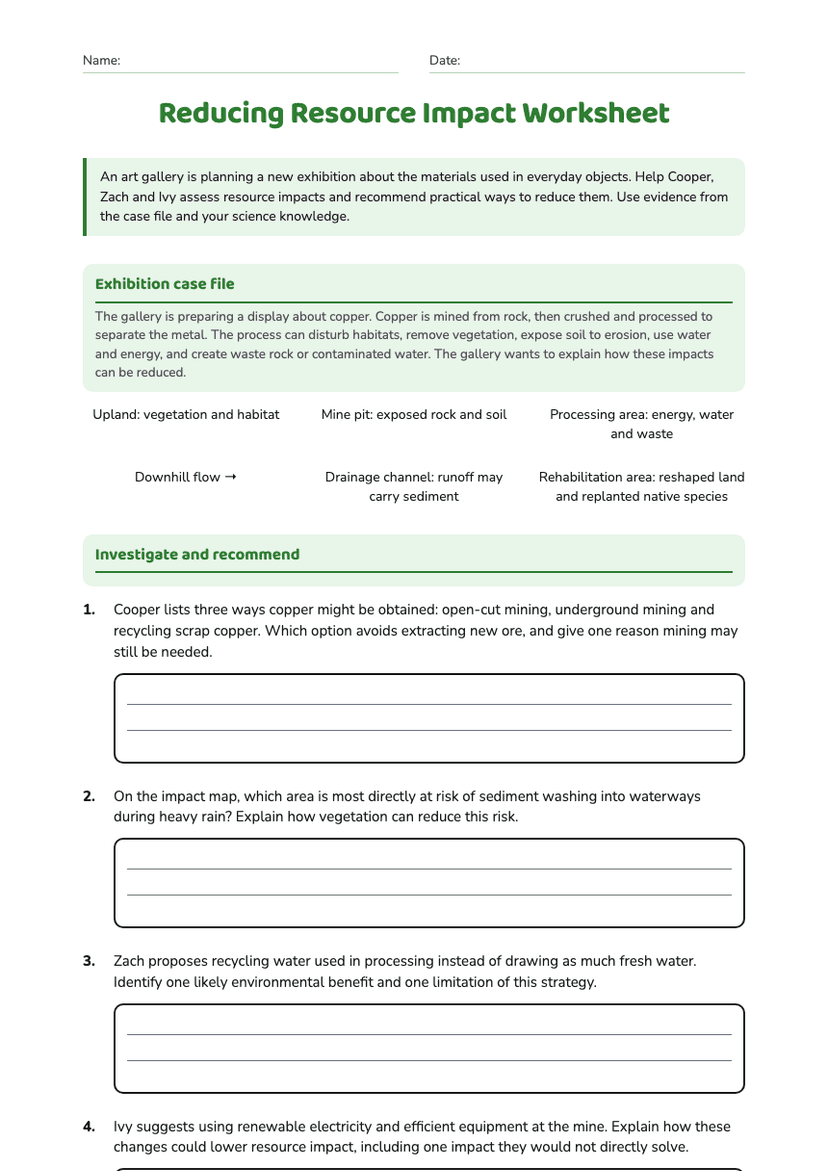
Reducing Resource Impact Worksheet
Free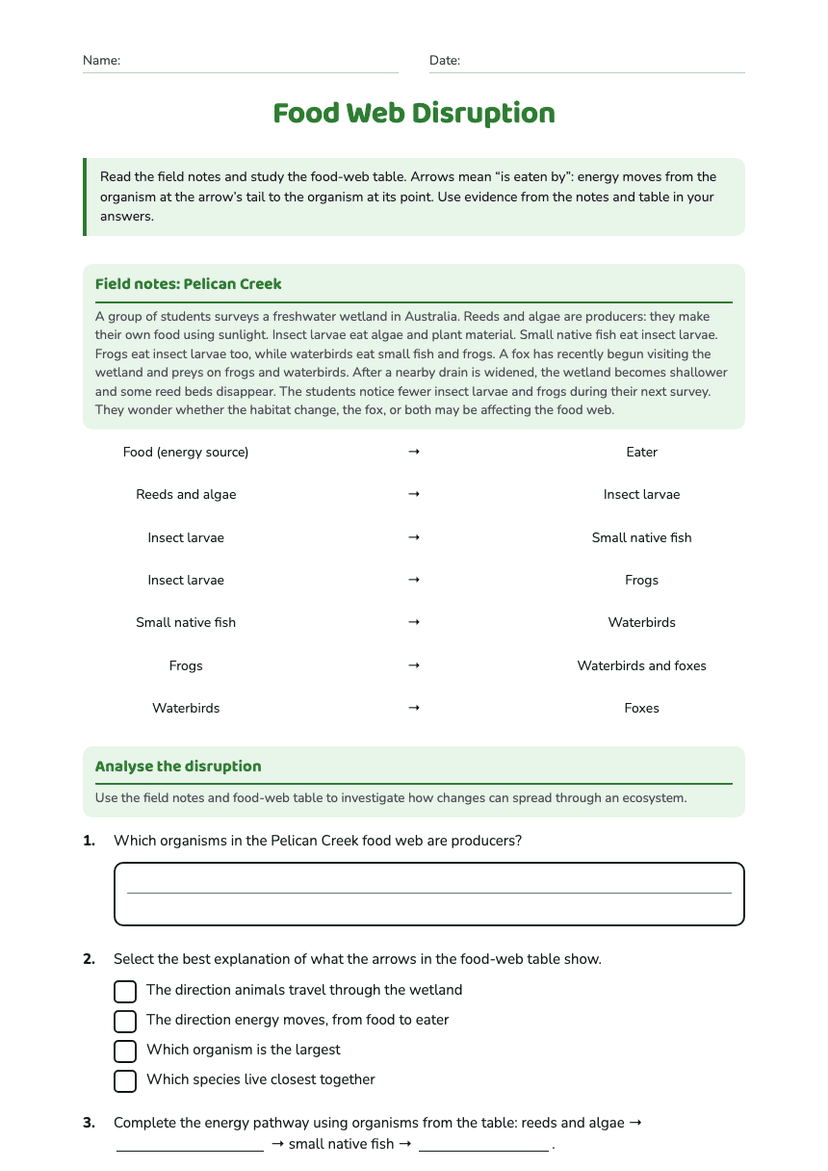
Food Web Disruption
Free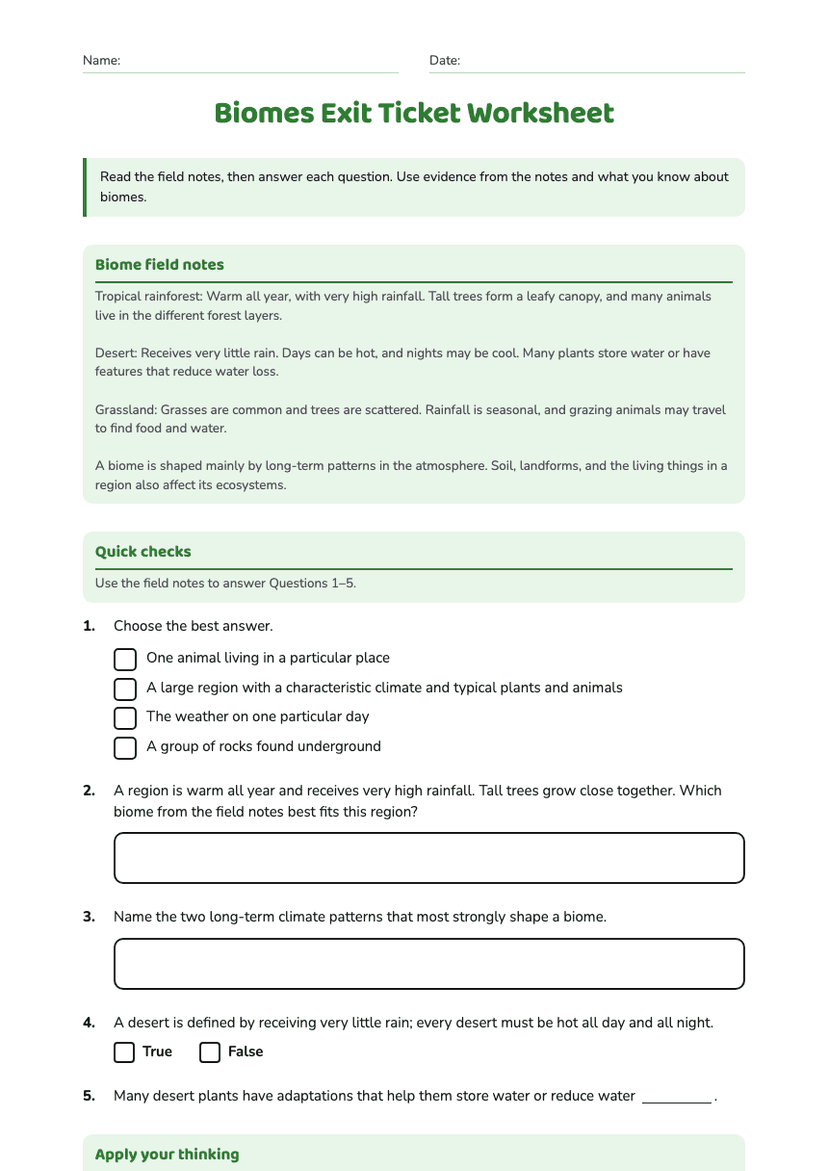
Biomes Exit Ticket Worksheet
Free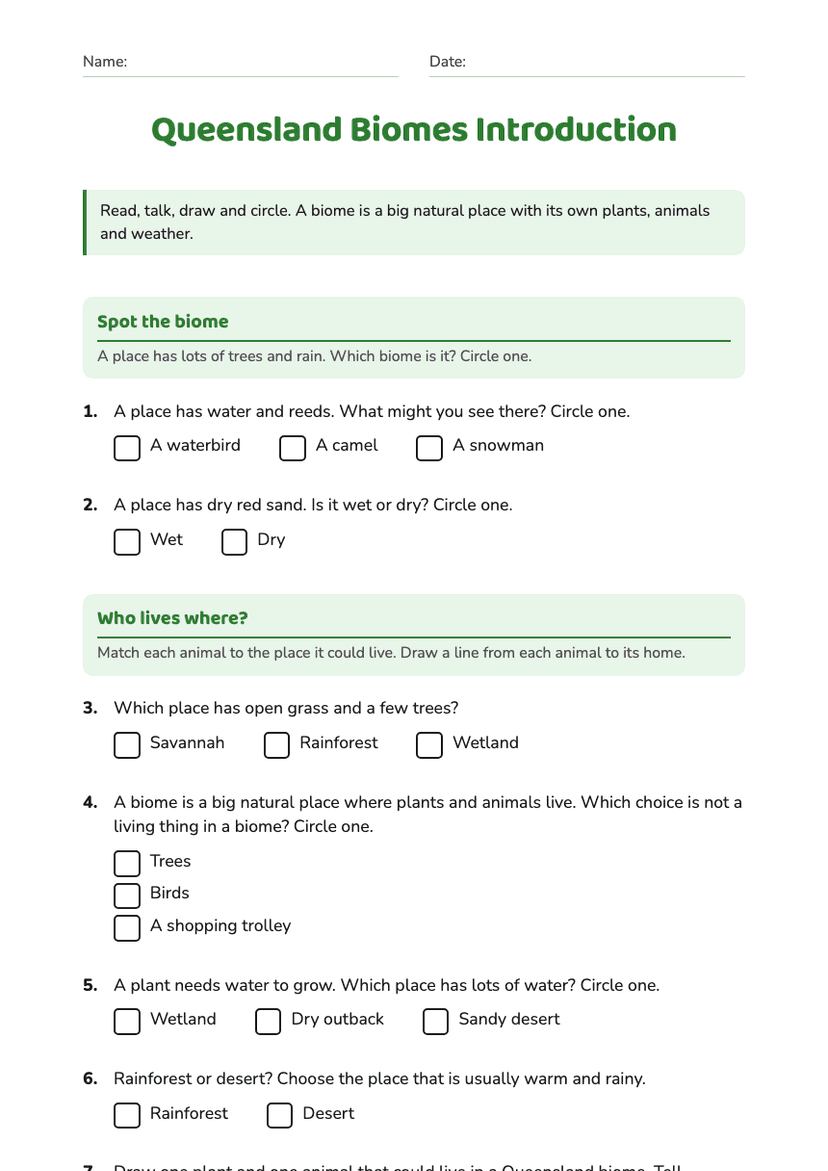
Queensland Biomes Introduction
Free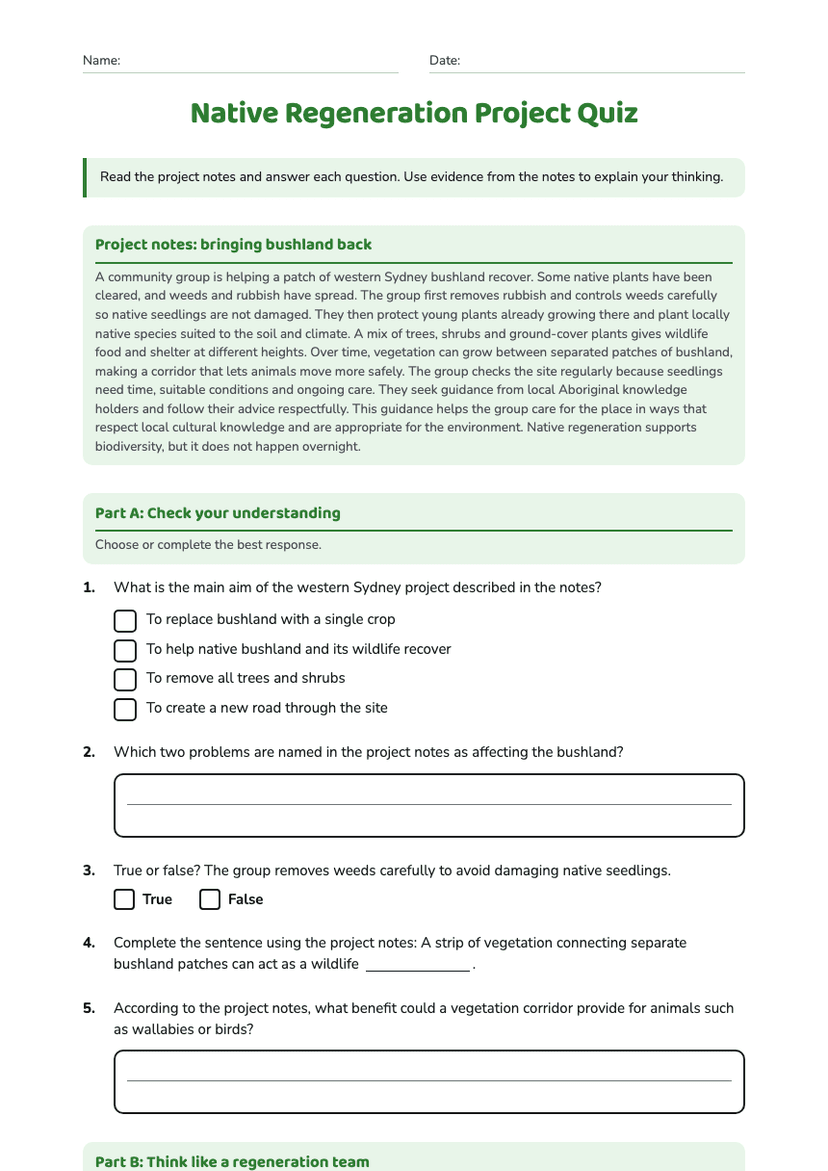
Native Regeneration Project Quiz
Free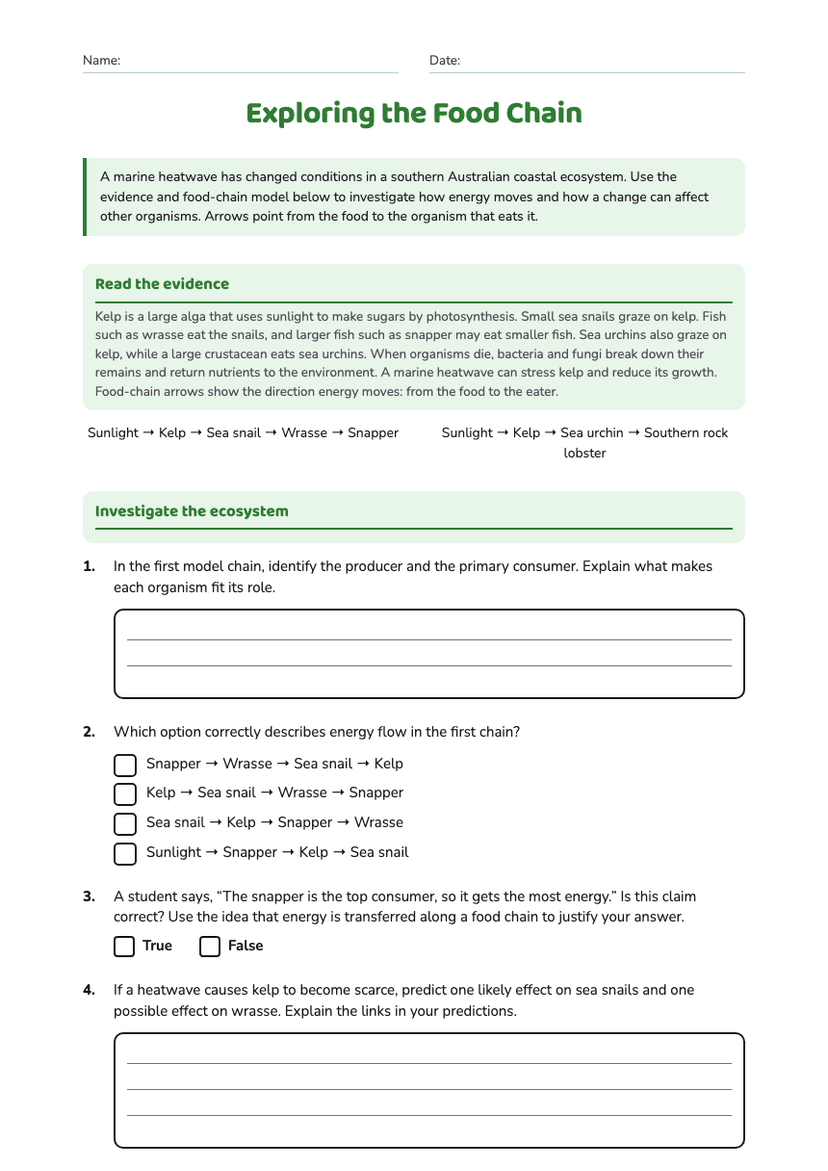
Exploring the Food Chain
Free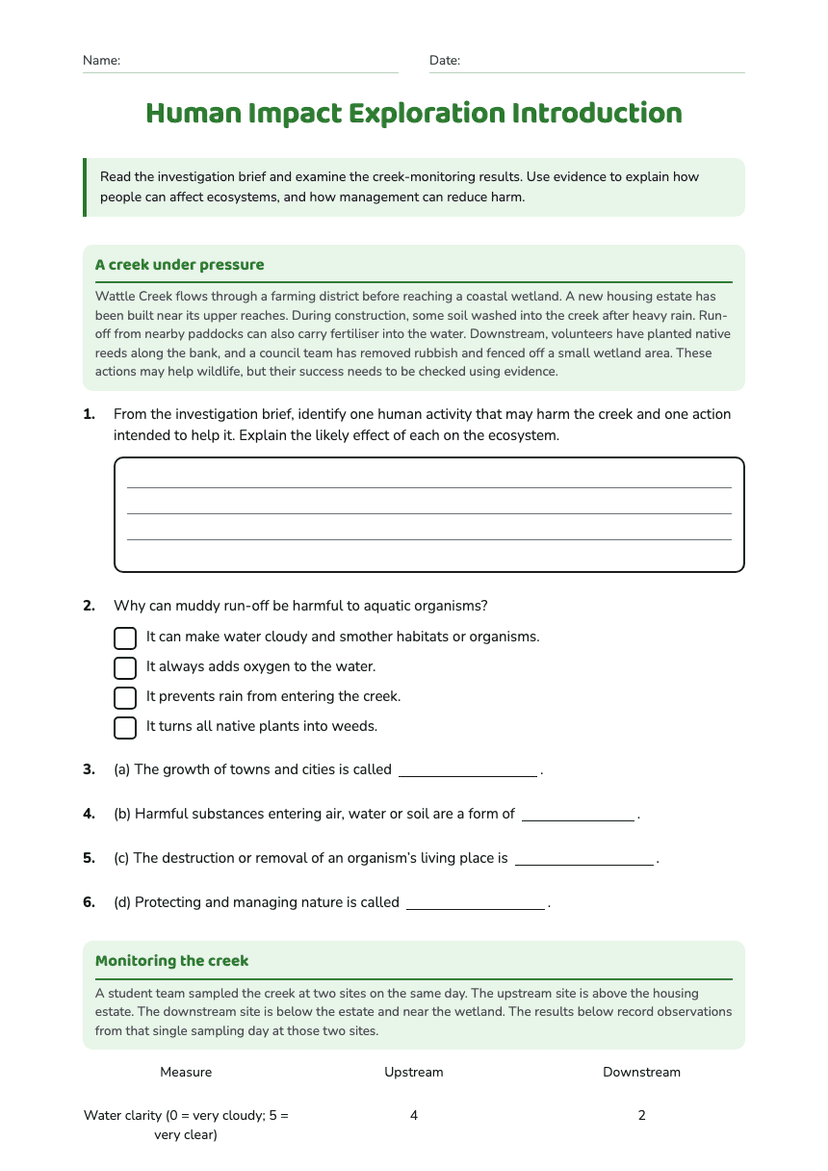
Human Impact Exploration Introduction
Free