Show, Don't Tell
A free english worksheet ready for your classroom. Open in Kuraplan to grab the print-ready PDF, customize it for your students, or generate a fresh version in seconds.

Show, Don't Tell
Spot the clues
At the weekend market, Talia clutched his paper bag. A warm, buttery smell curled into the air. He took one bite of the still-hot pie, closed his eyes and grinned. Which details help the reader work out how Talia feels about the pie?
- Isla was nervous about the speech.
- Isla rubbed her damp palms on her skirt and peered at the audience.
- Isla's first word came out in a squeak.
- Arun was furious.
- Arun felt very cross.
- Arun's jaw tightened. He shoved the chair back with a scrape.
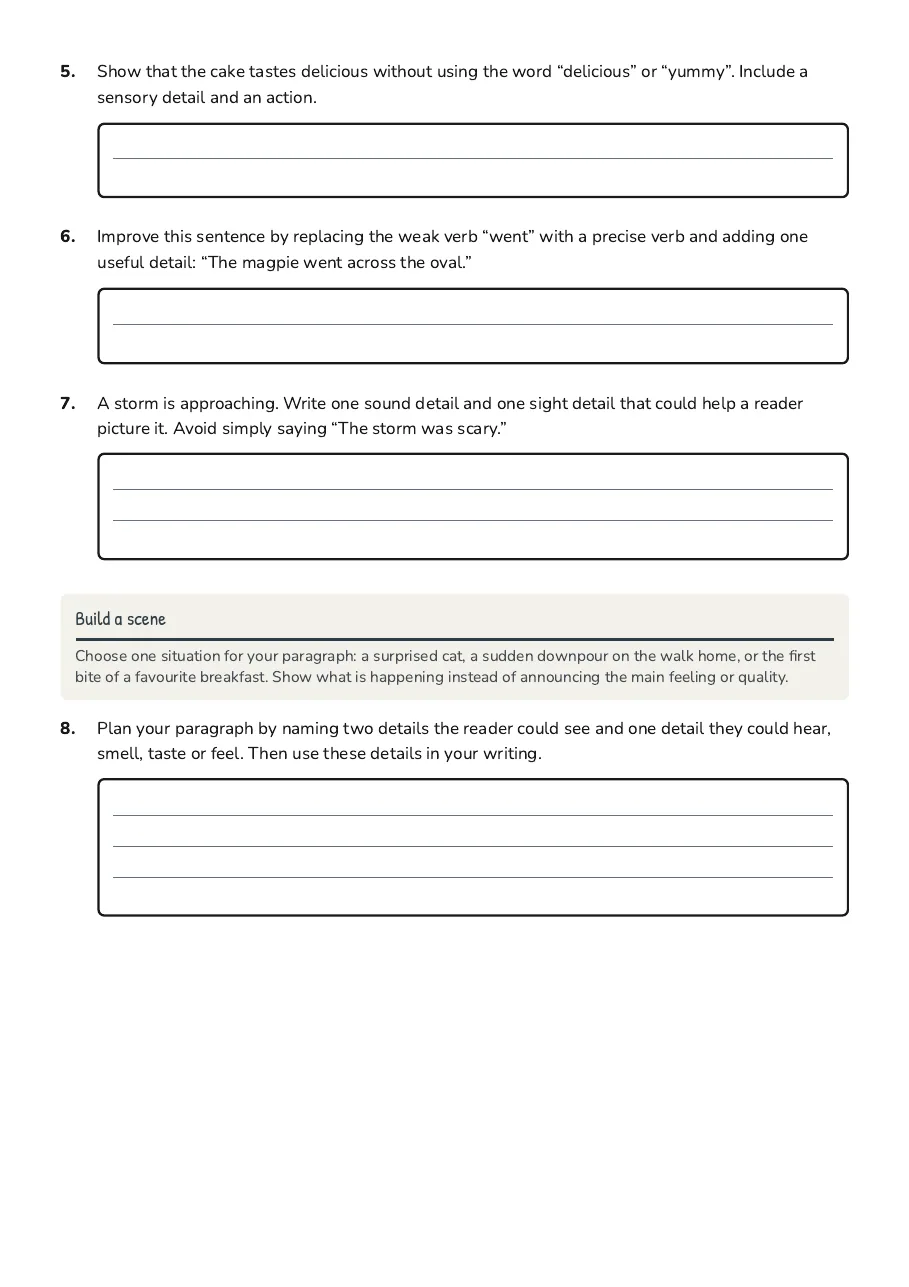
Upgrade the sentences
Rewrite each telling sentence so that a reader can infer the idea. You might use an action, a sound, dialogue or a sensory detail. There is more than one good answer.
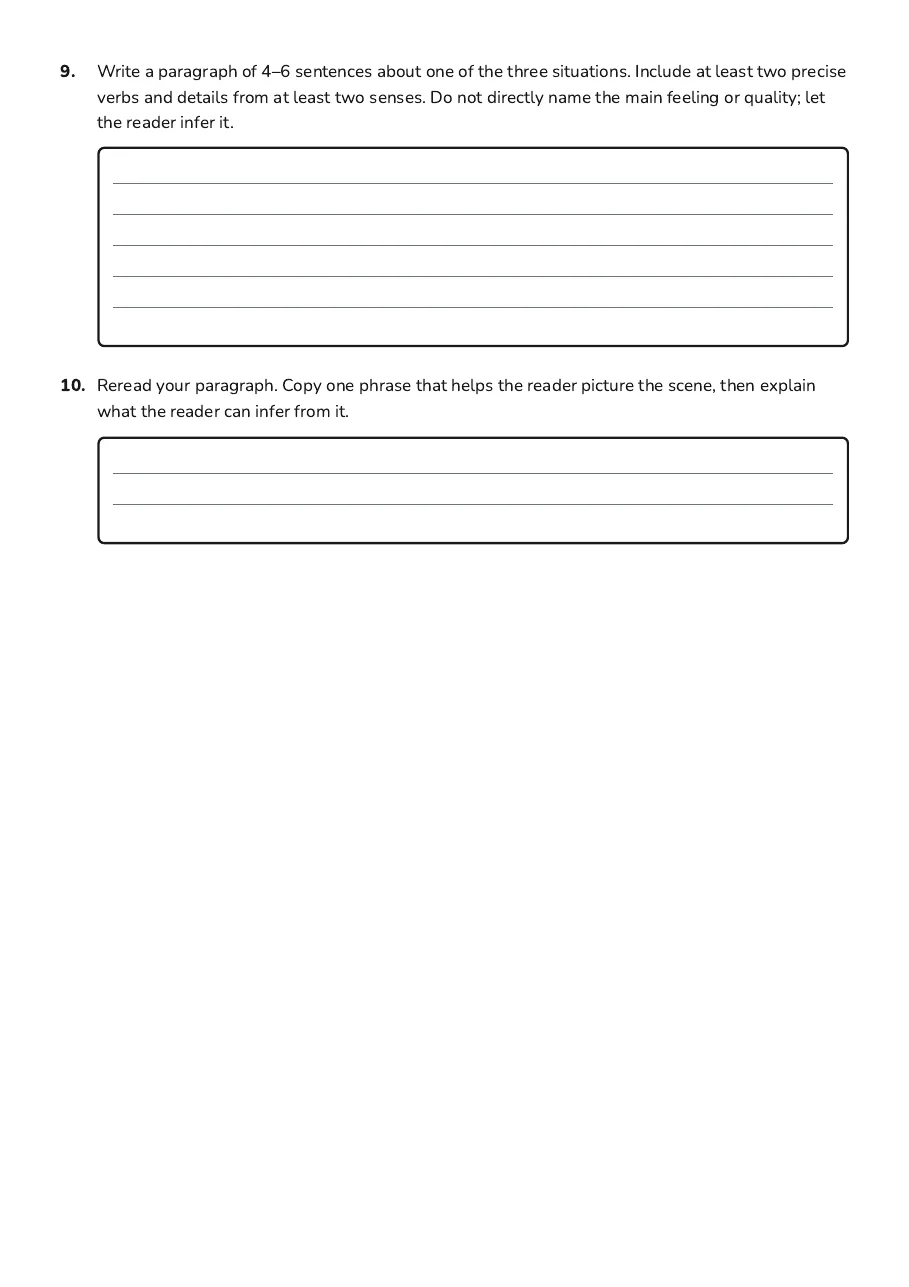
Build a scene
Choose one situation for your paragraph: a surprised cat, a sudden downpour on the walk home, or the first bite of a favourite breakfast. Show what is happening instead of announcing the main feeling or quality.
3 printable pages
Page 1
Page 2
Page 3
About This Worksheet
Free in Kuraplan
Sign up free, grab the PDF, and customize it for your class.
Print-Ready
Formatted for standard paper. Clean layout, easy to read.
AI-Generated
Created with Kuraplan's AI, designed for real classroom use.
For Teachers & Parents
Use in classrooms, for homework, tutoring, or homeschool.
Need a custom version of this worksheet?
Kuraplan's AI generates custom worksheets in seconds — differentiated for every learner, aligned to your curriculum.
Generate Custom Worksheets — FreeMore English Worksheets
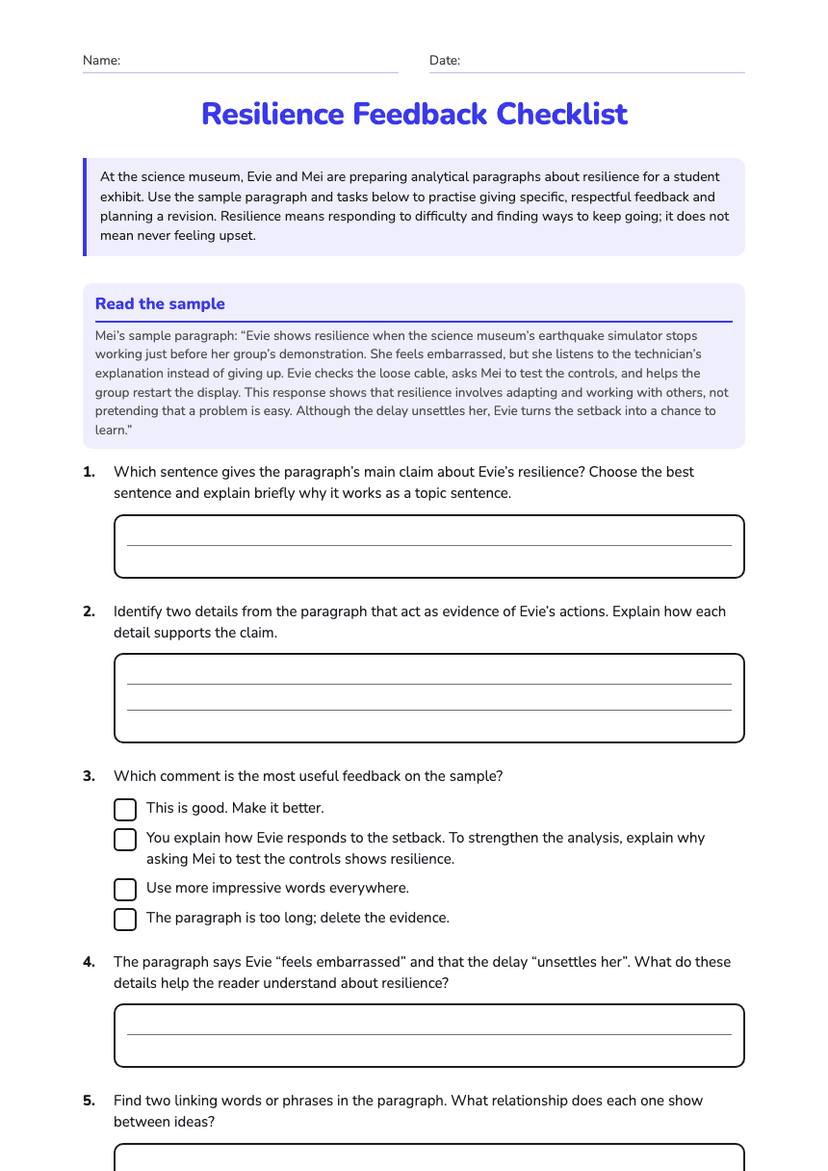
Resilience Feedback Checklist
Free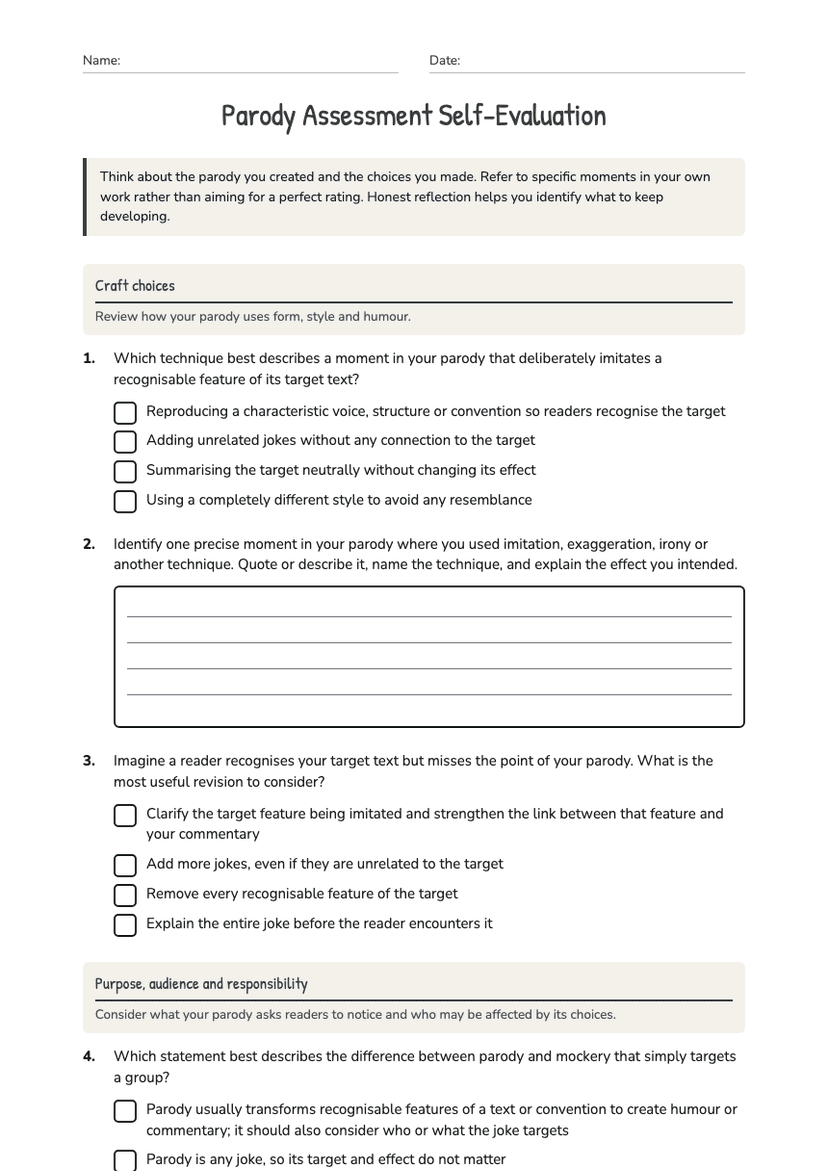
Parody Assessment Self-Evaluation
Free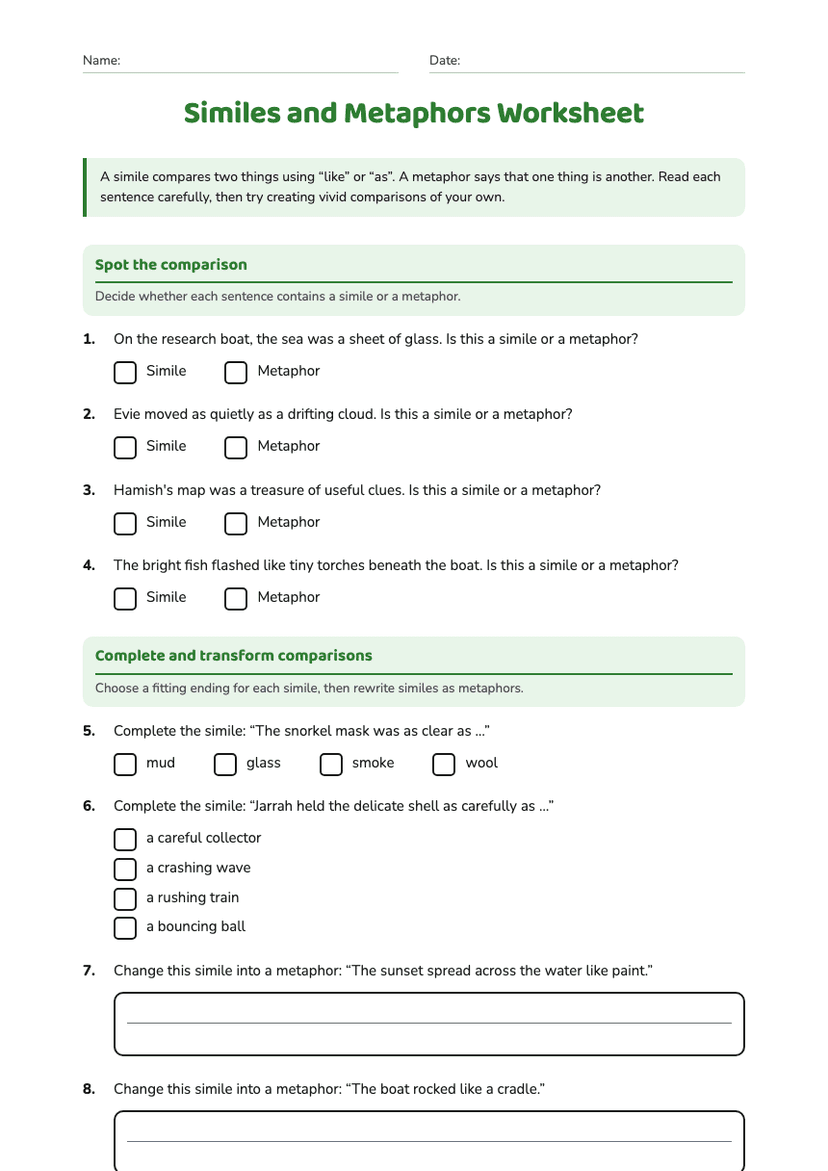
Similes and Metaphors Worksheet
Free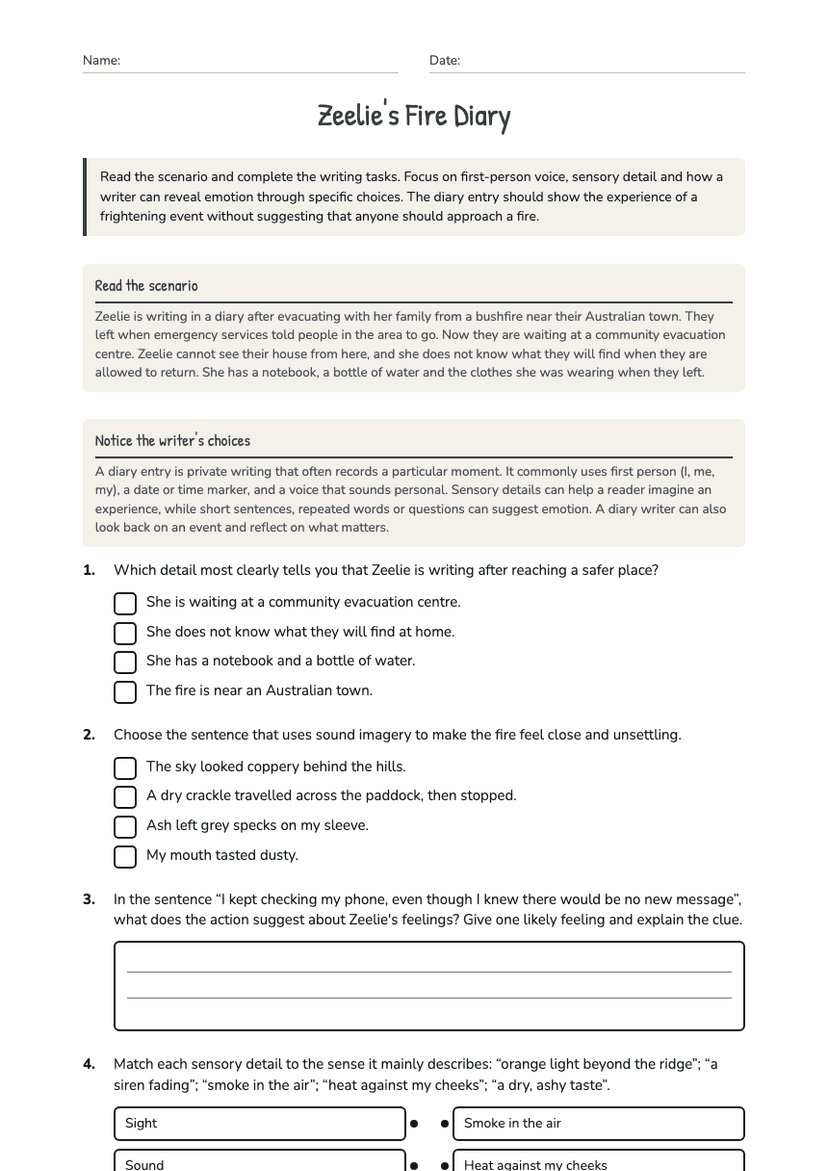
Zeelie's Fire Diary
Free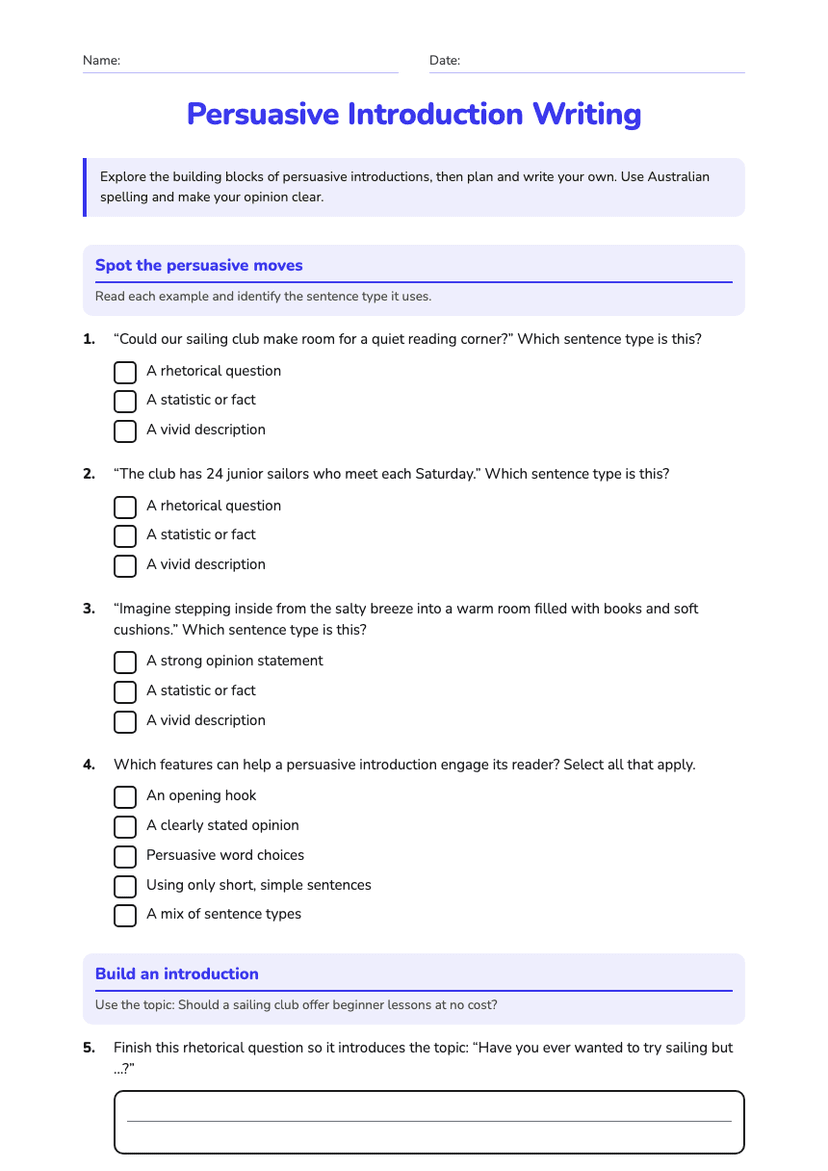
Persuasive Introduction Writing
Free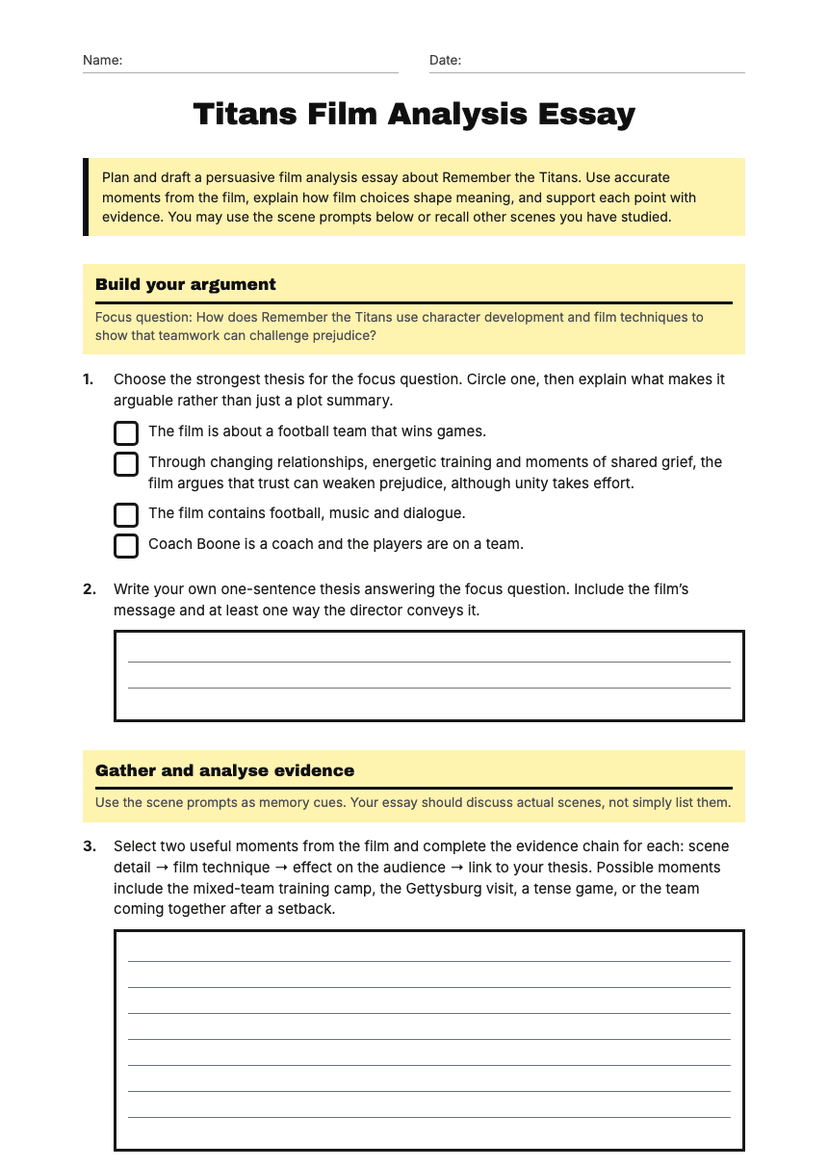
Titans Film Analysis Essay
Free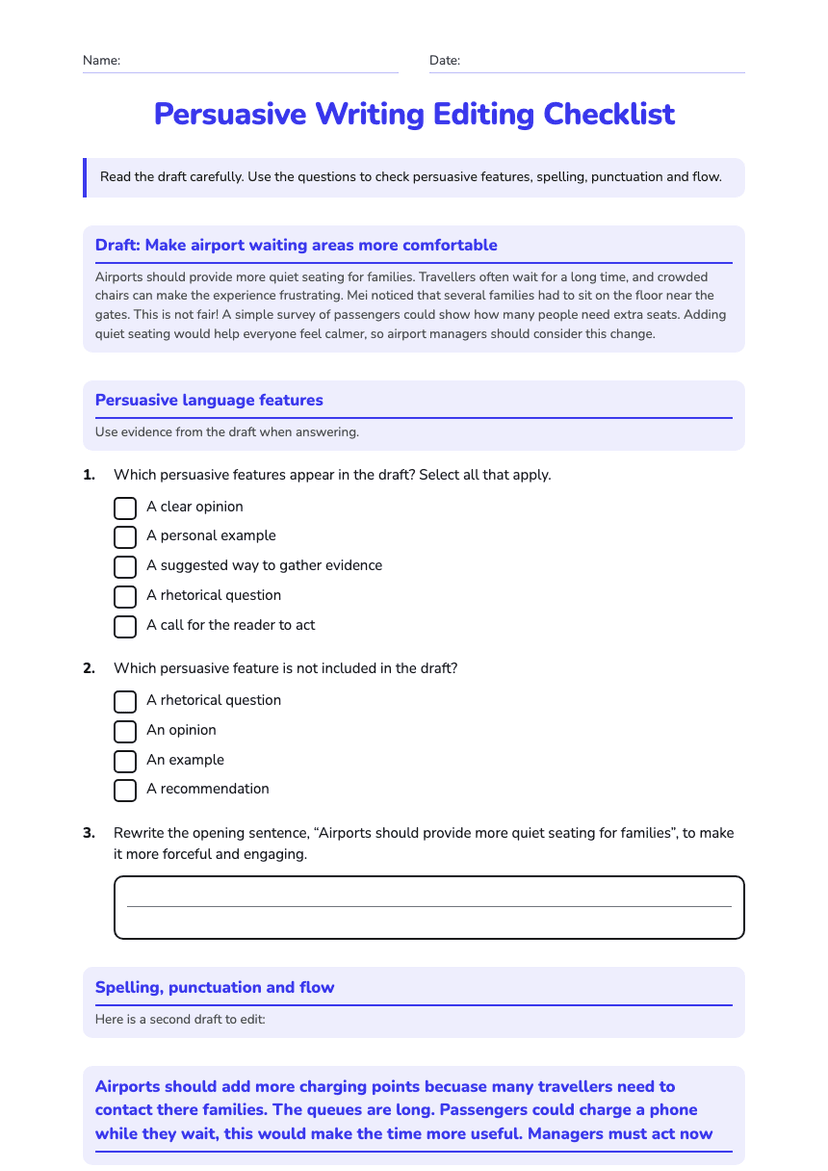
Persuasive Writing Editing Checklist
Free