Speaking for Animals
A free english worksheet ready for your classroom. Open in Kuraplan to grab the print-ready PDF, customize it for your students, or generate a fresh version in seconds.
Speaking for Animals
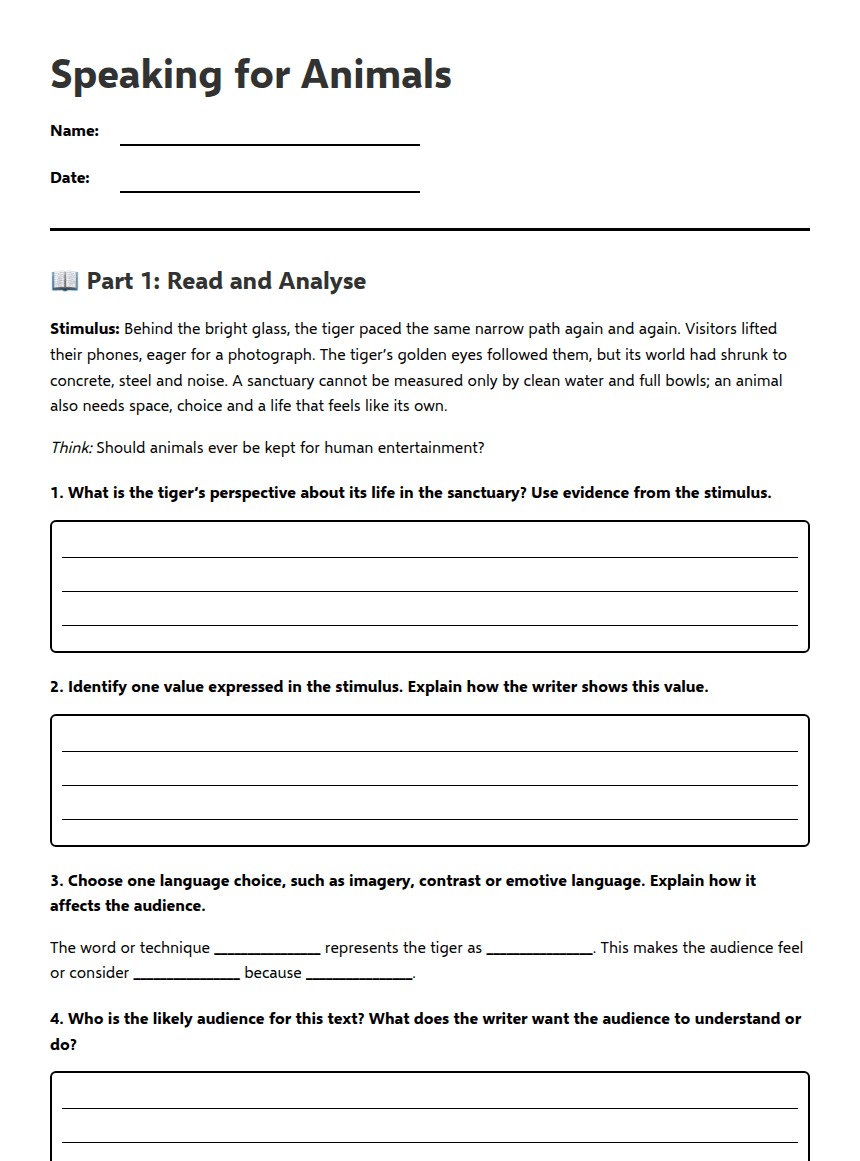
📖 Part 1: Read and Analyse
Stimulus: Behind the bright glass, the tiger paced the same narrow path again and again. Visitors lifted their phones, eager for a photograph. The tiger’s golden eyes followed them, but its world had shrunk to concrete, steel and noise. A sanctuary cannot be measured only by clean water and full bowls; an animal also needs space, choice and a life that feels like its own.
Think: Should animals ever be kept for human entertainment?
The word or technique ________________ represents the tiger as ________________. This makes the audience feel or consider ________________ because ________________.
✏️ Part 2: Plan Your Animal Speech
Write a 90–120-word persuasive speech in the first person. Speak as an animal affected by a human decision. Your audience might be zoo visitors, a wildlife park board or local decision-makers.
Animal and audience: I am a __________________________ speaking to __________________________.
Claim: I want my audience to believe or do ________________________________________________.
Reason 1 and evidence/example: _________________________________________________
Reason 2 and evidence/example: _________________________________________________
Emotive words I will use: ____________________________________________________
Rhetorical question: _________________________________________________________
Call to action: ______________________________________________________________
Language Toolbox
Sentence starters: “I am more than a __________.” “Every day, I __________.” “My life has changed because __________.” “You may think __________, but __________.” “Will you allow __________?” “Please __________ before it is too late.”
Persuasive devices: direct address (you), emotive language (fear, lonely, precious), repetition, rhetorical questions, facts or examples, and a strong call to action.
🎤 Part 3: Speak, Respond and Reflect
Rehearse your speech for 1–2 minutes. Adjust your volume, pace and emphasis so your audience can follow your ideas.
One effective language choice was: ____________________________________________
The speech represented the animal as: _________________________________________
One suggestion for clearer delivery or stronger persuasion: _______________________
Teacher Answer Guide
1. The tiger feels confined, restricted or unhappy. Evidence may include “paced the same narrow path”, “shrunk” and “concrete, steel and noise”.
2. Possible values include freedom, animal welfare, ethical responsibility, compassion and respect for living creatures. Students should explain how the text shows the value.
3. Accept well-supported answers. For example, “bright glass” contrasts with the tiger’s limited world, encouraging the audience to question whether the setting is truly positive.
4. Possible audiences include zoo visitors, animal lovers or people making decisions about animal care. The text encourages the audience to consider animals’ need for space, choice and wellbeing.
5–7. Responses will vary. Look for a clear viewpoint, first-person voice, logical reasons, relevant evidence or examples, purposeful persuasive language and attention to audience. Strong responses may acknowledge and rebut a counterargument.
About This Worksheet
Free in Kuraplan
Sign up free, grab the PDF, and customize it for your class.
Print-Ready
Formatted for standard paper. Clean layout, easy to read.
AI-Generated
Created with Kuraplan's AI, designed for real classroom use.
For Teachers & Parents
Use in classrooms, for homework, tutoring, or homeschool.
Need a custom version of this worksheet?
Kuraplan's AI generates custom worksheets in seconds — differentiated for every learner, aligned to your curriculum.
Generate Custom Worksheets — FreeMore English Worksheets
Interactive Communication Skills
Free
Speaking Skills Practice
Free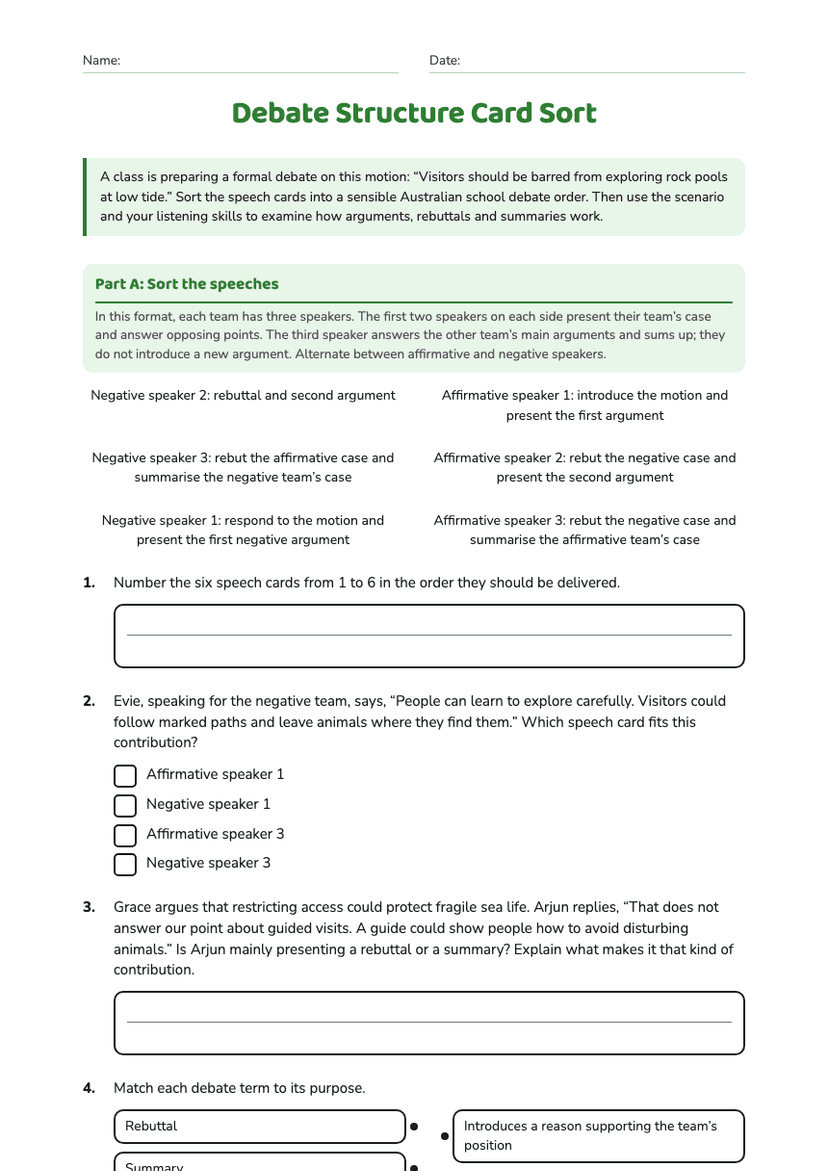
Debate Structure Card Sort
Free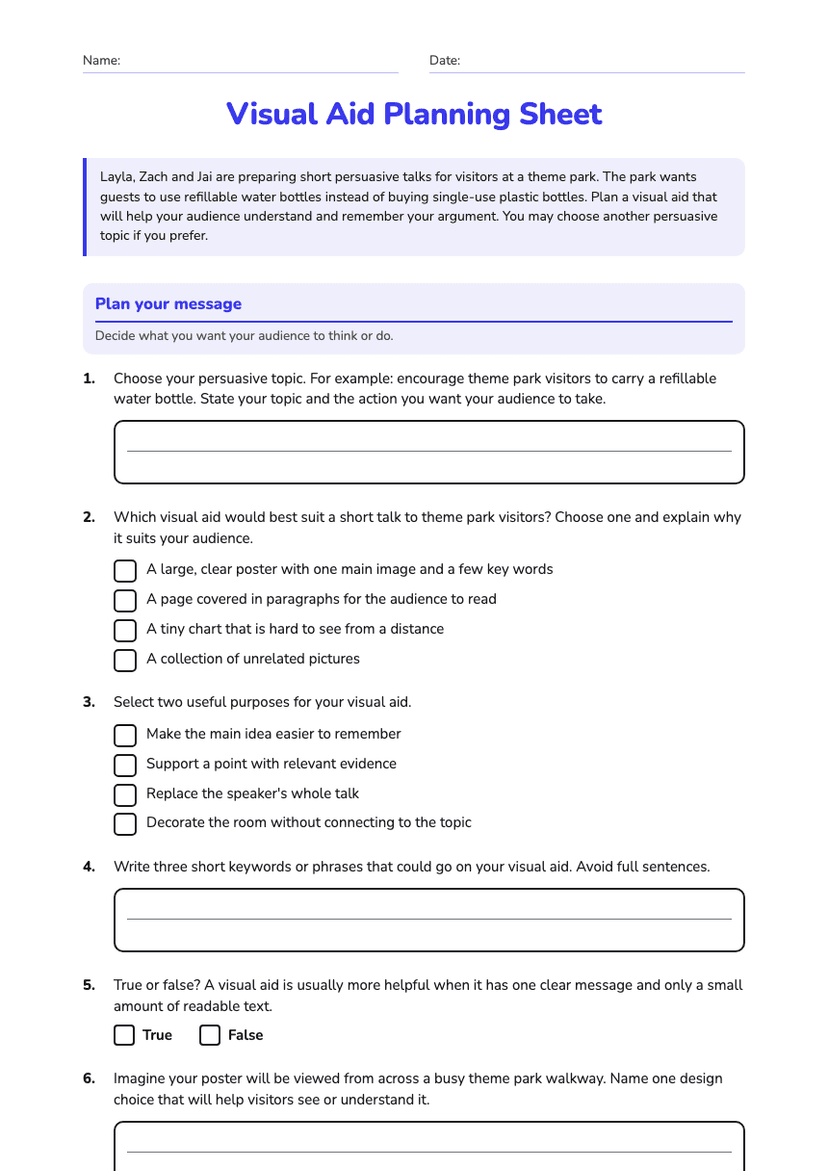
Visual Aid Planning Sheet
Free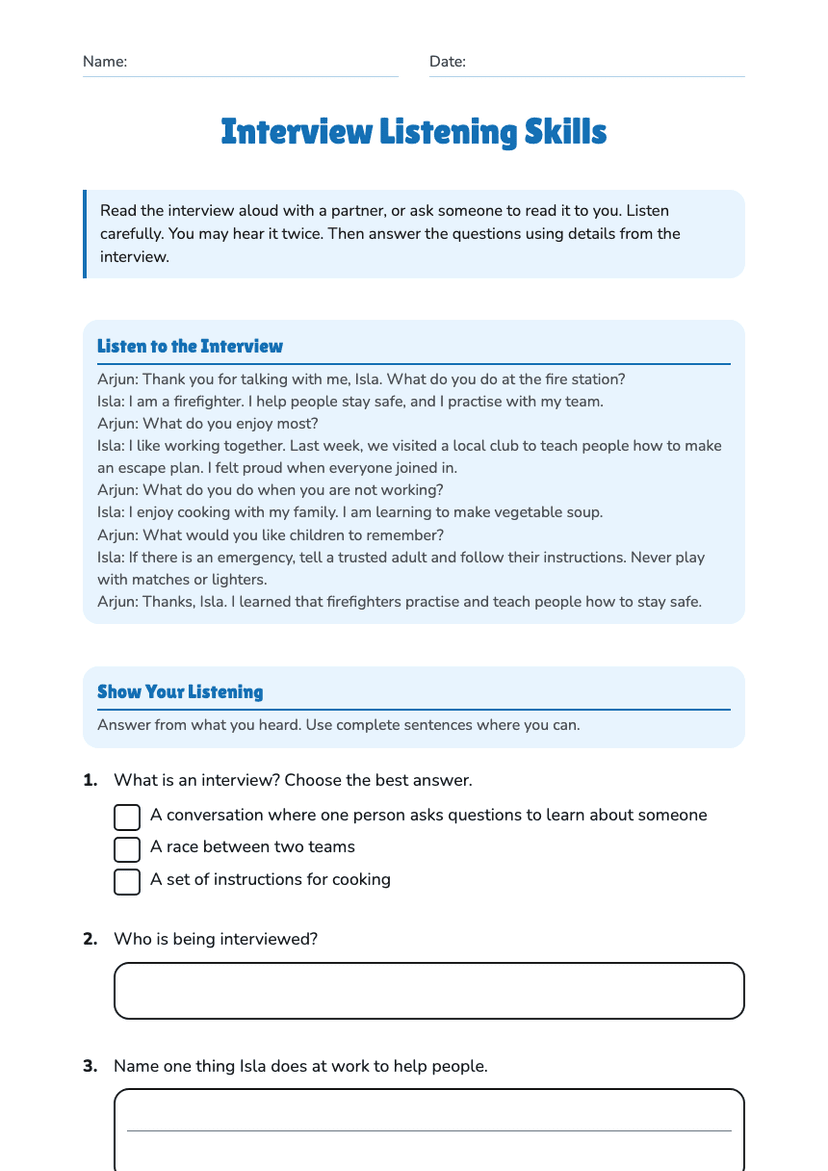
Interview Listening Skills
Free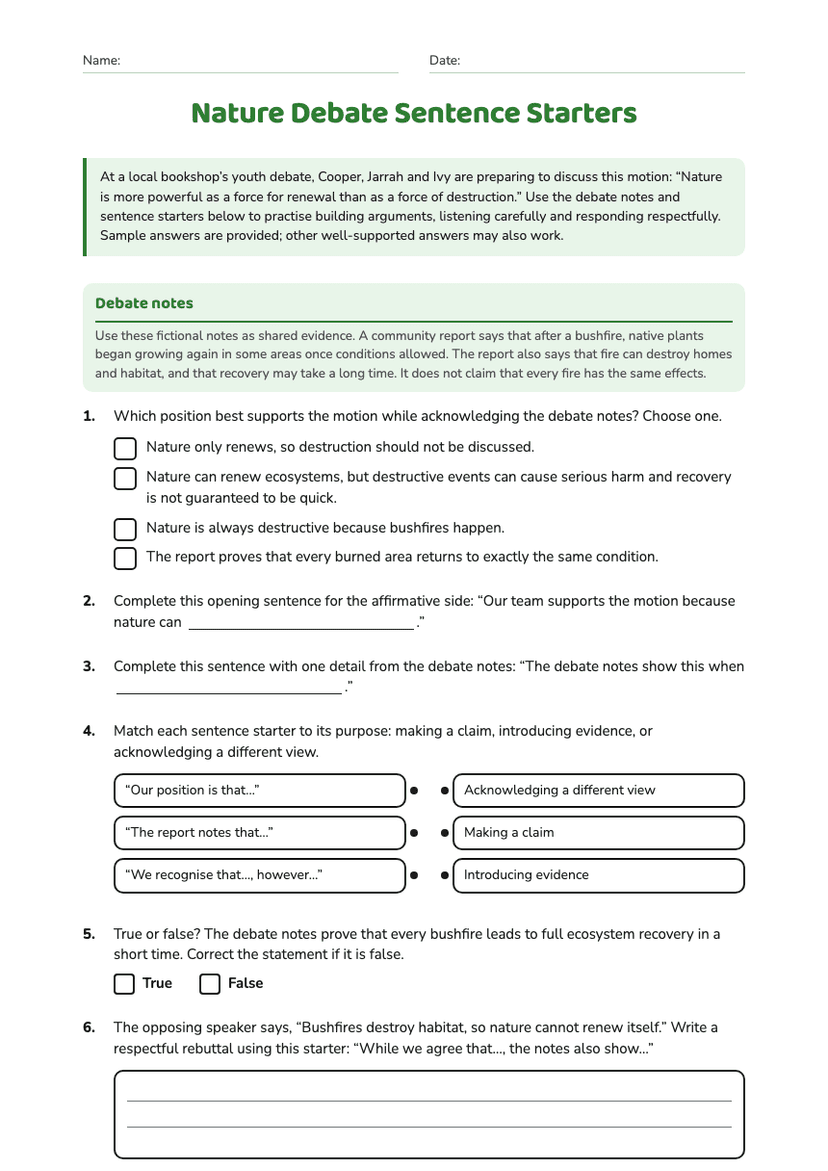
Nature Debate Sentence Starters
Free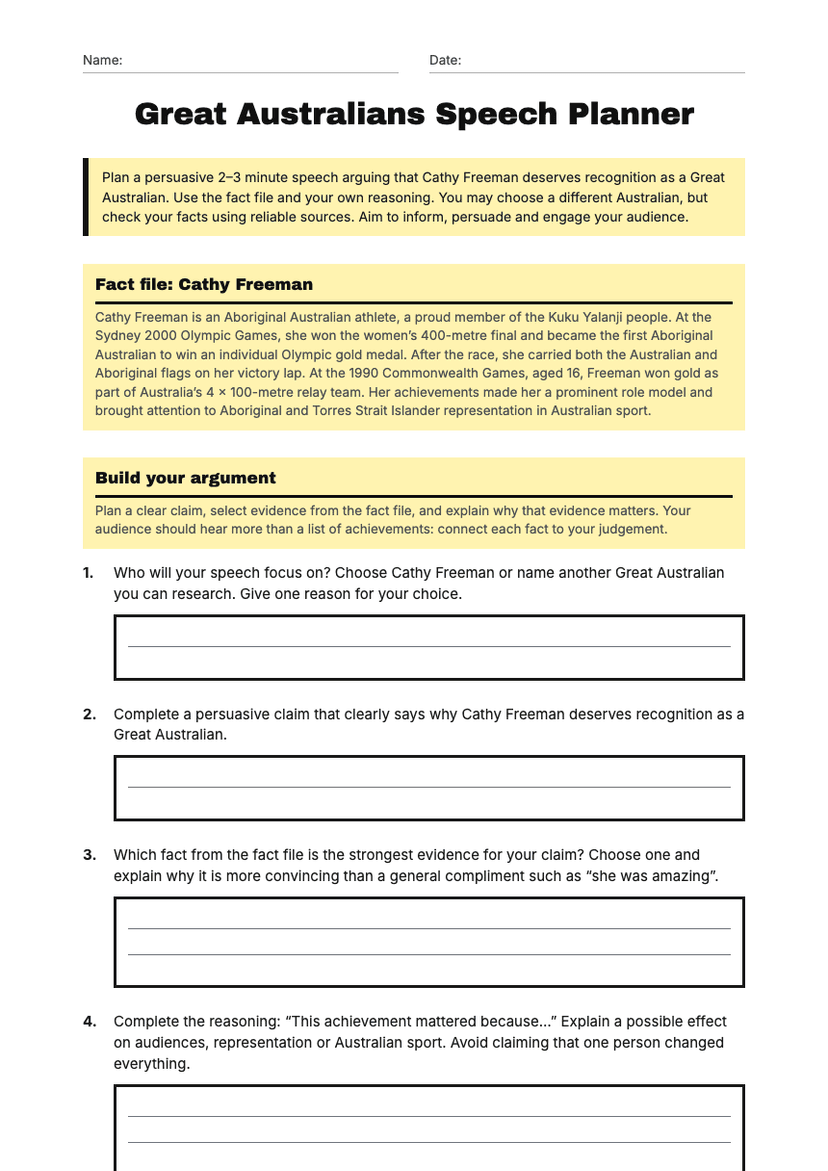
Great Australians Speech Planner
Free