Wind Turbine Energy Transformation
A free science worksheet ready for your classroom. Open in Kuraplan to grab the print-ready PDF, customize it for your students, or generate a fresh version in seconds.
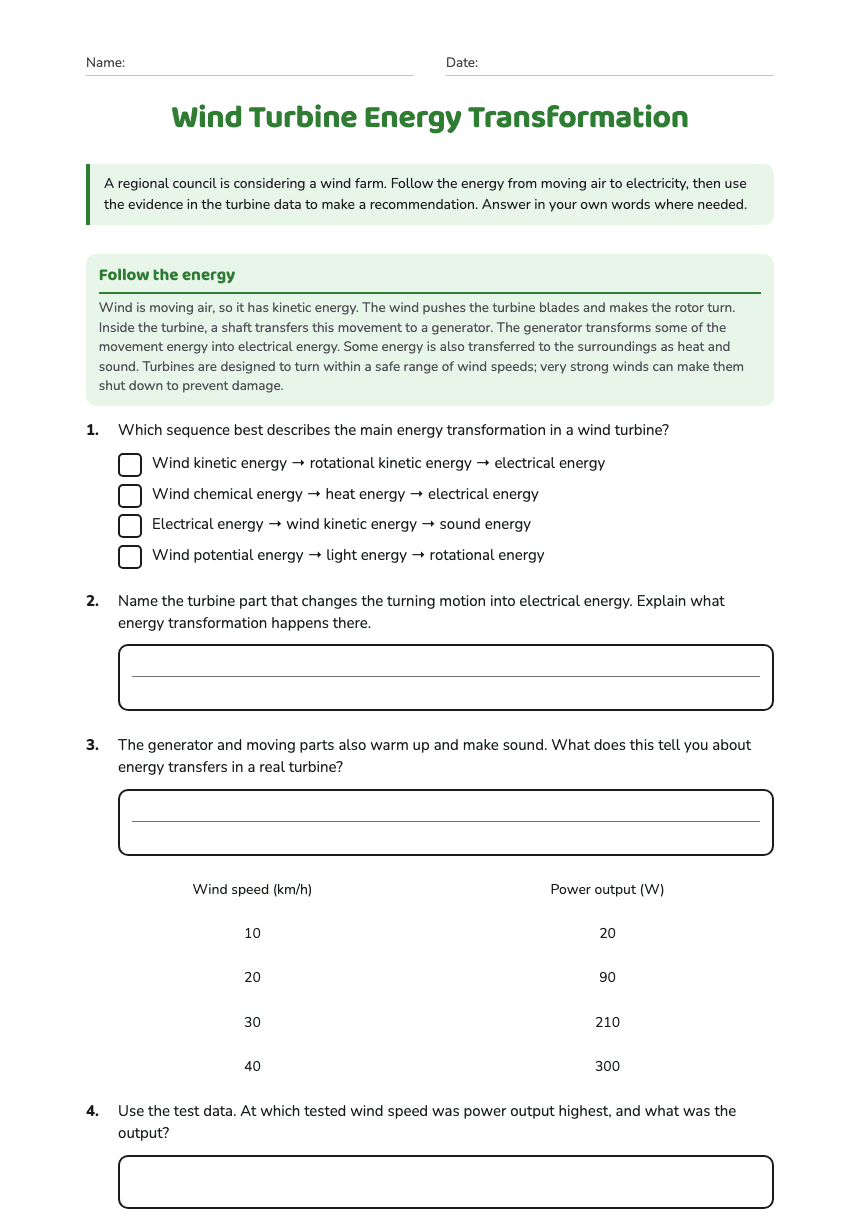
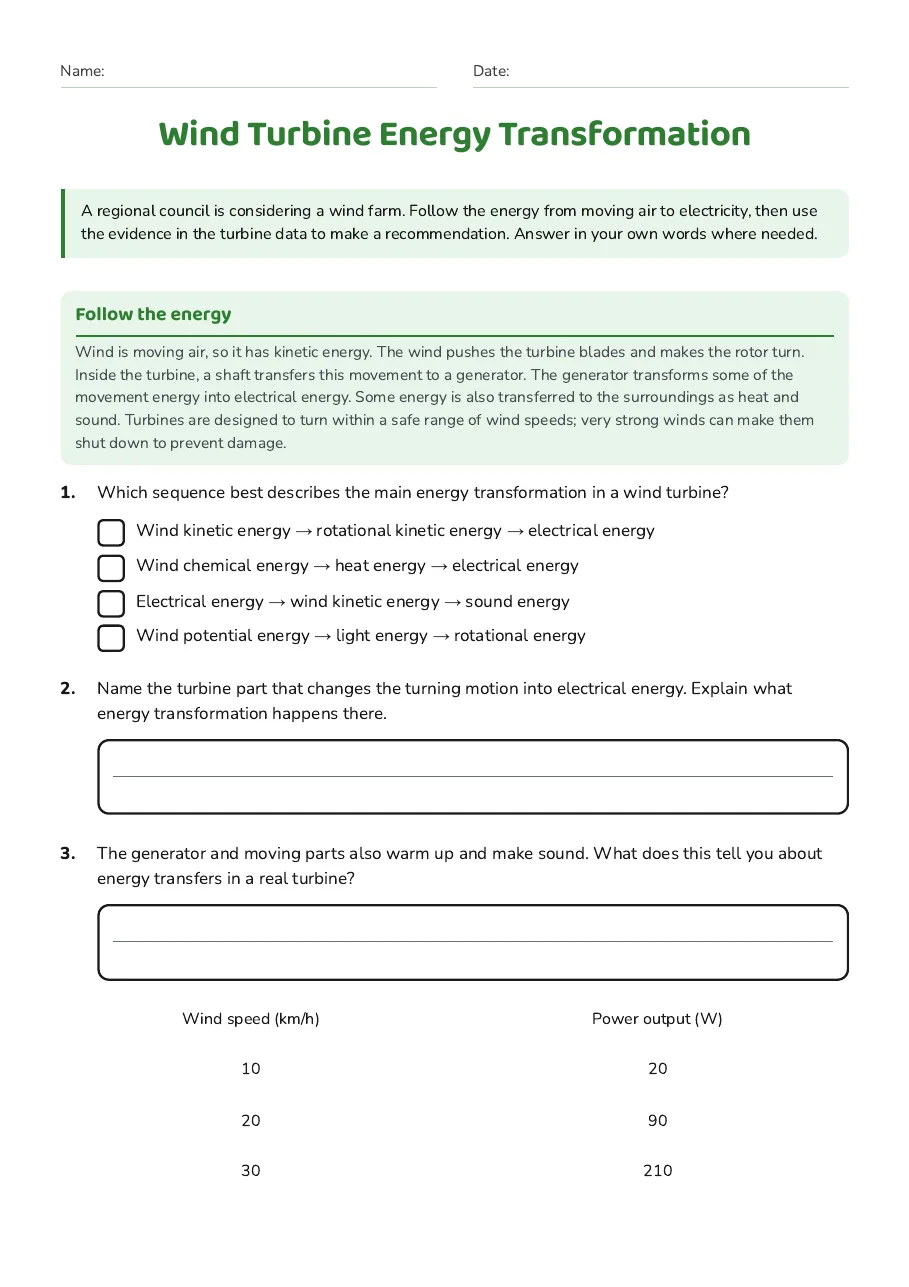
Wind Turbine Energy Transformation
Follow the energy
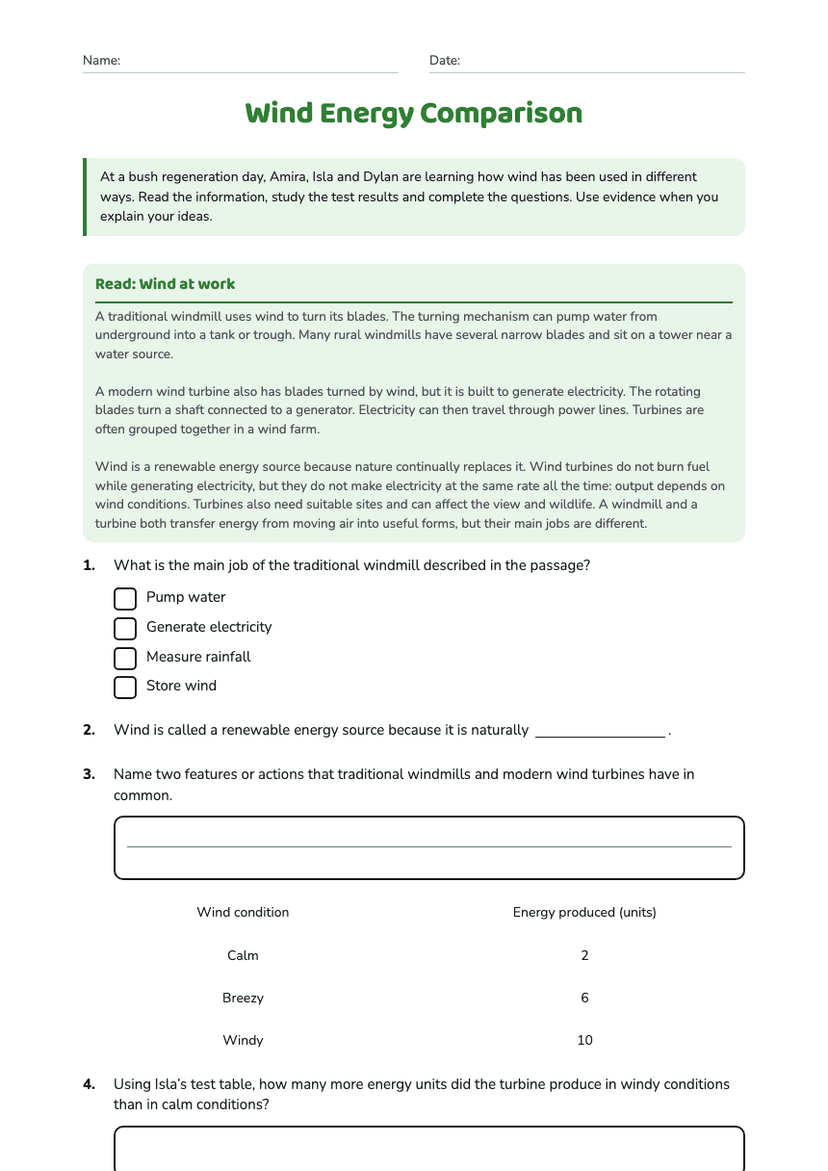
Wind is moving air, so it has kinetic energy. The wind pushes the turbine blades and makes the rotor turn. Inside the turbine, a shaft transfers this movement to a generator. The generator transforms some of the movement energy into electrical energy. Some energy is also transferred to the surroundings as heat and sound. Turbines are designed to turn within a safe range of wind speeds; very strong winds can make them shut down to prevent damage.
- Wind kinetic energy → rotational kinetic energy → electrical energy
- Wind chemical energy → heat energy → electrical energy
- Electrical energy → wind kinetic energy → sound energy
- Wind potential energy → light energy → rotational energy
Wind speed (km/h)
Power output (W)
10
20
20
90
30
210
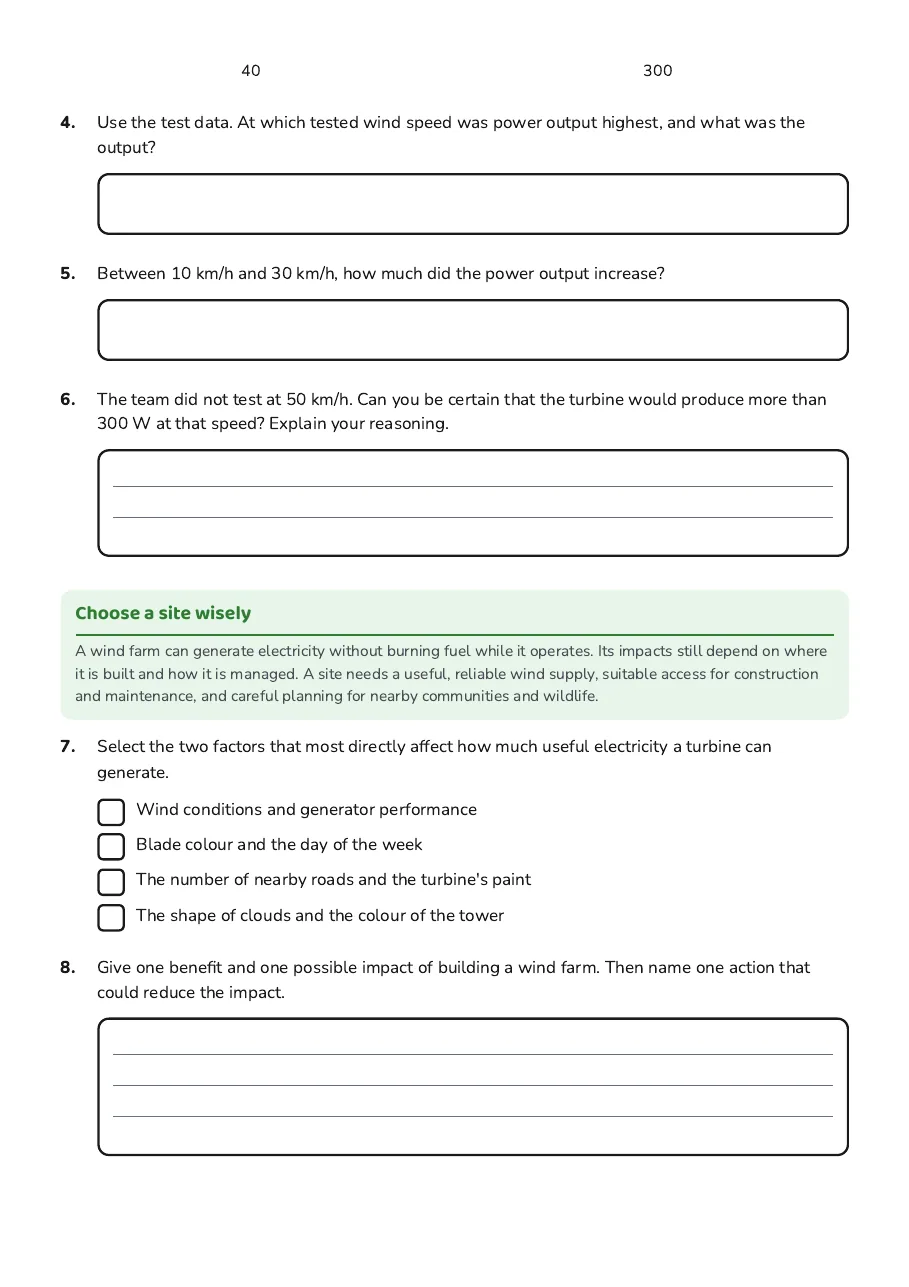
40
300
Choose a site wisely
A wind farm can generate electricity without burning fuel while it operates. Its impacts still depend on where it is built and how it is managed. A site needs a useful, reliable wind supply, suitable access for construction and maintenance, and careful planning for nearby communities and wildlife.
- Wind conditions and generator performance
- Blade colour and the day of the week
- The number of nearby roads and the turbine's paint
- The shape of clouds and the colour of the tower
3 printable pages
Page 1
Page 2
Page 3
About This Worksheet
Free in Kuraplan
Sign up free, grab the PDF, and customize it for your class.
Print-Ready
Formatted for standard paper. Clean layout, easy to read.
AI-Generated
Created with Kuraplan's AI, designed for real classroom use.
For Teachers & Parents
Use in classrooms, for homework, tutoring, or homeschool.
Need a custom version of this worksheet?
Kuraplan's AI generates custom worksheets in seconds — differentiated for every learner, aligned to your curriculum.
Generate Custom Worksheets — Free