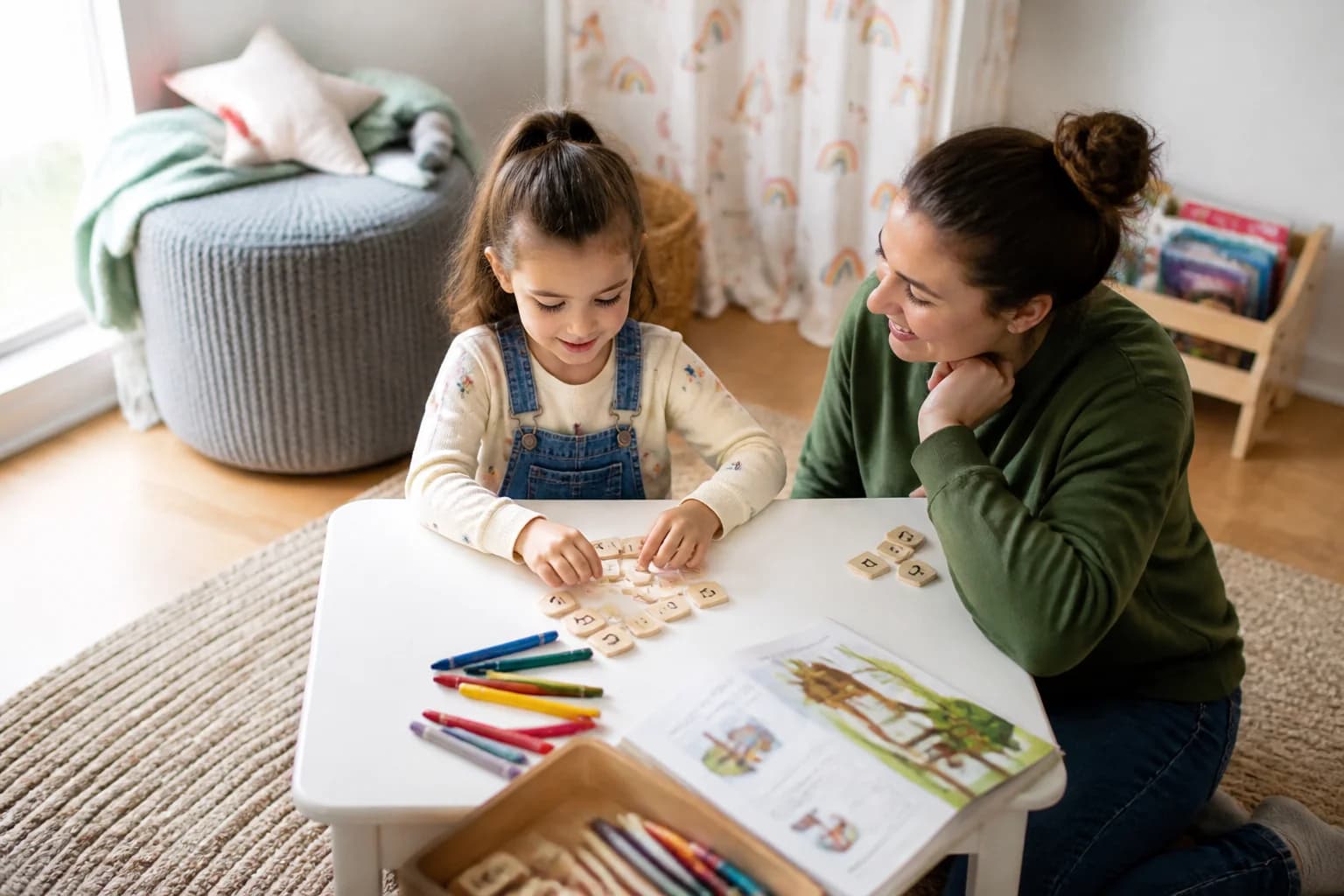
What a kindergartner actually needs
- Systematic phonics, ten to fifteen minutes a day: letter sounds, then blending, then simple decodable books. This is the one thing that must be a program.
- Early math, ten to fifteen minutes a day: counting, comparing, number bonds to ten, shapes and patterns, with real objects before worksheets.
- Handwriting, five to ten minutes: correct pencil grip and letter formation, taught deliberately, because habits formed now are hard to fix later.
- Read-alouds, daily and generous: picture books and the first chapter books, for vocabulary, story sense and love.
- The world, through play, nature, cooking, helping and conversation. Science and social studies at five are a walk and a question.
That is the whole list. The programs below cover it; you do not need all of them.
1.The Good and the Beautiful Kindergarten
Free PDF; printed about $40–$60Best for: an all-in-one Christian year for under $60
TGTB's kindergarten course book covers phonics, reading, handwriting, and gentle art and geography in one beautifully illustrated book, taught in short daily lessons. Add its math and you have a complete year. It is the most-used kindergarten curriculum in the US, and the PDFs are free.
Suits: Christian families who want to open a book and teach. Watch for: faith woven throughout, and phonics that moves quickly for some children; slow down rather than push.
2.Blossom and Root Kindergarten
About $60–$90 as PDFBest for: a secular, nature-rich, play-led year
Blossom and Root is the secular family's answer: a year of picture-book literature, nature study, art, and gentle early literacy and math, with a flexible weekly rhythm. It is warm, low-pressure and thoroughly planned.
Suits: secular families who want a Charlotte Mason or Waldorf-ish flavour. Watch for: phonics and math are light; add a phonics program and a math program from the list below.
3.All About Reading (Pre-reading and Level 1)
About $150–$200 per level with materialsBest for: teaching reading, done right
All About Reading is the scripted, multisensory phonics program most parents credit with teaching their child to read without tears. Pre-reading covers letter sounds and readiness through games and crafts; Level 1 teaches blending and the first patterns with letter tiles and decodable readers.
Suits: any child, and especially one who finds reading hard, and any parent who wants exact words to say. Watch for: price. It resells well, and the cheaper equivalent is next.
Best for: teaching reading for $30
Two hundred and thirty-one scripted lessons in one plain book, from letter sounds to multisyllable words. No colour, no manipulatives, no fuss, and it works. Many families use it with Bob Books or free decodables for practice.
Suits: budget-conscious families and parents who want a no-frills script. Watch for: it is dry to look at; some children need the games and tiles of AAR to stay engaged.
5.Math-U-See Primer, RightStart A, or Kindergarten Math with Confidence
Math with Confidence about $30; MUS Primer about $100; RightStart A about $200 with kitBest for: hands-on early math
Three good starts. Kindergarten Math with Confidence (Kate Snow) is a cheap, scripted, games-based program that needs only household objects. Math-U-See Primer introduces the blocks and video lessons gently. RightStart A builds number sense with the abacus and games and is the most parent-intensive of the three.
Suits: Math with Confidence for most families; Primer if you plan to continue with Math-U-See; RightStart for parents who love teaching hands-on. Watch for: none of these needs to be finished; kindergarten math is about counting, comparing and number bonds, not pages.
6.Handwriting Without Tears Kindergarten
About $15–$30Best for: letter formation the developmental way
Capitals first, letters grouped by stroke, a simple vertical print style and multisensory materials (wooden pieces, chalkboards) that make five-year-olds succeed. Ten minutes a day is enough.
Suits: every kindergartner, and especially those with weak fine-motor skills. Watch for: the font is plainer than some parents like; it transfers fine to any style later.
7.Five in a Row
About $35–$60 per volume plus library booksBest for: picture-book unit studies for everything else
Read one excellent picture book five days in a row and explore something different each day: the setting on a map, the science in the story, the art style, the character's choices. Five in a Row is the classic kindergarten social studies, science and art curriculum, and it is entirely conversation and books.
Suits: families who want everything beyond the three Rs to come from good books and talk. Watch for: some volumes have Christian supplements; the core is neutral. Library access matters.
Best for: a complete free kindergarten
Khan Academy Kids covers early literacy, phonics, math, and social-emotional learning for ages 2–8, adaptively and without ads. Add daily library books, Teach Your Monster to Read for phonics practice, a $30 phonics book if you want a script, and printables from the free resources on this site, and you have a complete kindergarten for the price of the phonics book.
Suits: families on no budget, and as a supplement for everyone. Watch for: screen time. Fifteen minutes of Khan Kids is practice; an hour is not.
What you can skip in kindergarten
- A boxed science curriculum. Nature walks, a magnifying glass and library books are kindergarten science.
- A history program. Stories about the past and a family timeline are enough; chronological history starts in first or second grade.
- Spelling and grammar. Spelling is the writing half of phonics for now; grammar begins around grade 3.
- Testing. You see the work every day. A few states require assessment later; none require it in kindergarten.
- A school day. Ninety minutes of intentional activity in short bursts, then play. Kindergarten is not first grade.
A kindergarten day that works
Breakfast and free play. A morning basket at 9:00: two picture books, a song, the calendar (fifteen minutes). Phonics lesson and a decodable book (fifteen minutes). Handwriting (five to ten minutes). Outside. Math with objects and a game (fifteen minutes). One more read-aloud or a Five in a Row activity. Done before 11:00. The afternoon is play, a nature walk, cooking, quiet time with books, and the bedtime chapter book. See the kindergarten hub for routines and printables.