Grade 6 Biography Unit Plan
A free english (ela) worksheet ready for your classroom. Open in Kuraplan to grab the print-ready PDF, customize it for your students, or generate a fresh version in seconds.
Grade 6 Biography Unit Plan
English Language Arts — Sutton, Ontario | 6 Lessons
📋 Unit Overview
Grade: 6 | Subject: English Language Arts | Duration: 6 Lessons
Big Idea: Biographies tell the true stories of real people and help us understand how individuals shape history, culture, and community.
Enduring Understanding: Students will understand that researching, reading, and writing biographies develops critical thinking, empathy, and communication skills.
🏫 Class Profile — Differentiation at a Glance
Total Students: 24 (17 boys, 7 girls)
3 Community Class Students — behaviour and autism diagnoses; require visual supports, sensory breaks, and predictable routines.
3 IEP Students — working at Grade 3–4 level; require modified texts, graphic organisers, and scaffolded writing frames.
4 ADHD Students — require chunked tasks, movement breaks, fidget tools, and frequent check-ins.
Remaining Students — Grade 6 level; may need engagement hooks and choice to build motivation.
♿ Universal Differentiation Strategies (Applied Across All Lessons)
Dyslexia-Friendly Options:
For IEP / Grade 3–4 Level Learners: Modified texts (shorter, simpler vocabulary), graphic organisers pre-filled with headings, reduced writing expectations (e.g., 3 sentences instead of a paragraph), one-on-one check-ins.
For Community Class Students: Visual schedules posted at their desks, task broken into 1–2 steps at a time, quiet workspace option, access to sensory tools, pre-taught vocabulary with picture cards.
For ADHD Learners: Tasks chunked into 10–15 minute segments, movement breaks built in, preferential seating, timer visible on board, checklists for multi-step tasks.
For Advanced / Extension Learners: Deeper research tasks, compare two biographies, leadership/theme analysis, create a "biography podcast" script.
📖 Lesson 1 — What Is a Biography?
Duration: 60 minutes | Curriculum Focus: Reading — Understanding Text Forms
🎯 Learning Goal
"I can" Statement: I can identify the features of a biography and explain how it is different from other types of texts.
✅ Success Criteria
📚 Materials
Short sample biography (Terry Fox — 1 page, dyslexia-friendly font available), anchor chart paper, markers, sticky notes, T-chart graphic organiser (Biography vs. Autobiography).
🗓️ Lesson Sequence
Minds On (10 min): Show a short video clip about a famous Canadian (e.g., Terry Fox, Viola Desmond). Ask: "What do you already know about this person? How did you learn it?" Introduce the word "biography." Build a class anchor chart: What We Think We Know / What We Want to Know.
Action (35 min): Read aloud a short biography of Terry Fox together. Students follow along with their own copy. Pause to identify features: real person, birth/death dates, chronological events, quotes, photos/captions. Students complete a T-chart comparing Biography vs. Autobiography. Pair-share findings.
Consolidation (15 min): Exit ticket — students write one sentence defining biography and list 2 features on a sticky note. Post on the class "Biography Wall."
🔀 Differentiation
IEP / Modified: Pre-filled T-chart with one example in each column; use picture-supported vocabulary cards for "biography," "autobiography," "chronological."
Community Class: Seat near the teacher during read-aloud; provide a personal copy with key sentences highlighted; visual schedule for the lesson posted on desk.
ADHD: Allow movement during video; provide a checklist of the 3 features to find while reading; use a 10-minute timer for the T-chart task.
Dyslexia: Provide the Terry Fox biography in OpenDyslexic font, size 14, on yellow paper. Audio version available via headphones.
Extension: Research a second Canadian biography of their choice and add a third column to the T-chart: "What makes this person worth writing about?"
🔍 Lesson 2 — Reading and Analysing a Biography
Duration: 60 minutes | Curriculum Focus: Reading — Comprehension Strategies; Making Inferences
🎯 Learning Goal
"I can" Statement: I can read a biography and identify the most important events, challenges, and contributions in a person's life.
✅ Success Criteria
📚 Materials
Levelled biography sets (Grade 3–4 level and Grade 6 level options on the same subject — e.g., Viola Desmond), blank timeline graphic organiser, inference anchor chart, highlighters.
🗓️ Lesson Sequence
Minds On (10 min): Review the anchor chart from Lesson 1. Introduce the concept of inference: "Authors don't always tell us everything — we use clues and what we know to figure things out." Show one example inference from a familiar text.
Action (35 min): Students select or are assigned a levelled biography. Read independently or with a partner. Students complete a timeline graphic organiser (5+ events). Students write one inference sentence: "I think _______ because the text says _______."
Consolidation (15 min): Small group share — each student shares their most important event and their inference. Teacher facilitates a brief discussion: "What made this person remarkable?"
🔀 Differentiation
IEP / Modified: Use Grade 3–4 levelled biography; provide a timeline template pre-labelled with 5 blank boxes; provide an inference sentence frame: "I think _______ is _______ because _______."
Community Class: Use a 3-event simplified timeline; allow drawing instead of writing for events; provide a personal visual schedule; seat with a patient peer buddy.
ADHD: Chunk reading into two 15-minute segments with a 2-minute stretch break in between; use a highlighter to mark key events as they read.
Dyslexia: Audio biography available (YouTube read-aloud or teacher-recorded); dyslexia-friendly font version of text provided.
Extension: Compare the biography of Viola Desmond to a second civil rights figure of their choice. Write a paragraph: "What do these two people have in common, and what can we learn from them?"
🖥️ Lesson 3 — Researching a Biography Subject
Duration: 60–75 minutes (Chromebook/computer lab session) | Curriculum Focus: Research Skills; Media Literacy; Note-Taking
🎯 Learning Goal
"I can" Statement: I can research a real person using reliable sources and organise my notes into key categories.
✅ Success Criteria
📚 Materials
Chromebooks or computer lab access, Research Note Organiser (graphic organiser with 5 categories), approved subject list (with Canadian figures included), bookmarked reliable websites (e.g., Canadian Encyclopedia, CBC Kids News, Britannica Kids), source recording template.
🗓️ Lesson Sequence
Minds On (10 min): Mini-lesson on reliable vs. unreliable sources. Show two websites side by side — one reliable (e.g., Britannica Kids), one unreliable (random blog). Ask: "How do we know if we can trust this information?" Introduce the Research Note Organiser.
Action (45 min): Students choose their biography subject (from approved list or propose one to teacher). Students research using pre-bookmarked sites and complete the Research Note Organiser. Teacher and EA circulate, checking in with IEP students and community class students first.
Consolidation (10 min): Students share one interesting fact they found with an elbow partner. Teacher asks: "Did anything surprise you? What do you still want to find out?"
🔀 Differentiation
IEP / Modified: Pre-selected subject assigned (e.g., Terry Fox — lots of accessible resources); research organiser pre-filled with guiding questions under each category (e.g., "Where was _______ born?"); allow point-form notes or drawings; teacher/EA scribes if needed.
Community Class: Provide a 1-page simplified biography printout as the main source (reduces internet overwhelm); complete 2–3 categories only; use picture-supported organiser; check in every 10 minutes.
ADHD: Set a visible timer for each category (8 minutes each); provide a step-by-step checklist posted at their workspace; allow use of noise-cancelling headphones.
Dyslexia: Use text-to-speech browser extension (e.g., Read Aloud for Chrome); allow voice notes instead of written notes; provide audio/video biography sources (YouTube documentaries).
Extension: Research a second person from the same field and begin a comparison chart. Start drafting 3 interview questions they would ask their subject if they could meet them.
✏️ Lesson 4 — Planning and Writing a Biography
Duration: 75 minutes (may extend into a second period) | Curriculum Focus: Writing — Non-Fiction; Organisation; Voice
🎯 Learning Goal
"I can" Statement: I can use my research notes to plan and write a structured biography with an introduction, body paragraphs, and a conclusion.
✅ Success Criteria
📚 Materials
Research Note Organisers from Lesson 3, Biography Writing Frame (scaffolded template), transition word anchor chart, mentor text (model biography paragraph), Chromebooks for typing (optional).
🗓️ Lesson Sequence
Minds On (10 min): Revisit the mentor text from Lesson 2. Identify: Where is the hook? Which paragraph covers early life? How does the conclusion wrap things up? Co-create a class writing checklist on the board.
Action (50 min): Students use their Research Note Organiser to complete a planning outline (5-box planner: Hook, Early Life, Achievements, Challenges/Legacy, Conclusion). Students begin drafting. Teacher conducts 3–4 minute writing conferences with IEP and community class students. Encourage typing for students who find handwriting a barrier.
Consolidation (15 min): Peer feedback — students swap drafts with a partner and use 2 stars and a wish (2 things they liked, 1 suggestion). Students add one revision based on feedback before next class.
🔀 Differentiation
IEP / Modified: Use a fully scaffolded Biography Writing Frame with sentence starters for each paragraph (e.g., "_______ was born on _______ in _______." / "One of their greatest achievements was..."); reduced length expectation — 1 sentence per box is acceptable; allow oral dictation to teacher or EA.
Community Class: Provide a 3-paragraph simplified frame (Introduction, One Achievement, Why They Matter); allow drawing with labels; scribe support if needed; use Google Docs voice typing.
ADHD: Break writing into two 20-minute chunks with a movement break; provide a physical checklist they can check off as they complete each paragraph; allow standing desk or floor work.
Dyslexia: Allow Google Docs voice typing; provide spell-check tools; do not penalise for spelling errors in drafts; focus feedback on content and organisation.
Extension: Add a 4th body paragraph analysing the person's character traits with specific evidence. Begin drafting a "Letter to My Subject" — what would they say to this person if they could meet them?
💻 Lesson 5 — Creating a Google Slides Biography Presentation
Duration: 75 minutes (computer lab) | Curriculum Focus: Media Literacy; Oral Communication; Digital Literacy
🎯 Learning Goal
"I can" Statement: I can create a clear and visually organised Google Slides presentation that shares the key information from my biography.
✅ Success Criteria
📚 Materials
Chromebooks with Google Slides, Biography writing drafts from Lesson 4, Google Slides template (pre-made with 6 slide headings), image search tips handout (e.g., Google Images — Tools — Labelled for Reuse), slide design checklist.
🗓️ Lesson Sequence
Minds On (10 min): Show two example slides — one overcrowded with text, one clean and visual. Ask: "Which would you rather look at? Why?" Introduce the rule: slides are NOT essays — use key words, not full sentences. Walk through the template together.
Action (50 min): Students open the shared Google Slides template and begin building their presentation. Teacher circulates, checking slide design, image sourcing, and text choices. Small group instruction at the back for students needing extra support with Google Slides navigation.
Consolidation (15 min): Gallery walk — students rotate and view 2 peers' presentations on screen. Leave a sticky note with one compliment and one question. Students return to make one improvement.
🔀 Differentiation
IEP / Modified: Reduce to 4 slides (Title, One Achievement, Why They Matter, Sources); provide a slide-by-slide instruction card with screenshots; allow bullet points copied directly from their writing frame; EA support for navigating Google Slides.
Community Class: Pre-built template with text boxes already sized and labelled; student adds images and 1–2 words per slide; option to record a voice note on each slide instead of typing; check in every 10 minutes with a clear next step.
ADHD: Provide a numbered step-by-step checklist for building each slide; set a timer for each slide (10 minutes); allow music via headphones during work time; celebrate completion of each slide with a quick check-in.
Dyslexia: Encourage use of dyslexia-friendly fonts in their slides (Arial, Comic Sans, or OpenDyslexic); allow voice recording on slides instead of typed text; teacher checks for readability rather than spelling.
Extension: Add speaker notes to each slide (full sentences explaining each point); add a "Did You Know?" slide with a surprising fact; create a custom slide theme/design from scratch.
🎤 Lesson 6 — Presenting and Celebrating Our Biographies
Duration: 75 minutes | Curriculum Focus: Oral Communication; Listening; Self-Assessment
🎯 Learning Goal
"I can" Statement: I can present my biography to an audience clearly and confidently, and I can give respectful feedback to my classmates.
✅ Success Criteria
📚 Materials
Completed Google Slides presentations, projector/smartboard, peer feedback forms (2 stars and a wish), self-assessment checklist, optional: "Biography Museum" name cards for a gallery-walk format.
🗓️ Lesson Sequence
Minds On (10 min): Briefly review presentation expectations (volume, eye contact, pace). Give students 5 minutes to practise reading through their slides quietly. Offer presentation options: full class presentation OR small group of 4–5 students.
Action (50 min): Students present in small groups or to the class (teacher's choice based on class comfort level). Audience members complete a peer feedback form for each presenter. Teacher uses a simple observation checklist to assess oral communication expectations.
Consolidation (15 min): Students complete a self-assessment: "What am I most proud of in this project? What would I do differently next time?" Class celebration — share 2–3 surprising facts they learned about a classmate's subject. Add subjects to the class "Biography Wall."
🔀 Differentiation
IEP / Modified: Allow presentation to teacher and one trusted peer only (not full class); student may read directly from their slides; reduce to sharing 2 slides; celebrate effort and participation equally.
Community Class: Option to pre-record a video presentation at home or during a quiet period; or present one slide only to the teacher; focus success criteria on participation and effort rather than fluency; provide a visual "presentation steps" card.
ADHD: Allow students to stand or move slightly while presenting; give a 2-minute warning before it's their turn; offer fidget tool during listening; seat near the front during others' presentations.
Dyslexia: Allow student to have cue cards with key words (not full sentences); do not penalise for reading directly from slides; focus assessment on content knowledge and effort.
Extension: Host a "Biography Podcast" — record a 2–3 minute audio presentation in the style of a radio documentary. Share with the class or school community. Write a reflection: "What did this person teach me about perseverance / courage / leadership?"
📊 Assessment Overview
Assessment FOR Learning (Formative)
Exit tickets (Lessons 1–2), observation during research and writing (Lessons 3–4), peer feedback (Lessons 4–5), teacher conferences during writing workshop.
Assessment AS Learning (Self-Assessment)
Success criteria checklists completed by students at the end of each lesson; self-assessment reflection in Lesson 6.
Assessment OF Learning (Summative)
Written biography draft (Lesson 4), Google Slides presentation (Lesson 5), oral presentation (Lesson 6). Use the Ontario Grade 6 ELA achievement chart — Knowledge & Understanding, Thinking, Communication, Application.
📝 Modifications for IEP Students
Assess based on modified expectations as outlined in each student's IEP. Focus on: completing a structured written piece with support, demonstrating understanding of the subject, and participating in oral communication in a supported format. Grade on growth and effort alongside achievement.
🌟 Suggested Subjects List (Canadian Focus)
Terry Fox | Viola Desmond | Lester B. Pearson | Roberta Bondar | Wayne Gretzky | Buffy Sainte-Marie | Frederick Banting | Cassie Campbell | Romeo Dallaire | Hayley Wickenheiser | Louis Riel | Shannen Koostachin
Students may also choose an international figure with teacher approval.
About This Worksheet
Free in Kuraplan
Sign up free, grab the PDF, and customize it for your class.
Print-Ready
Formatted for standard paper. Clean layout, easy to read.
AI-Generated
Created with Kuraplan's AI, designed for real classroom use.
For Teachers & Parents
Use in classrooms, for homework, tutoring, or homeschool.
Need a custom version of this worksheet?
Kuraplan's AI generates custom worksheets in seconds — differentiated for every learner, aligned to your curriculum.
Generate Custom Worksheets — FreeMore English (ELA) Worksheets
Supporting Arguments Practice
Free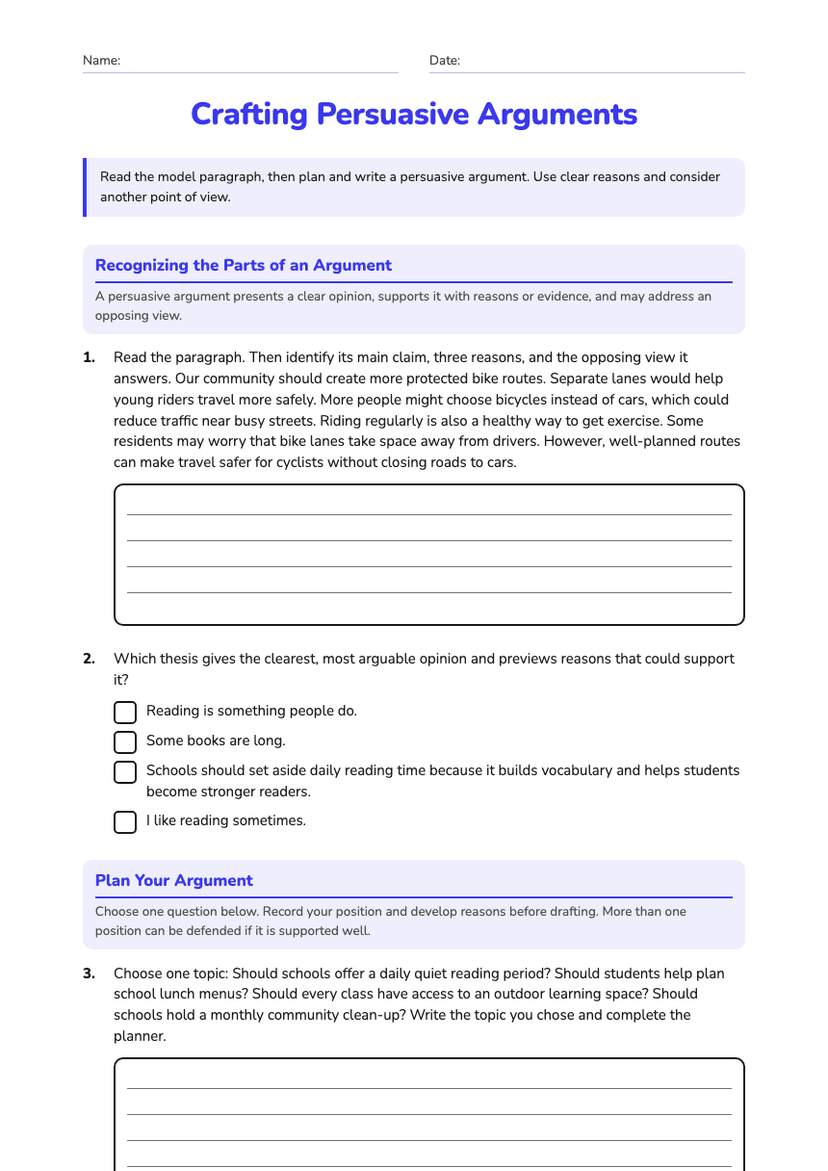
Crafting Persuasive Arguments
Free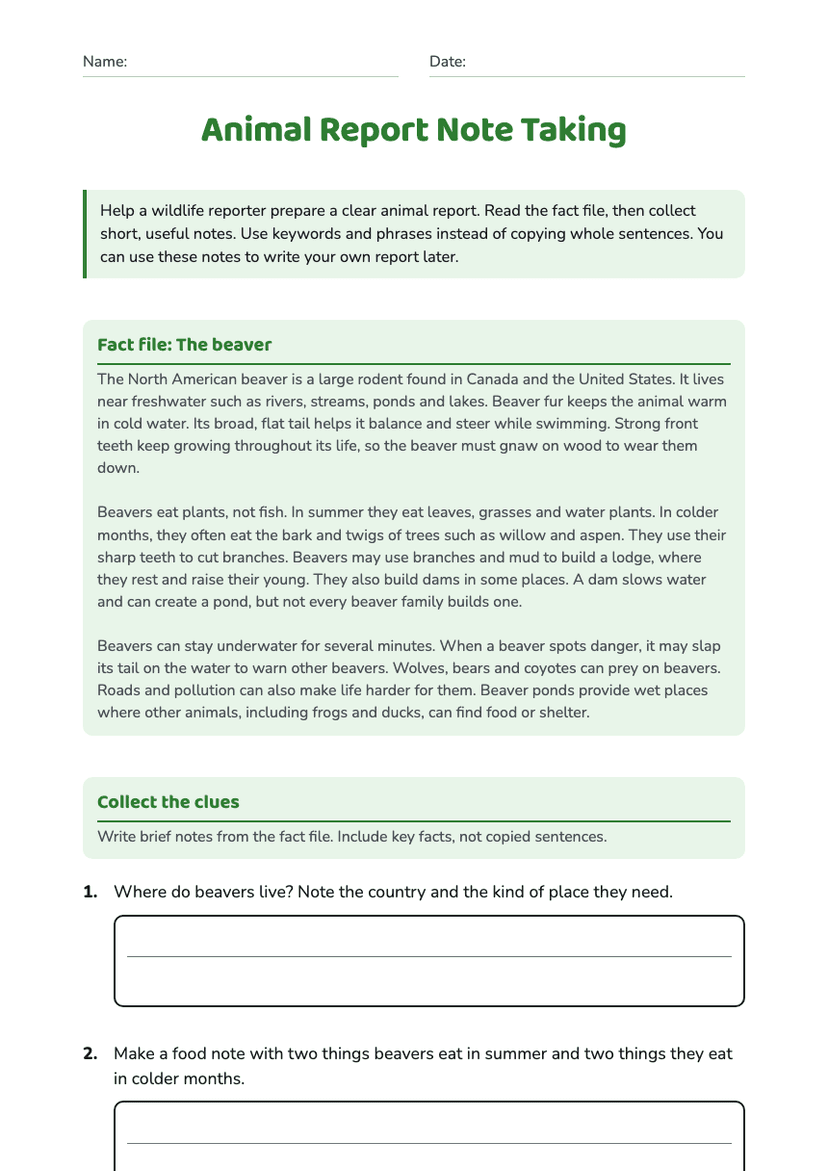
Animal Report Note Taking
Free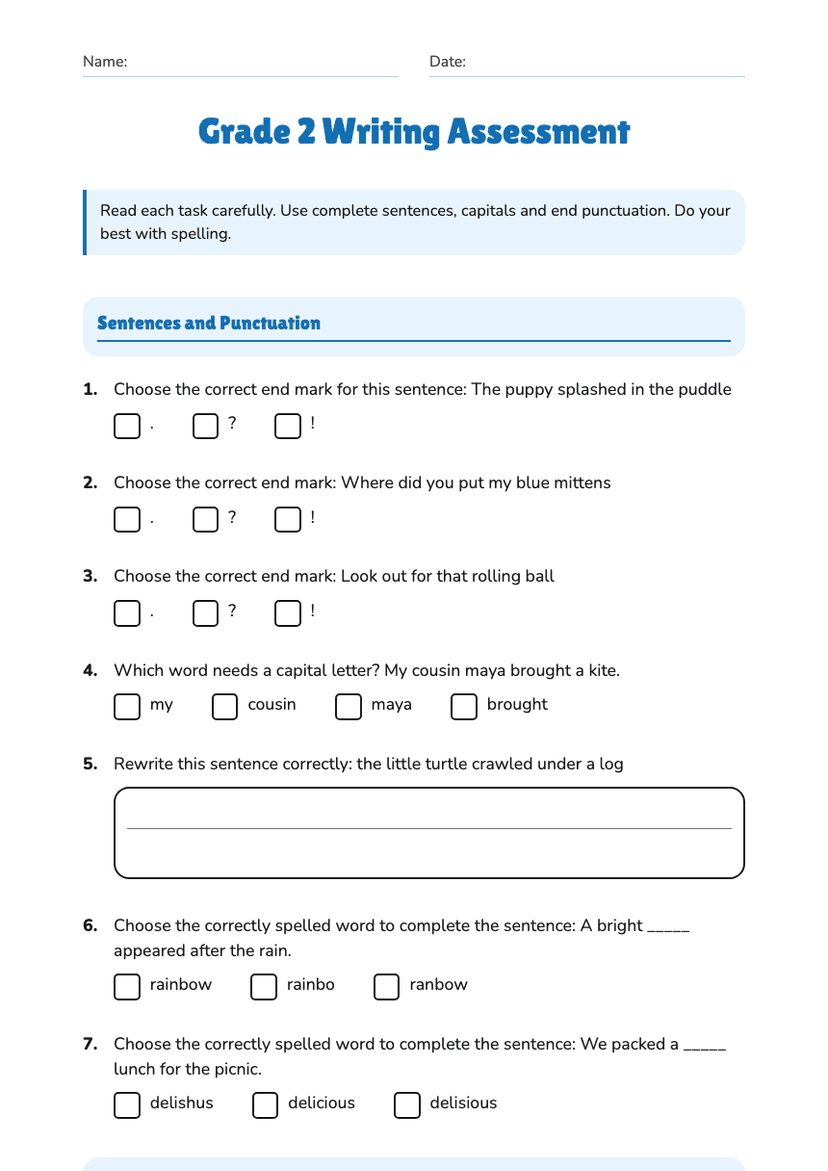
Grade 2 Writing Assessment
Free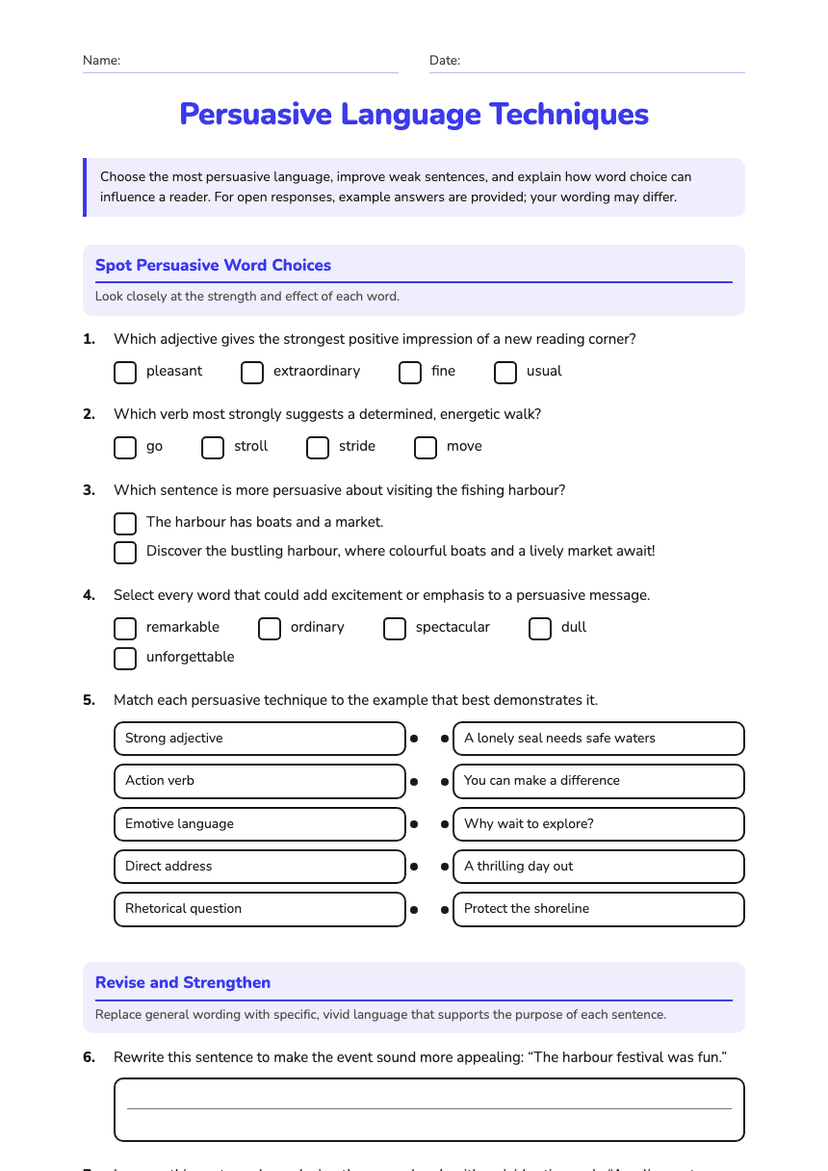
Persuasive Language Techniques
Free
Mastering PEEL Paragraphs
Free
Biography Worksheet Template
Free