Shakespeare and Elizabethan Context
A free english (ela) worksheet ready for your classroom. Open in Kuraplan to grab the print-ready PDF, customize it for your students, or generate a fresh version in seconds.
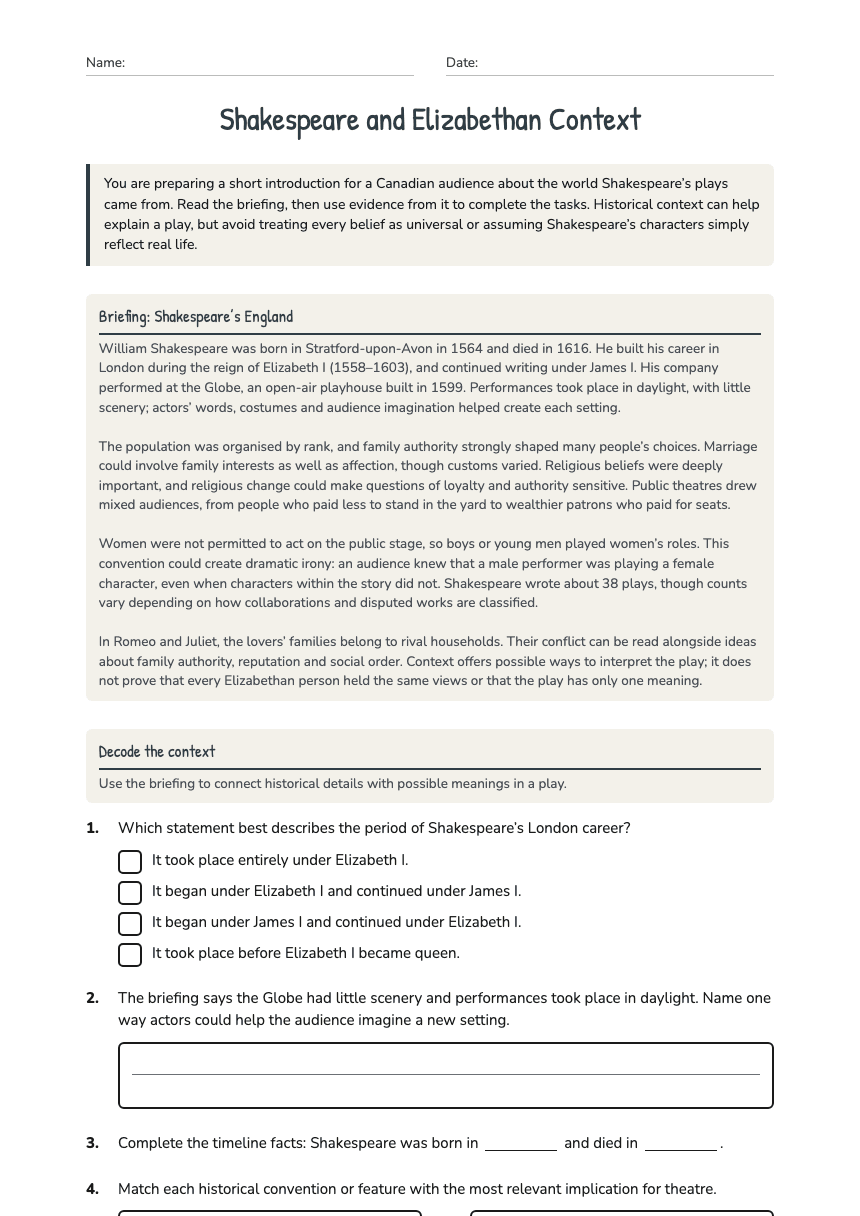
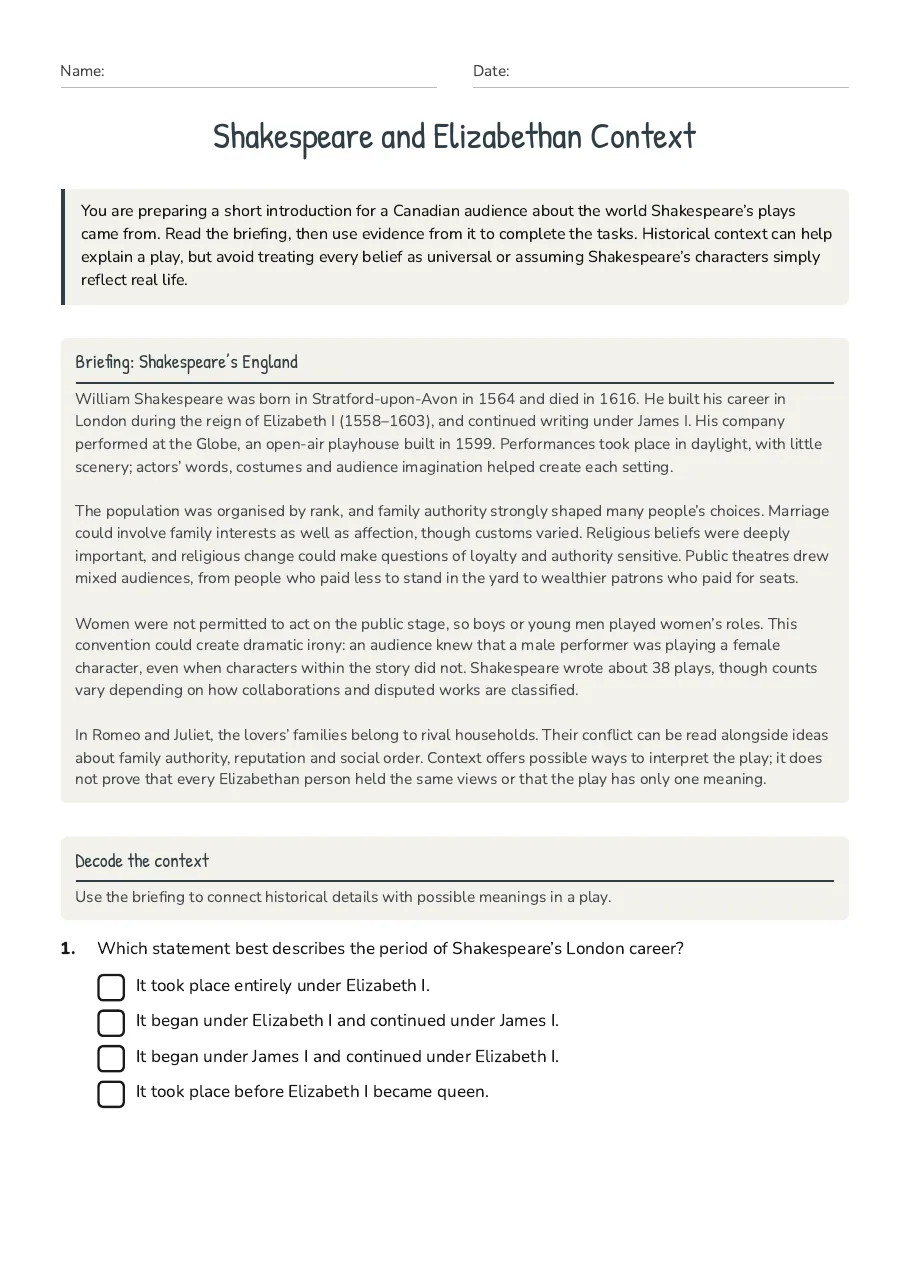
Shakespeare and Elizabethan Context
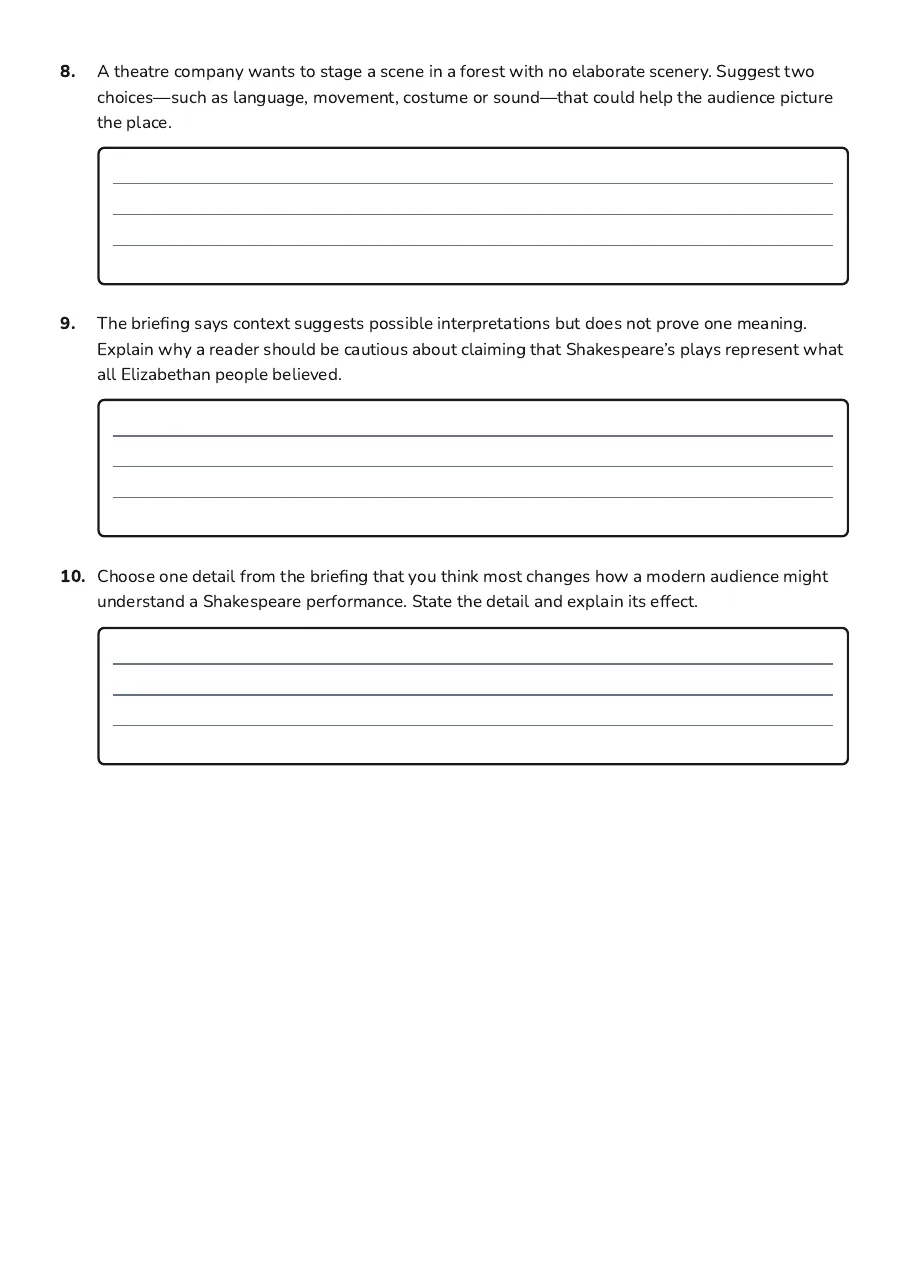
Briefing: Shakespeare’s England
William Shakespeare was born in Stratford-upon-Avon in 1564 and died in 1616. He built his career in London during the reign of Elizabeth I (1558–1603), and continued writing under James I. His company performed at the Globe, an open-air playhouse built in 1599. Performances took place in daylight, with little scenery; actors’ words, costumes and audience imagination helped create each setting. The population was organised by rank, and family authority strongly shaped many people’s choices. Marriage could involve family interests as well as affection, though customs varied. Religious beliefs were deeply important, and religious change could make questions of loyalty and authority sensitive. Public theatres drew mixed audiences, from people who paid less to stand in the yard to wealthier patrons who paid for seats. Women were not permitted to act on the public stage, so boys or young men played women’s roles. This convention could create dramatic irony: an audience knew that a male performer was playing a female character, even when characters within the story did not. Shakespeare wrote about 38 plays, though counts vary depending on how collaborations and disputed works are classified. In Romeo and Juliet, the lovers’ families belong to rival households. Their conflict can be read alongside ideas about family authority, reputation and social order. Context offers possible ways to interpret the play; it does not prove that every Elizabethan person held the same views or that the play has only one meaning.
Decode the context
Use the briefing to connect historical details with possible meanings in a play.
- It took place entirely under Elizabeth I.
- It began under Elizabeth I and continued under James I.
- It began under James I and continued under Elizabeth I.
- It took place before Elizabeth I became queen.
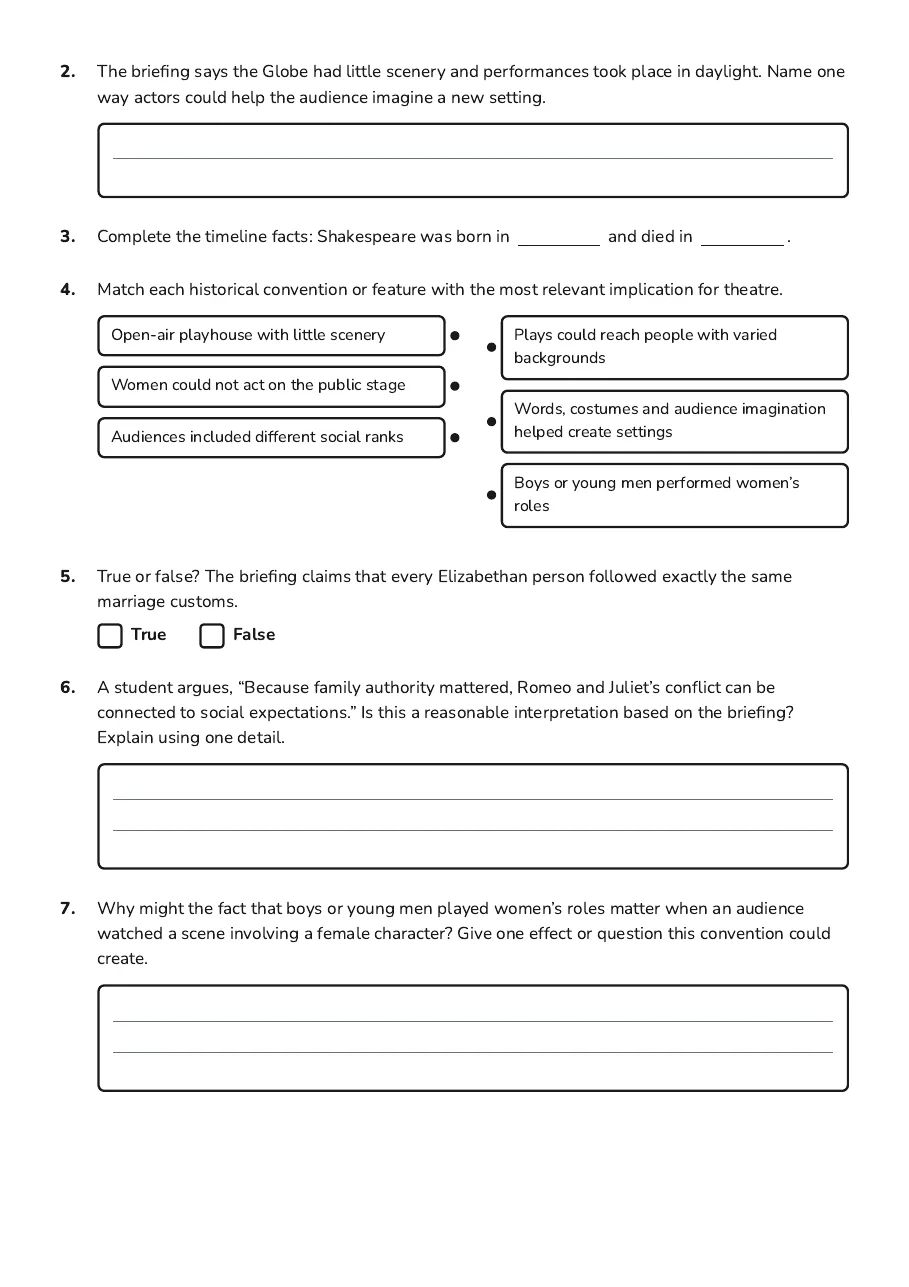
- Open-air playhouse with little scenery
- Women could not act on the public stage
- Audiences included different social ranks
- Plays could reach people with varied backgrounds
- Words, costumes and audience imagination helped create settings
- Boys or young men performed women’s roles
3 printable pages
Page 1
Page 2
Page 3
About This Worksheet
Free in Kuraplan
Sign up free, grab the PDF, and customize it for your class.
Print-Ready
Formatted for standard paper. Clean layout, easy to read.
AI-Generated
Created with Kuraplan's AI, designed for real classroom use.
For Teachers & Parents
Use in classrooms, for homework, tutoring, or homeschool.
Need a custom version of this worksheet?
Kuraplan's AI generates custom worksheets in seconds — differentiated for every learner, aligned to your curriculum.
Generate Custom Worksheets — FreeMore English (ELA) Worksheets
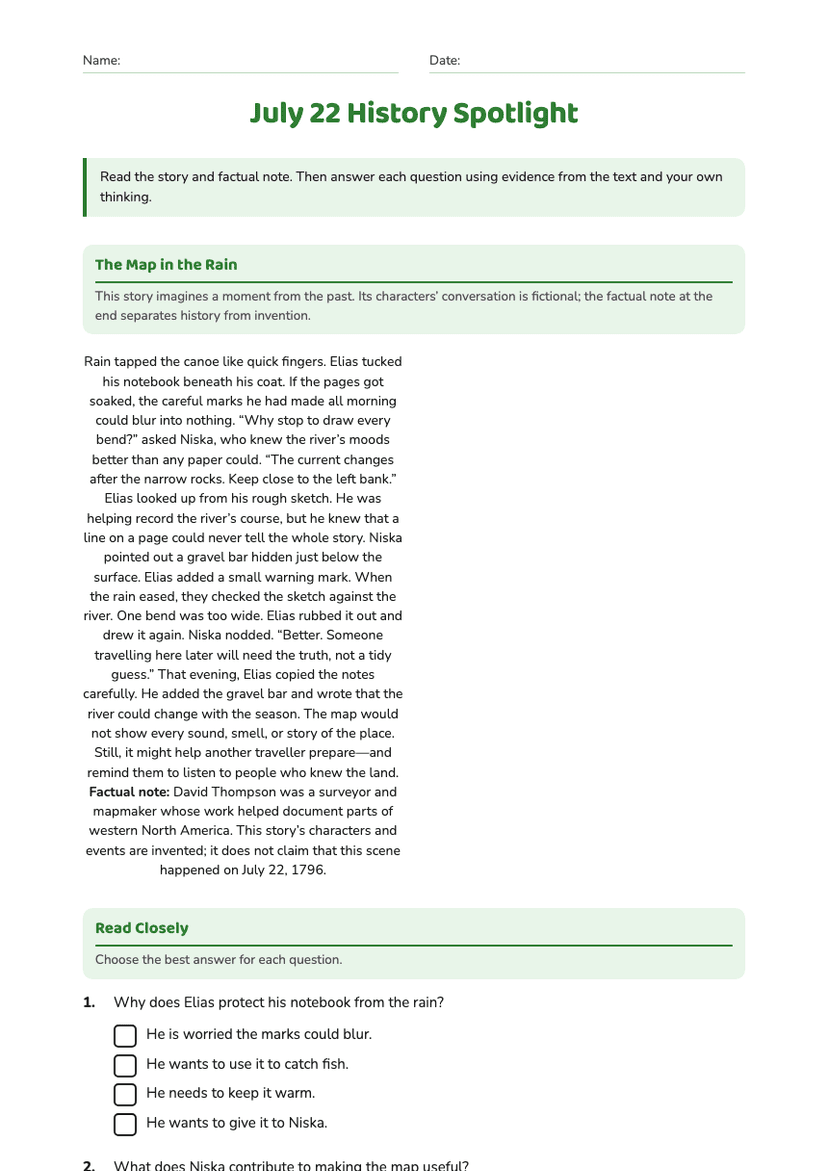
July 22 History Spotlight
Free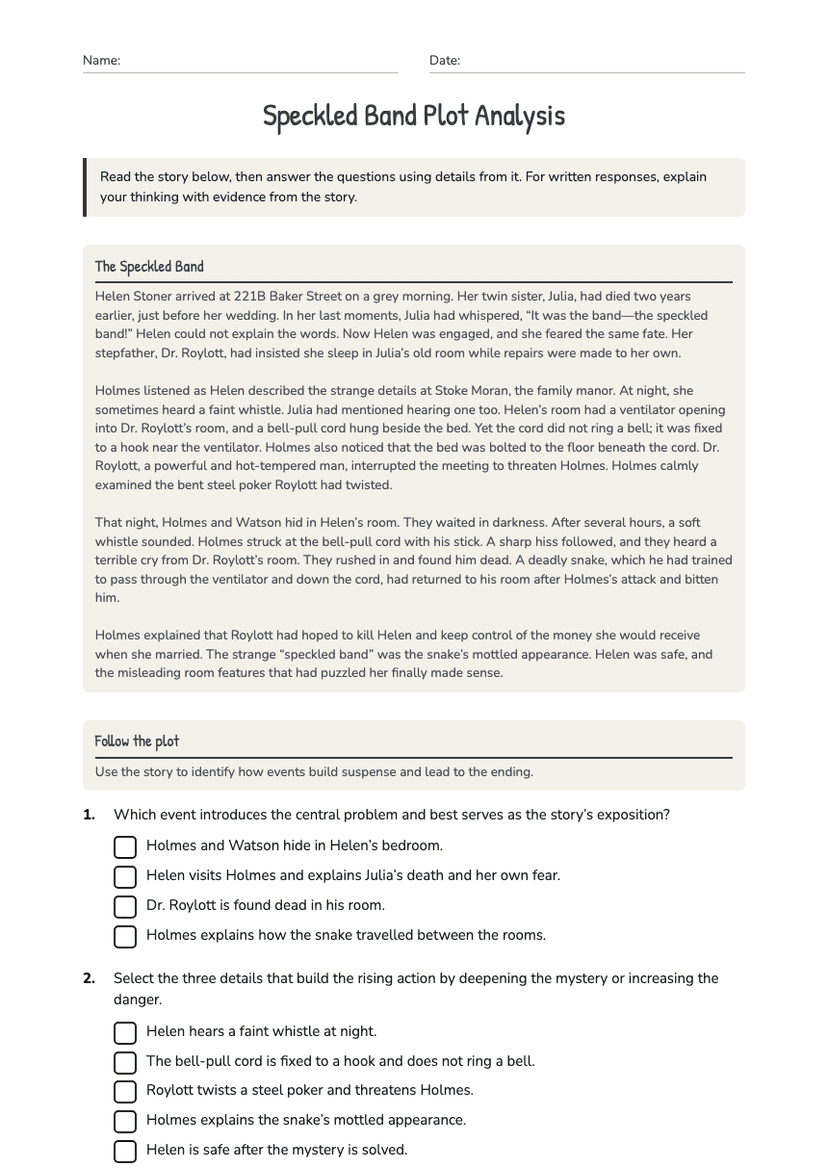
Speckled Band Plot Analysis
Free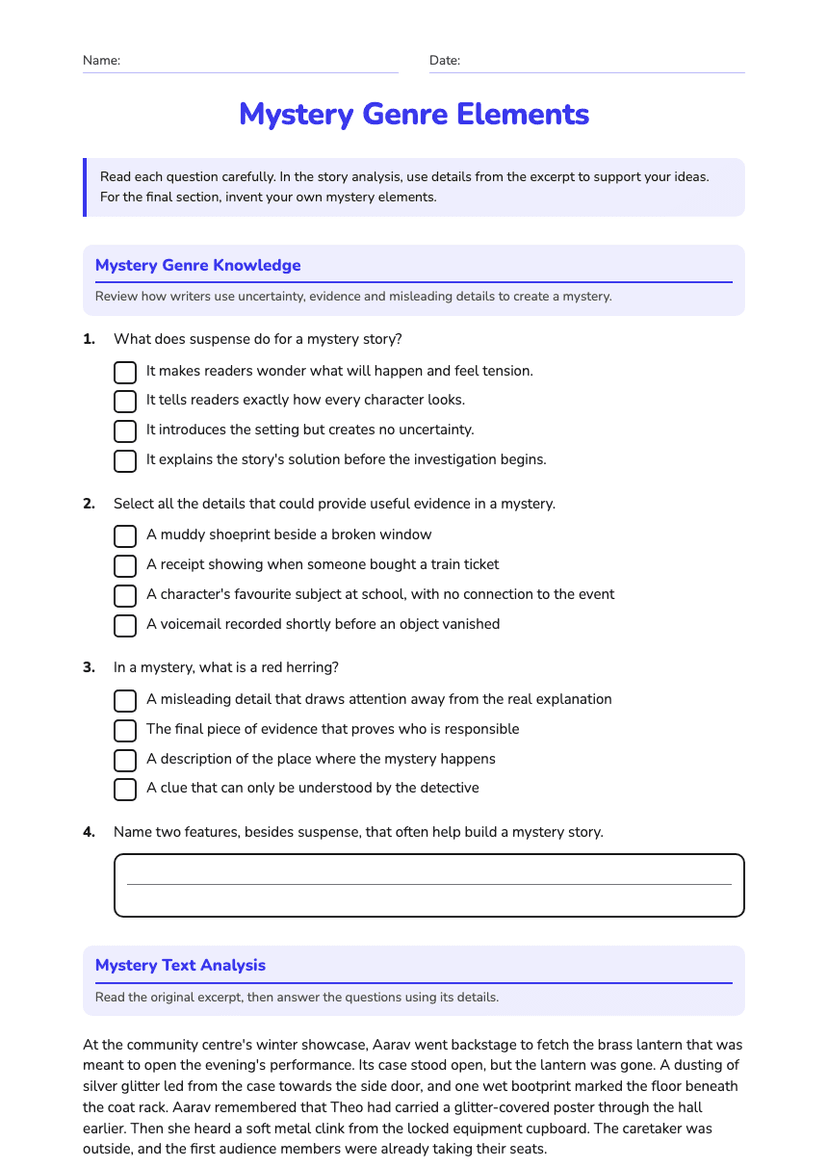
Mystery Genre Elements
Free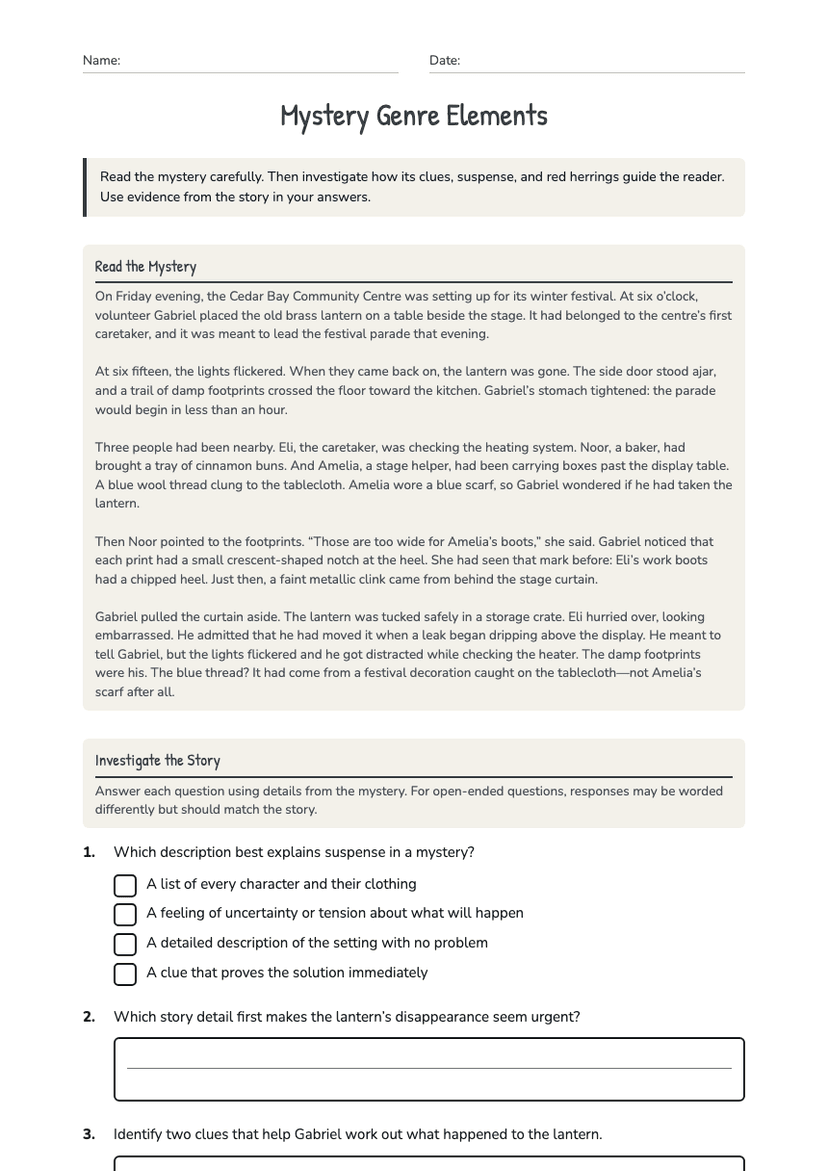
Mystery Genre Elements
Free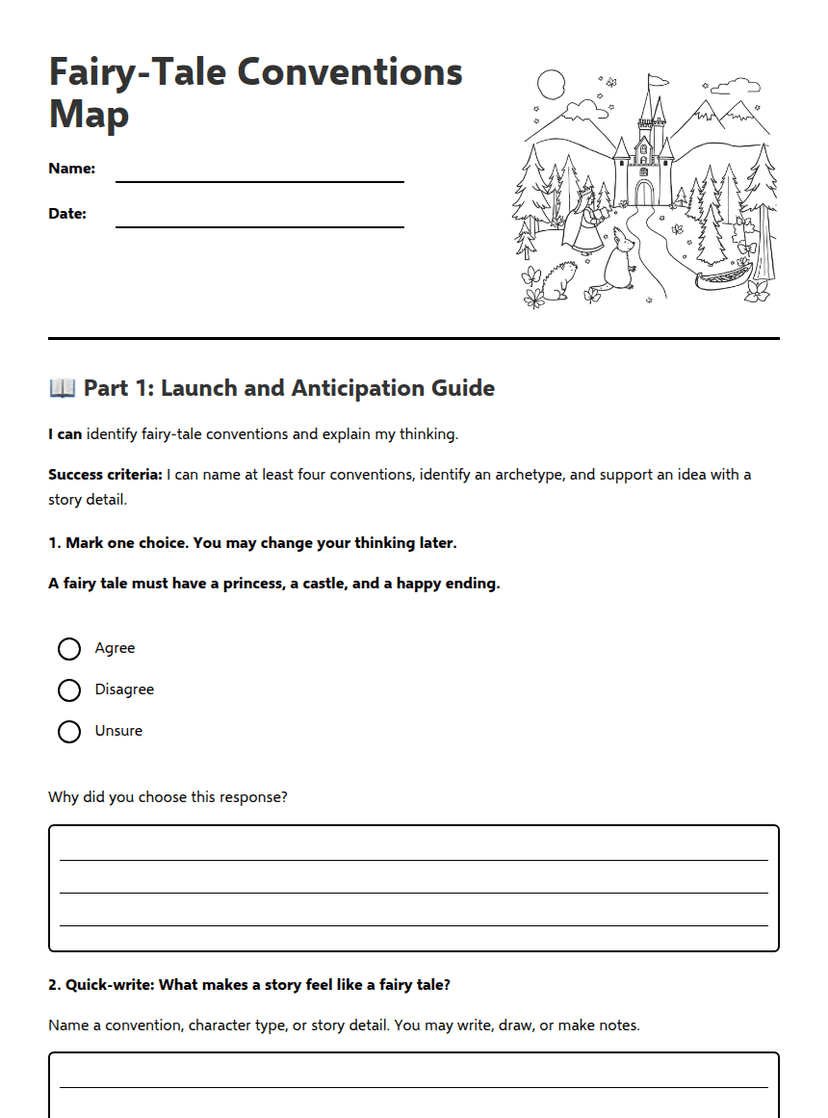
Fairy-Tale Conventions Map
Free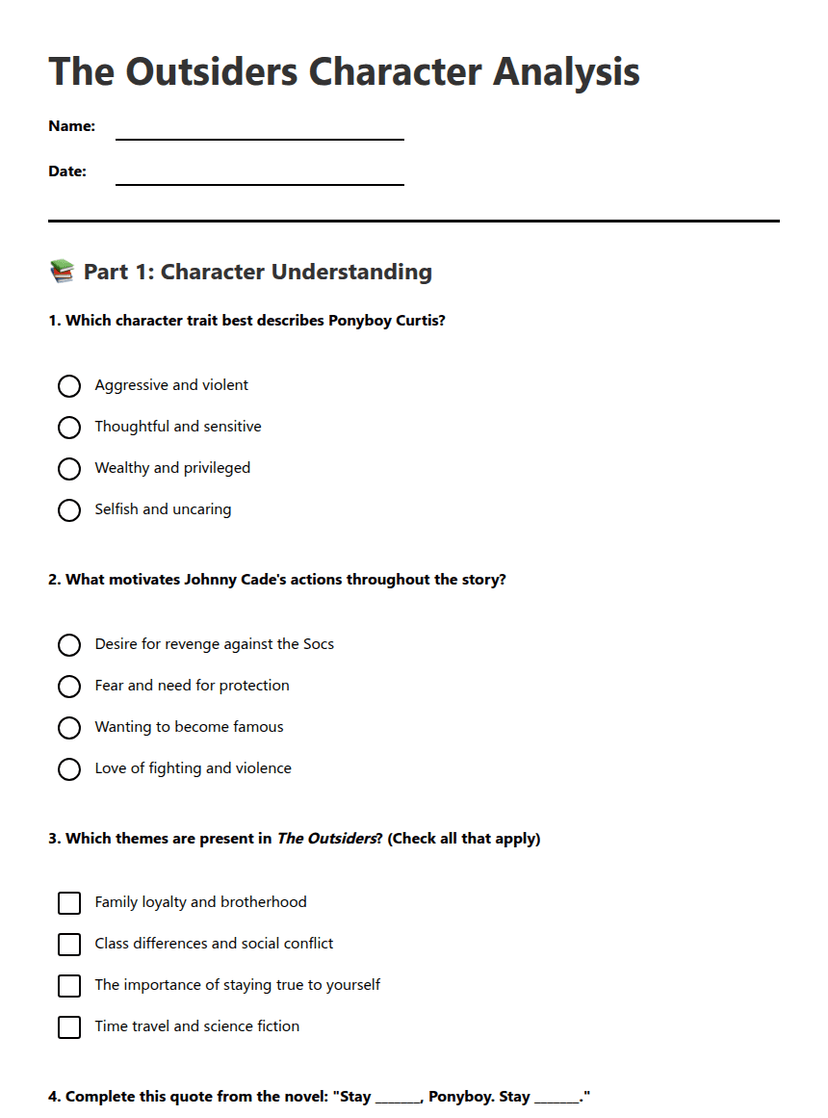
The Outsiders Character Analysis
Free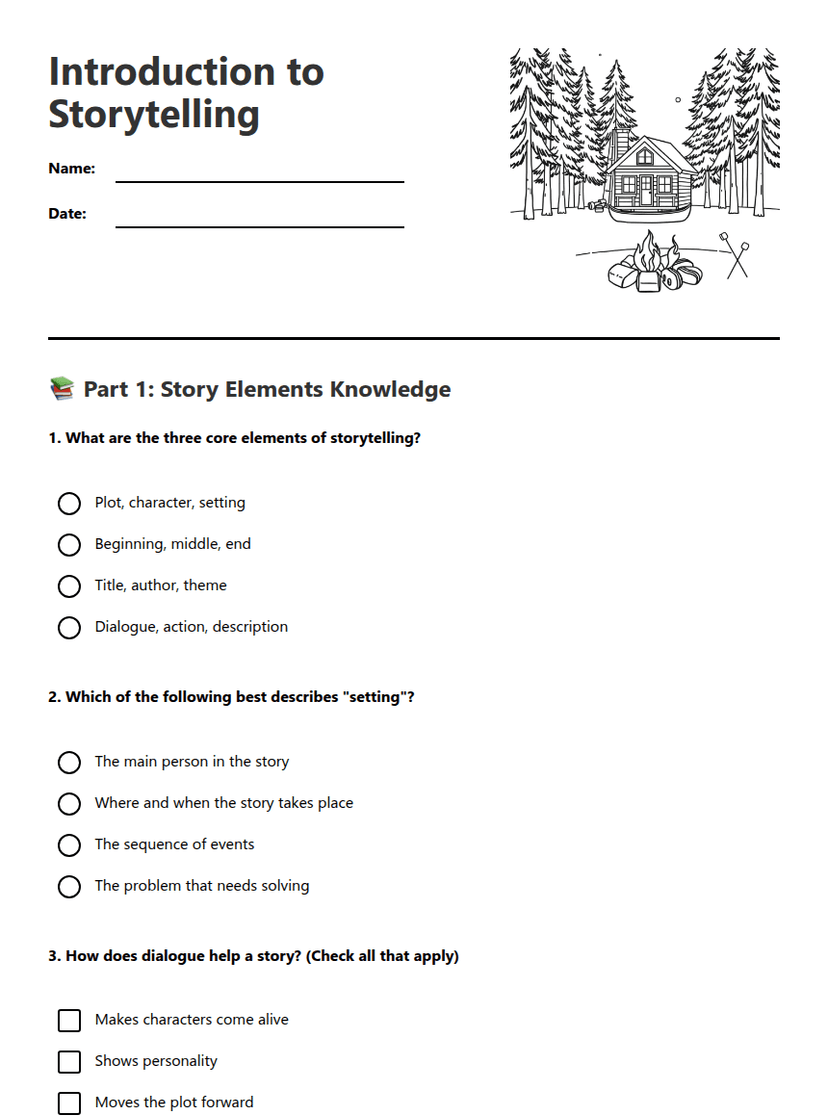
Introduction to Storytelling
Free