Social SciencesFreePrintable

Bicultural Integration in Practice

A free social sciences worksheet ready for your classroom. Open in Kuraplan to grab the print-ready PDF, customize it for your students, or generate a fresh version in seconds.
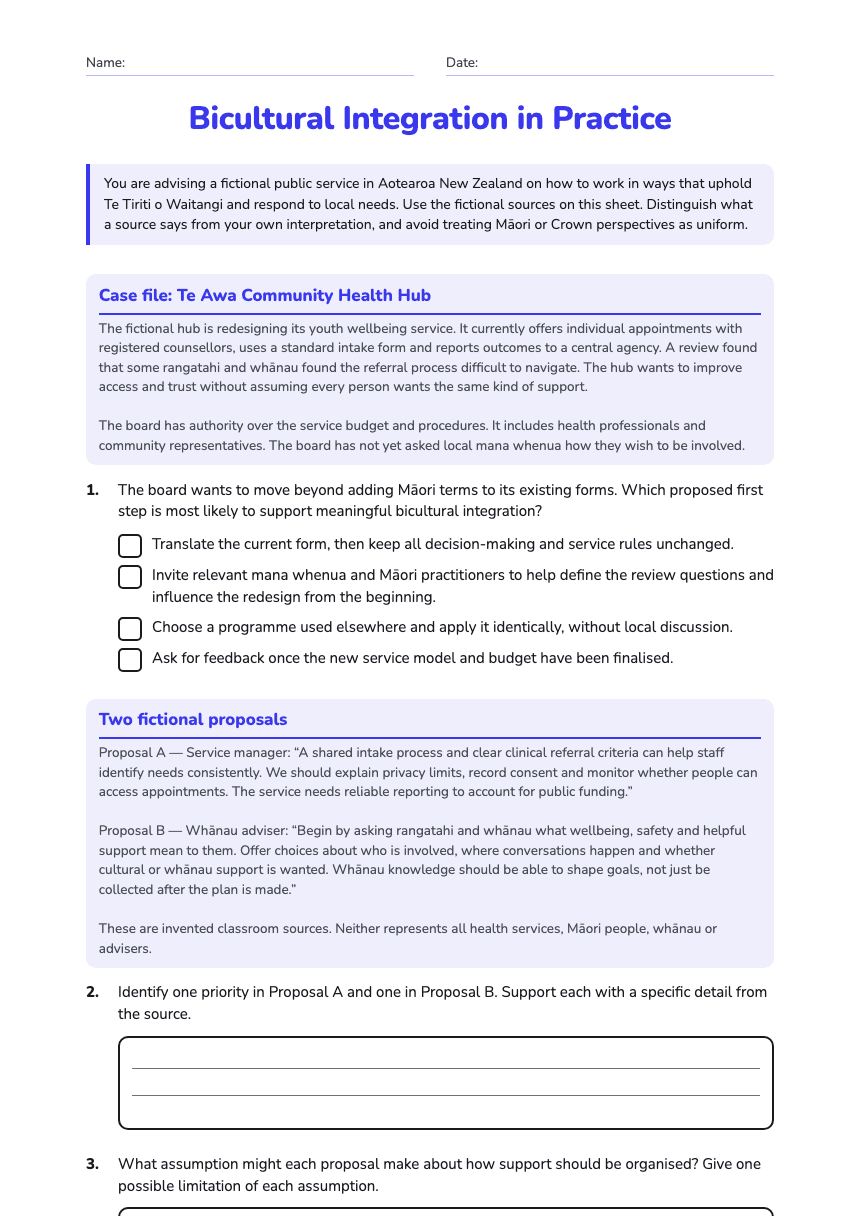
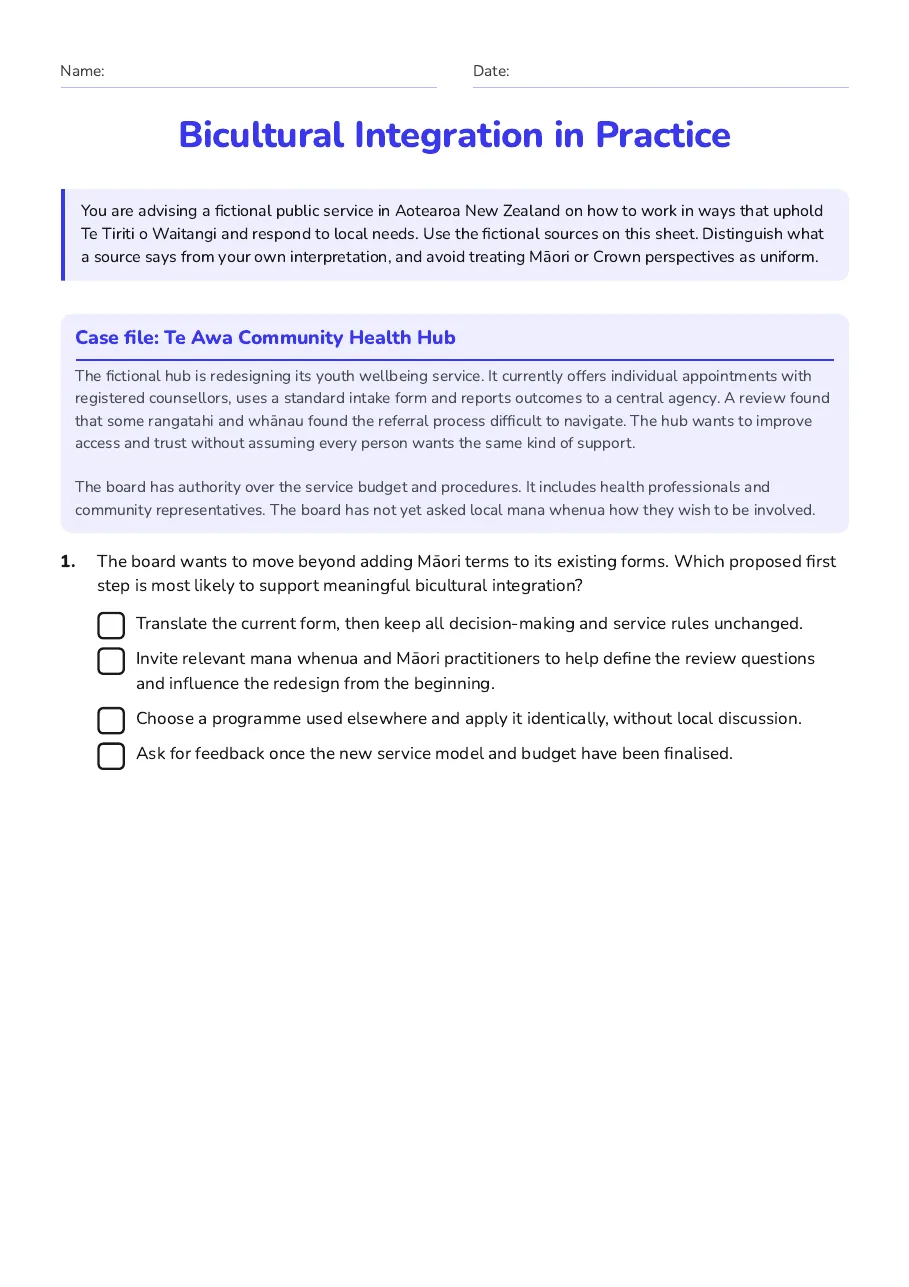
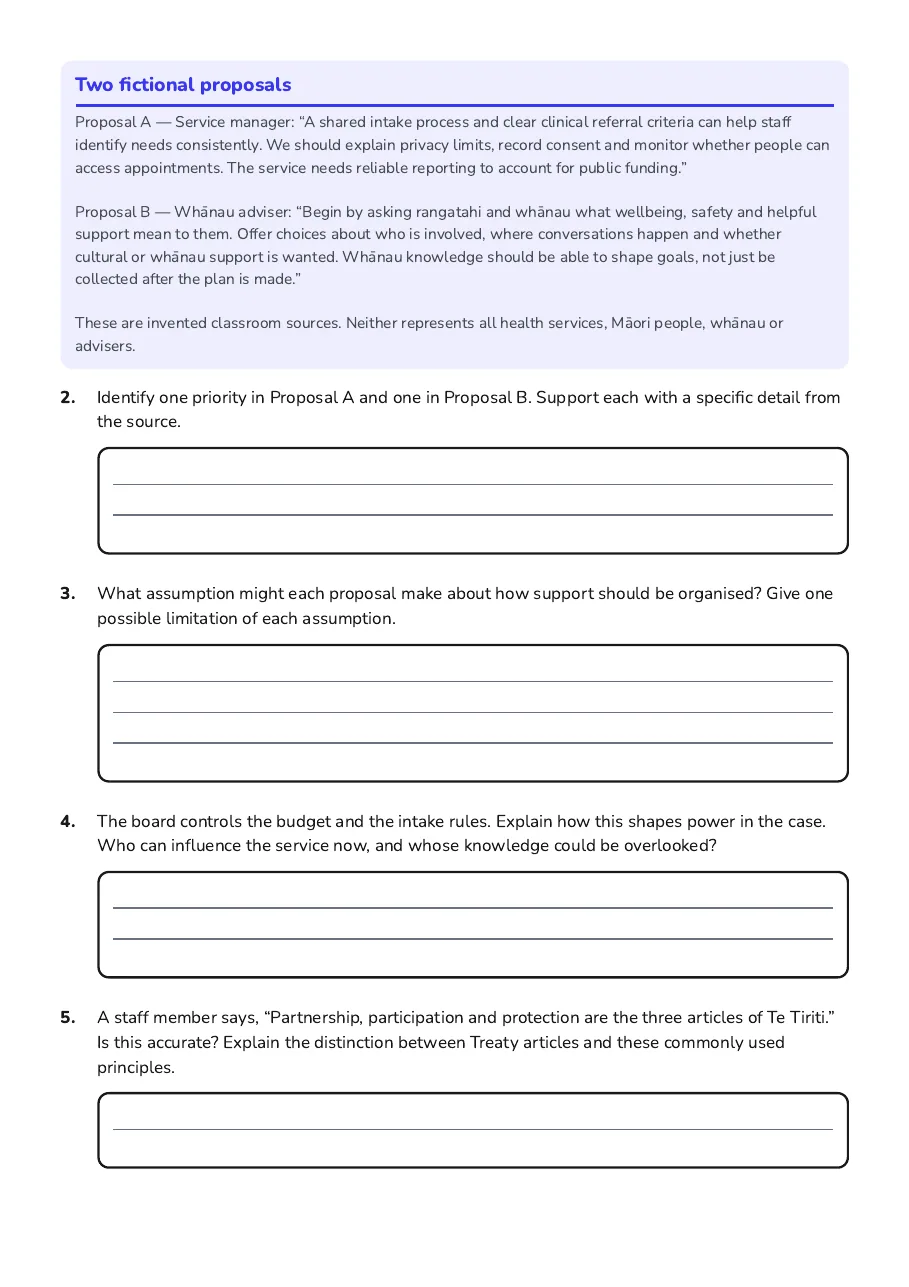
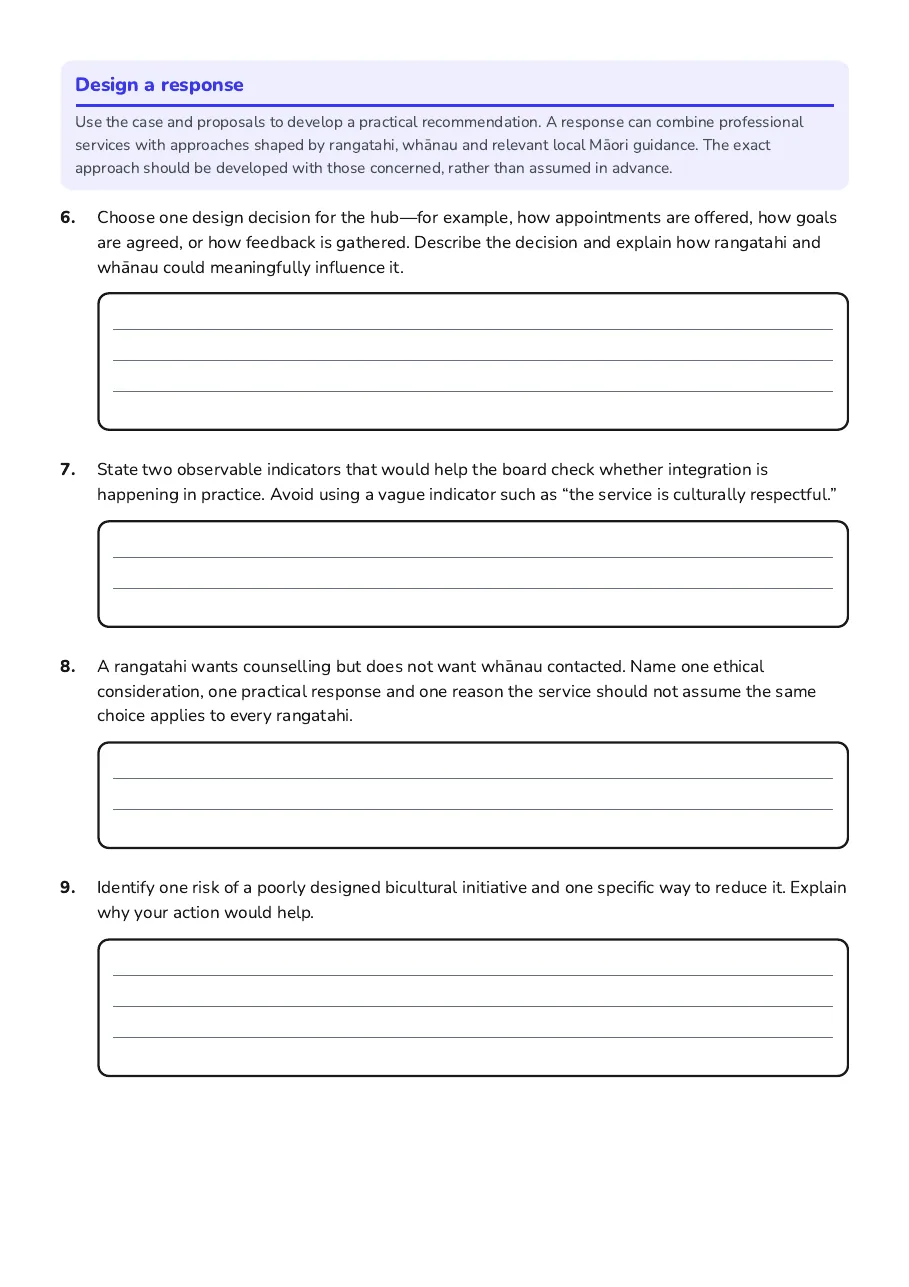
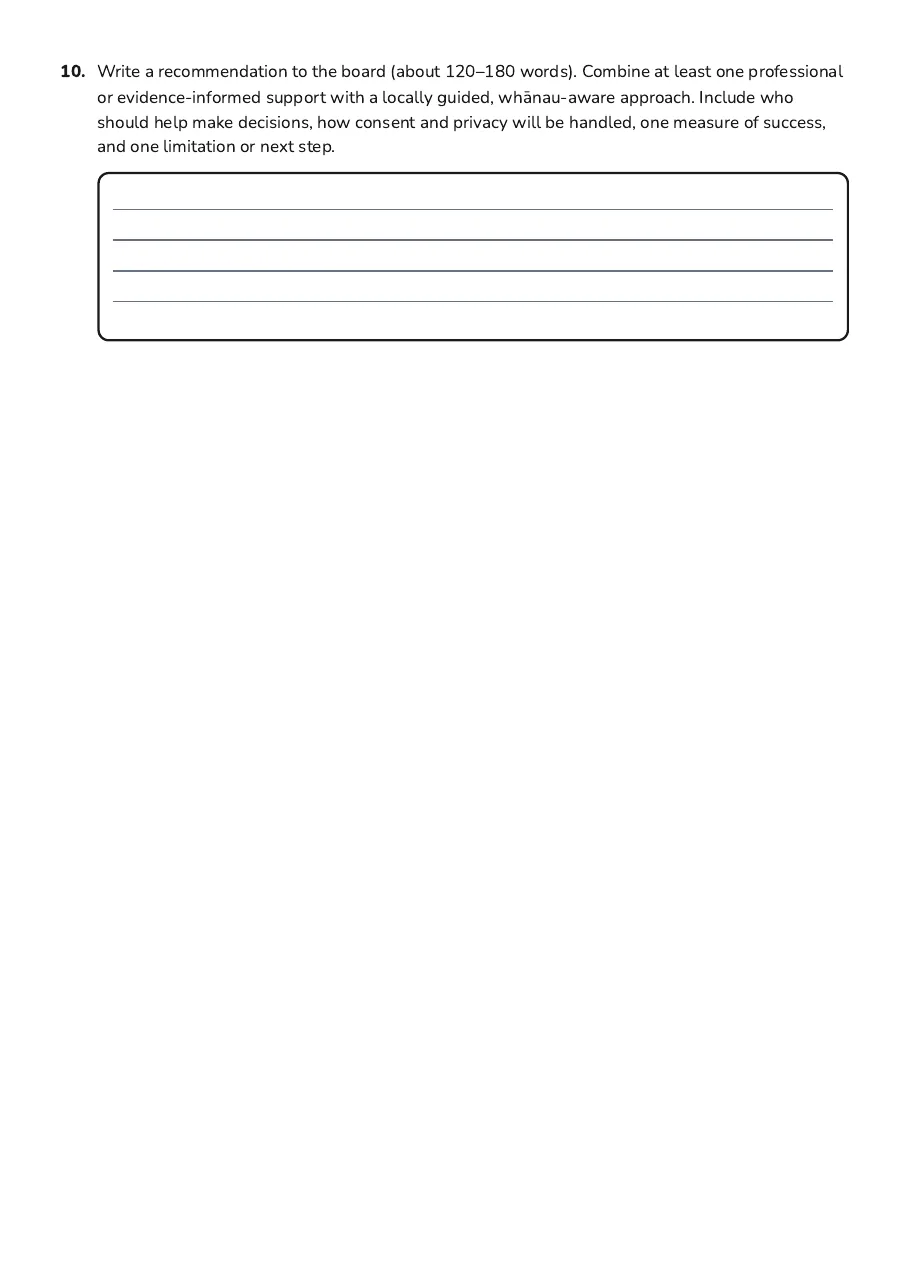
Bicultural Integration in Practice worksheet preview

Bicultural Integration in Practice

Worksheet illustration

Part 1: Learning focus and key ideas

WALT: We Are Learning To synthesise Western psychological approaches with Māori and Indigenous approaches to understand behaviour and wellbeing within cultural contexts.

Success criteria — I can:

1. Combine at least one Western theory and one Māori or Indigenous approach respectfully.

2. Create a bicultural support approach that includes whānau-centred supports and Western services where appropriate.

3. Justify why my choices are culturally appropriate, ethical and responsive to client needs.

4. Identify risks such as cultural mismatch, harm or oversimplification, and explain how these could be reduced.

Key overview

Biculturalism in Aotearoa New Zealand refers to working towards relationships and institutions that recognise the distinctive status of Māori and the Crown, while respecting the diversity of all communities. It is not simply adding Māori content to an existing system. It involves examining whose knowledge, values and decision-making have power.

Te Tiriti o Waitangi/Treaty of Waitangi: The Māori and English texts differ in important ways. In the Māori text, Article 1 refers to kāwanatanga, Article 2 guarantees tino rangatiratanga over taonga, and Article 3 concerns ōritetanga and the extension of rights. The English text uses different wording, including sovereignty and property rights. Partnership, participation and protection are commonly used as later interpretive principles; they are not the names of the three articles. Tino rangatiratanga can be understood as Māori authority, self-determination and the ability to exercise control over matters important to Māori.

Power and policy shape integration through funding, curriculum decisions, professional rules, referral pathways and whose evidence is treated as authoritative. Effective practice should involve meaningful Māori participation and local consultation, rather than assuming that Māori are one homogeneous group. Where possible, seek guidance from local iwi, hapū, whānau and Māori practitioners. Verify historical and Treaty claims with reliable sources.

1. Which statement best distinguishes Treaty articles from Treaty principles?

Articles are later school policies, while principles are the original text.

Articles are texts in the Treaty documents; principles are interpretive ideas developed over time.

Articles and principles are exactly the same terms.

2. Which action best demonstrates meaningful participation?

Asking for feedback after all decisions have been finalised.

Involving relevant Māori communities early and allowing their views to influence decisions.

Applying one Māori programme identically in every rohe.

3. In your own words, explain why bicultural integration is more than “adding on” Māori content.

Part 2: Source analysis and comparison

Context: A secondary school is reviewing its response to student anxiety after family disruption. Staff are considering counselling, whānau involvement and stronger cultural connection.

Fictional classroom source A — institutional perspective: “The school should use a consistent screening tool and refer students to qualified counsellors. A common process will help staff identify anxiety early and provide fair access to support. Whānau views can be collected during the referral process, while confidentiality and professional boundaries remain important.”

Fictional classroom source B — whānau-centred perspective: “Support should begin by listening to the student and the whānau about what wellbeing and safety mean for them. Counselling may be useful, but it should connect with whakapapa, relationships, belonging and culturally safe spaces. Whānau should help shape goals and decide who is involved, rather than being consulted only after a plan is made.”

These are teacher-created fictional perspectives, not quotations or evidence from named people. Do not assume either source represents all Māori, all whānau or all Crown institutions.

4. Identify the main viewpoint of each source. What does each source prioritise?
5. Identify one piece of evidence or reasoning used by each source. What assumption does each source appear to make?
6. Analyse one power relationship in the sources. Who makes decisions, whose knowledge is privileged, and how might policy or professional practice influence this?

Comparison organiser: avoid stereotyping

Complete the organiser using “may”, “could” or “some” where appropriate. Add local knowledge only when it is supported by reliable sources or appropriate consultation.

Possible priorities in a Māori or whānau-centred perspective
Whakapapa, whānau relationships, belonging, manaakitanga, cultural safety, tino rangatiratanga or collective wellbeing may be relevant. These priorities are not identical for every Māori person, whānau, iwi or hapū.
Evidence or example: ____________________________________________
Potential strength: ______________________________________________
Possible priorities in a Crown or Western institutional perspective
Consistency, professional standards, privacy, individual assessment, accountability or access to services may be relevant. Institutions also vary and can change through policy and practice.
Evidence or example: ____________________________________________
Potential strength: ______________________________________________
7. Propose two practical indicators that would show meaningful bicultural integration in a school or public institution. Make each indicator observable.
8. Describe one risk of a poorly designed bicultural support plan and one action that could reduce that risk.

Part 3: Apply, justify and reflect

Extended-response task: Explain how a school could respond to the case in a culturally responsive way. Use at least one Western psychological approach and one Māori or Indigenous approach. Do not treat either knowledge system as a single, fixed view.

Claim: What should the school do, and what is your overall position?

Evidence: Refer to the fictional sources, relevant course concepts, reliable research or local guidance. Identify the limits of your evidence.

Reasoning: Explain how your evidence supports your claim. Include whānau roles, professional roles, power, ethical considerations and a possible limitation.

9. Exit ticket — 3–2–1: Write three integration choices you made, two ethical or cultural reasons for them, and one next step to improve your plan.

Answer guide and teacher notes

Questions 1–2: 1. Articles are texts in the Treaty documents, while principles are later interpretive ideas. 2. Involving relevant Māori communities early, with influence over decisions, best demonstrates participation.

Questions 3–8: Accept well-supported responses. Strong answers distinguish Treaty articles from principles; identify each source’s priorities and assumptions; analyse institutional power; avoid generalising about Māori; and propose observable indicators such as shared decision-making, Māori-led or locally guided professional development, whānau involvement in goal-setting, culturally safe referral pathways, or regular evaluation by the relevant community.

Extended response: Look for a clear claim, relevant evidence and reasoning that connects theory to action. Credit plans that combine appropriate Western supports with whānau-centred and culturally grounded approaches, explain consent and confidentiality, identify who holds decision-making authority, and acknowledge limitations or the need for local consultation. This activity broadly supports NCEA Level 3 historical analysis skills, including analysing significant trends and the forces influencing them, as described in AS91439. It is a classroom learning worksheet, not an assessment schedule.

Differentiation: Provide a vocabulary bank including whakapapa, whānau, hapū, iwi, manaakitanga, tino rangatiratanga, partnership, participation, protection, cultural safety, evidence, assumption and power. Chunk the sources into shorter sections, colour-code theory and cultural perspectives, and provide a partially completed organiser or sentence starters such as “This source assumes…” and “A possible limitation is…”. Allow oral recording, paired discussion or written responses. Extension learners can test their plan against a “what if” scenario, such as client distrust of services or disagreement between family priorities and professional advice, then revise their plan while maintaining bicultural integrity.

Cultural responsiveness reminder: Use local iwi and hapū knowledge where appropriate, follow local protocols, and avoid presenting Māori knowledge as a decorative addition or a single universal model. Encourage students to verify historical and Treaty claims with reliable sources and to consult appropriately rather than speaking for communities.

About This Worksheet

Free in Kuraplan

Sign up free, grab the PDF, and customize it for your class.

Print-Ready

Formatted for standard paper. Clean layout, easy to read.

AI-Generated

Created with Kuraplan's AI, designed for real classroom use.

For Teachers & Parents

Use in classrooms, for homework, tutoring, or homeschool.

Need a custom version of this worksheet?

Kuraplan's AI generates custom worksheets in seconds — differentiated for every learner, aligned to your curriculum.

Generate Custom Worksheets — Free
No credit card Curriculum-aligned Under 60 seconds