Chemical Reactions Assessment Worksheet
A free science worksheet ready for your classroom. Open in Kuraplan to grab the print-ready PDF, customize it for your students, or generate a fresh version in seconds.
Chemical Reactions Assessment Worksheet
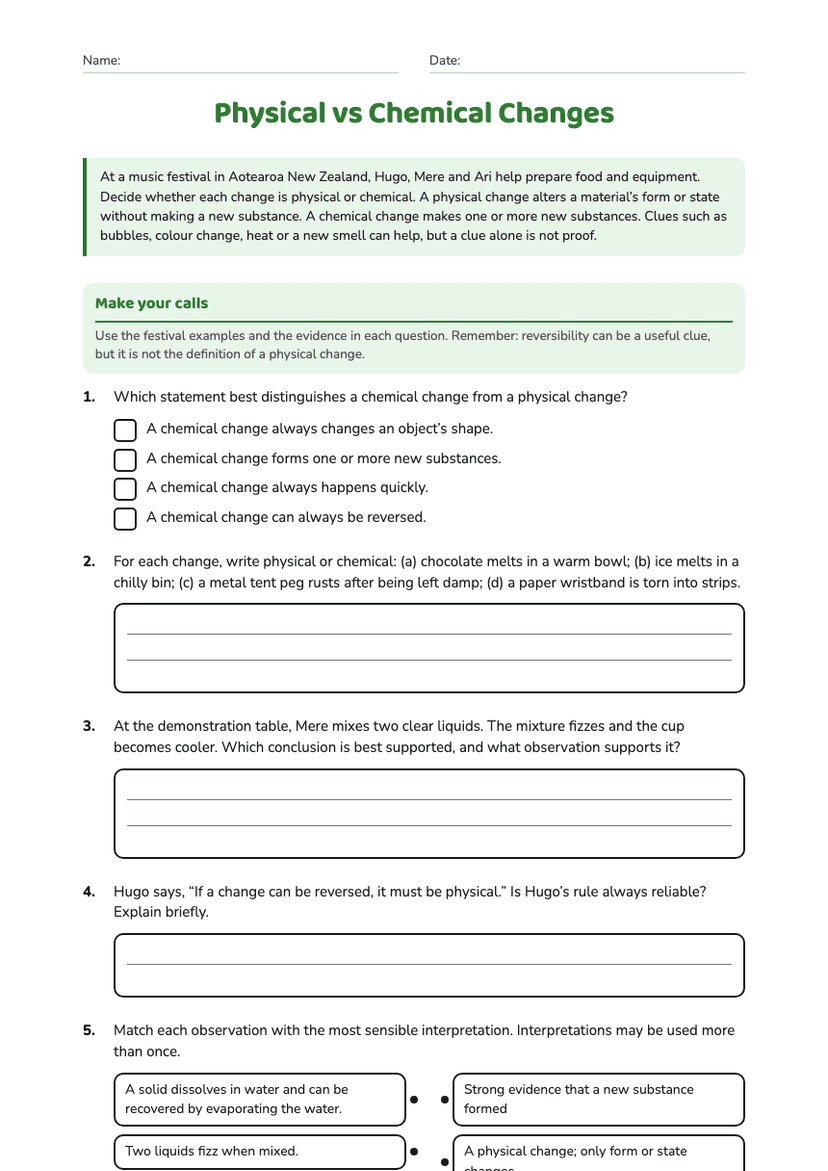
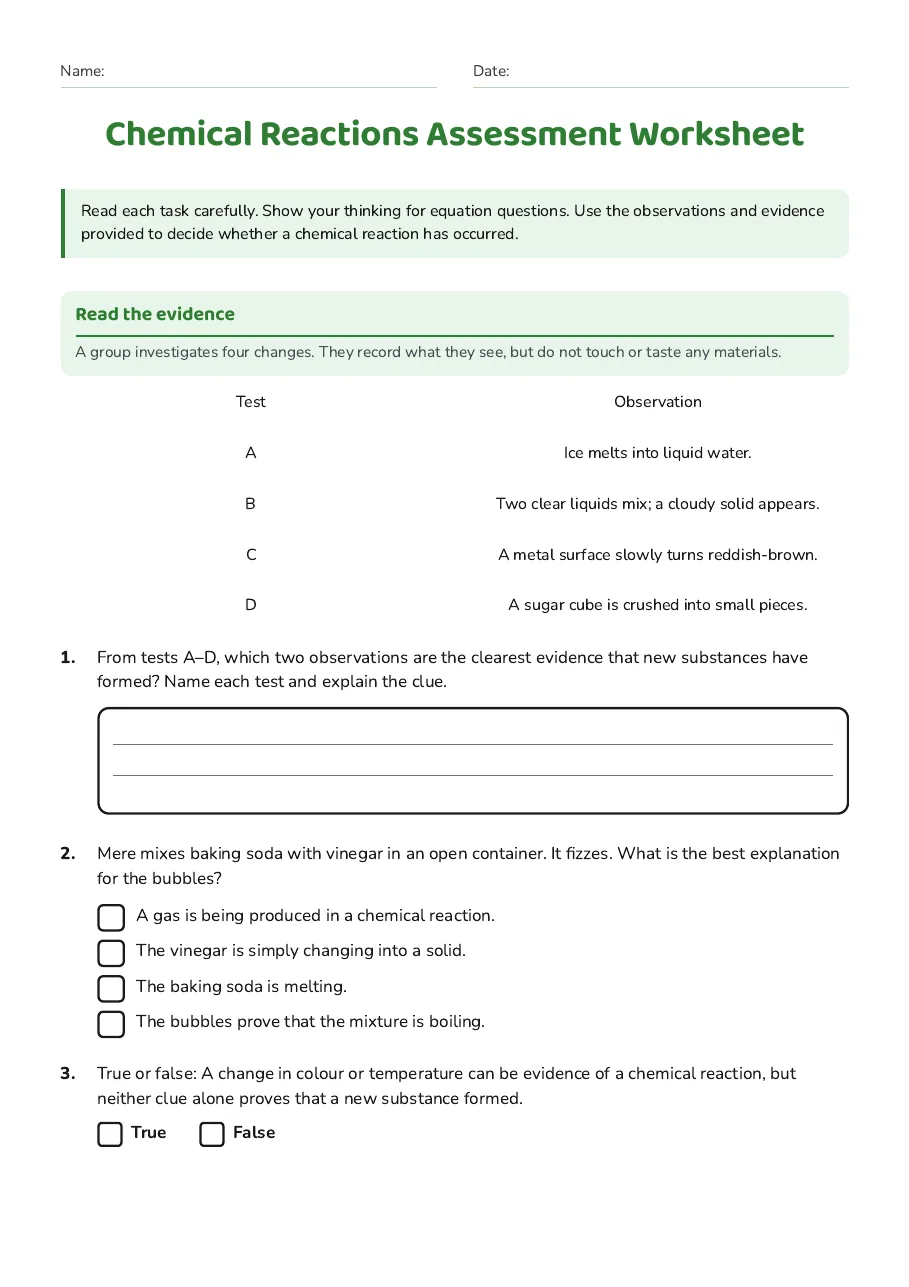
Read the evidence
A group investigates four changes. They record what they see, but do not touch or taste any materials.
Test
Observation
A
Ice melts into liquid water.
B
Two clear liquids mix; a cloudy solid appears.
C
A metal surface slowly turns reddish-brown.
D
A sugar cube is crushed into small pieces.
- A gas is being produced in a chemical reaction.
- The vinegar is simply changing into a solid.
- The baking soda is melting.
- The bubbles prove that the mixture is boiling.
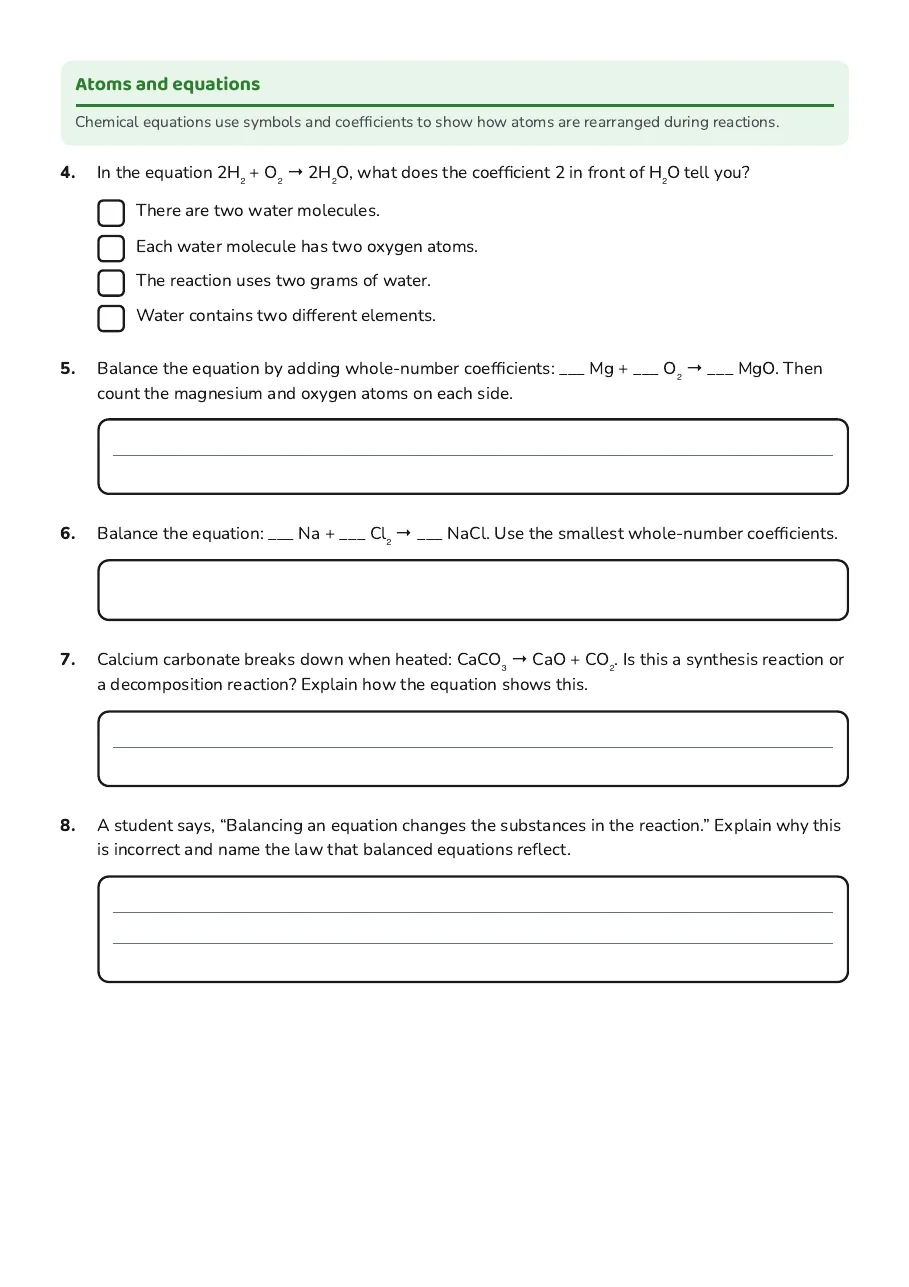
Atoms and equations
Chemical equations use symbols and coefficients to show how atoms are rearranged during reactions.
- There are two water molecules.
- Each water molecule has two oxygen atoms.
- The reaction uses two grams of water.
- Water contains two different elements.
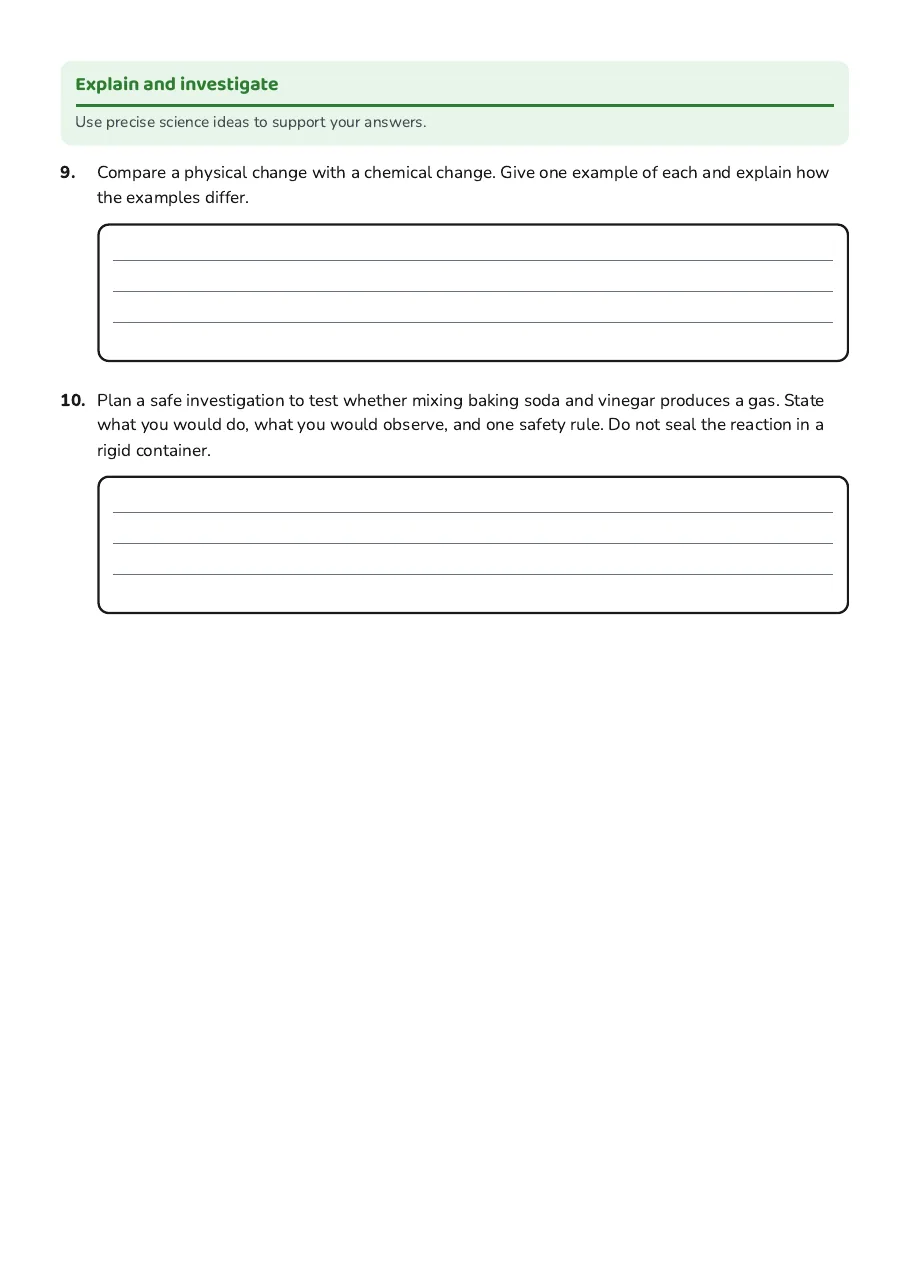
Explain and investigate
Use precise science ideas to support your answers.
3 printable pages
Page 1
Page 2
Page 3
About This Worksheet
Free in Kuraplan
Sign up free, grab the PDF, and customize it for your class.
Print-Ready
Formatted for standard paper. Clean layout, easy to read.
AI-Generated
Created with Kuraplan's AI, designed for real classroom use.
For Teachers & Parents
Use in classrooms, for homework, tutoring, or homeschool.
Need a custom version of this worksheet?
Kuraplan's AI generates custom worksheets in seconds — differentiated for every learner, aligned to your curriculum.
Generate Custom Worksheets — FreeMore Science Worksheets
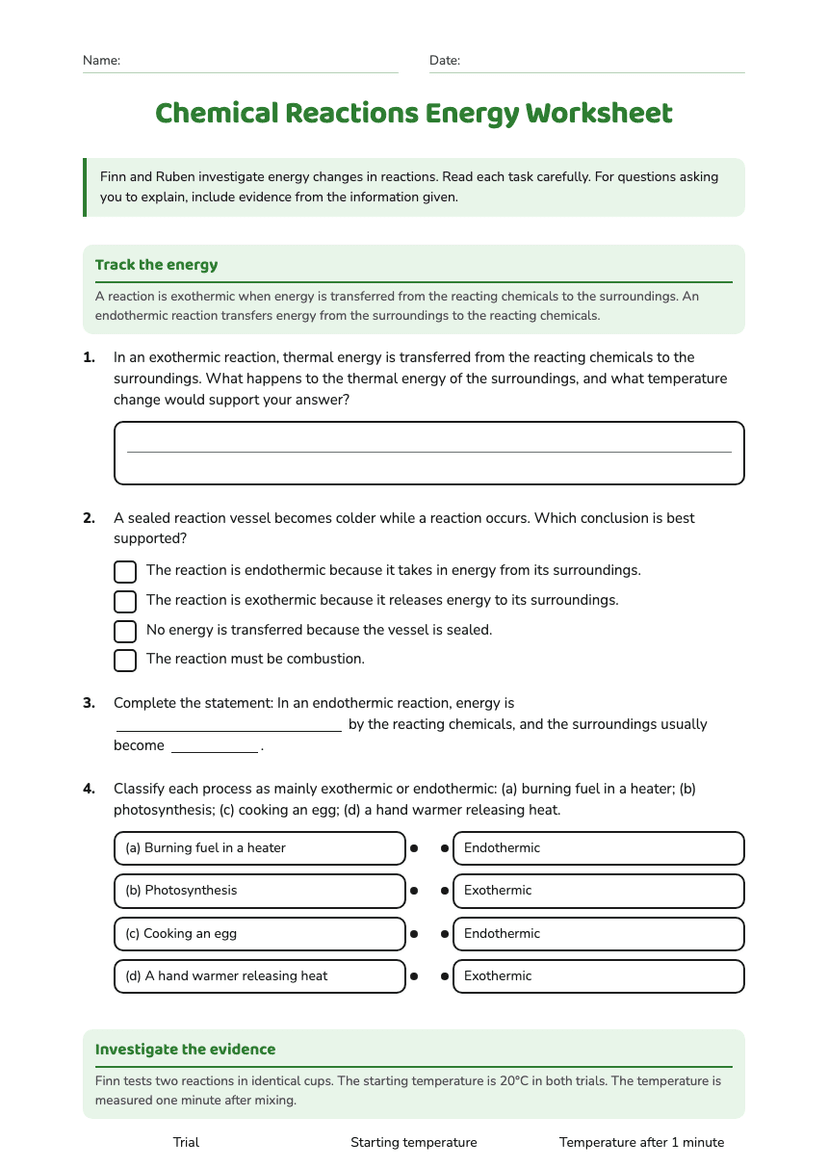
Chemical Reactions Energy Worksheet
Free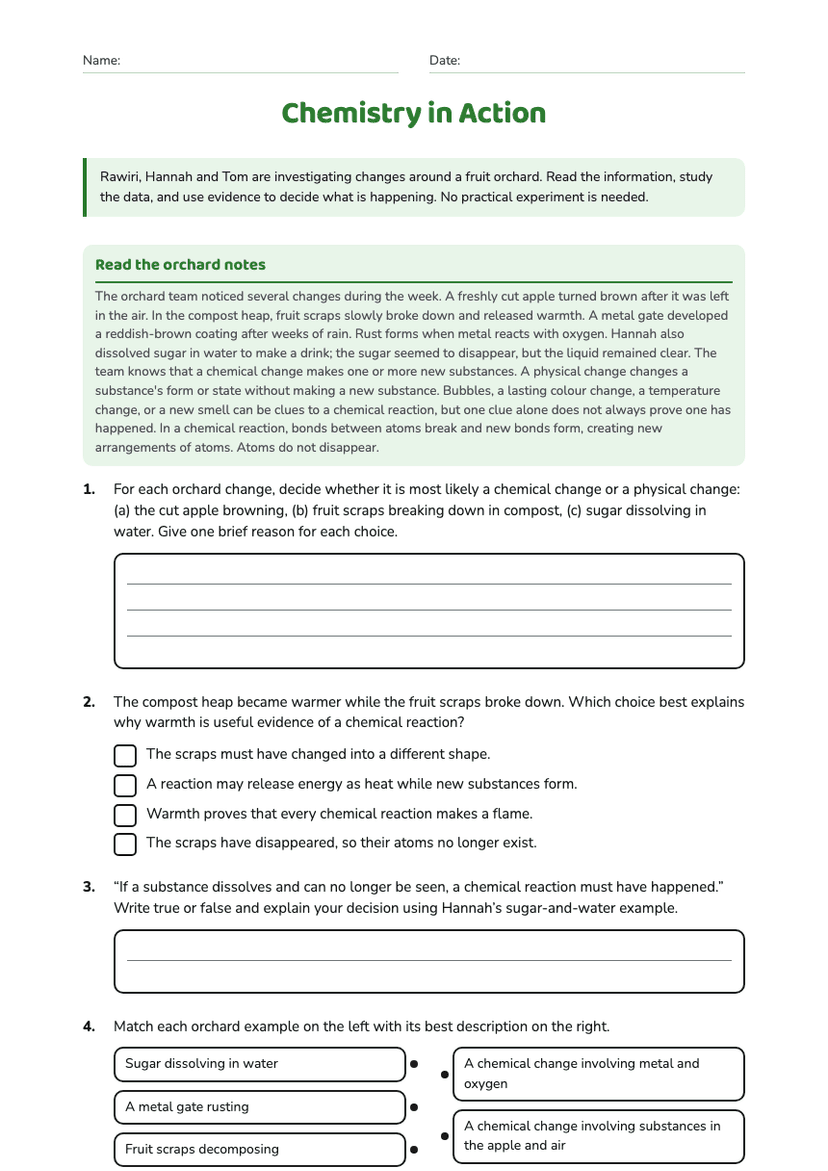
Chemistry in Action
Free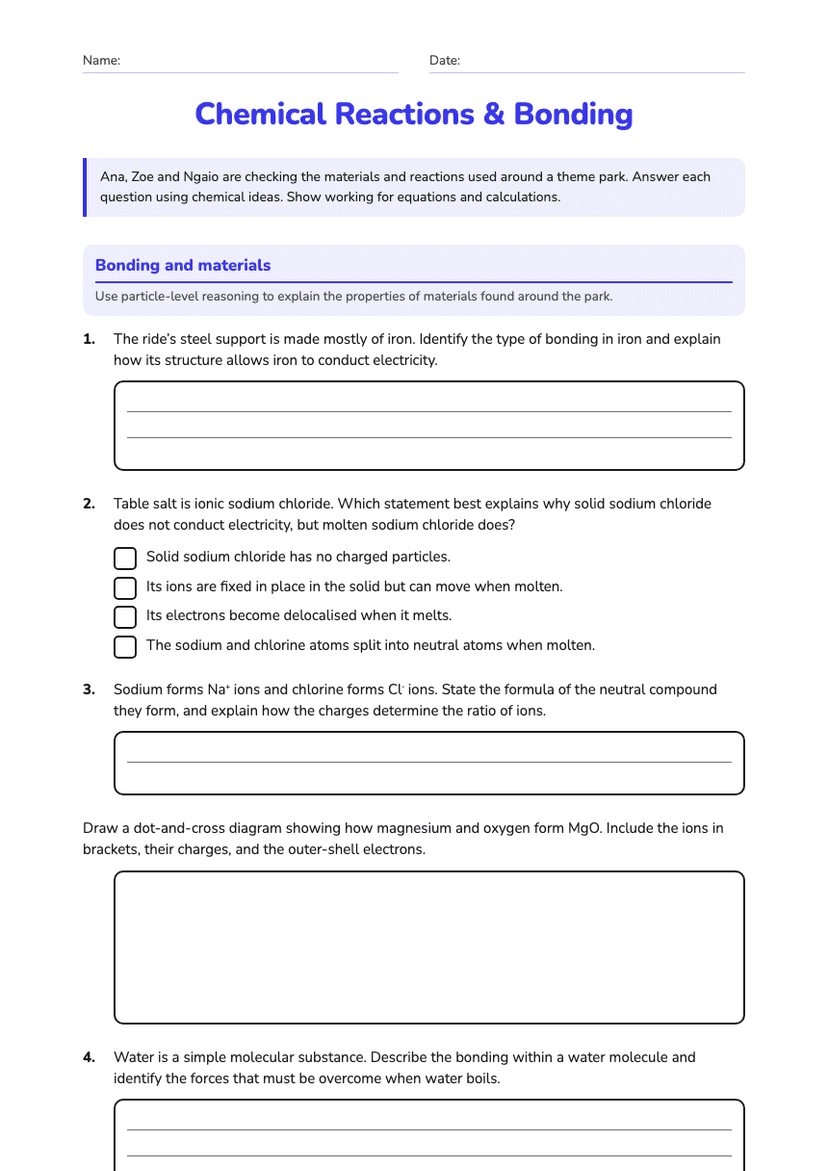
Chemical Reactions & Bonding
Free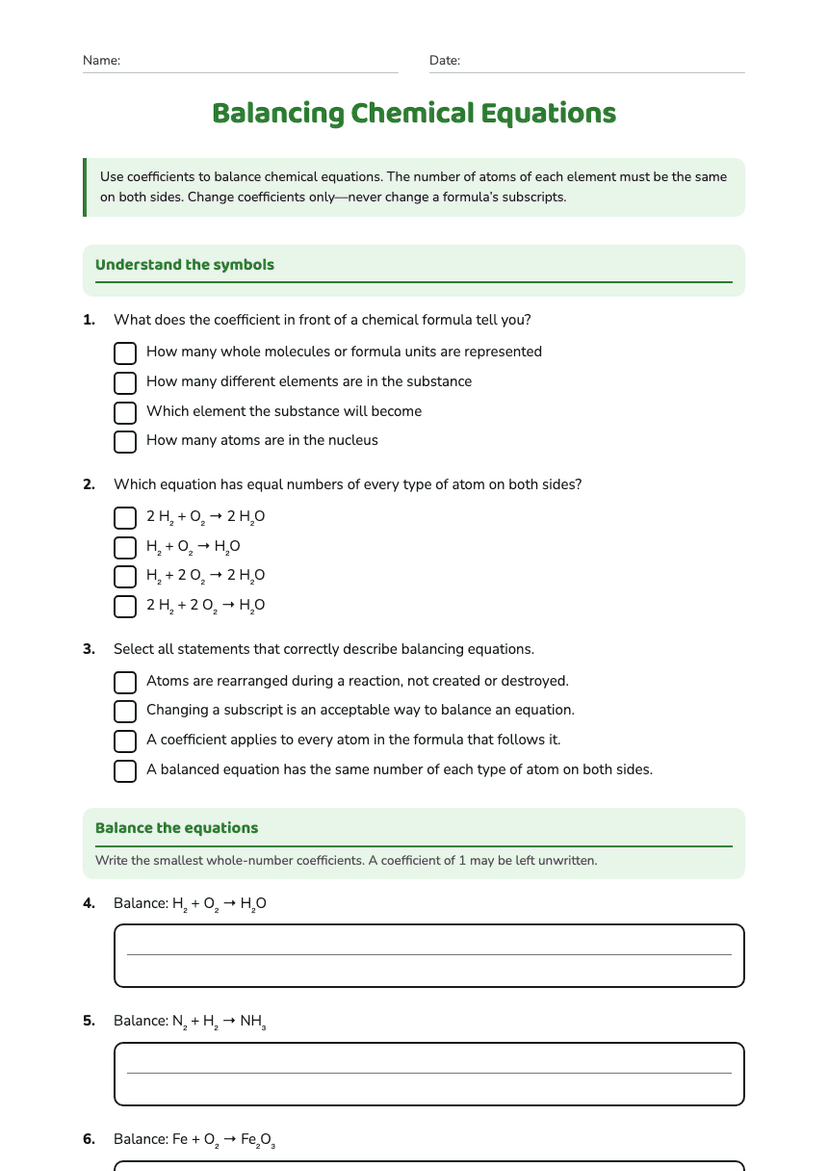
Balancing Chemical Equations
Free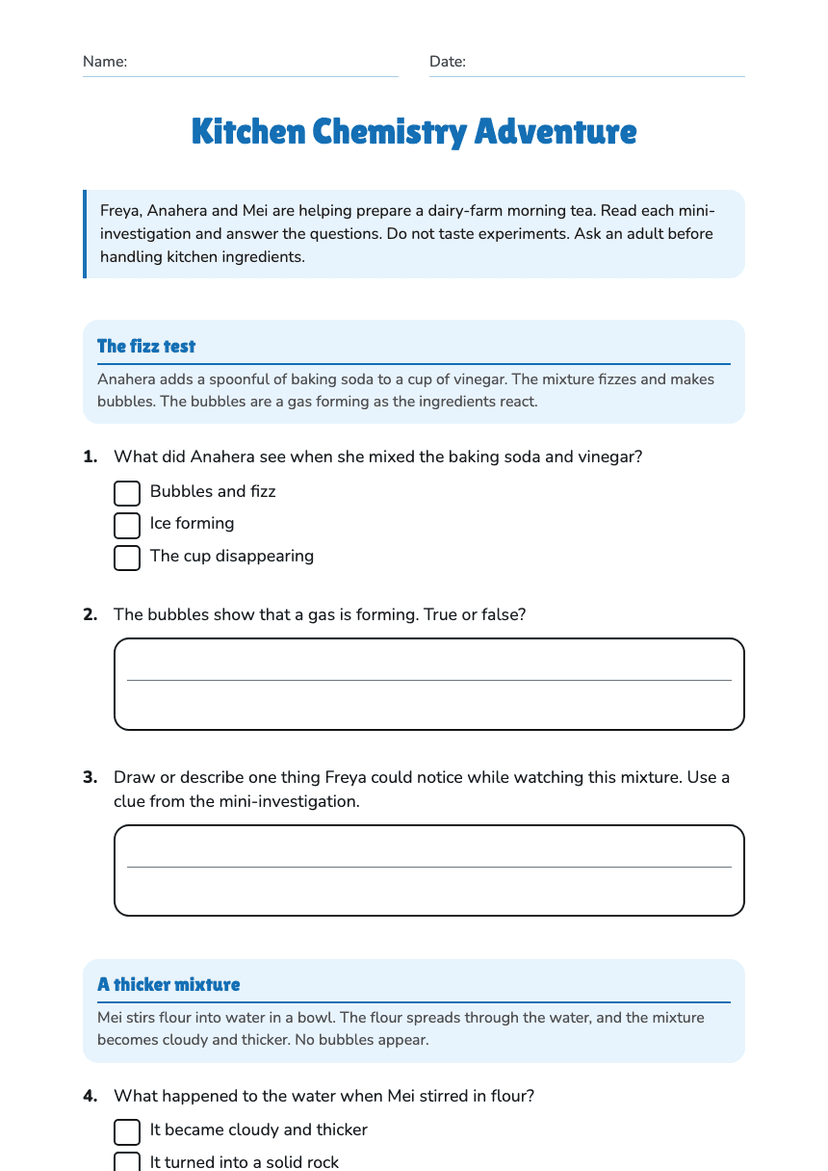
Kitchen Chemistry Adventure
Free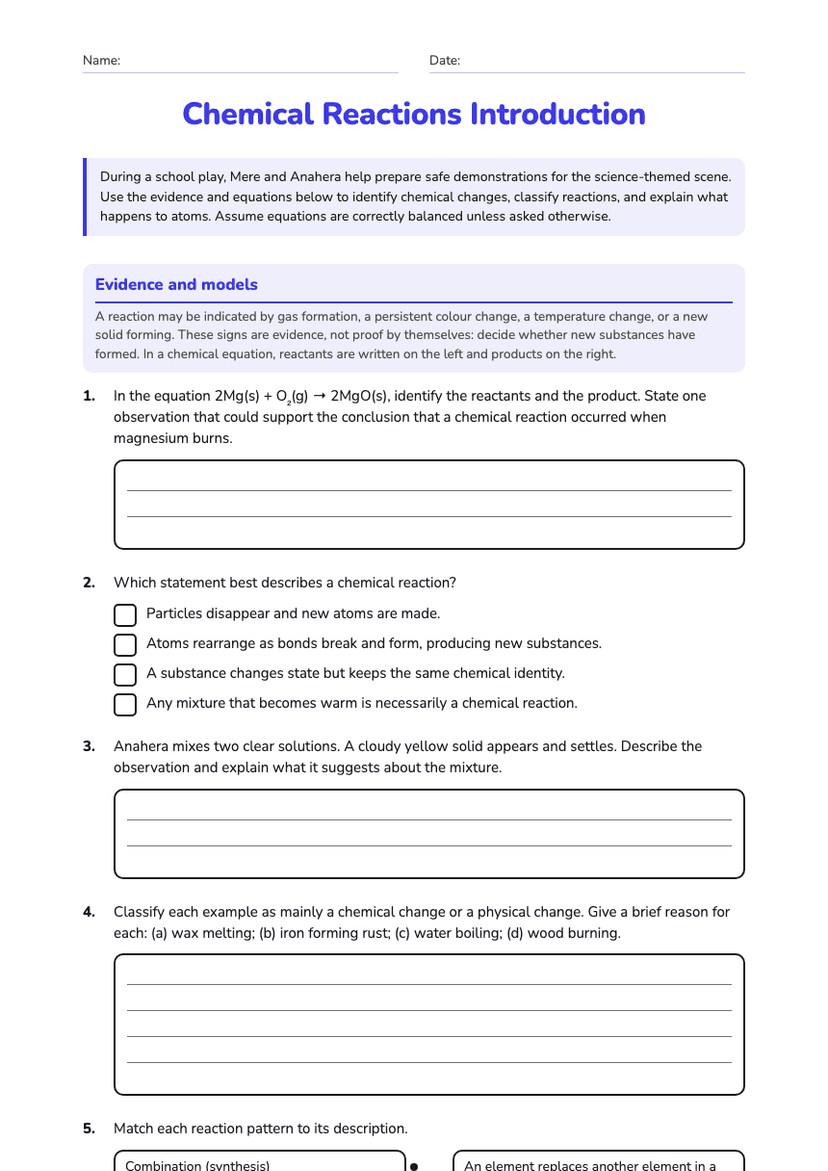
Chemical Reactions Introduction
Free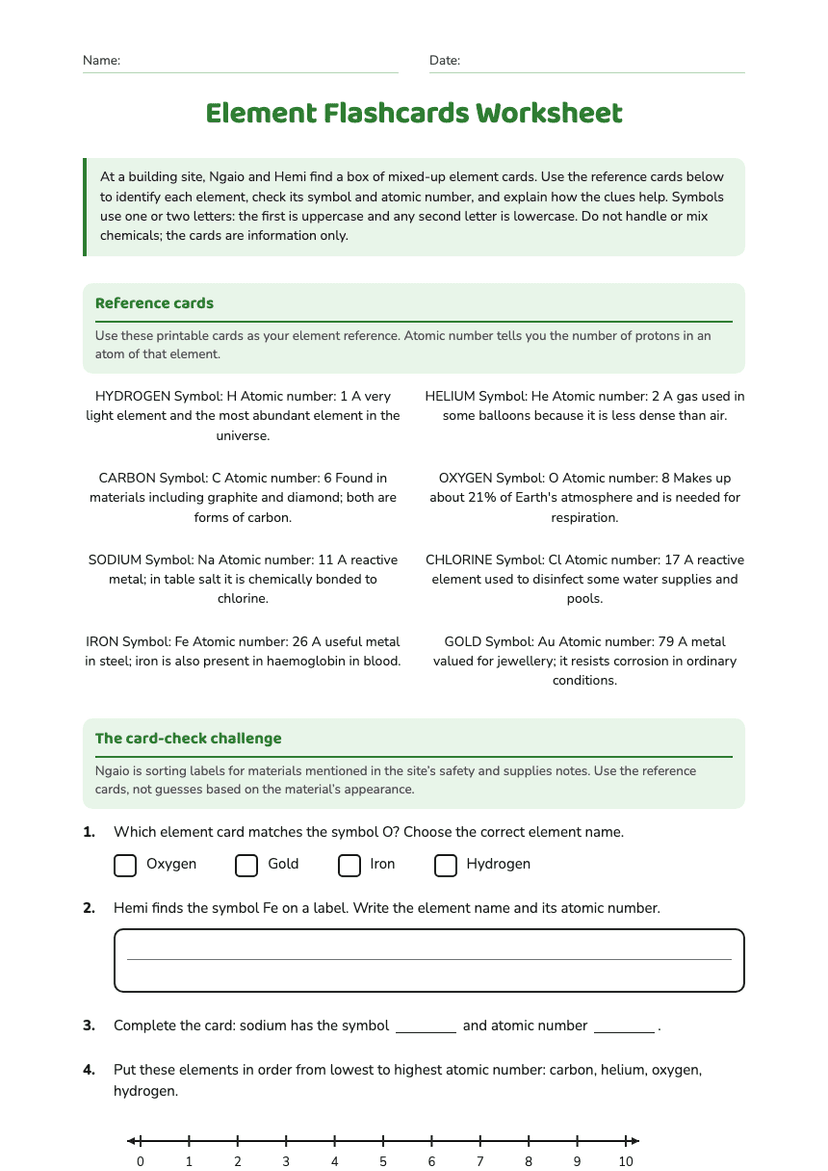
Element Flashcards Worksheet
Free