MathsFreePrintable

Community Issues Data Investigation

A free maths worksheet ready for your classroom. Open in Kuraplan to grab the print-ready PDF, customize it for your students, or generate a fresh version in seconds.
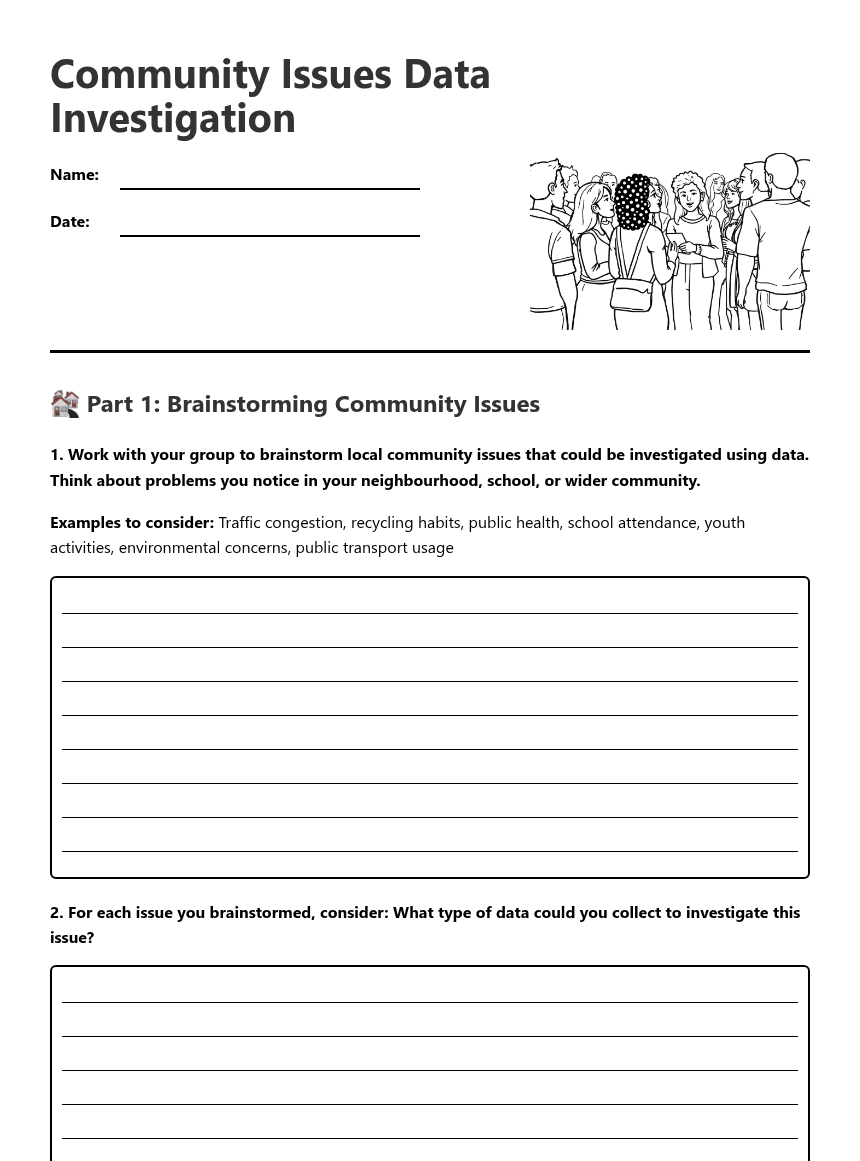
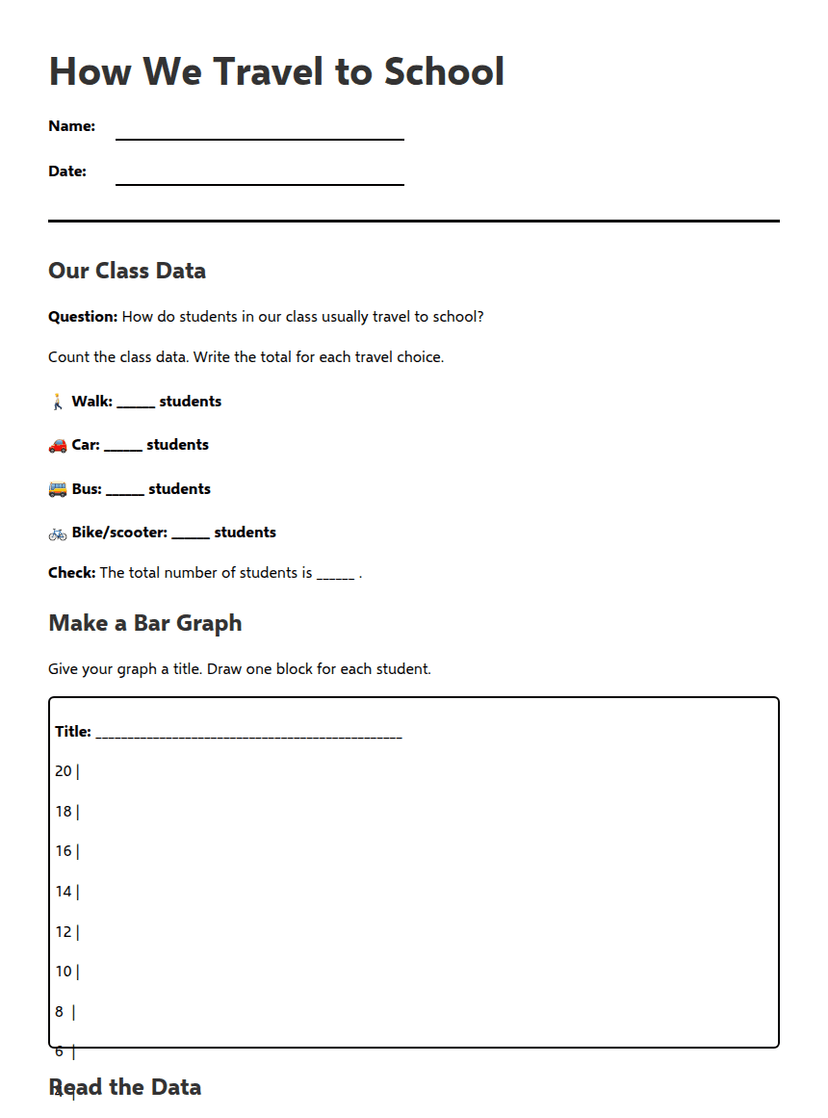
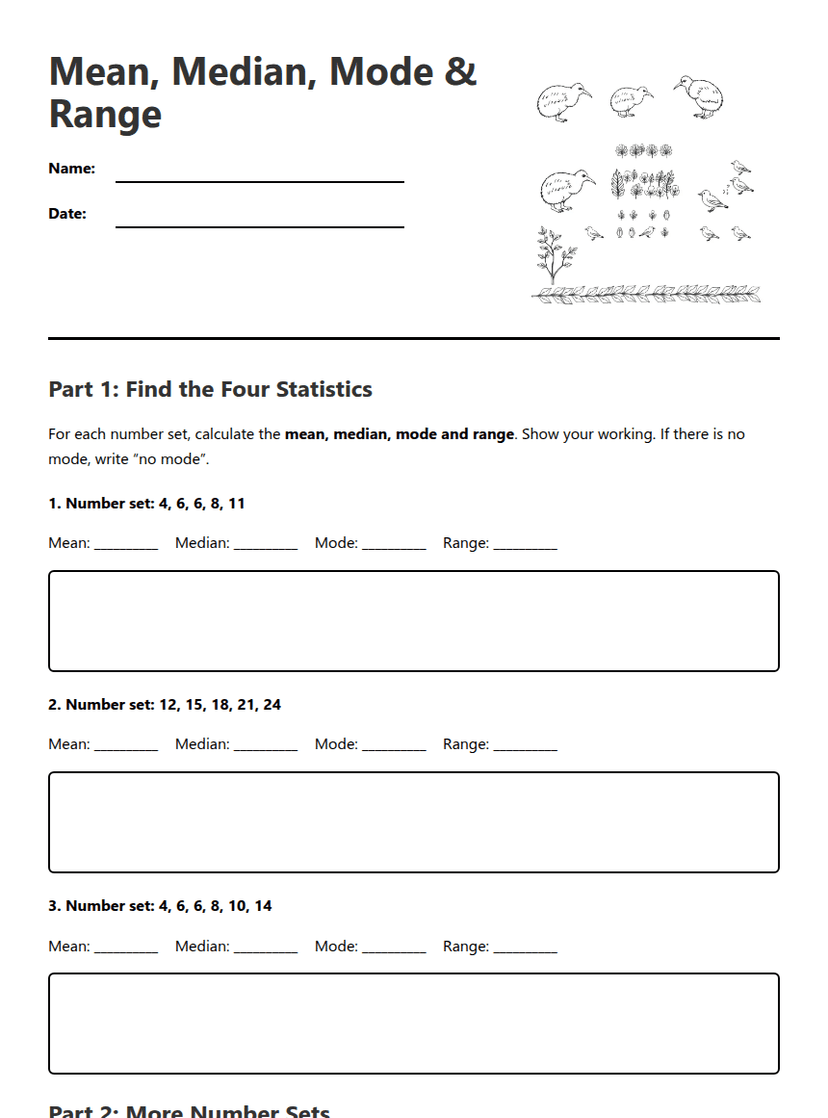
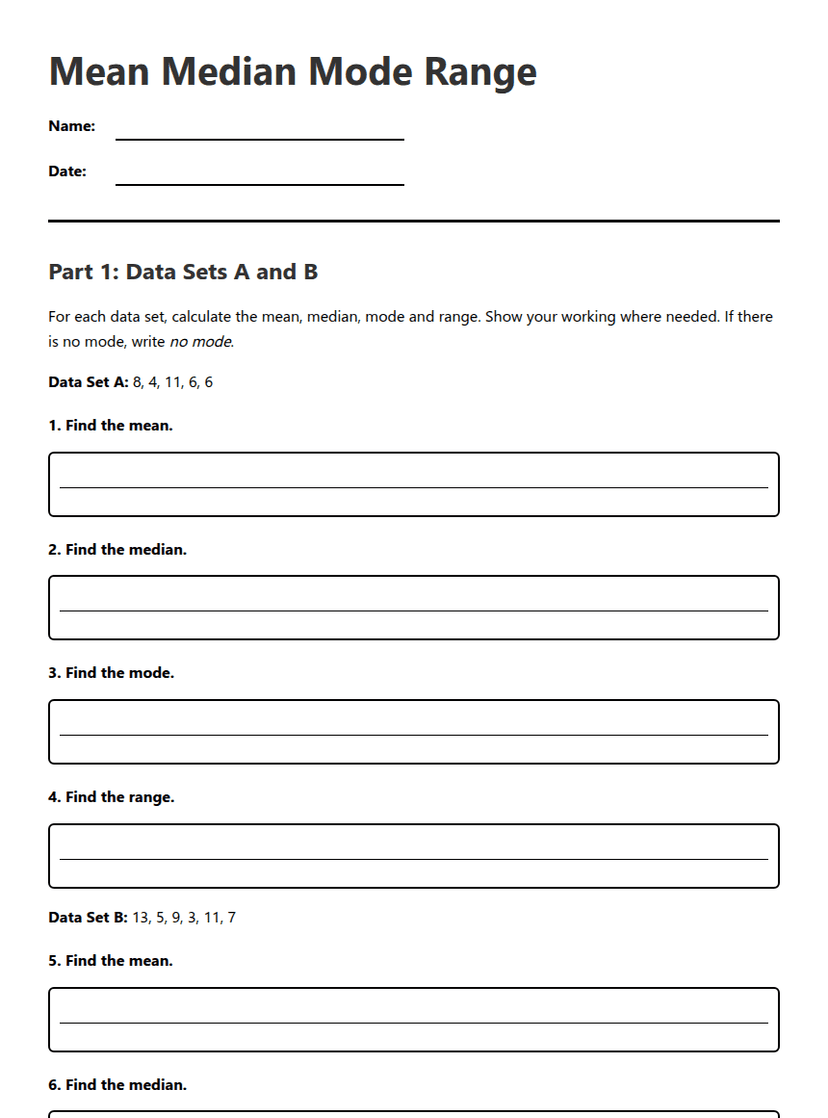
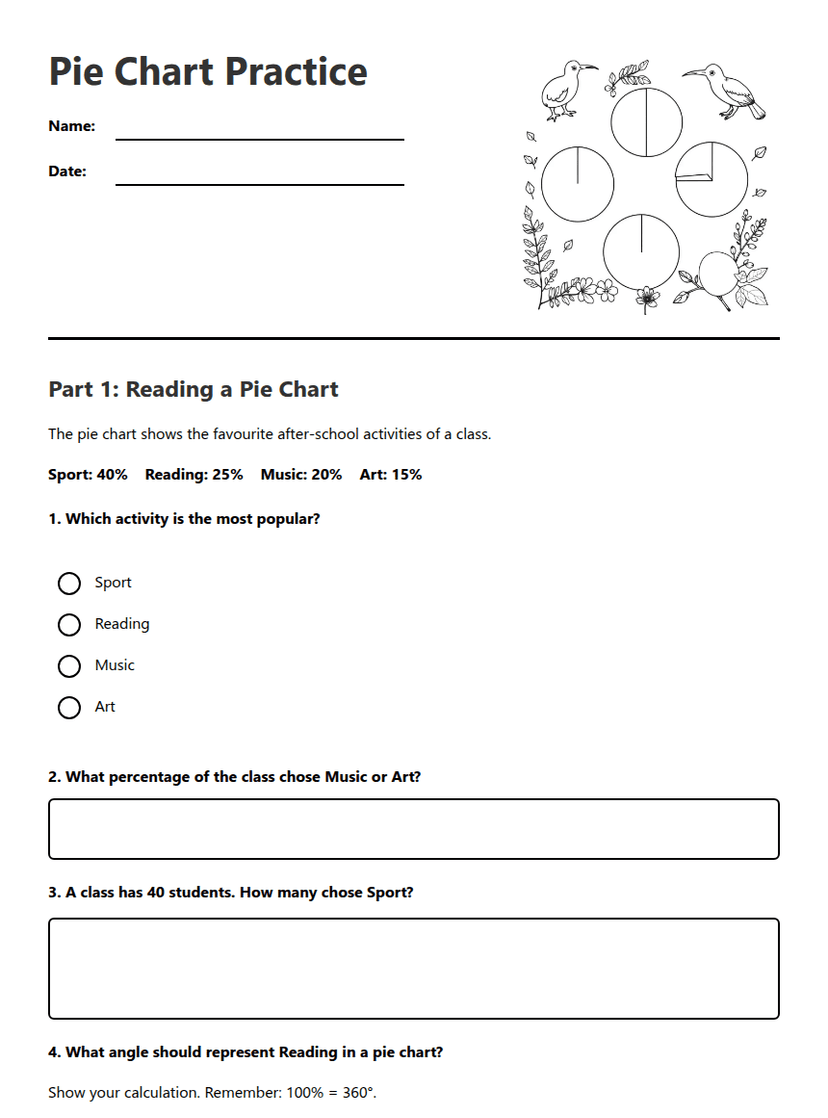
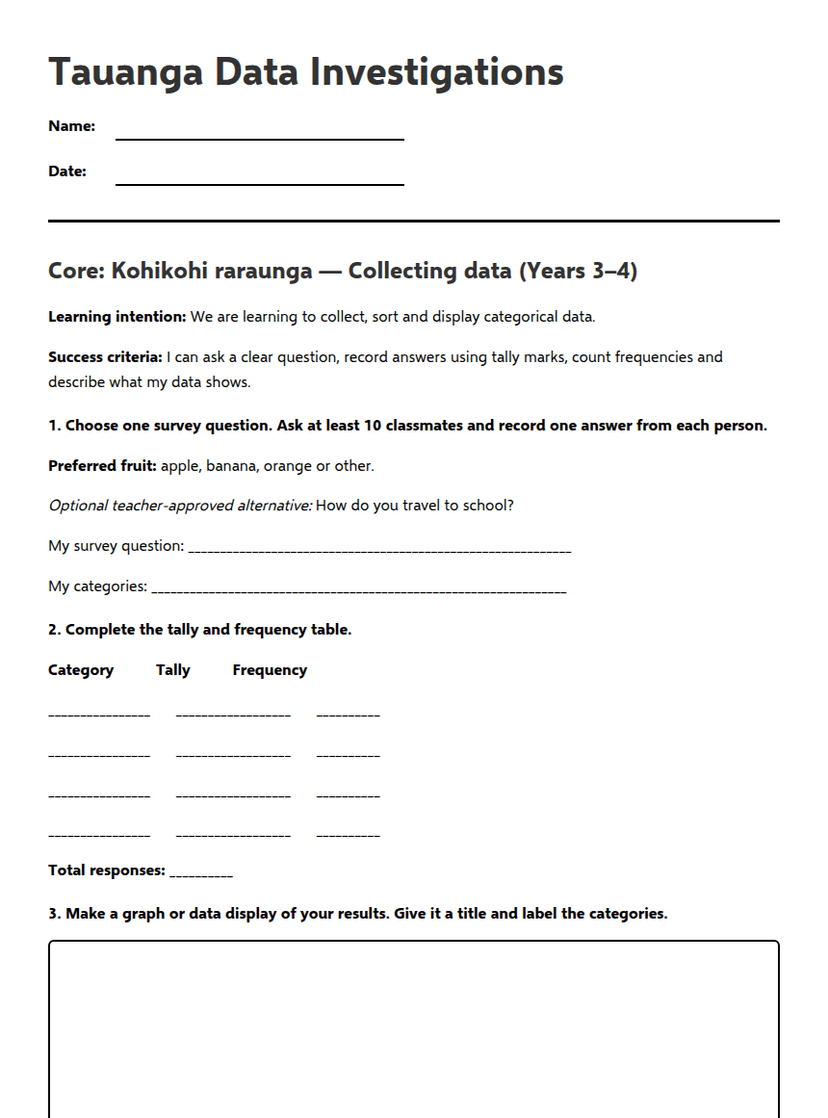
Community Issues Data Investigation worksheet preview

Community Issues Data Investigation

Community Issues Data Investigation

Students investigating community data

🏘️ Part 1: Brainstorming Community Issues

1. Work with your group to brainstorm local community issues that could be investigated using data. Think about problems you notice in your neighbourhood, school, or wider community.

Examples to consider: Traffic congestion, recycling habits, public health, school attendance, youth activities, environmental concerns, public transport usage

2. For each issue you brainstormed, consider: What type of data could you collect to investigate this issue?

🤔 Part 2: Ethical Considerations in Data Collection

3. When collecting data about community issues, we must consider ethical responsibilities. Check all the ethical considerations that are important:

Getting informed consent from people before collecting their data

Protecting people's privacy and personal information

Being honest about how the data will be used

Making sure participation is voluntary

Considering how the investigation might affect the community

Sharing results responsibly

4. Think about the concept of manaakitanga (care and respect). How can you show care and respect when investigating community issues?

🎯 Part 3: Selecting Your Community Issue

5. From your brainstormed list, select ONE community issue that your group finds most compelling and feasible for data investigation.

Our chosen community issue:

6. Explain why your group chose this issue. Consider the following in your response:

• Why is this issue important to your community?
• What makes this issue suitable for data investigation?
• How is this issue manageable and measurable?

7. What specific data could you collect to investigate this issue? Think about what you can measure or count.

📊 Part 4: Planning Your Investigation

8. Who would be your target population for data collection? (e.g., students, families, community members, businesses)
9. What potential data sources could you use? Check all that apply:

Surveys or questionnaires

Observations and counting

Existing data from councils or organisations

Interviews with community members

Online data sources

School records or data

10. How might your investigation help your community? What positive impact could your findings have?

🔍 Part 5: Reflection and Next Steps

11. What makes a community issue suitable for statistical investigation? List at least three characteristics:
12. What challenges do you anticipate in collecting data for your chosen issue?
13. How will you ensure your group collaborates effectively throughout this investigation?

About This Worksheet

Free in Kuraplan

Sign up free, grab the PDF, and customize it for your class.

Print-Ready

Formatted for standard paper. Clean layout, easy to read.

AI-Generated

Created with Kuraplan's AI, designed for real classroom use.

For Teachers & Parents

Use in classrooms, for homework, tutoring, or homeschool.

Need a custom version of this worksheet?

Kuraplan's AI generates custom worksheets in seconds — differentiated for every learner, aligned to your curriculum.

Generate Custom Worksheets — Free
No credit card Curriculum-aligned Under 60 seconds