MathsFreePrintable

Data Analysis Foundations

A free maths worksheet ready for your classroom. Open in Kuraplan to grab the print-ready PDF, customize it for your students, or generate a fresh version in seconds.
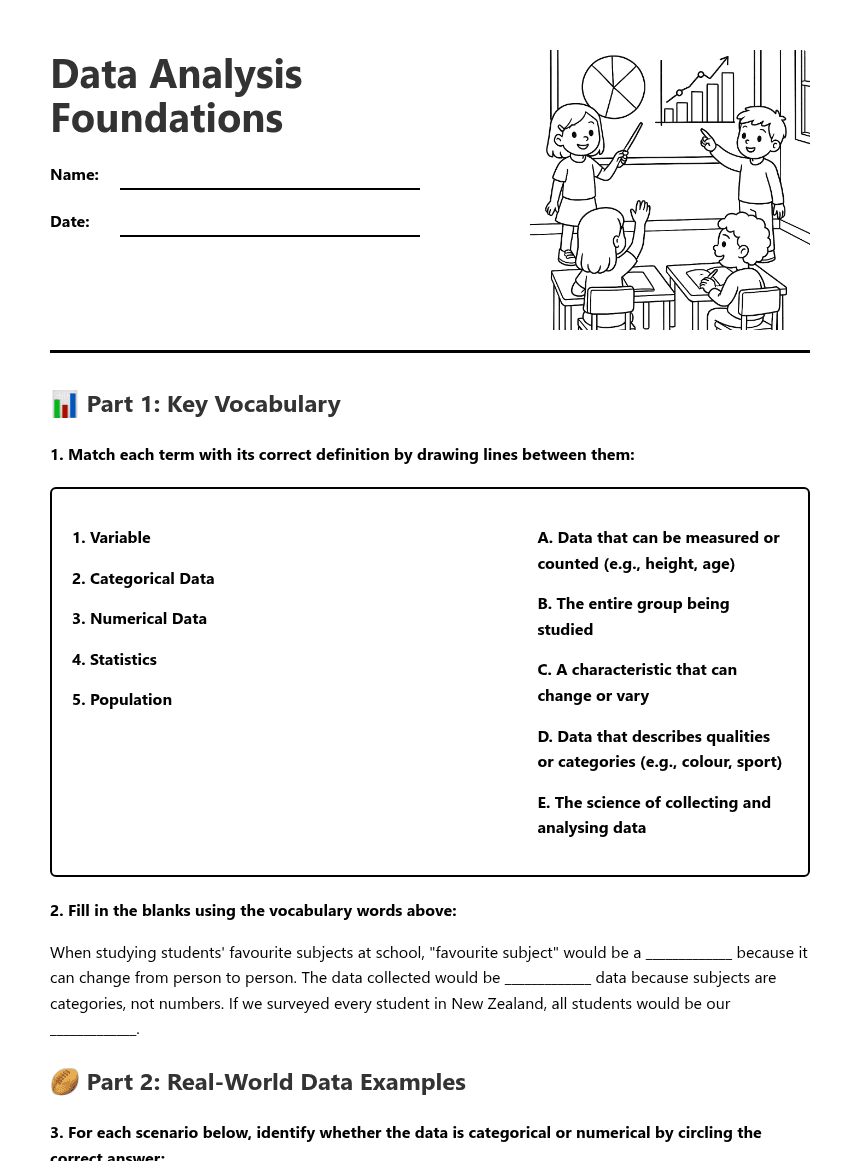
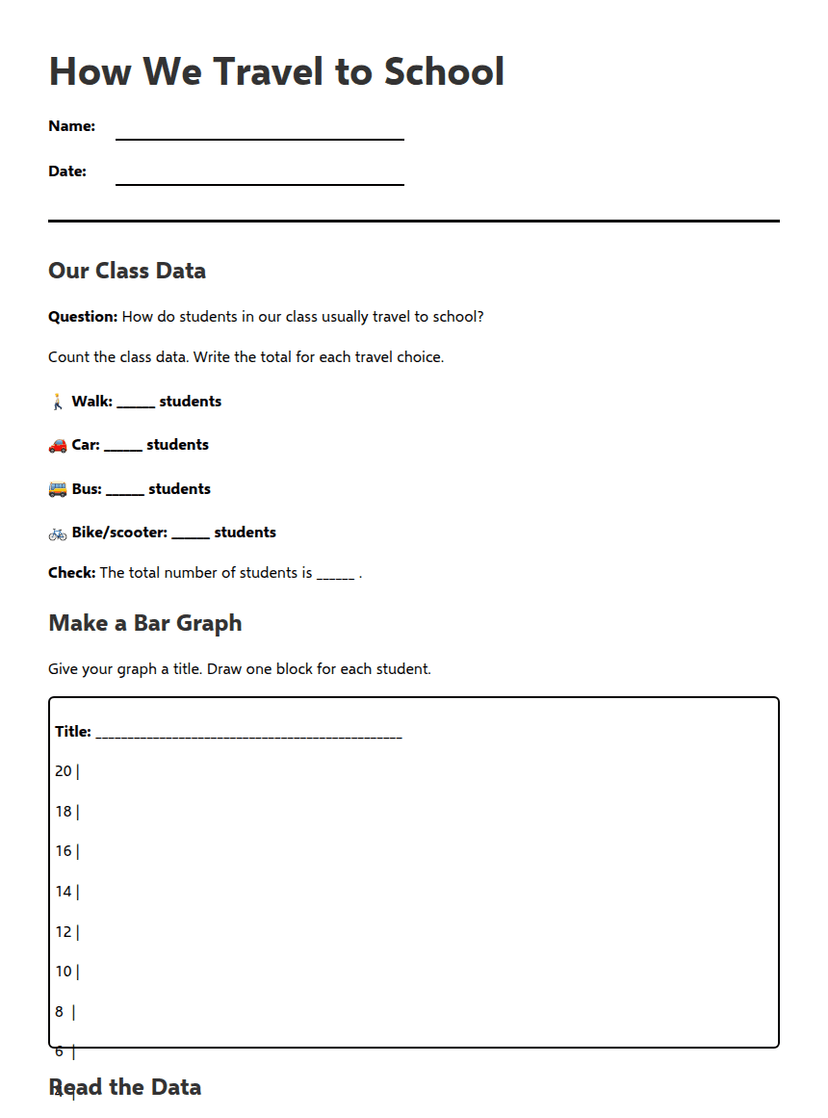
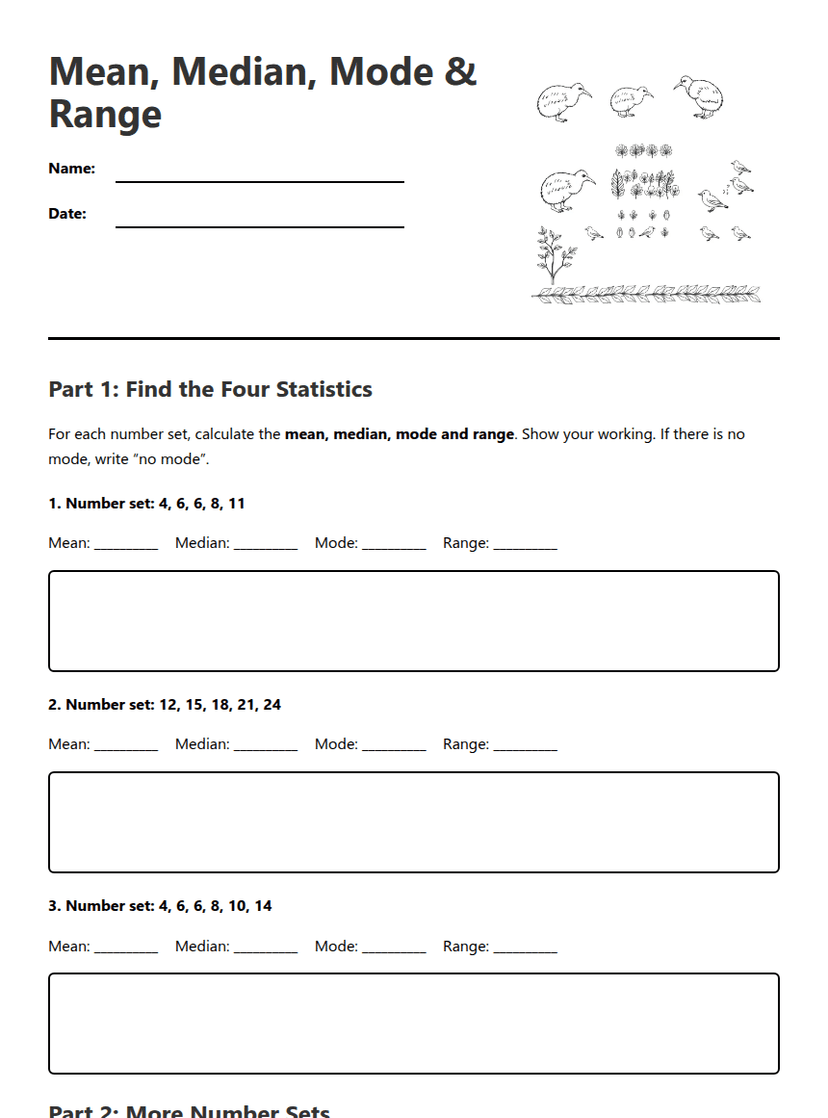
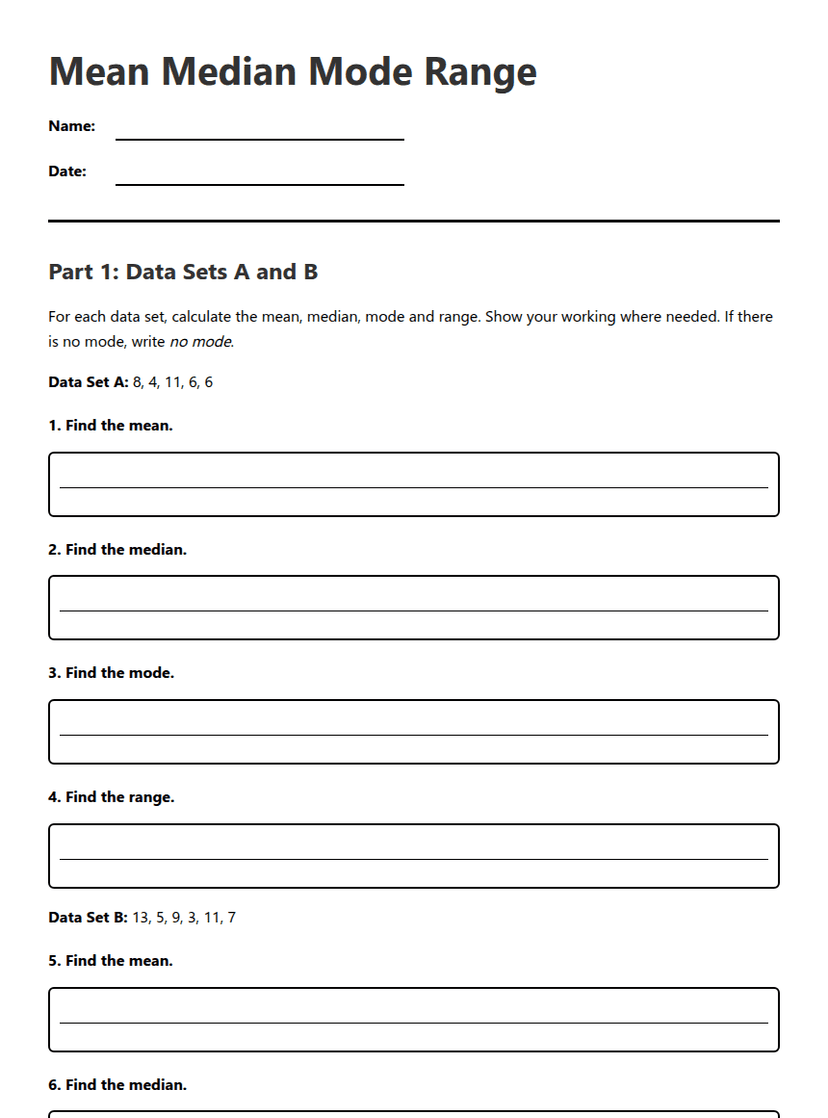
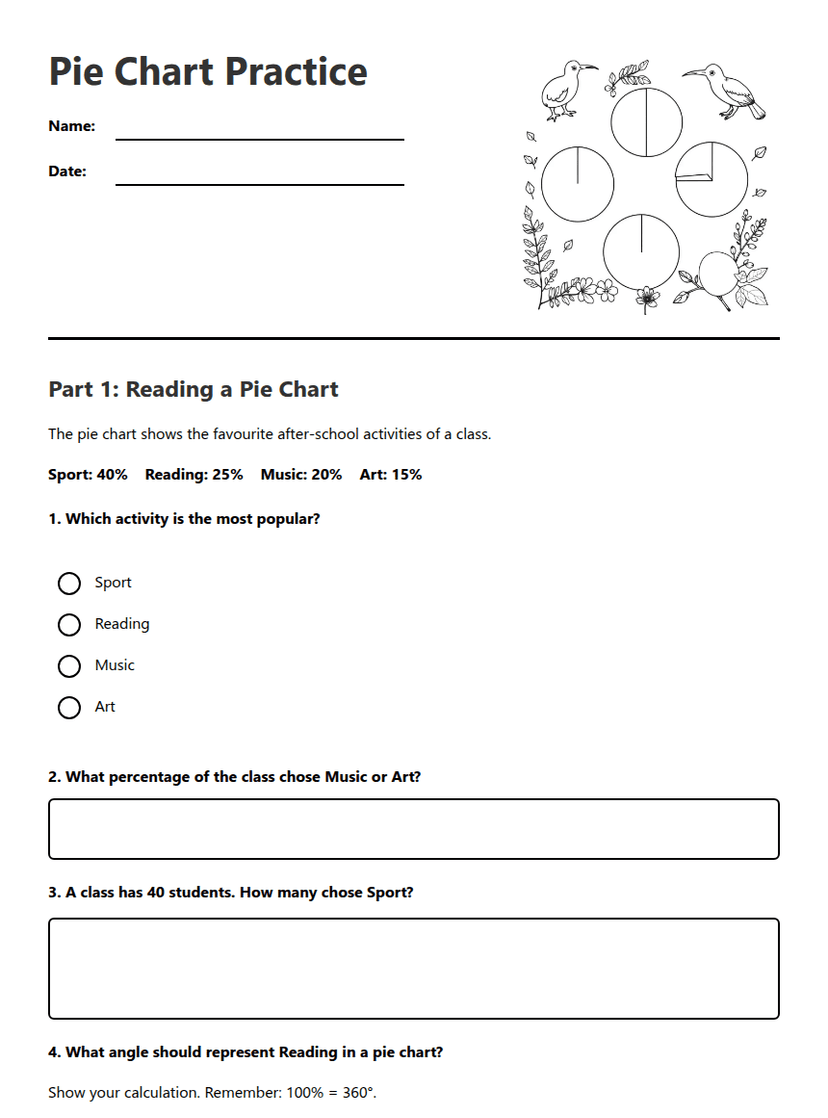
Data Analysis Foundations worksheet preview
Data Analysis Foundations

Data Analysis Foundations

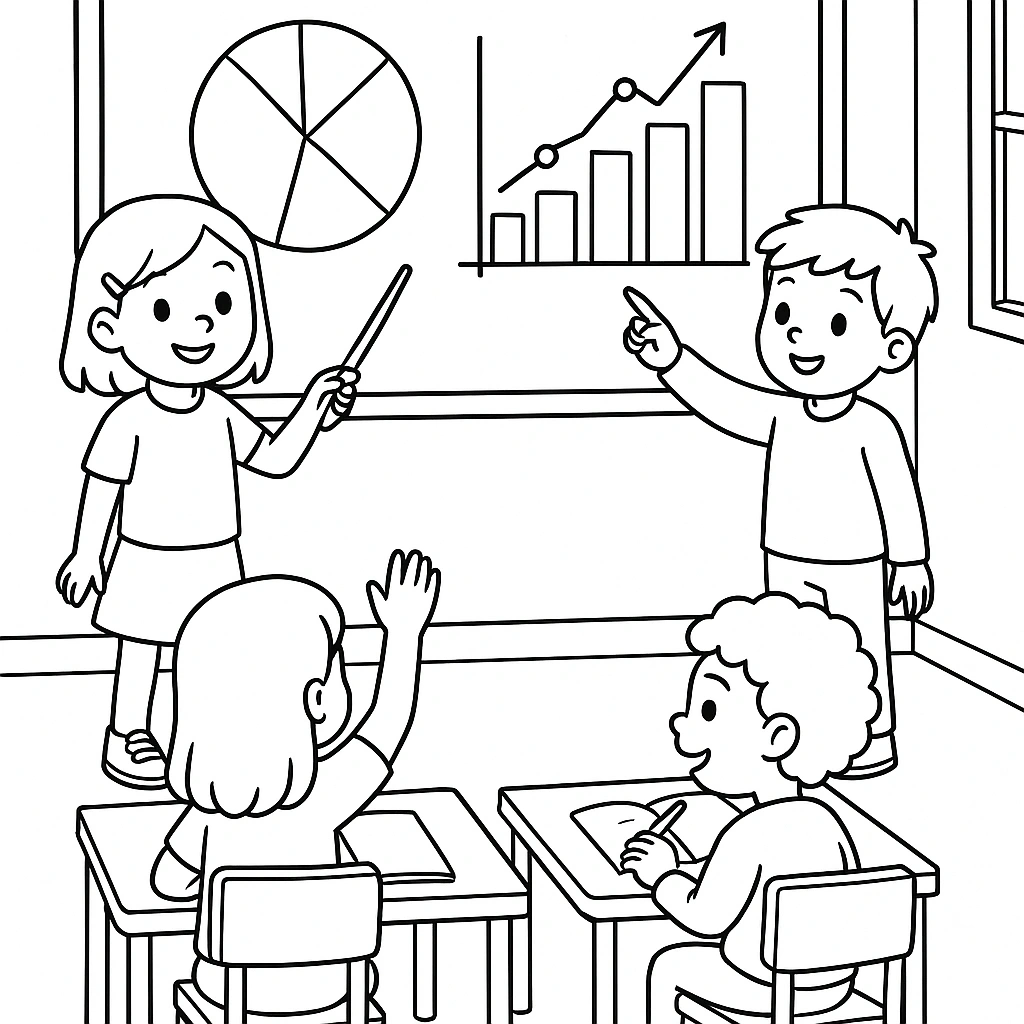
Data analysis charts and graphs illustration

📊 Part 1: Key Vocabulary

1. Match each term with its correct definition by drawing lines between them:
1. Variable
2. Categorical Data
3. Numerical Data
4. Statistics
5. Population
A. Data that can be measured or counted (e.g., height, age)
B. The entire group being studied
C. A characteristic that can change or vary
D. Data that describes qualities or categories (e.g., colour, sport)
E. The science of collecting and analysing data
2. Fill in the blanks using the vocabulary words above:

When studying students' favourite subjects at school, "favourite subject" would be a _____________ because it can change from person to person. The data collected would be _____________ data because subjects are categories, not numbers. If we surveyed every student in New Zealand, all students would be our _____________.

🏉 Part 2: Real-World Data Examples

3. For each scenario below, identify whether the data is categorical or numerical by circling the correct answer:

a) Heights of All Blacks rugby players

Categorical

Numerical

b) Favourite ice cream flavours at a dairy

Categorical

Numerical

c) Daily temperature in Auckland (°C)

Categorical

Numerical

d) Types of transport students use to get to school

Categorical

Numerical

4. Think of your own example for each data type:

Categorical data example: ________________________________

Numerical data example: ________________________________

🌍 Part 3: Why Data Analysis Matters

5. Check all the ways that data analysis is used in everyday life:

Weather forecasting

Sports performance tracking

Medical research

Social media algorithms

Traffic management

School timetabling

6. Explain why it's important to understand data before making decisions:

🏫 Part 4: School Lunch Analysis Scenario

7. Imagine you want to analyse what students eat for lunch at your school. For each piece of information below, identify what type of variable it is:

a) Type of lunch (homemade, canteen, takeaway)

Variable type: ________________________

b) Cost of lunch in dollars ($)

Variable type: ________________________

c) Time spent eating lunch (minutes)

Variable type: ________________________

d) Favourite lunch food

Variable type: ________________________

8. What other variables could you investigate about student lunches? List three more:

🤔 Part 5: Data as Taonga (Treasure)

9. In Māori culture, data is considered taonga (treasure). Why do you think data should be treated with respect and care?
10. Circle the ethical considerations we should think about when collecting data:

Getting permission from people

Keeping personal information private

Using data to help, not harm

All of the above

✏️ Part 6: Reflection

11. What is one new thing you learned about data analysis today?
12. How might you use data analysis in your future career or studies?

About This Worksheet

Free in Kuraplan

Sign up free, grab the PDF, and customize it for your class.

Print-Ready

Formatted for standard paper. Clean layout, easy to read.

AI-Generated

Created with Kuraplan's AI, designed for real classroom use.

For Teachers & Parents

Use in classrooms, for homework, tutoring, or homeschool.

Need a custom version of this worksheet?

Kuraplan's AI generates custom worksheets in seconds — differentiated for every learner, aligned to your curriculum.

Generate Custom Worksheets — Free
No credit card Curriculum-aligned Under 60 seconds