Encouragement in Dance Practice
A free pe worksheet ready for your classroom. Open in Kuraplan to grab the print-ready PDF, customize it for your students, or generate a fresh version in seconds.
Encouragement in Dance Practice
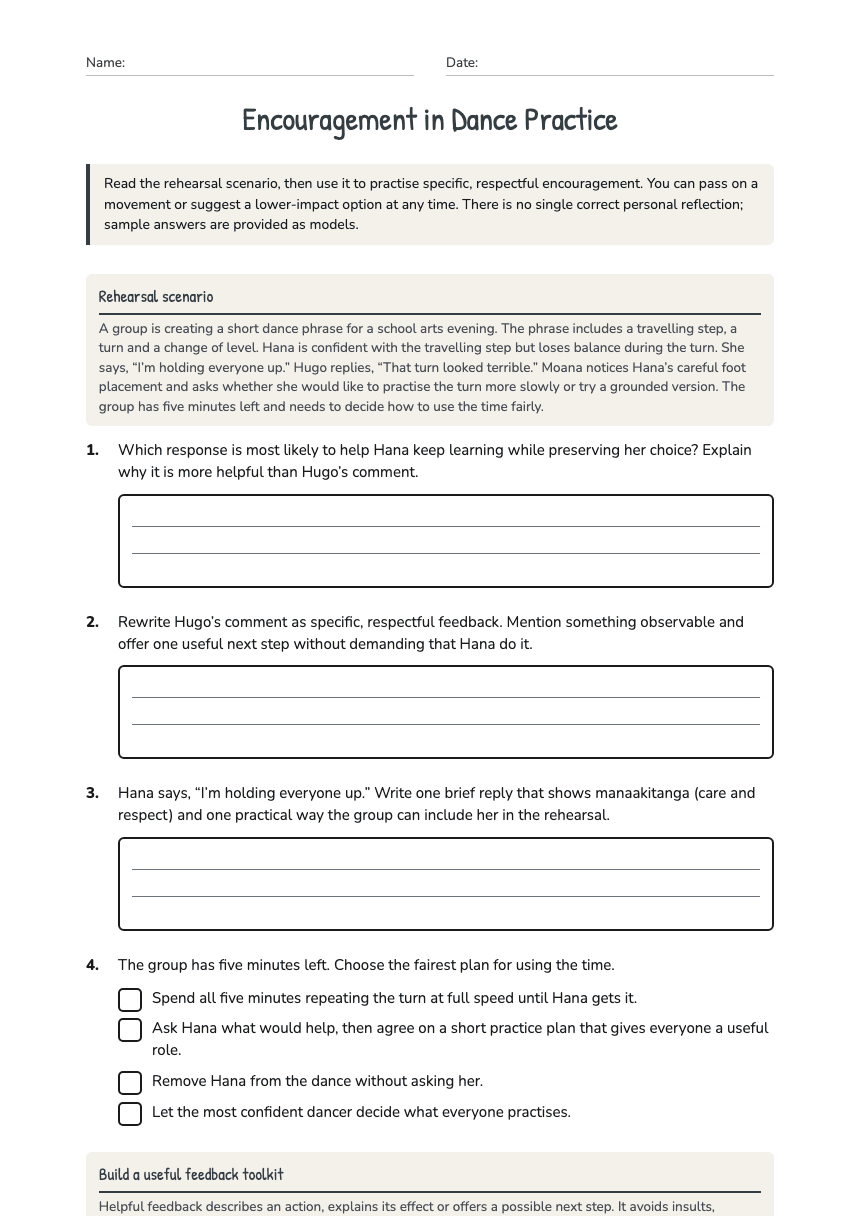
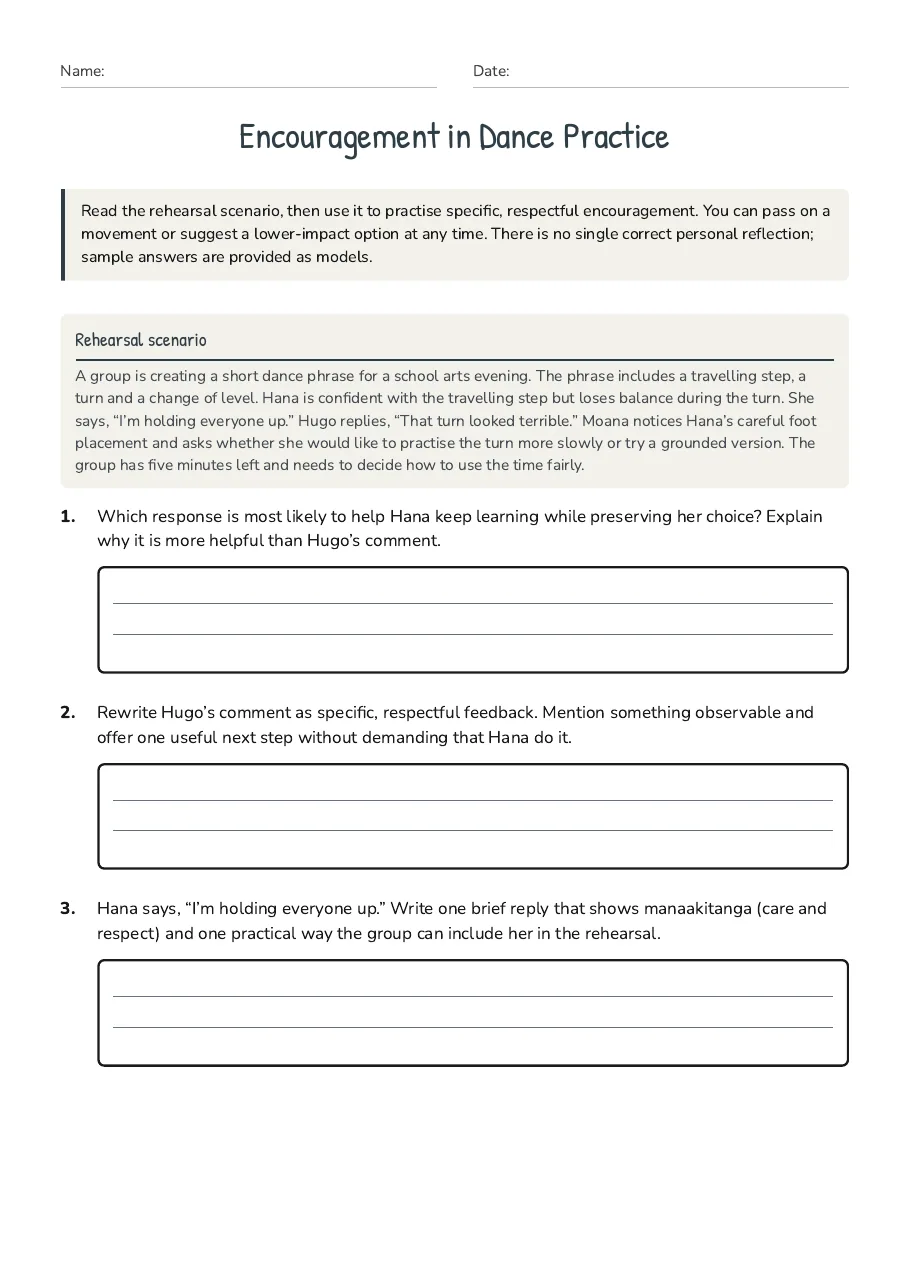
Rehearsal scenario
A group is creating a short dance phrase for a school arts evening. The phrase includes a travelling step, a turn and a change of level. Hana is confident with the travelling step but loses balance during the turn. She says, “I’m holding everyone up.” Hugo replies, “That turn looked terrible.” Moana notices Hana’s careful foot placement and asks whether she would like to practise the turn more slowly or try a grounded version. The group has five minutes left and needs to decide how to use the time fairly.
- Spend all five minutes repeating the turn at full speed until Hana gets it.
- Ask Hana what would help, then agree on a short practice plan that gives everyone a useful role.
- Remove Hana from the dance without asking her.
- Let the most confident dancer decide what everyone practises.
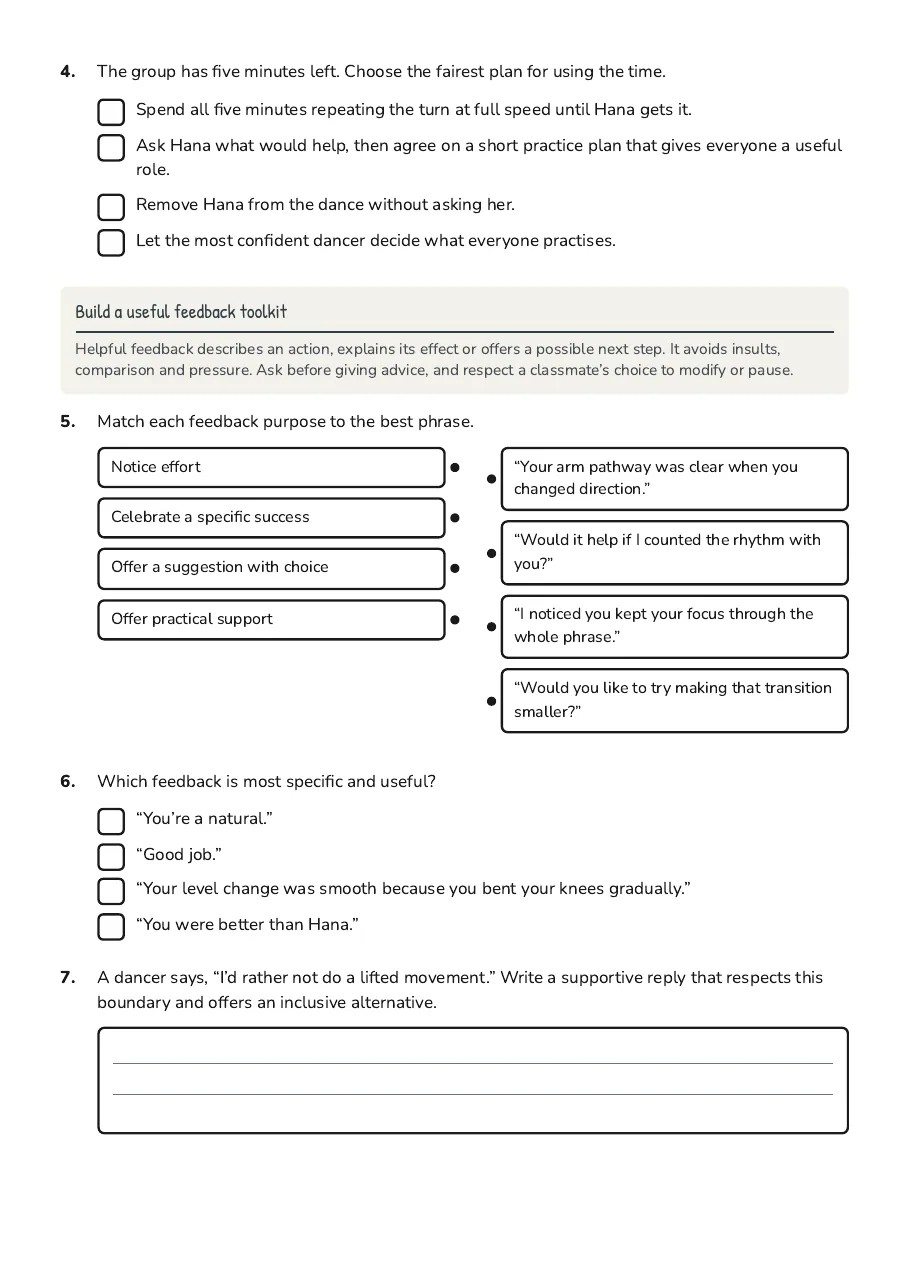
Build a useful feedback toolkit
Helpful feedback describes an action, explains its effect or offers a possible next step. It avoids insults, comparison and pressure. Ask before giving advice, and respect a classmate’s choice to modify or pause.
- Notice effort
- Celebrate a specific success
- Offer a suggestion with choice
- Offer practical support
- “Your arm pathway was clear when you changed direction.”
- “Would it help if I counted the rhythm with you?”
- “I noticed you kept your focus through the whole phrase.”
- “Would you like to try making that transition smaller?”
- “You’re a natural.”
- “Good job.”
- “Your level change was smooth because you bent your knees gradually.”
- “You were better than Hana.”
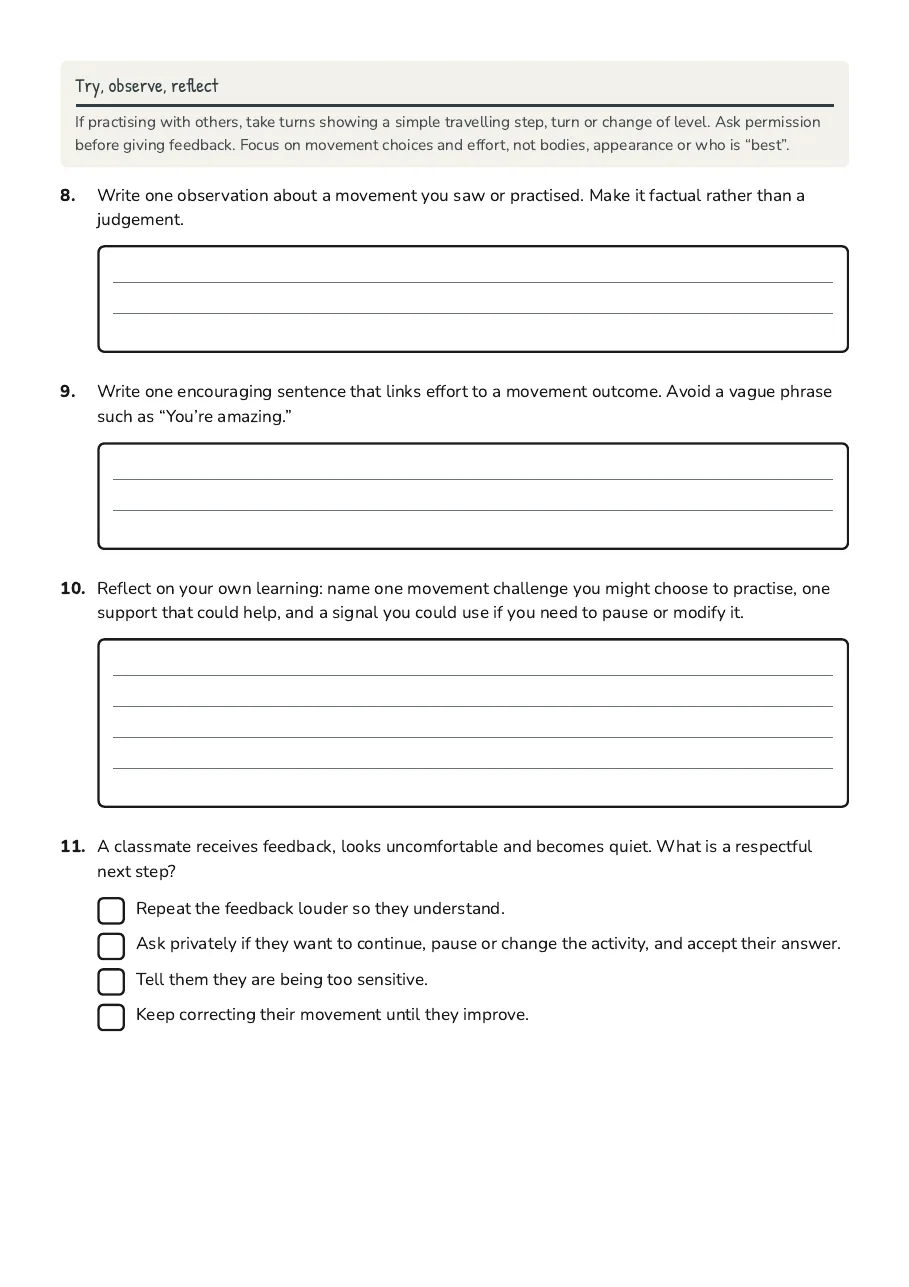
Try, observe, reflect
If practising with others, take turns showing a simple travelling step, turn or change of level. Ask permission before giving feedback. Focus on movement choices and effort, not bodies, appearance or who is “best”.
- Repeat the feedback louder so they understand.
- Ask privately if they want to continue, pause or change the activity, and accept their answer.
- Tell them they are being too sensitive.
- Keep correcting their movement until they improve.
4 printable pages
Page 1
Page 2
Page 3
Page 4
About This Worksheet
Free in Kuraplan
Sign up free, grab the PDF, and customize it for your class.
Print-Ready
Formatted for standard paper. Clean layout, easy to read.
AI-Generated
Created with Kuraplan's AI, designed for real classroom use.
For Teachers & Parents
Use in classrooms, for homework, tutoring, or homeschool.
Need a custom version of this worksheet?
Kuraplan's AI generates custom worksheets in seconds — differentiated for every learner, aligned to your curriculum.
Generate Custom Worksheets — FreeMore PE Worksheets
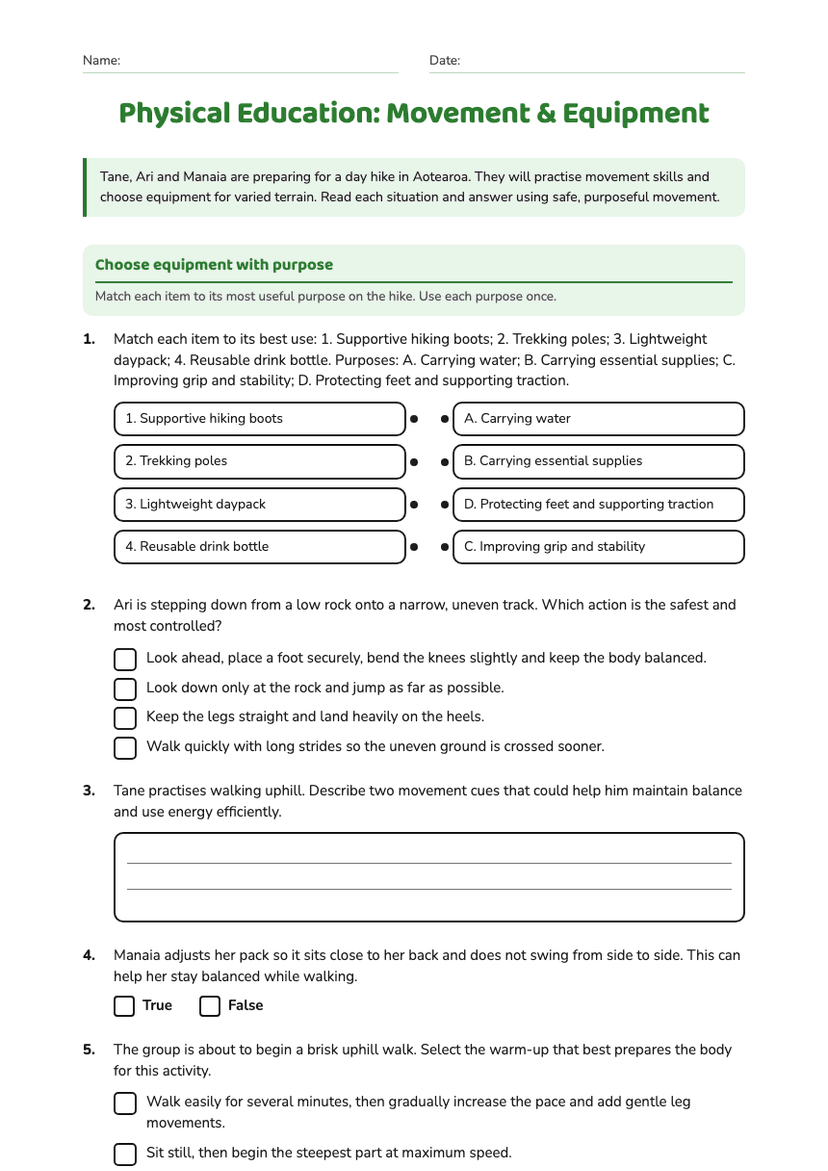
Physical Education: Movement & Equipment
Free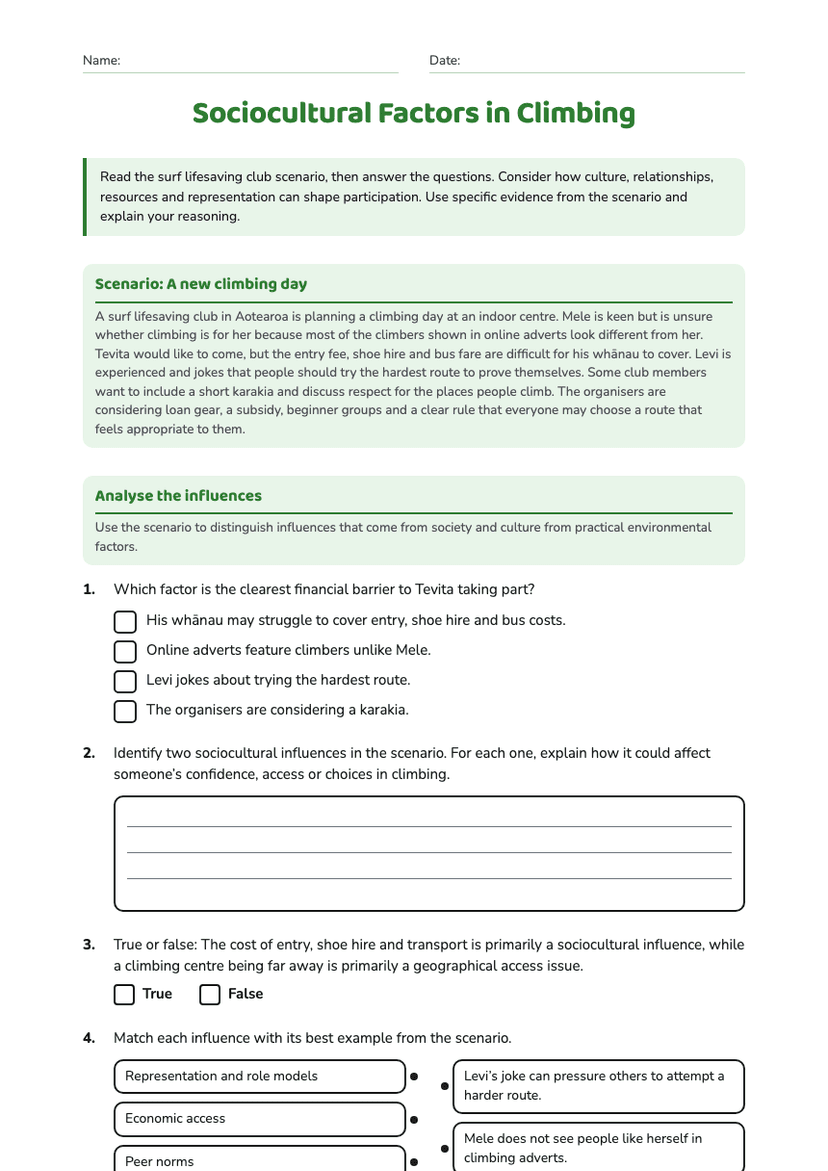
Sociocultural Factors in Climbing
Free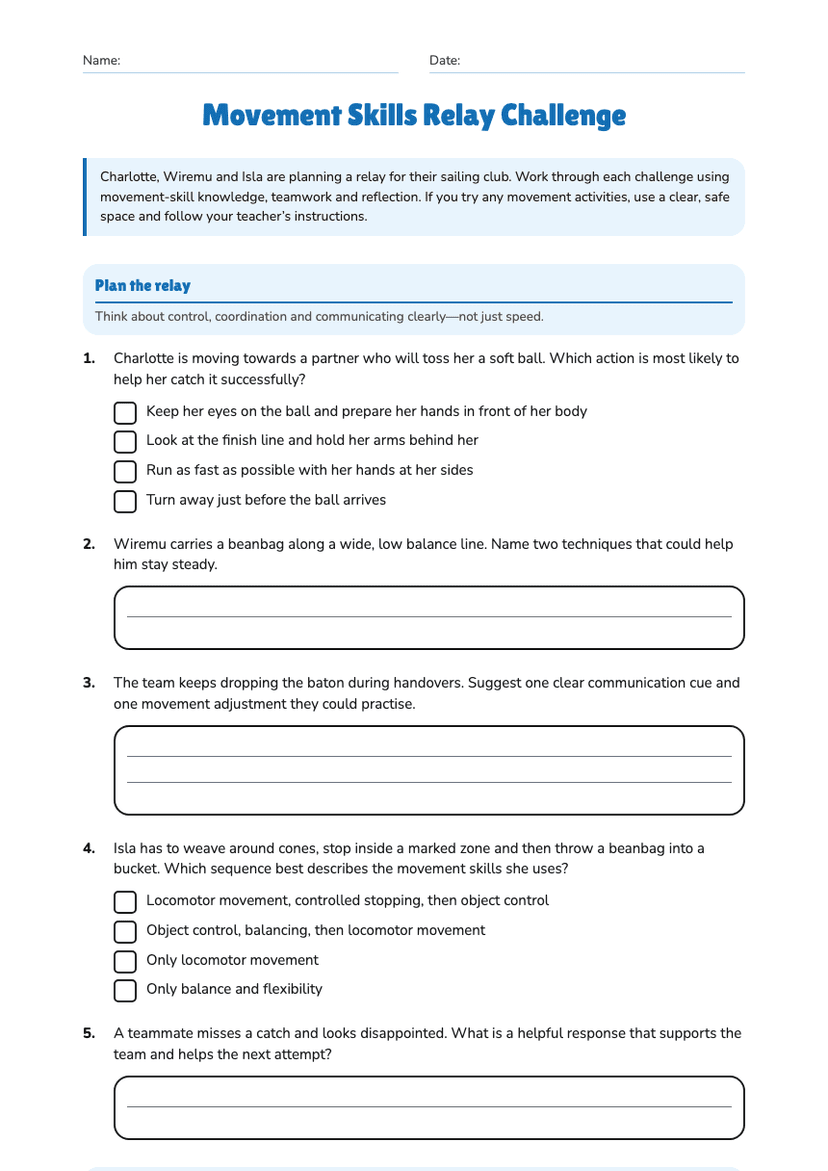
Movement Skills Relay Challenge
Free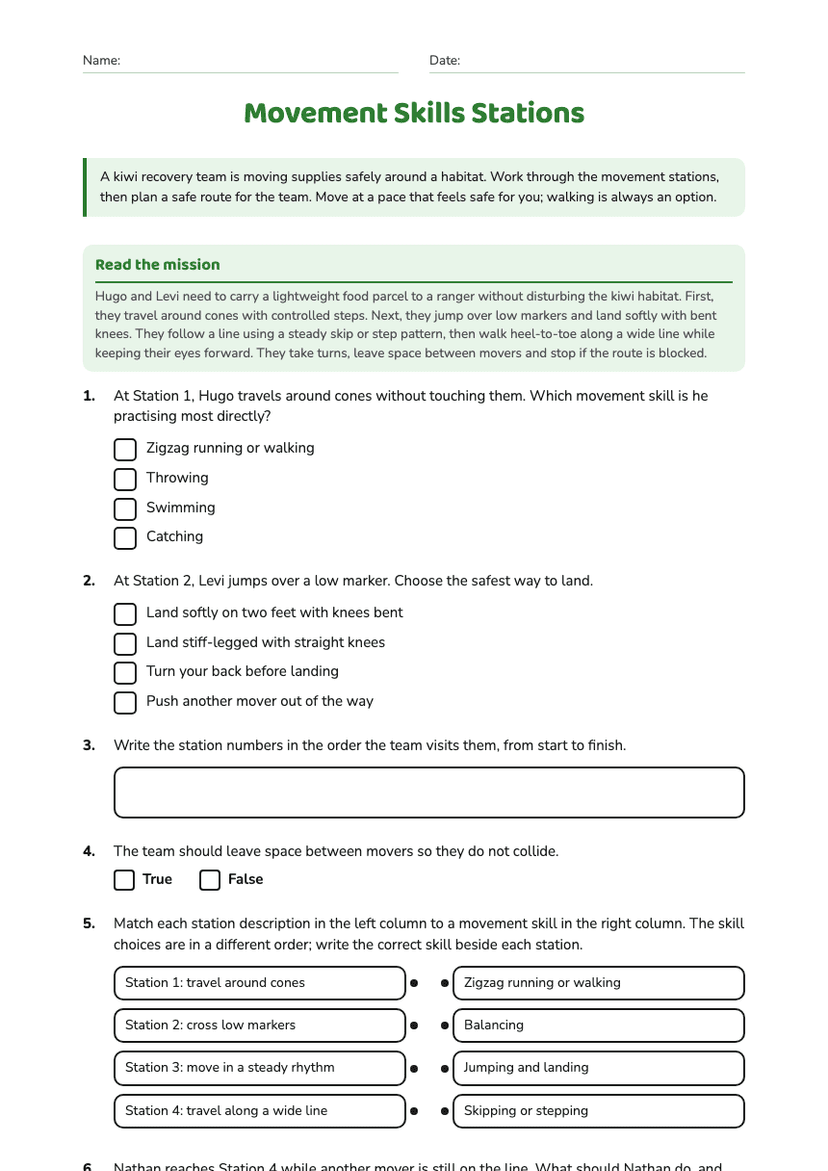
Movement Skills Stations
Free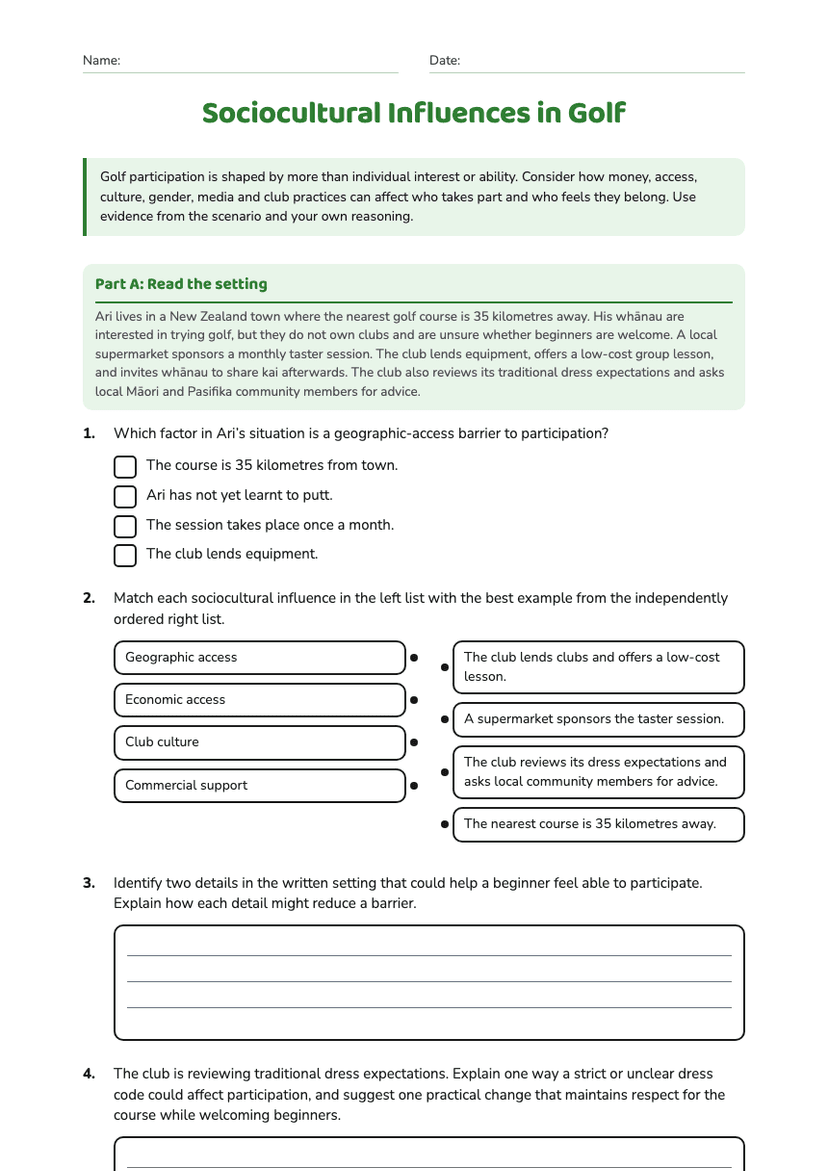
Sociocultural Influences in Golf
Free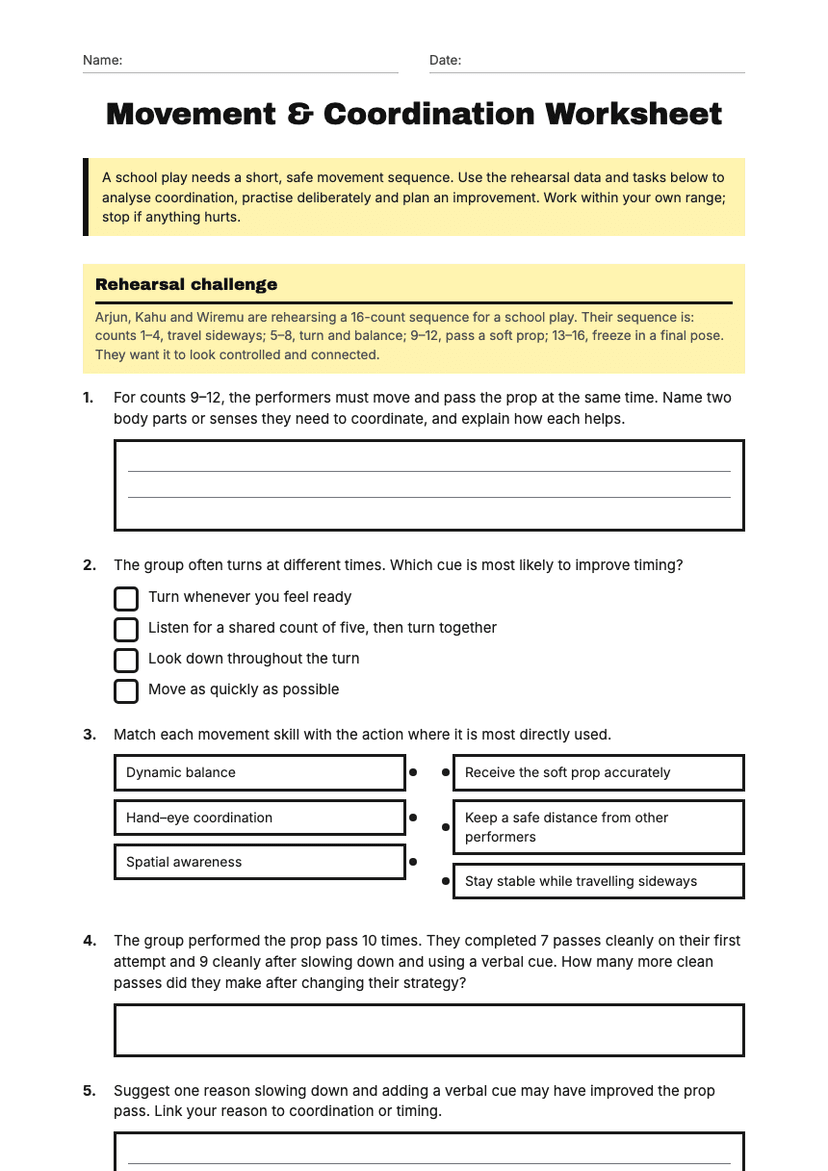
Movement & Coordination Worksheet
Free
Teamwork and Movement Skills
Free