Enzymes in Digestion Worksheet
A free science worksheet ready for your classroom. Open in Kuraplan to grab the print-ready PDF, customize it for your students, or generate a fresh version in seconds.
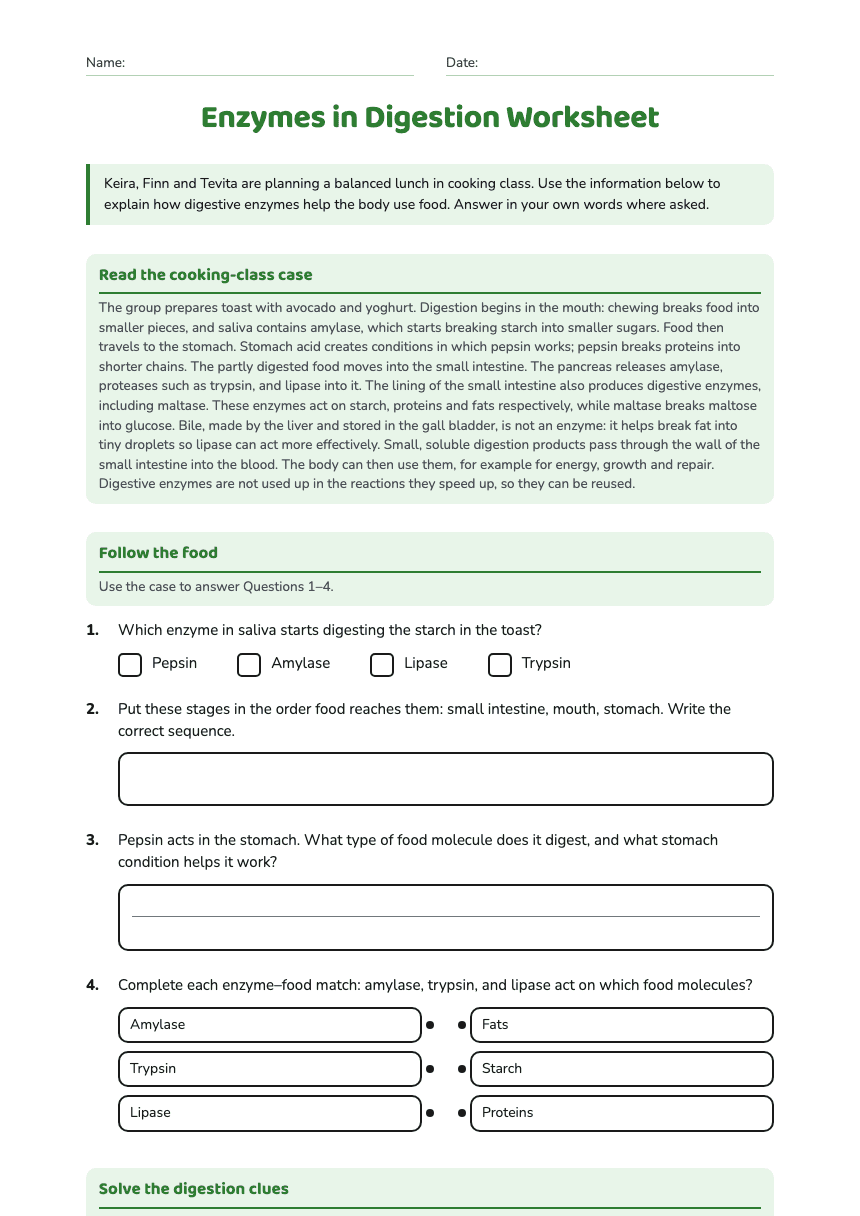
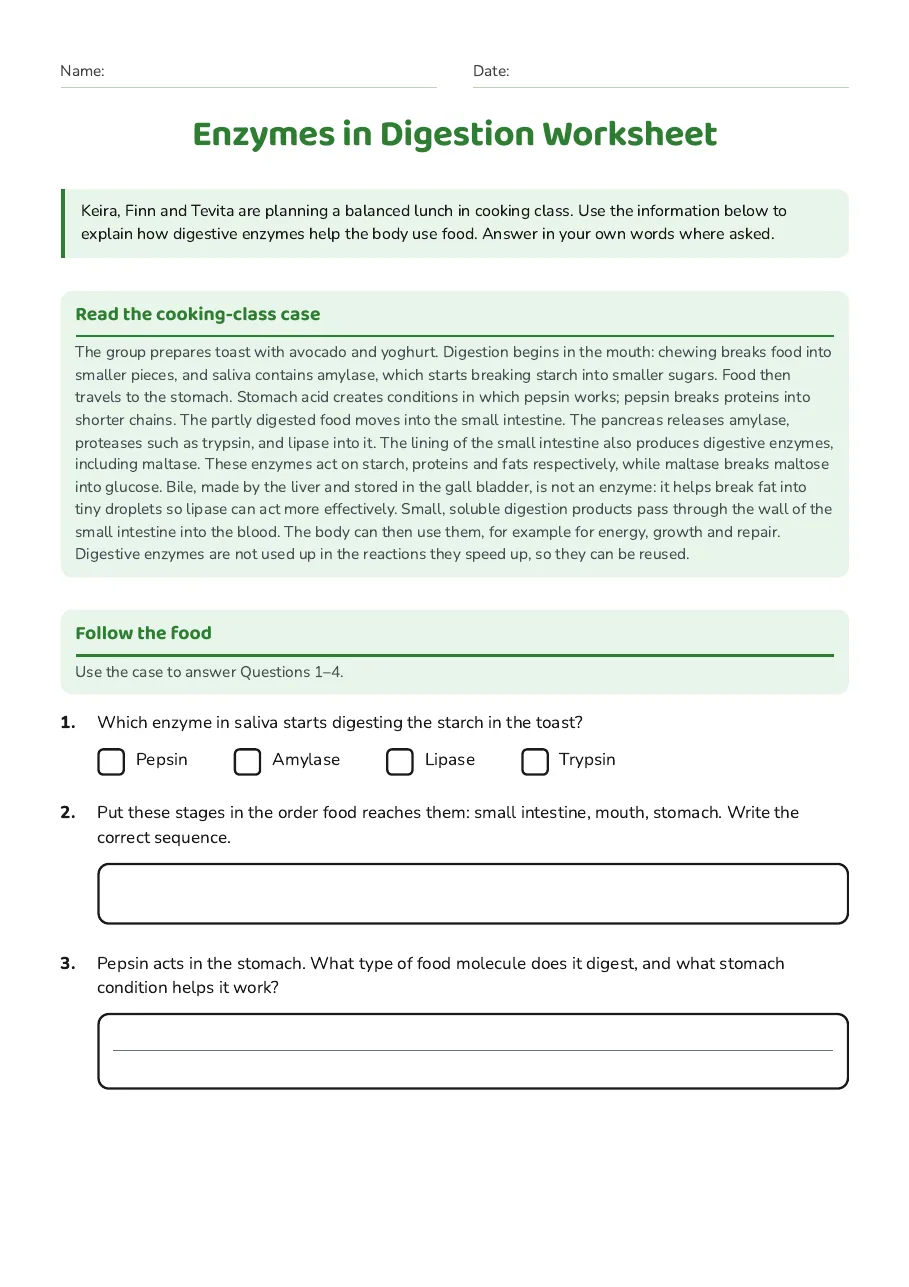
Enzymes in Digestion Worksheet
Read the cooking-class case
The group prepares toast with avocado and yoghurt. Digestion begins in the mouth: chewing breaks food into smaller pieces, and saliva contains amylase, which starts breaking starch into smaller sugars. Food then travels to the stomach. Stomach acid creates conditions in which pepsin works; pepsin breaks proteins into shorter chains. The partly digested food moves into the small intestine. The pancreas releases amylase, proteases such as trypsin, and lipase into it. The lining of the small intestine also produces digestive enzymes, including maltase. These enzymes act on starch, proteins and fats respectively, while maltase breaks maltose into glucose. Bile, made by the liver and stored in the gall bladder, is not an enzyme: it helps break fat into tiny droplets so lipase can act more effectively. Small, soluble digestion products pass through the wall of the small intestine into the blood. The body can then use them, for example for energy, growth and repair. Digestive enzymes are not used up in the reactions they speed up, so they can be reused.
Follow the food
Use the case to answer Questions 1–4.
- Pepsin
- Amylase
- Lipase
- Trypsin
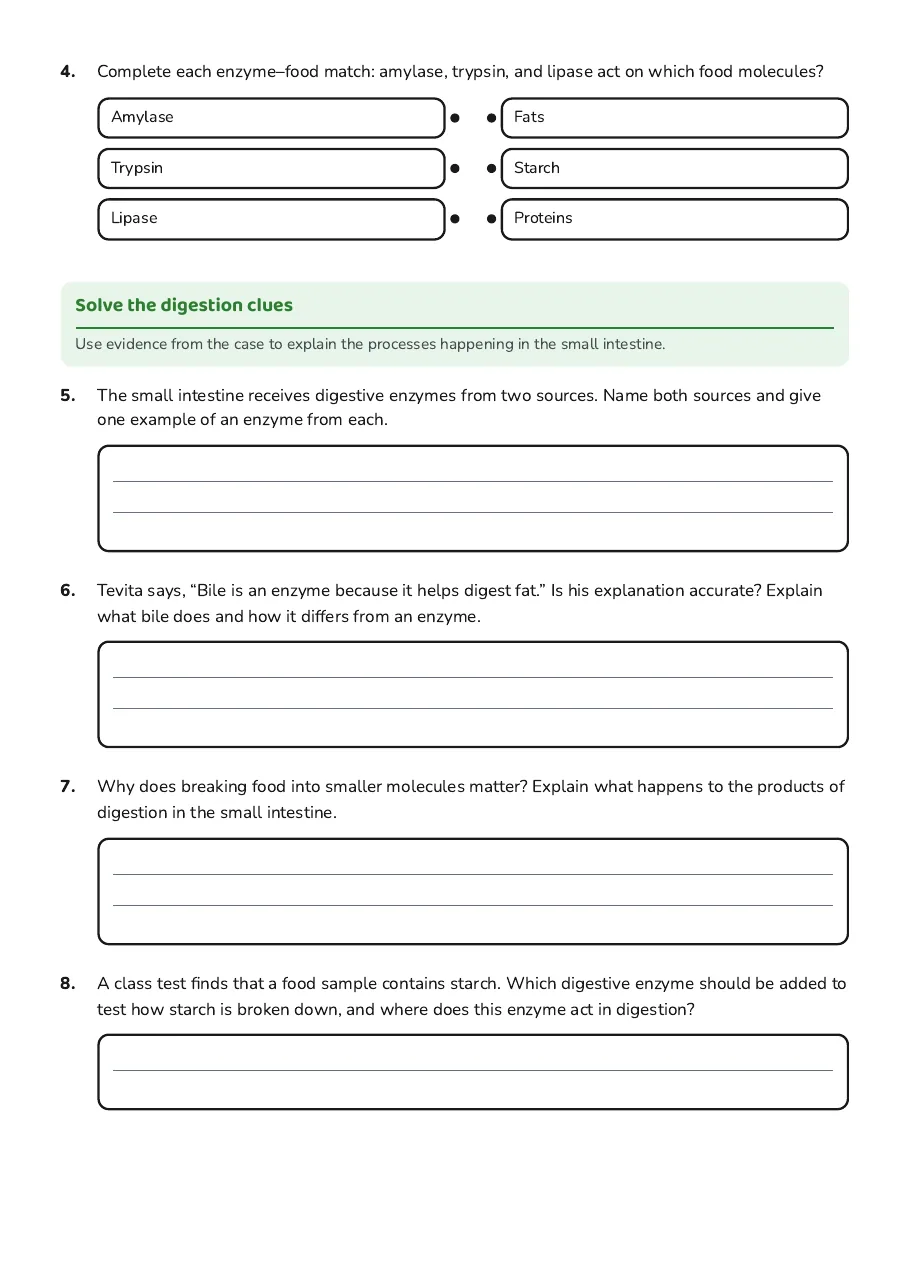
- Amylase
- Trypsin
- Lipase
- Fats
- Starch
- Proteins
Solve the digestion clues
Use evidence from the case to explain the processes happening in the small intestine.
3 printable pages
Page 1
Page 2
Page 3
About This Worksheet
Free in Kuraplan
Sign up free, grab the PDF, and customize it for your class.
Print-Ready
Formatted for standard paper. Clean layout, easy to read.
AI-Generated
Created with Kuraplan's AI, designed for real classroom use.
For Teachers & Parents
Use in classrooms, for homework, tutoring, or homeschool.
Need a custom version of this worksheet?
Kuraplan's AI generates custom worksheets in seconds — differentiated for every learner, aligned to your curriculum.
Generate Custom Worksheets — Free