Human Skeleton Comprehension Worksheet
A free science worksheet ready for your classroom. Open in Kuraplan to grab the print-ready PDF, customize it for your students, or generate a fresh version in seconds.
Human Skeleton Comprehension Worksheet
📖 Part 1: Reading Text
WALT: Understand the structure and function of the human skeleton
The Amazing Human Skeleton
Your skeleton is like a strong framework that holds your body together. An adult human has 206 bones, but babies are born with around 270 bones! As we grow, some of these bones join together to form the adult skeleton. This process is called ossification, where cartilage transforms into bone.
The skeleton has five main jobs. First, it supports your body and gives it shape - without bones, you would be like a jellyfish! Second, it protects your important organs. Your skull protects your brain, whilst your ribs protect your heart and lungs. Third, bones help you move by working with muscles. When muscles contract, they pull on bones, allowing for movement. Fourth, your bones make blood cells in the soft tissue inside called bone marrow. This is where red blood cells, which carry oxygen, and white blood cells, which fight infection, are produced. Finally, bones store important minerals like calcium and phosphorus that keep you healthy.
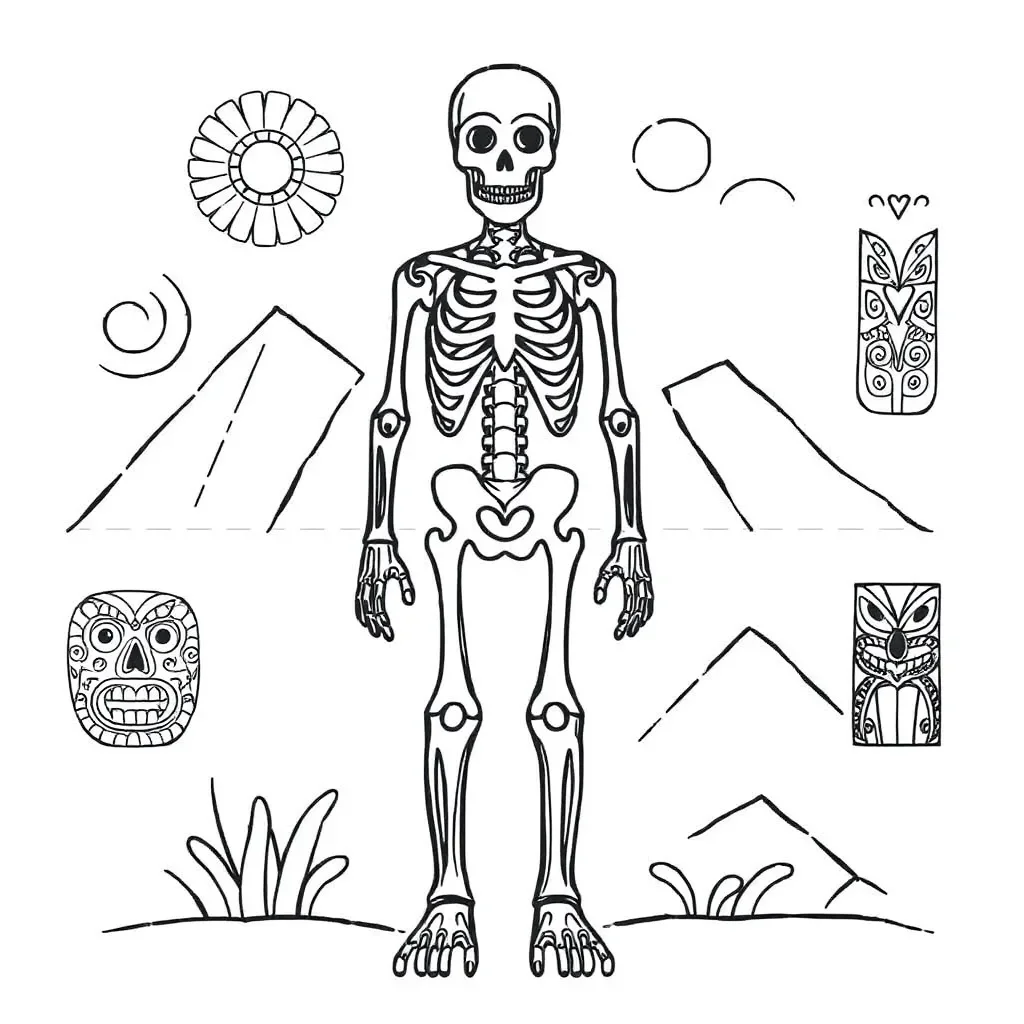
Let's look at some key bones. The skull protects your brain and forms your face. Your spine is made of 33 small bones called vertebrae that protect your spinal cord and allow for flexibility and movement. The ribs form a cage around your chest organs, providing protection and support. In your arms, you have the humerus (upper arm) and radius and ulna (forearm). Your legs contain the femur (thighbone), which is the longest and strongest bone in your body, and the tibia and fibula in your lower leg.
Bones are living tissue that can heal when broken. They're made of calcium phosphate, which makes them hard, and collagen, which makes them slightly flexible. Did you know that bones are constantly being remodeled? This means that old bone tissue is replaced with new tissue, which helps keep bones strong. Taking care of your bones by eating calcium-rich foods like milk and cheese, getting vitamin D from sunlight, and exercising regularly will keep your skeleton strong throughout your life.
🤔 Part 2: Comprehension Questions
Answer: ____________________
Answer: ____________________
📝 Answer Key
1. 206 bones
2. Skull
3. Femur
4. True
5. Sample answers: Eat calcium-rich foods, get vitamin D from sunlight, exercise regularly
6. Vertebrae
7. Bone marrow
8. Sample answer: Bones work with muscles to help the body move and provide attachment points for muscles
About This Worksheet
Free in Kuraplan
Sign up free, grab the PDF, and customize it for your class.
Print-Ready
Formatted for standard paper. Clean layout, easy to read.
AI-Generated
Created with Kuraplan's AI, designed for real classroom use.
For Teachers & Parents
Use in classrooms, for homework, tutoring, or homeschool.
Need a custom version of this worksheet?
Kuraplan's AI generates custom worksheets in seconds — differentiated for every learner, aligned to your curriculum.
Generate Custom Worksheets — FreeMore Science Worksheets
Oxygen Transport and Respiration
Free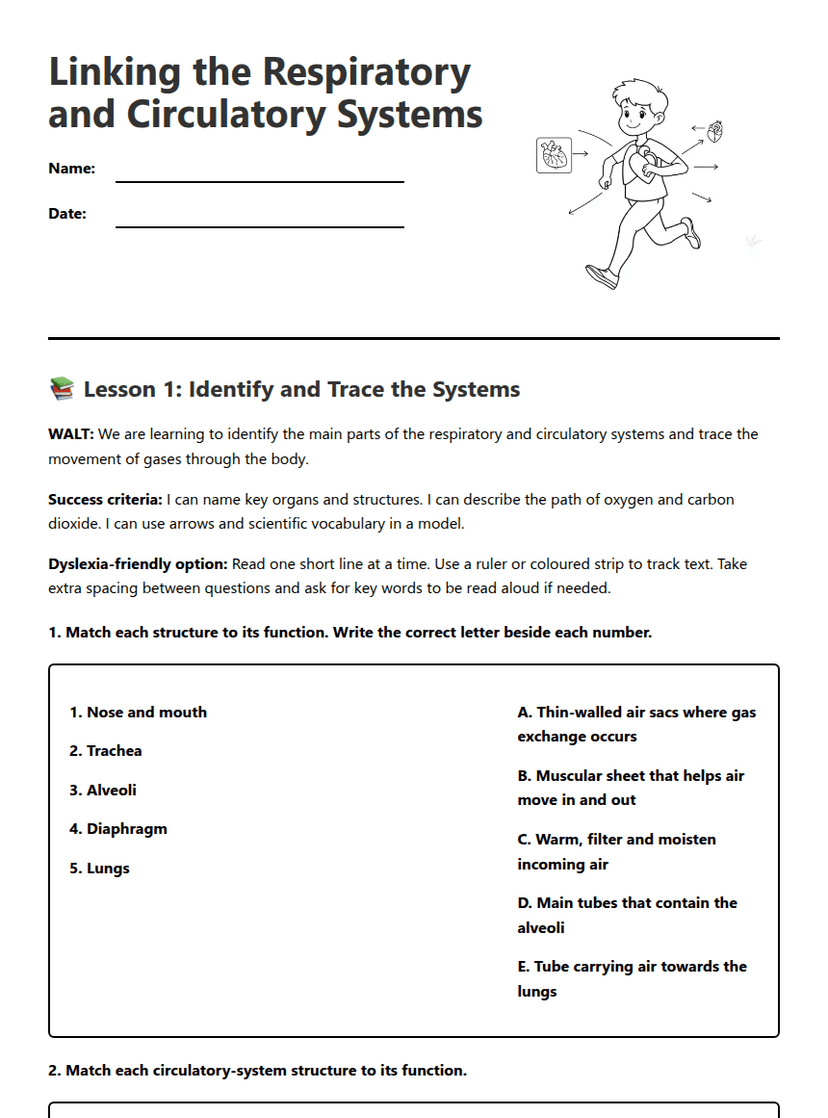
Respiratory and Circulatory Systems
Free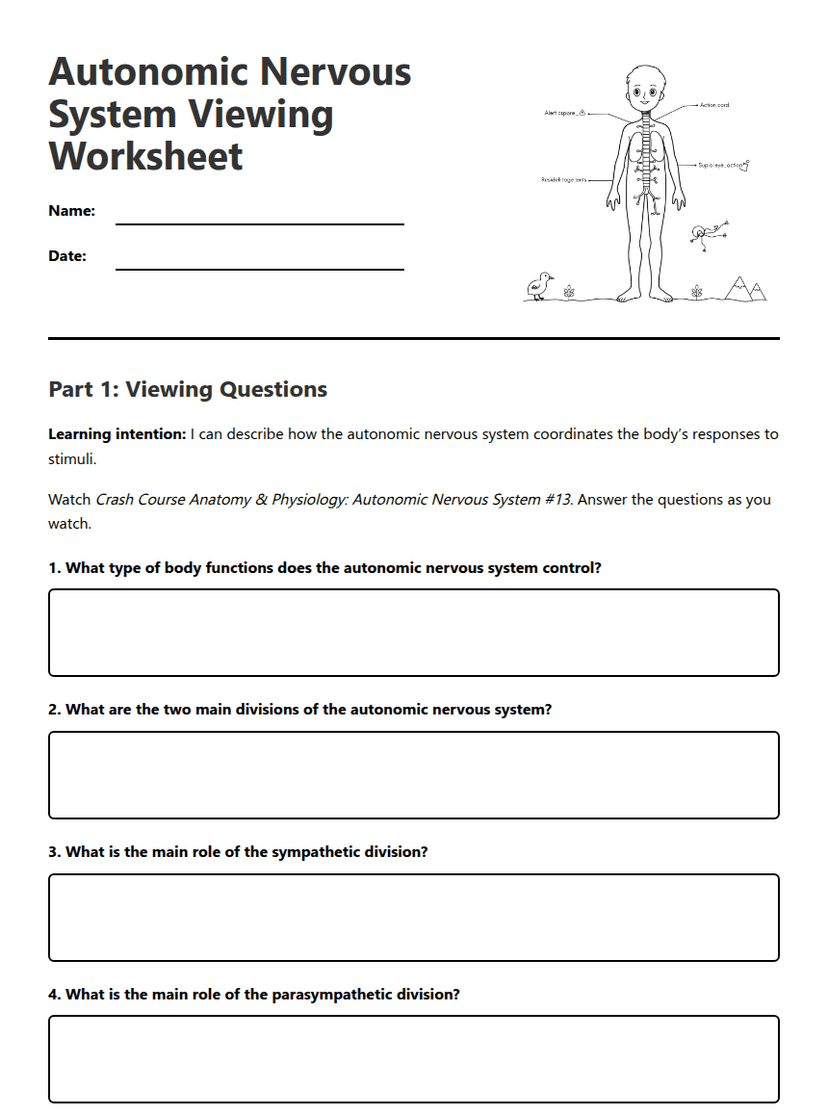
Autonomic Nervous System Viewing Worksheet
Free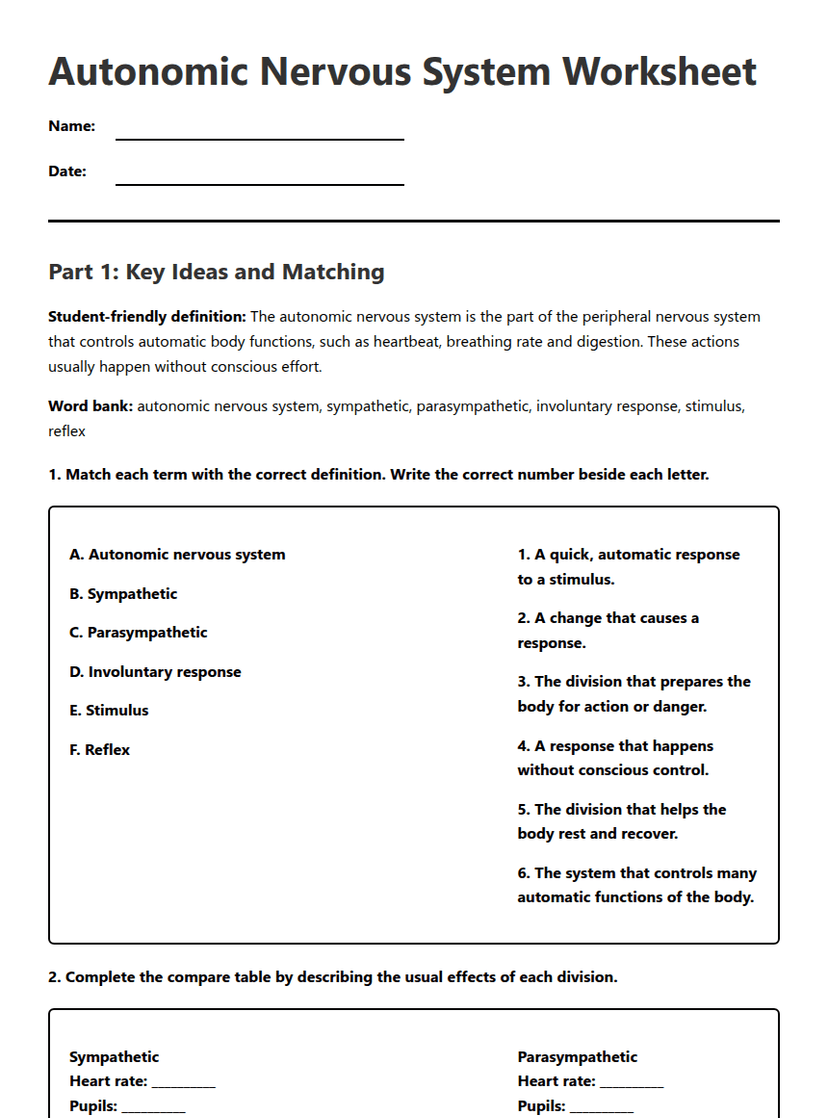
Autonomic Nervous System Worksheet
Free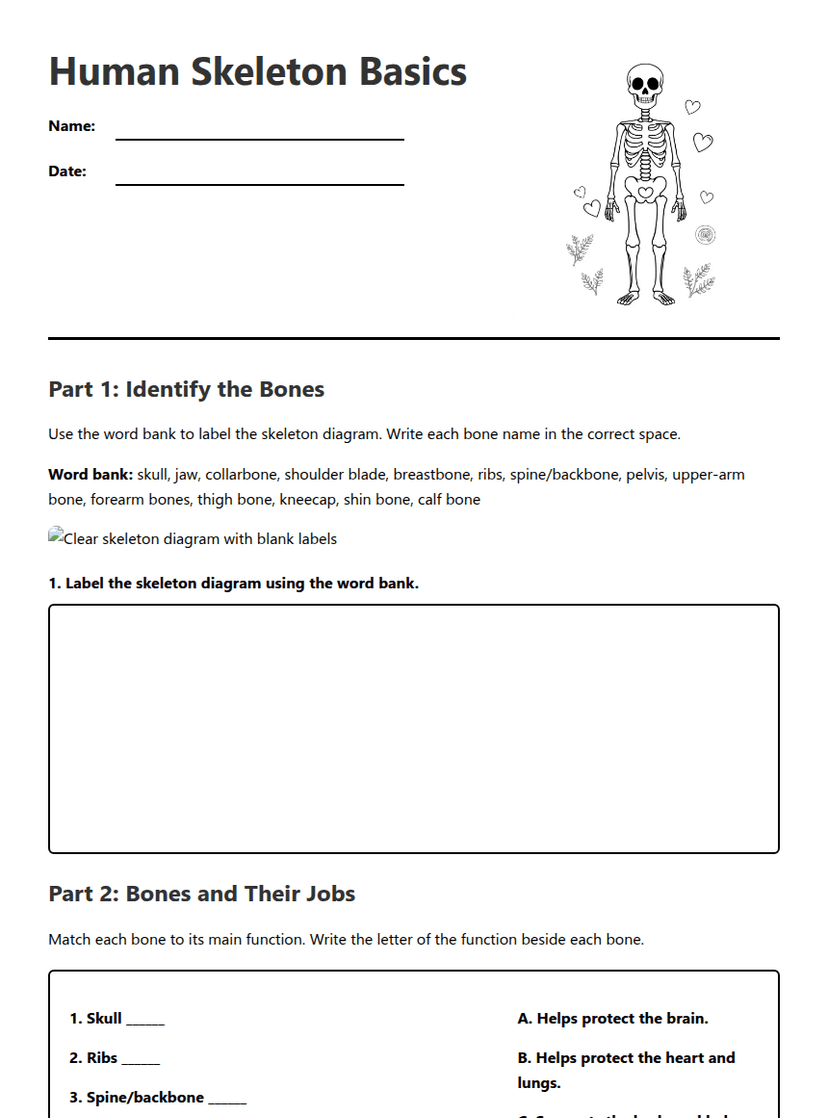
Human Skeleton Basics
Free
Human Skeleton: Structure and Movement
Free
Lung Gas Exchange Worksheet
Free