Leadership in Movement Worksheet
A free pe worksheet ready for your classroom. Open in Kuraplan to grab the print-ready PDF, customize it for your students, or generate a fresh version in seconds.
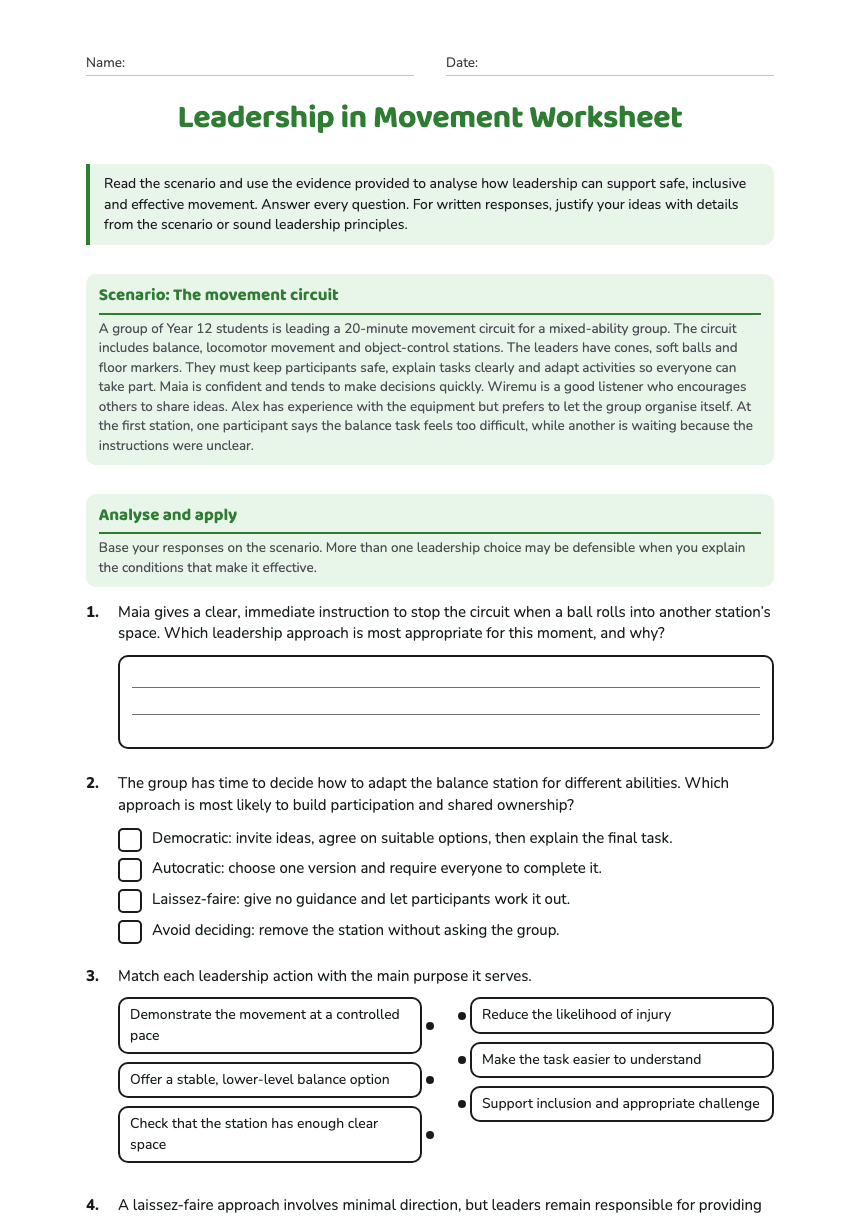
Leadership in Movement Worksheet
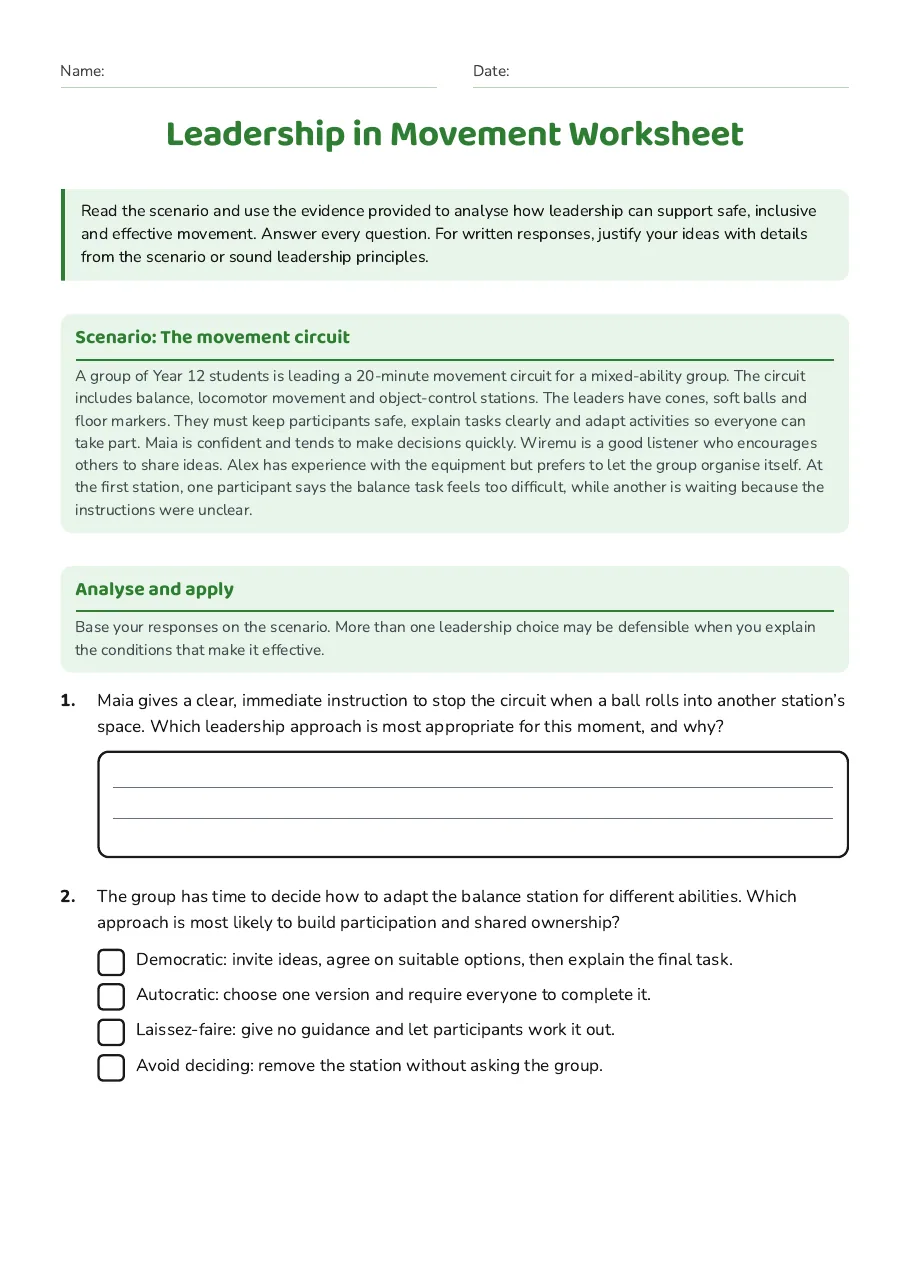
Scenario: The movement circuit
A group of Year 12 students is leading a 20-minute movement circuit for a mixed-ability group. The circuit includes balance, locomotor movement and object-control stations. The leaders have cones, soft balls and floor markers. They must keep participants safe, explain tasks clearly and adapt activities so everyone can take part. Maia is confident and tends to make decisions quickly. Wiremu is a good listener who encourages others to share ideas. Alex has experience with the equipment but prefers to let the group organise itself. At the first station, one participant says the balance task feels too difficult, while another is waiting because the instructions were unclear.
Analyse and apply
Base your responses on the scenario. More than one leadership choice may be defensible when you explain the conditions that make it effective.
- Democratic: invite ideas, agree on suitable options, then explain the final task.
- Autocratic: choose one version and require everyone to complete it.
- Laissez-faire: give no guidance and let participants work it out.
- Avoid deciding: remove the station without asking the group.
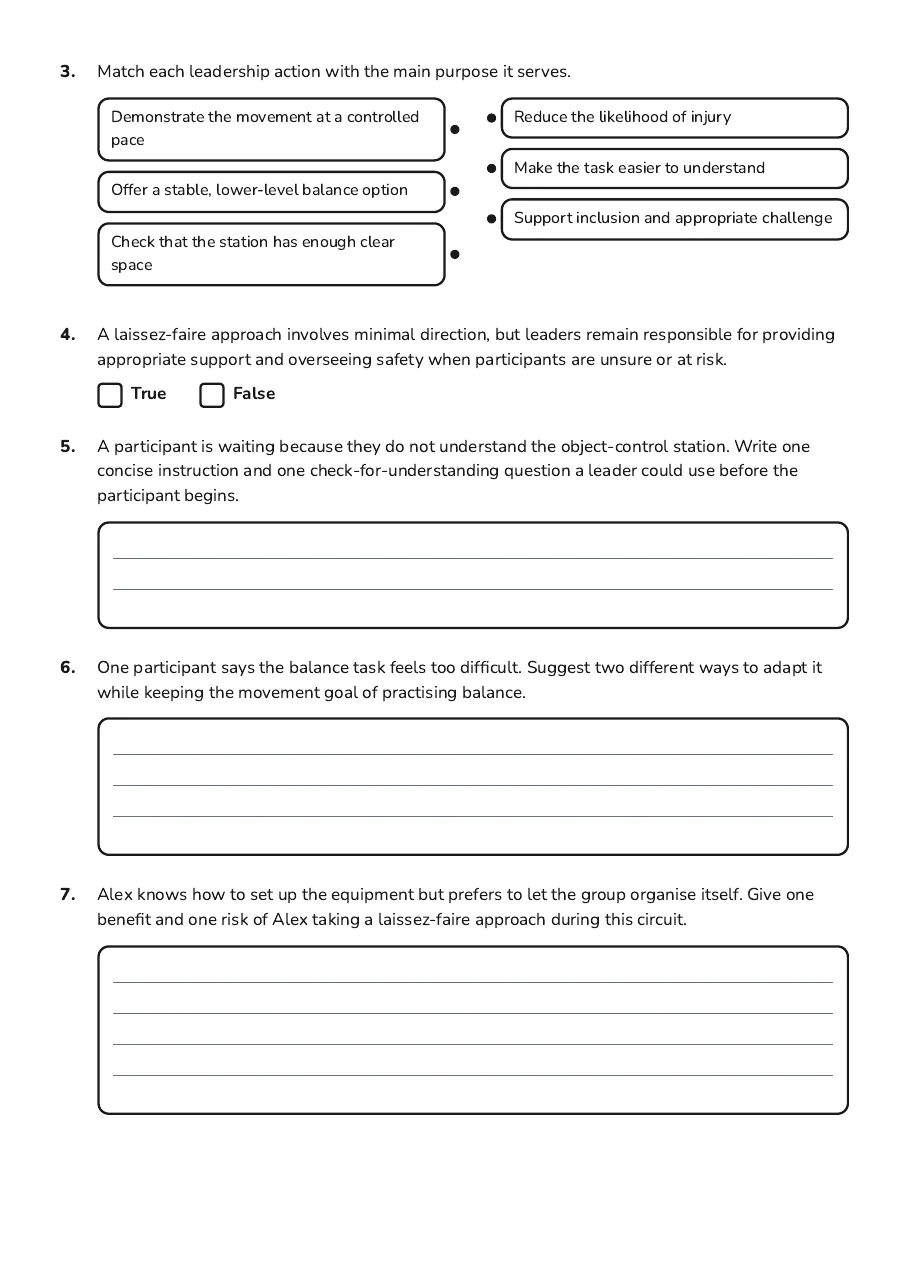
- Demonstrate the movement at a controlled pace
- Offer a stable, lower-level balance option
- Check that the station has enough clear space
- Reduce the likelihood of injury
- Make the task easier to understand
- Support inclusion and appropriate challenge
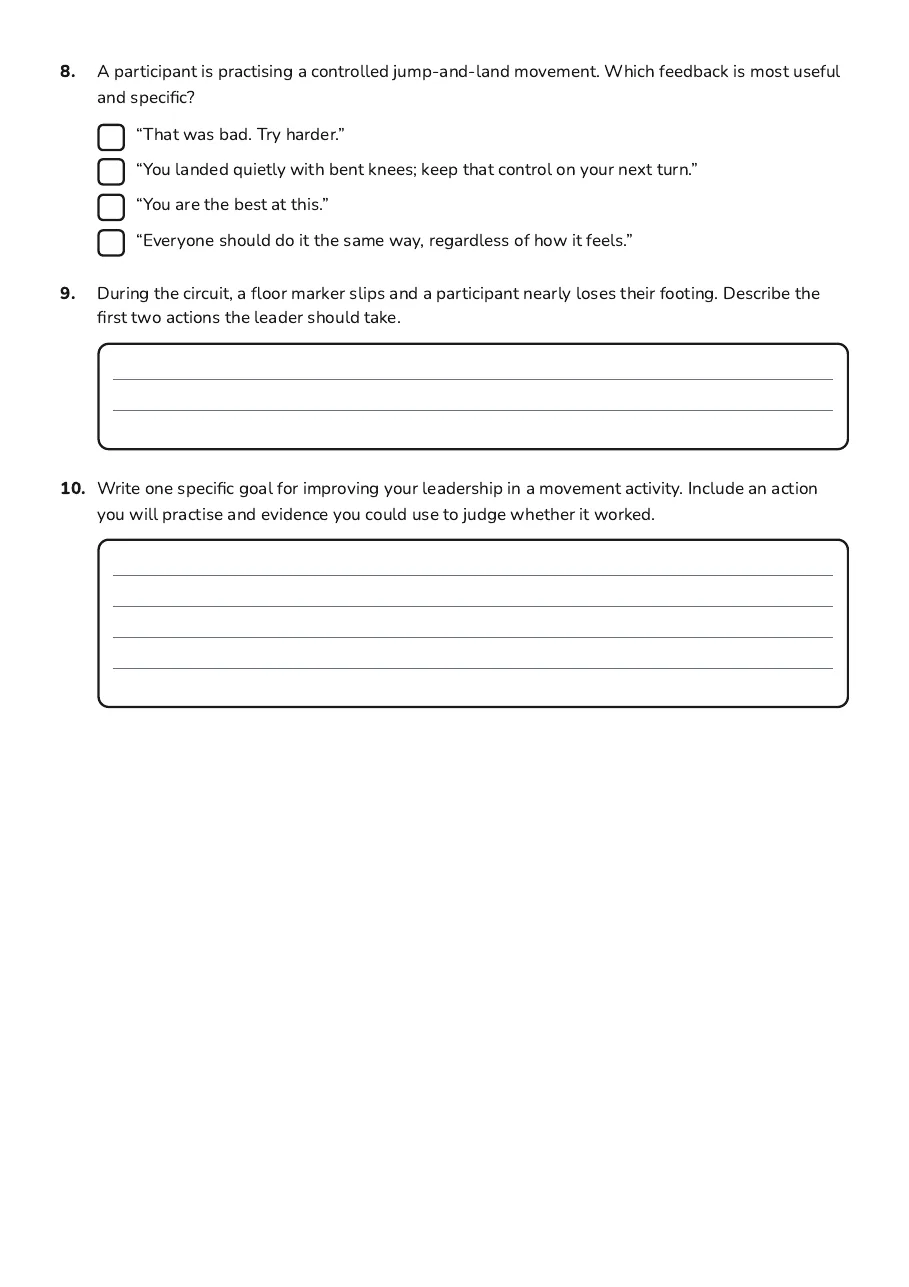
- “That was bad. Try harder.”
- “You landed quietly with bent knees; keep that control on your next turn.”
- “You are the best at this.”
- “Everyone should do it the same way, regardless of how it feels.”
3 printable pages
Page 1
Page 2
Page 3
About This Worksheet
Free in Kuraplan
Sign up free, grab the PDF, and customize it for your class.
Print-Ready
Formatted for standard paper. Clean layout, easy to read.
AI-Generated
Created with Kuraplan's AI, designed for real classroom use.
For Teachers & Parents
Use in classrooms, for homework, tutoring, or homeschool.
Need a custom version of this worksheet?
Kuraplan's AI generates custom worksheets in seconds — differentiated for every learner, aligned to your curriculum.
Generate Custom Worksheets — FreeMore PE Worksheets
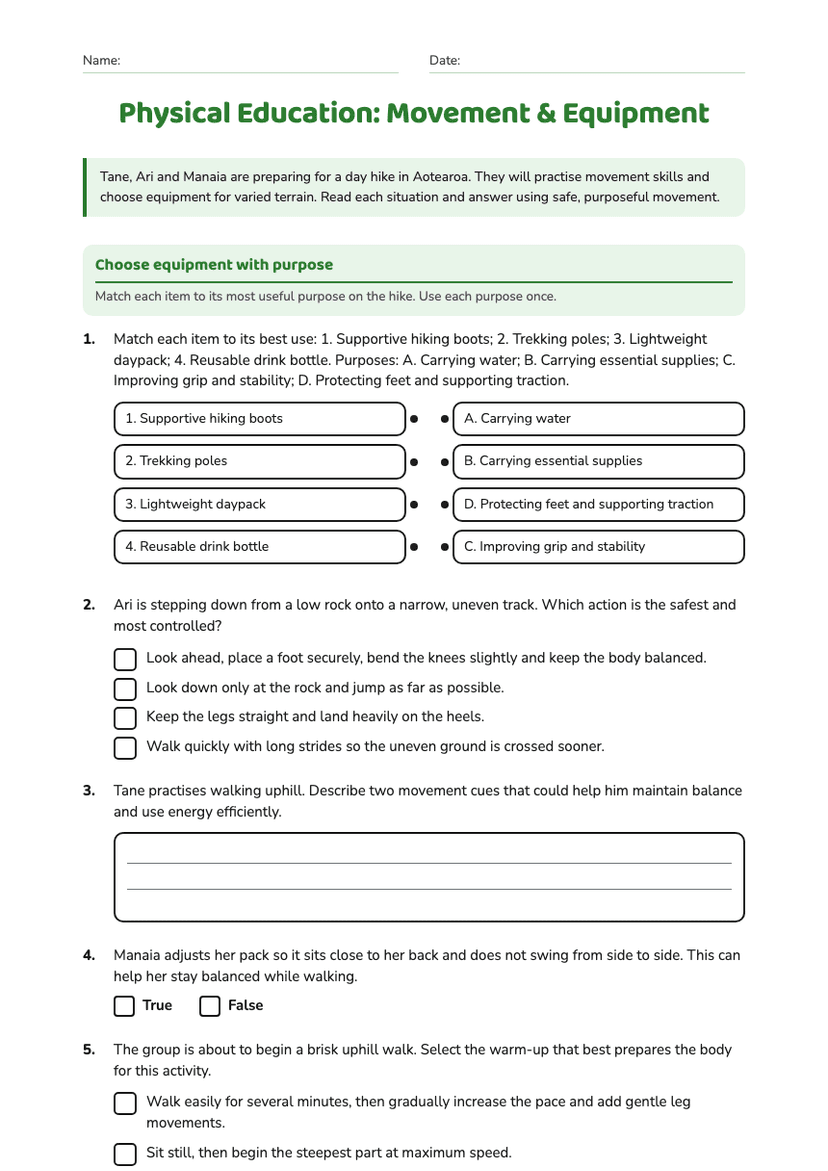
Physical Education: Movement & Equipment
Free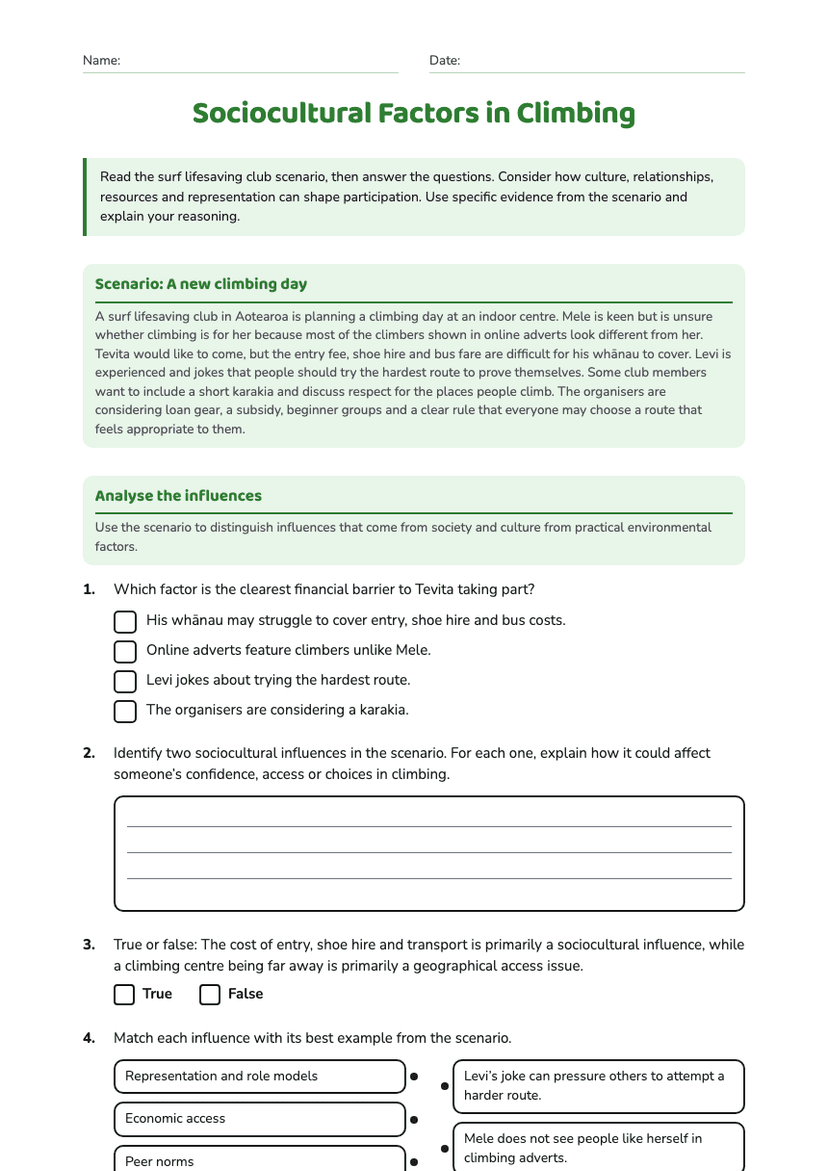
Sociocultural Factors in Climbing
Free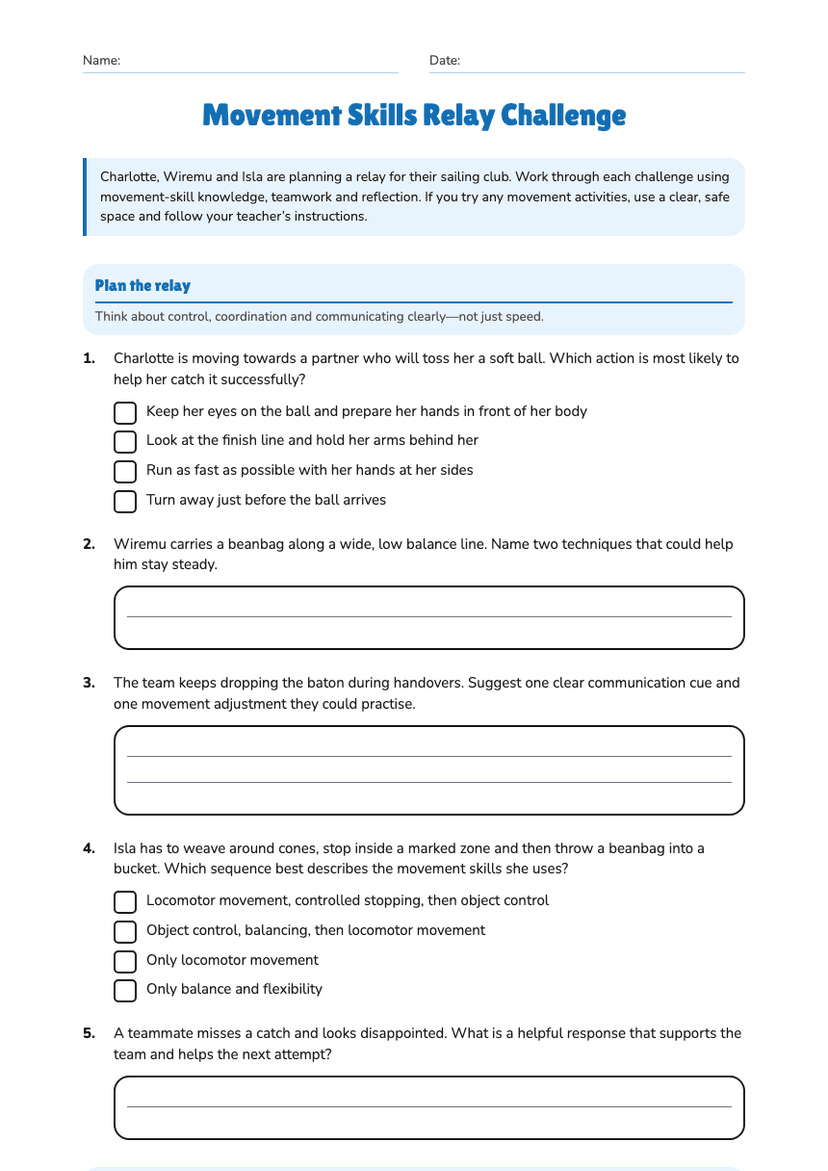
Movement Skills Relay Challenge
Free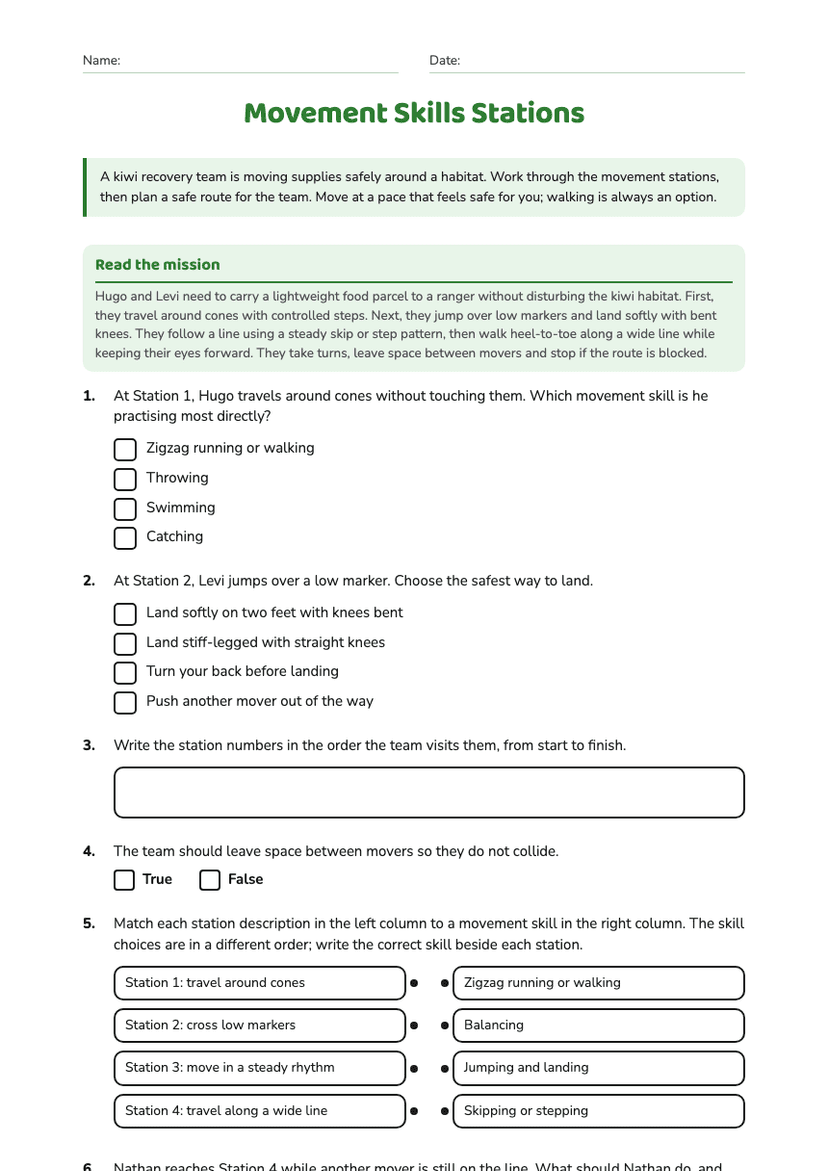
Movement Skills Stations
Free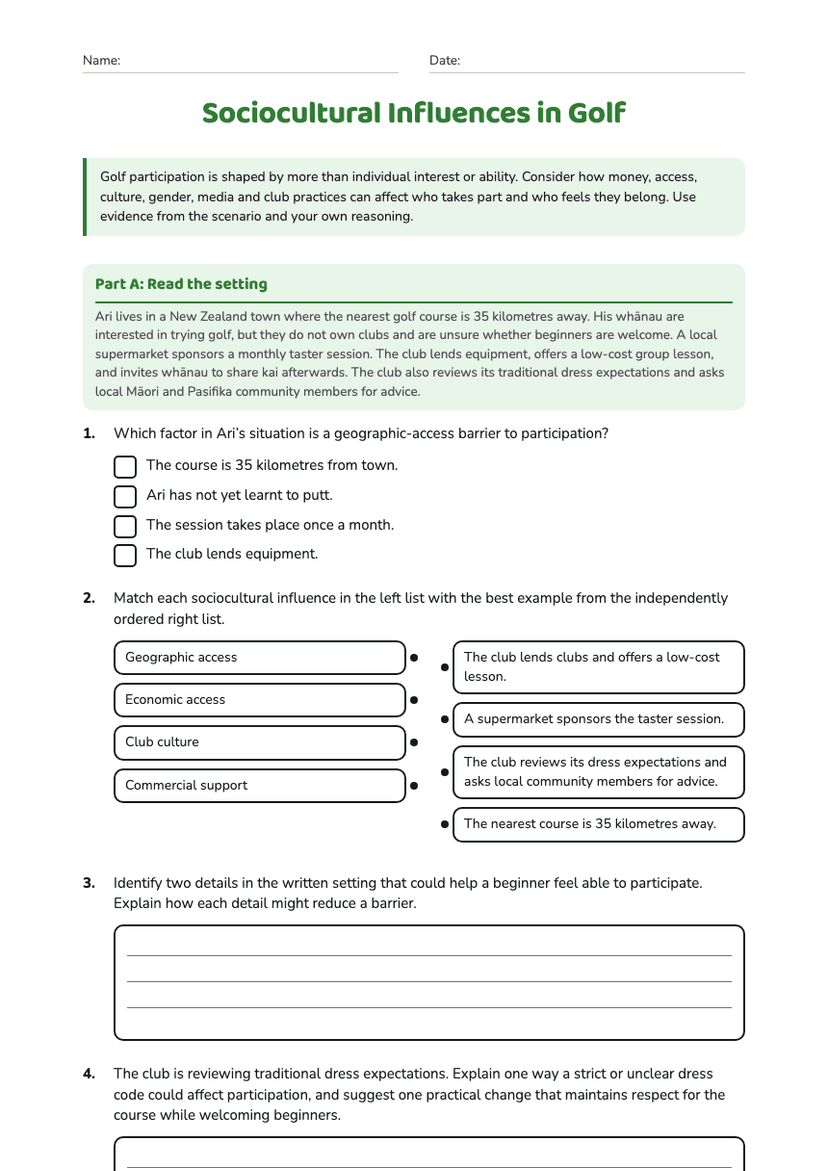
Sociocultural Influences in Golf
Free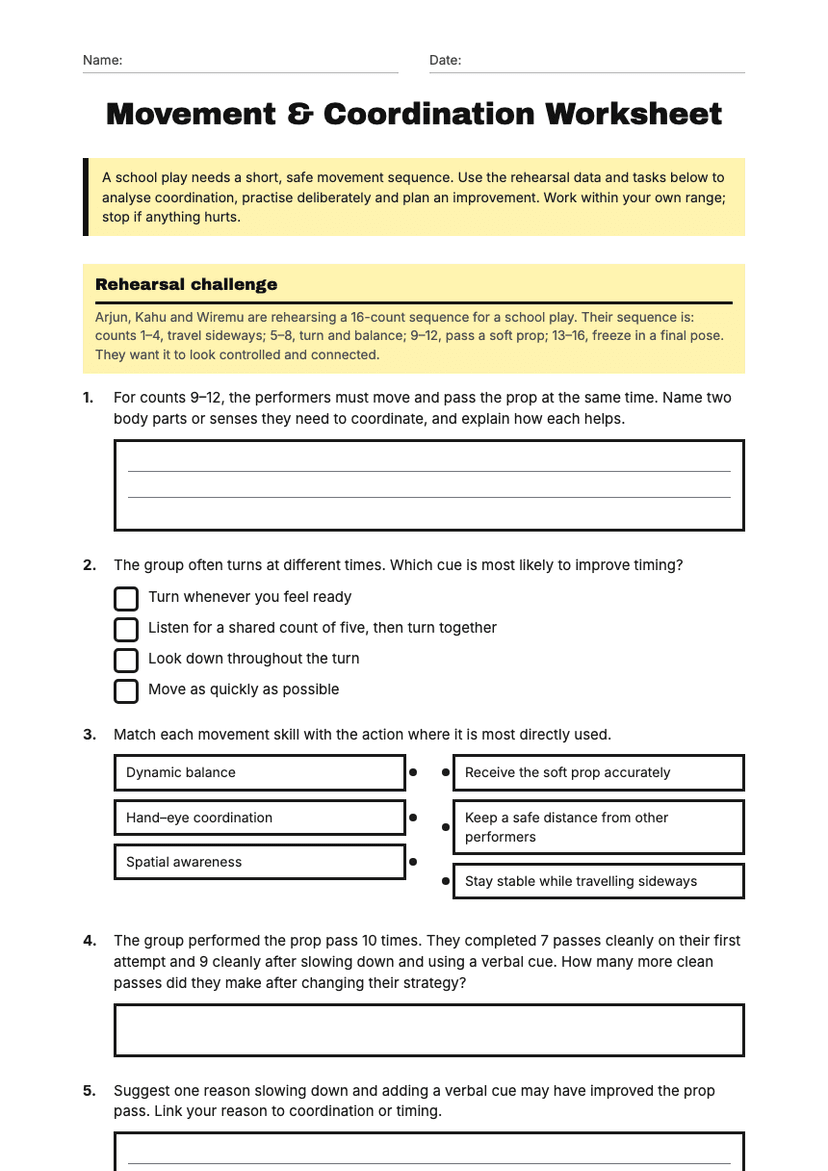
Movement & Coordination Worksheet
Free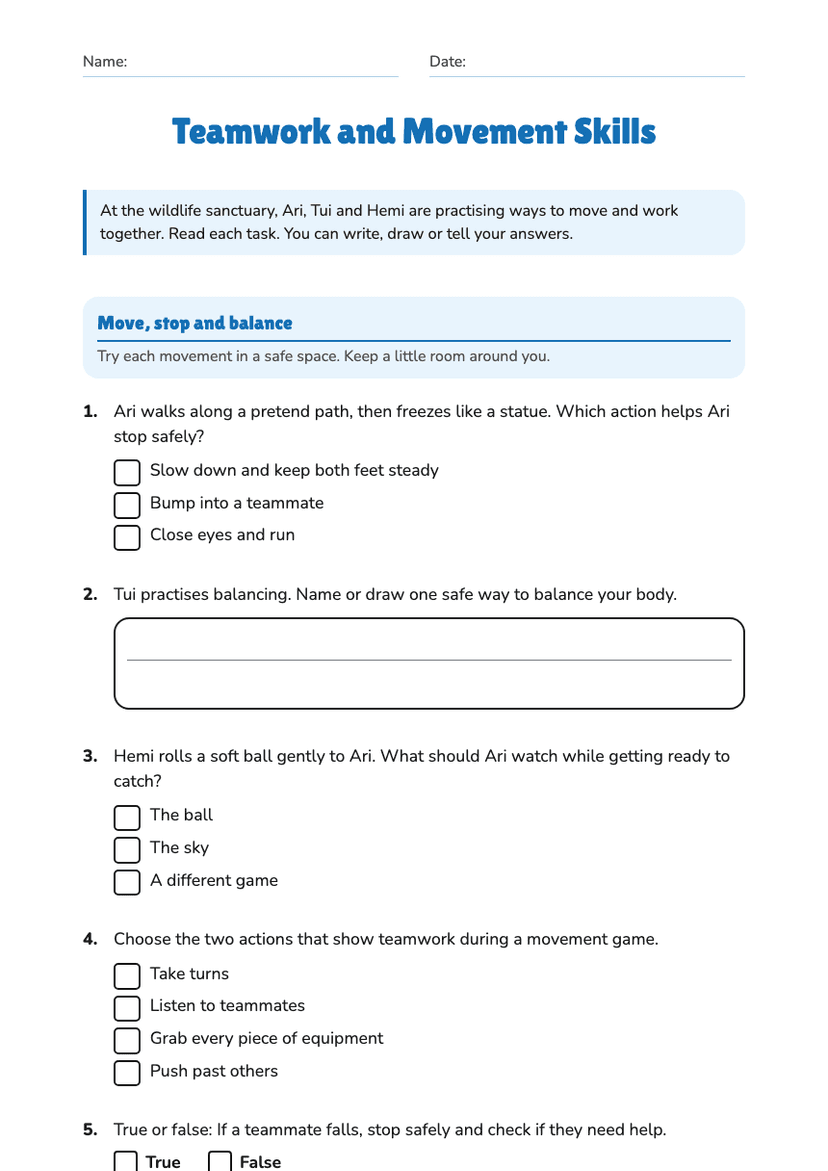
Teamwork and Movement Skills
Free