EnglishFreePrintable

Māori Storytelling Traditions

A free english worksheet ready for your classroom. Open in Kuraplan to grab the print-ready PDF, customize it for your students, or generate a fresh version in seconds.
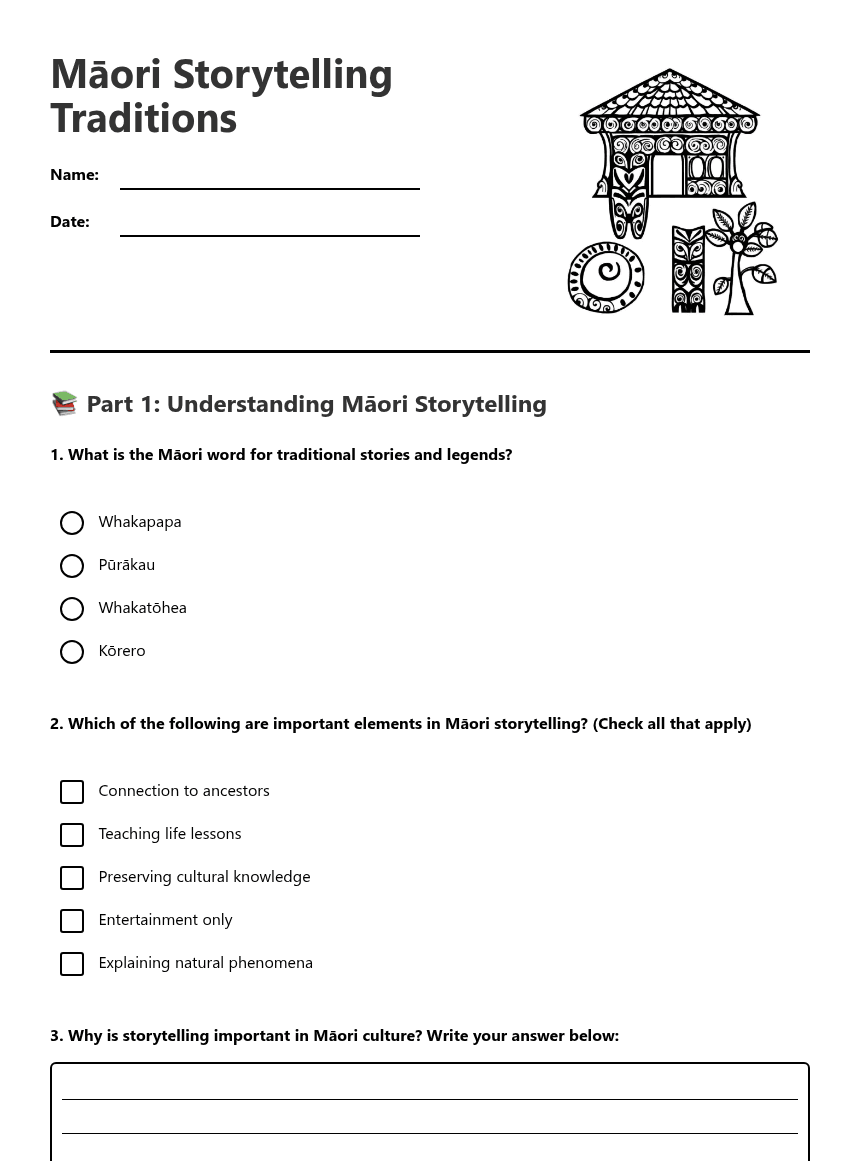
Māori Storytelling Traditions worksheet preview

Māori Storytelling Traditions

Māori Storytelling Traditions

Traditional Māori storytelling scene

📚 Part 1: Understanding Māori Storytelling

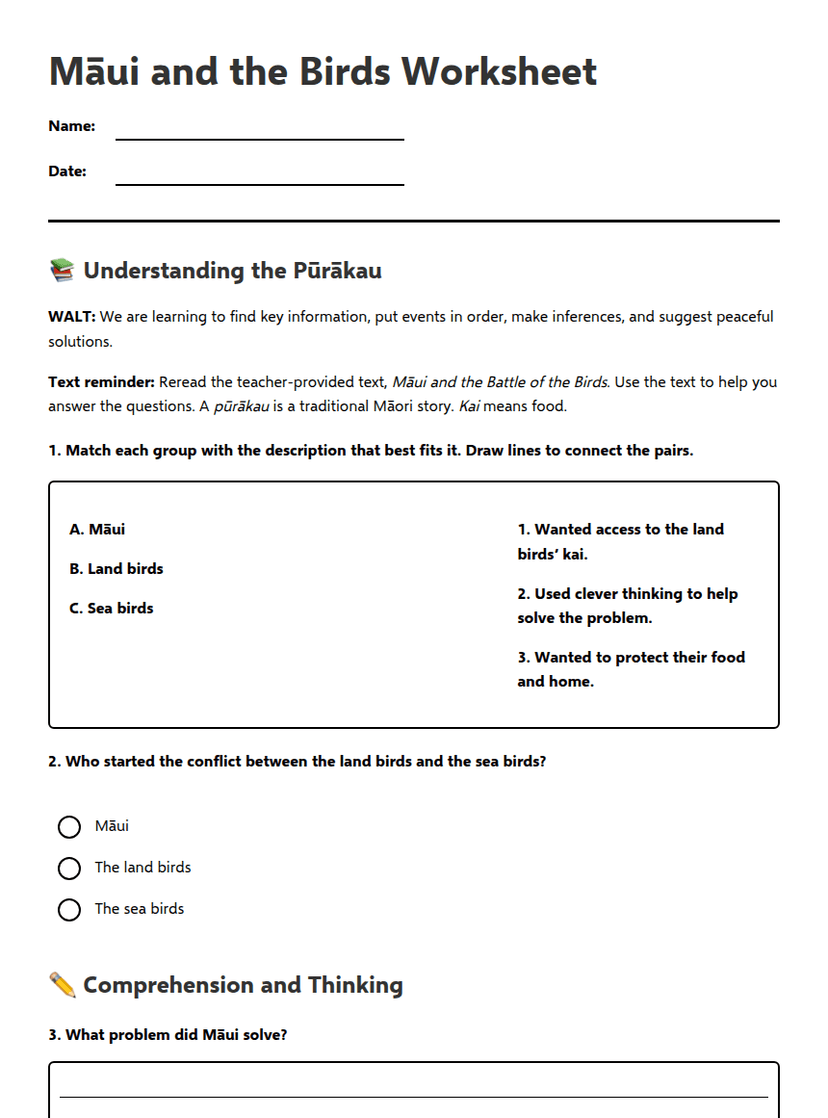
1. What is the Māori word for traditional stories and legends?

Whakapapa

Pūrākau

Whakatōhea

Kōrero

2. Which of the following are important elements in Māori storytelling? (Check all that apply)

Connection to ancestors

Teaching life lessons

Preserving cultural knowledge

Entertainment only

Explaining natural phenomena

3. Why is storytelling important in Māori culture? Write your answer below:

🌟 Part 2: Vocabulary and Cultural Terms

4. Match the Māori terms with their English meanings:
1. Whānau
2. Mana
3. Tapu
4. Whakapapa
5. Kaumātua
A. Sacred or forbidden
B. Genealogy or family connections
C. Spiritual power or authority
D. Extended family
E. Elder or respected person
5. Fill in the blanks using the words from the box above:

In Māori culture, _____________ are respected storytellers who pass down knowledge to their _____________. These stories often contain _____________ elements that must be treated with respect, and they help maintain the _____________ of families and iwi.

🎨 Part 3: Visualising Stories

6. Think about a Māori story you have read or heard. Draw a scene from that story in the box below. Include details that help show the setting, characters, and mood.
7. Describe what you drew and explain why this scene is important to the story:
8. When you visualise a story, which senses help you create mental images? (Check all that apply)

Sight (what you see)

Sound (what you hear)

Smell (what you smell)

Touch (what you feel)

Taste (what you taste)

📖 Part 4: Story Analysis

9. Choose a Māori legend or story you know. Complete the story map below:

Story Title: _________________________________

Main Characters: _________________________________

Setting (where and when): _________________________________

Problem or Challenge: _________________________________

Solution or Outcome: _________________________________

Cultural Lesson or Message: _________________________________

10. How do Māori stories help preserve cultural identity? Give two specific examples:

🤔 Part 5: Critical Thinking

11. Compare Māori storytelling traditions with storytelling from another culture you know. What similarities and differences can you identify?
12. Why is it important to show respect when learning about Māori stories and culture?

Because they are sacred and meaningful to Māori people

Because they contain important cultural knowledge

Because they help us understand different perspectives

All of the above

13. How might traditional Māori storytelling methods (oral tradition) be different from reading stories in books? Explain your thinking:

About This Worksheet

Free in Kuraplan

Sign up free, grab the PDF, and customize it for your class.

Print-Ready

Formatted for standard paper. Clean layout, easy to read.

AI-Generated

Created with Kuraplan's AI, designed for real classroom use.

For Teachers & Parents

Use in classrooms, for homework, tutoring, or homeschool.

Need a custom version of this worksheet?

Kuraplan's AI generates custom worksheets in seconds — differentiated for every learner, aligned to your curriculum.

Generate Custom Worksheets — Free
No credit card Curriculum-aligned Under 60 seconds