Muscle Movement Analysis Worksheet
A free pe worksheet ready for your classroom. Open in Kuraplan to grab the print-ready PDF, customize it for your students, or generate a fresh version in seconds.
Muscle Movement Analysis Worksheet
💪 Part 1: Major Muscle Identification
Muscles to identify: biceps, triceps, quadriceps, hamstrings, pectorals, deltoids
🔄 Part 2: Agonist and Antagonist Muscle Pairs
Agonist muscle: ________________________________
Antagonist muscle: ________________________________
When lifting the weight up:
Agonist (contracting): ________________
Antagonist (relaxing): ________________
📐 Part 3: Movement Terms
Flexion: ________________________________________
Extension: ________________________________________
Abduction: ________________________________________
Adduction: ________________________________________
Bending your elbow to bring your hand to your shoulder:
Flexion Extension Abduction AdductionLifting your arm out to the side away from your body:
Flexion Extension Abduction Adduction🏃 Part 4: Movement Analysis
Include: Primary muscles used, type of movement at knee and hip joints, agonist/antagonist pairs
🧠 Part 5: Critical Thinking
a) Injury prevention: ________________________________
b) Exercise effectiveness: ________________________________
c) Athletic performance: ________________________________
About This Worksheet
Free in Kuraplan
Sign up free, grab the PDF, and customize it for your class.
Print-Ready
Formatted for standard paper. Clean layout, easy to read.
AI-Generated
Created with Kuraplan's AI, designed for real classroom use.
For Teachers & Parents
Use in classrooms, for homework, tutoring, or homeschool.
Need a custom version of this worksheet?
Kuraplan's AI generates custom worksheets in seconds — differentiated for every learner, aligned to your curriculum.
Generate Custom Worksheets — FreeMore PE Worksheets
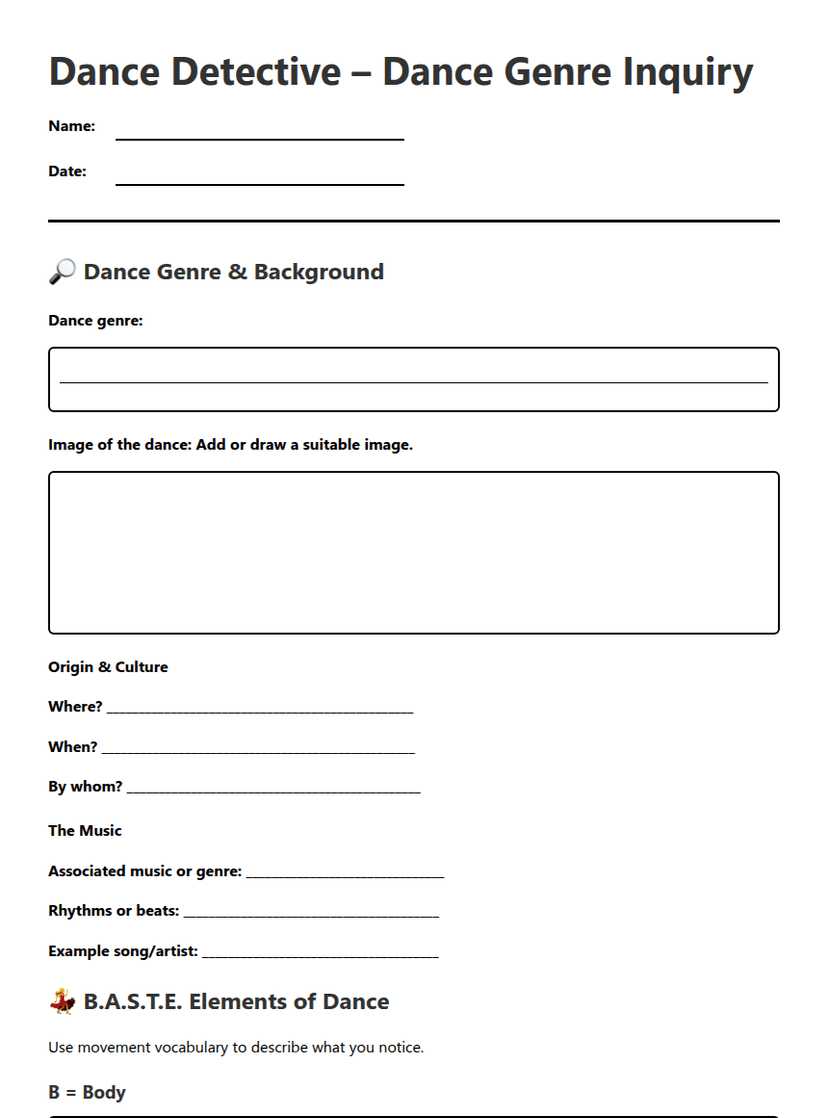
Dance Genre Detective
Free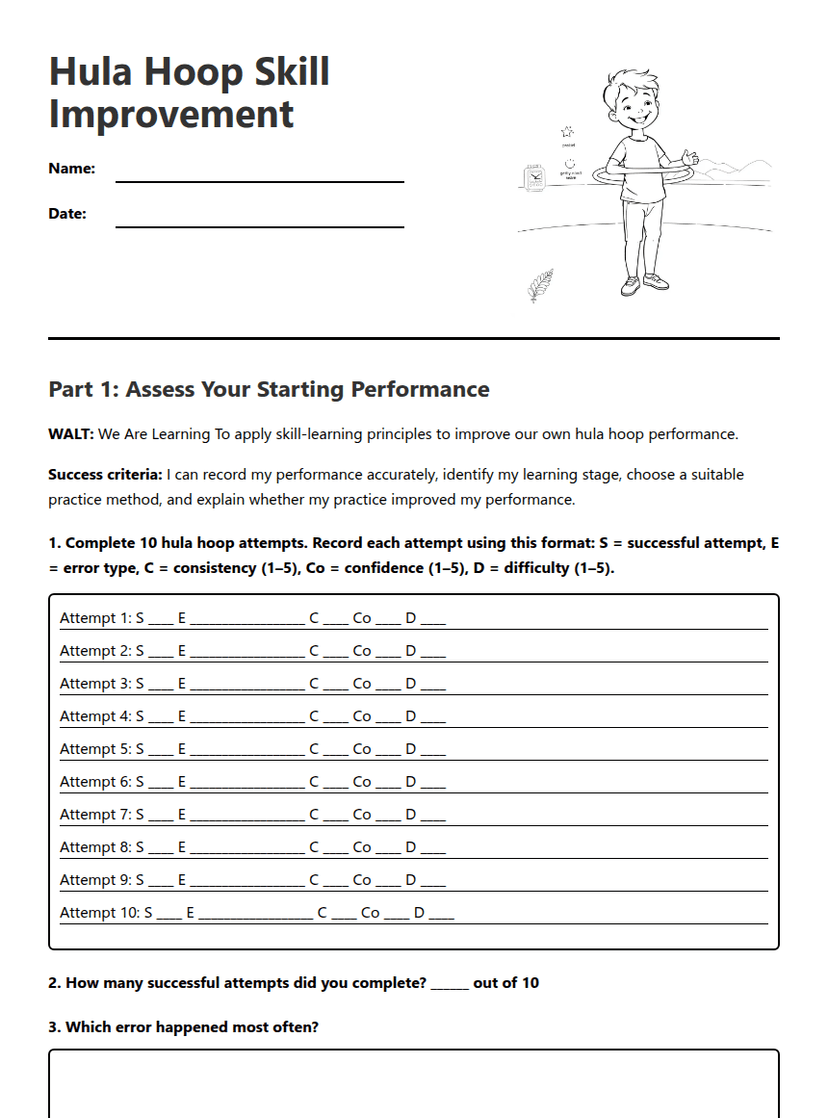
Hula Hoop Skill Improvement
Free
Class Gymnastics Evaluation Sheet
Free
Gymnastics Skills Assessment
Free
US 20159 Elements Assessment
Free
Functional Anatomy and Movement Analysis
Free
Socio-Cultural Influences on Movement
Free