EnglishFreePrintable
Narrative Elements Planning
A free english worksheet ready for your classroom. Open in Kuraplan to grab the print-ready PDF, customize it for your students, or generate a fresh version in seconds.
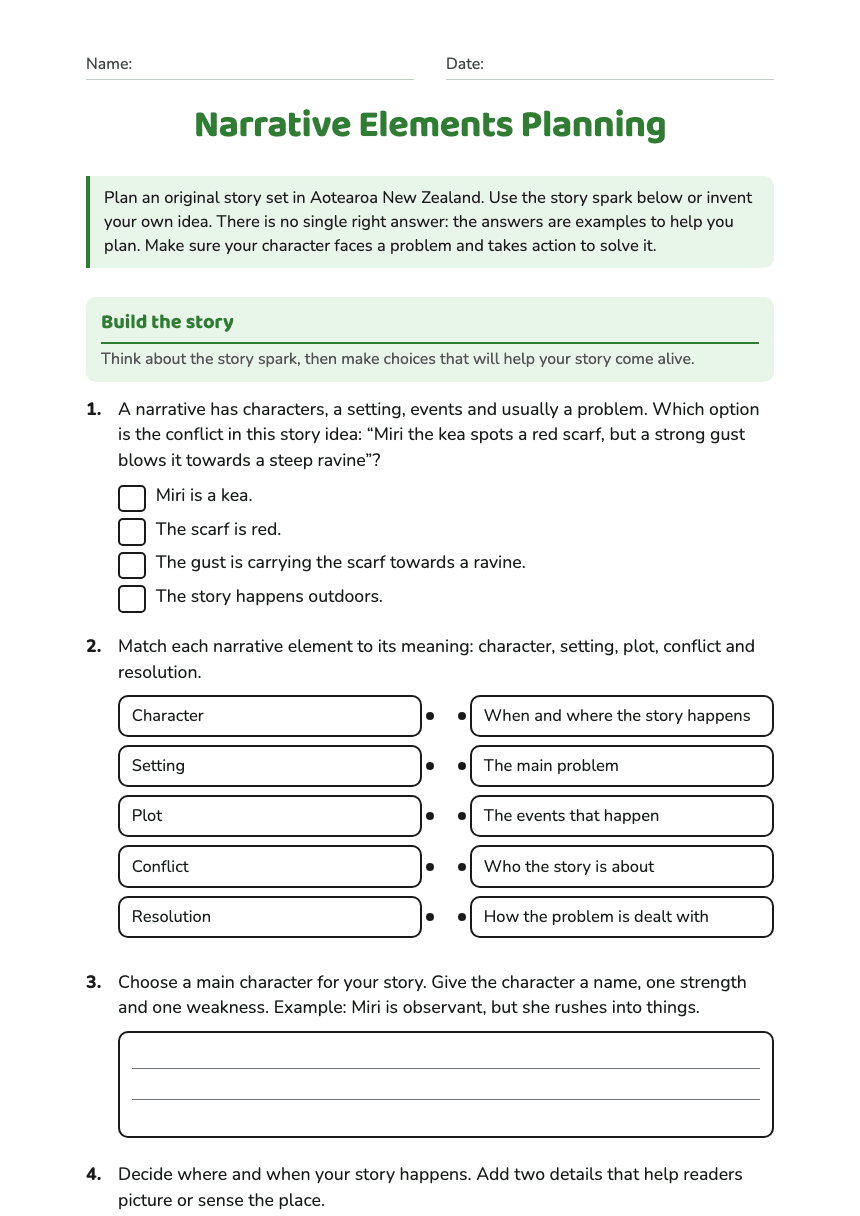
Name:Date:
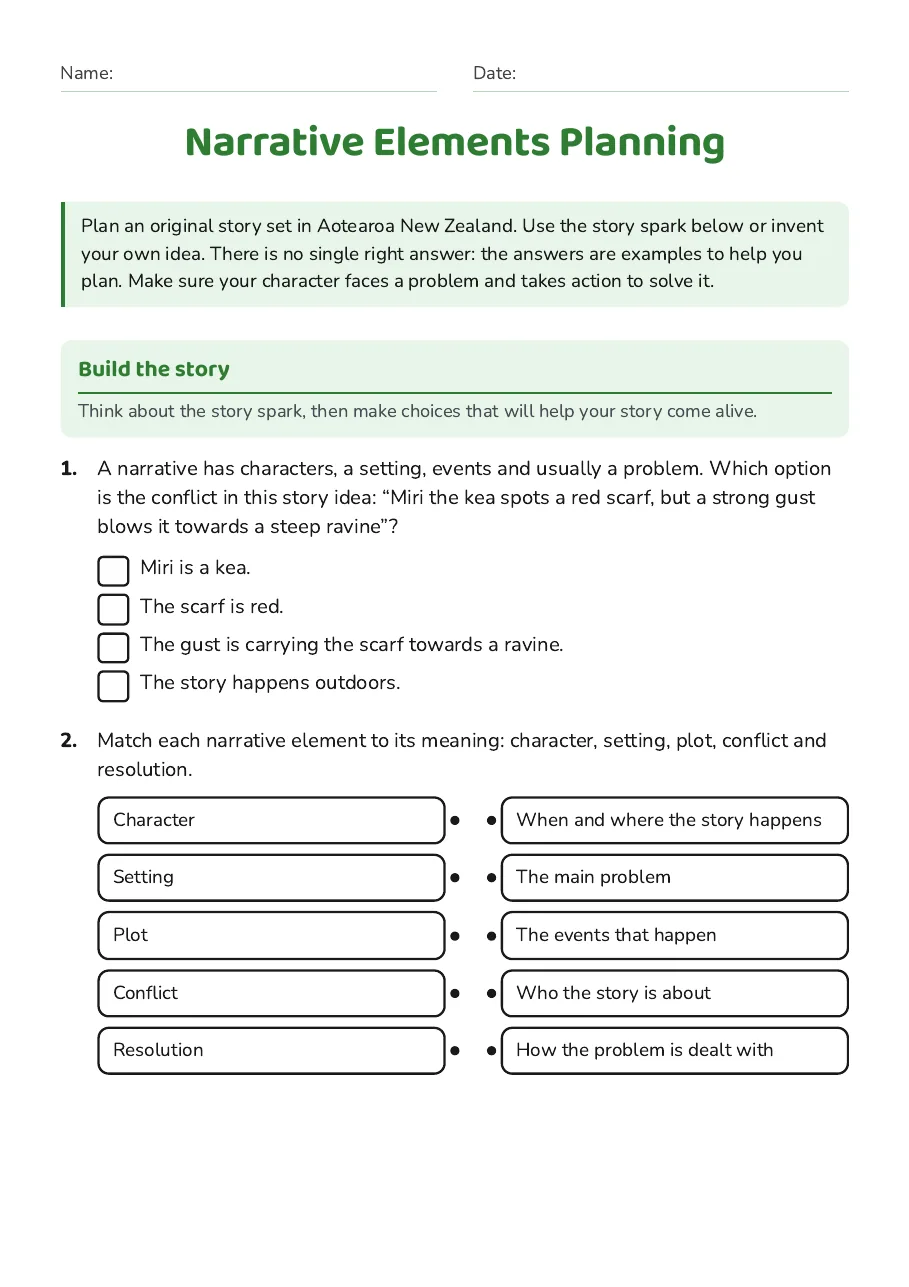
Narrative Elements Planning
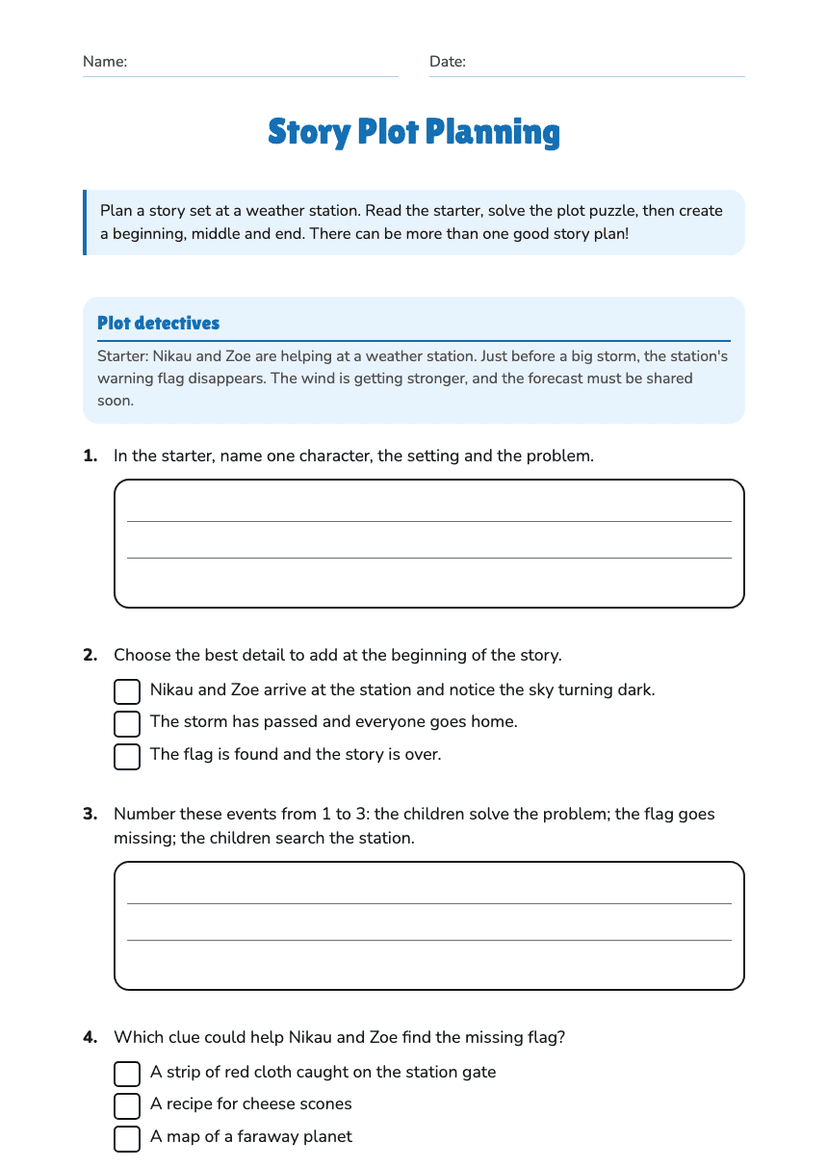
Plan an original story set in Aotearoa New Zealand. Use the story spark below or invent your own idea. There is no single right answer: the answers are examples to help you plan. Make sure your character faces a problem and takes action to solve it.
Build the story
Think about the story spark, then make choices that will help your story come alive.
1.A narrative has characters, a setting, events and usually a problem. Which option is the conflict in this story idea: “Miri the kea spots a red scarf, but a strong gust blows it towards a steep ravine”?
- Miri is a kea.
- The scarf is red.
- The gust is carrying the scarf towards a ravine.
- The story happens outdoors.
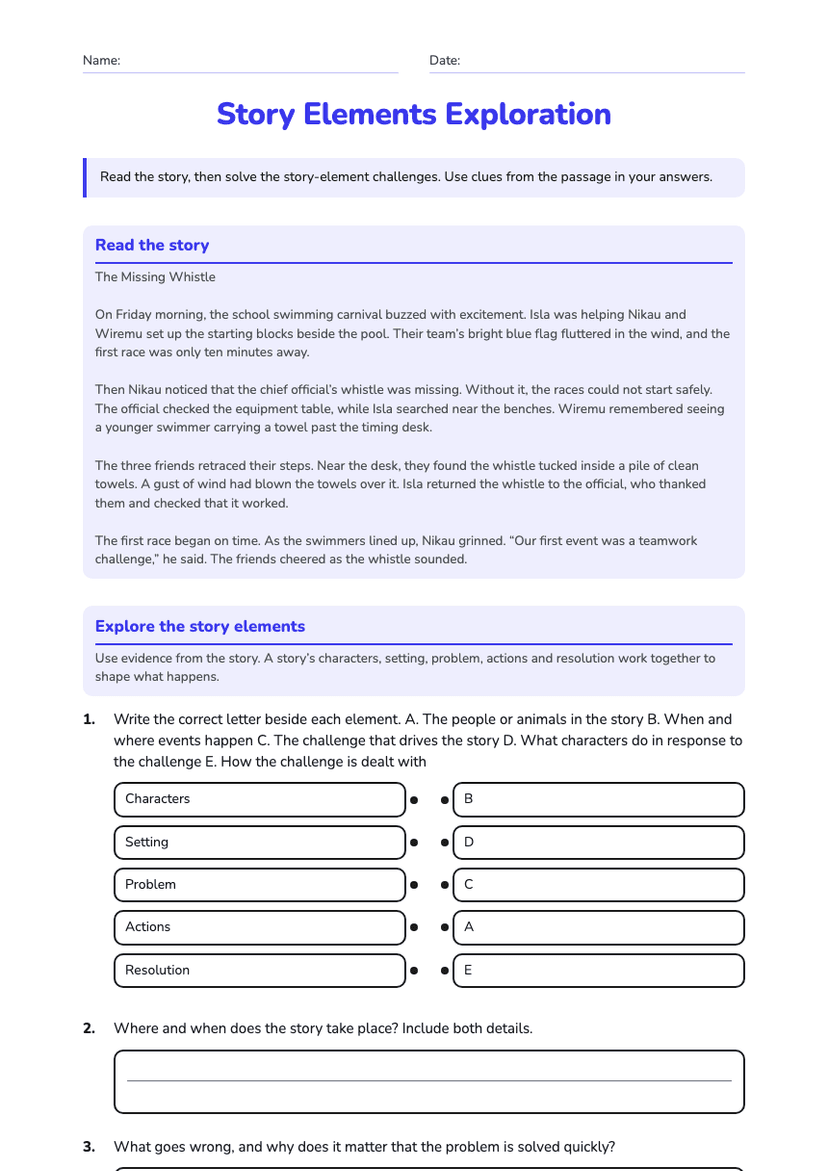
2.Match each narrative element to its meaning: character, setting, plot, conflict and resolution.
- Character
- Setting
- Plot
- Conflict
- Resolution
- When and where the story happens
- The main problem
- The events that happen
- Who the story is about
- How the problem is dealt with
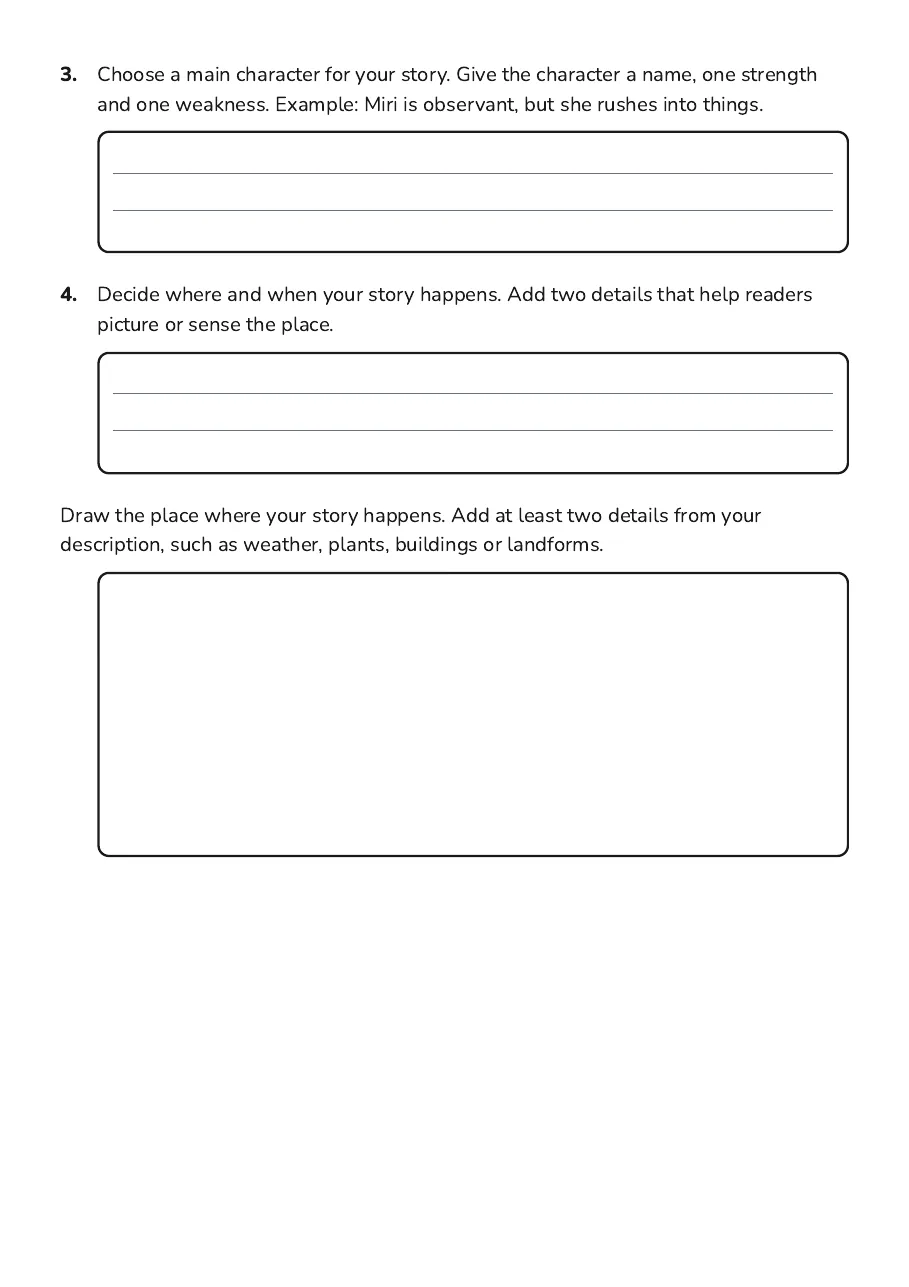
3.Choose a main character for your story. Give the character a name, one strength and one weakness. Example: Miri is observant, but she rushes into things.
4.Decide where and when your story happens. Add two details that help readers picture or sense the place.
Draw the place where your story happens. Add at least two details from your description, such as weather, plants, buildings or landforms.
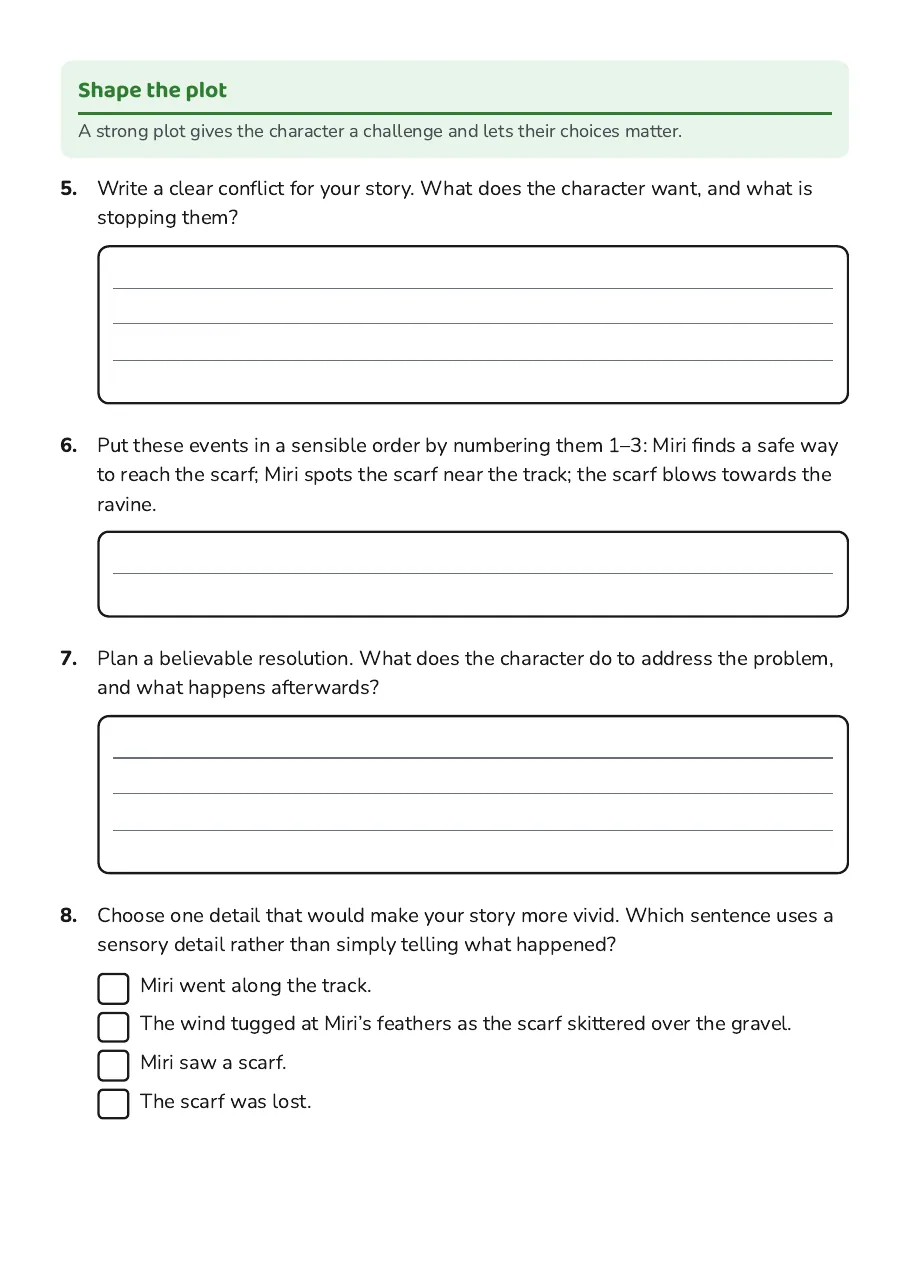
Shape the plot
A strong plot gives the character a challenge and lets their choices matter.
5.Write a clear conflict for your story. What does the character want, and what is stopping them?
6.Put these events in a sensible order by numbering them 1–3: Miri finds a safe way to reach the scarf; Miri spots the scarf near the track; the scarf blows towards the ravine.
7.Plan a believable resolution. What does the character do to address the problem, and what happens afterwards?
8.Choose one detail that would make your story more vivid. Which sentence uses a sensory detail rather than simply telling what happened?
- Miri went along the track.
- The wind tugged at Miri’s feathers as the scarf skittered over the gravel.
- Miri saw a scarf.
- The scarf was lost.
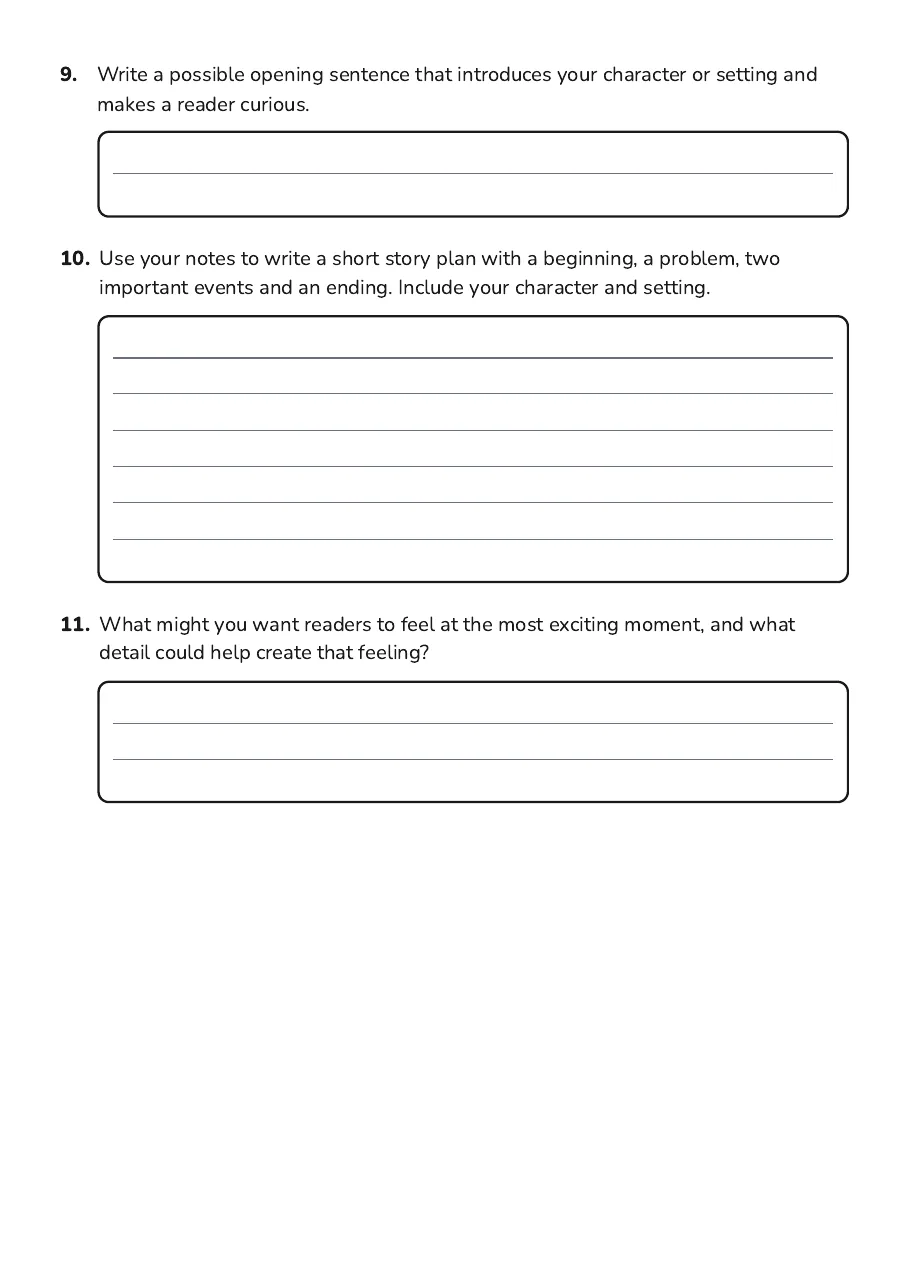
9.Write a possible opening sentence that introduces your character or setting and makes a reader curious.
10.Use your notes to write a short story plan with a beginning, a problem, two important events and an ending. Include your character and setting.
11.What might you want readers to feel at the most exciting moment, and what detail could help create that feeling?
4 printable pages
Page 1
Page 2
Page 3
Page 4
About This Worksheet
Free in Kuraplan
Sign up free, grab the PDF, and customize it for your class.
Print-Ready
Formatted for standard paper. Clean layout, easy to read.
AI-Generated
Created with Kuraplan's AI, designed for real classroom use.
For Teachers & Parents
Use in classrooms, for homework, tutoring, or homeschool.
Need a custom version of this worksheet?
Kuraplan's AI generates custom worksheets in seconds — differentiated for every learner, aligned to your curriculum.
Generate Custom Worksheets — Free No credit card Curriculum-aligned Under 60 seconds