Ngā Tikanga Māori
A free te reo māori worksheet ready for your classroom. Open in Kuraplan to grab the print-ready PDF, customize it for your students, or generate a fresh version in seconds.
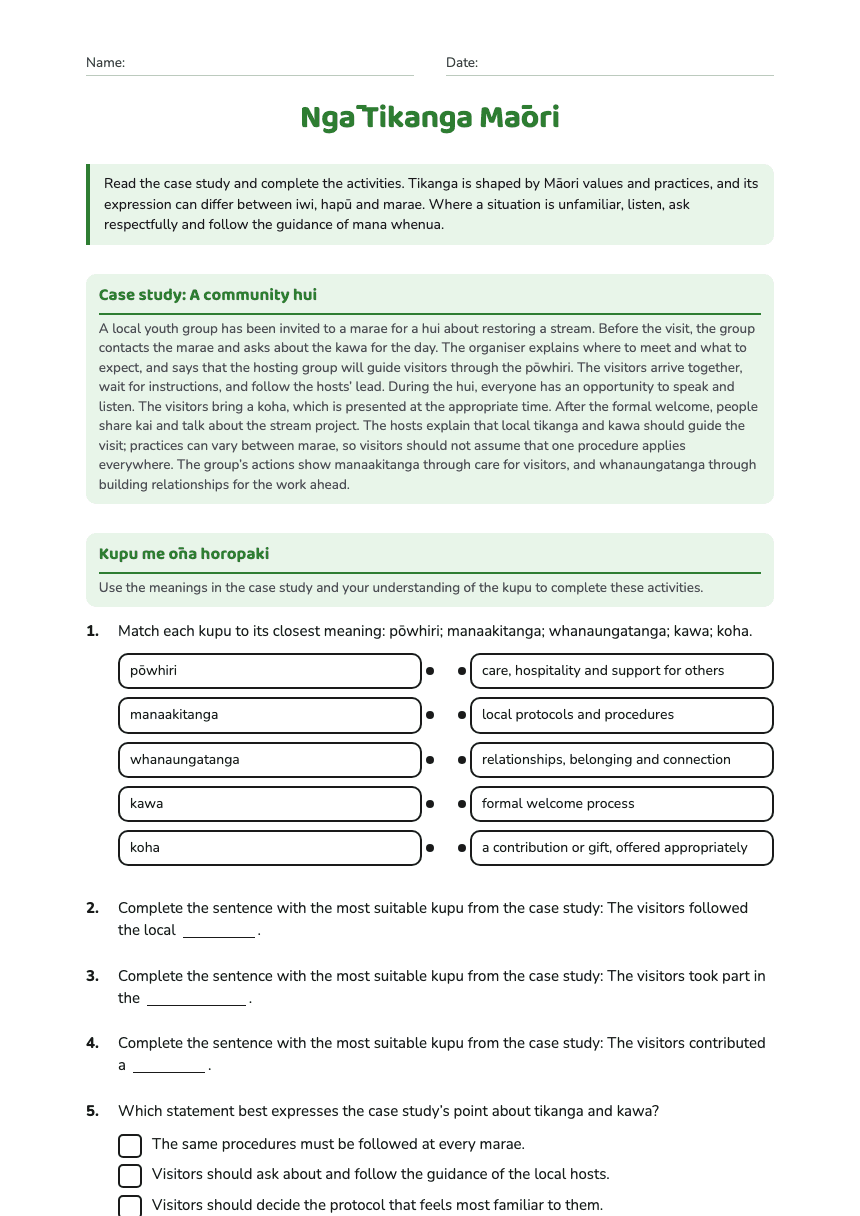
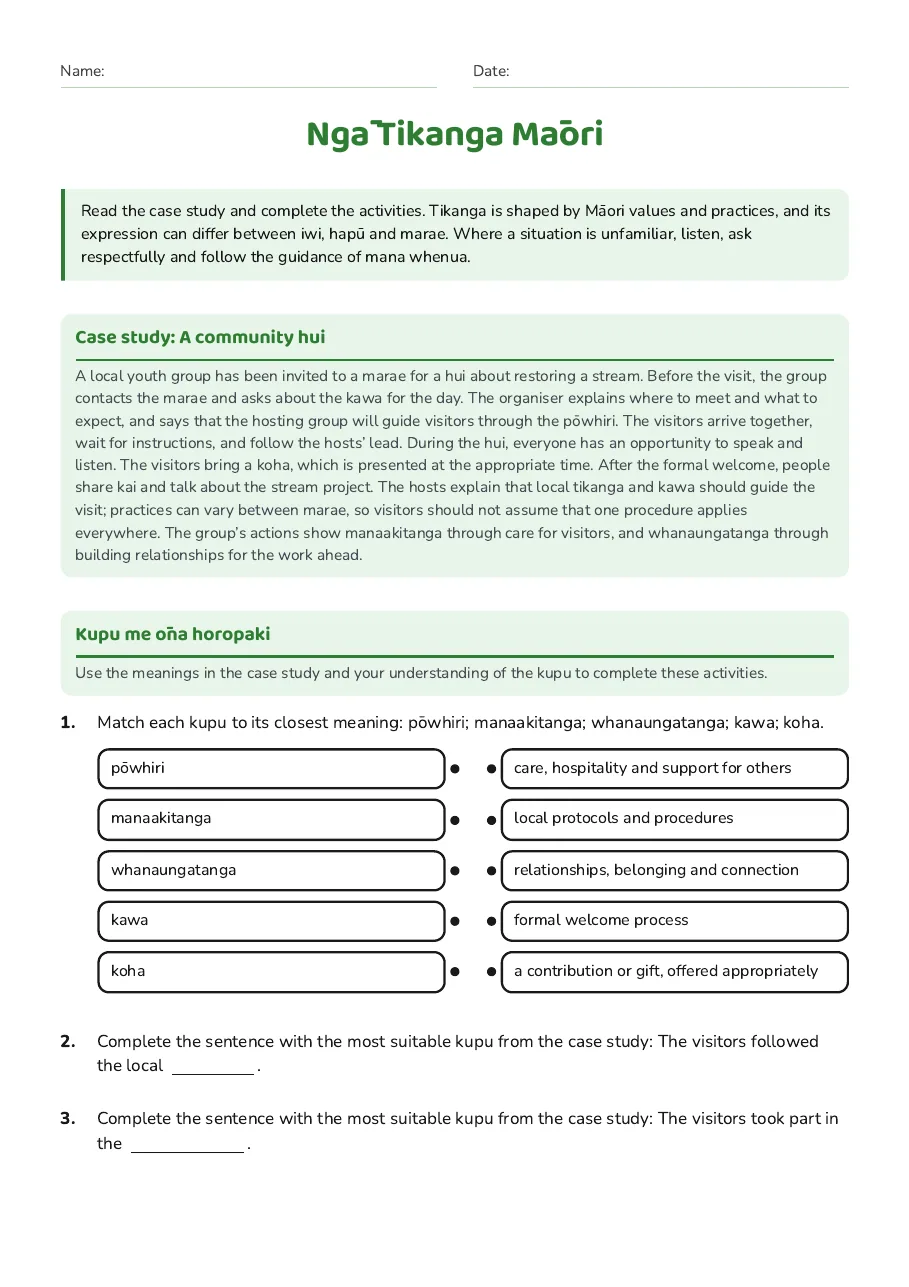
Ngā Tikanga Māori
Case study: A community hui
A local youth group has been invited to a marae for a hui about restoring a stream. Before the visit, the group contacts the marae and asks about the kawa for the day. The organiser explains where to meet and what to expect, and says that the hosting group will guide visitors through the pōwhiri. The visitors arrive together, wait for instructions, and follow the hosts’ lead. During the hui, everyone has an opportunity to speak and listen. The visitors bring a koha, which is presented at the appropriate time. After the formal welcome, people share kai and talk about the stream project. The hosts explain that local tikanga and kawa should guide the visit; practices can vary between marae, so visitors should not assume that one procedure applies everywhere. The group’s actions show manaakitanga through care for visitors, and whanaungatanga through building relationships for the work ahead.
Kupu me ōna horopaki
Use the meanings in the case study and your understanding of the kupu to complete these activities.
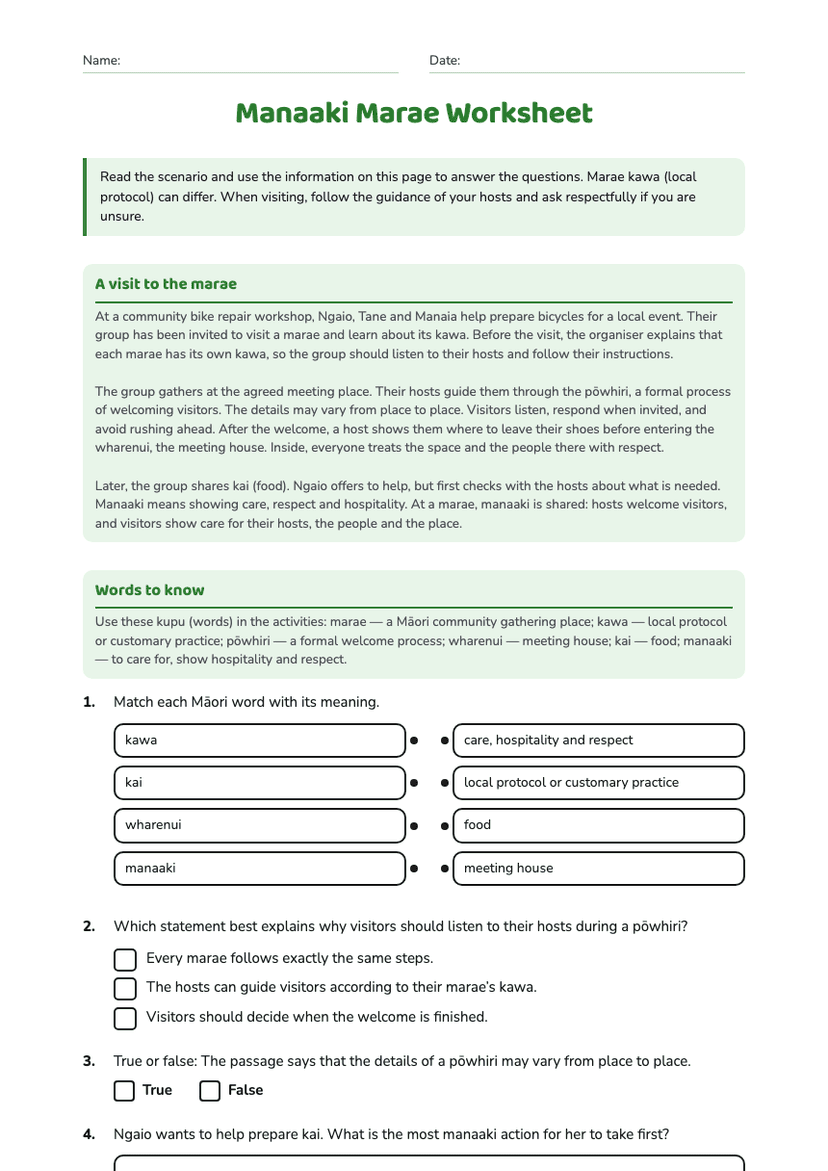
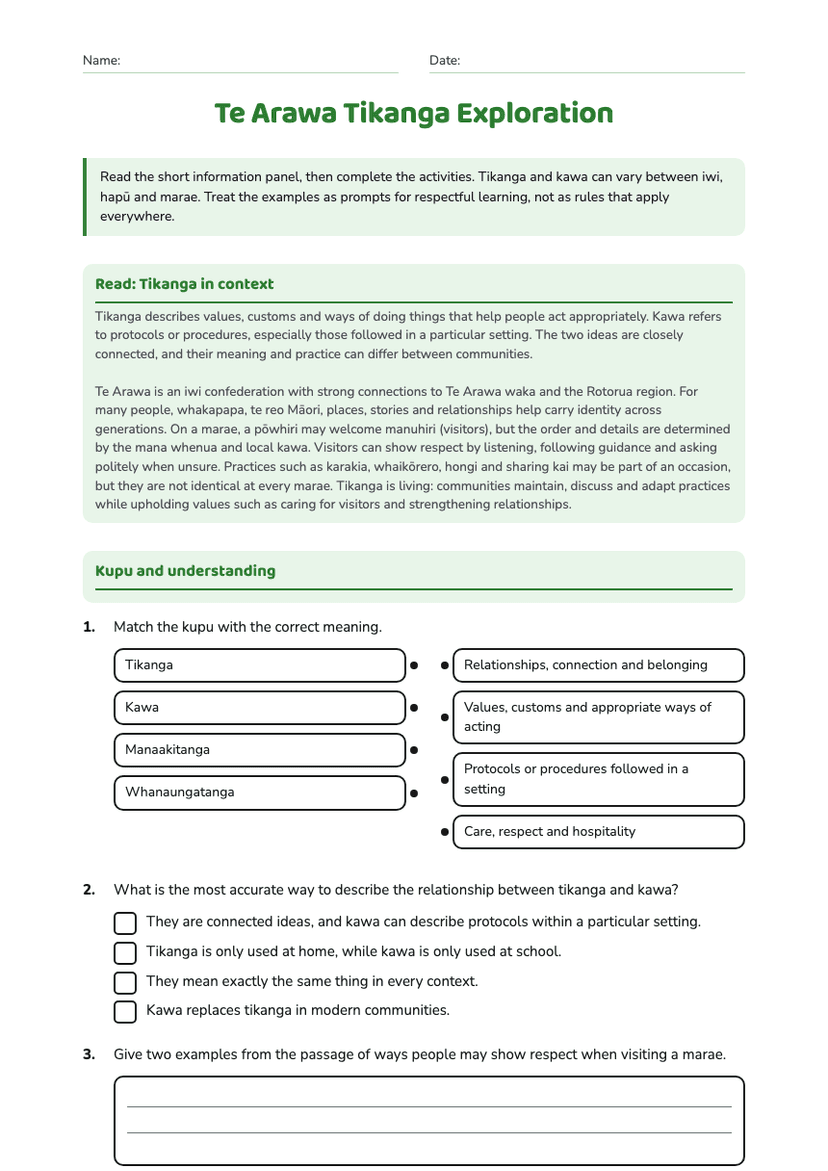
- pōwhiri
- manaakitanga
- whanaungatanga
- kawa
- koha
- care, hospitality and support for others
- local protocols and procedures
- relationships, belonging and connection
- formal welcome process
- a contribution or gift, offered appropriately
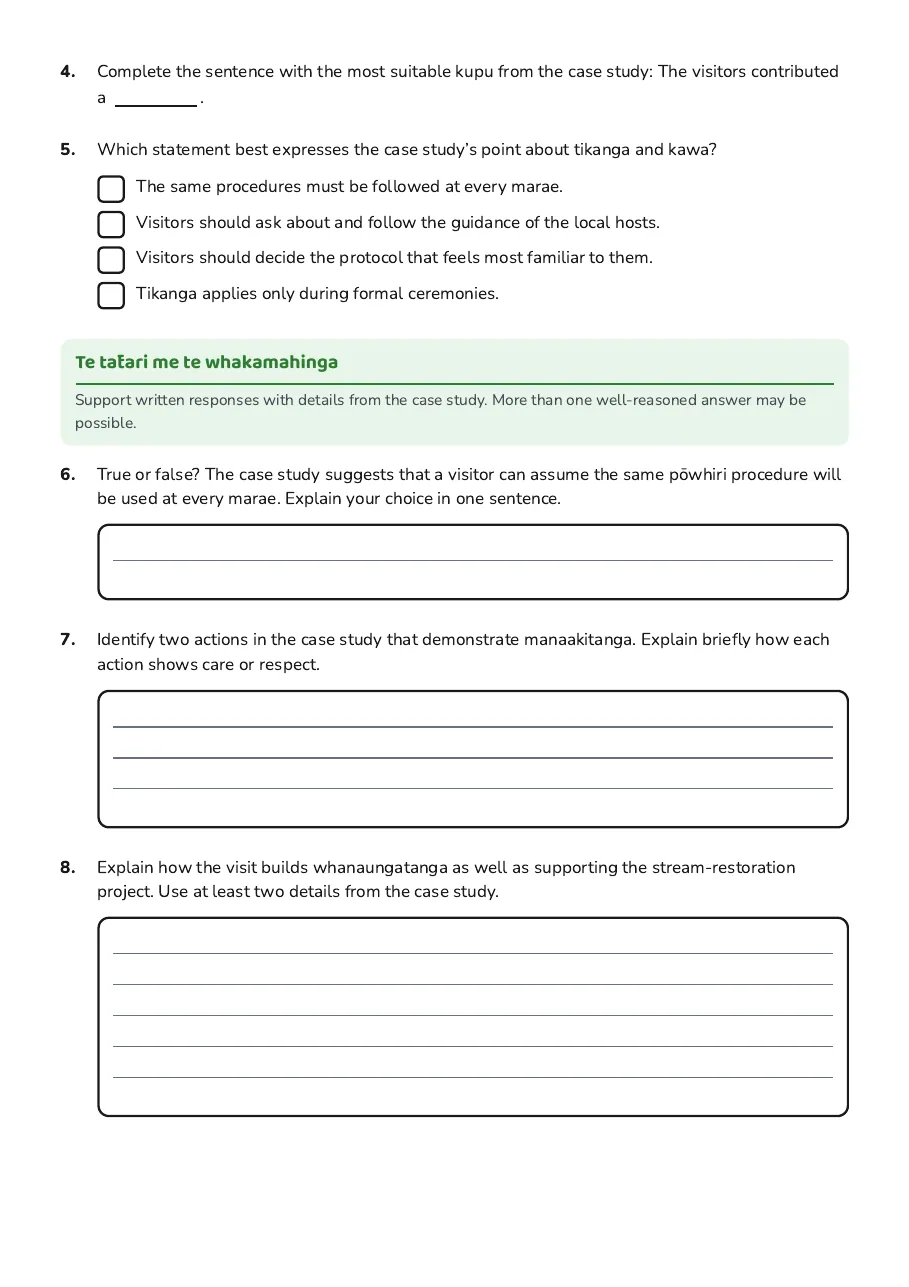
- The same procedures must be followed at every marae.
- Visitors should ask about and follow the guidance of the local hosts.
- Visitors should decide the protocol that feels most familiar to them.
- Tikanga applies only during formal ceremonies.
Te tātari me te whakamahinga
Support written responses with details from the case study. More than one well-reasoned answer may be possible.
3 printable pages
Page 1
Page 2
Page 3
About This Worksheet
Free in Kuraplan
Sign up free, grab the PDF, and customize it for your class.
Print-Ready
Formatted for standard paper. Clean layout, easy to read.
AI-Generated
Created with Kuraplan's AI, designed for real classroom use.
For Teachers & Parents
Use in classrooms, for homework, tutoring, or homeschool.
Need a custom version of this worksheet?
Kuraplan's AI generates custom worksheets in seconds — differentiated for every learner, aligned to your curriculum.
Generate Custom Worksheets — Free