Te Reo MāoriFreePrintable
Whakapapa and Identity
A free te reo māori worksheet ready for your classroom. Open in Kuraplan to grab the print-ready PDF, customize it for your students, or generate a fresh version in seconds.
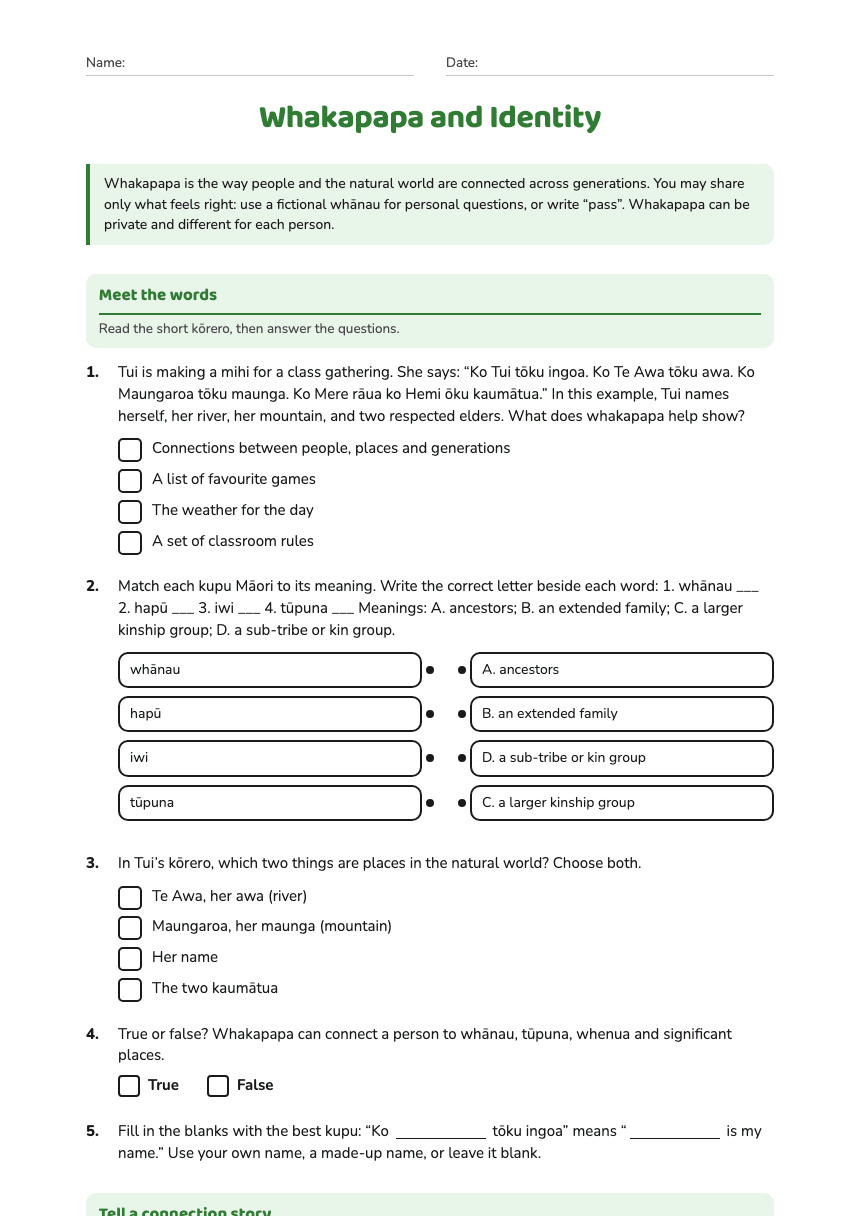
Name:Date:
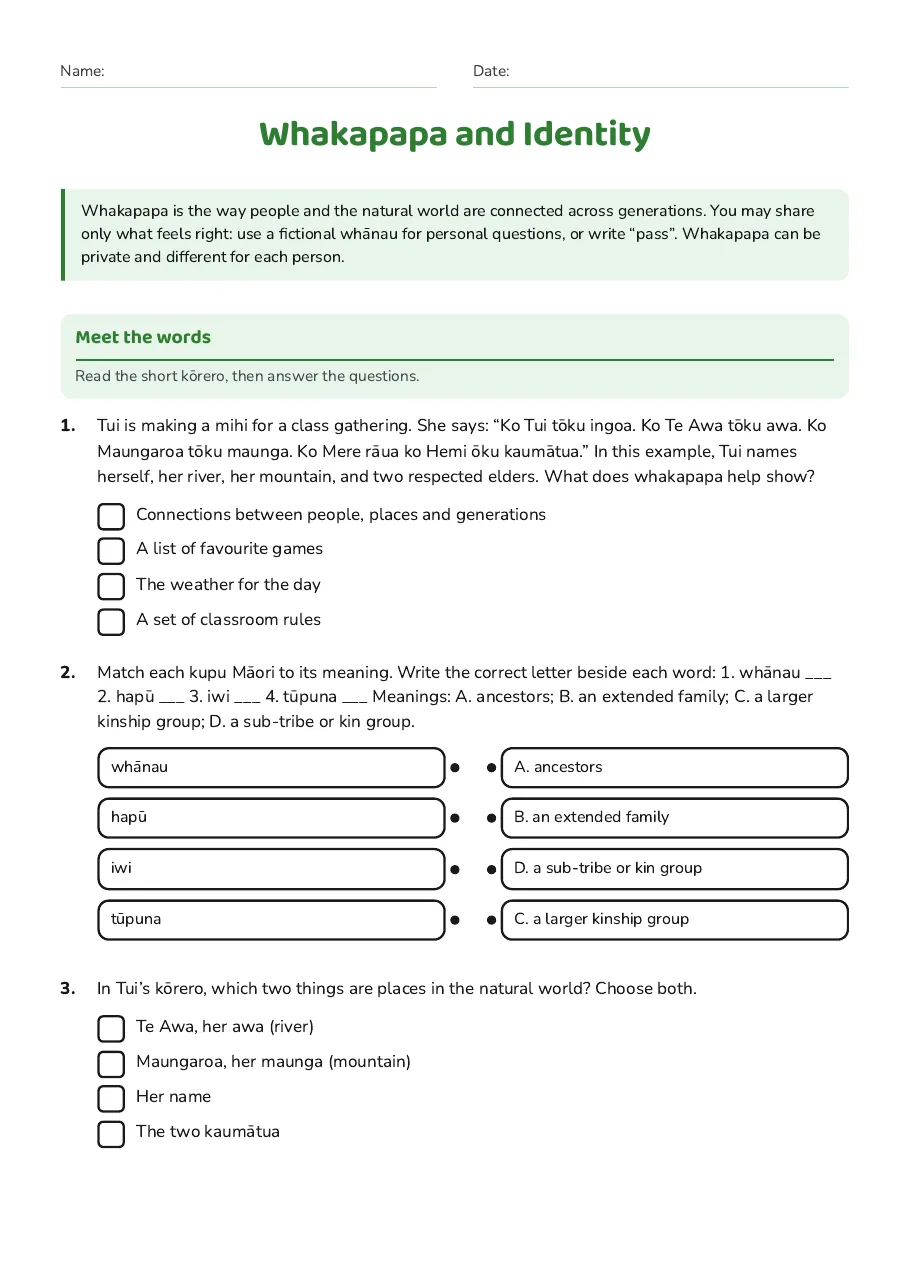
Whakapapa and Identity
Whakapapa is the way people and the natural world are connected across generations. You may share only what feels right: use a fictional whānau for personal questions, or write “pass”. Whakapapa can be private and different for each person.
Meet the words
Read the short kōrero, then answer the questions.
1.Tui is making a mihi for a class gathering. She says: “Ko Tui tōku ingoa. Ko Te Awa tōku awa. Ko Maungaroa tōku maunga. Ko Mere rāua ko Hemi ōku kaumātua.” In this example, Tui names herself, her river, her mountain, and two respected elders. What does whakapapa help show?
- Connections between people, places and generations
- A list of favourite games
- The weather for the day
- A set of classroom rules
2.Match each kupu Māori to its meaning. Write the correct letter beside each word: 1. whānau ___ 2. hapū ___ 3. iwi ___ 4. tūpuna ___ Meanings: A. ancestors; B. an extended family; C. a larger kinship group; D. a sub-tribe or kin group.
- whānau
- hapū
- iwi
- tūpuna
- A. ancestors
- B. an extended family
- D. a sub-tribe or kin group
- C. a larger kinship group
3.In Tui’s kōrero, which two things are places in the natural world? Choose both.
- Te Awa, her awa (river)
- Maungaroa, her maunga (mountain)
- Her name
- The two kaumātua
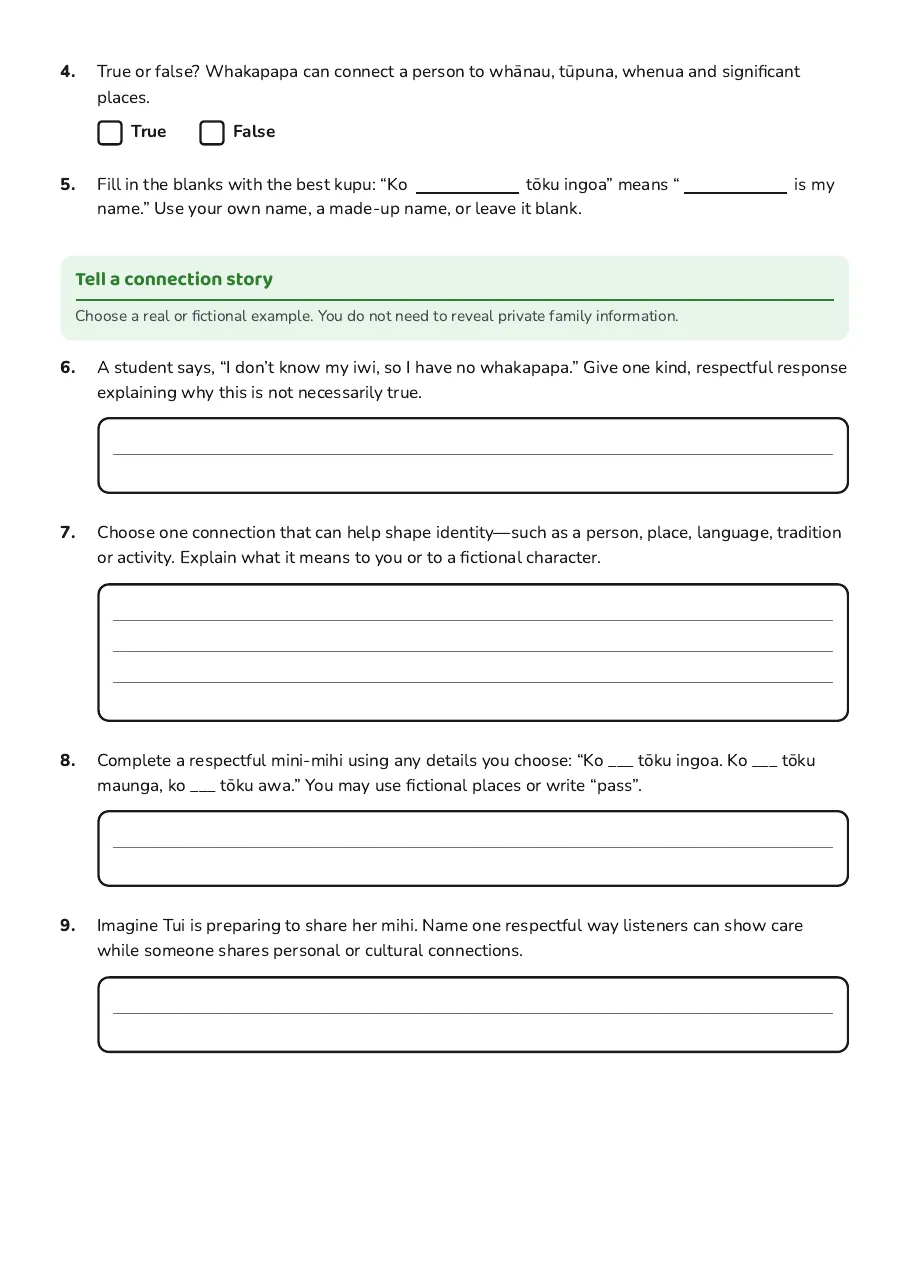
4.True or false? Whakapapa can connect a person to whānau, tūpuna, whenua and significant places.
TrueFalse
5.Fill in the blanks with the best kupu: “Ko tōku ingoa” means “ is my name.” Use your own name, a made-up name, or leave it blank.
Tell a connection story
Choose a real or fictional example. You do not need to reveal private family information.
6.A student says, “I don’t know my iwi, so I have no whakapapa.” Give one kind, respectful response explaining why this is not necessarily true.
7.Choose one connection that can help shape identity—such as a person, place, language, tradition or activity. Explain what it means to you or to a fictional character.
8.Complete a respectful mini-mihi using any details you choose: “Ko ___ tōku ingoa. Ko ___ tōku maunga, ko ___ tōku awa.” You may use fictional places or write “pass”.
9.Imagine Tui is preparing to share her mihi. Name one respectful way listeners can show care while someone shares personal or cultural connections.
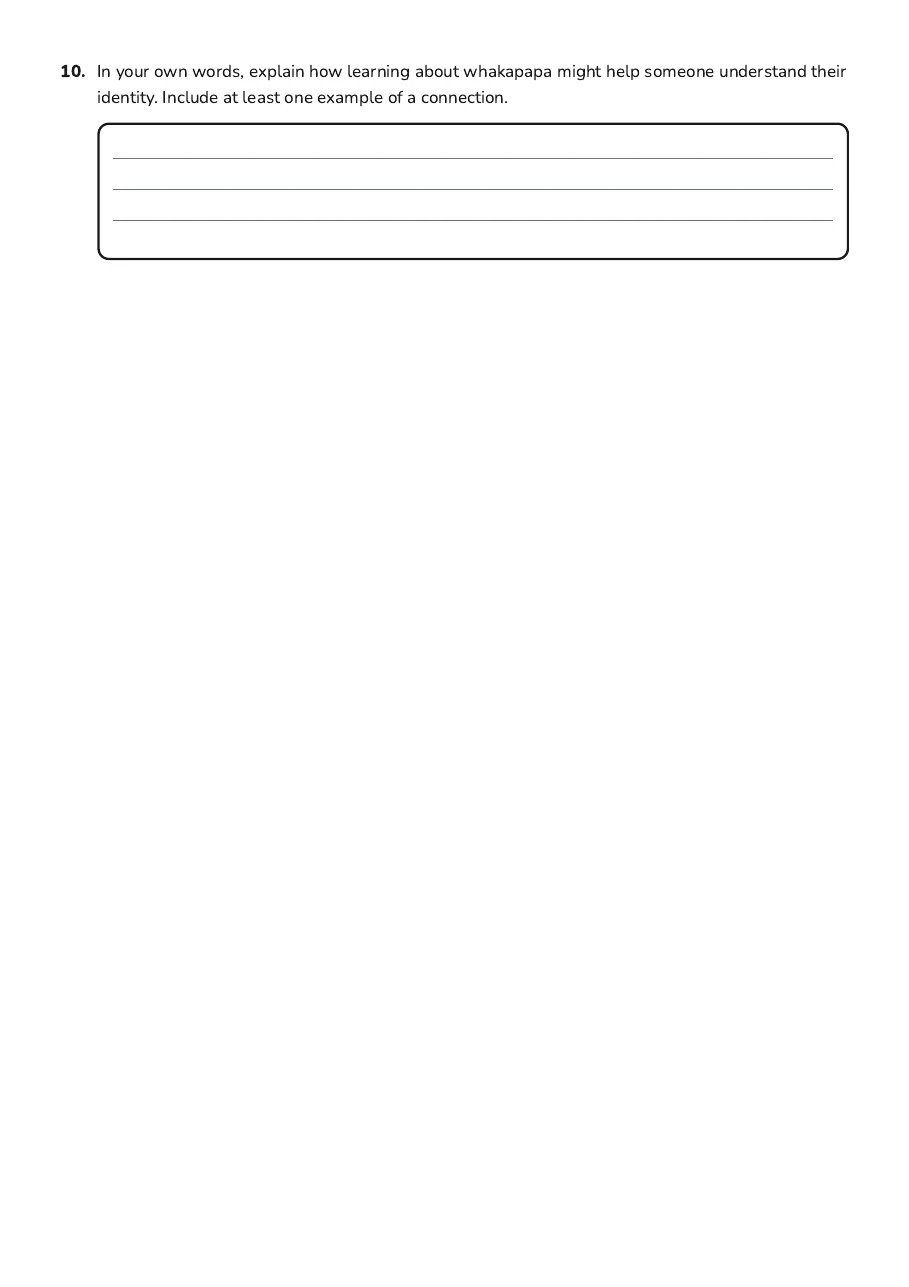
10.In your own words, explain how learning about whakapapa might help someone understand their identity. Include at least one example of a connection.
3 printable pages
Page 1
Page 2
Page 3
About This Worksheet
Free in Kuraplan
Sign up free, grab the PDF, and customize it for your class.
Print-Ready
Formatted for standard paper. Clean layout, easy to read.
AI-Generated
Created with Kuraplan's AI, designed for real classroom use.
For Teachers & Parents
Use in classrooms, for homework, tutoring, or homeschool.
Need a custom version of this worksheet?
Kuraplan's AI generates custom worksheets in seconds — differentiated for every learner, aligned to your curriculum.
Generate Custom Worksheets — Free No credit card Curriculum-aligned Under 60 seconds