Organic Chemistry: Distillation Basics
A free science worksheet ready for your classroom. Open in Kuraplan to grab the print-ready PDF, customize it for your students, or generate a fresh version in seconds.
Organic Chemistry: Distillation Basics
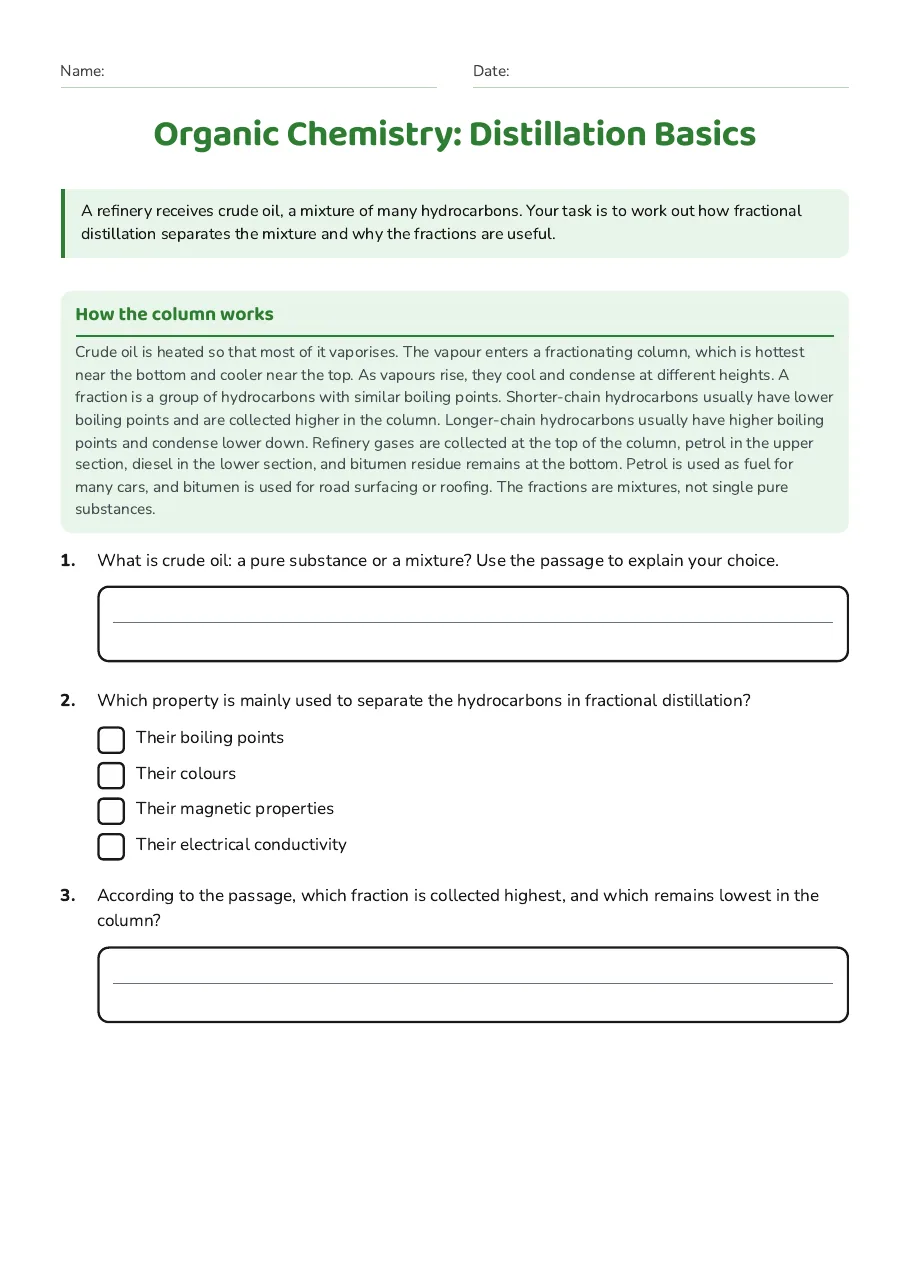
How the column works
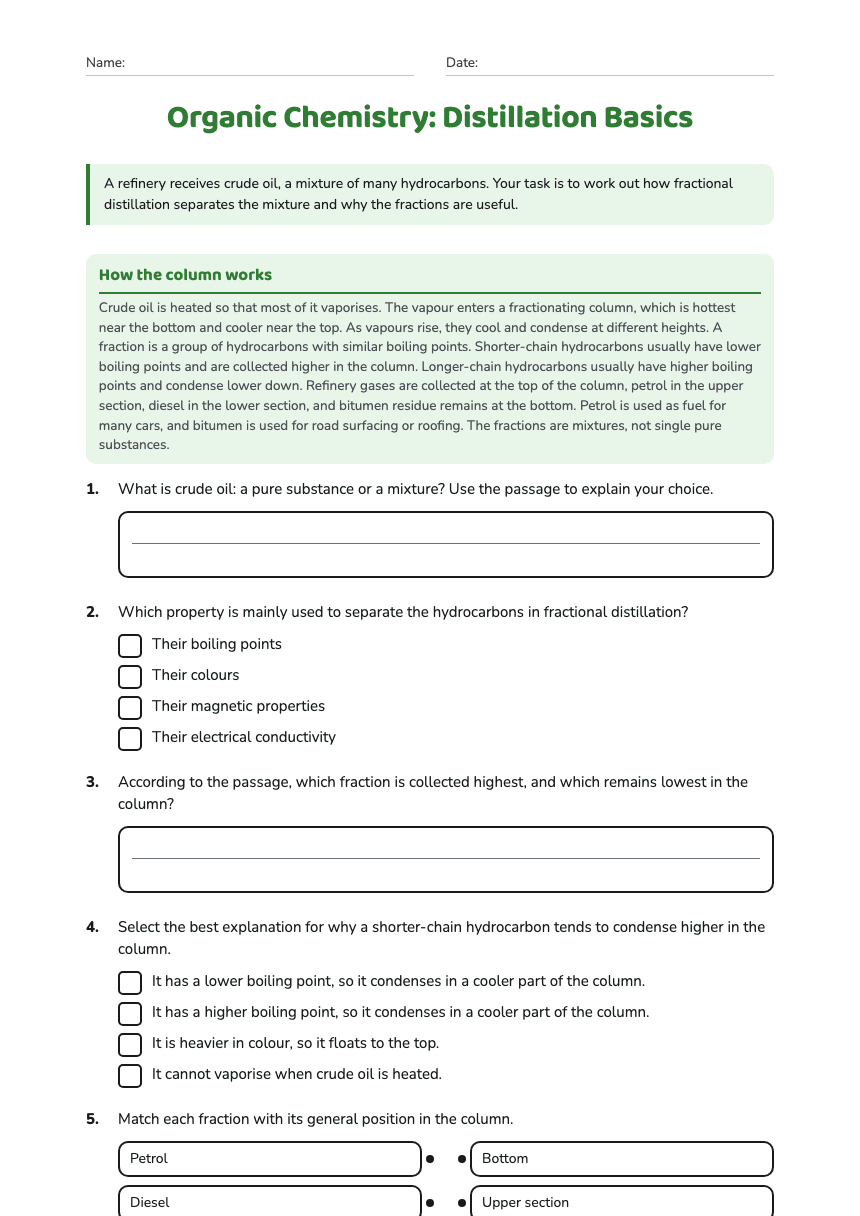
Crude oil is heated so that most of it vaporises. The vapour enters a fractionating column, which is hottest near the bottom and cooler near the top. As vapours rise, they cool and condense at different heights. A fraction is a group of hydrocarbons with similar boiling points. Shorter-chain hydrocarbons usually have lower boiling points and are collected higher in the column. Longer-chain hydrocarbons usually have higher boiling points and condense lower down. Refinery gases are collected at the top of the column, petrol in the upper section, diesel in the lower section, and bitumen residue remains at the bottom. Petrol is used as fuel for many cars, and bitumen is used for road surfacing or roofing. The fractions are mixtures, not single pure substances.
- Their boiling points
- Their colours
- Their magnetic properties
- Their electrical conductivity
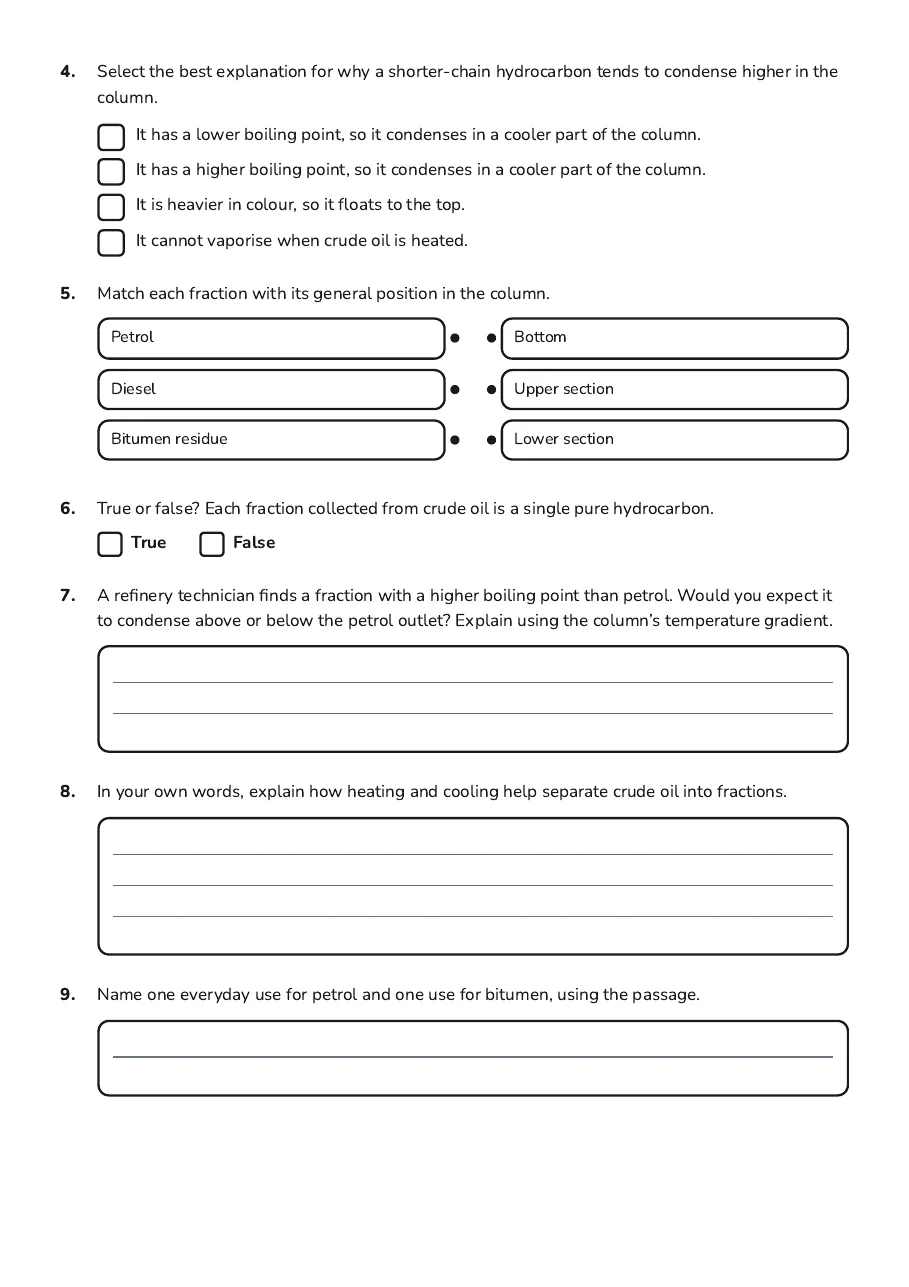
- It has a lower boiling point, so it condenses in a cooler part of the column.
- It has a higher boiling point, so it condenses in a cooler part of the column.
- It is heavier in colour, so it floats to the top.
- It cannot vaporise when crude oil is heated.
- Petrol
- Diesel
- Bitumen residue
- Bottom
- Upper section
- Lower section
2 printable pages
Page 1
Page 2
About This Worksheet
Free in Kuraplan
Sign up free, grab the PDF, and customize it for your class.
Print-Ready
Formatted for standard paper. Clean layout, easy to read.
AI-Generated
Created with Kuraplan's AI, designed for real classroom use.
For Teachers & Parents
Use in classrooms, for homework, tutoring, or homeschool.
Need a custom version of this worksheet?
Kuraplan's AI generates custom worksheets in seconds — differentiated for every learner, aligned to your curriculum.
Generate Custom Worksheets — FreeMore Science Worksheets
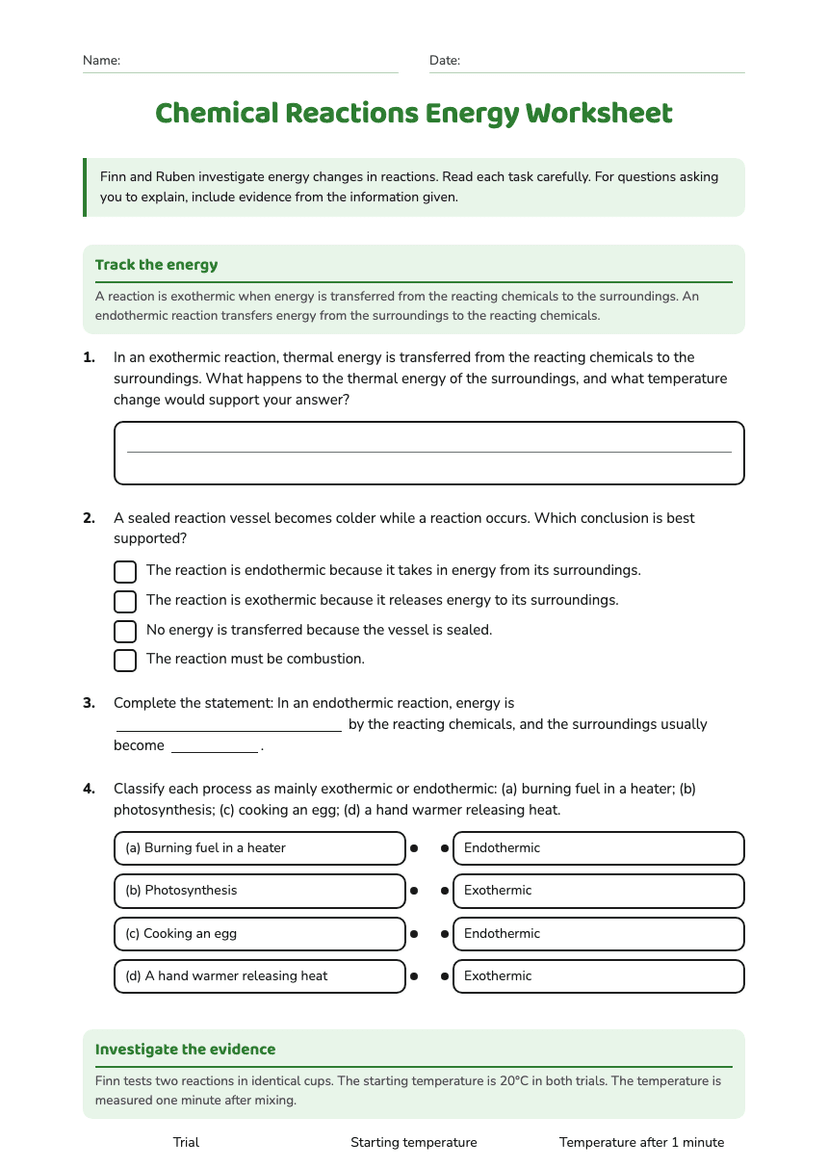
Chemical Reactions Energy Worksheet
Free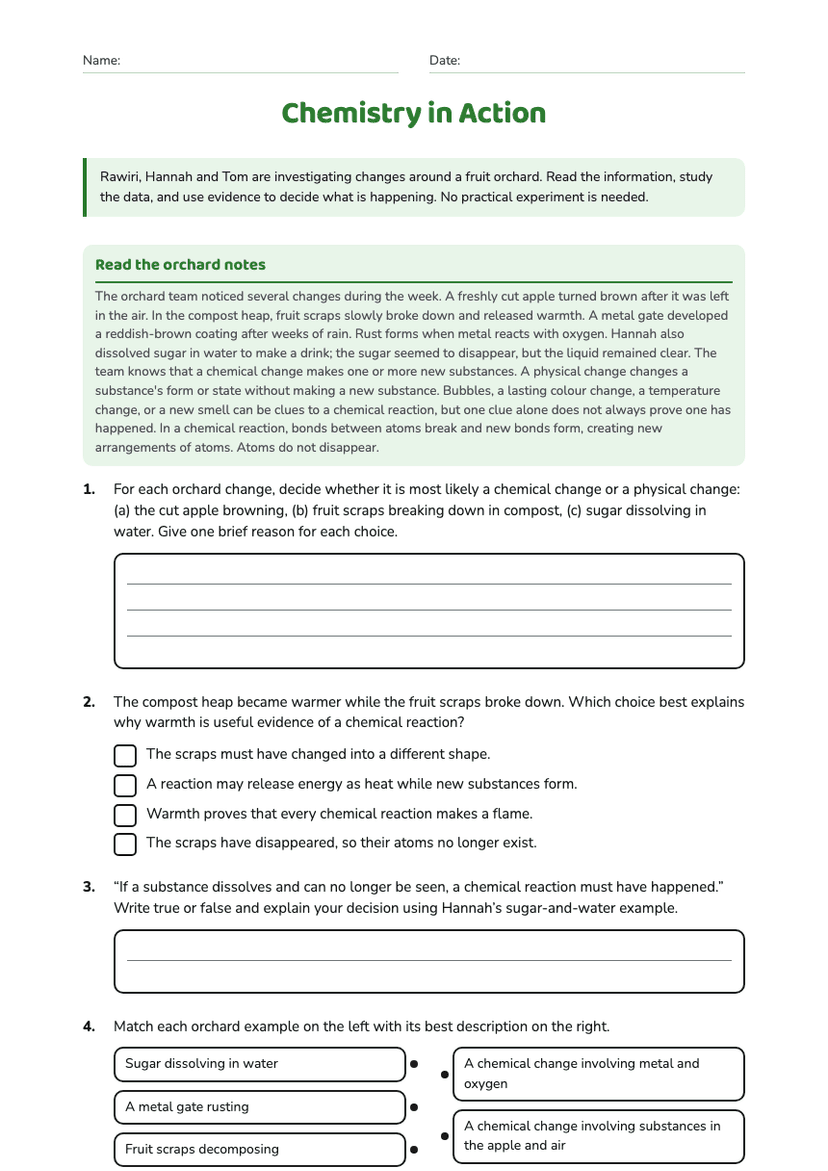
Chemistry in Action
Free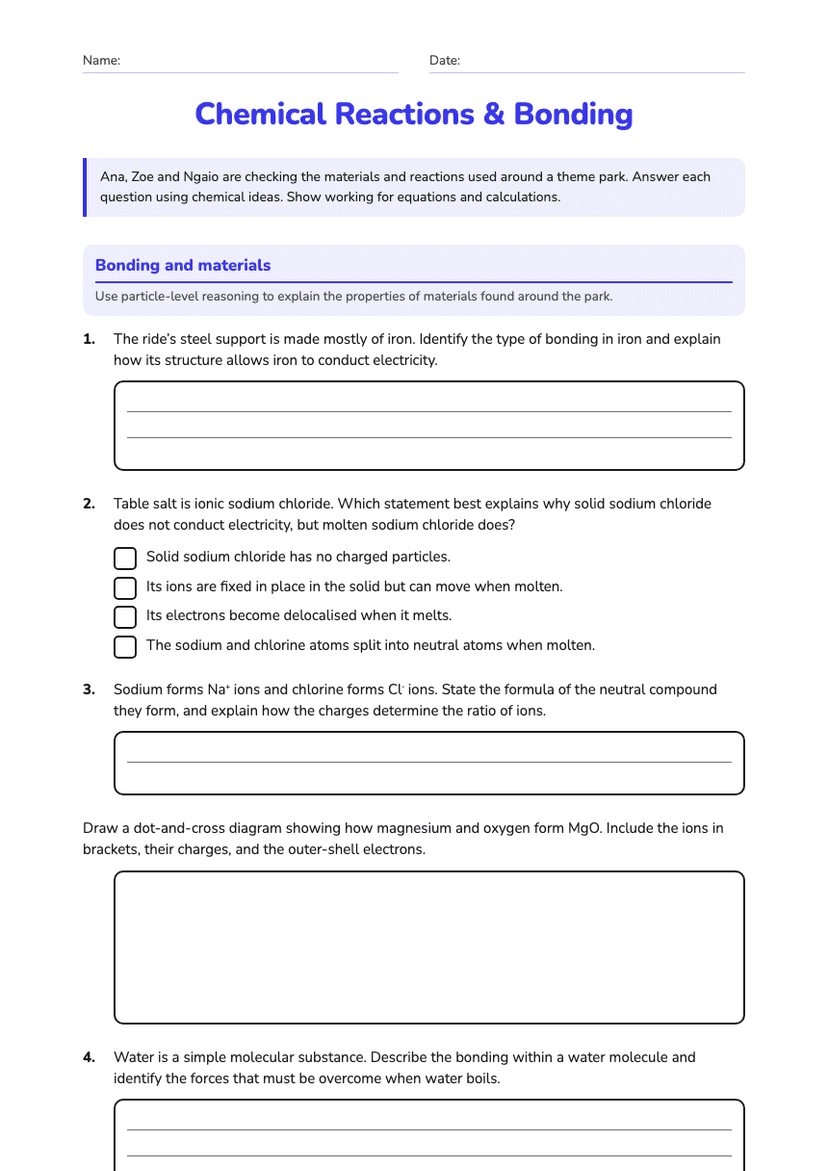
Chemical Reactions & Bonding
Free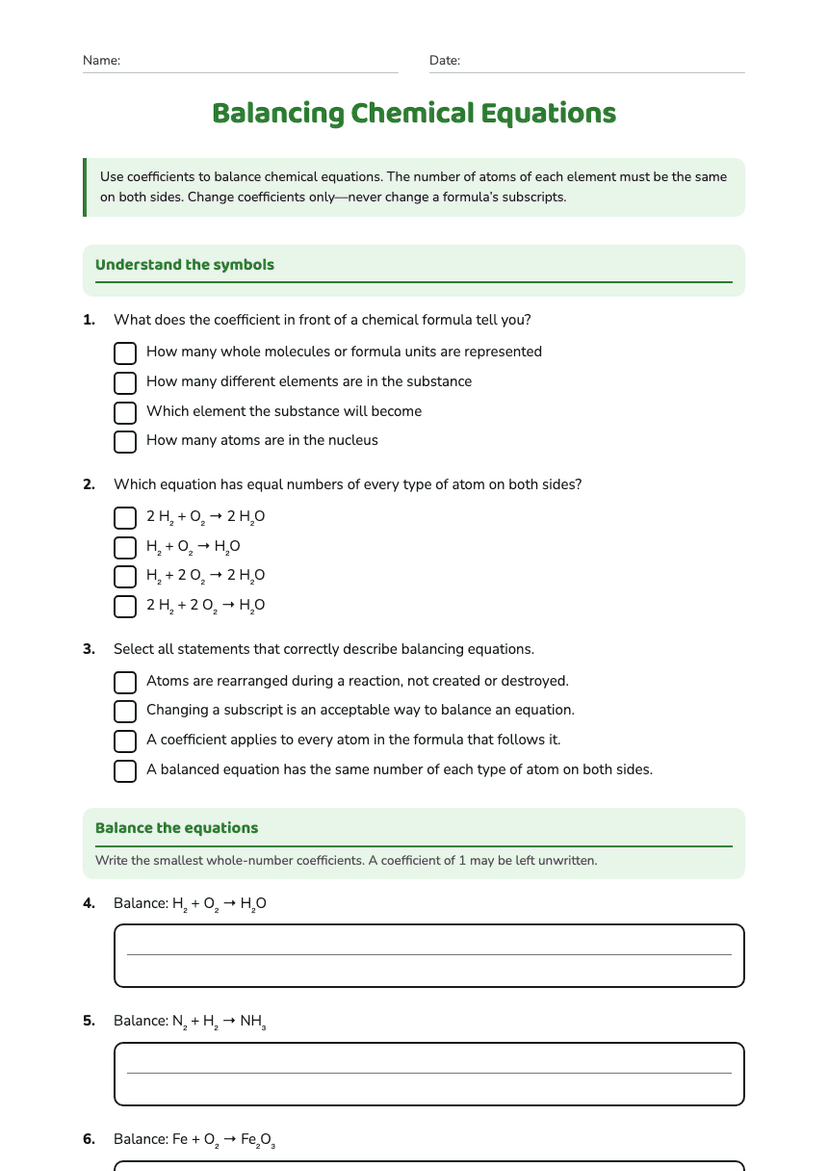
Balancing Chemical Equations
Free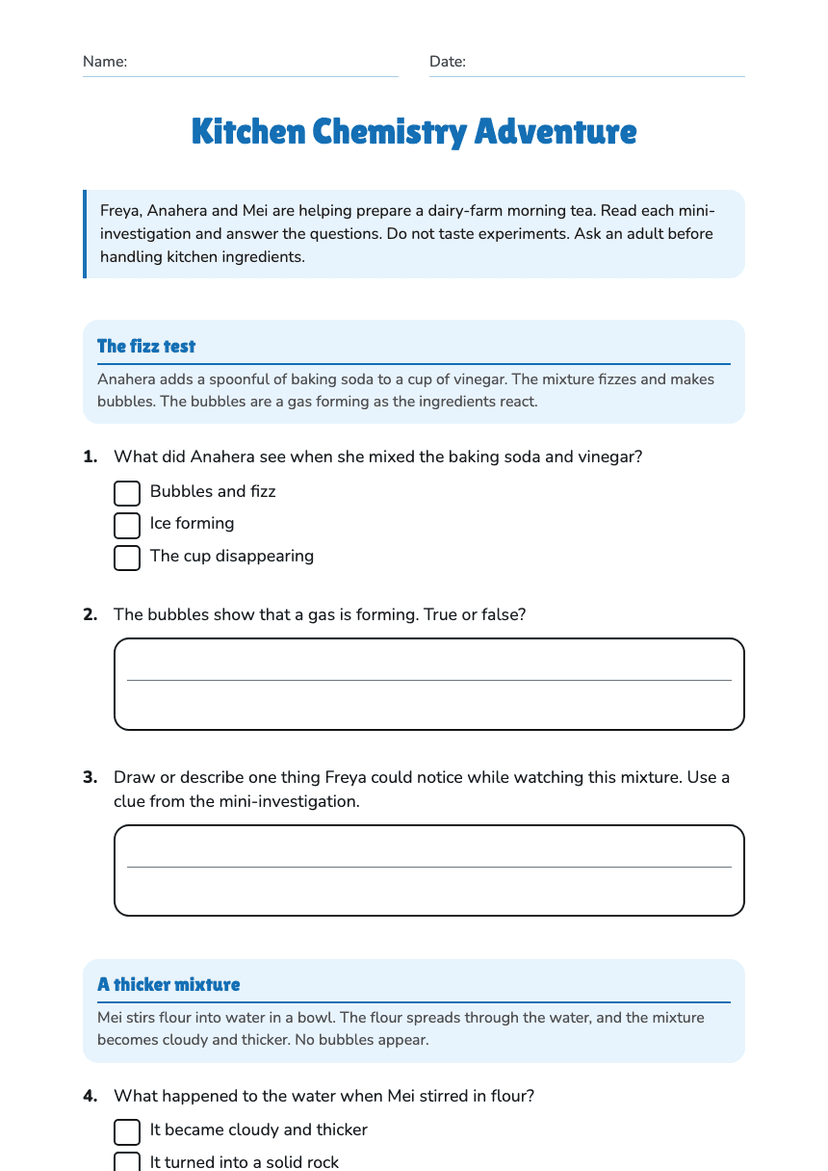
Kitchen Chemistry Adventure
Free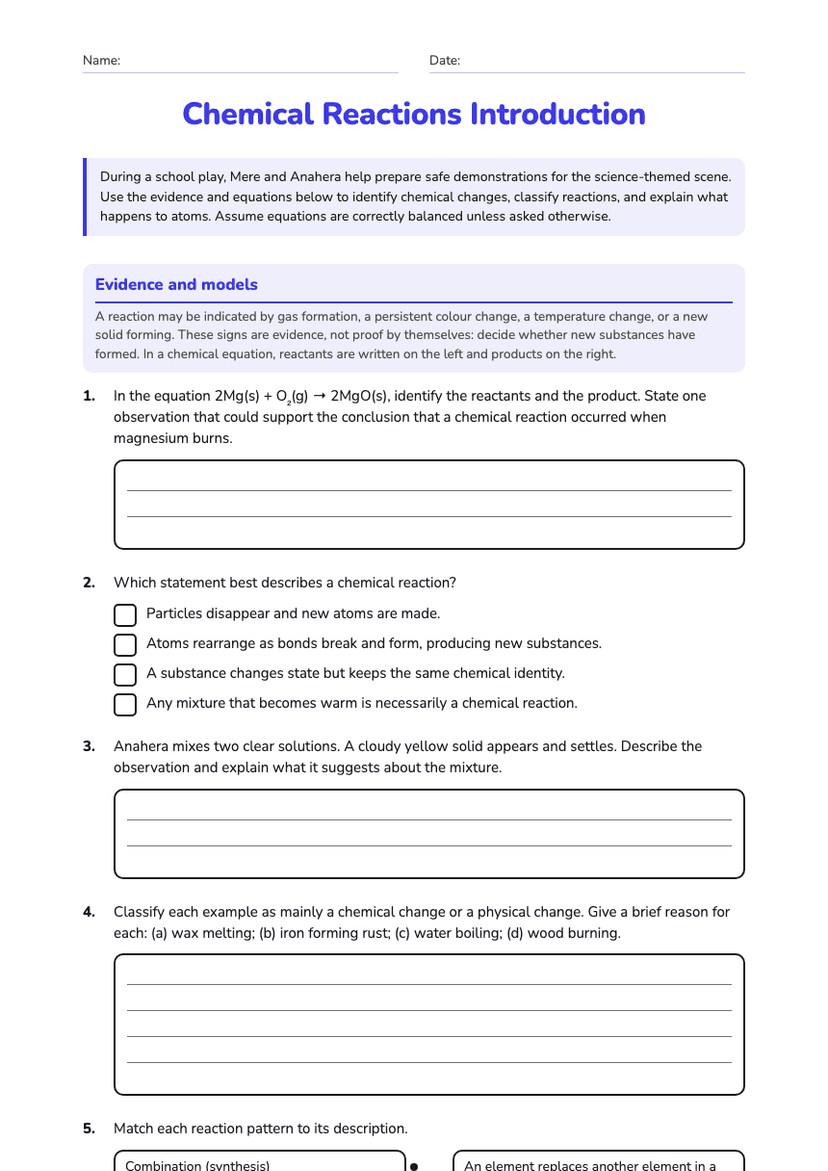
Chemical Reactions Introduction
Free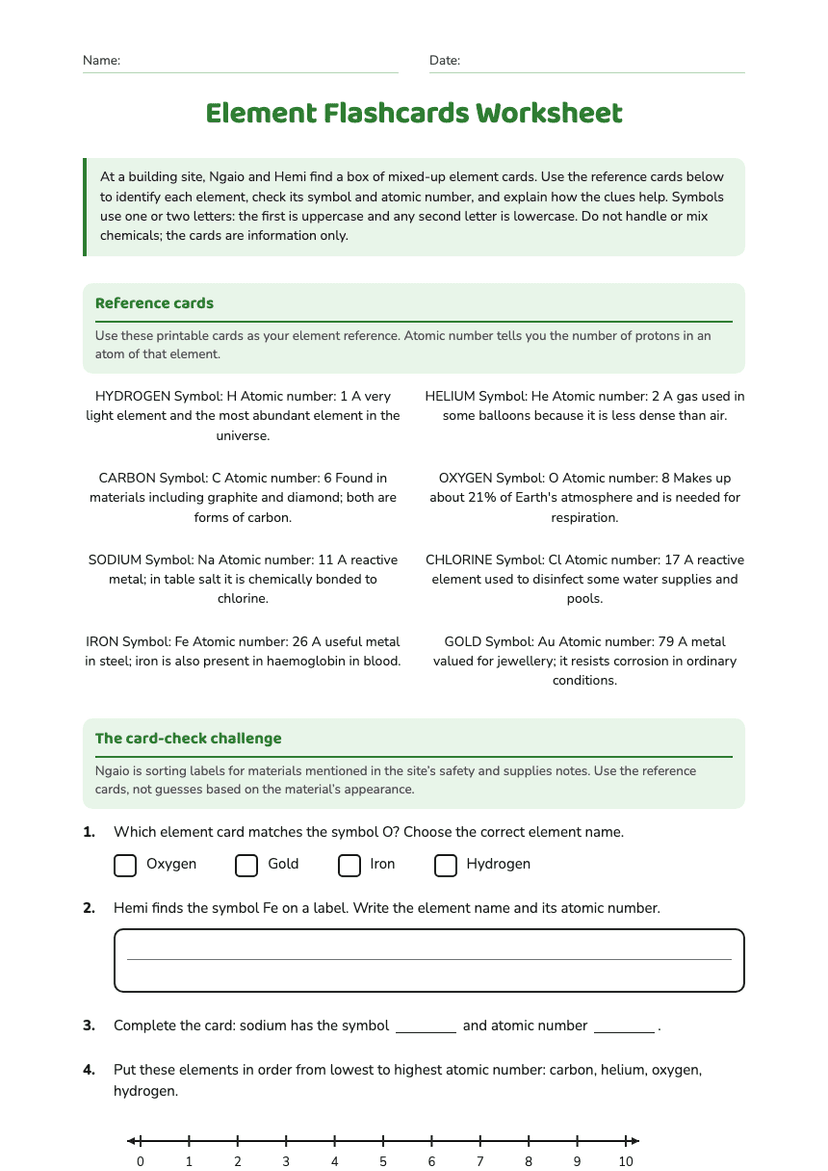
Element Flashcards Worksheet
Free