Physical vs Chemical Changes
A free science worksheet ready for your classroom. Open in Kuraplan to grab the print-ready PDF, customize it for your students, or generate a fresh version in seconds.
Physical vs Chemical Changes
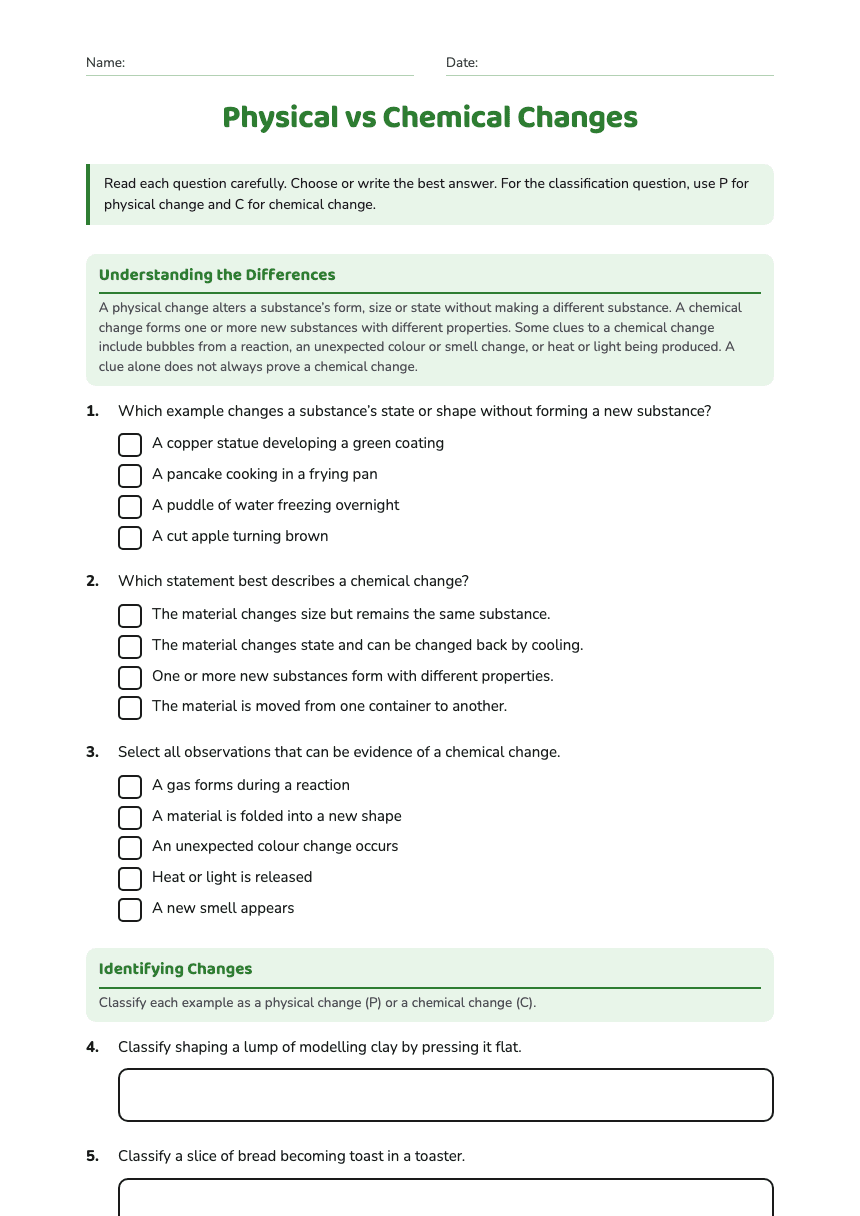
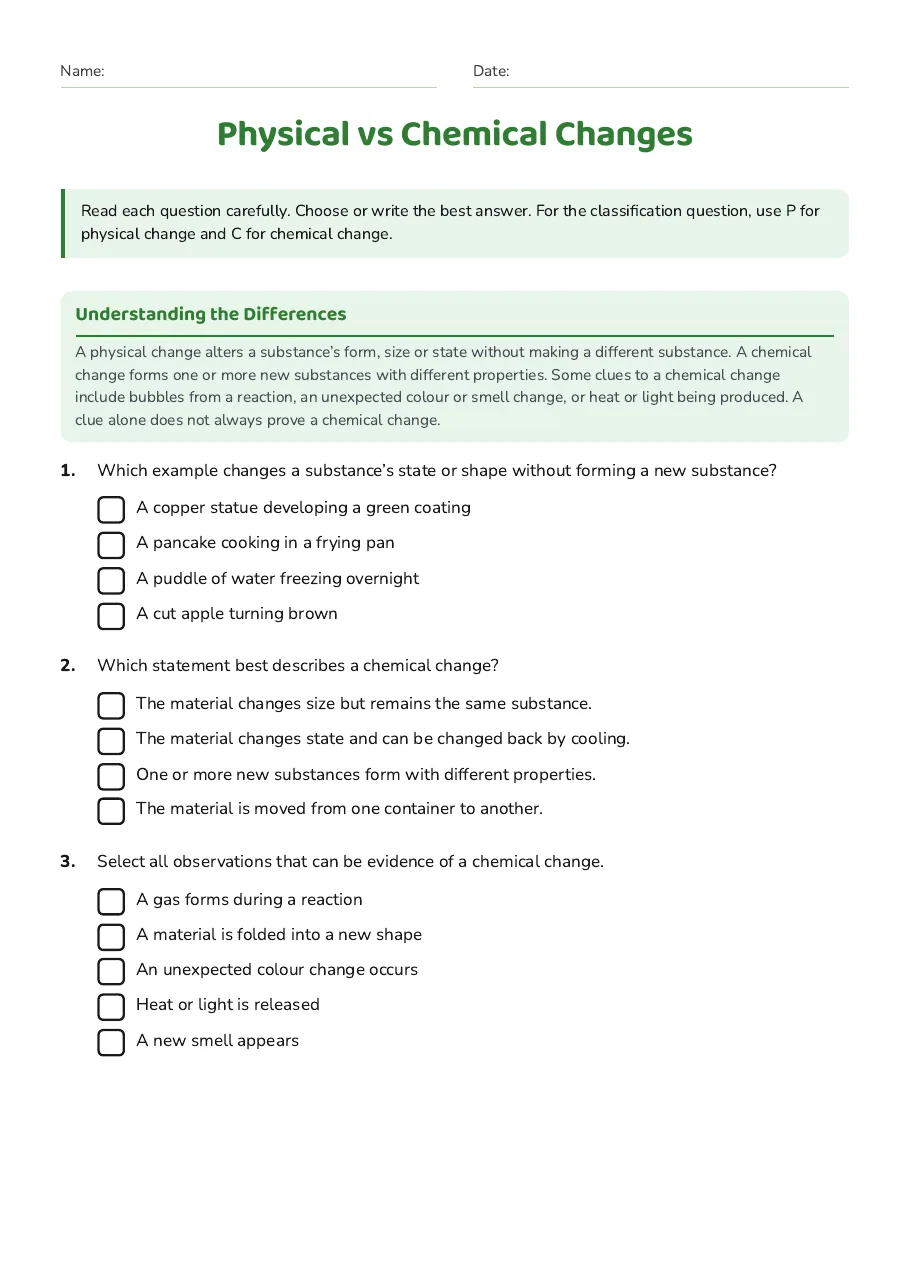
Understanding the Differences
A physical change alters a substance’s form, size or state without making a different substance. A chemical change forms one or more new substances with different properties. Some clues to a chemical change include bubbles from a reaction, an unexpected colour or smell change, or heat or light being produced. A clue alone does not always prove a chemical change.
- A copper statue developing a green coating
- A pancake cooking in a frying pan
- A puddle of water freezing overnight
- A cut apple turning brown
- The material changes size but remains the same substance.
- The material changes state and can be changed back by cooling.
- One or more new substances form with different properties.
- The material is moved from one container to another.
- A gas forms during a reaction
- A material is folded into a new shape
- An unexpected colour change occurs
- Heat or light is released
- A new smell appears
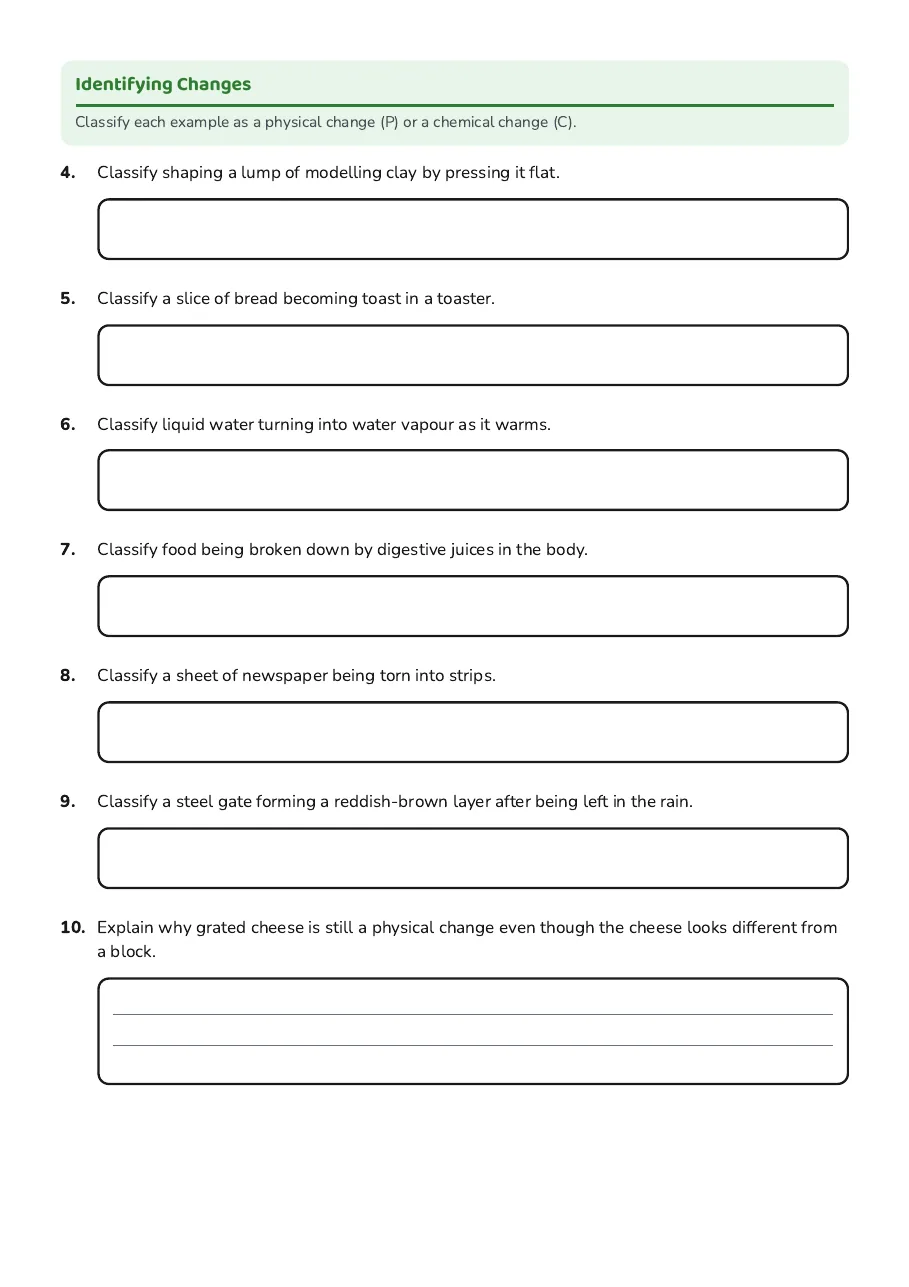
Identifying Changes
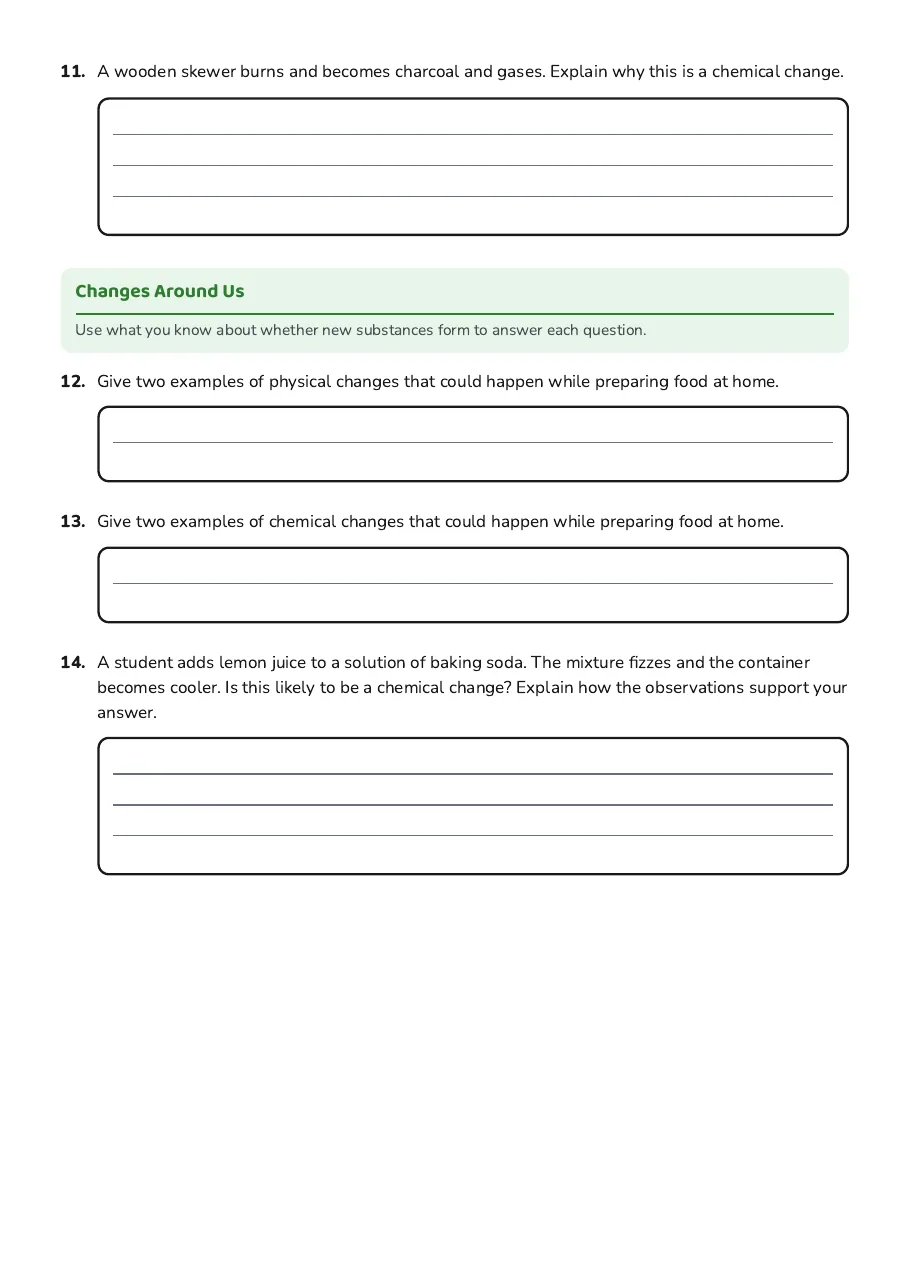
Classify each example as a physical change (P) or a chemical change (C).
Changes Around Us
Use what you know about whether new substances form to answer each question.
3 printable pages
Page 1
Page 2
Page 3
About This Worksheet
Free in Kuraplan
Sign up free, grab the PDF, and customize it for your class.
Print-Ready
Formatted for standard paper. Clean layout, easy to read.
AI-Generated
Created with Kuraplan's AI, designed for real classroom use.
For Teachers & Parents
Use in classrooms, for homework, tutoring, or homeschool.
Need a custom version of this worksheet?
Kuraplan's AI generates custom worksheets in seconds — differentiated for every learner, aligned to your curriculum.
Generate Custom Worksheets — FreeMore Science Worksheets
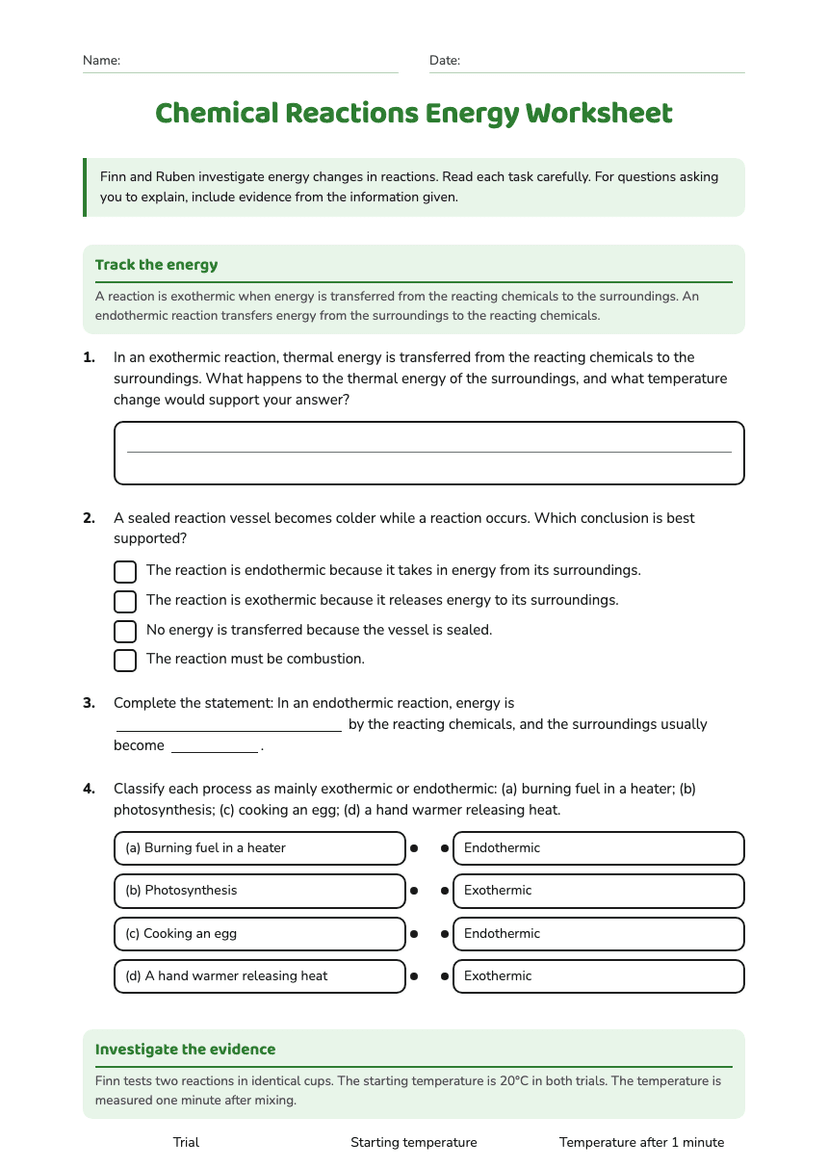
Chemical Reactions Energy Worksheet
Free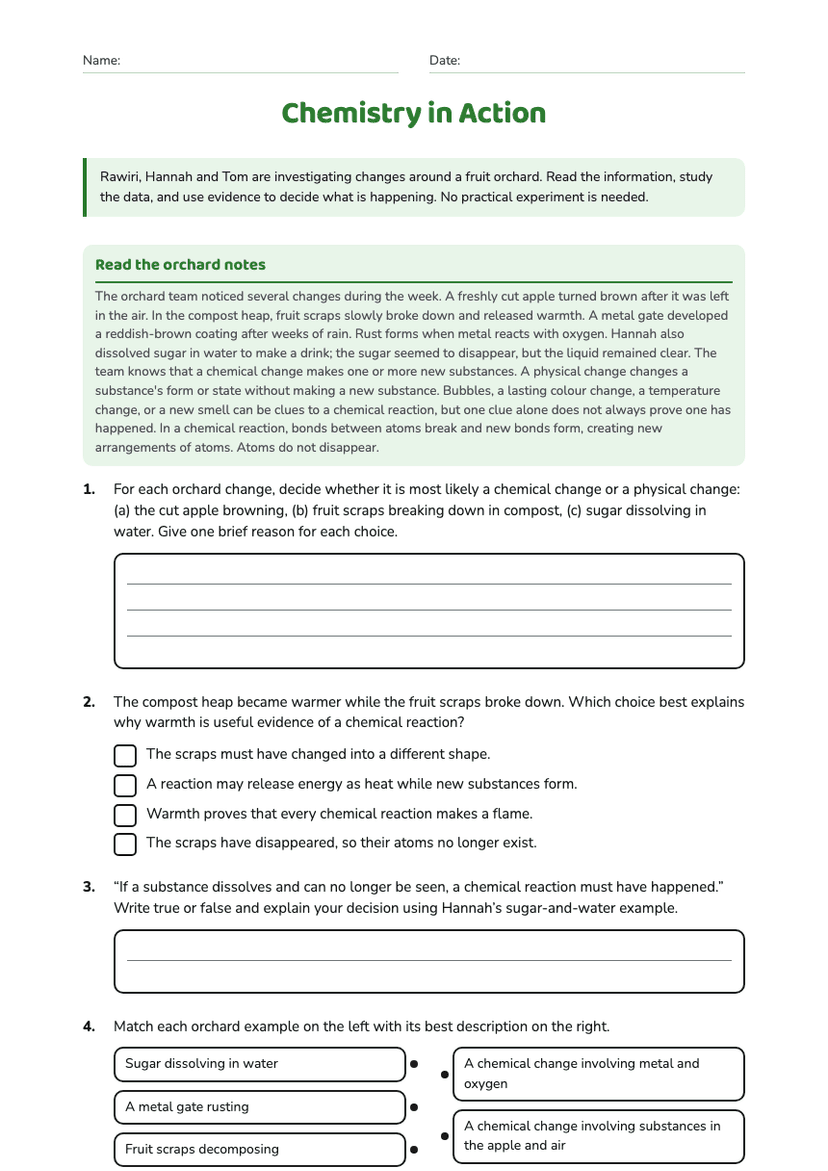
Chemistry in Action
Free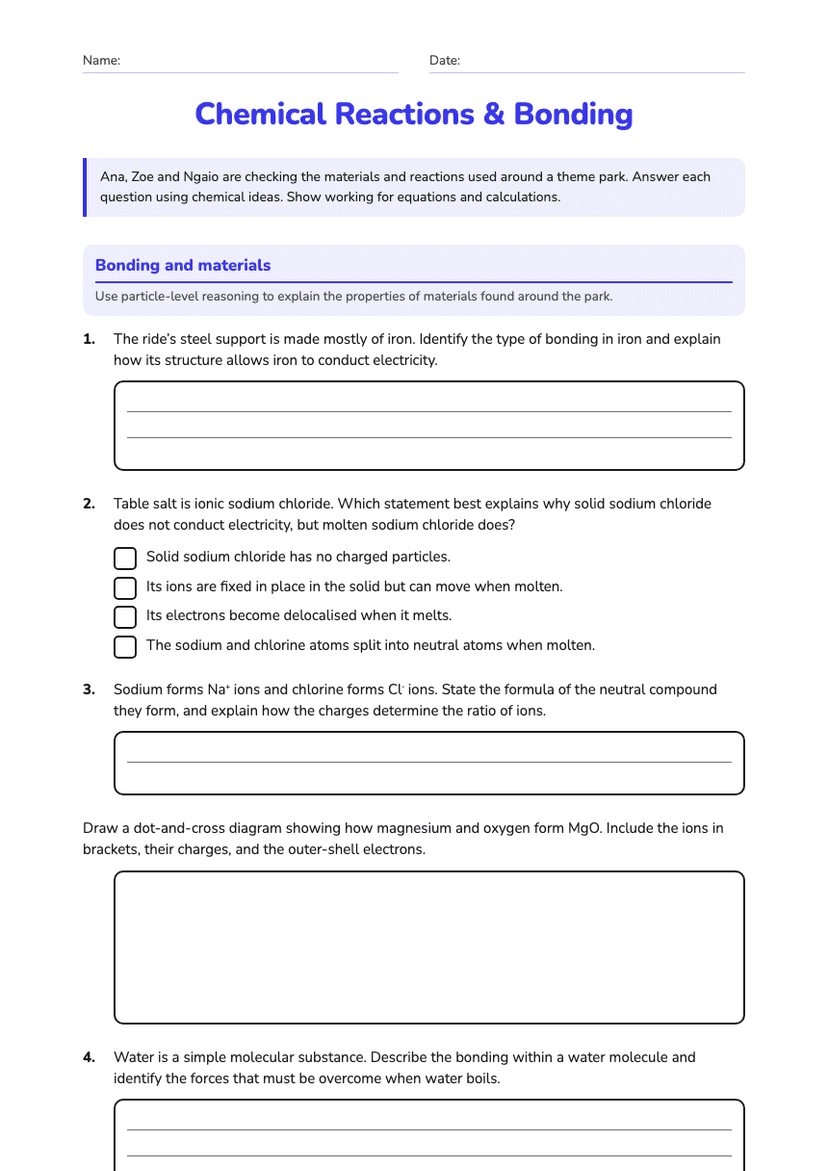
Chemical Reactions & Bonding
Free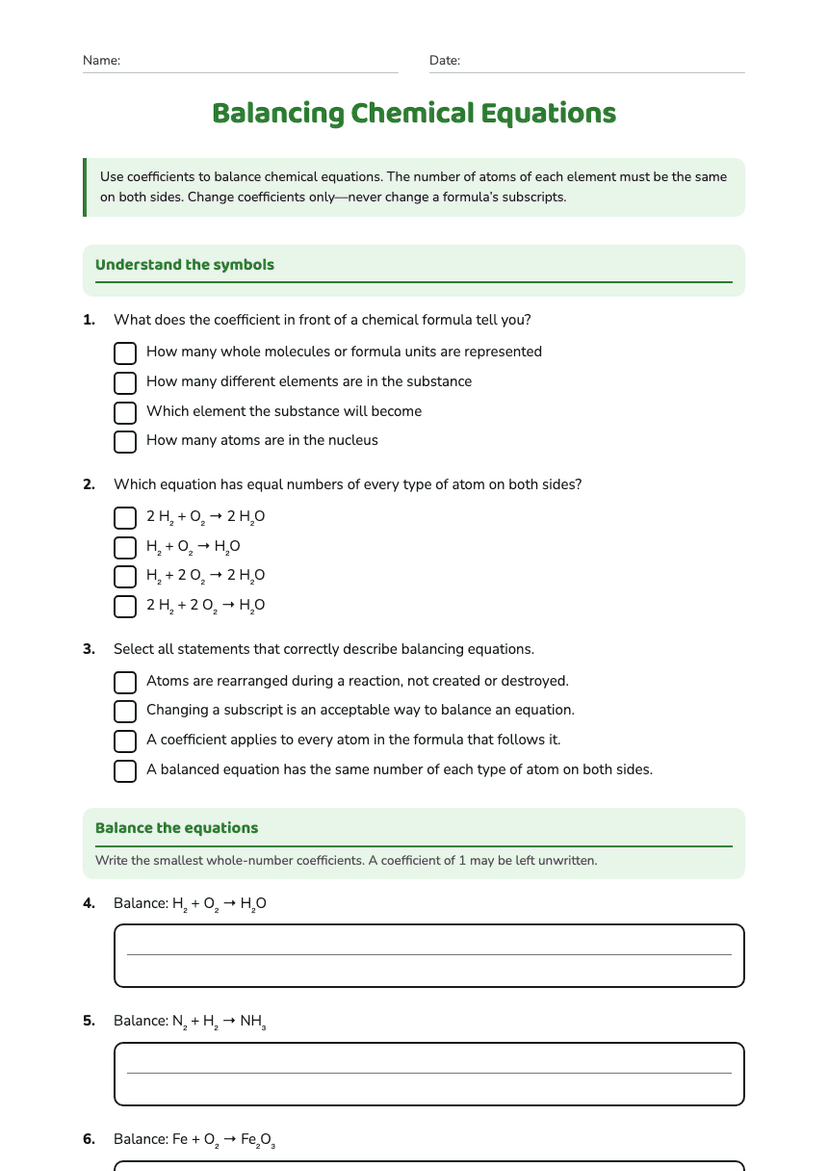
Balancing Chemical Equations
Free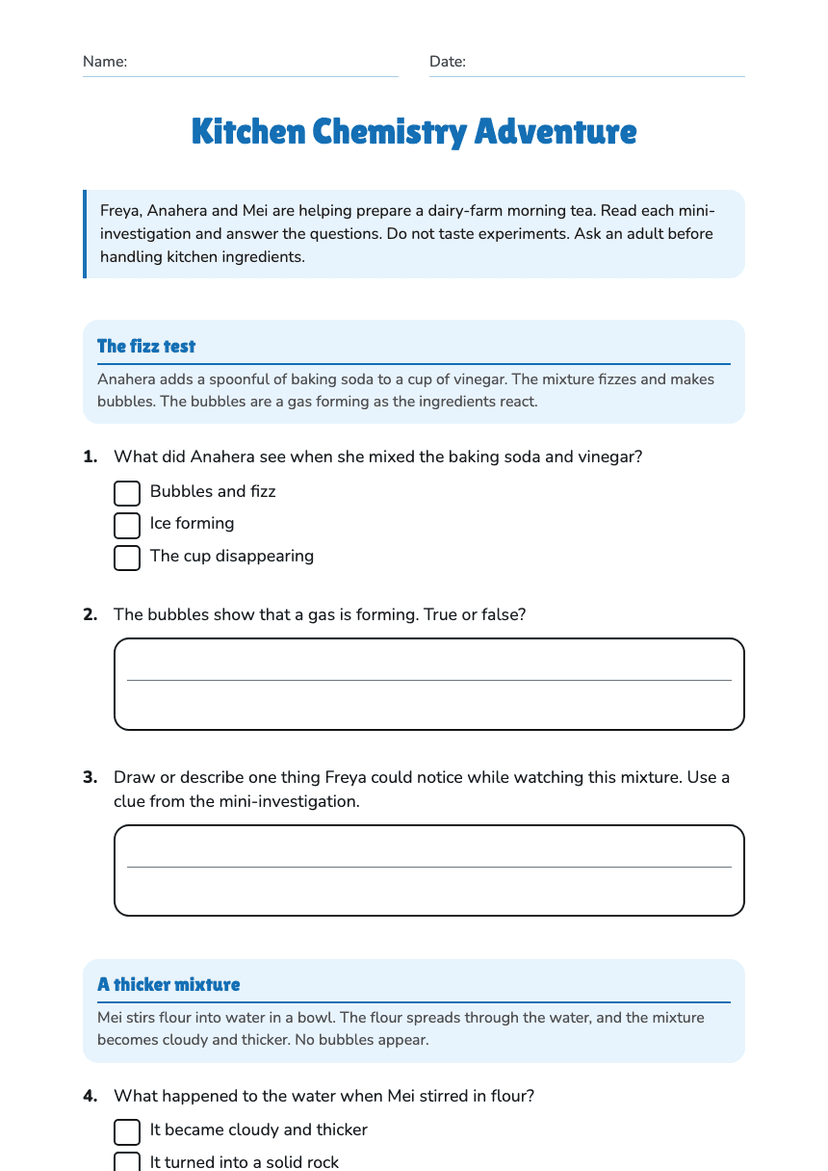
Kitchen Chemistry Adventure
Free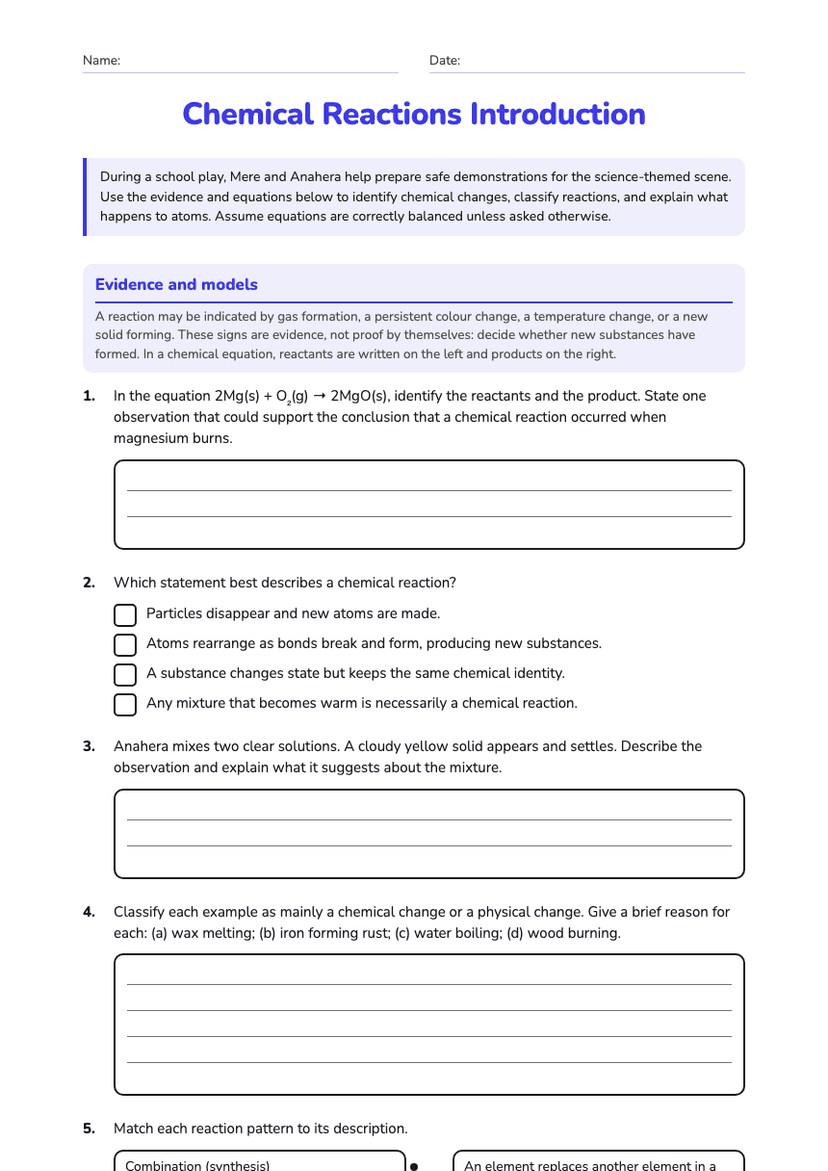
Chemical Reactions Introduction
Free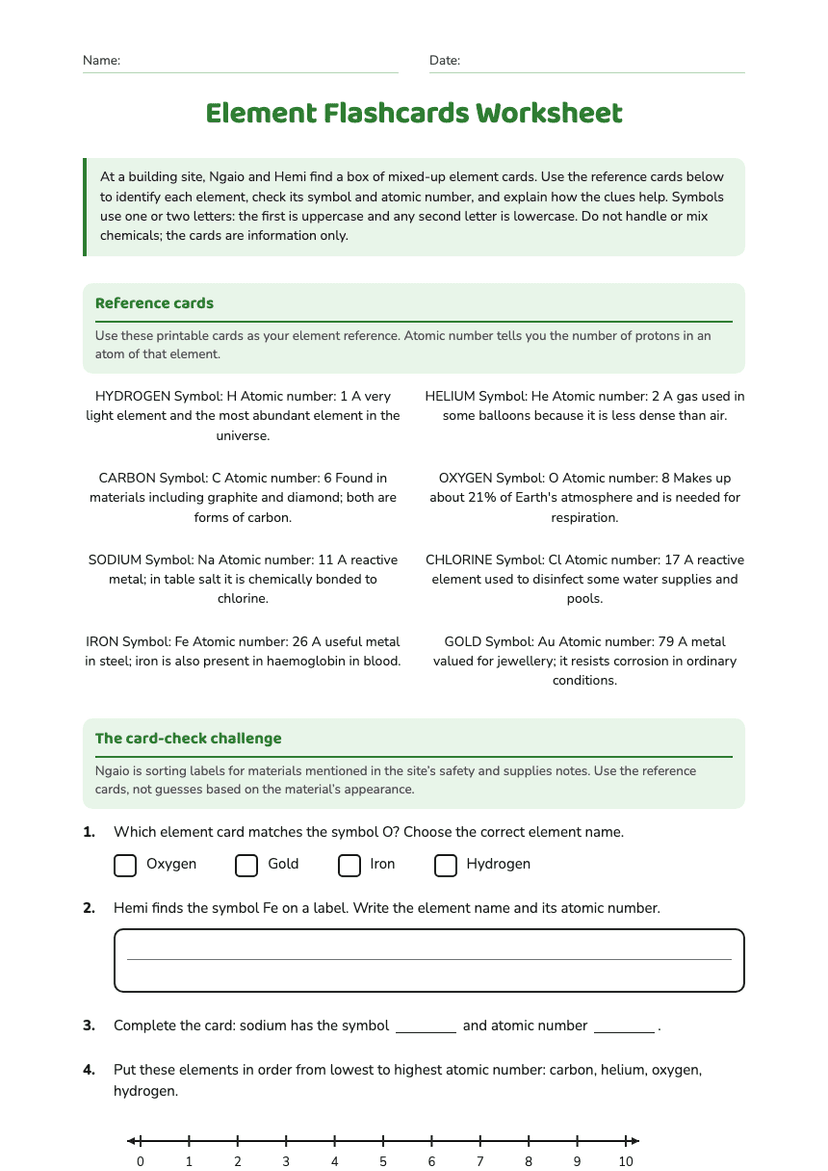
Element Flashcards Worksheet
Free